R P DoreBiblio.com

2 060 résultats
ria9780520359307_inpHardback. New. New Book; Fast Shipping from UK; Not signed; Not First Edition; N/A hardcover
ria9780520364516_inpHardback. New. New Book; Fast Shipping from UK; Not signed; Not First Edition; N/A hardcover
1995SKU2020028037Corcoran Museum of Art 1995. First Edition. Softcover. Very Good. 0x0x0. Profusely illustrated. Signed by Author. A catalog for an exhibition at The Corcoran Gallery of Art showcasing 27 or more works that blend mundane found materials with sophisticated graphic design. The collection highlights with text by Dore Ashton how Chermayeff repurposed for example office scraps envelopes and paper creating complex often whimsical portraiture. 64 pages. Includes a handwritten letter laid in on Chermayeff's letterhead; which reads: "Dear Nice to see you here with my catalog which I also sent to the Aspen Art Museum should they be interested some day. Best Ivan". Scarce thus. Ivan Chermayeff 1932–2017 was a British-born American graphic designer and artist renowned for co-founding the influential design firm Chermayeff & Geismar in 1957. He created iconic minimalist logos for corporations like Mobil Chase Bank NBC and the Smithsonian shaping modern corporate identity. Chermayeff was also a painter collagist and children’s book author. His Awards include: AIGA Gold Medal 1979 Art Directors Club Hall of Fame 1981 National Design Award for Lifetime Achievement 2014 from the Cooper Hewitt Smithsonian Design Museum. Corcoran Museum of Art paperback
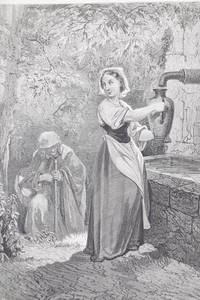
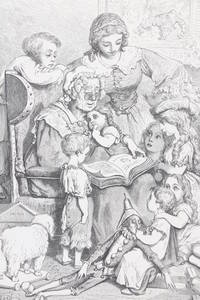
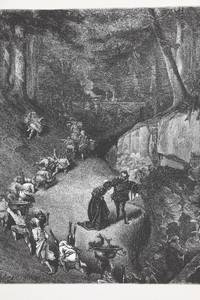
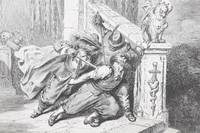
186279669Paris: Hetzel 1862. Fine. Hetzel Paris 1862 29.90 x 42.10 cm une feuille Original wood engraving signed on the plate by the artist and engraver. Composition created by Gustave Doré and engraved by Charles Maurand on China paper and mounted on laid Holland paper at the request of publisher Hetzel to illustrate his folio edition of Perrault's Contes in 1862. Occasional worming and soiling to lower right corner not affecting the engraving. These illustrations of the Contes are considered the most successful of this text: Gustave Doré presents an unprecedented dramatic vision. With him everything contributes to the dramatization of the tale from the theatrical staging of the scene to the smallest details that generate terrifying realism through the technique known as ""tinted wood"". He uses India ink or gouache previously diluted as required by the ""wash"" technique. For Perrault's tales the eleven best engravers of the time were employed to engrave with burin the forty wooden plates: Pannemaker Pisan Pierdon Maurand Boetzel Brevière Hébert Deschamps Dumont Delduc and Fagnon. Gustave Doré's work in illustrating the Contes is paramount; he does not reduce engraving to its ornamental function but transforms it into a true object of narration. These illustrations are Doré's most famous works and immediately received enthusiastic criticism notably that of Sainte-Beuve in Les Nouveaux lundis December 23 1861: ""Un Perrault comme il n'y en eut jamais jusqu'ici et comme il ne s'en verra plus. . Je ne puis que dire que ces dessins me semblent fort beaux d'un tour riche et opulent qu'ils ont un caractère grandiose qui renouvelle l'aspect de ces humbles contes et leur rend de leur premier merveilleux antérieur à Perrault même."" ""A Perrault like there never was before and as will never be seen again. . I can only say that these drawings seem very beautiful to me of a rich and opulent turn that they have a grandiose character that renews the aspect of these humble tales and restores to them their original marvelous quality that existed before Perrault himself."" Hetzel unknown
186279633Paris: Hetzel 1862. Fine. Hetzel Paris 1862 29.90 x 42.10 cm une feuille Original wood engraving signed on the plate by the artist and engraver. Composition created by Gustave Doré and engraved by François Pannemaker on chine collé mounted on Holland laid paper commissioned by publisher Hetzel to illustrate his folio edition of Perrault's Contes in 1862. A light marginal dampstain not affecting the design. These illustrations for the Contes are considered the most successful of this text: Gustave Doré offers an unprecedented dramatic vision. With him everything contributes to the dramatization of the tale from the theatrical staging of the tableau to the smallest details that generate terrifying realism thanks to the technique known as ""tinted wood."" He uses India ink or gouache previously diluted as required by the ""wash"" technique. For Perrault's tales the eleven best engravers of the period were enlisted to engrave with burin the forty wood plates: Pannemaker Pisan Pierdon Maurand Boetzel Brevière Hébert Deschamps Dumont Delduc and Fagnon. Gustave Doré's work in illustrating the Contes is paramount; he does not reduce engraving to its ornamental function but transforms it into a true object of narration. These illustrations are Doré's most famous works and immediately received enthusiastic reviews notably that of Sainte-Beuve in Les Nouveaux lundis December 23 1861: ""Un Perrault comme il n'y en eut jamais jusqu'ici et comme il ne s'en verra plus. . Je ne puis que dire que ces dessins me semblent fort beaux d'un tour riche et opulent qu'ils ont un caractère grandiose qui renouvelle l'aspect de ces humbles contes et leur rend de leur premier merveilleux antérieur à Perrault même."" ""A Perrault like there never was before and like there will never be again. . I can only say that these drawings seem very beautiful to me of a rich and opulent manner that they have a grandiose character which renews the aspect of these humble tales and restores to them their original marvel that preceded Perrault himself."" Hetzel unknown
186279661Paris: Hetzel 1862. Fine. Hetzel Paris 1862 29.90 x 42.10 cm une feuille Original wood engraving signed in the plate by the artist and engraver. Composition by Gustave Doré and engraved by François Pannemaker on China paper and laid down on Dutch laid paper at the request of publisher Hetzel to illustrate his folio edition of Perrault's Contes in 1862. Worming to margins not affecting the engraving. These illustrations of the Contes are considered the most successful for this text: Gustave Doré offers an unprecedented dramatic vision. With him everything contributes to the dramatization of the tale from the theatrical staging of the tableau to the smallest details that generate terrifying realism thanks to the technique known as ""tinted wood."" He uses India ink or gouache previously diluted as required by the ""wash"" technique. For Perrault's tales the eleven best engravers of the period were employed to engrave with burin the forty wood plates: Pannemaker Pisan Pierdon Maurand Boetzel Brevière Hébert Deschamps Dumont Delduc and Fagnon. Gustave Doré's work in illustrating the Contes is paramount; he does not reduce engraving to its ornamental function but transforms it into a true object of narration. These illustrations are Doré's most famous works and immediately received enthusiastic criticism notably that of Sainte-Beuve in Les Nouveaux lundis December 23 1861: ""Un Perrault comme il n'y en eut jamais jusqu'ici et comme il ne s'en verra plus. . Je ne puis que dire que ces dessins me semblent fort beaux d'un tour riche et opulent qu'ils ont un caractère grandiose qui renouvelle l'aspect de ces humbles contes et leur rend de leur premier merveilleux antérieur à Perrault même."" ""A Perrault such as there never was until now and such as will never be seen again. . I can only say that these drawings seem very beautiful to me of a rich and opulent turn that they have a grandiose character that renews the aspect of these humble tales and restores to them their first marvelous quality prior to Perrault himself."" Hetzel unknown
186279641Paris: Hetzel 1862. Fine. Hetzel Paris 1862 29.90 x 42.10 cm une feuille Original wood engraving signed on the plate by the artist and engraver. Composition by Gustave Doré and engraved by Hélène Boetzel on China paper and mounted on Dutch laid paper at the request of publisher Hetzel to illustrate his folio edition of Perrault's Contes in 1862. A pale marginal dampstain not touching the image. These illustrations of the Contes are considered the most successful of this text: Gustave Doré offers an unprecedented dramatic vision. With him everything contributes to the dramatization of the tale from the theatrical staging of the tableau to the smallest details that generate a terrifying realism through the technique known as ""tinted wood."" He uses India ink or gouache previously diluted as required by the ""wash"" technique. For Perrault's tales the eleven finest engravers of the period were enlisted to engrave with burin the forty wooden plates: Pannemaker Pisan Pierdon Maurand Boetzel Brevière Hébert Deschamps Dumont Delduc and Fagnon. Gustave Doré's work in illustrating the Contes is paramount; he does not reduce engraving to its ornamental function but transforms it into a true narrative object. These illustrations are Doré's most famous works and immediately received enthusiastic reviews notably that of Sainte-Beuve in Les Nouveaux lundis 23 December 1861: ""Un Perrault comme il n'y en eut jamais jusqu'ici et comme il ne s'en verra plus. . Je ne puis que dire que ces dessins me semblent fort beaux d'un tour riche et opulent qu'ils ont un caractère grandiose qui renouvelle l'aspect de ces humbles contes et leur rend de leur premier merveilleux antérieur à Perrault même."" ""A Perrault such as there has never been until now and such as will never be seen again. . I can only say that these drawings seem very beautiful to me rich and opulent in style that they have a grandiose character that renews the aspect of these humble tales and restores to them their first wonder anterior even to Perrault."" Hetzel unknown
186279672Paris: Hetzel 1862. Fine. Hetzel Paris 1862 29.90 x 42.10 cm une feuille Original wood engraving signed in the plate by the artist and the engraver. Composition created by Gustave Doré and engraved by Héliodore Pisan on China paper and mounted on Dutch laid paper at the request of publisher Hetzel to illustrate his folio edition of Perrault's Contes in 1862. Worming in margins not touching the engraving. These illustrations of the Contes are considered the most successful of this text: Gustave Doré offers an unprecedented dramatic vision. With him everything contributes to the dramatization of the tale from the theatrical staging of the scene to the smallest details that generate terrifying realism through the technique known as ""tinted wood"". He uses India ink or gouache previously diluted as required by the ""wash"" technique. For Perrault's tales the eleven best engravers of the time were enlisted to engrave with burin the forty wooden plates: Pannemaker Pisan Pierdon Maurand Boetzel Brevière Hébert Deschamps Dumont Delduc and Fagnon. Gustave Doré's work in illustrating the Contes is paramount; he does not reduce engraving to its ornamental function but transforms it into a true narrative object. These illustrations are Doré's most famous works and immediately received enthusiastic reviews notably that of Sainte-Beuve in Les Nouveaux lundis December 23 1861: ""Un Perrault comme il n'y en eut jamais jusqu'ici et comme il ne s'en verra plus. . Je ne puis que dire que ces dessins me semblent fort beaux d'un tour riche et opulent qu'ils ont un caractère grandiose qui renouvelle l'aspect de ces humbles contes et leur rend de leur premier merveilleux antérieur à Perrault même."" ""A Perrault like none before and like none to come. . I can only say that these drawings seem very beautiful to me richly and opulently executed having a grandiose character that renews the aspect of these humble tales and restores their original wonder that predates even Perrault."" Hetzel unknown
1011W997598Hardcover. New. Reliure éditeur skyvertex marron titre et fers or Fables Tome I. Culs-de-lampe et illustrations hors-texte dont 1 portrait de Jean de La Fontaine en frontispice par Gustave Doré. 271 pps. Guarantee hardcover
3385388449.Gpaperback. Good. Access codes and supplements are not guaranteed with used items. May be an ex-library book. paperback
382180890X.Ghardcover. Good. Access codes and supplements are not guaranteed with used items. May be an ex-library book. hardcover
23274374-nnew. unknown
23274374like new. unknown
1999Q-1873410824Routledge 1999-05-13. Paperback. New. New. In shrink wrap. Looks like an interesting title! Routledge paperback
20330586like new. unknown
646436-nnew. unknown
0451609689.Gmass_market. Good. Access codes and supplements are not guaranteed with used items. May be an ex-library book. unknown
513556Zig-zag. Bon Etat. in4. Sans date. Broché avec Jacquette. 59 pages. Un des dix premiers exemplaires numéroté a la main en chiffre romain " en las prensas offset de la empresa editora zig-zag en Santiago de Chile" Bordure de la jaquette usagée intérieur très bon Zig-zag unknown
1990Q-0944680054Robert Miller Gallery 1990-01-02. Paperback. New. New. In shrink wrap. Looks like an interesting title! Robert Miller Gallery paperback
6298390Taylor & Francis Group pp. 212 2nd Edition . Papeback. New. Taylor & Francis Group unknown
30586765like new. unknown
ria9780415153454_inpPaperback. New. New Book; Fast Shipping from UK; Not signed; Not First Edition; Provides a thorough examination of vocational education and training in all parts of the education system; from primary education through to in-house training in companies and on the shop floor. paperback
Variety-9781435167933Barnes & Noble Books; Revised Bonded Leather edition. Hardcover. New. English Barnes & Noble Books; Revised, Bonded Leather edition hardcover
Variety-9781435167933Barnes & Noble Books; Revised Bonded Leather edition. Hardcover. New. English Barnes & Noble Books; Revised, Bonded Leather edition hardcover
1996Q-1555951228Hudson Hills 1996-10-01. Hardcover. New. In shrink wrap. Looks like an interesting title! Hudson Hills hardcover