Francois Rabelais, Gustave DoreBiblio.com

2 060 résultats
1920399559Privately Printed circa 1920. Hardcover. Very Good/None. Hardcover black cloth with faded gilt lettering 640 pages. Circa 1920's there is no date of publication stated. Many pages toward second half are unopened. Solid binding paper tanning slightly. Name on front fly leaf otherwise clean. Dore's beautiful b&w drawings throughout. Record # 399559 Privately Printed hardcover
109143Privately Printed. Hardcover. Good in boards. Book plate. Staining. No date. Privately Printed hardcover
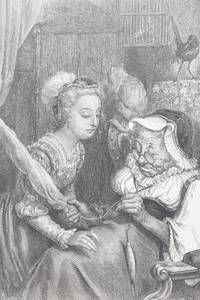
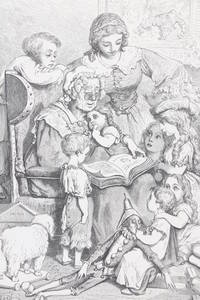
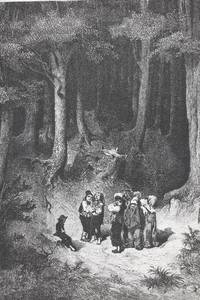
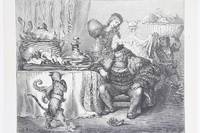
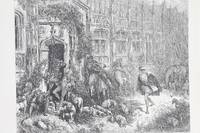
186279646Paris: Hetzel 1862. Fine. Hetzel Paris 1862 29.90 x 42.10 cm une feuille Original wood engraving signed in the plate by the artist and engraver. Composition created by Gustave Doré and engraved by François Pannemaker on China paper and mounted on Dutch laid paper at the request of publisher Hetzel to illustrate his folio edition of Perrault's Contes in 1862. A very light marginal dampstain not affecting the design as well as some soiling in the left margin. These illustrations of the Contes are considered the most successful of this text: Gustave Doré offers an unprecedented dramatic vision. With him everything contributes to the dramatization of the tale from the theatrical staging of the tableau to the smallest details that generate terrifying realism through the technique known as ""tinted wood."" He uses India ink or gouache previously diluted as required by the ""wash"" technique. For Perrault's tales the eleven best engravers of the time were enlisted to engrave the forty wood plates with the burin: Pannemaker Pisan Pierdon Maurand Boetzel Brevière Hébert Deschamps Dumont Delduc and Fagnon. Gustave Doré's work in illustrating the Contes is essential; he does not reduce engraving to its ornamental function but transforms it into a true object of narration. These illustrations are Doré's most famous works and immediately received enthusiastic reviews notably that of Sainte-Beuve in Les Nouveaux lundis December 23 1861: ""Un Perrault comme il n'y en eut jamais jusqu'ici et comme il ne s'en verra plus. . Je ne puis que dire que ces dessins me semblent fort beaux d'un tour riche et opulent qu'ils ont un caractère grandiose qui renouvelle l'aspect de ces humbles contes et leur rend de leur premier merveilleux antérieur à Perrault même."" ""A Perrault the likes of which has never existed until now and the likes of which will never be seen again. . I can only say that these drawings seem very beautiful to me of a rich and opulent style that they have a grandiose character that renews the aspect of these humble tales and restores to them their first marvelous quality that preceded Perrault himself."" Hetzel unknown
186279633Paris: Hetzel 1862. Fine. Hetzel Paris 1862 29.90 x 42.10 cm une feuille Original wood engraving signed on the plate by the artist and engraver. Composition created by Gustave Doré and engraved by François Pannemaker on chine collé mounted on Holland laid paper commissioned by publisher Hetzel to illustrate his folio edition of Perrault's Contes in 1862. A light marginal dampstain not affecting the design. These illustrations for the Contes are considered the most successful of this text: Gustave Doré offers an unprecedented dramatic vision. With him everything contributes to the dramatization of the tale from the theatrical staging of the tableau to the smallest details that generate terrifying realism thanks to the technique known as ""tinted wood."" He uses India ink or gouache previously diluted as required by the ""wash"" technique. For Perrault's tales the eleven best engravers of the period were enlisted to engrave with burin the forty wood plates: Pannemaker Pisan Pierdon Maurand Boetzel Brevière Hébert Deschamps Dumont Delduc and Fagnon. Gustave Doré's work in illustrating the Contes is paramount; he does not reduce engraving to its ornamental function but transforms it into a true object of narration. These illustrations are Doré's most famous works and immediately received enthusiastic reviews notably that of Sainte-Beuve in Les Nouveaux lundis December 23 1861: ""Un Perrault comme il n'y en eut jamais jusqu'ici et comme il ne s'en verra plus. . Je ne puis que dire que ces dessins me semblent fort beaux d'un tour riche et opulent qu'ils ont un caractère grandiose qui renouvelle l'aspect de ces humbles contes et leur rend de leur premier merveilleux antérieur à Perrault même."" ""A Perrault like there never was before and like there will never be again. . I can only say that these drawings seem very beautiful to me of a rich and opulent manner that they have a grandiose character which renews the aspect of these humble tales and restores to them their original marvel that preceded Perrault himself."" Hetzel unknown
186279638Paris: Hetzel 1862. Fine. Hetzel Paris 1862 29.90 x 42.10 cm une feuille Original wood engraving signed on the plate by the artist and engraver. Composition created by Gustave Doré and engraved by François Pierdon on China paper and mounted on Dutch laid paper at the request of publisher Hetzel to illustrate his folio edition of Perrault's Contes in 1862. A pale marginal dampstain not touching the image as well as some worming in the margin. These illustrations for the Contes are considered the most successful for this text: Gustave Doré offers an unprecedented dramatic vision. With him everything contributes to the dramatization of the tale from the theatrical staging of the tableau to the smallest details that generate terrifying realism through the technique known as ""tinted wood."" He uses India ink or gouache previously diluted as required by the ""wash"" technique. For Perrault's tales the eleven best engravers of the period were enlisted to engrave with burin the forty wooden plates: Pannemaker Pisan Pierdon Maurand Boetzel Brevière Hébert Deschamps Dumont Delduc and Fagnon. Gustave Doré's work in illustrating the Contes is essential; he does not reduce engraving to its ornamental function but transforms it into a true object of narration. These illustrations are Doré's most famous works and immediately received enthusiastic reviews notably that of Sainte-Beuve in Les Nouveaux lundis December 23 1861: ""Un Perrault comme il n'y en eut jamais jusqu'ici et comme il ne s'en verra plus. . Je ne puis que dire que ces dessins me semblent fort beaux d'un tour riche et opulent qu'ils ont un caractère grandiose qui renouvelle l'aspect de ces humbles contes et leur rend de leur premier merveilleux antérieur à Perrault même."" ""A Perrault like there never was before and as there will never be again. . I can only say that these drawings seem very beautiful to me of a rich and opulent style that they have a grandiose character that renews the aspect of these humble tales and restores to them their original wonder that preceded even Perrault."" Hetzel unknown
186279647Paris: Hetzel 1862. Fine. Hetzel Paris 1862 29.90 x 42.10 cm une feuille Original wood engraving signed in the plate by the artist and engraver. Composition created by Gustave Doré and engraved by François Pannemaker on China paper and mounted on Holland laid paper at the request of publisher Hetzel to illustrate his folio edition of Perrault's Contes in 1862. Very faint marginal dampstain not affecting the drawing and foxing in upper margin not affecting the engraving. These illustrations of the Contes are considered the most successful of this text: Gustave Doré offers an unprecedented dramatic vision. With him everything contributes to the dramatization of the tale from the theatrical staging of the tableau to the smallest details that generate terrifying realism through the technique known as ""tinted wood"". He uses India ink or gouache previously diluted as required by the ""wash"" technique. For Perrault's tales the eleven best engravers of the period were enlisted to engrave with burin the forty wooden plates: Pannemaker Pisan Pierdon Maurand Boetzel Brevière Hébert Deschamps Dumont Delduc and Fagnon. Gustave Doré's work in illustrating the Contes is paramount; he does not reduce engraving to its ornamental function but transforms it into a true narrative object. These illustrations are Doré's most famous works and immediately received enthusiastic reviews notably that of Sainte-Beuve in Les Nouveaux lundis December 23 1861: ""Un Perrault comme il n'y en eut jamais jusqu'ici et comme il ne s'en verra plus. . Je ne puis que dire que ces dessins me semblent fort beaux d'un tour riche et opulent qu'ils ont un caractère grandiose qui renouvelle l'aspect de ces humbles contes et leur rend de leur premier merveilleux antérieur à Perrault même."" ""A Perrault like none there has ever been until now and like none will ever be seen again. . I can only say that these drawings seem very beautiful to me of a rich and opulent style that they have a grandiose character that renews the aspect of these humble tales and restores to them their first wonder prior to Perrault himself."" Hetzel unknown
186279632Paris: Hetzel 1862. Fine. Hetzel Paris 1862 29.90 x 42.10 cm une feuille Original wood engraving signed on the plate by the artist and engraver. Composition created by Gustave Doré and engraved by François Pannemaker on chine collé mounted on Holland laid paper commissioned by publisher Hetzel to illustrate his folio edition of Perrault's Contes in 1862. A light marginal dampstain not affecting the design. These illustrations for the Contes are considered the most successful of this text: Gustave Doré offers an unprecedented dramatic vision. With him everything contributes to the dramatization of the tale from the theatrical staging of the tableau to the smallest details that generate terrifying realism thanks to the technique known as ""tinted wood."" He uses India ink or gouache previously diluted as required by the ""wash"" technique. For Perrault's tales the eleven best engravers of the period were enlisted to engrave with burin the forty wood plates: Pannemaker Pisan Pierdon Maurand Boetzel Brevière Hébert Deschamps Dumont Delduc and Fagnon. Gustave Doré's work in illustrating the Contes is paramount; he does not reduce engraving to its ornamental function but transforms it into a true object of narration. These illustrations are Doré's most famous works and immediately received enthusiastic reviews notably that of Sainte-Beuve in Les Nouveaux lundis December 23 1861: ""Un Perrault comme il n'y en eut jamais jusqu'ici et comme il ne s'en verra plus. . Je ne puis que dire que ces dessins me semblent fort beaux d'un tour riche et opulent qu'ils ont un caractère grandiose qui renouvelle l'aspect de ces humbles contes et leur rend de leur premier merveilleux antérieur à Perrault même."" ""A Perrault like there never was before and like there will never be again. . I can only say that these drawings seem very beautiful to me of a rich and opulent manner that they have a grandiose character which renews the aspect of these humble tales and restores to them their original marvel that preceded Perrault himself."" Hetzel unknown
186279661Paris: Hetzel 1862. Fine. Hetzel Paris 1862 29.90 x 42.10 cm une feuille Original wood engraving signed in the plate by the artist and engraver. Composition by Gustave Doré and engraved by François Pannemaker on China paper and laid down on Dutch laid paper at the request of publisher Hetzel to illustrate his folio edition of Perrault's Contes in 1862. Worming to margins not affecting the engraving. These illustrations of the Contes are considered the most successful for this text: Gustave Doré offers an unprecedented dramatic vision. With him everything contributes to the dramatization of the tale from the theatrical staging of the tableau to the smallest details that generate terrifying realism thanks to the technique known as ""tinted wood."" He uses India ink or gouache previously diluted as required by the ""wash"" technique. For Perrault's tales the eleven best engravers of the period were employed to engrave with burin the forty wood plates: Pannemaker Pisan Pierdon Maurand Boetzel Brevière Hébert Deschamps Dumont Delduc and Fagnon. Gustave Doré's work in illustrating the Contes is paramount; he does not reduce engraving to its ornamental function but transforms it into a true object of narration. These illustrations are Doré's most famous works and immediately received enthusiastic criticism notably that of Sainte-Beuve in Les Nouveaux lundis December 23 1861: ""Un Perrault comme il n'y en eut jamais jusqu'ici et comme il ne s'en verra plus. . Je ne puis que dire que ces dessins me semblent fort beaux d'un tour riche et opulent qu'ils ont un caractère grandiose qui renouvelle l'aspect de ces humbles contes et leur rend de leur premier merveilleux antérieur à Perrault même."" ""A Perrault such as there never was until now and such as will never be seen again. . I can only say that these drawings seem very beautiful to me of a rich and opulent turn that they have a grandiose character that renews the aspect of these humble tales and restores to them their first marvelous quality prior to Perrault himself."" Hetzel unknown
186279644Paris: Hetzel 1862. Fine. Hetzel Paris 1862 29.90 x 42.10 cm une feuille Original wood engraving signed in the plate by the artist and engraver. Composition created by Gustave Doré and engraved by François Pannemaker on China paper and mounted on Dutch laid paper at the request of publisher Hetzel to illustrate his folio edition of Perrault's Contes in 1862. A faint marginal dampstain not affecting the design as well as some spotting in the margins. These illustrations of the Contes are considered the most successful of this text: Gustave Doré offers an unprecedented dramatic vision. With him everything contributes to the dramatization of the tale from the theatrical staging of the tableau to the smallest details that generate terrifying realism thanks to the technique known as ""tinted wood."" He uses India ink or gouache previously diluted as required by the ""wash"" technique. For Perrault's tales the eleven best engravers of the time were called upon to engrave with burin the forty wooden plates: Pannemaker Pisan Pierdon Maurand Boetzel Brevière Hébert Deschamps Dumont Delduc and Fagnon. Gustave Doré's work in illustrating the Contes is paramount; he does not reduce engraving to its ornamental function but transforms it into a true narrative object. These illustrations are Doré's most famous works and immediately received enthusiastic criticism notably that of Sainte-Beuve in Les Nouveaux lundis December 23 1861: ""Un Perrault comme il n'y en eut jamais jusqu'ici et comme il ne s'en verra plus. . Je ne puis que dire que ces dessins me semblent fort beaux d'un tour riche et opulent qu'ils ont un caractère grandiose qui renouvelle l'aspect de ces humbles contes et leur rend de leur premier merveilleux antérieur à Perrault même."" ""A Perrault as there never was before and as there will never be again. . I can only say that these drawings seem very beautiful to me rich and opulent in character that they have a grandiose quality that renews the aspect of these humble tales and restores to them their original wonder that preceded Perrault himself."" Hetzel unknown
186279662Paris: Hetzel 1862. Fine. Hetzel Paris 1862 29.90 x 42.10 cm une feuille Original wood engraving signed in the plate by the artist and engraver. Composition by Gustave Doré and engraved by François Pannemaker on China paper and laid down on Dutch laid paper at the request of publisher Hetzel to illustrate his folio edition of Perrault's Contes in 1862. Rare worming to margins not affecting the engraving and crease to lower left corner of margin. These illustrations of the Contes are considered the most successful for this text: Gustave Doré offers an unprecedented dramatic vision. With him everything contributes to the dramatization of the tale from the theatrical staging of the tableau to the smallest details that generate terrifying realism thanks to the technique known as ""tinted wood."" He uses India ink or gouache previously diluted as required by the ""wash"" technique. For Perrault's tales the eleven best engravers of the period were employed to engrave with burin the forty wood plates: Pannemaker Pisan Pierdon Maurand Boetzel Brevière Hébert Deschamps Dumont Delduc and Fagnon. Gustave Doré's work in illustrating the Contes is paramount; he does not reduce engraving to its ornamental function but transforms it into a true object of narration. These illustrations are Doré's most famous works and immediately received enthusiastic criticism notably that of Sainte-Beuve in Les Nouveaux lundis December 23 1861: ""Un Perrault comme il n'y en eut jamais jusqu'ici et comme il ne s'en verra plus. . Je ne puis que dire que ces dessins me semblent fort beaux d'un tour riche et opulent qu'ils ont un caractère grandiose qui renouvelle l'aspect de ces humbles contes et leur rend de leur premier merveilleux antérieur à Perrault même."" ""A Perrault such as there never was until now and such as will never be seen again. . I can only say that these drawings seem very beautiful to me of a rich and opulent turn that they have a grandiose character that renews the aspect of these humble tales and restores to them their first marvelous quality prior to Perrault himself."" Hetzel unknown
186279660Paris: Hetzel 1862. Fine. Hetzel Paris 1862 29.90 x 42.10 cm une feuille Original wood engraving signed in the plate by the artist and engraver. Composition created by Gustave Doré and engraved by François Pannemaker on China paper and mounted on Holland laid paper at the request of publisher Hetzel to illustrate his folio edition of Perrault's Tales in 1862. Some soiling and foxing in the margins not affecting the engraving. These illustrations of the Tales are considered the most successful of this text: Gustave Doré offers an unprecedented dramatic vision. With him everything contributes to the dramatization of the tale from the theatrical staging of the tableau to the smallest details that generate terrifying realism through the technique known as ""tinted wood."" He uses India ink or gouache previously diluted as required by the ""wash"" technique. For Perrault's tales the eleven best engravers of the time contributed to engrave with burin the forty wooden plates: Pannemaker Pisan Pierdon Maurand Boetzel Brevière Hébert Deschamps Dumont Delduc and Fagnon. Gustave Doré's work in illustrating the Tales is essential; he does not reduce engraving to its ornamental function but transforms it into a true narrative object. These illustrations are Doré's most famous works and immediately received enthusiastic criticism notably that of Sainte-Beuve in Les Nouveaux lundis December 23 1861: ""Un Perrault comme il n'y en eut jamais jusqu'ici et comme il ne s'en verra plus. . Je ne puis que dire que ces dessins me semblent fort beaux d'un tour riche et opulent qu'ils ont un caractère grandiose qui renouvelle l'aspect de ces humbles contes et leur rend de leur premier merveilleux antérieur à Perrault même."" ""A Perrault such as there never was until now and such as will never be seen again. . I can only say that these drawings seem very beautiful to me of a rich and opulent style that they have a grandiose character which renews the aspect of these humble tales and restores to them their first marvelous quality anterior to Perrault himself."" Hetzel unknown
186279650Paris: Hetzel 1862. Fine. Hetzel Paris 1862 29.90 x 42.10 cm une feuille Original wood engraving signed in the plate by the artist and engraver. Composition created by Gustave Doré and engraved by François Pannemaker on China paper and mounted on Holland laid paper at the request of publisher Hetzel to illustrate his folio edition of Perrault's Contes in 1862. Light lack to lower right corner of margin not affecting the engraving. These illustrations of the Contes are considered the most successful of this text: Gustave Doré offers an unprecedented dramatic vision. With him everything contributes to the dramatization of the tale from the theatrical staging of the tableau to the smallest details that generate terrifying realism thanks to the technique known as ""tinted wood"". He uses India ink or gouache previously diluted as required by the ""wash"" technique. For Perrault's tales the eleven best engravers of the period were enlisted to engrave with burin the forty wooden plates: Pannemaker Pisan Pierdon Maurand Boetzel Brevière Hébert Deschamps Dumont Delduc and Fagnon. Gustave Doré's work in illustrating the Contes is paramount; he does not reduce engraving to its ornamental function but transforms it into a true object of narration. These illustrations are Doré's most famous works and immediately received enthusiastic reviews notably that of Sainte-Beuve in Les Nouveaux lundis December 23 1861: ""Un Perrault comme il n'y en eut jamais jusqu'ici et comme il ne s'en verra plus. . Je ne puis que dire que ces dessins me semblent fort beaux d'un tour riche et opulent qu'ils ont un caractère grandiose qui renouvelle l'aspect de ces humbles contes et leur rend de leur premier merveilleux antérieur à Perrault même."" ""A Perrault such as there never was before and as will never be seen again. . I can only say that these drawings seem very beautiful to me of a rich and opulent character that they have a grandiose quality that renews the aspect of these humble tales and restores to them their original wonder that predates Perrault himself."" Hetzel unknown
036508395X.Ghardcover. Good. Access codes and supplements are not guaranteed with used items. May be an ex-library book. hardcover
1330324080.Gpaperback. Good. Access codes and supplements are not guaranteed with used items. May be an ex-library book. paperback
2002458846London: The Maruts Press 2002. Paperback in very good condition. Signed by the author on the half title page. Limited edition; printed in an edition of 100 copies. Item comes in a slipcase which has some minor wear throughout. The slightly edgeworn cover has some light marks in a few places. The binding is sound; all text and illustrations are clear. CM. By Author. Paperback. Very Good. Used. The Maruts Press Paperback
2025x-0300282273Clark Art Inst 2025. Paperback. New. 330 pages. 9.51x7.01x9.50 inches. Clark Art Inst paperback
1965003294New York: Anti - Defamation League of B'nai B'rith 1965. Softcover. Very Good. Covers with wrap-around photo of a Klan gathering 40 pages 10-in tall many photographs. No date circa 1965. Dore Schary author of the preface was chairman of the Anti-Defamation League of B'nai B'rith. This report about Klan violence includes an 11-page partial chronology of violence and intimidation in the South from 1962 to 1965. Covers with light brown tone a bit of soil to rear cover. Anti - Defamation League of B'nai B'rith paperback
99999Paris Hachette 1868. 2° Frontisspitz-Portrait von Sandos LX 864 S. 84 blattgr. Abb. 248 Vignetten Schwarzes HLdr. der Zeit Rundumgoldschnitt Deckel berieben u. etwas beschienen die ersten u letzten Blätter stärker stockfleckig sonst meist sauber dennoch gutes Ex. Eines der schönsten Bücher von la Fontaine mit den eindrucksvollen Illustr. von Doré. Text franz. 010 Paris, Hachette, 1868 unknown
1011W997598Hardcover. New. Reliure éditeur skyvertex marron titre et fers or Fables Tome I. Culs-de-lampe et illustrations hors-texte dont 1 portrait de Jean de La Fontaine en frontispice par Gustave Doré. 271 pps. Guarantee hardcover
20152-2366620276Biotope Editions 2015. Hardcover. New. 192 pages. French language. 9.53x6.69x0.63 inches. Biotope Editions hardcover
A9780231185226Hardback. New. Novel Sounds shows how Southern writers turned to rock music and its technologies-tape radio vinyl-to develop the "rock novel." Florence Dore considers the work of writers like William Faulkner Flannery O'Connor and William Styron alongside Bessie Smith Lead Belly and Bob Dylan to uncover deep historical links between rock and literature. hardcover
A9780804751872Hardback. New. The Novel and the Obscene challenges our vision of early twentieth-century America as sexually progressive by identifying a resonant silence at the heart of the modernist American novel-a narrative mode that renders censorship symbolic at the very moment of its legal demise. hardcover
201197065Ridinghouse. New. 2011. Paperback. 1905464444 . FREE UPGRADE to Courier/Priority Shipping Upon Request - IN STOCK AND IMMEDIATELY AVAILABLE FOR SHIPMENT - Flawless copy brand new pristine never opened -- 294 pages. -- with a bonus offer-- . Ridinghouse paperback
57467Somogy éditions d'art 2003 In-8 25 cm 48pp. illustr. reliure cart. de l'éditeur Nb-0256 unknown
9788544215180JUSPODIVM EDITORA. new. Eric elaborou um trabalho destinado a estudar tema dos mais importantes a inconstitucionalidade por omiss�o. Para isso estabeleceu alguns marcos te��ricos entre os quais se destaca a ideia de for��a normativa da Constitui��o. Descreveu experi�ncias de ordenamentos jur�dicos estrangeiros especialmente da Alemanha Portugal e Espanha cujos sistemas constitucionais s�o de extrema relev�ncia para a compreens�o do Direito Constitucional brasileiro. Enfrentou ent�o o dif�cil tema da inconstitucionalidade por omiss�o identificando seus pressu��postos ou elementos caracterizadores. Destaca-se no trabalho de Eric Fernandes a anǭlise de casos importantes de inconstitucionalidade por omiss�o identificados no direito brasileiro indo muito alǸm do clǭssico exemplo do direito de greve dos servidores p�blicos e examinando casos como o da omiss�o quanto �� disciplina normativa de limita����es constitucionais ao poder de tributar. Vem depois a parte mais relevante do livro: o estudo dos remǸdios destinados a enfrentar e resolver os problemas decorrentes da inconstitucionalidade por omiss�o examinando com profundidade e profici�ncia o mandado de injun��o e a a��o direta de inconstitucionalidade por omiss�o. Alexandre Freitas C�mara JUSPODIVM EDITORA unknown