Gustave DORE - Heliodore PISANBiblio.com

2 060 résultats
186347269Paris: Hetzel 1863. Fine. Hetzel Paris 1863 43 x 21 cm une feuille First edition. Wood engraving signed in the plate by the artist. Plate created specifically for the illustration of Cervantes' Don Quixote for the 1863 Hachette edition. Gustave Doré first traveled to Spain in 1855 in the company of Théophile Gautier and publisher Paul Dalloz. In 1861 responding to a commission from the journal Le Tour du monde he returned there with Baron Jean Charles Davillier a knowledgeable Hispanophile who would recount their journey in his Voyage en Espagne. Doré went there primarily with a view to illustrating Don Quixote: ""Je me rends donc dans la patrie de cet illustre hidalgo pour étudier tous les lieux qu'il a parcourus et remplis de ses exploits et faire ainsi une chose qui aura son parfum local"" ""I am therefore going to the homeland of this illustrious hidalgo to study all the places he has traveled through and filled with his exploits and thus create something that will have its local flavor"". Gustave Doré would thus conduct several working sessions with Louis Viardot translator of Cervantes' text. Cervantes' novel ranks among the most illustrated narratives in European literature but Doré wanted to surpass his predecessors Tony Johannot Grandville Daumier. Upon its publication in 1863 the work would be the subject of unanimous praise notably from Emile Zola: ""On appelle ça illustrer un ouvrage : moi je prétends que c'est le refaire. Au lieu d'un chef-d'oeuvre l'esprit humain en compte deux"" ""They call that illustrating a work: I claim that it's remaking it. Instead of one masterpiece the human spirit now counts two"". See our other engravings by Gustave Doré Gustave Doré L'Imaginaire au pouvoir Musée d'Orsay 2014 Virtual exhibition on Gustave Doré on the Gallica website Hetzel unknown
186347258Paris: Hetzel 1863. Fine. Hetzel Paris 1863 31 x 43 cm une feuille First edition. Wood engraving signed in the plate by the artist. Plate specially created for the illustration of Cervantes' Don Quixote for the 1863 Hachette edition. Gustave Doré first traveled to Spain in 1855 in the company of Théophile Gautier and publisher Paul Dalloz. In 1861 responding to a commission from the journal Le Tour du monde he returned there with Baron Jean Charles Davillier an avid hispanophile who would recount their journey in his Voyage en Espagne. Doré went there primarily with a view to illustrating Don Quixote: ""I am therefore going to the homeland of this illustrious hidalgo to study all the places he traveled through and filled with his exploits and thus create something that will have its local flavor"". Gustave Doré would thus conduct several work sessions with Louis Viardot translator of Cervantes' text. Cervantes' novel is among the most illustrated stories in European literature but Doré wanted to surpass his predecessors Tony Johannot Grandville Daumier. Upon its publication in 1863 the work would be the subject of unanimous praise notably from Emile Zola: ""They call that illustrating a work: I maintain that it is remaking it. Instead of one masterpiece the human spirit now counts two"". See our other engravings by Gustave Doré Gustave Doré L'Imaginaire au pouvoir Musée d'Orsay 2014 Virtual exhibition around Gustave Doré on the Gallica website Hetzel unknown
186347313Paris: Hetzel 1863. Fine. Hetzel Paris 1863 21 x 43 cm une feuille First edition. Wood engraving signed in the plate by the artist. Plate created specifically for the illustration of Cervantes' Don Quixote for the Hachette edition of 1863. Gustave Doré first traveled to Spain in 1855 in the company of Théophile Gautier and publisher Paul Dalloz. In 1861 responding to a commission from the journal Le Tour du monde he returned there with Baron Jean Charles Davillier an experienced hispanophile who would recount their journey in his Voyage en Espagne. Doré went there primarily with a view to illustrating Don Quixote: ""I am therefore going to the homeland of this illustrious hidalgo to study all the places he traveled through and filled with his exploits and thus create something that will have its local flavor"". Gustave Doré would thus conduct several working sessions with Louis Viardot translator of Cervantes' text. Cervantes' novel is among the most illustrated stories in European literature but Doré wanted to surpass his predecessors Tony Johannot Grandville Daumier. When it appeared in 1863 the work received unanimous praise notably from Emile Zola: ""They call that illustrating a work: I contend that it is remaking it. Instead of one masterpiece the human spirit counts two"". See our other engravings by Gustave Doré Gustave Doré L'Imaginaire au pouvoir Musée d'Orsay 2014 Virtual exhibition on Gustave Doré on the Gallica website Hetzel unknown
186347266Paris: Hetzel 1863. Fine. Hetzel Paris 1863 31 x 43 cm une feuille First edition. Wood engraving signed in the plate by the artist. Plate created specifically for the illustration of Cervantes' Don Quixote for the 1863 Hachette edition. Gustave Doré first traveled to Spain in 1855 in the company of Théophile Gautier and publisher Paul Dalloz. In 1861 responding to a commission from the journal Le Tour du monde he returned there with Baron Jean Charles Davillier an avid hispanophile who would recount their journey in his Voyage en Espagne. Doré went there primarily with a view to illustrating Don Quixote: ""Je me rends donc dans la patrie de cet illustre hidalgo pour étudier tous les lieux qu'il a parcourus et remplis de ses exploits et faire ainsi une chose qui aura son parfum local"" ""I am therefore going to the homeland of this illustrious hidalgo to study all the places he traveled through and filled with his exploits and thus create something that will have its local flavor"". Gustave Doré would thus hold several working sessions with Louis Viardot translator of Cervantes' text. Cervantes' novel is among the most illustrated stories in European literature but Doré wanted to surpass his predecessors Tony Johannot Grandville Daumier. Upon its publication in 1863 the work would be the object of unanimous praise notably from Emile Zola: ""On appelle ça illustrer un ouvrage : moi je prétends que c'est le refaire. Au lieu d'un chef-d'oeuvre l'esprit humain en compte deux"" ""They call that illustrating a work: I maintain that it's remaking it. Instead of one masterpiece the human spirit now counts two"". See our other engravings by Gustave Doré Gustave Doré L'Imaginaire au pouvoir Musée d'Orsay 2014 Virtual exhibition on Gustave Doré on the Gallica website Hetzel unknown
186347301Paris: Hetzel 1863. Fine. Hetzel Paris 1863 21 x 43 cm une feuille First edition. Wood engraving signed in the plate by the artist. Plate created specifically for the illustration of Cervantes' Don Quixote for the 1863 Hachette edition. Gustave Doré first traveled to Spain in 1855 accompanied by Théophile Gautier and publisher Paul Dalloz. In 1861 responding to a commission from the journal Le Tour du monde he returned there with Baron Jean Charles Davillier an informed hispanophile who would recount their journey in his Voyage en Espagne. Doré went there primarily with a view to illustrating Don Quixote: ""Je me rends donc dans la patrie de cet illustre hidalgo pour étudier tous les lieux qu'il a parcourus et remplis de ses exploits et faire ainsi une chose qui aura son parfum local"" ""I am therefore going to the homeland of this illustrious hidalgo to study all the places he traveled through and filled with his exploits and thus create something that will have its local flavor"". Gustave Doré would thus conduct several working sessions with Louis Viardot translator of Cervantes' text. Cervantes' novel is among the most illustrated narratives in European literature but Doré wanted to surpass his predecessors Tony Johannot Grandville Daumier. Upon its publication in 1863 the work would receive unanimous praise notably from Emile Zola: ""On appelle ça illustrer un ouvrage : moi je prétends que c'est le refaire. Au lieu d'un chef-d'oeuvre l'esprit humain en compte deux"" ""They call that illustrating a work: I maintain that it is remaking it. Instead of one masterpiece the human spirit now counts two"". See our other engravings by Gustave Doré Gustave Doré L'Imaginaire au pouvoir Musée d'Orsay 2014 Virtual exhibition on Gustave Doré on the Gallica website Hetzel unknown
186347294Paris: Hetzel 1863. Fine. Hetzel Paris 1863 21 x 43 cm une feuille First edition. Wood engraving signed in the plate by the artist. Some very discreet worming. Plate created specifically for the illustration of Cervantes' Don Quixote in the Hachette edition of 1863. Gustave Doré first travelled to Spain in 1855 in the company of Théophile Gautier and the publisher Paul Dalloz. In 1861 responding to a commission from the journal Le Tour du monde he returned there with Baron Jean Charles Davillier a learned hispanophile who would recount their journey in his Voyage en Espagne. Doré went there primarily with a view to illustrating Don Quixote: ""Je me rends donc dans la patrie de cet illustre hidalgo pour étudier tous les lieux qu'il a parcourus et remplis de ses exploits et faire ainsi une chose qui aura son parfum local"" ""I am therefore going to the homeland of this illustrious hidalgo to study all the places he traversed and filled with his exploits and thus create something that will have its local flavour"". Gustave Doré would thus undertake several working sessions with Louis Viardot translator of Cervantes' text. Cervantes' novel ranks among the most illustrated narratives in European literature but Doré wanted to surpass his predecessors Tony Johannot Grandville Daumier. Upon its publication in 1863 the work would receive unanimous praise notably from Emile Zola: ""On appelle ça illustrer un ouvrage : moi je prétends que c'est le refaire. Au lieu d'un chef-d'oeuvre l'esprit humain en compte deux"" ""They call that illustrating a work: I maintain that it is remaking it. Instead of one masterpiece the human spirit now counts two"". See our other engravings by Gustave Doré Gustave Doré L'Imaginaire au pouvoir Musée d'Orsay 2014 Virtual exhibition on Gustave Doré on the Gallica website Hetzel unknown
186347310Paris: Hetzel 1863. Fine. Hetzel Paris 1863 21 x 43 cm une feuille First edition. Wood engraving signed in the plate by the artist. Plate created specifically for the illustration of Cervantes' Don Quixote for the Hachette edition of 1863. Gustave Doré first traveled to Spain in 1855 in the company of Théophile Gautier and publisher Paul Dalloz. In 1861 responding to a commission from the journal Le Tour du monde he returned there with Baron Jean Charles Davillier a knowledgeable hispanophile who would recount their journey in his Voyage en Espagne. Doré went there primarily with a view to illustrating Don Quixote: ""I am therefore going to the homeland of this illustrious hidalgo to study all the places he traveled through and filled with his exploits and thus create something that will have its local flavor"". Gustave Doré would thus conduct several working sessions with Louis Viardot translator of Cervantes' text. Cervantes' novel ranks among the most illustrated stories in European literature but Doré wanted to surpass his predecessors Tony Johannot Grandville Daumier. Upon its publication in 1863 the work would be the subject of unanimous praise notably from Émile Zola: ""They call that illustrating a work: I maintain that it's remaking it. Instead of one masterpiece the human spirit now counts two"". See our other engravings by Gustave Doré Gustave Doré L'Imaginaire au pouvoir Musée d'Orsay 2014 Virtual exhibition on Gustave Doré on the Gallica website Hetzel unknown
186347261Paris: Hetzel 1863. Fine. Hetzel Paris 1863 31 x 43 cm une feuille First edition. Wood engraving signed in the plate by the artist. Plate specially created for the illustration of Cervantes' Don Quixote for the Hachette edition of 1863. Gustave Doré first traveled to Spain in 1855 in the company of Théophile Gautier and publisher Paul Dalloz. In 1861 responding to a commission from the journal Le Tour du monde he returned there with Baron Jean Charles Davillier a knowledgeable hispanophile who would recount their journey in his Voyage en Espagne. Doré went there primarily with a view to illustrating Don Quichotte: ""Je me rends donc dans la patrie de cet illustre hidalgo pour étudier tous les lieux qu'il a parcourus et remplis de ses exploits et faire ainsi une chose qui aura son parfum local"" ""I am therefore going to the homeland of this illustrious hidalgo to study all the places he traveled through and filled with his exploits and thus create something that will have its local flavor"". Gustave Doré would thus hold several working sessions with Louis Viardot translator of Cervantes' text. Cervantes' novel ranks among the most illustrated stories in European literature but Doré wanted to surpass his predecessors Tony Johannot Grandville Daumier. Upon its publication in 1863 the work would be the subject of unanimous praise notably from Emile Zola: ""On appelle ça illustrer un ouvrage : moi je prétends que c'est le refaire. Au lieu d'un chef-d'oeuvre l'esprit humain en compte deux"" ""They call that illustrating a work: I claim it's remaking it. Instead of one masterpiece the human mind now counts two"". See our other engravings by Gustave Doré Gustave Doré L'Imaginaire au pouvoir Musée d'Orsay 2014 Virtual exhibition on Gustave Doré on the Gallica website Hetzel unknown
186347283Paris: Hetzel 1863. Fine. Hetzel Paris 1863 21 x 43 cm une feuille First edition. Wood engraving signed in the plate by the artist. Some pale spotting in the margin of the plate. Plate created specifically for the illustration of Don Quixote by Cervantes for the Hachette edition of 1863. Gustave Doré first traveled to Spain in 1855 in the company of Théophile Gautier and publisher Paul Dalloz. In 1861 responding to a commission from the journal Le Tour du monde he returned there with Baron Jean Charles Davillier a knowledgeable Hispanophile who would recount their journey in his Voyage en Espagne. Doré went there primarily with a view to illustrating Don Quixote: ""Je me rends donc dans la patrie de cet illustre hidalgo pour étudier tous les lieux qu'il a parcourus et remplis de ses exploits et faire ainsi une chose qui aura son parfum local"" ""I am therefore going to the homeland of this illustrious hidalgo to study all the places he traveled through and filled with his exploits and thus create something that will have its local flavor"". Gustave Doré would thus conduct several working sessions with Louis Viardot translator of Cervantes' text. Cervantes' novel counts among the most illustrated stories in European literature but Doré wanted to surpass his predecessors Tony Johannot Grandville Daumier. When it appeared in 1863 the work would be the subject of unanimous praise notably from Émile Zola: ""On appelle ça illustrer un ouvrage : moi je prétends que c'est le refaire. Au lieu d'un chef-d'oeuvre l'esprit humain en compte deux"" ""They call that illustrating a work: I maintain that it is remaking it. Instead of one masterpiece the human spirit counts two"". See our other engravings by Gustave Doré Gustave Doré L'Imaginaire au pouvoir Musée d'Orsay 2014 Virtual exhibition on Gustave Doré on the Gallica website Hetzel unknown
186347295Paris: Hetzel 1863. Fine. Hetzel Paris 1863 21 x 43 cm une feuille First edition. Wood engraving signed in the plate by the artist. Plate created specifically for the illustration of Cervantes' Don Quixote in the Hachette edition of 1863. Gustave Doré first travelled to Spain in 1855 in the company of Théophile Gautier and the publisher Paul Dalloz. In 1861 responding to a commission from the journal Le Tour du monde he returned there with Baron Jean Charles Davillier a learned hispanophile who would recount their journey in his Voyage en Espagne. Doré went there primarily with a view to illustrating Don Quixote: ""Je me rends donc dans la patrie de cet illustre hidalgo pour étudier tous les lieux qu'il a parcourus et remplis de ses exploits et faire ainsi une chose qui aura son parfum local"" ""I am therefore going to the homeland of this illustrious hidalgo to study all the places he traversed and filled with his exploits and thus create something that will have its local flavour"". Gustave Doré would thus undertake several working sessions with Louis Viardot translator of Cervantes' text. Cervantes' novel ranks among the most illustrated narratives in European literature but Doré wanted to surpass his predecessors Tony Johannot Grandville Daumier. Upon its publication in 1863 the work would receive unanimous praise notably from Emile Zola: ""On appelle ça illustrer un ouvrage : moi je prétends que c'est le refaire. Au lieu d'un chef-d'oeuvre l'esprit humain en compte deux"" ""They call that illustrating a work: I maintain that it is remaking it. Instead of one masterpiece the human spirit now counts two"". See our other engravings by Gustave Doré Gustave Doré L'Imaginaire au pouvoir Musée d'Orsay 2014 Virtual exhibition on Gustave Doré on the Gallica website Hetzel unknown
186347307Paris: Hetzel 1863. Fine. Hetzel Paris 1863 21 x 43 cm une feuille First edition. Wood engraving signed in the plate by the artist. A long tear without loss to the left margin of the plate. Plate created specifically for the illustration of Cervantes' Don Quixote for the 1863 Hachette edition. Gustave Doré first traveled to Spain in 1855 accompanied by Théophile Gautier and publisher Paul Dalloz. In 1861 responding to a commission from the journal Le Tour du monde he returned there with Baron Jean Charles Davillier an informed hispanophile who would recount their journey in his Voyage en Espagne. Doré went there primarily with a view to illustrating Don Quixote: ""Je me rends donc dans la patrie de cet illustre hidalgo pour étudier tous les lieux qu'il a parcourus et remplis de ses exploits et faire ainsi une chose qui aura son parfum local"" ""I am therefore going to the homeland of this illustrious hidalgo to study all the places he traveled through and filled with his exploits and thus create something that will have its local flavor"". Gustave Doré would thus conduct several working sessions with Louis Viardot translator of Cervantes' text. Cervantes' novel is among the most illustrated narratives in European literature but Doré wanted to surpass his predecessors Tony Johannot Grandville Daumier. Upon its publication in 1863 the work would receive unanimous praise notably from Emile Zola: ""On appelle ça illustrer un ouvrage : moi je prétends que c'est le refaire. Au lieu d'un chef-d'oeuvre l'esprit humain en compte deux"" ""They call that illustrating a work: I maintain that it is remaking it. Instead of one masterpiece the human spirit now counts two"". See our other engravings by Gustave Doré Gustave Doré L'Imaginaire au pouvoir Musée d'Orsay 2014 Virtual exhibition on Gustave Doré on the Gallica website Hetzel unknown
186347267Paris: Hetzel 1863. Fine. Hetzel Paris 1863 43 x 21 cm une feuille First edition. Wood engraving signed in the plate by the artist. Plate created specifically for the illustration of Cervantes' Don Quixote for the 1863 Hachette edition. Gustave Doré first traveled to Spain in 1855 in the company of Théophile Gautier and publisher Paul Dalloz. In 1861 responding to a commission from the journal Le Tour du monde he returned there with Baron Jean Charles Davillier a knowledgeable Hispanophile who would recount their journey in his Voyage en Espagne. Doré went there primarily with a view to illustrating Don Quixote: ""Je me rends donc dans la patrie de cet illustre hidalgo pour étudier tous les lieux qu'il a parcourus et remplis de ses exploits et faire ainsi une chose qui aura son parfum local"" ""I am therefore going to the homeland of this illustrious hidalgo to study all the places he has traveled through and filled with his exploits and thus create something that will have its local flavor"". Gustave Doré would thus conduct several working sessions with Louis Viardot translator of Cervantes' text. Cervantes' novel ranks among the most illustrated narratives in European literature but Doré wanted to surpass his predecessors Tony Johannot Grandville Daumier. Upon its publication in 1863 the work would be the subject of unanimous praise notably from Emile Zola: ""On appelle ça illustrer un ouvrage : moi je prétends que c'est le refaire. Au lieu d'un chef-d'oeuvre l'esprit humain en compte deux"" ""They call that illustrating a work: I claim that it's remaking it. Instead of one masterpiece the human spirit now counts two"". See our other engravings by Gustave Doré Gustave Doré L'Imaginaire au pouvoir Musée d'Orsay 2014 Virtual exhibition on Gustave Doré on the Gallica website Hetzel unknown
186347262Paris: Hetzel 1863. Fine. Hetzel Paris 1863 31 x 43 cm une feuille First edition. Wood engraving signed in the plate by the artist. Plate specially created for the illustration of Cervantes' Don Quixote for the Hachette edition of 1863. Gustave Doré first traveled to Spain in 1855 in the company of Théophile Gautier and publisher Paul Dalloz. In 1861 responding to a commission from the journal Le Tour du monde he returned there with Baron Jean Charles Davillier a knowledgeable hispanophile who would recount their journey in his Voyage en Espagne. Doré went there primarily with a view to illustrating Don Quichotte: ""Je me rends donc dans la patrie de cet illustre hidalgo pour étudier tous les lieux qu'il a parcourus et remplis de ses exploits et faire ainsi une chose qui aura son parfum local"" ""I am therefore going to the homeland of this illustrious hidalgo to study all the places he traveled through and filled with his exploits and thus create something that will have its local flavor"". Gustave Doré would thus hold several working sessions with Louis Viardot translator of Cervantes' text. Cervantes' novel ranks among the most illustrated stories in European literature but Doré wanted to surpass his predecessors Tony Johannot Grandville Daumier. Upon its publication in 1863 the work would be the subject of unanimous praise notably from Emile Zola: ""On appelle ça illustrer un ouvrage : moi je prétends que c'est le refaire. Au lieu d'un chef-d'oeuvre l'esprit humain en compte deux"" ""They call that illustrating a work: I claim it's remaking it. Instead of one masterpiece the human mind now counts two"". See our other engravings by Gustave Doré Gustave Doré L'Imaginaire au pouvoir Musée d'Orsay 2014 Virtual exhibition on Gustave Doré on the Gallica website Hetzel unknown
186347291Paris: Hetzel 1863. Fine. Hetzel Paris 1863 21 x 43 cm une feuille First edition. Wood engraving signed on the plate by the artist. Plate created specifically for the illustration of Cervantes' Don Quixote for the Hachette edition of 1863. Gustave Doré first traveled to Spain in 1855 accompanied by Théophile Gautier and publisher Paul Dalloz. In 1861 responding to a commission from the journal Le Tour du monde he returned there with Baron Jean Charles Davillier an avid hispanophile who would recount their journey in his Voyage en Espagne. Doré went there primarily for the illustration of Don Quixote: ""I am therefore going to the homeland of this illustrious hidalgo to study all the places he traveled through and filled with his exploits and thus create something that will have its local flavor"". Gustave Doré would thus conduct several working sessions with Louis Viardot translator of Cervantes' text. Cervantes' novel is among the most illustrated narratives in European literature but Doré wanted to surpass his predecessors Tony Johannot Grandville Daumier. Upon its publication in 1863 the work would receive unanimous praise notably from Emile Zola: ""They call that illustrating a work: I maintain that it's remaking it. Instead of one masterpiece the human spirit now counts two"". See our other engravings by Gustave Doré Gustave Doré L'Imaginaire au pouvoir Musée d'Orsay 2014 Virtual exhibition about Gustave Doré on the Gallica website Hetzel unknown
186347282Paris: Hetzel 1863. Fine. Hetzel Paris 1863 43 x 21 cm une feuille First edition. Wood engraving signed in the plate by the artist. Pale foxing in the upper margin not affecting the engraving. Plate created specifically for the illustration of Don Quixote by Cervantes for the Hachette edition of 1863. Gustave Doré first traveled to Spain in 1855 in the company of Théophile Gautier and publisher Paul Dalloz. In 1861 responding to a commission from the journal Le Tour du monde he returned there with Baron Jean Charles Davillier a knowledgeable Hispanophile who would recount their journey in his Voyage en Espagne. Doré went there primarily with a view to illustrating Don Quixote: ""Je me rends donc dans la patrie de cet illustre hidalgo pour étudier tous les lieux qu'il a parcourus et remplis de ses exploits et faire ainsi une chose qui aura son parfum local"" ""I am therefore going to the homeland of this illustrious hidalgo to study all the places he traveled through and filled with his exploits and thus create something that will have its local flavor"". Gustave Doré would thus conduct several working sessions with Louis Viardot translator of Cervantes' text. Cervantes' novel counts among the most illustrated stories in European literature but Doré wanted to surpass his predecessors Tony Johannot Grandville Daumier. When it appeared in 1863 the work would be the subject of unanimous praise notably from Émile Zola: ""On appelle ça illustrer un ouvrage : moi je prétends que c'est le refaire. Au lieu d'un chef-d'oeuvre l'esprit humain en compte deux"" ""They call that illustrating a work: I maintain that it is remaking it. Instead of one masterpiece the human spirit counts two"". See our other engravings by Gustave Doré Gustave Doré L'Imaginaire au pouvoir Musée d'Orsay 2014 Virtual exhibition on Gustave Doré on the Gallica website Hetzel unknown
186347292Paris: Hetzel 1863. Fine. Hetzel Paris 1863 21 x 43 cm une feuille First edition. Wood engraving signed in the plate by the artist. A small foxing spot in the upper margin not touching the engraving. Plate created specifically for the illustration of Cervantes' Don Quixote for the Hachette edition of 1863. Gustave Doré traveled to Spain first in 1855 in the company of Théophile Gautier and publisher Paul Dalloz. In 1861 responding to a commission from the journal Le Tour du monde he returned there with Baron Jean Charles Davillier a knowledgeable hispanophile who would recount their journey in his Voyage en Espagne. Doré went there mainly with a view to illustrating Don Quixote: ""I am therefore going to the homeland of this illustrious hidalgo to study all the places he traveled through and filled with his exploits and thus create something that will have its local flavor"". Gustave Doré would thus conduct several working sessions with Louis Viardot translator of Cervantes' text. Cervantes' novel is among the most illustrated narratives in European literature but Doré wanted to surpass his predecessors Tony Johannot Grandville Daumier. Upon its publication in 1863 the work would be the subject of unanimous praise notably from Émile Zola: ""They call that illustrating a work: I maintain that it's remaking it. Instead of one masterpiece the human spirit counts two"". See our other engravings by Gustave Doré Gustave Doré L'Imaginaire au pouvoir Musée d'Orsay 2014 Virtual exhibition about Gustave Doré on the Gallica website Hetzel unknown
186347264Paris: Hetzel 1863. Fine. Hetzel Paris 1863 31 x 43 cm une feuille First edition. Wood engraving signed in the plate by the artist. Plate created specifically for the illustration of Cervantes' Don Quixote for the 1863 Hachette edition. Gustave Doré first traveled to Spain in 1855 in the company of Théophile Gautier and publisher Paul Dalloz. In 1861 responding to a commission from the journal Le Tour du monde he returned there with Baron Jean Charles Davillier an avid hispanophile who would recount their journey in his Voyage en Espagne. Doré went there primarily with a view to illustrating Don Quixote: ""Je me rends donc dans la patrie de cet illustre hidalgo pour étudier tous les lieux qu'il a parcourus et remplis de ses exploits et faire ainsi une chose qui aura son parfum local"" ""I am therefore going to the homeland of this illustrious hidalgo to study all the places he traveled through and filled with his exploits and thus create something that will have its local flavor"". Gustave Doré would thus hold several working sessions with Louis Viardot translator of Cervantes' text. Cervantes' novel is among the most illustrated stories in European literature but Doré wanted to surpass his predecessors Tony Johannot Grandville Daumier. Upon its publication in 1863 the work would be the object of unanimous praise notably from Emile Zola: ""On appelle ça illustrer un ouvrage : moi je prétends que c'est le refaire. Au lieu d'un chef-d'oeuvre l'esprit humain en compte deux"" ""They call that illustrating a work: I maintain that it's remaking it. Instead of one masterpiece the human spirit now counts two"". See our other engravings by Gustave Doré Gustave Doré L'Imaginaire au pouvoir Musée d'Orsay 2014 Virtual exhibition on Gustave Doré on the Gallica website Hetzel unknown
186347274Paris: Hetzel 1863. Fine. Hetzel Paris 1863 21 x 43 cm une feuille First edition. Wood engraving signed in the plate by the artist. Light foxing to lower right margin not touching the plate. Plate created specifically for the illustration of Cervantes' Don Quixote for the Hachette edition of 1863. Gustave Doré first travelled to Spain in 1855 accompanied by Théophile Gautier and the publisher Paul Dalloz. In 1861 fulfilling a commission from the journal Le Tour du monde he returned there with Baron Jean Charles Davillier an experienced hispanophile who would recount their journey in his Voyage en Espagne. Doré went there primarily with a view to illustrating Don Quixote: ""I am therefore going to the homeland of this illustrious hidalgo to study all the places he travelled through and filled with his exploits and thus create something which will have its local flavour"". Gustave Doré would thus hold several working sessions with Louis Viardot translator of Cervantes' text. Cervantes' novel is among the most illustrated stories in European literature but Doré wanted to surpass his predecessors Tony Johannot Grandville Daumier. When it appeared in 1863 the work was the subject of unanimous praise notably from Emile Zola: ""They call that illustrating a work: I maintain that it's remaking it. Instead of one masterpiece the human spirit now counts two"". See our other engravings by Gustave Doré Gustave Doré L'Imaginaire au pouvoir Musée d'Orsay 2014 Virtual exhibition on Gustave Doré on the Gallica website Hetzel unknown
186347309Paris: Hetzel 1863. Fine. Hetzel Paris 1863 21 x 43 cm une feuille First edition. Wood engraving signed in the plate by the artist. Some light foxing. Plate specially created for the illustration of Cervantes' Don Quixote for the Hachette edition of 1863. Gustave Doré first traveled to Spain in 1855 in the company of Théophile Gautier and publisher Paul Dalloz. In 1861 responding to a commission from the journal Le Tour du monde he returned there with Baron Jean Charles Davillier a knowledgeable hispanophile who would recount their journey in his Voyage en Espagne. Doré went there primarily with a view to illustrating Don Quixote: ""I am therefore going to the homeland of this illustrious hidalgo to study all the places he traveled through and filled with his exploits and thus create something that will have its local flavor"". Gustave Doré would thus conduct several work sessions with Louis Viardot translator of Cervantes' text. Cervantes' novel ranks among the most illustrated narratives in European literature but Doré wanted to surpass his predecessors Tony Johannot Grandville Daumier. When it was published in 1863 the work would be the object of unanimous praise notably from Emile Zola: ""They call that illustrating a work: I maintain that it's recreating it. Instead of one masterpiece the human spirit now counts two"". See our other engravings by Gustave Doré Gustave Doré L'Imaginaire au pouvoir Musée d'Orsay 2014 Virtual exhibition on Gustave Doré on the Gallica website Hetzel unknown
186347278Paris: Hetzel 1863. Fine. Hetzel Paris 1863 43 x 21 cm une feuille First edition. Wood engraving signed on the plate by the artist. Light foxing not affecting the engraving. Plate created specifically for the illustration of Cervantes' Don Quixote in the Hachette edition of 1863. Gustave Doré first traveled to Spain in 1855 in the company of Théophile Gautier and publisher Paul Dalloz. In 1861 responding to a commission from the journal Le Tour du monde he returned there with Baron Jean Charles Davillier a knowledgeable hispanophile who would recount their journey in his Voyage en Espagne. Doré went there primarily with a view to illustrating Don Quixote: ""I am therefore going to the homeland of this illustrious hidalgo to study all the places he traveled through and filled with his exploits and thus create something that will have its local flavor"". Gustave Doré would thus conduct several working sessions with Louis Viardot translator of Cervantes' text. Cervantes' novel is among the most illustrated stories in European literature but Doré wanted to surpass his predecessors Tony Johannot Grandville Daumier. Upon its publication in 1863 the work would be the subject of unanimous praise notably from Emile Zola: ""They call that illustrating a work: I maintain that it is remaking it. Instead of one masterpiece the human spirit counts two"". See our other engravings by Gustave Doré Gustave Doré L'Imaginaire au pouvoir Musée d'Orsay 2014 Virtual exhibition about Gustave Doré on the Gallica website Hetzel unknown
186347281Paris: Hetzel 1863. Fine. Hetzel Paris 1863 43 x 21 cm une feuille First edition. Wood engraving signed on the plate by the artist. Plate created specifically for the illustration of Cervantes' Don Quixote in the Hachette edition of 1863. Gustave Doré first traveled to Spain in 1855 in the company of Théophile Gautier and publisher Paul Dalloz. In 1861 responding to a commission from the journal Le Tour du monde he returned there with Baron Jean Charles Davillier a knowledgeable hispanophile who would recount their journey in his Voyage en Espagne. Doré went there primarily with a view to illustrating Don Quixote: ""I am therefore going to the homeland of this illustrious hidalgo to study all the places he traveled through and filled with his exploits and thus create something that will have its local flavor"". Gustave Doré would thus conduct several working sessions with Louis Viardot translator of Cervantes' text. Cervantes' novel is among the most illustrated stories in European literature but Doré wanted to surpass his predecessors Tony Johannot Grandville Daumier. Upon its publication in 1863 the work would be the subject of unanimous praise notably from Emile Zola: ""They call that illustrating a work: I maintain that it is remaking it. Instead of one masterpiece the human spirit counts two"". See our other engravings by Gustave Doré Gustave Doré L'Imaginaire au pouvoir Musée d'Orsay 2014 Virtual exhibition about Gustave Doré on the Gallica website Hetzel unknown
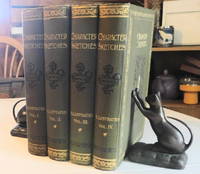
189298686New York: Selmar Hess: 1892-1896. 1892-1896. Very good. - Quarto 11-1/2 inches high by 9 inches wide. Four hardcover volumes bound in pictorial olive green cloth with gilt decorations and an art nouveau illustration stamped on the front covers with moire pastedowns and endpapers. Titled in gilt on the spines. All edges are gilt. The corners and head & tail of the spines are lightly bumped and the bottom edges of the covers are slightly rubbed. Volume 1 1892: viii & 408 pages. Volume 2 1896: vi & 408 pages. Volume 3: 1896: vi & 408 pages. Volume 4 1892: vi & 384 pages. Each volume is illustrated with a color frontispiece and 84 plates with printed tissue guards a total of 340 plates in all including works by Gustave Dore Sir Edwin Landseer Holman Hunt Sir Frederick Leighton E.A. Abbey and G. Moreau. The front hinge of the second volume is cracked opposite the front blank leaf. An attractive set. <p>Volume 4 contains an "English and American bibliography" pages 285-336 and "Authors and dates of dramas and operas" pages 342-384. New York: Selmar Hess: 1892-1896. hardcover
1996Q-188895700XMCE Publishing Co 1996-06-01. Hardcover. New. New. In shrink wrap. Looks like an interesting title! MCE Publishing Co hardcover
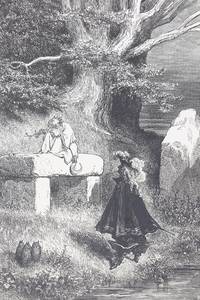
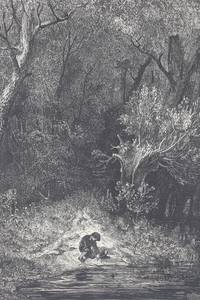
186279664Paris: Hetzel 1862. Fine. Hetzel Paris 1862 29.90 x 42.10 cm une feuille Original wood engraving signed in the plate by the artist and engraver. Composition created by Gustave Doré and engraved by Boetzel on China paper and mounted on Holland laid paper at the request of publisher Hetzel to illustrate his folio edition of Perrault's Contes in 1862. Occasional light worming in margins not affecting the engraving. These illustrations for the Contes are considered the most successful of this text: Gustave Doré offers an unprecedented dramatic vision. With him everything contributes to the dramatization of the tale from the theatrical staging of the composition to the smallest details that generate terrifying realism through the technique known as ""tinted wood."" He uses India ink or gouache previously diluted as required by the ""wash"" technique. For Perrault's tales the eleven best engravers of the period were employed to engrave with the burin the forty wooden plates: Pannemaker Pisan Pierdon Maurand Boetzel Brevière Hébert Deschamps Dumont Delduc and Fagnon. Gustave Doré's work in illustrating the Contes is paramount; he does not reduce engraving to its ornamental function but transforms it into a true object of narration. These illustrations are Doré's most famous works and immediately received enthusiastic reviews notably that of Sainte-Beuve in Les Nouveaux lundis December 23 1861: ""A Perrault like there never was until now and like there will never be again. . I can only say that these drawings seem very beautiful to me richly and opulently turned that they have a grandiose character that renews the aspect of these humble tales and restores to them their first marvel prior to Perrault himself."" Hetzel unknown
186279637Paris: Hetzel 1862. Fine. Hetzel Paris 1862 29.90 x 42.10 cm une feuille Original wood engraving on end-grain wood signed in the plate by the artist and engraver. Composition created by Gustave Doré and engraved by Charles Maurand on China paper and mounted on Holland laid paper at the request of publisher Hetzel to illustrate his folio edition of Perrault's Contes in 1862. A pale marginal dampstain not touching the image. These illustrations of the Contes are considered the most successful of this text: Gustave Doré offers an unprecedented dramatic vision. With him everything contributes to the dramatization of the tale from the theatrical staging of the tableau to the smallest details that generate terrifying realism through the technique known as ""tinted wood"". He uses India ink or gouache previously diluted as required by the ""wash"" technique. For Perrault's tales the eleven finest engravers of the period were enlisted to engrave with burin the forty wood blocks: Pannemaker Pisan Pierdon Maurand Boetzel Brevière Hébert Deschamps Dumont Delduc and Fagnon. Gustave Doré's work in the context of illustrating the Contes is paramount; he does not reduce engraving to its ornamental function but transforms it into a true object of narration. These illustrations are Doré's most famous works and immediately received enthusiastic reviews notably that of Sainte-Beuve in Les Nouveaux lundis 23 December 1861: ""Un Perrault comme il n'y en eut jamais jusqu'ici et comme il ne s'en verra plus. . Je ne puis que dire que ces dessins me semblent fort beaux d'un tour riche et opulent qu'ils ont un caractère grandiose qui renouvelle l'aspect de ces humbles contes et leur rend de leur premier merveilleux antérieur à Perrault même."" ""A Perrault such as there never was until now and such as there will never be again. . I can only say that these drawings seem very beautiful to me of a rich and opulent turn that they have a grandiose character that renews the aspect of these humble tales and restores to them their original wonder that predates Perrault himself."" Hetzel unknown