44 résultats
65447Eds Broquet Inc. 1992 In-4-oblong 175pp. illustr. reliure pleine toile de l'editeur avec jaquette Nb-0277 complet avec bandeau d'origine de l'editeur quelques imperfections sur la jaquette Grondin - Le Peintre des Oiseaux. unknown
THWL-54541Hardcover. NEW. US Standard Edition. We will ship same day or next day with trackable delivery method. Expedited Shipping Available. We don't entertain INTERNATIONAL orders ATM. 30-day money-back guarantee. hardcover
27914669like new. unknown
27914669-nnew. unknown
1976__9027930147Mouton De Gruyter 1976. Paperback. New. 206 pages. Russian language. 9.50x6.00x0.75 inches. Mouton De Gruyter paperback
2026100090443Ernest Leroux 2026. Bon état général cependant page 13 détachée reliure fragilisées sur les premières pages étiquettes sur le dos tranche ternie intérieur propre page 13 détachée reliure fragilisées sur les premières pages. in4. 2026. Cartonné. illustrations en noir et blanc et en couleurs Ernest Leroux unknown
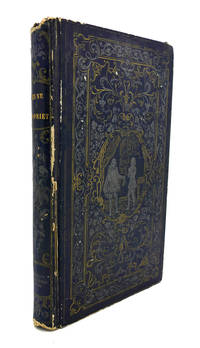
183889658Paris: Desiree Eymery 1838. First Edition. Hardcover. Very Good in boards. Spine crown is chipped with edge wear. Slightly wrinkled throughout.; 8vo 8" - 9" tall. Desiree Eymery hardcover
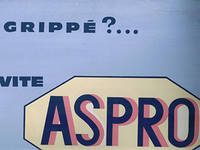
51-1045Paris: Circa 1930s. Original gouache maquette for a poster250 x 320 mm. Unsigned. Paris: Circa 1930s. unknown
2017__1786301237ISTE Ltd. 2017. Hardcover. New. 172 pages. 9.50x6.50x0.50 inches. ISTE Ltd. hardcover
4095Paris. Desiree Eymery. 1836. Hardcover. Gut. D5 --- Mit 3 Abb. zumindest 1 Abb. dürfte fehlen Kanten u. Ecken etwas bestoßen schönes Exemplar = avec 3 gravures 1 gravure apart In-12 320 pp. reliure cuir doree coins abimes bon exemplaire Paris. Desiree Eymery. 1836 hardcover
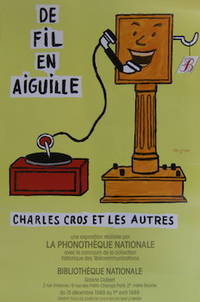
69-3627Paris France: Bibliotheque Nationale 1988. 60 x 40 cm. Offset Color Lithograph. Very Good. Paris, France: Bibliotheque Nationale, 1988 unknown
2024BN314413Dalloz 2024. 2024. Hardcover. Code général de la fonction publique 2024 annoté et commenté. 3e éd. <br/><br/>Code général de la fonction publique 2024 annoté et commenté. 3e éd. Jean-Charles Savignac Jérôme Michel Fabienne Lambolez Suzanne Sprungard et Christelle De Gaudemont Dalloz hardcover
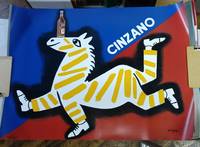
1990pw1008Toppan 1990. Mint. Large 117cm x 160cm 63" x 46"From "The rare 100 Best Posters From Europe and the United States poster set" published by Toppan Press in Japan. This was a continuation of Toppan's "The Best 100 Japanese Posters" 200 sets were printed to be distributed to museums and educational institutions around the world these are pristine reproductions by the top printing company in Japan. We are selling each of the posters individually. <br /> <br /> Savignac reinterpreted Cinzano's Zebra mascot in the 1950s. Toppan unknown
194563523Saint-Maurice-d'Ételan soit disant Paris: Pierre Bettencourtfaussement Gallimard 1945. Fine. Pierre Bettencourt faussement Gallimard Saint-Maurice-d'Ételan soit disant Paris 1945 en réalité circa 1947 16 x 25.50 cm broché WHITE Lilian pseud. for BETTENCOURT Pierre illustration by SAVIGNAC Raymond Midi à 14h Here for Ever Gallimard Pierre Bettencourt Paris Saint-Maurice d'Etelan 1945 16 x 255 cm original wrappers First edition of 200 copies printed on Arches paper. The book is illustrated with 3 original compositions in color by Savignac. A deception by Pierre Bettencourt the work is supposedly illustrated by Jean Hugo and translated by Jean-Paul Sartre the statement of publisher author translator illustrator and printing is false. The spine and cover lightly and marginally sunned a little stain on the foot of the first cover the interior is in a good condition. $ 380 [ Pierre Bettencourt](faussement) Gallimard unknown
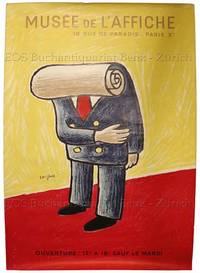
1978474BG1978. Paris Union Centrale des Arts 1978. Farblitographie auf Papier. Bildgrösse: 109 x 75 cm. Leichte Gebrauchsspuren an den Seiten. unknown
37287Karcher - Dufournet 68 x 276 cm d'origine en deux parties unknown
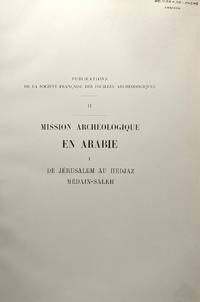
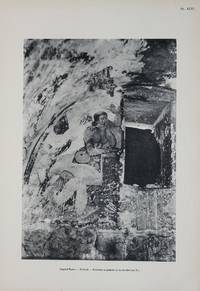
1922NL-02453<p><strong>Jaussen & Savignac's iconic plate atlas of Islamic desert architecture.</strong></p><p>Antoine Jaussen and Raphaël Savignac were French Dominican scholars whose early 20th-century expeditions to northern Arabia significantly contributed to the establishment of archaeological and epigraphic studies of the region. Working under the auspices of the <em>École Biblique</em> in Jerusalem they combined rigorous fieldwork with detailed documentation producing extensive photographic records architectural surveys and numerous transcriptions of ancient inscriptions. Their multi-volume <em>Mission archéologique en Arabie</em> 19091922 remains a landmark publication in the history of Middle Eastern archaeology offering some of the earliest systematic studies of Nabataean sites and early Islamic monuments. The work continues to serve as a vital reference for historians archaeologists and art historians alike.</p><p><em>The atlas volume for Les châteaux arabes</em></p><p>Neatline is pleased to present the atlas from the third volume of <em>Mission archéologique en Arabie</em> 1922. This is devoted entirely to the famed Umayyad <strong>"desert castles" </strong>of northern Arabia presentday Jordan and was published by Paul Geuthner of Paris in two parts: a text volume and the present atlas. The text volume 134 pages contains 21 illustrations mostly photographs while the atlas volume comprises 58 loose plates. These plates contain detailed site and building plans cross-sections and elevations as well as photographic views of interiors exteriors and decorative elements including fountains columns and carved motifs.</p><p>The atlas plates from <em>Les châteaux arabes </em>include the earliest published photographs of Qusayr 'Amra Qasr Tûba and Qasr al-Kharana sites previously known only from rough sketches Saba Farès-Drappeau <em>Revue des mondes musulmans et de la Méditerranée</em> 89-90: 325-30.Of the three the most famous is undoubtedly Qusayr 'Amra: a small 8thcentury "pleasure palace" with a domed audience hall and an attached ceremonial bathhouse. Qusayr 'Amra is an exceptionally well-preserved Umayyad desert castle notable for the elaborate painted frescoes that decorate the walls and ceilings of the reception hall and <em>hammam</em>. Jaussen and Savignac's plates capture these unique interior spaces long before later restorations and damages changed them considerably.</p><p>The atlas generally provides new measured plans alongside extensive pictorial documentation for these critical sites. The authors explain in the associated text volume that they found earlier descriptions of al-Kharana and Qasr Tûba to be faulty and unreliable and thus have ventured to re-describe them in their entirety. The atlas plates remain a valuable archive for these monuments which in many cases have suffered from later renovations or alterations.</p><p><strong>Context is Everything</strong></p><p><em>The French archaeological mission in Arabia</em></p><p><em>Mission archéologique en Arabie III</em> was the culmination of a series of French scholarly expeditions organized by the Dominican scholars of the <em>École Biblique</em> in Jerusalem and sponsored by the <em>Société des Fouilles Archéologiques</em> and the French Institute of Oriental Archaeology IFAO. The surveys were part of the <em>École Biblique's</em> program to document antiquities in the Hijaz and Transjordan which was an ambitious and pioneering endeavor in Middle Eastern archaeology at the time. Jaussen and Savignac conducted fieldwork in the Arabian Peninsula in 1907 1909 and 1910 compiling some of the first systematic maps site plans and inscription indices from North Arabia. It was in effect the first truly archaeological survey of the region.</p><p>The first two volumes 1909 and 1914 reported on Mada'in Slih Hegra and al-'Ul focusing on Nabataean inscriptions and classical-period sites. A supplemental ethnographic appendix published alongside Volume II records the customs of the Bedouin observed during those trips. The third volume originally intended for simultaneous publication was delayed by World War I. When it was finally issued in 1922 it completed the series by documenting the early Islamic palaces <em>qusur</em> encountered by Jaussen and Savignac on their expeditions.</p><p><em>The importance of early documentation</em></p><p>The so-called Desert Castles <em>al-qusr al-</em><em></em><em>arabiyya</em> are a network of palaces and fortresses built by the Umayyad caliphs in the late 7th and 8th centuries CE primarily in eastern Jordan and southern Syria. They combine classical Roman Byzantine and Persian influences with early Islamic art. Their purposes varied significantly with palaces like Qusayr 'Amra serving mostly representational functions Qasr al-Kharana functioning more as a caliphal hunting lodge in the desert and forts like Qasr Hallabat serving more defensive purposes. After the Umayyad dynasty was toppled in 750 CE most <em>qusr</em> were abandoned and fell into ruin. In many cases only fragments of walls mosaics or inscriptions survive today. Early 20th-century records are consequently critical. Jaussen and Savignac's 1922 publication preserves details that might otherwise have been lost. It is widely acknowledged that Qusayr 'Amra's interior frescoes of hunting scenes musicians and zodiac motifs are among the finest examples of early Islamic "secular" art. The plates of the 1922 volume capture these decorations decades before modern conservation began.</p><p><em>Concluding remarks</em></p><p><em>Mission archéologique en Arabie III </em>represents the final installment of a groundbreaking French scholarly mission dedicated to the desert architecture of the first Islamic dynasty. The five-volume corpus to which it belongs was an unprecedented accomplishment at the time. Few Western scholars had explored these remote landscapes since Charles Doughty 1876 or Alois Musil 190107. By using modern photography and careful surveying techniques Jaussen and Savignac not only brought these remote places to European audiences but also set new scientific standards for the documentation of cultural heritage.</p><p>The atlas volume of <em>Les châteaux arabes</em> provides an irreplaceable visual baseline for anyone interested in how early Muslim elites shaped and used the desert.</p><p>Cartographers:</p><p><strong>Antoine-Joseph "Antonin" Jaussen</strong> 18711962 and <strong>Antoine-Raphaël Savignac</strong> 18741951 were French Dominican friars of the <em>École Biblique</em> in Jerusalem. Jaussen born in Ardèche in 1871 became a pioneer in Arabian ethnography and early Islamic archaeology. He mastered Arabic and became fascinated by Bedouin culture and in 1907 he wrote <em>"Coutumes des Arabes au pays de Moab</em>." Savignac four years younger was renowned as a Semitic epigrapher and an experienced photographer. Both were trained under Père Marie-Joseph Lagrange at the Jerusalem school and had been colleagues since 1893.</p><p>Jaussen and Savignac jointly led the French expeditions to Northern Arabia in 1907 1909 and 1910. With Ottoman permission they journeyed to Mada'in Slih Hegra Tayma Al-'Ul and beyond. On these desert treks Jaussen kept detailed diaries and studied the local tribes while Savignac documented the monuments and archaeology they came across with large-format photography. The result was the five-volume <em>Mission archéologique en Arabie</em> published between 1909 and 1922.</p><p>Condition Description</p><p>Wear along spine.</p>
ria9780849310997_inpHardcover. New. New Book; Fast Shipping from UK; Not signed; Not First Edition; This unique up-to-date reference covers the role of phosphonates in traditional and modern organic syntheses. It includes 600 reaction schemes. hardcover
2003x-0849310997CRC Pr I Llc 2003. Hardcover. New. 1st edition. 552 pages. 10.00x7.00x1.00 inches. CRC Pr I Llc hardcover