Gavarni, PaulBiblio.com
953 résultats
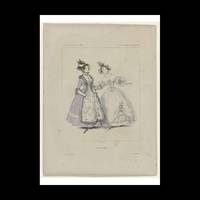
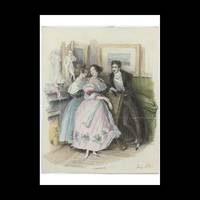
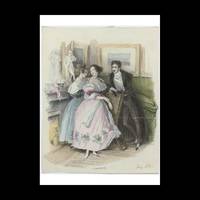
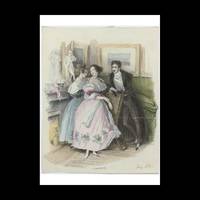
2089383Contentum Ltd. Loose sheet. New. High-quality art print based on an original work from the Rijksmuseum. Created in the 19th century 1834. Professionally printed on premium fine-art paper Museum Etching museum quality in size A3. The artwork is printed with a white border museum-style presentation. Contentum Ltd. unknown
2089385Contentum Ltd. Loose sheet. New. High-quality art print based on an original work from the Rijksmuseum. Created in the 19th century 1834. Professionally printed on premium fine-art paper Photo Rag Bright White premium quality in size A2. The artwork is printed with a white border museum-style presentation. Contentum Ltd. unknown
2089384Contentum Ltd. Loose sheet. New. High-quality art print based on an original work from the Rijksmuseum. Created in the 19th century 1834. Professionally printed on premium fine-art paper Photo Matt Fibre in size A2. The artwork is printed with a white border museum-style presentation. Contentum Ltd. unknown
2089386Contentum Ltd. Loose sheet. New. High-quality art print based on an original work from the Rijksmuseum. Created in the 19th century 1834. Professionally printed on premium fine-art paper Museum Etching museum quality in size A2. The artwork is printed with a white border museum-style presentation. Contentum Ltd. unknown
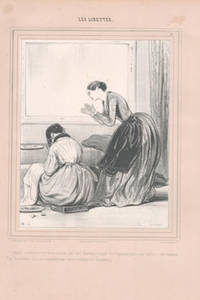
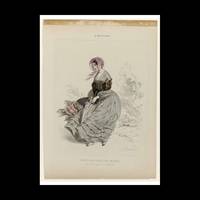
16-6135Paris: Chez Bauger Chez Aubert 1841. Lithograph sur blanc. 33.3 x 23.5 cm. Plate no. XI from the series: "Les Lorettes." Armelhault and Bocher no. 773. Les Lorettes described by scholars:MLA citation: Murphy Libby and Greggor Mattson. A la Recherche des Femmes Perdues. Oberlin College 2016.Prostitution was a common social phenomenon that was practiced by women regardless of class but the type of prostitute varied depending on the status of the men involved. The social standing of prostitutes often shifted throughout their lifetimes but their roles generally remained within four basic levels of prostitution. This exhibit focuses on these four important types of prostitutes imagined and mythologized in various media of the time. The lorette the aspiring courtesan was the prostitute of mystery elusive and secretive often evading the government’s health regulations. The grisette was a prostitute from a working-class background often found inhabiting the apartments of young Parisian students. The fille publique or streetwalker was from the lowest class of prostitute and often attracted the poorest customers. Walking the street alone or in groups la fille publique was most vulnerable to police repression. And finally women in “maisons closes†or brothels catered to men of different social classes. The most luxurious brothels attracted middle class men with their continuous business. These women though varying in status participated in a form of sexual commerce that was common in French society in the 19th century. Paris: Chez Bauger, Chez Aubert, 1841 unknown
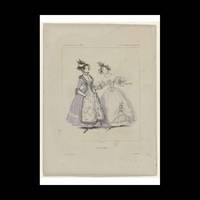
2089630Contentum Ltd. Loose sheet. New. High-quality art print based on an original work from the Rijksmuseum. Created in the 19th century 1835. Professionally printed on premium fine-art paper Museum Etching museum quality in size A3. The artwork is printed with a white border museum-style presentation. Contentum Ltd. unknown
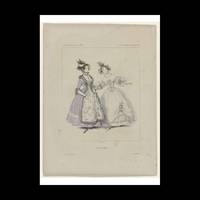
2091153Contentum Ltd. Loose sheet. New. High-quality art print based on an original work from the Rijksmuseum. Created in the 19th century 1840. Professionally printed on premium fine-art paper Photo Matt Fibre in size A2. The artwork is printed with a white border museum-style presentation. Contentum Ltd. unknown
2091154Contentum Ltd. Loose sheet. New. High-quality art print based on an original work from the Rijksmuseum. Created in the 19th century 1840. Professionally printed on premium fine-art paper Photo Rag Bright White premium quality in size A2. The artwork is printed with a white border museum-style presentation. Contentum Ltd. unknown
2091152Contentum Ltd. Loose sheet. New. High-quality art print based on an original work from the Rijksmuseum. Created in the 19th century 1840. Professionally printed on premium fine-art paper Museum Etching museum quality in size A3. The artwork is printed with a white border museum-style presentation. Contentum Ltd. unknown
2091155Contentum Ltd. Loose sheet. New. High-quality art print based on an original work from the Rijksmuseum. Created in the 19th century 1840. Professionally printed on premium fine-art paper Museum Etching museum quality in size A2. The artwork is printed with a white border museum-style presentation. Contentum Ltd. unknown
06347Paris: Caboche Grégoire 1837. One of Paul Gavarni's Rarest and Most Famous Series<br /> Thirty-Four Superb Lithographs.<br /> <br /> GAVARNI Paul pseudonym of Guillaume Sulpice Chevallier. La Boite aux Lettres. Paris: Caboche Grégoire et Cie Chez Arnauld de Vresse libraire éditeur 1837-1839.<br /> <br /> Folio 13 1/2 x 10 1/2 inches; 343 x 267 mm. Thirty-four superb lithograph plates with captions of the 'letters' printed below. Bound without the lithograph title-page.<br /> <br /> Bound by Pagnant ca. 1920 in quarter tan morocco over red patterned boards spine with five raised bands lettered in gilt in compartments cockerel endpapers. Joints expertly repaired some light to moderate foxing to several of the plates. Still an excellent example of this rare suite of lithographs.<br /> <br /> The first twelve lithographs were published by Caboche Grégoire et Cie. The following twenty-two lithographs were published by Aubert & Cie. and appeared in the journal Le Charivari between 7 November 1837 and 6 February 1839.<br /> <br /> According to OCLC there is just one copy with all thirty-four plates in libraries and institutions worldwide: The Clark Art Institute MA USA with all thirty-four plates- but lacking the lithographed title-page. Other than that example there are only three individual lithographs at The Getty CA USA numbers 4 8 & 14. The Getty also have a plain example of number 10. <br /> <br /> Paul Gavarni 1804-1866. "A French artist best known for his lithographs Paul Gavarni née Chevalier Suplice Guillaume was born in Paris on January 13 1804. Throughout his lifetime Gavarni produced over 4000 satirical prints for journals and fashion magazines. Both delicately witty and elegantly revealing of human behavior and character Gavarni's genre scenes made him one of the most important and popular nineteenth-century artists. He is often critically paired with Honoré Daumier with whom he and other young printmakers like Jean-Jacques Grandville and Joseph Traviés raised the status and importance of social lithography and printmaking as an art form. In the 1830s he began to work for L'Artiste La Caricature and most importantly Le Charivari. The latter was owned by Charles Philipon and became Gavarni's longest running contract and most important place of publication. Here Gavarni published some of his most famous series including Les Artistes La Boite aux Lettres Clichy inspired by his month-long stay in debtor's prison Les Coulisses Les Enfants Terribles Impressions de Ménage etc. etc." <br /> childsgallery.com<br /> <br /> "Gavarni as Sainte-Beuve puts it set to depicting and silhouetting society in all directions and from top to bottom: the high society the not so high society-all sorts of societies capturing the life of his time. He grabbed modern life by every available handhold imitating no one looking for nothing else swimming in open water and taking us in his wake amidst the stream of the manners of the time. He was Gavarni with an inexhaustible wit who at the bottom of a graceful drawing always interesting thanks to rational observation would write a caption full of subtle humor. It would sometimes unfold like a short comedy or be condensed like a geometrical axiom. Amusing and light-hearted when taken separately Gavarni's captions showed their true color of skeptical melancholy and of deep and powerful meaning when considered as a whole. He could through the accuracy of faces careful rendering of clothes and the precision of poses and bearing unmistakably express the age quality occupation habits manners and ridiculous ways of the characters he depicted. He made them speak a language that was stunning with original exactness feeling and novelty. Gavarni-and that's why he is great-created two genres at once: the pencil-drawn comedy of manners and the caption. His reputation became huge. True enough much of his audience only saw the funny aspect of the genre and called his drawings "caricatures" without noticing any difference with those of Daumier. But all sensitive souls were seduced by their elegance and subtlety and easily perceived their uniqueness." oldbookillustrations.com.<br /> <br /> Armelhault & Bocher pp. 88-95 11 unnumbered 348-368. Not mentioned in Ray.<br /> . Paris: Caboche, Grégoire , 1837 unknown
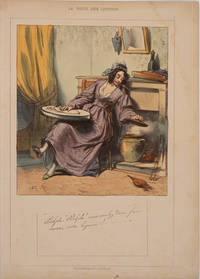
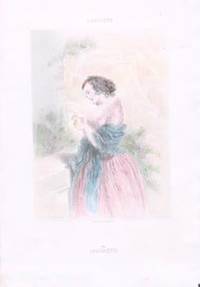
185724513Paris: Caboche Gregoire 1857. Very good condition. Caricature by Paul Gavarni 1804 - 1866 French satirical artist noted for his clever observations of contemporary life and elegant genre scenes and imitated by artists such as James McNeill Whistler. The image depicts an elegant young Parisian woman burning love letters quill pen in her mouth as she prepares to write a response. Magnificent hand colored lithograph highlighted with gum arabic dated in the print at the lower left. Image 7 1/2" x 11 1/4". Paper size approximately 9 1/2 x 12 1/2". Light damp stain in margin top right corner. Caboche, Gregoire unknown
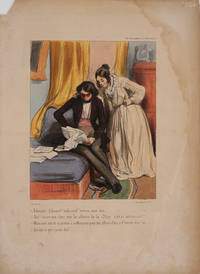
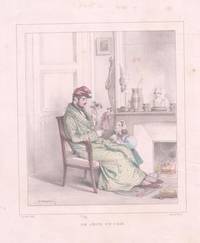
185724518Paris: Chez Aubert & Cie 1857. Very good condition. A caricature by Paul Gavarni 1804 - 1866 French satirical artist noted for his clever observations of contemporary life and elegant genre scenes and imitated by artists such as James McNeill Whistler. In this image the Chinese opium war is the subject of the husband's concentration while reading the paper; the young wife is attempting to convince him to leave for a 9am appointment. Signed in the print at the lower left. Magnificently hand colored lithograph highlighted with gum arabic. Damp stain right edge not affecting the image; small chip upper left corner. Light fold at center. Paper size approximately 9 1/2 x 12 1/2" Chez Aubert & Cie unknown
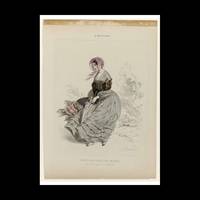
71-6846Paris: L’Artiste circa 1875. Hand-colored etching and engraving. 28.5 x 17.5 cm sheet. Very Good some foxing in the margins missing lower right sheet corner.Provenance: ancienne galerie Vandevoorde 22 rue Vignon Paris. Paris: L’Artiste, circa 1875. unknown
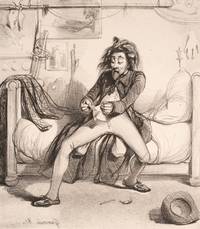
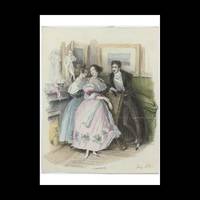
71-6717Paris: French Publisher circa 1836. Hand-colored lithograph. 29.5 x 22.5 cm sheet. Very Good light foxing in the margins water staining in margins.Provenance: ancienne galerie Vandevoorde 22 rue Vignon Paris. Paris: French Publisher, circa 1836. unknown
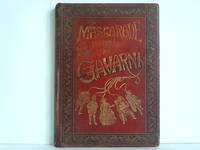
1J8750Lévy Paris 1881. 215 S. mit 100 Abb. original Leinen-Einband mit reichem Buchschmuck quart etwas berieben bestoßen und fleckig/Rücken eingerissen/fachgerecht neu aufgebunden. - Introduction par Ludovic Halévy / Text französisch - unknown
2113500Contentum Ltd. Loose sheet. New. High-quality art print based on an original work from the Rijksmuseum. Created in the 19th century 1835. Professionally printed on premium fine-art paper Museum Etching museum quality in size A2. The artwork is printed with a white border museum-style presentation. Contentum Ltd. unknown
2113498Contentum Ltd. Loose sheet. New. High-quality art print based on an original work from the Rijksmuseum. Created in the 19th century 1835. Professionally printed on premium fine-art paper Photo Matt Fibre in size A2. The artwork is printed with a white border museum-style presentation. Contentum Ltd. unknown
2113499Contentum Ltd. Loose sheet. New. High-quality art print based on an original work from the Rijksmuseum. Created in the 19th century 1835. Professionally printed on premium fine-art paper Photo Rag Bright White premium quality in size A2. The artwork is printed with a white border museum-style presentation. Contentum Ltd. unknown
2113497Contentum Ltd. Loose sheet. New. High-quality art print based on an original work from the Rijksmuseum. Created in the 19th century 1835. Professionally printed on premium fine-art paper Museum Etching museum quality in size A3. The artwork is printed with a white border museum-style presentation. Contentum Ltd. unknown
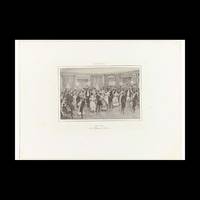
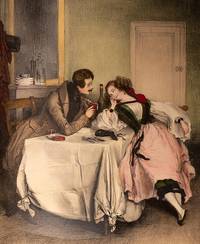
06687Paris: Chez Bauger 1834. Midnight in Paris - Gavarni and the Secret Theater of Carnival<br /> <br /> A Superb Hand-Colored Copy of Le Carnaval à Paris in the Original Publisher's Binding<br /> Together with the Very Rare and Complete Suite of Les Bals Masqués<br /> <br /> GAVARNI Paul pseudonym of Guillaume Sulpice Chevallier. Le Carnaval à Paris. February 1841 - February 1842. and Les Bals Masqués. Paris: Chez Bauger Rue du Croissant 16; variously printed by Aubert & Cie. and Kaeppelin February 1834.<br /> <br /> Folio 13 1/8 x 9 7/8 inches; 333 x 251 mm. A superb carnival album containing twenty-eight magnificent hand-colored lithographs heightened throughout with gum arabic including the complete suite of seven plates from Les Bals Masqués together with an additional related carnival plate "Bal Masqué No. 8" all bound after the first twenty hand-colored lithographs of Le Carnaval à Paris. Eight-page Aubert et Cie. catalog bound in at end.<br /> <br /> Publisher's quarter maroon calf over red patterned boards front cover decoratively lettered in gilt: "Le Carnaval à Paris" smooth spine. A remarkably fresh and well-preserved copy the plates with exceptionally bright contemporary hand-coloring and luminous gum-arabic heightening the binding with only minor wear at extremities. An unusually handsome survival.<br /> <br /> The Les Bals Masqués sequence forms a brilliant miniature drama of Parisian carnival life. <br /> <br /> 1. C'est toi mauvais sujet! "It's you you wicked creature!" A masked reveler in dazzling Oriental costume leans intimately toward a richly dressed young woman whose expression balances amusement and suspicion amid the crowded ballroom. <br /> <br /> 2. T'en souviens tu friponne. "Do you remember you little minx" This plate captures a moment of flirtatious accusation between a masked cavalier dressed in vivid blue and his companion the theatrical gesture and conspiratorial proximity perfectly conveying the coded language of carnival seduction.<br /> <br /> 3. Vois mon mari derrière! "Look - my husband is behind us!" Gavarni brilliantly stages bourgeois panic and comic intrigue as a masked woman urgently warns her companion while curious revelers peer from the theater box above. <br /> <br /> 4. Les apprêts du bal. "Preparations for the Ball" shifts backstage to the private preparations before the festivities two young women dressing in Pierrot-inspired white costumes beneath heavy green drapery the quiet intimacy contrasting sharply with the social theater of the ballroom itself.<br /> <br /> 5. Un cabinet chez Pétron. "A Private Room at Pétron's" - the mood darkens delightfully when an exhausted young woman reclines dreamily in a private dining cabinet while her companion smokes and pours wine after the night's excesses. <br /> <br /> 6. Un souper de carnaval. "A Carnival Supper" - a masked beauty bends toward her seated admirer in a dim attic interior littered with dishes and bottles one of Gavarni's most psychologically suggestive images of post-ball intimacy.<br /> <br /> 7. Le retour du bal masqué. "The Return from the Masked Ball" - this plate is from the series Fantaisies the emotional climax of the suite is undoubtedly portrayed where a pale and utterly exhausted reveler collapses into a chair while attendants remove her costume after the night's pleasures and deceptions have run their course. The theatricality fatigue and melancholy glamour of Carnival Paris are distilled here with extraordinary elegance and humanity.<br /> <br /> 8. The additional hand colored lithograph "Bal Masqué No. 8" C'est vieux et laid mon cher; tu es volè comme dans un bois. "It's old and ugly my dear! You've been robbed as if in a forest" - this plate is from the series Fantaisies and serves almost as an epilogue to the series: a weary bourgeois gentleman trapped between two masked women whose expressions suggest equal measures of intrigue manipulation and amusement. Framed within an elaborate ornamental border it possesses the sharp observational wit characteristic of Gavarni at his finest.<br /> <br /> A visually dazzling and socially revealing document of Parisian carnival life during the July Monarchy Le Carnaval à Paris ranks among the most evocative lithographic productions of the great age of French caricature. Combining theatricality fashion illustration social satire and romantic intrigue the plates capture the masked balls flirtations backstage preparations clandestine suppers exhausted dawn returns and coded erotic freedoms of carnival Paris with extraordinary wit and elegance.<br /> <br /> Paul Gavarni was among the supreme interpreters of nineteenth-century Parisian society standing beside Honoré Daumier and Grandville as one of the defining graphic artists of the period. Yet where Daumier's art often bites with political ferocity Gavarni's genius lay in psychological nuance gesture costume flirtation and the delicate ambiguities of urban social performance. His carnival subjects remain among the most sophisticated visual chronicles of Parisian pleasure culture produced during the nineteenth century.<br /> <br /> The present copy is especially desirable for its rich contemporary hand-coloring lavish gum-arabic enhancement and survival in the original binding. The gum arabic was applied to heighten reflective surfaces and luxurious fabrics producing a shimmering effect intended to imitate satin silk velvet candlelight and theatrical costume textures. Such deluxe issues were considerably more expensive than ordinary tinted or uncolored impressions and survive far less frequently today.<br /> <br /> A splendid and highly decorative survival from the golden age of Parisian lithography - simultaneously theatrical satirical elegant and deeply evocative of the secret life of Carnival Paris.<br /> <br /> Le Carnaval à Paris. February 1841 - February 1842. Plates 1-20.<br /> <br /> 1. Nèfie-loi Coquardeau! si tu ne finis pas de t'amuser comme ca on va te fich'au violon. "Watch it Coquardeau! If you don't stop carrying on like this they'll throw you in jail."<br /> 2. Rue Coquenard au cinquième; une porte jaune. Ton portier fait des chaufferettes et tu joues de la flûte ainsi! "Rue Coquenard fifth floor; a yellow door. Your porter makes foot-warmers and you play the flute - like this!"<br /> 3. -Il n'est pas ici! Madame. -Il y viendra! Madame. "He isn't here Madam. - He'll come Madam."<br /> 4. Qu'est-ce Les gens de Qualité se commettent-ils maintenant avec ceux de votre sorte Pandour! "What's this People of quality mix nowadays with people of your sort Scoundrel!"<br /> 5. -Jai un mal à la tète de chien! -C'est le champagne. -Ah! Dieu je ne bois jamais de vin; c'est le rhum. "I've got a splitting headache! It's the champagne. Oh God I never drink wine; it's the rum."<br /> 6. -Qui diable ca peut-il être -Voyons mon Oncle: ma cosine Claire. . . . a la migraine; Madame; Madame d'Asté est en deuil; ma sœur a horreur des bals masqués d'abord; Madame Debry. . . . Philippe défend à sa femme d'y venir; ma tante Clèmence. . . . - Ta tante est couchée. . . . Mais qui diable ca peut-il être "Who the devil can it be Let's see Uncle: my cousin Claire. has a migraine Madam; Madame d'Asté is in mourning; my sister detests masked balls anyway; Madame Debry. Philippe forbids his wife to come; my Aunt Clémence. Your aunt is in bed. But who the devil can it be"<br /> 7. -Parbleu! si vous deviez les èpouser toutes mauvais sujets! les oncles n'y suffiraient pas. -Ni les neveux non plus mon oncle. "Good heavens! If you had to marry all of them you rogues there wouldn't be enough uncles to go around! Nor nephews either Uncle."<br /> 8. -Tu vois bien la blonde d'henri là! qui parle à ce grand avec une barbe. . . . -Cà! . . . . c'est la femme de Clément. . . . -Éh! bien oui c'est cà. . . . tu vois elle va souper avec le petit Russe. . . . eh! bien mon Nini Chèvrier l'attend au café anglais. . . . un si brave garçon! . . . . -Cà c'est pas gentil. "You see Henri's blonde over there talking to that tall fellow with the beard. That one . that's Clément's wife. Well yes that's her. you see she's going to supper with the little Russian. and meanwhile my dear Nini Chèvrier is waiting for her at the Café Anglais. such a nice fellow too!<br /> That's really not nice."<br /> 9. "On désire cèder Monsieur avec tous les avantages y attachès Sàdresser à Monsieur." "Wanted to transfer Sir together with all attached advantages. Apply to Monsieur."<br /> 10. -Prête-moi vingt frances Guillemain j'ai le Domino rose à dèjeûner. -Je l'ai eu à souper mon pauvre bonhomme et je n'ai plus le sou. "Lend me twenty francs Guillemain; I've got the Pink Domino coming for breakfast.I had her for supper my poor fellow and I haven't a sou left."<br /> 11. -Les rats couchés nous sommes venus. -Et. . . . vos petits voisins de l'entresol. . . . vous ne les avez pas débauchés -Eux des poules comme çà! çà se couche à minuit en carnival et puis çà vient vous dire que le carnival est triste. -Epiciers! "Once the old rats were in bed we came out. And your little neighbors on the mezzanine. you didn't lead them astray Them Chickens like that! They go to bed at midnight during Carnival then come and tell you Carnival is dull. Grocers!"<br /> 12. Oh! hè! Dufrène oh! hè les pistons oh! èh! affûetz vos becs: faut de l'harmonie aux flambards de la chouette harmonie! "Hey! Dufrène! Hey there brass players! Sharpen your beaks - the torchbearers need music splendid owl-like music!"<br /> 13. Voilà la petite avec le brun qui l'amène toujours: le blond qui la remmène toujours va venir. "There's the little brunette with the dark-haired fellow who always brings her; the blond who always takes her home will be here soon."<br /> 14. -C'est donc comme çà que ça mène la joie les houzards de ce règiment là -Turlututu mon ange nous sortons d'en prendre et toi "So this is how the hussars of that regiment enjoy themselves Turlututu my angel we've just come from having a drink - and you"<br /> 15. -C'est un diplomate. . . -C'est un epicier. . . -Non! c'est un mari d'une femme agréable. -Non! Cabocher mon ami vous avez donc bu. . . que vous ne voyez pas que Mosieu est un jeune homme farceur comme tout déguise en un qui sembête à most. . . . le roué masque! "He's a diplomat. He's a grocer. No! He's the husband of an attractive woman. No Cabocher my friend you must be drunk. can't you see that the gentleman is just a practical joker disguised as one of those dreadfully boring fellows. the sly masked rogue!"<br /> 16. -Reflèchissez mon cher ange. . . .: une couchette de noyer toute neuve! et la commode. . . . et quatre belles petites chaises. . . . avec les rideaux jannes et la flèche. . . . cest un aveniur çá! -Je ne dis pas! Mosieu Coquardeau; mais jaime mieux Henri sans rien. "Think about it my dear angel. a brand-new walnut bed! And the chest of drawers. and four lovely little chairs. with yellow curtains and the canopy. that's a future for you! I'm not saying otherwise Monsieur Coquardeau; but I prefer Henri with nothing."<br /> 17. Veux-tu te Sauver Sauvage! "Get lost savage!"<br /> 18. Tenez Clara je suis contrairé comme tout! c'est ma bête de femme qui est partie avec le numéro de mon paletot et ma clef! à prèsent faut que j'attende le jour et que jáille aux Batignolles pour avior ma clef. . . . je suis contraire comme tout. "Look Clara I'm furious! My idiot wife went off with the number tag for my overcoat and my key! Now I have to wait until daylight and go all the way to Batignolles to get my key. I'm absolutely beside myself."<br /> 19. A sept heures ma fille se lève; le temps de faire ses quinze tours il est bien huit heures; faut travailler son piano; on déjeune à neuf; à dix c;est son anglais; ma fille chante sur les midi; et puis sa mère veut qu'elle couse qu'elle fasse un peu de cuisine un peu de tout: bon! la maitresse de paysage arrive à trois hèures; et puis nous avons des serins faut nettoyer çà les fleurs des pots n'importe quoi; les uns et les autres viennent: arrivent cing heures. Et le soir c'est Monsieu Marritou qui lui fait repasser son orthographe. . . . et après çà vous croyez qu'une jeunesse a beaucoup le temps de s'amuser vous! "At seven my daughter gets up; by the time she's done her fifteen turns it's already eight; then she must practice the piano; breakfast is at nine; at ten she has English lessons; around noon she sings; and then her mother wants her to sew do a little cooking a bit of everything; good! the landscape drawing teacher arrives at three; then we have canaries that need cleaning flowers in pots goodness knows what; visitors begin arriving around five. And in the evening Monsieur Marritou makes her review her spelling. and after all that you think young people have much time for amusement!"<br /> 20. . . . . Elle ètait donc censée garder sa tante Grayet qui tenait le lit. . .depuis le Rois pour ses dameuses coliques quand un soir je monte au Grand-Vainqueur pour voir un peu: qu'est-ce'que je vois . . . . mon èspouse en Garde-Française! ! ! !. . . . . ".So she was supposedly staying home to care for her Aunt Grayet who had been bedridden since Twelfth Night with dreadful colic when one evening I went up to the Grand-Vainqueur just to have a look: what do I see . my wife dressed as a French Guardsman!!!".<br /> <br /> Armelhault & Bocher 397-409 Le Carnaval a Paris; 2058 2057 2065 2060 2061 also see pp. 87/88 Les Bals Masques; & 1726 Fantaisies. Paris: Chez Bauger, 1834 unknown
0274480018.Ghardcover. Good. Access codes and supplements are not guaranteed with used items. May be an ex-library book. hardcover
1372192034.Gpaperback. Good. Access codes and supplements are not guaranteed with used items. May be an ex-library book. paperback
1845g9599Paris: J. Hetzel. VG : in very good condition without dust jacket. Respined. Covers faded. Some browning. Aeg. Heraldic book-plate on paste-downs. 1845. First Edition. Red hardback cloth cover. 270mm x 180mm 11" x 7". xxxii 380pp; lxxx 364pp. Numerous b/w illustrations. '. tableau complet de leur vie privée publique politique artistique littéraire industrielle etc etc.' Volume 2 published in 1846. Heraldic book-plate of George Charles Bright M.D. 'Post Tenebras Lucem'. N.B.: Heavy set - extra shipping needed for overseas. . J. Hetzel hardcover
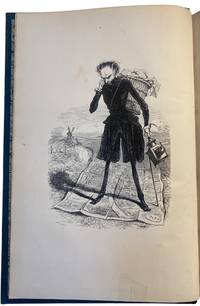
18455089Paris: J. Hetzel 1845. First edition. Very nice copy. Two volumes. Half dark blue leather with gilt decoration. Buckram boards. The edges of the spine are a little scuffed but overall in good clean condition. Internally in excellent condition throughout. Small closed tear has been repaired to the bottom edge of the frontis illustration. The inside boards of each volume hold the armourial bookplate of the Swiss naturalist Camille Pictet. 212 engravings after Garvarni & Bertall. 800 vignettes. xxxii 380. Lxxx 364. pages. 28cm x 18.5cm. . Première édition. Très bel exemplaire. Deux volumes. Cuir bleu foncé rigide avec décorations dorées. Plaques de bougran. Les bords du dos sont un peu éraflés mais l'ensemble est en bon état. L'intérieur est en excellent état. Les plats intérieurs de chaque volume portent l'ex-libris armorié du naturaliste suisse Camille Pictet. 212 gravures d'après Garvarni & Bertall. 800 vignettes. xxxii 380 Lxxx 364 pages. 28cm x 18.5cm. J. Hetzel hardcover