2 747 résultats
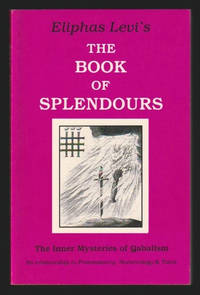
1981933335<p>York Beach Maine: Samuel Weiser Inc. 1981 - 1984 FIRST WEISER PRINTING - Evidently Unread and would be Fine if not for some edge spotting touch of extremity wear see scan. A Very Good Copy Indeed. First Paperback Edition. Soft Cover. Very Good. Illus. by Cover design by Alden Cole. 8vo size - 8¼" tall.</p> Samuel Weiser, Inc. paperback
1018327436.Ghardcover. Good. Access codes and supplements are not guaranteed with used items. May be an ex-library book. hardcover
2002__1585620807Amer Psychiatric Pub Inc 2002. Paperback. New. 1st edition. 252 pages. 6.50x4.25x0.75 inches. Amer Psychiatric Pub Inc paperback
20131-3841624782Presses Académiques Francophones 2013. Paperback. New. 372 pages. French language. 8.66x5.91x0.84 inches. Presses Académiques Francophones paperback
2013__3841624782Presses Académiques Francophones 2013. Paperback. New. 372 pages. French language. 8.66x5.91x0.84 inches. Presses Académiques Francophones paperback
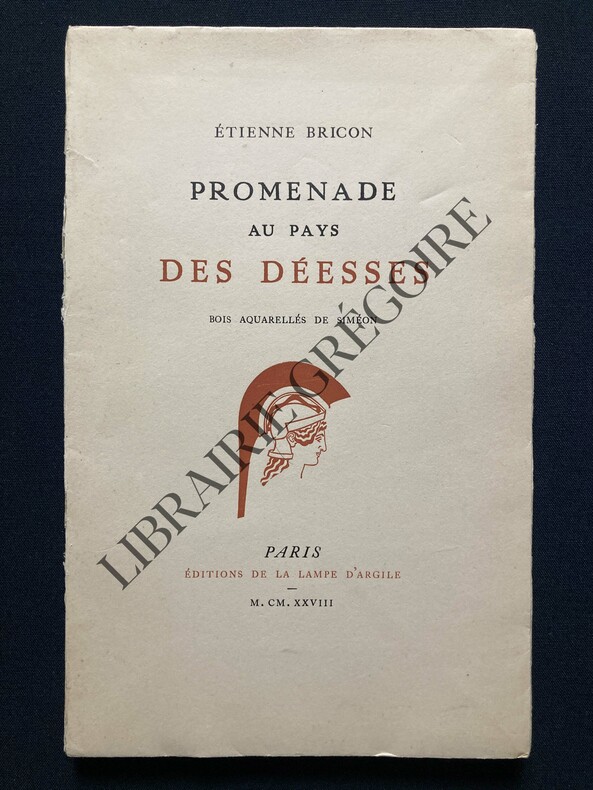
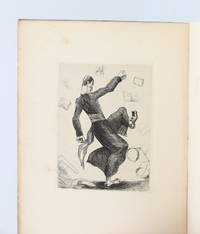
1928ABE-1746002629855120 PAGES-16,5 CM X 25,8 CM-AVEC UNE PAGE AUTOGRAPHE DE LA COMTESSE DE NOAILLES ET 23 BOIS AQUARELLES DE SIMEON-ORNEMENTATION DE LA COUVERTURE PAR ALFRED LATOUR-EXEMPLAIRE N°195 SUR HOLLANDE-EN GRANDE PARTIE NON COUPE-DOS EN PARTIE RECOLLE-(300I)
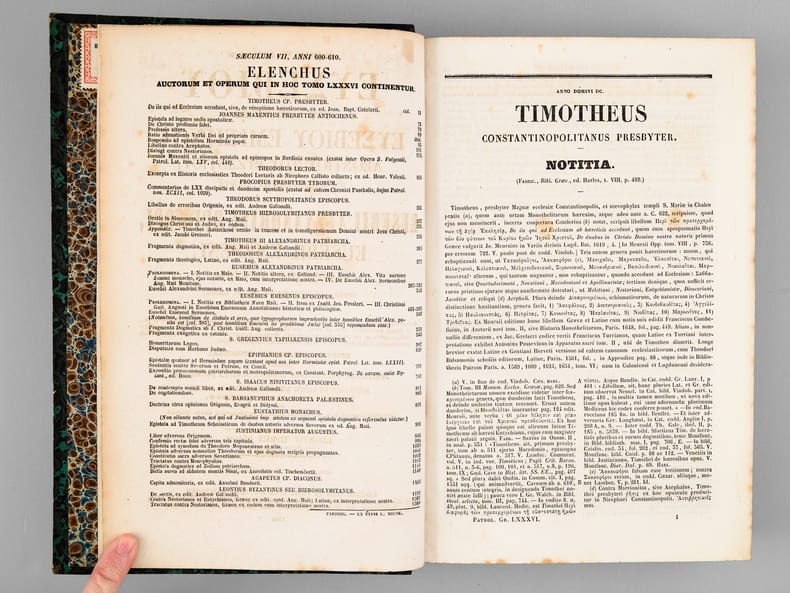
186068690Accurante J.P. Migne, 2 vol. in-4 reliure de l'époque demi-chagrin vert, dos à 4 nerfs dorés, Apud J.P. Migne, Petit-Montrouge, 1860 Rappel du titre complet : Eusebii Alexandrini Episcopi, Eusebii Emeseni Leonti Byzantini Opera quae reperiri potuerunt omnia, etc... (1 Tome en 2 volumes - Complet). Patrologiae Cursus completus. Series Graeca. Tomus LXXXVI Pars Prior & Pars Posterior [ Patrologia Graeca Tome 86 en 2 volumes - Presbytre Timothée de Constantinople, Jean Maxence, Théodore le Lecteur, Procope de Tyr, Théodore de Scythopolis, Timothée de Jérusalem, Théodose d'Alexandrie, Eusèbe d'Alexandrie, Eusèbe d'Émèse, Grégence de Safar, Épiphane de Constantinople, Isaac de Ninive, Barsanuphe de Palestine, Eustathe le Moine, Justinien Ier, Agapet le Diacre, Léonce de Byzance, Éphrem d'Antioche, Paul le Silentiaire, Eutychius de Constantinople, Évagre le Scholastique, Euloge d'Alexandrie, Siméon Stylite le Jeune, Zacharie de Jérusalem, Modeste de Jérusalem, anonyme sur le siège de Jérusalem par les Perses, Jobius, Erechthius d'Antioche de Pisidie, Pierre de Laodicée ]
Z1-R-020-02053Academic Pr. Used - Good. Ships from UK in 48 hours or less usually same day. Your purchase helps support Sri Lankan Children's Charity 'The Rainbow Centre'. Ex-library so some stamps and wear but in good overall condition. 100% money back guarantee. We are a world class secondhand bookstore based in Hertfordshire United Kingdom and specialize in high quality textbooks across an enormous variety of subjects. We aim to provide a vast range of textbooks rare and collectible books at a great price. Our donations to The Rainbow Centre have helped provide an education and a safe haven to hundreds of children who live in appalling conditions. We provide a 100% money back guarantee and are dedicated to providing our customers with the highest standards of service in the bookselling industry. Academic Pr unknown
2014BN122354Academic Press Hartcourt Brace Jovanovich Publishers 2014. 2014. Hardcover. Numerical methods for initial value problems in ordinary Differential Equations. Computer Science and Scientific Computing <br/><br/>Numerical methods for initial value problems in ordinary Differential Equations. Computer Science and Scientific Computing Fatunla Simeon Ola Academic Press, Hartcourt Brace Jovanovich, Publishers hardcover
0122499301.Ghardcover. Good. Access codes and supplements are not guaranteed with used items. May be an ex-library book. hardcover
1988MA-179San Diego CA.: Academic Press 1988. Comprehensive scholarly text presents a detailed monograph emphasizing the numerical treatment of specialdifferential equations: stiff stiff oscillatory singular and discontinuous initial value problems which are often characterized by large Lipschitz constants. Topics covered include numerical integration algorithms; theory of one-step methods; Runge-Kutta processes; linear multi-step processes; extrapolation processes and singularities; stiff algorithms; stiff initial value problems; second order differential equations; etc. 295 pgs. Illustrated. Gilt spine and front cover. Top spine corner slightly bumped. First Edition. Hard Cover. As New. 8vo - over 7¾" - 9¾" tall. Academic Press Hardcover
2003x-0824746996Marcel Dekker Inc 2003. Hardcover. New. 1st edition. 616 pages. 9.00x6.25x1.50 inches. Marcel Dekker Inc hardcover
1986Cyb-1992Nathan Technique Malicorne sur Sarthe, 72, Pays de la Loire, France 1986 Book condition, Etat : Bon broché grand In-8 1 vol. - 237 pages
1983RO60134254Nathan. 1983. In-8. Broché. Etat d'usage, Tâchée, Dos fané, Intérieur acceptable. 235 pages. Tampon de librairie et annotations (ex-libris).page de titre.. . . . Classification Dewey : 372.7-Livre scolaire : mathématiques
1975RO20241807Nathan Technique. 1975. In-8. Relié. Bon état, Couv. convenable, Dos satisfaisant, Intérieur frais. 175 pages. . . . Classification Dewey : 510-Mathématiques
1993151042Providence: American Mathematical Society 1993. Hardcover. ex library-good. Translations of Mathematical Monographs Vol. 116. 223 3 p. 26 cm. Ex library with labels on spine and rear pastedown ink stamps on top edge and title. Lower corners a bit bumped. <br/><br/> American Mathematical Society hardcover
1864014551Paris: Imprimerie Imperiale 1864. Un volume 18x27 cm di 6-186 pagine; ritratto inciso in antiporta. In lingua francese. Il testo più importante è a pag. 145 il REQUISITOIRE prononcé a la Cour d'Assises de la Seine le 27 février 1864 DANS L'ACCUSATION DE COMPLOT CONTRE LA VIE DE LEMPEREUR. Si tratta della requisitoria finale del processo a Mazzini e ai suoi amici per il complotto fallito contro la vita di Napoleone III nel 1863. - Bella legatura in mezza pelle verde ad angoli dorso a nervi con titoli e riquadri dorati piatti e risguardie con carta marmorizzata. Imprimerie Imperiale unknown
2013x-1489926011Springer 2013. Paperback. New. reprint edition. 251 pages. 9.26x6.11x0.70 inches. Springer paperback
1978105842Toronto: Champlain Society 1978. Hardcover. Fine. First edition limited to 1400 copies. liii 520 xxiv pp. Octavo in original red cloth with gilt lettered. Crested spine for members only. Not illustrated. Previous owner's name and date on front free endpaper. Copy #432. Fine condition. The fifth volume of the diary of Simeon Perkins and Volume L of the Champlain Society. 1978 Champlain Society hardcover
1978143624Toronto: Champlain Society 1978. Hardcover. Fine. First edition limited to 1400 copies. liii 520 xxiv pp. Octavo in original red cloth with gilt lettered. Gilt top edge others untrimmed. Crested spine for members only. Not illustrated. Fine condition. The fifth volume of the diary of Simeon Perkins and Volume L of the Champlain Society. 1978 Champlain Society hardcover
192154861Paris: Lucien Vogel éditeur 1921. Fine. Lucien Vogel éditeur Paris 1921 18 x 24 cm une feuille Original color print printed on vergé paper non signed. An original print used to illustrate the Gazette du bon ton one of the most attractive and influential 20th century fashion magazines featuring the talents of French artists and other contributors from the burgeoning Art Deco movement. A celebrated fashion magazine established in 1912 by Lucien Vogel La Gazette du bon ton appeared until 1925 with a hiatus from 1915 to 1920 due to the war the editor-in-chief having been called up for service. It consisted of 69 issues printed in only 2000 copies each and notably illustrated with 573 color plates and 148 sketches of the models of the great designers. Right from the start this sumptuous publication was aimed at bibliophiles and fashionable society Françoise Tétart-Vittu La Gazette du bon ton in Dictionnaire de la mode 2016 and was printed on fine vergé paper using a type cut specially for the magazine by Georges Peignot known as Cochin later used in 1946 by Christian Dior. The prints were made using stencils heightened in colors some highlighted in gold or palladium. The story began in 1912 when Lucien Vogel a man of the world involved in fashion he had already been part of the fashion magazine Femina decided with his wife Cosette de Brunhoff the sister of Jean creator of Babar to set up the Gazette du bon ton subtitled at the time: Art fashion frivolities. Georges Charensol noted the reasoning of the editor-in-chief: In 1910 he observed there was no really artistic fashion magazine nothing representative of the spirit of the time. My dream was therefore to make a luxury magazine with truly modern artists I was assured of success because when it comes to fashion no country on earth can compete with France. Un grand éditeur dart. Lucien Vogel in Les Nouvelles littéraires no. 133 May 1925. The magazine was immediately successful not only in France but also in the United States and Latin America. At first Vogel put together a team of seven artists: André-Édouard Marty and Pierre Brissaud followed by Georges Lepape and Dammicourt as well as eventually his friends from school and the School of Fine Arts like George Barbier Bernard Boutet de Monvel and Charles Martin. Other talented people soon came flocking to join the team: Guy Arnoux Léon Bakst Benito Boutet de Monvel Umberto Brunelleschi Chas Laborde Jean-Gabriel Domergue Raoul Dufy Édouard Halouze Alexandre Iacovleff Jean Émile Laboureur Charles Loupot Chalres Martin Maggie Salcedo. These artist mostly unknown when Lucien Vogel sought them out later became emblematic and sought-after artistic figures. It was also they who worked on the advertising drawings for the Gazette. The plates put the spotlight on and celebrate dresses by seven designers of the age: Lanvin Doeuillet Paquin Poiret Worth Vionnet and Doucet. The designers provided exclusive models for each issue. Nonetheless some of the illustrations are not based on real models but simply on the illustrators conception of the fashion of the day. The Gazette du bon ton was an important step in the history of fashion. Combining aesthetic demands with the physical whole it brought together for the first time the great talents of the artistic literary and fashion worlds; and imposed through this alchemy a completely new image of women: slender independent and daring which was shared by the new generation of designers including Coco Chanel Jean Patou Marcel Rochas and so on Taken over in 1920 by Condé Montrose Nast the Gazette du bon ton was an important influence on the new layout and aesthetics of that little dying paper that Nast had bought a few years earlier: Vogue. Lucien Vogel éditeur unknown
192154901Paris: Lucien Vogel éditeur 1921. Fine. Lucien Vogel éditeur Paris 1921 18 x 24 cm une feuille Original color print printed on vergé paper signed in the plate. An original print used to illustrate the Gazette du bon ton one of the most attractive and influential 20th century fashion magazines featuring the talents of French artists and other contributors from the burgeoning Art Deco movement. A celebrated fashion magazine established in 1912 by Lucien Vogel La Gazette du bon ton appeared until 1925 with a hiatus from 1915 to 1920 due to the war the editor-in-chief having been called up for service. It consisted of 69 issues printed in only 2000 copies each and notably illustrated with 573 color plates and 148 sketches of the models of the great designers. Right from the start this sumptuous publication was aimed at bibliophiles and fashionable society Françoise Tétart-Vittu La Gazette du bon ton in Dictionnaire de la mode 2016 and was printed on fine vergé paper using a type cut specially for the magazine by Georges Peignot known as Cochin later used in 1946 by Christian Dior. The prints were made using stencils heightened in colors some highlighted in gold or palladium. The story began in 1912 when Lucien Vogel a man of the world involved in fashion he had already been part of the fashion magazine Femina decided with his wife Cosette de Brunhoff the sister of Jean creator of Babar to set up the Gazette du bon ton subtitled at the time: Art fashion frivolities. Georges Charensol noted the reasoning of the editor-in-chief: In 1910 he observed there was no really artistic fashion magazine nothing representative of the spirit of the time. My dream was therefore to make a luxury magazine with truly modern artists I was assured of success because when it comes to fashion no country on earth can compete with France. Un grand éditeur dart. Lucien Vogel in Les Nouvelles littéraires no. 133 May 1925. The magazine was immediately successful not only in France but also in the United States and Latin America. At first Vogel put together a team of seven artists: André-Édouard Marty and Pierre Brissaud followed by Georges Lepape and Dammicourt as well as eventually his friends from school and the School of Fine Arts like George Barbier Bernard Boutet de Monvel and Charles Martin. Other talented people soon came flocking to join the team: Guy Arnoux Léon Bakst Benito Boutet de Monvel Umberto Brunelleschi Chas Laborde Jean-Gabriel Domergue Raoul Dufy Édouard Halouze Alexandre Iacovleff Jean Émile Laboureur Charles Loupot Chalres Martin Maggie Salcedo. These artist mostly unknown when Lucien Vogel sought them out later became emblematic and sought-after artistic figures. It was also they who worked on the advertising drawings for the Gazette. The plates put the spotlight on and celebrate dresses by seven designers of the age: Lanvin Doeuillet Paquin Poiret Worth Vionnet and Doucet. The designers provided exclusive models for each issue. Nonetheless some of the illustrations are not based on real models but simply on the illustrators conception of the fashion of the day. The Gazette du bon ton was an important step in the history of fashion. Combining aesthetic demands with the physical whole it brought together for the first time the great talents of the artistic literary and fashion worlds; and imposed through this alchemy a completely new image of women: slender independent and daring which was shared by the new generation of designers including Coco Chanel Jean Patou Marcel Rochas and so on Taken over in 1920 by Condé Montrose Nast the Gazette du bon ton was an important influence on the new layout and aesthetics of that little dying paper that Nast had bought a few years earlier: Vogue. Lucien Vogel éditeur unknown
191257636Paris: S. n. 1912. Fine. S. n. Paris 1912 14 x 22.50 cm une feuille original print in color printed on laid paper signed lower left of the board. One of the first French fashion magazines published a few days before the famous Gazette fashionable and bringing together the greatest French artists of the Art Deco movement. The Journal ladies and modes is a trimensuelle illustrated French fashion magazine created in 1797. Its publication was stopped in 1839 before being taken in June 1912 under the leadership of Tommaso Antongini secretary friend and biographer of Gabriele 'Annunzio. It will disappear in August 1914 on the eve of the First World War. The review was drawn to 1279 copies making it for the time a relatively confidential publication. The 186 plates with great finesse are engraved on strong paper and colored stencil. They represent the majority of the time women but also men and children. The models are not unlike those of the Gazette fashionable whose publication will be launched a few months later those renowned couturiers but are the fruit of the imagination of the illustrators themselves. The stencils are mostly executed by George Barbier but other artists collaborating on the magazine: Léon Bakst B. Berty Bernard Boutet de Monvel Roger Broders Jan van Brock Umberto Brunelleschi H. Robert Dammy Etienne Drian Abel Faivre Marie-Madeleine Franc-Nohain Xavier Gosé Paul Iribe Kriegck Victor Lhuer Pierre Legrain Charles Martin Fernand Simeon Ismael Smith Armand Vallee and Gerda Wegener. Many of these illustrators will also be involved in The Gazette fashionable. Their work emblematic of the Art Deco movement emphasize the influence of Orientalism and costumes of the Ballets Russes while registering in the daily activities of affluent French of the time. From the preface of the first issue of 1912 Anatole France said: ""After seventy-five years he is reborn. He is reborn through the efforts of a few ingenious minds and artists. He is reborn for the curious if there is that do not simply modes newspaper fired several thousand and illustrated by photography. And if publishers make us very exactly in its format with its paper printing its processes of etching and coloring the old classic patterns of the past is that they intend to continue the pleasantly and become charming classic fashion of today and tomorrow. "" S. n. unknown
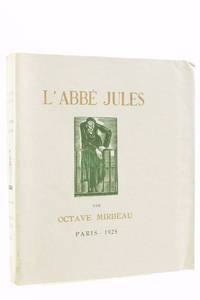
192585649Paris: Editions Mornay 1925. Fine. Editions Mornay Paris 1925 15.50 x 20.50 cm broché Edition illustrated with original woodcuts by Fernand Siméon one of 895 numbered copies on Rives paper. Light foxing to endpapers otherwise a handsome copy. Editions Mornay unknown
192575111Paris: Editions Mornay 1925. Fine. Editions Mornay Paris 1925 17 x 20.50 cm broché Edition illustrated with original wood engravings by André Deslignières one of 82 numbered copies on Japon impérial paper ours being one of 10 hors commerce and nominative copies the deluxe printing after 2 Japon ancien copies. Two small tears reattached at foot of spine. Fine full-margined copy. Editions Mornay unknown