SIMEON, MarlBiblio.com

2 159 résultats
2010DADAX6131543534Omniscriptum 2010-11-25. paperback. New. 5.91x0.63x8.66. Buy with confidence. Excellent Customer Service & Return policy. Omniscriptum paperback
0198827784.Ghardcover. Good. Access codes and supplements are not guaranteed with used items. May be an ex-library book. hardcover
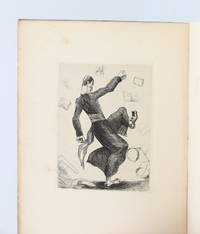
192585649Paris: Editions Mornay 1925. Fine. Editions Mornay Paris 1925 15.50 x 20.50 cm broché Edition illustrated with original woodcuts by Fernand Siméon one of 895 numbered copies on Rives paper. Light foxing to endpapers otherwise a handsome copy. Editions Mornay unknown
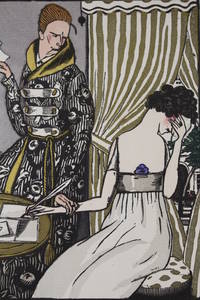
192054711Paris: Lucien Vogel éditeur 1920. Fine. Lucien Vogel éditeur Paris Février 1920 18 x 24 cm une feuille Original color print heightened with gold printed on vergé paper signed in the plate. An original print used to illustrate the Gazette du bon ton one of the most attractive and influential 20th century fashion magazines featuring the talents of French artists and other contributors from the burgeoning Art Deco movement. A celebrated fashion magazine established in 1912 by Lucien Vogel La Gazette du bon ton appeared until 1925 with a hiatus from 1915 to 1920 due to the war the editor-in-chief having been called up for service. It consisted of 69 issues printed in only 2000 copies each and notably illustrated with 573 color plates and 148 sketches of the models of the great designers. Right from the start this sumptuous publication was aimed at bibliophiles and fashionable society Françoise Tétart-Vittu La Gazette du bon ton in Dictionnaire de la mode 2016 and was printed on fine vergé paper using a type cut specially for the magazine by Georges Peignot known as Cochin later used in 1946 by Christian Dior. The prints were made using stencils heightened in colors some highlighted in gold or palladium. The story began in 1912 when Lucien Vogel a man of the world involved in fashion he had already been part of the fashion magazine Femina decided with his wife Cosette de Brunhoff the sister of Jean creator of Babar to set up the Gazette du bon ton subtitled at the time: Art fashion frivolities. Georges Charensol noted the reasoning of the editor-in-chief: In 1910 he observed there was no really artistic fashion magazine nothing representative of the spirit of the time. My dream was therefore to make a luxury magazine with truly modern artists I was assured of success because when it comes to fashion no country on earth can compete with France. Un grand éditeur dart. Lucien Vogel in Les Nouvelles littéraires no. 133 May 1925. The magazine was immediately successful not only in France but also in the United States and Latin America. At first Vogel put together a team of seven artists: André-Édouard Marty and Pierre Brissaud followed by Georges Lepape and Dammicourt as well as eventually his friends from school and the School of Fine Arts like George Barbier Bernard Boutet de Monvel and Charles Martin. Other talented people soon came flocking to join the team: Guy Arnoux Léon Bakst Benito Boutet de Monvel Umberto Brunelleschi Chas Laborde Jean-Gabriel Domergue Raoul Dufy Édouard Halouze Alexandre Iacovleff Jean Émile Laboureur Charles Loupot Chalres Martin Maggie Salcedo. These artist mostly unknown when Lucien Vogel sought them out later became emblematic and sought-after artistic figures. It was also they who worked on the advertising drawings for the Gazette. The plates put the spotlight on and celebrate dresses by seven designers of the age: Lanvin Doeuillet Paquin Poiret Worth Vionnet and Doucet. The designers provided exclusive models for each issue. Nonetheless some of the illustrations are not based on real models but simply on the illustrators conception of the fashion of the day. The Gazette du bon ton was an important step in the history of fashion. Combining aesthetic demands with the physical whole it brought together for the first time the great talents of the artistic literary and fashion worlds; and imposed through this alchemy a completely new image of women: slender independent and daring which was shared by the new generation of designers including Coco Chanel Jean Patou Marcel Rochas and so on Taken over in 1920 by Condé Montrose Nast the Gazette du bon ton was an important influence on the new layout and aesthetics of that little dying paper that Nast had bought a few years earlier: Vogue. Lucien Vogel éditeur unknown
192154839Paris: Lucien Vogel éditeur 1921. Fine. Lucien Vogel éditeur Paris 1921 18 x 24 cm une feuille Original color print heightened with gold printed on vergé paper signed in plate. An original print used to illustrate the Gazette du bon ton one of the most attractive and influential 20th century fashion magazines featuring the talents of French artists and other contributors from the burgeoning Art Deco movement. A celebrated fashion magazine established in 1912 by Lucien Vogel La Gazette du bon ton appeared until 1925 with a hiatus from 1915 to 1920 due to the war the editor-in-chief having been called up for service. It consisted of 69 issues printed in only 2000 copies each and notably illustrated with 573 color plates and 148 sketches of the models of the great designers. Right from the start this sumptuous publication was aimed at bibliophiles and fashionable society Françoise Tétart-Vittu La Gazette du bon ton in Dictionnaire de la mode 2016 and was printed on fine vergé paper using a type cut specially for the magazine by Georges Peignot known as Cochin later used in 1946 by Christian Dior. The prints were made using stencils heightened in colors some highlighted in gold or palladium. The story began in 1912 when Lucien Vogel a man of the world involved in fashion he had already been part of the fashion magazine Femina decided with his wife Cosette de Brunhoff the sister of Jean creator of Babar to set up the Gazette du bon ton subtitled at the time: Art fashion frivolities. Georges Charensol noted the reasoning of the editor-in-chief: In 1910 he observed there was no really artistic fashion magazine nothing representative of the spirit of the time. My dream was therefore to make a luxury magazine with truly modern artists I was assured of success because when it comes to fashion no country on earth can compete with France. Un grand éditeur dart. Lucien Vogel in Les Nouvelles littéraires no. 133 May 1925. The magazine was immediately successful not only in France but also in the United States and Latin America. At first Vogel put together a team of seven artists: André-Édouard Marty and Pierre Brissaud followed by Georges Lepape and Dammicourt as well as eventually his friends from school and the School of Fine Arts like George Barbier Bernard Boutet de Monvel and Charles Martin. Other talented people soon came flocking to join the team: Guy Arnoux Léon Bakst Benito Boutet de Monvel Umberto Brunelleschi Chas Laborde Jean-Gabriel Domergue Raoul Dufy Édouard Halouze Alexandre Iacovleff Jean Émile Laboureur Charles Loupot Chalres Martin Maggie Salcedo. These artist mostly unknown when Lucien Vogel sought them out later became emblematic and sought-after artistic figures. It was also they who worked on the advertising drawings for the Gazette. The plates put the spotlight on and celebrate dresses by seven designers of the age: Lanvin Doeuillet Paquin Poiret Worth Vionnet and Doucet. The designers provided exclusive models for each issue. Nonetheless some of the illustrations are not based on real models but simply on the illustrators conception of the fashion of the day. The Gazette du bon ton was an important step in the history of fashion. Combining aesthetic demands with the physical whole it brought together for the first time the great talents of the artistic literary and fashion worlds; and imposed through this alchemy a completely new image of women: slender independent and daring which was shared by the new generation of designers including Coco Chanel Jean Patou Marcel Rochas and so on Taken over in 1920 by Condé Montrose Nast the Gazette du bon ton was an important influence on the new layout and aesthetics of that little dying paper that Nast had bought a few years earlier: Vogue. Lucien Vogel éditeur unknown
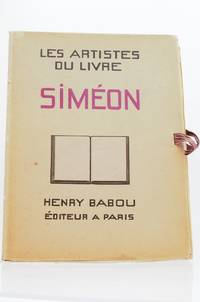
193075475Paris: Henri Babou 1930. Fine. Henri Babou Paris 1930 20.50 x 26.50 cm en feuilles sous chemise à lacets First edition one of 50 numbered copies on Japon ours unjustified deluxe copy. Fine copy spine and boards of the chemise marginally sunned and spotted. Letter-preface by Jean-Jacques Brousson. Photographic portrait of Fernand Siméon by Laure Albin Guillot. Work illustrated with a frontispiece black illustrations in the text as well as 15 hors-texte plates in black and colors extracted from works illustrated by the artist. Our copy lacks the original drawing by Fernand Siméon which should appear in the deluxe copies. Henri Babou hardcover
19586841958. Plattner Samuel; Graubündens Alterthümer 1876/Simeon A.; Begleiter durch die Kathedrale von Chur 1914/Schmucki Die Kathedrale von Chur 1928Poeschel E; Zur Baugeschichte der Kathedrale und der Kirche St.Lucius in Chur Poeschel E; Sonderdruck aus Anzeiger f.Schweiz.Altertumskunde 1930 Vier Schriften in Halbleineneinband. Handschriftl.Widmungen von Erwin Poeschel 4°. Hln. marm. Raetica unknown
2011DADAX3844383549LAP Lambert Academic Publishing 2011-10-04. paperback. New. 5.91x0.66x8.66. Buy with confidence. Excellent Customer Service & Return policy. LAP Lambert Academic Publishing paperback
0367450429.Gpaperback. Good. Access codes and supplements are not guaranteed with used items. May be an ex-library book. paperback
41927770like new. unknown
B9780805860962Hardback. New. Presents case studies to illustrate the corporate benefits for designing accessibility. This work serves as a means to demystify what is involved in designing inclusive products for various users. It highlights numerous examples for designers such as creating a tool for Web browsing for older adults as well as digital television access. hardcover
3642872735.Gpaperback. Good. Access codes and supplements are not guaranteed with used items. May be an ex-library book. paperback
32218583-nnew. unknown
ria9781108428361_inpHardcover. New. New Book; Fast Shipping from UK; Not signed; Not First Edition; This book focuses on clientelism the pattern of exchanges between politicians and votes as citizens promise to vote for a politician in order to receive benefits. While many scholars have explored the threats to clientelism this book hardcover
A9781845450625Hardback. New. Despite its outwardly static and traditional appearance the Haredi ultra-Orthodox world is engaged in a constant cultural dialogue with modernity. This dialogue is exceptionally visible in the realm of language as shown in this study that examines the language and culture of four ultra-Orthodox groups found in Israel: the Ashkenazi European Mitnagdim-Lithuanians and the Oriental Sefaradi Haredim. After the presentation of the historical background of the four sects the author analyzes the public and private domains focusing on language as used in many different forms and situations and on the management of language. He furthermore compares the language policies of British American and French Haredim belonging to the Habad Gur Mitnagdic and Sefaradi sects to those in Israel and finds many similarities between the groups. The book concludes with the proposal of an interdisciplinary model based on the Haredi case study which can be used by language planners worldwide to understand the issues of language maintenance and loss among ethnic and ethno-religious minorities. hardcover
2014__077482817XUniv of British Columbia Pr 2014. Hardcover. New. 351 pages. 9.00x6.00x1.00 inches. Univ of British Columbia Pr hardcover
41950133-nnew. unknown
41950133like new. unknown
41927770-nnew. unknown
0971586322.Gpaperback. Good. Access codes and supplements are not guaranteed with used items. May be an ex-library book. paperback
32218583like new. unknown
2003DADAX0761967982SAGE Publications Ltd 2003-10-08. First Edition. paperback. New. 6.69x0.69x9.53. Buy with confidence. Excellent Customer Service & Return policy. SAGE Publications Ltd paperback
21874899like new. unknown