Hawkins, Simeon SBiblio.com
Editor-James C SimeonBiblio.com
Critical Issues in International Refugee Law: Strategies Toward Interpretative Harmony
8969363like new. unknown

GreatBookPrices · États-Unis139,39 $US≈ 117,94 €
2 747 résultats
a103291Single page letters on various size papers. Letters dated April 1854 to April 1855 . Written by Hawkins from Jamesport Loang Island and other places. Names mentioned in letters include George Davis George Hawkins Jaohn Darling G M Smith. Several schooners are mentioned: Charles T Smyth John G White and Autumn. Simeon S Hawkins was born in Stony Brook Long Island New York March 30 1827. He was Captain of the schooner "Chas. D Hallock" in 1847 when only 20 years old. A staunch Republican he was elected to the NY State Assembly on the Republican ticket in 1883. He was elected NY State Sentator in 1888. He served as Town Supervisor for one term. Hon. Mr. Hawkins was one of the the organizers of the Riverhead Savings Band and also served as a Deacon in the Congregational Church. VG. all letters legible. . unknown
8969363like new. unknown
3639309189.Gpaperback. Good. Access codes and supplements are not guaranteed with used items. May be an ex-library book. paperback
2010DADAX3639247930VDM Verlag 2010-04-16. paperback. New. 5.91x0.63x8.66. Buy with confidence. Excellent Customer Service & Return policy. VDM Verlag paperback
2002DADAX0971586306Brand: Mount Baldy Press Inc 2002-05-30. Third Edition. paperback. New. 4.50x0.50x7.75. Buy with confidence. Excellent Customer Service & Return policy. Brand: Mount Baldy Press, Inc paperback
101739718X.Ghardcover. Good. Access codes and supplements are not guaranteed with used items. May be an ex-library book. hardcover
2608320like new. unknown
A9780226834320Hardback. New. <b>An insightful history of nineteenth- and twentieth-century Britain told through a single sense: touch. </b><br />  <br /> When where and who gets to touch and be touched and who decides What do we learn through touch How does touch bring us closer together or push us apart These are urgent contemporary questions but they have their origins in late nineteenth- and early twentieth-century Britain when new urban encounters compelled intense discussion of what touch was and why it mattered. In this vividly written book Simeon Koole excavates the history of these concerns and reveals how they continue to shape ideas about “touch†in the present.<br />  <br /><i>Intimate Subjects</i> takes us to the bustling railway stations shady massage parlors all-night coffee stalls and other shared spaces where passengers customers vagrants and others came into contact leading to new understandings of touch. We travel in crammed subway cars where strangers negotiated the boundaries of personal space. We visit tea shops where waitresses made difficult choices about autonomy and consent. We enter classrooms in which teachers wondered whether blind children could truly grasp the world and labs in which neurologists experimented on themselves and others to unlock the secrets of touch. We tiptoe through London’s ink-black fogs in which disoriented travelers became newly conscious of their bodies and feared being accosted by criminals. Across myriad forgotten encounters such as these Koole shows touch remade what it meant to be embodied—as well as the meanings of disability personal boundaries and scientific knowledge.<br />  <br /> With imagination and verve <i>Intimate Subjects</i> offers a new way of theorizing the body and the senses as well as a new way of thinking about embodiment and vulnerability today.<br />  hardcover
3631906161.Ghardcover. Good. Access codes and supplements are not guaranteed with used items. May be an ex-library book. hardcover
2016x-1138198692Chapman & Hall 2016. Paperback. New. reprint edition. 414 pages. 9.25x6.00x1.25 inches. Chapman & Hall paperback
B9781108428361Hardback. New. This book focuses on clientelism the pattern of exchanges between politicians and votes as citizens promise to vote for a politician in order to receive benefits. While many scholars have explored the threats to clientelism this book is the first exploration into why clientelism survives and even thrives in certain countries. hardcover
3736972776.Gpaperback. Good. Access codes and supplements are not guaranteed with used items. May be an ex-library book. paperback
42709572-nnew. unknown
42709572like new. unknown
2010DADAX6131543534Omniscriptum 2010-11-25. paperback. New. 5.91x0.63x8.66. Buy with confidence. Excellent Customer Service & Return policy. Omniscriptum paperback
0198827784.Ghardcover. Good. Access codes and supplements are not guaranteed with used items. May be an ex-library book. hardcover
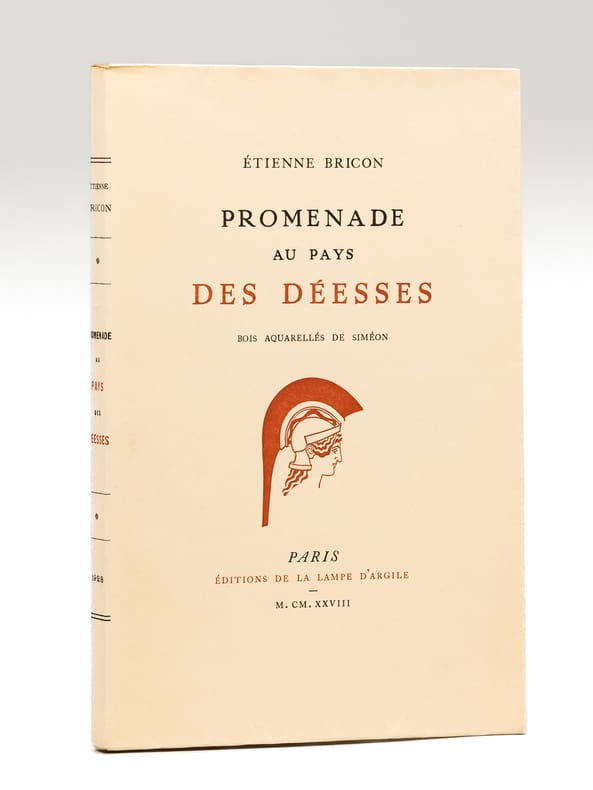
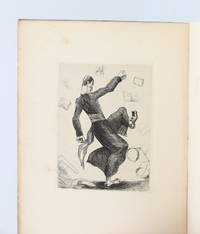
192869925Bois aquarellés de Siméon, un des 25 exemplaires sur Japon Impérial avec une suite sur chine des bois gravés, numérotés de 11 à 35 (n° 30), avec une page autographe de la Comtesse de Noailles et 23 bois aquarellés de Siméon, Editions de la Lampe d'Argile, Georges Servant, Paris, 1928, 119 pp.
192585649Paris: Editions Mornay 1925. Fine. Editions Mornay Paris 1925 15.50 x 20.50 cm broché Edition illustrated with original woodcuts by Fernand Siméon one of 895 numbered copies on Rives paper. Light foxing to endpapers otherwise a handsome copy. Editions Mornay unknown
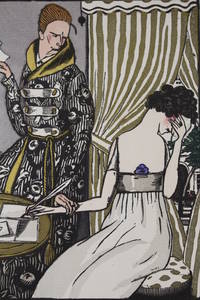
192054711Paris: Lucien Vogel éditeur 1920. Fine. Lucien Vogel éditeur Paris Février 1920 18 x 24 cm une feuille Original color print heightened with gold printed on vergé paper signed in the plate. An original print used to illustrate the Gazette du bon ton one of the most attractive and influential 20th century fashion magazines featuring the talents of French artists and other contributors from the burgeoning Art Deco movement. A celebrated fashion magazine established in 1912 by Lucien Vogel La Gazette du bon ton appeared until 1925 with a hiatus from 1915 to 1920 due to the war the editor-in-chief having been called up for service. It consisted of 69 issues printed in only 2000 copies each and notably illustrated with 573 color plates and 148 sketches of the models of the great designers. Right from the start this sumptuous publication was aimed at bibliophiles and fashionable society Françoise Tétart-Vittu La Gazette du bon ton in Dictionnaire de la mode 2016 and was printed on fine vergé paper using a type cut specially for the magazine by Georges Peignot known as Cochin later used in 1946 by Christian Dior. The prints were made using stencils heightened in colors some highlighted in gold or palladium. The story began in 1912 when Lucien Vogel a man of the world involved in fashion he had already been part of the fashion magazine Femina decided with his wife Cosette de Brunhoff the sister of Jean creator of Babar to set up the Gazette du bon ton subtitled at the time: Art fashion frivolities. Georges Charensol noted the reasoning of the editor-in-chief: In 1910 he observed there was no really artistic fashion magazine nothing representative of the spirit of the time. My dream was therefore to make a luxury magazine with truly modern artists I was assured of success because when it comes to fashion no country on earth can compete with France. Un grand éditeur dart. Lucien Vogel in Les Nouvelles littéraires no. 133 May 1925. The magazine was immediately successful not only in France but also in the United States and Latin America. At first Vogel put together a team of seven artists: André-Édouard Marty and Pierre Brissaud followed by Georges Lepape and Dammicourt as well as eventually his friends from school and the School of Fine Arts like George Barbier Bernard Boutet de Monvel and Charles Martin. Other talented people soon came flocking to join the team: Guy Arnoux Léon Bakst Benito Boutet de Monvel Umberto Brunelleschi Chas Laborde Jean-Gabriel Domergue Raoul Dufy Édouard Halouze Alexandre Iacovleff Jean Émile Laboureur Charles Loupot Chalres Martin Maggie Salcedo. These artist mostly unknown when Lucien Vogel sought them out later became emblematic and sought-after artistic figures. It was also they who worked on the advertising drawings for the Gazette. The plates put the spotlight on and celebrate dresses by seven designers of the age: Lanvin Doeuillet Paquin Poiret Worth Vionnet and Doucet. The designers provided exclusive models for each issue. Nonetheless some of the illustrations are not based on real models but simply on the illustrators conception of the fashion of the day. The Gazette du bon ton was an important step in the history of fashion. Combining aesthetic demands with the physical whole it brought together for the first time the great talents of the artistic literary and fashion worlds; and imposed through this alchemy a completely new image of women: slender independent and daring which was shared by the new generation of designers including Coco Chanel Jean Patou Marcel Rochas and so on Taken over in 1920 by Condé Montrose Nast the Gazette du bon ton was an important influence on the new layout and aesthetics of that little dying paper that Nast had bought a few years earlier: Vogue. Lucien Vogel éditeur unknown
192154839Paris: Lucien Vogel éditeur 1921. Fine. Lucien Vogel éditeur Paris 1921 18 x 24 cm une feuille Original color print heightened with gold printed on vergé paper signed in plate. An original print used to illustrate the Gazette du bon ton one of the most attractive and influential 20th century fashion magazines featuring the talents of French artists and other contributors from the burgeoning Art Deco movement. A celebrated fashion magazine established in 1912 by Lucien Vogel La Gazette du bon ton appeared until 1925 with a hiatus from 1915 to 1920 due to the war the editor-in-chief having been called up for service. It consisted of 69 issues printed in only 2000 copies each and notably illustrated with 573 color plates and 148 sketches of the models of the great designers. Right from the start this sumptuous publication was aimed at bibliophiles and fashionable society Françoise Tétart-Vittu La Gazette du bon ton in Dictionnaire de la mode 2016 and was printed on fine vergé paper using a type cut specially for the magazine by Georges Peignot known as Cochin later used in 1946 by Christian Dior. The prints were made using stencils heightened in colors some highlighted in gold or palladium. The story began in 1912 when Lucien Vogel a man of the world involved in fashion he had already been part of the fashion magazine Femina decided with his wife Cosette de Brunhoff the sister of Jean creator of Babar to set up the Gazette du bon ton subtitled at the time: Art fashion frivolities. Georges Charensol noted the reasoning of the editor-in-chief: In 1910 he observed there was no really artistic fashion magazine nothing representative of the spirit of the time. My dream was therefore to make a luxury magazine with truly modern artists I was assured of success because when it comes to fashion no country on earth can compete with France. Un grand éditeur dart. Lucien Vogel in Les Nouvelles littéraires no. 133 May 1925. The magazine was immediately successful not only in France but also in the United States and Latin America. At first Vogel put together a team of seven artists: André-Édouard Marty and Pierre Brissaud followed by Georges Lepape and Dammicourt as well as eventually his friends from school and the School of Fine Arts like George Barbier Bernard Boutet de Monvel and Charles Martin. Other talented people soon came flocking to join the team: Guy Arnoux Léon Bakst Benito Boutet de Monvel Umberto Brunelleschi Chas Laborde Jean-Gabriel Domergue Raoul Dufy Édouard Halouze Alexandre Iacovleff Jean Émile Laboureur Charles Loupot Chalres Martin Maggie Salcedo. These artist mostly unknown when Lucien Vogel sought them out later became emblematic and sought-after artistic figures. It was also they who worked on the advertising drawings for the Gazette. The plates put the spotlight on and celebrate dresses by seven designers of the age: Lanvin Doeuillet Paquin Poiret Worth Vionnet and Doucet. The designers provided exclusive models for each issue. Nonetheless some of the illustrations are not based on real models but simply on the illustrators conception of the fashion of the day. The Gazette du bon ton was an important step in the history of fashion. Combining aesthetic demands with the physical whole it brought together for the first time the great talents of the artistic literary and fashion worlds; and imposed through this alchemy a completely new image of women: slender independent and daring which was shared by the new generation of designers including Coco Chanel Jean Patou Marcel Rochas and so on Taken over in 1920 by Condé Montrose Nast the Gazette du bon ton was an important influence on the new layout and aesthetics of that little dying paper that Nast had bought a few years earlier: Vogue. Lucien Vogel éditeur unknown
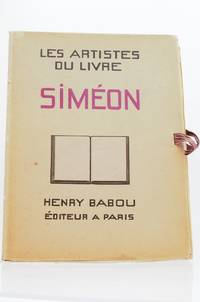
193075475Paris: Henri Babou 1930. Fine. Henri Babou Paris 1930 20.50 x 26.50 cm en feuilles sous chemise à lacets First edition one of 50 numbered copies on Japon ours unjustified deluxe copy. Fine copy spine and boards of the chemise marginally sunned and spotted. Letter-preface by Jean-Jacques Brousson. Photographic portrait of Fernand Siméon by Laure Albin Guillot. Work illustrated with a frontispiece black illustrations in the text as well as 15 hors-texte plates in black and colors extracted from works illustrated by the artist. Our copy lacks the original drawing by Fernand Siméon which should appear in the deluxe copies. Henri Babou hardcover
192670966Illustré par Fernand Siméon, exemplaire sur vélin de Rives numéroté, 1 vol. in-8 reliure demi-basane marron, dos à un nerf, couverture conservée, collection « Les Beaux Livres », Chez A. & G. Mornay, Libraires, Paris, 1926, 401 pp.
750Paris, Jonquières, 1923. In-8°, demi-chagrin bleu nuit, dos lisse orné de fleurons dorés et d'un décor à froid, tête dorée, couverture (Flammarion).
19586841958. Plattner Samuel; Graubündens Alterthümer 1876/Simeon A.; Begleiter durch die Kathedrale von Chur 1914/Schmucki Die Kathedrale von Chur 1928Poeschel E; Zur Baugeschichte der Kathedrale und der Kirche St.Lucius in Chur Poeschel E; Sonderdruck aus Anzeiger f.Schweiz.Altertumskunde 1930 Vier Schriften in Halbleineneinband. Handschriftl.Widmungen von Erwin Poeschel 4°. Hln. marm. Raetica unknown