Fernand SIMEON - Hugues REBELLBiblio.com
421 résultats
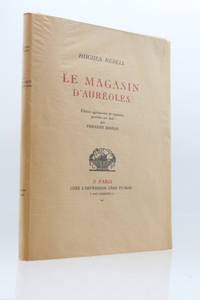
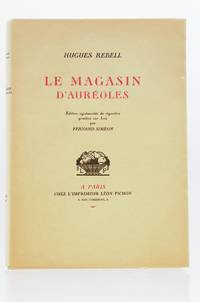
192775476Paris: Léon Pichon 1927. Fine. Léon Pichon Paris 1927 16.50 x 23 cm en feuilles Illustrated edition with 17 wood-engraved vignettes by Fernand Siméon one of 25 numbered copies on Japon Shidzuoka ours unnumbered but justified ""copy printed for Léon Pichon"" deluxe copy after 15 Japon à la forme. Handsome complete copy including as mentioned in the justification the suite on Chine of the wood engravings. Léon Pichon unknown
192775233Paris: Léon Pichon 1927. Fine. Léon Pichon Paris 1927 16.50 x 23 cm en feuilles Edition illustrated with 17 wood-engraved vignettes by Fernand Siméon one of 25 numbered copies on Japon Shidzuoka deluxe copies after 15 Japon à la forme. Handsome complete copy as mentioned in the justification page with the suite on China of the wood engravings. Léon Pichon unknown
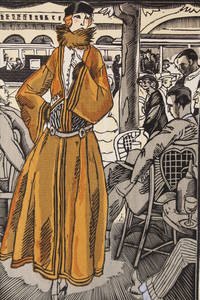
192154939Paris: Lucien Vogel éditeur 1921. Fine. Lucien Vogel éditeur Paris 1921 18 x 24 cm une feuille Original color print printed on vergé paper signed in the plate. An original print used to illustrate the Gazette du bon ton one of the most attractive and influential 20th century fashion magazines featuring the talents of French artists and other contributors from the burgeoning Art Deco movement. A celebrated fashion magazine established in 1912 by Lucien Vogel La Gazette du bon ton appeared until 1925 with a hiatus from 1915 to 1920 due to the war the editor-in-chief having been called up for service. It consisted of 69 issues printed in only 2000 copies each and notably illustrated with 573 color plates and 148 sketches of the models of the great designers. Right from the start this sumptuous publication was aimed at bibliophiles and fashionable society Françoise Tétart-Vittu La Gazette du bon ton in Dictionnaire de la mode 2016 and was printed on fine vergé paper using a type cut specially for the magazine by Georges Peignot known as Cochin later used in 1946 by Christian Dior. The prints were made using stencils heightened in colors some highlighted in gold or palladium. The story began in 1912 when Lucien Vogel a man of the world involved in fashion he had already been part of the fashion magazine Femina decided with his wife Cosette de Brunhoff the sister of Jean creator of Babar to set up the Gazette du bon ton subtitled at the time: Art fashion frivolities. Georges Charensol noted the reasoning of the editor-in-chief: 'In 1910' he observed there was no really artistic fashion magazine nothing representative of the spirit of the time. My dream was therefore to make a luxury magazine with truly modern artists I was assured of success because when it comes to fashion no country on earth can compete with France.' Un grand éditeur d'art. Lucien Vogel in Les Nouvelles littéraires no. 133 May 1925. The magazine was immediately successful not only in France but also in the United States and Latin America. At first Vogel put together a team of seven artists: André-Édouard Marty and Pierre Brissaud followed by Georges Lepape and Dammicourt as well as eventually his friends from school and the School of Fine Arts like George Barbier Bernard Boutet de Monvel and Charles Martin. Other talented people soon came flocking to join the team: Guy Arnoux Léon Bakst Benito Boutet de Monvel Umberto Brunelleschi Chas Laborde Jean-Gabriel Domergue Raoul Dufy Édouard Halouze Alexandre Iacovleff Jean Émile Laboureur Charles Loupot Chalres Martin Maggie Salcedo. These artist mostly unknown when Lucien Vogel sought them out later became emblematic and sought-after artistic figures. It was also they who worked on the advertising drawings for the Gazette. The plates put the spotlight on and celebrate dresses by seven designers of the age: Lanvin Doeuillet Paquin Poiret Worth Vionnet and Doucet. The designers provided exclusive models for each issue. Nonetheless some of the illustrations are not based on real models but simply on the illustrator's conception of the fashion of the day. The Gazette du bon ton was an important step in the history of fashion. Combining aesthetic demands with the physical whole it brought together for the first time the great talents of the artistic literary and fashion worlds; and imposed through this alchemy a completely new image of women: slender independent and daring which was shared by the new generation of designers including Coco Chanel Jean Patou Marcel Rochas and so on Taken over in 1920 by Condé Montrose Nast the Gazette du bon ton was an important influence on the new layout and aesthetics of that little dying paper that Nast had bought a few years earlier: Vogue. Lucien Vogel éditeur unknown
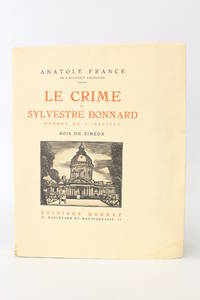
192365018Paris: Editions Mornay 1923. Fine. Editions Mornay Paris 1923 17.50 x 22 cm broché Edition illustrated with original etchings and woodcuts by Fernand Siméon one of 35 numbered copies on Holland paper ours being one of 24 hors commerce copies the most limited deluxe paper printing after a unique copy on old Japan paper. Handsome copy despite a small light dampstain at foot of front cover and on its rear flap verso. Our copy is complete as stipulated in the justification page with its suite of woodcuts on Japan paper and the proof before letters of the etchings. Editions Mornay unknown
1922219561922. Paris Editions RenÂŽ Kieffer 1922. Un fort vol. au format pt in-8 198 x 147 mm de 224 pp. brochÂŽ sous couverture ˆ rabats rempliÂŽs. Un des 35 exemplaires numÂŽrotÂŽs du tirage sur Japon ancien ˆ la forme recelant - outre les illustrations qu'il se doit de contenir - une suite in fine desdites illustrations tirÂŽes sur Japon pelure. ''Fernand SimÂŽon peignit et grava des illustrations pour des ÂŽcrivains du XVIIÂme au XXÂme siÂcle. Parmi ceux-ci A. de Chamisso Voltaire Anatole France etc''. in BÂŽnÂŽzit.''SimÂŽon rencontra Auguste LepÂre lequel lui fit dÂŽcouvrir l'art de la gravure sur bois. Entre 1920 et 1928 il a illustrÂŽ plus de quarante ouvrages qui lui valurent un renom dont il ne profita guÂre emportÂŽ en quelques jours par une mÂŽningite ˆ 44 ans. ''Le dessin de SimÂŽon est essentiellement moderne. Avec gožt il rÂŽunit les qualitÂŽs qu'on trouve plus poussÂŽes ou systÂŽmatiques chez d'autres artistes. Son talent est fait d'humour nonchalant de hardiesse dans l'expression de mesure dans la fantaisie de mesure surtout qui le conduit gaiement jusqu'ˆ la limite dangereuse de l'outrance. Nul ne reprÂŽsente aussi bien que lui parce que nul ne les concilie avec autant de tact les diverses tendances de la gravure franÂaise d'aprÂs-guerre. Comme les illustrateurs du XVIIÂme siÂcle il sait traduire les situations les plus scabreuses sans heurter le ton d'une bonne compagnie point begueule'' A.H. Martinie citÂŽ in Osterwalder. MahÂŽ RÂŽpertoire des ÂŽditions de luxe p. 226 - Carterert IV Le TrÂŽsor du bibliophile / IllustrÂŽs modernes p. 141 - BÂŽnÂŽzit IX Dictionnaire des peintres p. 608 - Osterwalder II Dictionnaire des illustrateurs p. 1079 - Monod 8265. Rares rousseurs et lÂŽgers frottements affectant le dos. Revers du premier feuillet - blanc - oxydÂŽ. Rousseurs dans le texte ; dont quelques feuillets sont plus largement pourvus. Du reste bonne condition. Exemplaire non coupÂŽ. b42961 unknown
1998LFA00be9Une plaquette de 32 pages, format 150 x 210 mm, broché couverture couleurs, illustré, publié en 1998, Guide du Patrimoine Naturel de la Région Rhône-Alpes, bon état
192387250Couverture rempliée illustrée. Édition ornée de 2 eaux-fortes et de bois gravés par Fernand SIMÉON. A grands témoins. Petite réparation au dos.
192135486Couverture beige jaunie aux extrémités. intérieur très rpopre. Avec 10 compositions originales sur calque gravées sur bois de Fernand Siméon, présentées chacune sous passe-partout. Non rogné.
192054798Lucien Vogel éditeur | Paris Septembre 1920 | 18 x 24 cm | une feuille
192154839Lucien Vogel éditeur | Paris 1921 | 18 x 24 cm | une feuille
192154939Lucien Vogel éditeur | Paris 1921 | 18 x 24 cm | une feuille
192365018Editions Mornay | Paris 1923 | 17.50 x 22 cm | broché
192775233Léon Pichon | Paris 1927 | 16.50 x 23 cm | en feuilles
192775476Léon Pichon | Paris 1927 | 16.50 x 23 cm | en feuilles
192164866Edition décoré de quatre-vingts compositions originales gravées sur bois par Fernand Siméon exemplaire sur papier de Rives numéroté, 1 vol. petit in-8 reliure demi-chagrin à coins lie de vin, couvertures conservées, dos à 5 nerfs, coll. Les Maîtres du Livres, Georges Crès et Cie, Paris, 1921, 331 pp.
1954008756Paris Galerie Le Soleil dans la tête 1954 En feuilles, couverture illustrée à rabats
1993R200007358CHEYNE MANIER MELINETTE. 1993. In-8. Broché. Bon état, Couv. convenable, Dos satisfaisant, Intérieur frais. 72 pages.. Avec Jaquette. . . Classification Dewey : 841-Poésie
192263687Bois originaux de F. Siméon, un des 500 exemplaires sur vélin à la Forme numérotés (n°443), 1 vol. petit in-8 reliure postérieure demi-basane marron, dos à deux séries de nerfs répétés, couv. conservées, Editions René Kieffer, Paris, 1922, 224 pp.
192221956Paris, Editions René Kieffer, 1922. Un fort vol. au format pt in-8 (198 x 147 mm) de 224 pp., broché, sous couverture à rabats rempliés.
1994LFA-126722948Un ouvrage de 211 pages, format 135 x 220 mm, illustré, broché, publié en 1994, PUG, collection "Résistances", bon état
196710182Albin michel 1967 493 pages in8. 1967. reliure pleine toile sous rodhoid. 493 pages. Le Fou d'Édenberg est un roman de Samivel publié en 1968 qui raconte l'histoire de la transformation de Saint Béat et de la résistance de Siméon Ecart face à la colonisation des espaces naturels. L'œuvre offre une critique impitoyable de la mutation des montagnes françaises et de la société des loisirs émergente
1933047318Edition De La Fondation Égyptologique Reine Élisabeth broché Couverture Illustrée 1933 414 pages en format 13 - 20 cm - couverture souillée
192043226Lucien Vogel éditeur | Paris [circa 1920] | 19.50 x 25 cm | une feuille
1933C82595Bruxelles, Fondation Egyptologique Reine Elisabeth 1933 vii + 415pp., 20cm., br.orig., C82595
1933100142474Fondation égyptologique reine élisabeth 1933 in8. 1933. Broché.