31 résultats
B174834-2Paris Librairie Payot et Cie. n.d. 271 1pp. 107 illus. Frontis. portrait. Dec. wraps. Glassine d.j. 5me mille. Light wear. Paris (Librairie Payot et Cie.), n.d. paperback
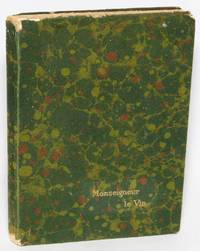
1927328556Paris: Établissements Nicolas 1927. Pamphlet. 101 9p. color illustrations maps 3 1 folded table 1 folded leaf with a 2-color chart wraps. 8x5.75. Includes a 2 page note from the publisher. Bound in crunchy velvet with a green marbled pattern. Chipped at head and tail of spine. Good. Monseigneur le Vin 4. Fourth volume of a planned five-volume series on the history of wine and wine-producing regions in France. Illustrations by Charles Egli known for his iconic illustrations for satirical journals such as Le Rire and L'Assiette au Beurre. Établissements Nicolas unknown
B174613-1Paris Librairie Payot et Cie. n.d. 301 1pp. 113 illus. Dec. illus. wraps. Glassine d.j. Paris (Librairie Payot et Cie.), n.d. paperback
B174834-1Paris Librairie Payot et Cie. n.d. 271 1pp. 107 illus. Frontis. portrait. Dec. wraps. Glassine d.j. Paris (Librairie Payot et Cie.), n.d. paperback
1930G5 - HAY175681930. Paris Calmann-Lévy Editeurs. en feuillets sous couverture rempliée. Couverture insolée rares et très faibles rousseurs en bas de quelques feuillets sinon très bon état des gravures. pt in-4. avec 66 compositions sur chine ; couverture avec titre en rouge et noir. unknown
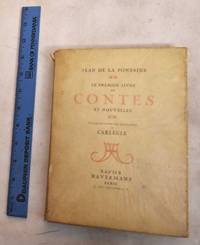
1927189671Paris: Xavier Havermans 1927. Softcover. VG- light shelfwear and soiling to wraps and text block pages are clean and clear. Tan wraps with black and red lettering; V 90 color and bw illustrations mylar cover. Text is in French. Color illustrations throughout from Swiss born artist Charles-Emile Carlegle. Xavier Havermans paperback
15538Bound with orig. wrappers in private boards gilt titlelabel. Top edge gilt. Uncut. No 457 of 940 "sur papier de Rives" a total of 1050. Many colour-illustrations by Carlègle. hardcover
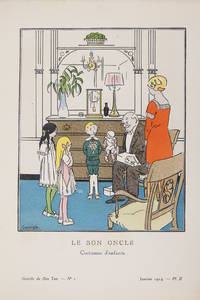
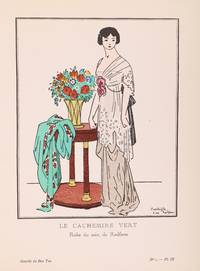
191443225Paris: Lucien Vogel éditeur 1914. Fine. Lucien Vogel éditeur Paris 1914 19.50 x 25 cm une feuille Original color print printed on vergé paper signed in the plate. An original print used to illustrate the Gazette du bon ton one of the most attractive and influential 20th century fashion magazines featuring the talents of French artists and other contributors from the burgeoning Art Deco movement. A celebrated fashion magazine established in 1912 by Lucien Vogel La Gazette du bon ton appeared until 1925 with a hiatus from 1915 to 1920 due to the war the editor-in-chief having been called up for service. It consisted of 69 issues printed in only 2000 copies each and notably illustrated with 573 color plates and 148 sketches of the models of the great designers. Right from the start this sumptuous publication was aimed at bibliophiles and fashionable society Françoise Tétart-Vittu La Gazette du bon ton in Dictionnaire de la mode 2016 and was printed on fine vergé paper using a type cut specially for the magazine by Georges Peignot known as Cochin later used in 1946 by Christian Dior. The prints were made using stencils heightened in colors some highlighted in gold or palladium. The story began in 1912 when Lucien Vogel a man of the world involved in fashion he had already been part of the fashion magazine Femina decided with his wife Cosette de Brunhoff the sister of Jean creator of Babar to set up the Gazette du bon ton subtitled at the time: Art fashion frivolities. Georges Charensol noted the reasoning of the editor-in-chief: 'In 1910' he observed there was no really artistic fashion magazine nothing representative of the spirit of the time. My dream was therefore to make a luxury magazine with truly modern artists I was assured of success because when it comes to fashion no country on earth can compete with France.' Un grand éditeur d'art. Lucien Vogel in Les Nouvelles littéraires no. 133 May 1925. The magazine was immediately successful not only in France but also in the United States and Latin America. At first Vogel put together a team of seven artists: André-Édouard Marty and Pierre Brissaud followed by Georges Lepape and Dammicourt as well as eventually his friends from school and the School of Fine Arts like George Barbier Bernard Boutet de Monvel and Charles Martin. Other talented people soon came flocking to join the team: Guy Arnoux Léon Bakst Benito Boutet de Monvel Umberto Brunelleschi Chas Laborde Jean-Gabriel Domergue Raoul Dufy Édouard Halouze Alexandre Iacovleff Jean Émile Laboureur Charles Loupot Chalres Martin Maggie Salcedo. These artist mostly unknown when Lucien Vogel sought them out later became emblematic and sought-after artistic figures. It was also they who worked on the advertising drawings for the Gazette. The plates put the spotlight on and celebrate dresses by seven designers of the age: Lanvin Doeuillet Paquin Poiret Worth Vionnet and Doucet. The designers provided exclusive models for each issue. Nonetheless some of the illustrations are not based on real models but simply on the illustrator's conception of the fashion of the day. The Gazette du bon ton was an important step in the history of fashion. Combining aesthetic demands with the physical whole it brought together for the first time the great talents of the artistic literary and fashion worlds; and imposed through this alchemy a completely new image of women: slender independent and daring which was shared by the new generation of designers including Coco Chanel Jean Patou Marcel Rochas and so on Taken over in 1920 by Condé Montrose Nast the Gazette du bon ton was an important influence on the new layout and aesthetics of that little dying paper that Nast had bought a few years earlier: Vogue. Lucien Vogel éditeur unknown
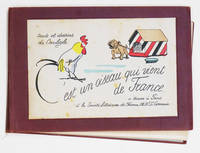
103392Paris Société littéraire de France 1916. Quer-8° 56 S. m blattgrosssen Illustr. OLwd. m Deckelillustration Deckel berieben min. fleckig Exlibris a Vors. Im Gelenk etws locker. Charles-Émile Egli dit Carlègle 1877–1937 est un graveur illustrateur et peintre suisse naturalisé français.Sous le nom de « Carlègle » il illustre des journaux satiriques tels que L'Assiette au beurre Le Rire Demain ou La Vie parisienne mais aussi L'Illustration Cocorico Fantasio et de nombreux livres et textes classiques ou contemporains comme La Fontaine Ronsard Verlaine Henri de Régnier etc.À compter de 1905 il commence à publier des albums de gravures comme L'Automobile 217-UU et Une histoire qui finit mal. En 1908 il commence à réaliser des illustrations destinées à des ouvrages. En 1909 il participe à des expositions internationales de dessinateurs humoristiques Paris Copenhague. Sa production ne faiblit pas dans les années 1920 et il reste à la fois chic et populaire produisant pour la Gazette du Bon Ton et La Vie Parisienne. Text franz. Dieses Buch befindet sich in unserem Aussenlager; sollten Sie dieses im Laden abholen wollen bitten wir Sie um vorgängige Nachricht. 010 Paris, Société littéraire de France, 1916 unknown
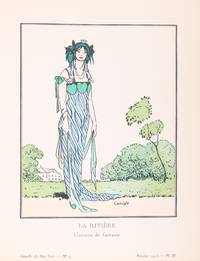
191389412Paris: Lucien Vogel éditeur 1913. Fine. Lucien Vogel éditeur Paris Février 1913 19 x 24.50 cm une feuille Original colour print printed on laid paper and signed in the plate lower right. Original engraving produced for the illustration of La Gazette du Bon Ton one of the most beautiful and influential fashion journals of the 20th century celebrating the talent of French designers and artists at the height of the Art Deco era. A celebrated fashion magazine established in 1912 by Lucien Vogel La Gazette du bon ton appeared until 1925 with a hiatus from 1915 to 1920 due to the war the editor-in-chief having been called up for service. It consisted of 69 issues printed in only 2000 copies each and notably illustrated with 573 color plates and 148 sketches of the models of the great designers. Right from the start this sumptuous publication “was aimed at bibliophiles and fashionable society” Françoise Tétart-Vittu “La Gazette du bon ton” in Dictionnaire de la mode 2016 and was printed on fine vergé paper using a type cut specially for the magazine by Georges Peignot known as Cochin later used in 1946 by Christian Dior. The prints were made using stencils heightened in colors some highlighted in gold or palladium. The story began in 1912 when Lucien Vogel a man of the world involved in fashion he had already been part of the fashion magazine Femina decided with his wife Cosette de Brunhoff – the sister of Jean creator of Babar – to set up the Gazette du bon ton subtitled at the time: “Art fashion frivolities.”  Georges Charensol noted the reasoning of the editor-in-chief: “’In 1910Â’ he observed ‘there was no really artistic fashion magazine nothing representative of the spirit of the time. My dream was therefore to make a luxury magazine with truly modern artistsÂ…I was assured of success because when it comes to fashion no country on earth can compete with France.’” “Un grand éditeur dÂ’art. Lucien Vogel” in Les Nouvelles littéraires no. 133 May 1925. The magazine was immediately successful not only in France but also in the United States and Latin America. At first Vogel put together a team of seven artists: André-Édouard Marty and Pierre Brissaud followed by Georges Lepape and Dammicourt as well as eventually his friends from school and the School of Fine Arts like George Barbier Bernard Boutet de Monvel and Charles Martin. Other talented people soon came flocking to join the team: Guy Arnoux Léon Bakst Benito Boutet de Monvel Umberto Brunelleschi Chas Laborde Jean-Gabriel Domergue Raoul Dufy Édouard Halouze Alexandre Iacovleff Jean Émile Laboureur Charles Loupot Chalres Martin Maggie Salcedo. These artist mostly unknown when Lucien Vogel sought them out later became emblematic and sought-after artistic figures. It was also they who worked on the advertising drawings for the Gazette. The plates put the spotlight on and celebrate dresses by seven designers of the age: Lanvin Doeuillet Paquin Poiret Worth Vionnet and Doucet. The designers provided exclusive models for each issue. Nonetheless some of the illustrations are not based on real models but simply on the illustratorÂ’s conception of the fashion of the day.   The Gazette du bon ton was an important step in the history of fashion. Combining aesthetic demands with the physical whole it brought together – for the first time – the great talents of the artistic literary and fashion worlds; and imposed through this alchemy a completely new image of women: slender independent and daring which was shared by the new generation of designers including Coco Chanel Jean Patou Marcel Rochas and so onÂ… Taken over in 1920 by Condé Montrose Nast the Gazette du bon ton was an important influence on the new layout and aesthetics of that “little dying paper” that Nast had bought a few years earlier: Vogue. Lucien Vogel éditeur unknown
191354503Paris: Lucien Vogel éditeur 1913. Fine. Lucien Vogel éditeur Paris Février 1913 19 x 24.50 cm une feuille Original color print printed on vergé paper signed in the plate. An original print used to illustrate the Gazette du bon ton one of the most attractive and influential 20th century fashion magazines featuring the talents of French artists and other contributors from the burgeoning Art Deco movement. A celebrated fashion magazine established in 1912 by Lucien Vogel La Gazette du bon ton appeared until 1925 with a hiatus from 1915 to 1920 due to the war the editor-in-chief having been called up for service. It consisted of 69 issues printed in only 2000 copies each and notably illustrated with 573 color plates and 148 sketches of the models of the great designers. Right from the start this sumptuous publication was aimed at bibliophiles and fashionable society Françoise Tétart-Vittu La Gazette du bon ton in Dictionnaire de la mode 2016 and was printed on fine vergé paper using a type cut specially for the magazine by Georges Peignot known as Cochin later used in 1946 by Christian Dior. The prints were made using stencils heightened in colors some highlighted in gold or palladium. The story began in 1912 when Lucien Vogel a man of the world involved in fashion he had already been part of the fashion magazine Femina decided with his wife Cosette de Brunhoff the sister of Jean creator of Babar to set up the Gazette du bon ton subtitled at the time: Art fashion frivolities. Georges Charensol noted the reasoning of the editor-in-chief: In 1910 he observed there was no really artistic fashion magazine nothing representative of the spirit of the time. My dream was therefore to make a luxury magazine with truly modern artists I was assured of success because when it comes to fashion no country on earth can compete with France. Un grand éditeur dart. Lucien Vogel in Les Nouvelles littéraires no. 133 May 1925. The magazine was immediately successful not only in France but also in the United States and Latin America. At first Vogel put together a team of seven artists: André-Édouard Marty and Pierre Brissaud followed by Georges Lepape and Dammicourt as well as eventually his friends from school and the School of Fine Arts like George Barbier Bernard Boutet de Monvel and Charles Martin. Other talented people soon came flocking to join the team: Guy Arnoux Léon Bakst Benito Boutet de Monvel Umberto Brunelleschi Chas Laborde Jean-Gabriel Domergue Raoul Dufy Édouard Halouze Alexandre Iacovleff Jean Émile Laboureur Charles Loupot Chalres Martin Maggie Salcedo. These artist mostly unknown when Lucien Vogel sought them out later became emblematic and sought-after artistic figures. It was also they who worked on the advertising drawings for the Gazette. The plates put the spotlight on and celebrate dresses by seven designers of the age: Lanvin Doeuillet Paquin Poiret Worth Vionnet and Doucet. The designers provided exclusive models for each issue. Nonetheless some of the illustrations are not based on real models but simply on the illustrators conception of the fashion of the day. The Gazette du bon ton was an important step in the history of fashion. Combining aesthetic demands with the physical whole it brought together for the first time the great talents of the artistic literary and fashion worlds; and imposed through this alchemy a completely new image of women: slender independent and daring which was shared by the new generation of designers including Coco Chanel Jean Patou Marcel Rochas and so on Taken over in 1920 by Condé Montrose Nast the Gazette du bon ton was an important influence on the new layout and aesthetics of that little dying paper that Nast had bought a few years earlier: Vogue. Lucien Vogel éditeur unknown
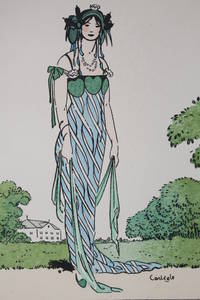
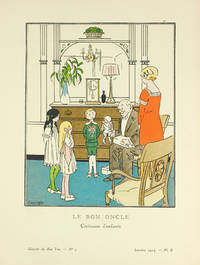
191484681Paris: Lucien Vogel éditeur 1914. Fine. Lucien Vogel éditeur Paris Janvier 1914 19 x 24.50 cm une feuille Original color print printed on laid paper signed at the bottom left of the plate. Original engraving created for the illustration of La Gazette du bon ton one of the most beautiful and influential fashion magazines of the 20th century celebrating the talent of French creators and artists in the full flowering of Art Deco. This famous fashion magazine founded in 1912 by Lucien Vogel was published until 1925 with an interruption during the War from 1915 to 1920 due to the mobilization of its editor-in-chief. It consists of 69 issues printed in only 2000 copies and is illustrated notably with 573 color plates and 148 sketches representing models by great couturiers. From their publication these luxurious publications ""address bibliophiles and worldly aesthetes"" Françoise Tétart-Vittu ""La Gazette du bon ton"" in Dictionnaire de la mode 2016. Printed on beautiful laid paper they use a typeface specially created for the magazine by Georges Peignot the Cochin character adopted in 1946 by Christian Dior. The prints are made using the metal stencil technique heightened in colors and some highlighted in gold or palladium. The adventure began in 1912 when Lucien Vogel a man of society and fashion - he had already participated in the magazine Femina - decided to found with his wife Cosette de Brunhoff sister of Jean the father of Babar the Gazette du bon ton whose subtitle was then ""Art modes et frivolités"". Georges Charensol reports the words of the editor-in-chief: ""In 1910 he observes there existed no fashion journal truly artistic and representative of the spirit of its time. I was therefore thinking of making a luxury magazine with truly modern artists . I was certain of success because for fashion no country can rival France."" ""Un grand éditeur d'art. Lucien Vogel"" in Les Nouvelles littéraires n°133 May 1925. The success of the magazine was immediate not only in France but also in the United States and South America. Originally Vogel therefore brought together a group of seven artists: André-Édouard Marty and Pierre Brissaud followed by Georges Lepape and Dammicourt; and finally his friends from the École des beaux-arts who were George Barbier Bernard Boutet de Monvel or Charles Martin. Other talents quickly came to join the team: Guy Arnoux Léon Bakst Benito Boutet de Monvel Umberto Brunelleschi Chas Laborde Jean-Gabriel Domergue Raoul Dufy Édouard Halouze Alexandre Iacovleff Jean Émile Laboureur Charles Loupot Charles Martin Maggie Salcedo. These artists mostly unknown when Lucien Vogel called upon them would subsequently become emblematic and sought-after artistic figures. These same illustrators created the drawings for the Gazette's advertisements. The plates highlight and sublimate the dresses of seven creators of the time: Lanvin Doeuillet Paquin Poiret Worth Vionnet and Doucet. The couturiers provided exclusive models for each issue. Nevertheless some of the illustrations featured no real model but only the illustrator's idea of the fashion of the day. La Gazette du bon ton is a decisive stage in the history of fashion. Combining aesthetic demands and plastic unity it brought together for the first time the great talents of the world of arts letters and fashion and imposed through this alchemy a completely new image of woman slender independent and audacious also carried by the new generation of couturiers Coco Chanel Jean Patou Marcel Rochas. Taken over in 1920 by Condé Montrose Nast the Gazette du bon ton would largely inspire the new composition and aesthetic choices of the ""dying little journal"" that Nast had bought a few years earlier: Vogue magazine. Lucien Vogel éditeur unknown
191489465Paris 1914. Fine. Paris Janvier 1914 19 x 24.50 cm une feuille Original colour print printed on laid paper and signed in the plate lower left. Original engraving produced for the illustration of La Gazette du Bon Ton one of the most beautiful and influential fashion journals of the 20th century celebrating the talent of French designers and artists at the height of the Art Deco era. A celebrated fashion magazine established in 1912 by Lucien Vogel La Gazette du bon ton appeared until 1925 with a hiatus from 1915 to 1920 due to the war the editor-in-chief having been called up for service. It consisted of 69 issues printed in only 2000 copies each and notably illustrated with 573 color plates and 148 sketches of the models of the great designers. Right from the start this sumptuous publication “was aimed at bibliophiles and fashionable society” Françoise Tétart-Vittu “La Gazette du bon ton” in Dictionnaire de la mode 2016 and was printed on fine vergé paper using a type cut specially for the magazine by Georges Peignot known as Cochin later used in 1946 by Christian Dior. The prints were made using stencils heightened in colors some highlighted in gold or palladium. The story began in 1912 when Lucien Vogel a man of the world involved in fashion he had already been part of the fashion magazine Femina decided with his wife Cosette de Brunhoff – the sister of Jean creator of Babar – to set up the Gazette du bon ton subtitled at the time: “Art fashion frivolities.”  Georges Charensol noted the reasoning of the editor-in-chief: “’In 1910’ he observed ‘there was no really artistic fashion magazine nothing representative of the spirit of the time. My dream was therefore to make a luxury magazine with truly modern artists…I was assured of success because when it comes to fashion no country on earth can compete with France.’” “Un grand éditeur d’art. Lucien Vogel” in Les Nouvelles littéraires no. 133 May 1925. The magazine was immediately successful not only in France but also in the United States and Latin America. At first Vogel put together a team of seven artists: André-Édouard Marty and Pierre Brissaud followed by Georges Lepape and Dammicourt as well as eventually his friends from school and the School of Fine Arts like George Barbier Bernard Boutet de Monvel and Charles Martin. Other talented people soon came flocking to join the team: Guy Arnoux Léon Bakst Benito Boutet de Monvel Umberto Brunelleschi Chas Laborde Jean-Gabriel Domergue Raoul Dufy Édouard Halouze Alexandre Iacovleff Jean Émile Laboureur Charles Loupot Chalres Martin Maggie Salcedo. These artist mostly unknown when Lucien Vogel sought them out later became emblematic and sought-after artistic figures. It was also they who worked on the advertising drawings for the Gazette. The plates put the spotlight on and celebrate dresses by seven designers of the age: Lanvin Doeuillet Paquin Poiret Worth Vionnet and Doucet. The designers provided exclusive models for each issue. Nonetheless some of the illustrations are not based on real models but simply on the illustrator’s conception of the fashion of the day.   The Gazette du bon ton was an important step in the history of fashion. Combining aesthetic demands with the physical whole it brought together – for the first time – the great talents of the artistic literary and fashion worlds; and imposed through this alchemy a completely new image of women: slender independent and daring which was shared by the new generation of designers including Coco Chanel Jean Patou Marcel Rochas and so on… Taken over in 1920 by Condé Montrose Nast the Gazette du bon ton was an important influence on the new layout and aesthetics of that “little dying paper” that Nast had bought a few years earlier: Vogue. unknown
191454616Paris: Lucien Vogel éditeur 1914. Fine. Lucien Vogel éditeur Paris Janvier 1914 19 x 24.50 cm une feuille Original color print printed on vergé paper signed in the plate. An original print used to illustrate the Gazette du bon ton one of the most attractive and influential 20th century fashion magazines featuring the talents of French artists and other contributors from the burgeoning Art Deco movement. A celebrated fashion magazine established in 1912 by Lucien Vogel La Gazette du bon ton appeared until 1925 with a hiatus from 1915 to 1920 due to the war the editor-in-chief having been called up for service. It consisted of 69 issues printed in only 2000 copies each and notably illustrated with 573 color plates and 148 sketches of the models of the great designers. Right from the start this sumptuous publication was aimed at bibliophiles and fashionable society Françoise Tétart-Vittu La Gazette du bon ton in Dictionnaire de la mode 2016 and was printed on fine vergé paper using a type cut specially for the magazine by Georges Peignot known as Cochin later used in 1946 by Christian Dior. The prints were made using stencils heightened in colors some highlighted in gold or palladium. The story began in 1912 when Lucien Vogel a man of the world involved in fashion he had already been part of the fashion magazine Femina decided with his wife Cosette de Brunhoff the sister of Jean creator of Babar to set up the Gazette du bon ton subtitled at the time: Art fashion frivolities. Georges Charensol noted the reasoning of the editor-in-chief: 'In 1910' he observed there was no really artistic fashion magazine nothing representative of the spirit of the time. My dream was therefore to make a luxury magazine with truly modern artists I was assured of success because when it comes to fashion no country on earth can compete with France.' Un grand éditeur d'art. Lucien Vogel in Les Nouvelles littéraires no. 133 May 1925. The magazine was immediately successful not only in France but also in the United States and Latin America. At first Vogel put together a team of seven artists: André-Édouard Marty and Pierre Brissaud followed by Georges Lepape and Dammicourt as well as eventually his friends from school and the School of Fine Arts like George Barbier Bernard Boutet de Monvel and Charles Martin. Other talented people soon came flocking to join the team: Guy Arnoux Léon Bakst Benito Boutet de Monvel Umberto Brunelleschi Chas Laborde Jean-Gabriel Domergue Raoul Dufy Édouard Halouze Alexandre Iacovleff Jean Émile Laboureur Charles Loupot Chalres Martin Maggie Salcedo. These artist mostly unknown when Lucien Vogel sought them out later became emblematic and sought-after artistic figures. It was also they who worked on the advertising drawings for the Gazette. The plates put the spotlight on and celebrate dresses by seven designers of the age: Lanvin Doeuillet Paquin Poiret Worth Vionnet and Doucet. The designers provided exclusive models for each issue. Nonetheless some of the illustrations are not based on real models but simply on the illustrator's conception of the fashion of the day. The Gazette du bon ton was an important step in the history of fashion. Combining aesthetic demands with the physical whole it brought together for the first time the great talents of the artistic literary and fashion worlds; and imposed through this alchemy a completely new image of women: slender independent and daring which was shared by the new generation of designers including Coco Chanel Jean Patou Marcel Rochas and so on Taken over in 1920 by Condé Montrose Nast the Gazette du bon ton was an important influence on the new layout and aesthetics of that little dying paper that Nast had bought a few years earlier: Vogue. Lucien Vogel éditeur unknown
1929265991929. A Paris Editions Mornay / Coll. ''Les Beaux livres'' 1929. Un vol. au format gd in-12 203 x 154 mm de 289 pp. Reliure de l'ÂŽpoque de demi-maroquin olive ˆ coins filets dorÂŽs portÂŽs sur les plats dos ˆ nerfs ornÂŽ de filets gras ˆ froid titre dorÂŽ tÂte dorÂŽe sur tÂŽmoins couvertures et dos conservÂŽs. Flammarion. Exemplaire - qui a conservÂŽ ses couvertures papier originelles - est ici revÂtu d'une agrÂŽable reliure du temps signÂŽe Flammarion. Un des 825 exemplaires numÂŽrotÂŽs du tirage sur vÂŽlin de Rives. L'ouvrage s'agrÂŽmente - ici en premier tirage - de dÂŽlicieuses illustrations en couleurs de CarlÂgle. En peintre subtil des moeurs de la vie de province dont l'atmosphÂre se retrouve au coeur de beaucoup de ses histoires Boylesve livre ici un conte libertin et malicieux ÂŽcrit d'une plume dÂŽlicate et lÂŽgÂre. Saint-Martin 5.000 dessinateurs de presse p. 776 - BÂŽnÂŽzit IX Dictionnaire des peintres p. 316. Angles ÂŽlimÂŽs. Dos passÂŽ. Quelques lÂŽgers frottements affectant la reliure. TrÂs rares rousseurs dans le texte. Du reste belle condition. b42961 unknown
15530Bound with orig. frontwrapper in cont. hcalf. No 948 of 928 "sur papier de Rives" a total of 1065. Fine colourplates by Carlègle. unknown
191289478Paris 1912. Fine. Paris 1912-1913 19 x 24.50 cm une feuille Original colour print printed on laid paper and signed in the plate lower right. Original engraving produced for the illustration of La Gazette du Bon Ton one of the most beautiful and influential fashion journals of the 20th century celebrating the talent of French designers and artists at the height of the Art Deco era. A celebrated fashion magazine established in 1912 by Lucien Vogel La Gazette du bon ton appeared until 1925 with a hiatus from 1915 to 1920 due to the war the editor-in-chief having been called up for service. It consisted of 69 issues printed in only 2000 copies each and notably illustrated with 573 color plates and 148 sketches of the models of the great designers. Right from the start this sumptuous publication “was aimed at bibliophiles and fashionable society” Françoise Tétart-Vittu “La Gazette du bon ton” in Dictionnaire de la mode 2016 and was printed on fine vergé paper using a type cut specially for the magazine by Georges Peignot known as Cochin later used in 1946 by Christian Dior. The prints were made using stencils heightened in colors some highlighted in gold or palladium. The story began in 1912 when Lucien Vogel a man of the world involved in fashion he had already been part of the fashion magazine Femina decided with his wife Cosette de Brunhoff – the sister of Jean creator of Babar – to set up the Gazette du bon ton subtitled at the time: “Art fashion frivolities.”  Georges Charensol noted the reasoning of the editor-in-chief: “’In 1910’ he observed ‘there was no really artistic fashion magazine nothing representative of the spirit of the time. My dream was therefore to make a luxury magazine with truly modern artists…I was assured of success because when it comes to fashion no country on earth can compete with France.’” “Un grand éditeur d’art. Lucien Vogel” in Les Nouvelles littéraires no. 133 May 1925. The magazine was immediately successful not only in France but also in the United States and Latin America. At first Vogel put together a team of seven artists: André-Édouard Marty and Pierre Brissaud followed by Georges Lepape and Dammicourt as well as eventually his friends from school and the School of Fine Arts like George Barbier Bernard Boutet de Monvel and Charles Martin. Other talented people soon came flocking to join the team: Guy Arnoux Léon Bakst Benito Boutet de Monvel Umberto Brunelleschi Chas Laborde Jean-Gabriel Domergue Raoul Dufy Édouard Halouze Alexandre Iacovleff Jean Émile Laboureur Charles Loupot Chalres Martin Maggie Salcedo. These artist mostly unknown when Lucien Vogel sought them out later became emblematic and sought-after artistic figures. It was also they who worked on the advertising drawings for the Gazette. The plates put the spotlight on and celebrate dresses by seven designers of the age: Lanvin Doeuillet Paquin Poiret Worth Vionnet and Doucet. The designers provided exclusive models for each issue. Nonetheless some of the illustrations are not based on real models but simply on the illustrator’s conception of the fashion of the day.   The Gazette du bon ton was an important step in the history of fashion. Combining aesthetic demands with the physical whole it brought together – for the first time – the great talents of the artistic literary and fashion worlds; and imposed through this alchemy a completely new image of women: slender independent and daring which was shared by the new generation of designers including Coco Chanel Jean Patou Marcel Rochas and so on… Taken over in 1920 by Condé Montrose Nast the Gazette du bon ton was an important influence on the new layout and aesthetics of that “little dying paper” that Nast had bought a few years earlier: Vogue. unknown
191254480Paris: Lucien Vogel éditeur 1912. Fine. Lucien Vogel éditeur Paris 1912-1913 19 x 24.50 cm une feuille Original color print printed on vergé paper signed in the plate. An original print used to illustrate the Gazette du bon ton one of the most attractive and influential 20th century fashion magazines featuring the talents of French artists and other contributors from the burgeoning Art Deco movement. A celebrated fashion magazine established in 1912 by Lucien Vogel La Gazette du bon ton appeared until 1925 with a hiatus from 1915 to 1920 due to the war the editor-in-chief having been called up for service. It consisted of 69 issues printed in only 2000 copies each and notably illustrated with 573 color plates and 148 sketches of the models of the great designers. Right from the start this sumptuous publication was aimed at bibliophiles and fashionable society Françoise Tétart-Vittu La Gazette du bon ton in Dictionnaire de la mode 2016 and was printed on fine vergé paper using a type cut specially for the magazine by Georges Peignot known as Cochin later used in 1946 by Christian Dior. The prints were made using stencils heightened in colors some highlighted in gold or palladium. The story began in 1912 when Lucien Vogel a man of the world involved in fashion he had already been part of the fashion magazine Femina decided with his wife Cosette de Brunhoff the sister of Jean creator of Babar to set up the Gazette du bon ton subtitled at the time: Art fashion frivolities. Georges Charensol noted the reasoning of the editor-in-chief: 'In 1910' he observed there was no really artistic fashion magazine nothing representative of the spirit of the time. My dream was therefore to make a luxury magazine with truly modern artists I was assured of success because when it comes to fashion no country on earth can compete with France.' Un grand éditeur d'art. Lucien Vogel in Les Nouvelles littéraires no. 133 May 1925. The magazine was immediately successful not only in France but also in the United States and Latin America. At first Vogel put together a team of seven artists: André-Édouard Marty and Pierre Brissaud followed by Georges Lepape and Dammicourt as well as eventually his friends from school and the School of Fine Arts like George Barbier Bernard Boutet de Monvel and Charles Martin. Other talented people soon came flocking to join the team: Guy Arnoux Léon Bakst Benito Boutet de Monvel Umberto Brunelleschi Chas Laborde Jean-Gabriel Domergue Raoul Dufy Édouard Halouze Alexandre Iacovleff Jean Émile Laboureur Charles Loupot Chalres Martin Maggie Salcedo. These artist mostly unknown when Lucien Vogel sought them out later became emblematic and sought-after artistic figures. It was also they who worked on the advertising drawings for the Gazette. The plates put the spotlight on and celebrate dresses by seven designers of the age: Lanvin Doeuillet Paquin Poiret Worth Vionnet and Doucet. The designers provided exclusive models for each issue. Nonetheless some of the illustrations are not based on real models but simply on the illustrator's conception of the fashion of the day. The Gazette du bon ton was an important step in the history of fashion. Combining aesthetic demands with the physical whole it brought together for the first time the great talents of the artistic literary and fashion worlds; and imposed through this alchemy a completely new image of women: slender independent and daring which was shared by the new generation of designers including Coco Chanel Jean Patou Marcel Rochas and so on Taken over in 1920 by Condé Montrose Nast the Gazette du bon ton was an important influence on the new layout and aesthetics of that little dying paper that Nast had bought a few years earlier: Vogue. Lucien Vogel éditeur unknown
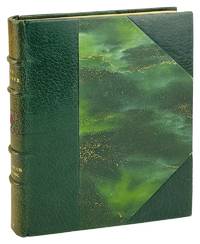
192931574Paris: Editions Mornay 1929. Very Good. Paris: Éditions Mornay 1929. First Thus Limited to 1000 copies of which this is no. 639. Small quarto; mid-century three-quarter forest green crushed morocco over marbled boards gilt spine in five compartments top edge gilt marbled endpapers original wrappers bound in; 291pp.; color frontispiece illus. throughout. Spine leather sunned to brown attractive bookseller ticket of the Montreal-based Librairie Deom to front pastedown else a Very Good to Near Fine example. Editions Mornay unknown
19141260651914. Paris: Lucien Vogel 1914. <br /> <br /> Single plate.<br /> <br /> § From a spectacularly illustrated fashion magazine of the early 1900s depicting the cutting edge of style at the time. unknown
12021Editions Mornay Paris 1933. In/8 broché couverture rempliée illustrée dune vignette illustrations de Carlègle : 30 compositions originales en couleur dont un frontispice une en-tête 27 in-texte et un cul de lampe 326 pages. Dos insolé avec léger manque en coiffe supérieur. Monod 3303. Exemplaire numéroté sur papier de Rives unknown
1917005716Paris: La Vie Parisienne 1917. First Edition . Illustrated Wraps. Very Good. 13.75" x 10.5. René Vincent Jacques Lehmann Nam Carlegle Vald'Es Valvérane & D'Espagnat other uncredited . Paris: La Vie Parisienne 1917. Illustrations - ephemera from the an unassembled issue of September 22 1917 of La Vie Parisienne from its Golden Age by some of the forty or fifty great illustration artists who gained famed in large part for their work in that famed Society magazine. 8 pages remaining here from an unstapled and not fully assembled original copy of the issue. The included art is by René Vincent Jacques Lehmann Nam Carlegle Vald'Es Valvérane & D'Espagnat and others uncredited . Text in French. Illustrated wraps in the very large folio size 13.75" x 10.5" 8 glossy pages here of an original 19. As remaining ephemera these pages are in Very Good condition and more than suitable for framing or other applications; a touch of crinkle and very little fade. See scans. The apparent reddish stains on the black and white spreads is color scan-through from the color illustrations on the opposite side of the page. See all scans. The two-page spreads - of a folio size publication - are too large to be completely included on even a large-format scanner but you will get the idea. The conceits of Art Nouveau and Art Deco evolving one to the other at the time as those could be manifested through depiction of the wonders of French women may never have been more stunning than they were through the remarkable sensibilities of the coterie of artists who regularly contributed to La Vie Parisienne. These pages are from an original - and of course first and only edition - unassembled example of that unique publication. As such extraordinarily hard to replace whether in full issues or as surviving frame-able ephemera as here. l-eph2 <br/> <br/> La Vie Parisienne paperback
1918005718Paris: La Vie Parisienne 1918. First Edition . Illustrated Wraps. Very Good. 13.75" x 10.5. Chéri Hérouard Georges Léonnec Suzanne Meunier Carlegle others uncredited. . Paris: La Vie Parisienne 1918. Illustrations - ephemera from an unassembled issue of March 23 1918 of La Vie Parisienne from its Golden Age by some of the forty or fifty great illustration artists who gained famed in large part for their work in that famed Society magazine. 8 pages remaining here from a partly stapled but not fully assembled original copy of the issue; one seam is even unopened. The included art is by Chéri Hérouard Georges Léonnec Suzanne Meunier Carlegle and others uncredited. Text in French. Illustrated wraps in the very large folio size 13.75" x 10.5" 8 glossy pages here of an original 19. As remaining ephemera these pages are in Very Good condition and more than suitable for framing or other applications; a touch of crinkle some tiny seam chips and short closed edge cuts none of which show up well in the scans which see. The two-page spreads - of a folio size publication - are too large to be completely included on even a large-format scanner but you will get the idea. The conceits of Art Nouveau and Art Deco evolving one to the other at the time as those could be manifested through depiction of the wonders of French women may never have been more stunning than they were through the remarkable sensibilities of the coterie of artists who regularly contributed to La Vie Parisienne. These pages are from an unassembled original - and of course first and only edition - example of that unique publication. As such extraordinarily hard to replace whether in full issues or as surviving frame-able ephemera as here. l-eph2 <br/> <br/> La Vie Parisienne paperback
B173345-1Paris Société Littéraire de France 1916. 4 56 2pp. Prof. illus. Text in manuscript by the artist. Oblong 4to. Cloth with dec. illus. supralibros title in color. Acetate d.j. New fitted cloth clamshell case. Paris (Société Littéraire de France), 1916. hardcover
191548950Paris: Payot & Cie 1915. Fine. Payot & Cie Paris 1915 13.50 x 20.50 cm broché First edition one of 15 numbered copies on Holland paper the only deluxe copies. Preface by Maurice Barrès. Work illustrated with a portrait of the author by Paul Jobert as frontispiece as well as 107 pen drawings by Charles-Emile Carlègle Small lacks to head of spine light adhesive paper stains to heads and feet of endpapers otherwise handsome full-margined copy. Payot & Cie unknown