133 résultats
1737LA - HAY325771737. A Paris chez Jacques Clousier. reliés plein veau marron éditeur. Plats parfois frottés ou avec petites épidermures ; quelques coins usés et une coiffe ainsi que les dos avec faiblesse des dorures ; le dos du tome 2 est fendu en tête et en pied ; certaines pages sont brunies légèrement et plis en coins inférieurs en début du deuxième tome sinon reliures solides et ensemble correct. 4 volumes in-12. enrichi de nombreuses planches de gravures ; avec aussi des bandeaux et culs-de-lampe ; dos à 5 nerfs avec caissons ornés de motifs floraux filets d'encadrements et titres dorés ; toutes tranches rouges. unknown
1734mon0003663117Paris: Chez Jacques Clousier 1734. Hardcover. Good. . full calf binding with raised bands and gilt on the spine cover shows minor wear. red edges marbled endpapers. pages clean. Paris: Chez Jacques Clousier hardcover
17321705260083Paris J. Clouzier 1732-01-01. Hardcover. Very Good. 4 volume set complete. New edition. Contemporary leather gilt spine raised bands leather spine labels. Marbled endpapers. Profusely illustrated with plates not collated. Rubbing wear head of joints starting. Scattered foxing. 3 title with repair. Wellcome IV page 495; Sommervogel VI page 1599. <br> Regnault occupied the chair of mathematics at the College Louis-le-Grand and applied the system of Descartes to the study of the exact sciences. Wanting to demonstrate that Antiquity is at the source of modern science Regnault confronts the knowledge of the ancients and that of his time in a living way. He thus imagines encounters between scientists and ancient and modern philosophers for example making dialogue between Aristotle and Descartes. Cioranescu III Bibliographie de la litterature francaise au XVIIIeme 52497; Querard VII La France litteraire p. 498. This is an oversized or heavy book that requires additional postage for international delivery outside the US. Paris, J. Clouzier hardcover
171962442à Paris: Par La Compagnie des libraires 1719. Fine. Par La Compagnie des libraires à Paris 1719 9 x 16 cm relié New edition after the first very rare published in 1670. Huet's Treatise on the Origin of Novels in the form of a letter to Segrais appears at the end of the first part of Zaïde. Armorial copy of Charlotte Emilie Le Fèvre de Caumartin de La cour de Balleroy daughter of Louis-François Le Fèvre de Caumartin lord of Boissy and wife of the Marquis de la Cour de Balleroy. Feminine arms are rare and sought after as few women formed libraries with their coat of arms. The Marquise de Balleroy who died in 1749 settled in Normandy and maintained an intense correspondence with the highest nobility from which she descended. Full speckled brown calf bindings. Raised band spines with decorative tooling. Morocco title labels in tan volume labels in speckled brown calf. Headcap of volume II split. A brown stain in corner of first 10 leaves of volume I gradually fading this stain recurring later spreading then disappearing. A browner area at edge of right corner of volume I on upper board. Despite some flaws a handsome copy. It is now considered that Zaïde was a collaborative work by Segrais and Madame de La Fayette whose Princess of Clèves would appear in 1678. Segrais was her secretary and it is thought that he provided the materials and historical research while Madame de La Fayette handled the entire writing. The action takes place in Spain in the 9th century. Consalve son of one of the greatest counts of Castile takes in Zaïde daughter of a Muslim prince following a shipwreck. Very quickly he falls in love with her but the two young people do not speak the same language. Par La Compagnie des libraires unknown
179868118à Paris: Chez L'auteur 1798. Fine. Chez L'auteur à Paris 1798 An VI 13 x 21.50 cm broché First edition. Gift inscription on cover: ""De la part de Regnault pour Baudet Lafarge représentant rue et hotel des champs Elisées"". Title of the title page: Catalogue raisonné d'un choix précieux de dessins et d'une nombreuse et riche collection d'estampes anciennes et modernes en feuilles en recueils et en oeuvres livres à figures science et arts tableaux et autres objets curieux. A handsome allegorical frontispiece depicting the interior of a cabinet and a title vignette with Basan's portrait in medallion both by Choffart. Original grey paper wrappers restored with blue paper boards. Spine unlettered with small lacks of paper. Brown dampstain traces to upper margin of final table leaves. Handsome copy full-margined fresh. In the preliminary pages biography of Basan and presentation of the collection. Followed by the catalogue arranged by schools. At the end an alphabetical table of artists' names and a table of contents prints schools. Chez L'auteur hardcover
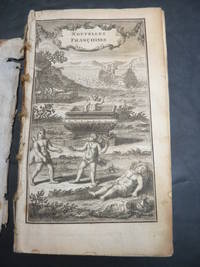
172214676à Paris: Chez Guillaume Saucrain 1722. Fine. Chez Guillaume Saucrain à Paris 1722 16 x 9.50 cm 2 volumes brochés New edition after the original of 1657 Sommaville. Edition illustrated with a frontispiece and 6 unsigned figures one for each novella as frontispiece. In original wrappers lacking binding. A light dampstain at the end of volume I in the middle. Segrais 1624-1701 was secretary to Mademoiselle de Montpensier from whom Madame de Lafayette would draw a narrative and director of the French Academy. The collection comprises 6 historical novellas a genre inaugurated a few years earlier by Madame de Lafayette's La princesse de Clèves. Lafayette's novels appeared under Segrais's pseudonym. In the preface Segrais speaks of a princess close to Louis XIV and retired to a castle with her attendants each telling a story the whole forming the entertainments of Princess Aurélie. These novellas constitute an important ensemble for 17th-century literature and a decisive step close to Madame de Lafayette's literature toward the modern narrative. Chez Guillaume Saucrain unknown