1 706 résultats
60111, Piqpoq, 2013 Hardcover, 159 pages, Texte en Francais, 240 x 170 mm, Nouveau ex. , illustrations en couleur / n/b. ISBN 9782919459049.
Hardcover, 159 pages, Texte en Francais, 240 x 170 mm, Nouveau ex. , illustrations en couleur / n/b. ISBN 9782919459049. Élève, enseignant, puis directeur de l'école Boulle, Jacques Hitier (1917-1999) se singularise parmi les créateurs modernes en apportant au meuble industriel son expérience d'artiste décorateur. Après des recherches menées dans l'équipement scolaire pour des marques aussi célèbres que Mobilor ou Mullca, il élargit son travail de création à l'habitation dès la fin des années 1940. Alors que le meuble industriel semblait condamné à équiper ateliers et collectivités depuis près d'un siècle, Jacques Hitier réussit à répondre aux désirs des particuliers. Associé à la firme Tubauto, il invente un style où le tube de métal s'intégre à l'intimité du logement, par la souplesse des lignes, la douceur des matières et la gaieté des couleurs. Cette monographie, réalisée à partir des archives conservées par sa famille, retrace le parcours de Jacques Hitier, avec des pages thématiques mettant en avant les temps forts de sa carrière, et des notices descriptives présentant ses oeuvres emblématiques.
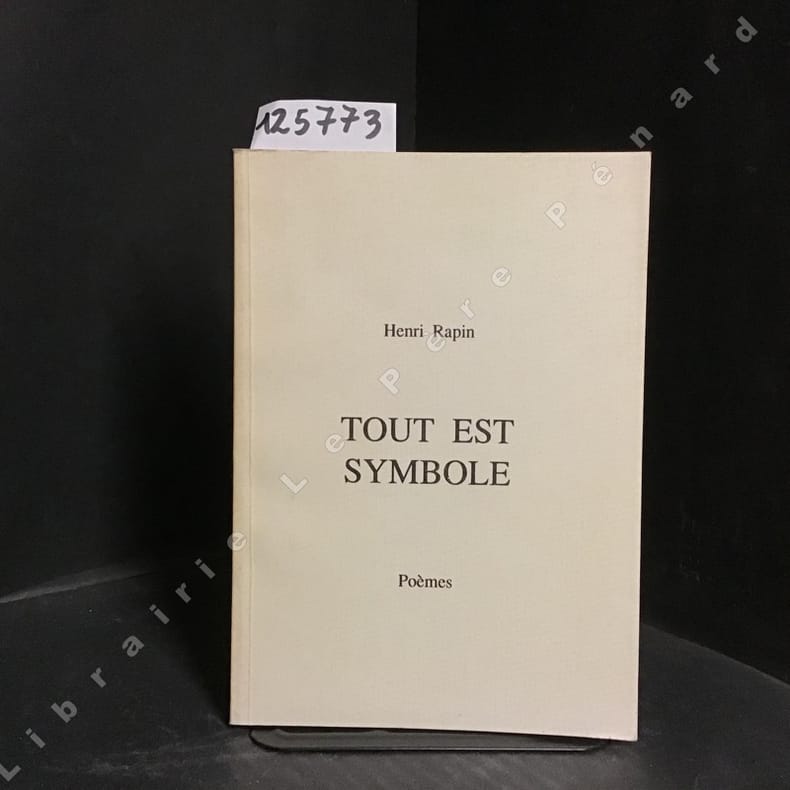
19951257731995 Editions non-renseignées - 1995 - In-8 broché - 94 pages - Avec un envoi d'Henri Rapin sur la page de garde
500344771Sans date.
38339Editions Olizane. 2005. In-8. Br. 829 p. BE.
19651126171New York, Macmillan, (1965). 4to. 278, (1) S. m. zahlr. teils farb. Abb. OLwd.
19956312EBNew York, Harry N. Abrams, 1995. 4°. 30 cm. 175 Seiten. Original-Leinenband mit Original-Schutzumschlag.
Paperback, English/ Finnish, 151 PAGES Illustrated. fine! ISBN 9789529878871. Timo Sarpaneva was originally trained as a graphic designer and the student assignments from his years at the Central School of Industrial Art (1940 ? 1949) have not been previously published or displayed. Less known works by him also include textile patterns and designs from the 1940s and 1950s. Added to these are paintings and graphic design by Timo Sarpaneva from the same period, 1943 ? 1956. Timo Sarpaneva : Piirroksia, luonnoksia ja maalauksia 1943 - 1956 Drawings, Sketches and Paintings 1943 - 1956 Paperback English, Finnish Translated by Jyri Kokkonen , Edited by Harry Kivilinna Share Timo Sarpaneva oli koulutukseltaan graafikko, ja hänen Taideteollisuus-keskuskoulun aikana (1940 - 1949) tekemiään koulutehtäviä ei ole aikaisemmin ollut esillä tai julkaistu. Vähemmän tunnettuja ovat myös hänen 1940-1950 - luvuilla suunnittelemansa tekstiilimallit. Tähän julkaisuun on lisäksi koottu hänen maalauksiaan ja grafiikkaa samalta ajanjaksolta, vuosilta 1943 - 1956. Timo Sarpaneva (1926-2006) oli monipuolinen kansainvälinen taiteilija ja suunnittelija, jonka ura ajoittuu seitsemälle vuosikymmenelle. Hän suunnitteli mm. tekstiilejä, painotuotteita, muovia, valurautaa, terästä, posliinia, lasia ja hopeaa. Hänen keksimälleen paperin- ja kankaanpainomenetelmälle myönnettiin kansainvälinen patentti. Myös Iittalan lasitehtaalla Sarpanevan keksimä Finlandia-pintalasitekniikka vaikutti suuresti seuraavien vuosien käyttö- ja taidelasin ilmeeseen. Jo Sarpanevan ensi esiintyminen taidemaalarina v. 1949 Helsingin Taidehallin nuortennäyttelyssä oli menestys. ?Sarpaneva on huomioon otettava koloristinen lahjakkuus, jonka hienostunut taidekäsitys antaa suuria lupauksia?, kirjoitti arvostettu taidekriitikko Edward Richter. Toinen sija Riihimäen lasitehtaan julistamassa kansainvälisessä lasinsuunnittelukilpailussa v. 1949, sytytti kiinnostuksen lasiin. Lasin parissa Sarpaneva työskenteli koko uransa ajan suunnitellen käyttö- ja taidelasia, sekä lasiveistoksia. Hänen teollista muotoiluaan on palkittu mm. Milanon Triennaleissa Grand Prix'lla. Sarpaneva on ottanut vastaan lukuisia huomionosoituksia mm. Pro Finlandia 1958 Maailman ensimmäinen muotoilun kunniatohtori, Royal College of Art, Lontoo 1967 Professorin arvonimi 1976 Akateemikko H.C., Academia de Diseno, University of Mexico City 1985 Kunniatohtori, Taideteollinen Korkeakoulu 1993
Pictorial softcover, 210 x 215mm., 160pp., very profound colour illustration. ISBN 9788874394906. Engaging Italian industry and culture in a single-minded and spontaneous project of national image building, Italy's designers have produced a complete variety of forms?fashion, graphic arts, and product and set design?with a unique international resonance. This book explores Italian design of the last half-century, featuring the classic lines of the Vespa, Bruno Munari's deconstruction of the common fork, the nostalgic appeal of Italo Marchioni's ice cream cone, and the sleek minimalism of Alberto Meda's "Light Light Chair," among many other masterpieces. Includes 148 illustrations and an introduction by Paola Antonelli, Senior Curator in the Department of Architecture and Design at the Museum. Moma 5. New book.
23049New York, Modern Museum of Art, 2008 Pictorial softcover, 210 x 215mm., 160pp., very profound colour illustration. ISBN 9788874394906.
47001, . Wasmuth, Berlin 2007, 23,5 x 27,5 cm. 296 S. mit 235 (115 farb.) Abb. Bibliografie, Anmerkungen und Register. Leinen. Text in deutscher Sprache. Gebonden, Hardcover met omslagwikkel compleet. ISBN 9783803032058.
23,5 x 27,5 cm. 296 S. mit 235 (115 farb.) Abb. Bibliografie, Anmerkungen und Register. Leinen. Text in deutscher Sprache. Gebonden, Hardcover met omslagwikkel compleet. ISBN 9783803032058. Er gehort zu den Pionieren der ?Industrieform? und ganzheitlicher Werbekonzepte, des ?Corporate Design? in den 1940er Jahren, konsequente Modernisierung des noch an kunstgewerblich orientiertem Design sein Hauptanliegen: Jupp Ernst wurde 1948 Direktor der Meisterschule fur das gestaltende Handwerk in Wuppertal, welche er in eine Ausbildungsstatte fur Industriedesign umbaute, die auch visuelle Kommunikation mit einbezog. Als Universalgestalter arbeitete Ernst nicht nur als Designer, sondern auch als Werbegrafiker, Fotograf oder Architekt, er war einer der fuhrenden Kopfe des Deutschen Werkbundes und des Rates fur Formgebung sowie auch Maler und Plastiker. Dieser Vielzahl von Tatigkeiten, der schopferischen Entwicklung und dem Lebenswerk von Jupp Ernst geht dieses Buch mit Hingabe nach. Beim Blattern dieses wohlgestalteten Bandes wird schnell eines deutlich: man mag den Namen vielleicht nicht gekannt haben - die Produkte aus Industriedesign und Grafik sind fast jedem schon einmal begegnet (Stichwort Melitta, Afri-Cola, Rosenthal etc.). Besonders interessant: das reichhaltige historische Fotomaterial, das uns quasi eine kleine Nebengeschichte des deutschen Industrie- und Mobeldesigns erzahlt!
201147648Berlin ; München : Dt. Kunstverl., 2011. 192 S.; zahlr. Ill. ; 32 cm Pp.
23224BE, Kunstboek, 2008 Hardback, 230x230mm, 156p, English / Dutch (NL) edition , new condition. . ISBN 9789058562357.
Hardback, 230x230mm, 156p, English / Dutch (NL) edition , new condition. . ISBN 9789058562357. Het surrealisme mag dan vooral gekend zijn als stroming binnen de literatuur en schone kunsten, toch is de invloed van deze 20e-eeuwse kunstrichting op andere domeinen niet te onderschatten. Ook de wereld van de vormgeving en het hedendaagse design ontsnapt niet aan een gezonde portie surreele humor. Forms with a smile bundelt ontwerpen en objecten van moderne surrealisten en toont aan dat niets is wat het lijkt. Harige tapijten, lampen in de vorm van een melkfles, usb-sticks gesneden uit houten takken of zetels gemaakt uit pluchen troeteldieren. Is het puur humor? Of is het een prikkelend statement verpakt in een aanstekelijke glimlach? Net zoals het surrealisme vertelt design soms meer dan we denken. Gewapend met subtiele ironie trekken deze nieuwe surrealisten ten strijde in een wereld waar een zekere serieux regeert. ----- Today surrealism may be firstly known as a school in literature and fine arts, but the influence of this 20th-century school on other domains cannot be underestimated. The world of contemporary design doesn't escape a healthy portion of surreal humour. Forms with a smile bundles designs and objects of modern surrealists and shows that nothing is what it seems to be. Hairy carpets, lamps in the shape of a milk bottle, USB sticks cut from wood branches or chairs made from plush toys. Is it just humour? Or is it a stimulating statement wrapped in a contagious smile? Just like surrealism, design sometimes tells more than we think. Armed with subtle irony these new surrealists wage war against a world reigned by a certain serieux.
1965R150179237CHEZ L AUTEUR.. 1965. In-8. Broché. Etat d'usage, Couv. légèrement passée, Agraffes rouillées, Intérieur acceptable. 78 pages.. . . . Classification Dewey : 70.49-Presse illustrée, magazines, revues
59130, Prestel 1990, 1990 Hardcover, 262 pages, ENG, 305 x 235 mm, cover isn't perfect , book itself is in good condition, illustrations in colour and b/w. ISBN 9783791310664.
Hardcover, 262 pages, ENG, 305 x 235 mm, cover isn't perfect , book itself is in good condition, illustrations in colour and b/w. ISBN 9783791310664. You're warmly familiar with the work. The first time you drank a modern-day bottle of Coca-Cola, his bottle shape became ingrained in your memory. From the prestigious design work he completed on President John F. Kennedy?s Air Force One to the design of the familiar Greyhound bus, Raymond Loewy's efforts showed no limitations. Raymond Loewy has long been regarded as the most famous American Industrial Designer.
Hardcover, 440 pages, ENG, 310 x 260 mm, book is in very fine order, with hundreds of images / photo's, in colour, everything you ever wanted to decorate your house with, is in this book !. ISBN 9780756623494. This comprehensive resource for collectors is a complete visual guide to the history of the decorative arts from furniture and ceramics to glass, silver and metalware, and textiles.
Testi di Elspeth Thompson. Tricia Guild è conosciuta per l'originalità delle sue collezioni di stoffe e carte da parati e per la straordinaria capacità nell'uso del colore e delle fantasie nella decorazione di interni. La sua ispirazione nasce dai tessuti, dalle tecniche, dai motivi e dai moduli ornamentali di ogni parte del mondo e di ogni epoca storica - il broccato e il damasco dell'Estremo Oriente, la tradizione dell'illustrazione botanica e della pittura floreale, gli scozzesi, i rigati e i quadrettati del Nord Europa, i vivaci stampati etnici dell'India e dell'America centrale, le decorazioni figurate delle porcellane cinesi ed europee, le audaci fantasie astratte e geometriche della pittura contemporanea. Oggi l'interesse per la decorazione ha raggiunto un vasto pubblico. Dopo interi decenni dominati dal minimalismo, il colore è tornato prepotentemente alla ribalta tanto nei tessuti quanto nella carta da parati. Fra i maggiori designer a livello mondiale, Tricia Guild sa interpretare con maestria questa tendenza. Scegliere motivi tradizionali e reinterpretarli in chiave moderna, elaborare usi sorprendentemente contemporanei di tecniche dimenticate come la stampa a floccaggio, rivisitare motivi decorativi osservati nei molti viaggi in ogni parte del mondo, dall'Italia all'India: tutto questo fa parte del suo modo di intendere il lavoro. Il libro offre a tutti spunti e idee per valorizzare la propria casa. Note alle condizioni del volume Nessuna. (T-CA) Autore/i Tricia Guild, Elspeth Thompson Editore Arnoldo Mondadori Editore Luogo Milano Anno 2009 Pagine 208 Dimensioni 24x30 (cm) Illustrazioni ill. colori n.t. - colors ills Legatura cart. edit. con sovracc. ill. colori - Hardcover with dustjacket Conservazione Nuovo - New Lingua Italiano - Italian text Peso 1900 (gr) ISBN 8837068506 EAN-13 9788837068509
in-4° carre (26x24), 218 pp, abondante iconographie en couleurs, reliure editeur. Bel exemplaire, sans la jaquette. [PIL-HA1@] Nombreuses illustrations d'intérieurs et de mobilier des annees soixante.
Hardcover, 352 pages Illustrated. 32 x 25 cm . ENGLISH ISBN 9783961711796. A vivid company biography of leading furniture manufacturer Walter Knoll based on its formative figures Wilhelm, Hans, and Walter Knoll and, for more than 25 years to date, Markus Benz. Walter Knoll, the book, charts the more than one-and-a-half-century-old history of this remarkable furniture dynasty, tracing the evolution of its designs in relation to key cultural and historical developments. When the Thomas Mann House in Los Angeles was recently bought by the Federal Republic of Germany and transformed into a representative transatlantic meeting place, it was Walter Knoll furnishings that defined its interior design and showcased German creativity and economic-cultural performance. Based in Herrenberg, near Stuttgart, the more than 150-year-old furniture business is one of the most successful furniture companies of the modern era and a global leader in the high-end furnishings segment. Walter Knoll's impressively long history dates back to Wilhelm Knoll, the founding father of the Knoll dynasty, who first set up a leather shop in Stuttgart in 1865. Knoll rose from being a tanner and merchant to the court purveyor to the House of Wurttemberg. When his sons, Willy and Walter, took over the company in 1907, they began producing seating-introducing the first club armchair to Germany and becoming the industry's first exporter. Their advances marked a revolution in upholstered furniture. After founding his own company in the 1920s, Walter Knoll was a breakout sensation in the avant-garde interior design world with a landmark exhibition at the Weissenhof Estate in Stuttgart, under the direction of Mies van der Rohe, in 1927. His son, Hans Knoll, went to the U.S. in the 1930s and himself founded his own company, Knoll Inc., and with it, re-wrote design history. In 1993, Markus Benz, the son of Rolf Benz, joined the Knoll ranks, continuing the successful cooperation with internationally-renowned architects and designers.
In-8 (cm. 26), 6 volumi, brossura illustrata, con alette, pp. 223, (1); 215, (1); 216; 216; 216; 216, con illustrazioni in bianco e nero ed a colori nel testo. I temi trattati sono: 1 - Arte. Dalle avanguardie alla pop art. 2 - Arte. Dagli anni settanta a oggi. 3 - Scultura. Metamorfosi della materia. 4 - Design. Interior design. Oggetti e protagonisti. 5 - Design. Industrial design. Auto e mezzi di comunicazione. 6 - Design. Moda. Creazioni e stilisti. In ottimo stato (nice copy).
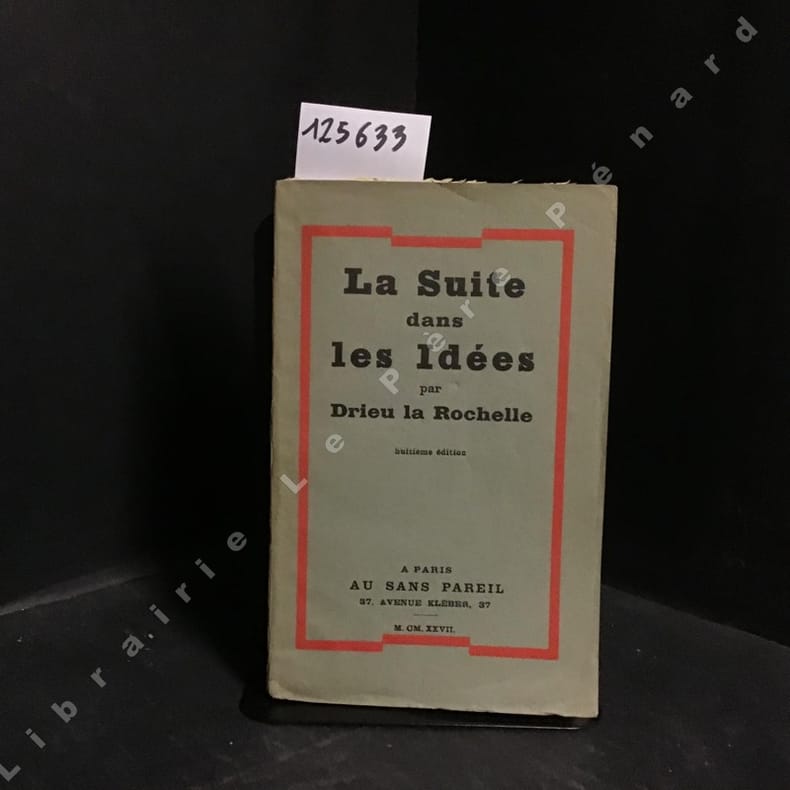
19271256331927 A Paris, Au Sans Pareil - M. CM. XXVII. (1927) - In-8 broché - 173 pages
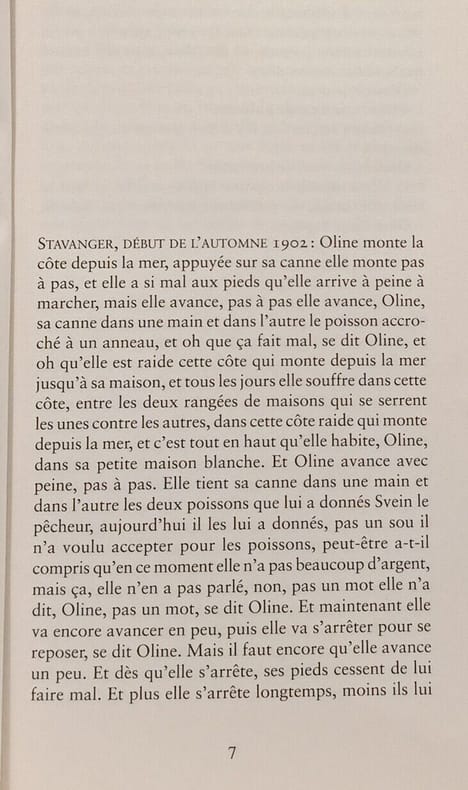
1998100145833POL 1998 288 pages 14x20 5x2 8cm. 1998. Broché. 288 pages. Melancholia I de Jon Fosse est un roman qui plonge dans l'esprit tourmenté du peintre norvégien Lars Hertervig. À travers un monologue intérieur répétitif et obsédant il explore la folie la création artistique et la relation du peintre avec Hélène Winckelmann sur fond de paysage côtier norvégien. Ce premier volume d'un diptyque constitue un psychogramme de l'artiste marqué par la maladie mentale et le génie