6 résultats
1762038465London: Robert Sayer 1762. First Edition . No Binding. Fine. Original Engraving Plate On P. 100. Light Chipping To Edges Not Affecting Lettering Or Design. Jean-Baptiste Pillement 24 May 1728 - 26 April 1808 Was A Painter And Designer Known For His Exquisite And Delicate Landscapes But Whose Importance Lies Primarily In The Engravings Done After His Drawings And Their Influence In Spreading The Rococo Style And Particularly The Taste For Chinoiserie Throughout Europe. In 1743 At The Age Of 15 He Moved From Lyon To Paris Where He Was Employed As An Apprentice Designer At The Gobelin Factory. In 1745 He Left For Spain Where He Remained For 5 Years. There He Found Employment In Various Cities As Both A Designer And Painter. In 1750 At The Age Of 22 He Moved To Lisbon Where He Enjoyed Continuing Success. In 1754 He Left Lisbon For London. Pillement Then Spent Eight Years In England Fully Exploiting The English Taste For Landscapes. There He Was Inspired By The Paintings Of Among Others Nicolaes Berchem. During This Period He Became Acquainted With David Garrick The Famous Actor And His Austrian Wife Eva Maria Weigel Who Became Avid Collectors Of His Work. In 1763 Pillement Then Traveled To Vienna Where He Was Employed At The Imperial Court Of Maria Theresa And Francis I. In 1765 He Left Vienna For Warsaw Where His Many Projects Included Decorating The Royal Castle In Warsaw And The Ujazdowski Castle His Largest Project Commissioned By The King Of Poland Stanislaw Ii Augustus. He Also Later Worked In Saint Petersburg The Piedmont Milan Rome And Venice. 1768-1780 Pillement Again Worked In France Where He Was Employed By Marie Antoinette In The Petit Trianon. 1780-1789 He Was Once Again On The Iberian Peninsula And In 1789 Moved To Pézenas In The Languedoc. In 1800 He Returned To Lyon Where He Continued To Paint While Also Designing For The Silk Industry And Giving Lessons In The Academy Founded By Napoleon. He Remained In His Native Lyon Until His Death. Pillement's Illustrations Are A Mixture Of Fantastic Birds Flora & Fauna Large Human Figures And Chinoiserie. His Designs Were Used By Engravers And Decorators On Porcelain And Pottery But Also On Textiles Wallpaper And Silver. Pillement Had Discovered In 1764 A New Method Of Printing On Silk With Fast Colours Recorded In His Memoirs. One Of His Prime Vehicles Was The Single Print Marketed Independently Of An Album. He Published Many Albums One Is: Oùvre De Fleurs Ornements Cartouches Figures Et Sujets Chinois 1776. The Art Gallery Of Greater Victoria British Columbia The Cleveland Museum Of Art The Courtauld Institute Of Art London The Honolulu Museum Of Art The Indiana University Art Museum Bloomington Indiana The Metropolitan Museum Of Art New York City Museum Der Bildenden Künste Leipzig Germany The Museum Of Fine Arts Boston The National Gallery Of Art Washington D.C. Palazzo Pitti Florence Gulbenkian Museum Lisbon Portugal And The Philadelphia Museum Of Art Are Among The Public Collections Holding Work By Jean-Baptiste Pillement. <br/> <br/> Robert Sayer unknown
1797058033Prag, Calve, 1797. 8°, geb. Pappeinbd., 163 S., ohne den Kupferstich - gutes Exemplar
175944507AB[Augsburg, Klauber 1759]. Kl.-8°. 128 S. Leder der Zeit. Die Deckel leicht aufgebogen. Deckel-Ecken mit Leder verstärkt, Vorsätze erneuert. Die Kupfertafeln im Kopfsteg teils eng beschnitten (teils auch mit Textverlust). Der Titel im Fuß beschnitten (Verlagsadresse abgeschnitten, hier für die Titelaufnahme erschlossen). Wenige kl. Randeinrisse, teils etwas braun- oder fingerfleckig.
1750702461750 | 19.50 x 28 cm | relié
1788ALDR0629Brünn, gedruckt bei Joseph Georg Traßler und im Verlage der Kompagnie (ab Bd 5: und im Verlage R. A. Schrämbls) 1786-1788. 5 Bde. 8°. 324 S., S. 333-421 (Ss. 325-332 fehlen), mit XXI gest., kol. Tafeln, 3 nn. Bll.; 324 S., mit XXII-LX (= 39) gest., kol. Taf., 4 nn. Bll.; 356 S., mit LXI-LXXVII (= 17) gest., kol. Taf., 4 nn. Bll.; Titelbl., 427 S, mit CII-CXL (= 38 v. 39) gest., kol. Tafeln (Taf. CCXVIII fehlt); 482 S., mit CCIII-CCXLIX (= 48) gest., kol. Taf., 5 nn. Bll., mit einigen Zierleisten. Marmorierte Lederbände der Zeit, Rückenschildchen und Rückenverzierung in Goldprägung, einige Bände mit großt. abgeriebenen kleinen Papierschildchen mit handschriftlicher Zählung, Einbanddeckel mit Streicheisenlinien gerahmt, Vorsätze rot marmoriert, Buchschnitte rot gefärbt, bestoßen und berieben, teilw. mit Kratzspuren u. etwas fleckig, an den Kapitalen meist schadhaft, Rückenleder rissig, Leder entlang der Gelenke eingerissen, Bindungen locker. Seiten insgesamt schwach gebräunt bzw. braunfleckig, selten stärker gebräunt, kaum fleckig, mit Randausriss ohne Textverlust im Titelblatt des zweiten Bandes, im siebenten Band fehlt die untere Hälfte des Titelblattes. Mit Bleistiftanmerkungen und -anstreichungen im Text, jeweils einer Zahl in alter Tintenschrift am vorderen Schmutzumschlagblatt oder fliegenden Vorsatzblatt verso. - Aus dem Nachlass des Architekten Johannes Spalt, der es aus der Bibliothek des Architekten Josef Hoffmann erhalten hatte. Mit Spalts Namenszug und dem handschriftlichen Zusatz 'Aus Josef Hoffmanns Bibliothek' mit Bleistift am vorderen Schmutzumschlagblatt avers. VD18 90176952. Vgl. Graesse 1,568 - altösterreichischer Nachdruck der ersten drei, des fünften und siebenten Bandes der umfassenden 'Naturgeschichte der Vögel' des bedeutenden französischen Naturforschers Buffon (1707-1788). Die französische Originalausgabe 'Histoire naturelle des oiseaux' in zehn Bänden erschien erstmals 1770-1786, die deutsche Ausgabe ab 1772. Übersetzer der vorliegenden ersten drei Bände war Friedrich Heinrich Wilhelm Martini (1729-1778), den fünften und siebenten Band übersetzte Bernhard Christian Otto (1745-1835). Ansehnliche Exemplare mit allen - nur Tafel CCXVIII fehlt - sorgfältig altkolorierten Tafeln. Das schadhafte Titelblatt und die fehlenden Seiten aus dem ersten Band liegen in Kopie bei. [3 Warenabbildungen]
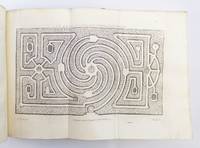
1728ST19567-025London: Bernard Linton 1728. Second Edition in English. "With very large Additions and a new Treatise of Flowers and Orange-Trees. 255 x 195 mm. 10 1/8 x 7 3/4. viii 297 i.e. 299 17 pp.Translated by John James. <br/> Contemporary calf boards capably rebacked in a lighter calf raised bands dark brown morocco label with gilt lettering. With tailpieces a number of illustrations and 38 folding plates of garden plans. Front pastedown with armorial bookplate of Whyte Melville of Bennochy and Strathkinness; front free endpaper with ink singature of Robert Melvill and the armorial bookplate of Francis Gray Smart. Hunt 471; Henrey 950; Fowler 171 first edition in English; Harris 381. Original boards somewhat crackled as nearly always with treated calf and slightly marked corners quite worn a hint of browning to title and final leaf of ads otherwise a very desirable copy the text and plates in remarkably clean and bright condition.<br/> <br/> This is the definitive guide to formal gardening practices in the 18th century containing a thorough exploration of both theory and practice that is elucidated by nearly 40 folding plates drawn by one of the most influential architects of the period. Henrey calls it "the first important book on garden design to appear in England in the eighteenth century" and according to the Met museum's website the work "became the standard international text of the grand French manner of garden design." The text includes a wide array of design recommendations that comprise elements such as labyrinths groves bowling greens porticos colonnades and stairways; examples of different types of ornamentation and embellishment such as statuary and water features; recommendations for the best type of trees to employ; and practical advice for the care and management of plants and gardens. It is also notable as the first book to describe the "ha-ha" a type of fence with a sunken grade on one side creating an invisible livestock barrier while also preserving an unspoiled view of the countryside beyond it. The name supposedly derives from the astonished sound a viewer would make when encountering this ingenious solution. The work was originally published anonymously in French in 1709 and the first edition in English translated by architect John James appeared in 1712. Although the title page of the present work credits it to the great French architect Alexander Le Blond named "architecte du Roi" in France and the chief architect of St. Petersburg it is actually the work of his pupil Antoine Joseph Dezallier D'Argenville 1680-1765. Le Blond however did provide most of the drawings for the plates which beautifully illustrate the various garden designs and structural plans. Our three previous owners are of some interest. The signature on the front free endpaper is probably that of General Robert Melvill or Mellville 1723-1809 who served in the West Indies during the Seven Years' war. He became a plantation owner and governor of the Grenadines Dominica St. Vincent Tobago and Grenada. After returning to Great Britain in 1771 Melvill pursued academic interests and became a member Royal Society and the Society of Antiquaries of London as well as a member of the Royal Society of Edinburgh. Because he was a bachelor Melvill's estate went to his cousin John Whyte-Melville 1797-1883 a renowned golfer he became captain of the Royal and Ancient Golf Club in 1823 and the father of the novelist and poet George John Whyte-Melville. Francis Gray Smart 1844-1913 was a homeopathic physician who founded the Tunbridge Wells Homeopathic Hospital. He was also an antiquary and avid coin collector who became a member of the Linnean Society the Society of Antiquaries and the British Numismatic Society. Considered apart from the book's sturdy though not especially attractive exterior the contents here are unexpectedly fresh clean and bright--unusual in a type of book that might normally have experienced use in an unprotected environment. Bernard Linton unknown