53 résultats
1790ST19326Amsterdam: H. Keyzer H. Gartman en W. Vermandel 1790. 555 x 345 mm. 21 7/8 x 13 3/4". 2 p.l. 62 folding plates. <br/> Attractive late 19th or early 20th century retrospective polished brown calf by L. Guétant stamp-signed in gilt on tail of spine double gilt-ruled border floral cornerpieces raised bands spine panels with scrolling floral borders and central flower ornament gilt titling. With title vignette and 62 ENGRAVED FOLDING PLATES ALL WITH BEAUTIFUL HAND COLORING AND HIGHLIGHTED WITH GOLD depicting Bible scenes from the Old and New Testament 61 of which are by Jan Luyken. A Large Paper Copy. For earlier editions: Graesse IV p. 308; Brunet III 1245-46; Klaversma & Hannema 159-164. Light rubbing to joints and edges boards just a little marked trivial foxing and faint spots here and there but A REMARKABLY FINE COPY the binding lustrous and showing little wear the paper extremely bright and fresh the margins immense and the paint and gold unusually vibrant.<br/> <br/> The marvelous illustrations of Dutch engraver and poet Jan Luyken comprise this collection of "remarkable stories" from the Bible each depicted with panoramic grandeur and enhanced with a wide range of finely applied colors and gold. Luyken 1649-1712 had written and illustrated erotic poetry as a young man but later became a devout Pietist after reading the works of German mystic Jakob Böhme. He became a member of the Baptist Church in 1673 and thereafter devoted his talents to producing religious works. The vast scenes here are notable in their scale detail and animation. There are a number of battle scenes from the Old Testament as well as dramatic depictions of the plagues and a fascinating episode from the histories of Josephus depicting Herod's soldiers being lowered down the side of a cliff in large boxes suspended from chains in order to attack the thieves hiding in caverns on the cliffside. There is a majestic portrayal of the Queen of Sheba arriving at the court of Solomon a peaceful scene of Adam naming the beasts in the Garden of Eden and a festive celebration of the Feast of Tabernacles. New Testament scenes include a terrifying final judgment a blinding conversion of St. Paul and scenes from that Apostle's travels. The engravings have one common trait: they are heavily populated whether by men or beasts and one of Luyken's special gifts is to render every person in the crowd as an individual with his own concerns and reactions to the events at hand. The engravings while already greatly pleasing in black and white are even more stirring and memorable when seen in the full color and gold used here. Expansive tableaus are given greater definition and clarity and events such as Noah’s flood and the destruction of Sodom and Gomorrah are rendered even more successful in expressing the awesome powers of the Almighty. The illustrations are quite definitely Protestant in point of view: there are no depictions of the Virgin Mary not even a Nativity scene. Except for engravings of the Annunciation to the Shepherds and the Massacre of the Holy Innocents the illustrations focus on Jesus as an adult and on the work of his Apostles spreading the gospel. There were earlier editions containing Luyken's 62 large plates which originally appeared without text as here in 1708 and they appeared again with a text in Dutch in 1729 and in French in 1732. Copies of these editions appear with some regularity in the marketplace but are usually not colored and are often found incomplete or with other major condition issues. We can trace no record in RBH or OCLC of a copy of our 1790 edition and we can find nothing that compares with the quality of coloring and grand height attained by the monumental margins seen here. H. Keyzer, H. Gartman en W. Vermandel unknown
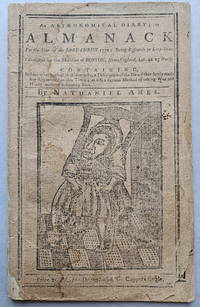
17713835<p>Three engravings by Paul Revere are certainly the most distinctive feature of this Boston almanac for 1772 namely:</p><p>Miss Emma Leach a dwarf born in Beverley Massachusetts on front cover.</p><p>The Patriotic American Farmer John Dickinson.</p><p>Mrs. Catharine M'Caulay.</p><p>Almanac making in colonial America was a rather unscrupulous affair at times. The notion of copyright was unknown among publishers. Indeed almanac piracy or perhaps liberal borrowing was the accepted industry practice.</p><p>The present almanac offers an excellent example of heavy borrowing. The Boston Ames <em>Almanack </em>for 1772 was published in two versions: one by Ezekiel Russell and the other a pirated version by an unnamed printer/publisher. The text and images of the two are very similar although the cuts of the three subjects differ very slightly between the two almanacs. Paul Revere's daybook for December 1771 identifies <strong>two</strong> purchasers of plates for a 1772 Ames almanac Ezekiel Russell and Edes & Gill. Within a matter of a week it's apparent that Revere produced two sets of plates of the same subjects for competing almanacs.</p><p>In an advertisement for Russell's version of the Ames almanac he "hopes that the publick with their usual impartiality will give him preference in buying of his Ames' genuine almanac before any pirated edition." Revere's contributions were in both the original and this pirated edition of the almanac.</p><p><strong>References: </strong> Evans: 11961; Drake <em>Almanacs of the U.S</em>.: 3205; Brigham <em>Paul Revere's Engravings</em>: pp. 202-203; Hamilton <em>Early American Book Illustrators and Wood Engravers</em>: 56; O'Neal <em>Early American Almanacs</em>: 115 mistakenly citing Russell as publisher.</p><p><strong>Condition:</strong> Disbound; leaves are separated with a later paper reinforcement in the gutter of two leaves. Chipping to lower corners of two leaves. Scattered mostly light staining and a few spots of foxing. Good.</p><p>ICN 7815.</p> [Printed by T. & J. Fleet and Edes & Gill. Price 2s. 8d. per dozen, and six coppers single. ]
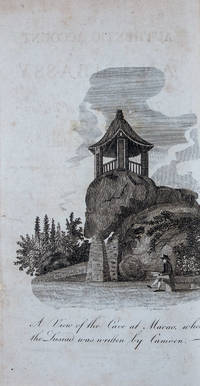
179946241Philadelphia: Robert Campbell 1799. First American edition. Hardcover. g to vg. Large octavo 8 1/2 x 5 1/2". xxiii 1 297 1pp Vol. 1; 267 1 xxivpp Vol. 2. Modern brown cloth with gold lettered leather title label to spine. Engraved frontispiece to both volumes. Lacking the separately printed atlas as usual.<br /> <br /> First American edition of this official report on the British Macartney Embassy to China that took place between 1792 and 1794. It was written after the return to England by the Secretary to the mission Sir George Leonard Staunton 1st Baronet 1737-1801 based on his own observations and notes from other crewmembers including his twelve-year-old son Sir George Thomas Staunton 2nd Baronet. <br /> <br /> "The account offers rich insights into the beginnings of British Imperialism in China and thus makes it an important primary source for the historiography of Sino-Western relations. There is an academic dispute whether the account marks a sudden turning point in British-Chinese dynamics or reflects a slow and complex divergence. <br /> <br /> While the political and economic ambitions of the embassy failed the account by Staunton brought back detailed descriptions of and observations on the Chinese culture that were received with curiosity in the West and led to the commercial success of the book and the publication of several translations and subsequent writings on the Macartney Mission." From Wikipedia<br /> <br /> This work is splendidly illustrated throughout with eight stunning engravings by Samuel Seymour two in volume one six in volume two including the frontispieces as called for in the directions to the binder. The xxiv page appendix contains detailed tables and charts dealing with population and socio-economic information.<br /> <br /> Previous owner's stamp E. W. Sage at verso of first frontispiece and at upper margin of first title. Moderate and sporadic foxing / age-toning throughout. Binding in very good interior in good to very good condition. Robert Campbell hardcover
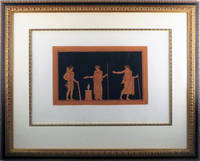
176629450Naples 1766-1776. A single aquatint plate drawn and engraved after the original pieces in the Hamilton collection. An aquatint printed as a black background over terracotta with highlighting in light gray/white. The image shows three figures one a warrior draped in animal skins carries a club stands before another figure with a thin staff who stands next to a flaming brazier. A third figure with a shorter staff walks way from the scene. Printed on a single folio sheet measuring larger than 18" x 12" the image approximately 12" X 7.75" now very handsomely presented in cream mounting approximately 24 by 18 inches with ornate gilt framework design around the leaf glazed and now under archival glass in a very attractive frame of gilded red wood and black enamel. In all a very impressive display. Very fine and in an excellent state of preservation. A BEAUTIFUL AND IMPRESSIVE PLATE FROM A MASTERPIECE OF CLASSIC ART RENDERINGS AND PUBLICATION. Hamilton served as British envoy to the court of Naples where he began collecting Greek vases and other antiquities immediately upon arriving at his post. In 1766–67 he published a volume of engravings of his collection entitled A Collection of Etruscan Greek and Roman antiquities from the cabinet of the Honble. Wm. Hamilton. A further three volumes were produced in 1769–76. Josiah Wedgwood the potter and porcelain maker drew great inspiration from the reproductions presented in Hamilton's volumes.<br> While widely recognized for their beauty the reproductions from Hamilton's vases have become evidence of the irreconcilable problem of neoclassicism in the Romantic period. Significant changes in the way the vases were engraved over a span of thirty or forty years demonstrate how an immutable collection of objects is subject to radical shifts in representation in response to the social and artistic styles of the time. unknown
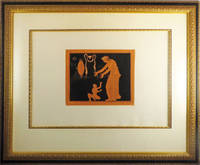
176629242Naples 1766-1776. A single aquatint plate drawn and engraved after the original pieces in the Hamilton collection. An aquatint printed as a black background over terracotta with highlighting in light gray. The image shows a woman bending to pick up a child who squats before her. Objects hover above one is a shield another is a rope or cord. The image is numbered T6 in the top left corner and P6 in the top right it is numbered in Roman VIII at the bottom. Printed on a single folio sheet measuring larger than 18" x 12" the image approximately 9" X 7.25". Now very handsomely presented in cream mounting approximately 24 x 18 inches with ornate gilt framework design glazed under archival glass within a very attractive frame of gilded red wood and black enamel. In all a very impressive display. A very beautiful presentation and in an excellent state of preservation. A BEAUTIFUL AND IMPRESSIVE PLATE FROM A MASTERPIECE OF CLASSIC ART RENDERINGS AND PUBLICATION. Hamilton served as British envoy to the court of Naples where he began collecting Greek vases and other antiquities immediately upon arriving at his post. In 1766–67 he published a volume of engravings of his collection entitled A Collection of Etruscan Greek and Roman antiquities from the cabinet of the Honble. Wm. Hamilton. A further three volumes were produced in 1769–76. Josiah Wedgwood the potter and porcelain maker drew great inspiration from the reproductions presented in Hamilton's volumes.<br> While widely recognized for their beauty the reproductions from Hamilton's vases have become evidence of the irreconcilable problem of neoclassicism in the Romantic period. Significant changes in the way the vases were engraved over a span of thirty or forty years demonstrate how an immutable collection of objects is subject to radical shifts in representation in response to the social and artistic styles of the time. unknown
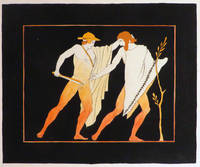
176626519Naples 1766-1776. A single aquatint plate drawn and engraved after the original pieces in the Hamilton collection. The colour aquatint shows a confrontation between two men one brandishing a sword with cloak draped over his left arm the other attempting to ward him off a stylized tree flanks the illustration. The background is black the image coloured with shades of tan terra-cotta and gold. Printed on a single folio sheet measuring approximately 20" x 13" the image approximately 11.5" X 9.5". Now presented in cream mounting boards 22" x18" behind clear mylar. A very fine plate in an excellent state of preservation. A BEAUTIFUL AND IMPRESSIVE PLATE FROM A MASTERPIECE OF CLASSIC ART RENDERINGS AND PUBLICATION. Hamilton served as British envoy to the court of Naples where he began collecting Greek vases and other antiquities immediately upon arriving at his post. In 1766–67 he published a volume of engravings of his collection entitled A Collection of Etruscan Greek and Roman antiquities from the cabinet of the Honble. Wm. Hamilton. A further three volumes were produced in 1769–76. Josiah Wedgwood the potter and porcelain maker drew great inspiration from the reproductions presented in Hamilton's volumes.<br> While widely recognized for their beauty the reproductions from Hamilton's vases have become evidence of the irreconcilable problem of neoclassicism in the Romantic period. Significant changes in the way the vases were engraved over a span of thirty or forty years demonstrate how an immutable collection of objects is subject to radical shifts in representation in response to the social and artistic styles of the time. hardcover
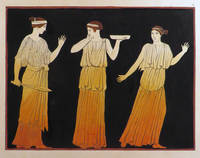
176626547Naples 1766-1776. A single aquatint plate drawn and engraved after the original pieces in the Hamilton collection. The colour aquatint shows three maidens one of which is brandishing a sword. The middle female holds a paten in her left hand. The image may be part of a bacchanal scene. The background is black the image coloured with shades of tan brown terra-cotta and gold. Printed on a single folio sheet measuring approximately 20" x 15" the image approximately 9.5" X 7.5". Now presented in cream mounting boards 22" x18" behind clear mylar. A very fine plate in an excellent state of preservation. A BEAUTIFUL AND IMPRESSIVE PLATE FROM A MASTERPIECE OF CLASSIC ART RENDERINGS AND PUBLICATION. Hamilton served as British envoy to the court of Naples where he began collecting Greek vases and other antiquities immediately upon arriving at his post. In 1766–67 he published a volume of engravings of his collection entitled A Collection of Etruscan Greek and Roman antiquities from the cabinet of the Honble. Wm. Hamilton. A further three volumes were produced in 1769–76. Josiah Wedgwood the potter and porcelain maker drew great inspiration from the reproductions presented in Hamilton's volumes.<br> While widely recognized for their beauty the reproductions from Hamilton's vases have become evidence of the irreconcilable problem of neoclassicism in the Romantic period. Significant changes in the way the vases were engraved over a span of thirty or forty years demonstrate how an immutable collection of objects is subject to radical shifts in representation in response to the social and artistic styles of the time. hardcover
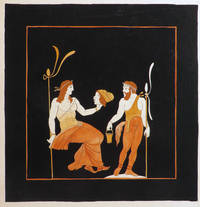
176626548Naples 1766-1776. A single aquatint plate drawn and engraved after the original pieces in the Hamilton collection. The colour aquatint shows a seated muscular long-haired man he holds the head of a dwarf or murdered reveler in his left hand his right hand holds a spear. In front of this man there stands a satyr holding a spear and wine bucket. The background is black the image coloured with shades of tan brown terra-cotta and gold. Printed on a single folio sheet measuring approximately 20" x 13" the image approximately 11.25" X 11.5". Now presented in cream mounting boards 22" x18" behind clear mylar. A very fine plate in an excellent state of preservation. A BEAUTIFUL AND IMPRESSIVE PLATE FROM A MASTERPIECE OF CLASSIC ART RENDERINGS AND PUBLICATION. Hamilton served as British envoy to the court of Naples where he began collecting Greek vases and other antiquities immediately upon arriving at his post. In 1766–67 he published a volume of engravings of his collection entitled A Collection of Etruscan Greek and Roman antiquities from the cabinet of the Honble. Wm. Hamilton. A further three volumes were produced in 1769–76. Josiah Wedgwood the potter and porcelain maker drew great inspiration from the reproductions presented in Hamilton's volumes.<br> While widely recognized for their beauty the reproductions from Hamilton's vases have become evidence of the irreconcilable problem of neoclassicism in the Romantic period. Significant changes in the way the vases were engraved over a span of thirty or forty years demonstrate how an immutable collection of objects is subject to radical shifts in representation in response to the social and artistic styles of the time. hardcover
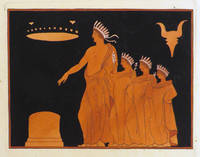
176626551Naples 1766-1776. A single aquatint plate drawn and engraved after the original pieces in the Hamilton collection. An aquatint in terracotta on a black background with highlighting in light rose showing a man leading three children they are all wearing laurels and bearing leaves for sacrifice. As they approach the altar two objects hover above one of which is likely a basin or kylix the other resembles a stylized head of a horned animal. Printed on a single folio sheet measuring approximately 20" x 14" the image approximately 5.5" X 7.5". Now presented in cream mounting boards 22" x18" behind clear mylar. A very fine plate in an excellent state of preservation. A BEAUTIFUL AND IMPRESSIVE PLATE FROM A MASTERPIECE OF CLASSIC ART RENDERINGS AND PUBLICATION. Hamilton served as British envoy to the court of Naples where he began collecting Greek vases and other antiquities immediately upon arriving at his post. In 1766–67 he published a volume of engravings of his collection entitled A Collection of Etruscan Greek and Roman antiquities from the cabinet of the Honble. Wm. Hamilton. A further three volumes were produced in 1769–76. Josiah Wedgwood the potter and porcelain maker drew great inspiration from the reproductions presented in Hamilton's volumes.<br> While widely recognized for their beauty the reproductions from Hamilton's vases have become evidence of the irreconcilable problem of neoclassicism in the Romantic period. Significant changes in the way the vases were engraved over a span of thirty or forty years demonstrate how an immutable collection of objects is subject to radical shifts in representation in response to the social and artistic styles of the time. hardcover
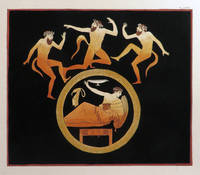
176626550Naples 1766-1776. A single aquatint plate drawn and engraved after the original pieces in the Hamilton collection. The colour aquatint shows a bacchanal scene-- a youth in peplos reclines on an ornate couch he holds a large bowl in his left hand his right gestures toward a kylix above--all within a Greek-key tondo. Above him there are three dancing satyrs. This is a nicely detailed image on a black background coloured in shades of brown tan terracotta and gold. Printed on a single folio sheet measuring approximately 20" x 15" the image approximately 8.25" X 10". Now presented in cream mounting boards 22" x18" behind clear mylar. A very fine plate in an excellent state of preservation. A BEAUTIFUL AND IMPRESSIVE PLATE FROM A MASTERPIECE OF CLASSIC ART RENDERINGS AND PUBLICATION. Hamilton served as British envoy to the court of Naples where he began collecting Greek vases and other antiquities immediately upon arriving at his post. In 1766–67 he published a volume of engravings of his collection entitled A Collection of Etruscan Greek and Roman antiquities from the cabinet of the Honble. Wm. Hamilton. A further three volumes were produced in 1769–76. Josiah Wedgwood the potter and porcelain maker drew great inspiration from the reproductions presented in Hamilton's volumes.<br> While widely recognized for their beauty the reproductions from Hamilton's vases have become evidence of the irreconcilable problem of neoclassicism in the Romantic period. Significant changes in the way the vases were engraved over a span of thirty or forty years demonstrate how an immutable collection of objects is subject to radical shifts in representation in response to the social and artistic styles of the time. hardcover
17840007884London: Hooper & Wigstead ca. 1784. New edition. Hardcover. Poor. copperplates. Folio contemporary full calf extra-gilt spines some intermittent foxing; lacks one cover. Note: oversize volume will require additional shipping fee. <br/><br/>One of 8 vols: this covers Derbyshire Devonshire Dorsetshire Durham Essex Gloucestershire Herefordshire Hertfordshire. 79 copperplates plus 5 plans 2 of 9 maps. There is also an engraved frontispiece and vignette title-page. Hooper & Wigstead hardcover
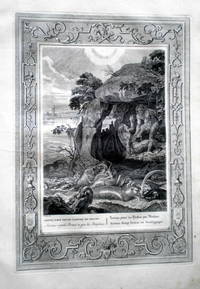
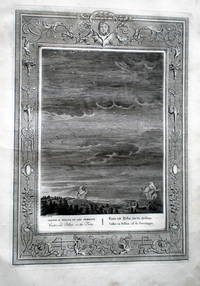
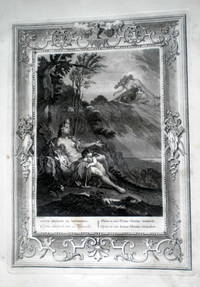
1733biblio312Amsterdam: Chatelain 1733. <p>Gravure sur cuivre La feuille = 310 X 460 mm la cuvette = 255 x 352 mm quelques rousseurs en marge image propre</p> Chatelain unknown
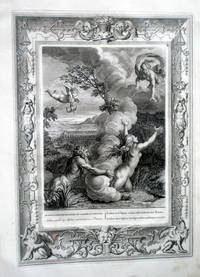
1733biblio318Amsterdam: Chatelain 1733. <p>Gravure sur cuivre La feuille = 310 X 460 mm la cuvette = 255 x 352 mm quelques rousseurs en marge image propre</p> Chatelain unknown
1800006803Exmouth Eng 1800. Very Good. 1 folded sheet creating 4 pages; handwritten letter on 2 pages signed 1 page blank address on the 4th page. Teignmouth notes that "Lady Teignmouth has lately presented me with another son." The engraved portrait drawn by J. Richmond engraved by W. Walker was published by Hatchard & Sons in 1843. John Shore 1st Baron Teignmouth 1751-1834 was an official of the East India Co. and served as Governor General of Bengal from 1793 to 1797; the following year he was created Baron Teignmouth. He was also the first president of the British and Foreign Bible Society. In Very Good Condition: letter is lightly creased; lightly soiled; print is lightly soiled in margins; indentation at upper edge; image is clean and crisp. unknown
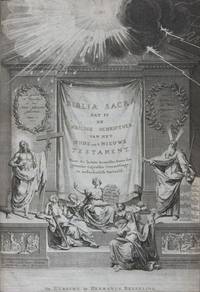
174318928Utrecht: Hermanus Besseling 1743. Second edition. Hardcover. g- to vg. Folio 15 6/8 x 10 1/2". XVIII 652 pp; folding engraved map. Text in Dutch. Contemporary full calf with gold lettering and tooling to spine front joint tender. Raised bands. Additional engraved title by Bernard Picart. Title in red and black lettering. Publisher's vignette on title page. Decorative head- tailpieces and initials. This handsome second edition of "Biblia Sacra" is splendidly illustrated throughout with 35 double-page engraved plates of 36 lacking plate #1 depicting the Creation from Johannes Luyken's "Icones Biblicae Veteris et N.Testamenti 1729" as well as 2 folded maps and one folded plan of Jerusalem. This is the first volume containing the entire Old Testament. Binding rubbed along edges and on covers. Head and tail of spine partly chipped. Minor age-toning along paper margin. Text in Dutch with plate captions in Dutch and French. A good copy with clean fresh plates throughout. Hermanus Besseling hardcover
1733biblio311Amsterdam: Chatelain 1733. <p>Gravure sur cuivre La feuille = 310 X 460 mm la cuvette = 255 x 352 mm quelques rousseurs en marge image propre</p> Chatelain unknown
1733biblio316Amsterdam: Chatelain 1733. <p>Gravure sur cuivre La feuille = 310 X 460 mm la cuvette = 255 x 352 mm quelques rousseurs en marge image propre</p> Chatelain unknown
1779D7139Paris et Dijon: les Auteurs et Frantin 1779-1781. First Edition. Hardcover. Very Good. Contemporary mottled calf lavishly gilt-stamped spine gilt-stamped lettering in red leather spine label original decorative endpapers; 8vo 120x 202 mm 3 volumes; with half-titles 3 additional titles 2 allegorical frontispieces 50 plates 39 of them with double views of Paris and 2 full-page vignettes. Some very light scuffing at spine tips and along joints; occasional light toning and marginal soiling. A handsome set with the bookplates of John D. Rockefeller Jr. and Abby Aldrich. Cohen-de Ricci 692. <br/><br/> les Auteurs, et Frantin hardcover
1733biblio314Amsterdam: Chatelain 1733. <p>Gravure sur cuivre La feuille = 310 X 460 mm la cuvette = 255 x 352 mm quelques rousseurs en marge image propre</p> Chatelain unknown
1800ABC_49334Antwerp 1800. 16mo ca. 13 x 9.5 cm. Johannes Carolus Craen or his son-in-law Hendrik Leys Early 19th-century gold-tooled red sheepskin with a general title in Dutch lettered in gold on the spine gold-tooled board edges marbled endpapers gilt edges. 351 devotional engravings including 8 repeats printed on wove paper engraved by several 17th-century engravers printed from the original copper plates at the end of the 18th- or beginning of the 19th century. 351 ll. Intriguing and extensive collection of 351 devotional prints comprising ca. 16 print series and several separate engraved title pages of print series and some separate devotional prints. Each print shows a small engraving depicting a religious theme for almost every occasion and especially for the important days of the liturgical year. These prints were engraved and published in Antwerp which is considered to be the centre of production and publishing of devotional prints in the 17th- and 18th centuries. The majority of these praying cards were originally published by Franciscus Huberti or Frans Huybrechts 1630-1687 who seems to have been the first engraver and publisher to produce these types of works in Antwerp. He was mostly known for publishing so-called "gerijmde gebedsprentjes" rhymed devotional prints/prayer cards. After his death his plates were sold and used by others to republish the prints for example by Michiel Bunel 1670-1739 and later by Carolus Craen 1733-1799. Craen's plates were next used by Hendrik Leys d. 1853 not to be confused with the Antwerp painter Henri Leys. In 1805 Leys had married Craen's daughter and took over the publishing and printing business of his mother-in-law immediately after. He mostly continued publishing prints using older copperplates that were already part of the business since his father-in-law ran it and was one of the last printer-publishers to use copperplates in a time when lithography became more and more popular. At the end of his life Leys owned approximately 12000 usable copperplates made or sold by a whole host of 17th- and 18th-century engravers and/or publishers of devotional prints such as the Wierix-Barbé family Huberti Galle Van der Sande Bunel and the Van Merlen family. Cornelis van Merlen 1654-1723 was a publisher and engraver active in Antwerp. The Van Merlen family were important engravers and publishers of devotional engravings in Antwerp during the 17th- and 18th centuries. In 1687 he married Sara Maria Huybrechts who was the daughter of publisher and engraver Gaspar Huberti and Sara Voet and niece of the Antwerp engraver Franciscus Huberti 1630-1687 whose engravings make up the majority of the present work. The majority of the present work is most likely made up of Craen's or Leys' prints of the plates by Huberti Jacobus de Man Anton Wierix the Van Merlen family of engravers and others.A complete list of contents is available upon request.With a manuscript owner's inscription on the verso of the first flyleaf "Mimi Josephine Cogels 1822" a manuscript inscription on the recto of the second flyleaf "le 1er Avril 1822 1831" and some faint pencil annotations on the verso of the second to last flyleaf and the recto of the final flyleaf. The binding shows some slight rubbing the front joint is slightly weakened without any loss lacking the fore edge margin of the engraving of S. Gregorius no. 351 not affecting the engraving possibly lacking the 352nd engraving only a stub of paper remains possibly lacking the engraving of S. Ioannes Neponucenus by C. van Merlen a few leaves show minor marginal tears not affecting the engravings and with a brown stain on the final two flyleaves. Otherwise in very good condition.l Thijs A.K.L. Antwerpen: internationaal uitgeverscentrum van devotieprenten 17e - 18e eeuw Leuven 1993; Miscellanea Neerlandica 7 passim; cf. for the publishers see: https://archief.museumplantinmoretus.be/doc/au::108950 Huberti; https://archief.museumplantinmoretus.be/doc/au::109845:1 Craen; https://archief.museumplantinmoretus.be/doc/au::109887 Leys. unknown
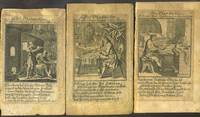
174028414Germany 1740. Good overall. 3 German copper plate engravings of glass blowing with German text. B&w approx. 6 x 4" toned mat burn where previously framed. unknown
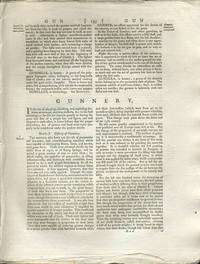
179723396Edinburgh: A. Bell and C. Macfarquhar 1797. Third Edtion. Fine condition. Unopened extract from the original 1797 volume of the renowned encyclopedia consisting of 54 pages pp195-248 on guns and gun making with two copper engraved plates. The wonderful engraved images of cannon includes a row of cannon ranging in size from a 33 pounder down to a 12 powder with a cut away view of the interior.<br /> <br /> The gunnery text includes 3 sections on the history of gunnery the theory of gunnery and the practice includes tables of comparative velocity and ranges; lengths and weights of Iron ship guns. The gunpowder section includes information on making gunpowder of different kinds; the gunsmithing section describes the forging methods utilized in different weapons. Text printed in 2 columns the extract very bright and fresh. A. Bell and C. Macfarquhar unknown
1785000633London: Harrison & Co. 1785. Old Calf. Good Plus. 8.5" x 5.25. Stothard Thomas. London: Harrison & Co. 1785. Illustrated with 14 copper-engraved plates after Stothard. Vol 1. only which includes: Johnson Samuel. The Rambler 4 vols. in 1. bound with: Lyttleton George Lord. Letters from a Persian in England to his Friend at Ispahan. 1 vii 463 81 pp. Old calf 8v0 8.5" x 5.25". Joints weak with later three gilt incuse compartments added over spine edgewear; internally quite clean with lovely fine Thomas Stothard plates. L-40n <br/> <br/> Harrison & Co. unknown
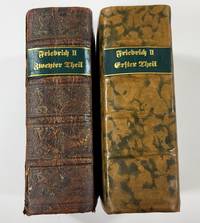
1760047298Tubingen Germany: Johann Ulrich Cotta 1760. In German. Two thick volumes first and second parts both title pages dated 1760. Volume I has been professionally rebound in the same style as the second. Extensively illustrated with full page and folding engravings including folding tables and maps frontis portraits of the emperor and eagle engraving on title pages. Full mottled leather with newer gilt and dark green spine labels raised spine bands all edges tinted red original marbled endpapers with additional new endpapers in first part. Part I is 1000 pages and is very good with faint dampstains to the lower corners of pages 993-1000 very minor worming to the bottom of one folding table short closed tear to one map. Part II has some edgewear and small area of worming to the outer edge of the front cover 28 1024 pages margins of two folding maps trimmed a little closely. Overall quite a nice set sturdy bindings good to very good throughout. Hard Cover. Good. 12mo - over 6¾" - 7¾" tall. Johann Ulrich Cotta Hardcover
1764001R83Various publishers including . Paris &/or Geneva: -1769. 1764 Fourteen 14 Rare French Literary Pamphlets in two volumes. All 8vo. 205 mm. Leather backed marbled boards very slightly worn. Hardbound. Text in fine condition; some offsetting from the engravings. Contents include: Vol. I - 1. LETTRE AMOUREUSE D'HELOISE A ABAILARD. Translation of: Eloisa to Abelard by Alexander Pope. New Edition corrected by the autor. Chez la veuve Duchesne Paris: 1766. 30 p. large engraving by Eisen; Engraved headpiece by Colardeau. 2. LETTRE DE DON CARLOS A ELISABETH SUIVIE DUN PASSAGE DE L'AMINTE DU TASSE TRADUIT EN VERS & Du Poeme De La Nuit imite de Gesner. Panckoucke Paris & Duchesne Lille: 1768. pp. VIII 29 Gravelot engraved plate. 3. LETTRE DE JULIE FILLE D'AUGUSTE A OVIDE. By Claude Dorat. A Geneve Et se trouve a Paris: Chez Bauche: 1766. 23p. With Engraved head and tail pieces by Eisen and Massard. 4. LETTRE D'OVIDE A JULIE PRECEDEE DUNE LETTRE EN PROSE A M. DIDEROT. By the Marquis de Pezay. Geneva: 1767. 32p. Full page engraved plate and vignettes after Eisen. 5. LETTRE DE SAPHO A PHAON Precedee d'une Epitre a Rosine D'une vie de Sapho & suivie d'une Traduction en Vers des Ouvrages de ce Poete. By Blin de Sainmore. Sebastien Jorry Paris: 1766. 32 p. Engraved plate by Aliamet after Gravelot; Vignettes by Ghendt after Eisen another by Choffard. 6. LETTRE DE CATON D'UTIQUE A CESAR. By Abbe Parmentier. Lambert Paris: 1766. 34 p. Engraved plate after Gravelot. 7. LETTRE D'ALCIBIADE A GLICERE: Bouquetiere d'Athenes suivie d'une Lettre de Venus a Paris et d'une Epitre a la Maitresse que J'Aurai. By Marquis de Pezay. S. Jorry Geneva & Paris: 1764. 36 p. Large engraved plate and vignettes by Eisen. Vol. II - 1. LETTRE DU COMTE DE COMMINGES A SA MERE: Suivie d'une Lettre de Philomele a Progne. By Claude-Joseph Dorat. S. Jorry Paris: 1764. 68 p. Two full page engravings vignettes by Eisen & Massard. 2. L'HEUREUX JOUR EPITRE A MON AMI. By le Parquis de Pezay. Duchene Paris: 1768. pp. 29 1. Engraved title full page engraving & vignettes by Eisen & Massard. Cohen p. 797. 3. LISLE MERVEILLEUSE. Poeme en Trois Chants Traduit du Grec Suivi d'Alphonse ou de l'Alcide Espagnol Conte tres Moral. By C. J. Dorat. Geneva: 1768. 85 p. Engraved plate after Eisen. 4. L'HOPITAL DES FOUS Aesculapius - or The Hospital of Fools by William Walsh. A Play translated by De La Flotte. Jorry Paris: 1765. Large plate head-piece and tail-piece engraved by Delafosse after Eisen. Two lines of French manuscript about Fools. 5. EXTRAIT DE QUELQUES PIECES PRESENTEES A L'ACADEMIE FRANCOISE Pour concourir au Prix de poesie de L'Annee 1766. Regnard Paris: 1766. 27 p. 6. EPITRE AUX MALHEUREUX Piece qui a Eu L'Accessit du Prix de l'Academie Francois 1766. par M G.-H. Gaillard. Paris Regnard: 1766. 10p. 7. EPITRE A UN AMI SUR LA RECHERCHE DU BONHEUR. Cette Piece a concouru au Price de l'Academie Francois 1766. par M.D. Avocat au Parlement Cuissart & Regnard Paris: 1766. 19p. Small circular stain on first 10 pages. This collection is sometimes found with the texts in a different order and with different pagings and signatures and/or with one or more pieces omitted. There are often different printers and publishers where identified. The artists and engravers were among the best of this great era in illustration: Charles-Dominique-Joseph Eisen 1720-1778; Charles-Pierre Colardeau 1732-1776; Hubert Francois Gravelot 1699-1773; Jacques Aliamet 1726-1788; Jean Francois Rousseau; Emmanuel Jean Nepomucene de Ghendt 1738-1815; Joseph de Longueil 1730-1792; Jean Massard 1740-1822; Pierre-Philippe Choffard 1730-1809. A classic of 18th century French book illustration. CHEST 2/1. Hardcover. Very Good. Various publishers, including . Paris &/or Geneva: -1769. hardcover