WOOLF VirginiaLivre Rare Book
558 résultats
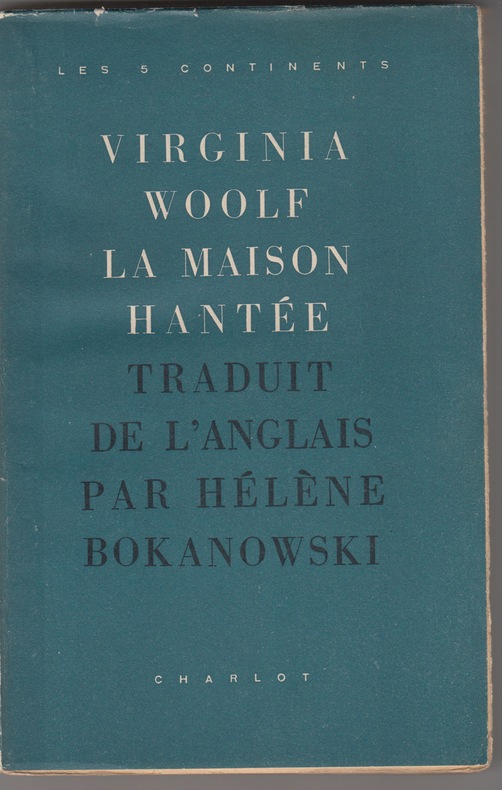
1946237881946 P.,Editions Charlot, 1946 Collection "Les 5 continents" dirigée par Philippe Soupault. Traduit de l'anglais par Hélène Bokanowski.In-12, 266 pages, broché (200g) Bon état.
1962GW-671Heritage Press 1962 New York: Heritage Press 1962. Illustrated with lithographs in color By Jean Charlot. Hardcover in fine condition. Prior owner's bookplate on front pastedown. An otherwise clean tight copy. Comes with slipcover in very good condition. Shipped in well-padded box. Smoke-free shop. Hardcover. Fine/No Jacket. Heritage Press hardcover
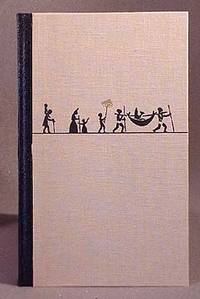
1962016751New York: Limited Editions Club 1962. Hardcover. Fine in glassine and a close to Fine slipcase with some soiling. Jean Charlot. Tall octavo 6-3/4" x 10-7/8" bound in natural buckram with a silhouette frieze of the Bridge's doomed pedestrians stamped in black on both covers backed in fine imported black morocco leather. Introduction by Granville Hicks. Illustrated with 16 full-color lithographs drawn directly on the plates by Jean Charlot and printed in seven colors. Copy #457 of 1500 SIGNED by the artist on the colophon page. Monthly Letter laid in. <br/><br/> Limited Editions Club hardcover
1962014467New York: Limited Editions Club 1962. Hardcover. Small stain on the front pastedown from a previous bookplate. About Fine in a lightly soiled Near Fine slipcase. Jean Charlot. Tall octavo 6-3/4" x 10-7/8" bound in natural buckram with a silhouette frieze of the Bridge's doomed pedestrians stamped in black on both covers backed in fine imported black morocco leather. Introduction by Granville Hicks. Illustrated with 16 full-color lithographs drawn directly on the plates by Jean Charlot and printed in seven colors. Copy #355 of 1500 SIGNED by the artist on the colophon page. <br/><br/> Limited Editions Club hardcover
196785627Partitions sur le Cinéma Tilt Music 1967
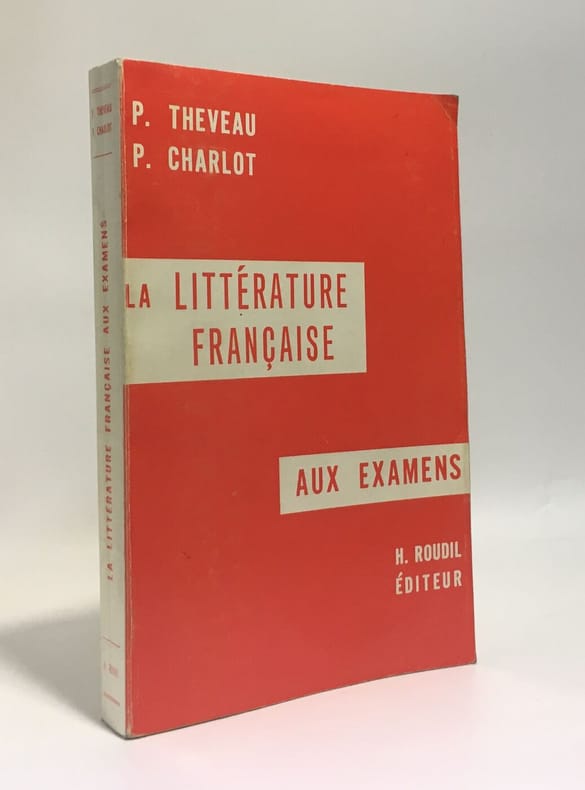
1968RO20214033H.Roudil. 1968. In-12. Broché. Etat d'usage, Couv. légèrement passée, Coiffe en tête abîmée, Papier jauni. 415 pages.. . . . Classification Dewey : 372.6-Livre scolaire : français
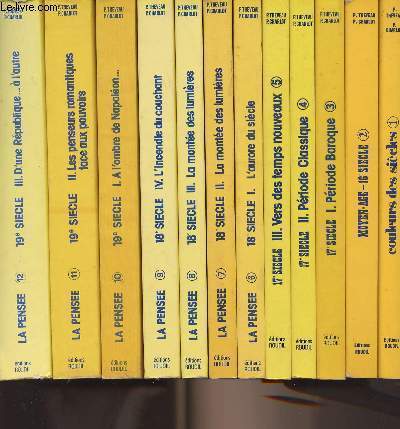
1977R240148854Editions Roudil. 1977. In-12. Broché. Etat d'usage, Couv. convenable, Dos satisfaisant, Intérieur acceptable. 137 + 217 + 183 + 152 + 165 + 167 + 175 + 165 + 226 + 263 + 319 + pages.. . . . Classification Dewey : 809-Histoire, littérature
1977R320018524ROUDIL J.B.. 1977. In-12. Broché. Etat d'usage, Couv. convenable, Dos satisfaisant, Intérieur acceptable. 137 pages.. . . . Classification Dewey : 809-Histoire, littérature
1981R320018533ROUDIL J.B.. 1981. In-12. Broché. Etat d'usage, Couv. convenable, Dos satisfaisant, Intérieur frais. 331 pages.. . . . Classification Dewey : 809-Histoire, littérature
1978R320018529ROUDIL J.B.. 1978. In-12. Broché. Etat d'usage, Couv. défraîchie, Dos satisfaisant, Intérieur acceptable. 167 pages.. . . . Classification Dewey : 809-Histoire, littérature
1978R320018530ROUDIL J.B.. 1978. In-12. Broché. Etat d'usage, Couv. convenable, Dos satisfaisant, Intérieur acceptable. 175 pages.. . . . Classification Dewey : 809-Histoire, littérature
1977R320018531ROUDIL J.B.. 1977. In-12. Broché. Etat d'usage, Couv. convenable, Dos satisfaisant, Intérieur frais. 165 pages.. . . . Classification Dewey : 809-Histoire, littérature
1979R320018532ROUDIL J.B.. 1979. In-12. Broché. Etat d'usage, Couv. convenable, Dos satisfaisant, Intérieur frais. 226 pages.. . . . Classification Dewey : 809-Histoire, littérature
1958RO20198150ROUDIL H.. 1958. In-12. Broché. Bon état, Couv. convenable, Dos satisfaisant, Intérieur frais. 415 pages.. . . . Classification Dewey : 372.6-Livre scolaire : français
1958RO20172678ROUDIL H.. 1958. In-12. Broché. Etat d'usage, Couv. convenable, Dos satisfaisant, Intérieur frais. 415 pages.. . . . Classification Dewey : 372.6-Livre scolaire : français
1968ROD0134586H. ROUDIL. 1968. In-12. Broché. Etat d'usage, Coins frottés, Dos plié, Intérieur acceptable. 415 pages - dos insolé et plié - annotations à l'encre sur la page de titre.. . . . Classification Dewey : 372.6-Livre scolaire : français
1972100056853Roudil 1972 in12. 1972. Broché.
198834CnChristian Pirot 1988 12 x 19 157 pages - broché - trés belles illustrations et trés bon etat
198834CnChristian Pirot 1988 12 x 19 157 pages - broché - trés belles illustrations et trés bon etat
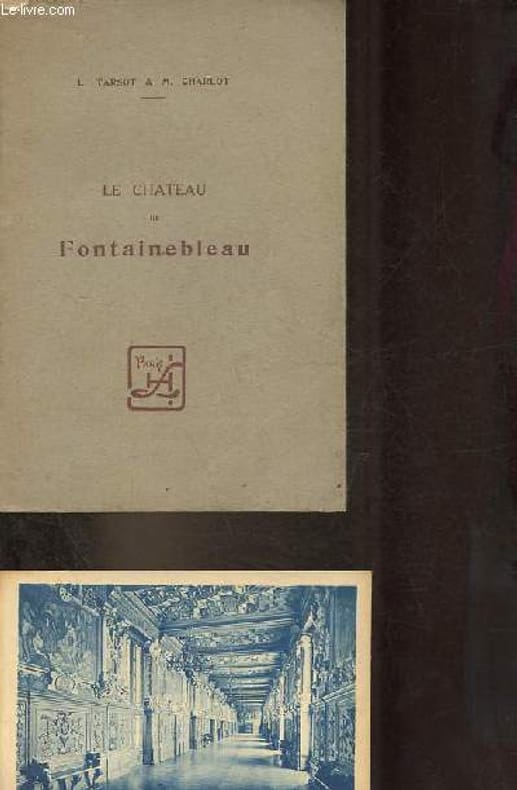
1927R100067403"H.Laurens. 1927. In-12. Broché. Etat d'usage, 1er plat abîmé, Coiffe en tête abîmée, Papier jauni. 128 pages - quelques illustrations en noir et blanc dans le texte - petit manque en tête sur le 1er plat - coiffes abîmées - en supplément une carte postale en monochrome viere "" Palais de Fontainebleau galerie françois 1er"".. . . . Classification Dewey : 728.8-Château"
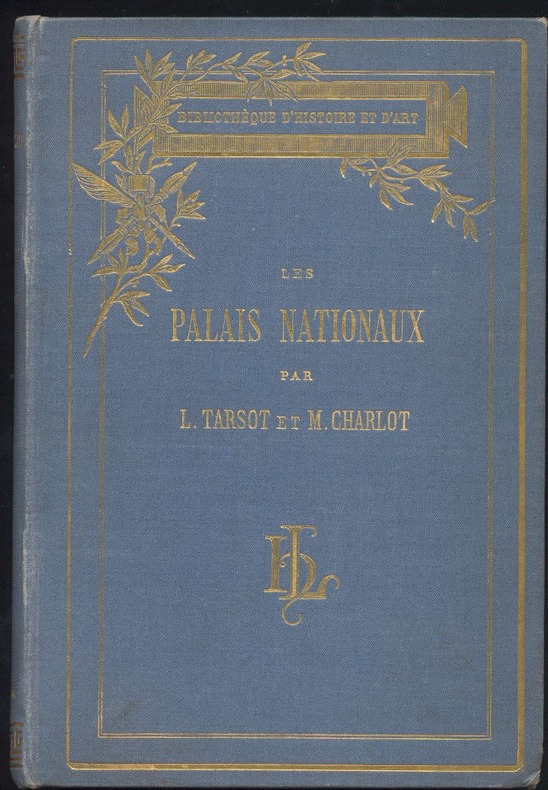
1910209311910 P., Laurens, sans date (vers 1910), in 8° relié pleine percaline bleue de l'éditeur,VII-128-32-28-48-48-16-16 pages.Recueil de monographies paginées séparément, en tout 290 pages.
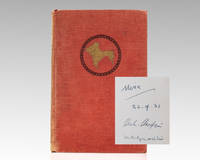
1929150889New York: Lewis Copeland Company 1929. First edition of this political critique of British colonial rule in India. Octavo original publisher's cloth with gilt titles to the spine vignette of India stamped in gilt to the front panel frontispiece of Nobel Prize-winning Indian author Rabindranath Tagore illustrated with black and white photographs throughout. Boldly signed by Mohandas Gandhi and comic actor filmmaker and composer Charlie Chaplin on the recto of the frontispiece in fountain pen. Additionally signed and dated by Mirabehn on the recto of the frontispiece "Mira 22.9.31." Mirabehn was the name adopted by Madeleine Slade 1892-1982 an Englishwoman who became a devoted follower of Mahatma Gandhi and an influential figure in India's independence movement. In very good condition. On September 22 1931 in a modest house on East India Dock Road in London's East End Charlie Chaplin met Mahatma Gandhi during the latter's visit to Britain for the Second Round Table Conference - a series of high-profile negotiations on India's constitutional future. Gandhi had come as the sole representative of the Indian National Congress hoping to press the case for Indian self-rule. Although Gandhi had never heard of the film star he agreed to meet him only after learning how profoundly Chaplin's work resonated with ordinary people. Their conversation turned to machinery and its social impact: Chaplin argued that machines could free workers from drudgery while Gandhi countered that under colonialism mechanization had only deepened India's economic dependence on Britain. Before India could enjoy the benefits of technological progress he insisted it first needed freedom. The encounter made a lasting impression on Chaplin. According to recollections he joined Gandhi in prayer during the visit and afterward described him as 'one of the most brilliant men' he had ever met. Five years later Chaplin released Modern Times widely regarded to be one of the best films of his career one of the last great silent movies and the last outing for his Little Tramp character. The themes of the movie - concern for workers skepticism toward unrestrained industrialization and an interest in human dignity - echo the conversation he shared with Gandhi that afternoon. Accompanied by a typed holiday greeting card from Doctor Katial which reads in full "With best wishes for Christmas and the New Year from Doctor Katial." Together with a handwritten letter of provenance from the original recipient W. Stuart Masters. The letter reads in full "'India in Bondage' by Prof. J.T. Sunderland. Autographed by Charles Chaplin and Mohandas Gandhi. This book was a gift to me by my friend Dr. C. L. Katial sometime mayor and alderman of Clerkenwell. At the time of the abortive 1931 All-India Conference Chaplin was visiting London and wished to meet Gandhi privately for a talk. The result of the talk was the film Modern Times. News of the impending meeting have 'leaked' to the Press a 'secret' meeting place was sought and found in the East End home of Dr. Katial who was acting as Gandhi's personal physician during his London visit. Dr. Katial phoned me the place and time to give an 'exclusive' interview; and I obtained the autographs at that time. W. Stuart Masters." Both are in near fine condition and laid in. Jabez T. Sunderland 1842–1936 was an American Unitarian minister reformer and writer whose work engaged prominently with international social and political issues particularly the cause of Indian self-government. Trained in theology and active in liberal religious circles Sunderland combined clerical leadership with advocacy for education peace and anti-imperial reform. He became especially known for his criticism of British colonial rule in India articulated most fully in India in Bondage 1928. Drawing on economic data historical analysis and contemporary political developments Sunderland contends that British administration imposed structural economic hardship and curtailed India’s political and moral autonomy. Lewis Copeland Company hardcover
19601254712Büchergilde Gutenberg; Zürich, Wien, Prag, o.J. (ca. 1960). 225 Seiten; 24 cm; fadengeh. Orig.-Leinenband.
19111249963Verlag von Rascher & Cie; Zürich und Leipzig, 1911. VIII; 184 Seiten; 20,5 cm; klammergeh. Orig.-Leinenband.
19111249546Verlag von Rascher & Cie; Zürich und Leipzig, 1911. VIII; 184 Seiten; 20,5 cm; klammergeh. Orig.-Leinenband.