8 399 résultats
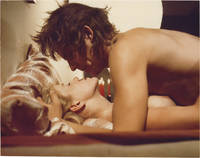
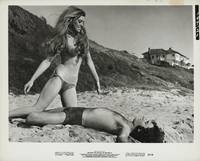
1970148340Los Angeles: Twentieth Century-Fox 1970. Vintage studio still photograph of Edy Williams and David Gurian from the 1970 film. <br /> <br /> Based on an original story by Roger Ebert who also helped write the screenplay. Three girls come to Hollywood to make it big with their rock band "The Kelly Affair" stopping first to visit Kelly MacNamara's 1966 Playboy Playmate Dolly Read estranged aunt. Kelly's aunt introduces the band comprised of Kelly Read Casey Anderson 1968 Playboy Playmate Cynthia Myers and Petronella Danforth Marcia McBroom to a flamboyant producer named Ronnie "Z-Man" Barzell John LaZar who changes their name to "The Carrie Nations" and has them perform at one of his orgiastic parties after a set by Strawberry Alarm Clock. Throughout the success of the new band the girls use drugs and alcohol attempt to maintain romantic relationships even a lesbian tryst with Erica Gavin director Meyer's "Vixen" and find "Z-Man" to be a murderous transsexual. <br /> <br /> The film proved to be sexploitation and exploitation to its psychedelic limits at the time was Meyer's biggest box-office draw to date and gave the director a new audience: mainstream filmgoers in mainstream cinemas. Originally intended as a sequel to <br /> "Valley of the Dolls" 1967 with an original screenplay by Jacqueline Susann Twentieth Century-Fox found the script unsatisfactory and sought new material. The film was released as part of a settlement with Susann with the disclaimer "This is not a sequel to VALLEY OF THE DOLLS." One of few X-rated films released by Twentieth Century-Fox another being "Myra Breckenridge" 1970. <br /> <br /> Pam Grier got her start in this film as an uncredited party attendant. Meyer regulars like Charles Napier Lavelle Roby and Haji all make appearances. <br /> <br /> Set in Los Angeles. <br /> <br /> 8 x 10 inches. CONDITION. <br /> <br /> Criterion Collection 836. Meyer US. Twentieth Century-Fox unknown
1975149729N.p.: N.p. 1975. Vintage oversize borderless reference photograph from the set of the 1970 film showing actresses Erica Gavin and an uncredited model with cinematographer Fred J. Koenekamp behind the camera at the far left. With the film's French 1975 release title "Orgissimo" at the bottom right.<br /> <br /> After nearly a decade as one of America's most successful independent filmmakers sexploitation auteur Russ Meyer first reached out for the brass ring of major studio success with this frantic and most entertaining cult favorite once described by Meyer and screenwriter Roger Ebert as "the first exploitation-horror-camp-musical." The film follows three members of an all-girl rock band called The Kelly Affair who relocate to Hollywood in search of fame and fortune. Their success comes at the price of their friendship and integrity however and the girls eventually succumb to a nonstop train of decadence drugs and betrayal. Featuring one-hit wonders the Strawberry Alarm Clock supporting performances by Meyer regulars Charles Napier and Haji and a bit part from future Blaxploitation icon Pam Grier "Beyond the Valley of the Dolls" proved to be Meyer's biggest box-office success.<br /> <br /> Set and shot on location in Hollywood.<br /> <br /> 12 x 9.5 inches. Near Fine with light wear to the corners.<br /> <br /> Criterion Collection 836. N.p. unknown
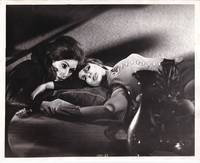
1970155647N.p.: N.p. 1970. Vintage reference photograph from the 1970 film showing actors Cynthia Myers and Erica Gavin. Dealer label adhered to the verso. <br /> <br /> After nearly a decade as one of America's most successful independent filmmakers sexploitation auteur Russ Meyer first reached out for the brass ring of major studio success with this frantic and most entertaining cult favorite once described by Meyer and screenwriter Roger Ebert as "the first exploitation-horror-camp-musical." The film follows three members of an all-girl rock band called The Kelly Affair who relocate to Hollywood in search of fame and fortune. Their success comes at the price of their friendship and integrity however and the girls eventually succumb to a nonstop train of decadence drugs and betrayal. Featuring one-hit wonders the Strawberry Alarm Clock supporting performances by Meyer regulars Charles Napier and Haji and a bit part from future Blaxploitation icon Pam Grier the film proved to be Meyer's biggest box-office success.<br /> <br /> Set and shot on location in Hollywood.<br /> <br /> 10 x 8 inches. Near Fine. <br /> <br /> Criterion Collection 836. N.p. unknown
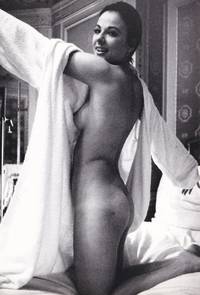
1970153231N.p.: N.p. 1970. Vintage oversize borderless reference photograph from the 1970 film showing a near-nude Edy Williams. With the stamp of still photographer Willy Rizzo on the verso. <br /> <br /> After nearly a decade as one of America's most successful independent filmmakers sexploitation auteur Russ Meyer first reached out for the brass ring of major studio success with this frantic and most entertaining cult favorite once described by Meyer and screenwriter Roger Ebert as "the first exploitation-horror-camp-musical." The film follows three members of an all-girl rock band called The Kelly Affair who relocate to Hollywood in search of fame and fortune. Their success comes at the price of their friendship and integrity however and the girls eventually succumb to a nonstop train of decadence drugs and betrayal. Featuring one-hit wonders the Strawberry Alarm Clock supporting performances by Meyer regulars Charles Napier and Haji and a bit part from future Blaxploitation icon Pam Grier the film proved to be Meyer's biggest box-office success.<br /> <br /> Set and shot on location in Hollywood.<br /> <br /> 8 x 12 inches. Near Fine. <br /> <br /> Criterion Collection 836. N.p. unknown
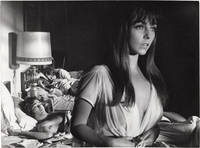
1970158260N.p.: N.p. 1970. Five vintage borderless reference photographs from the 1970 film. Four with printed mimeo snipes affixed to the versos. <br /> <br /> After nearly a decade as one of America's most successful independent filmmakers sexploitation auteur Russ Meyer first reached out for the brass ring of major studio success with this frantic and most entertaining cult favorite once described by Meyer and screenwriter Roger Ebert as "the first exploitation-horror-camp-musical." The film follows three members of an all-girl rock band called The Kelly Affair who relocate to Hollywood in search of fame and fortune. Their success comes at the price of their friendship and integrity however and the girls eventually succumb to a nonstop train of decadence drugs and betrayal. Featuring one-hit wonders the Strawberry Alarm Clock supporting performances by Meyer regulars Charles Napier and Haji and a bit part from future Blaxploitation icon Pam Grier the film proved to be Meyer's biggest box-office success.<br /> <br /> Set and shot on location in Hollywood.<br /> <br /> 9.5 x 7 inches. Near Fine. <br /> <br /> Criterion Collection 836. N.p. unknown
1974161106N.p.: N.p. 1974. Two vintage oversize borderless color reference photographs from the 1974 Swedish film. With censorship stamps on the versos and one with layout annotations in manuscript pencil and ink on the verso and a gold distribution label on the recto. <br /> <br /> A sixteen-year-old girl is seduced by several adult lesbians during a visit to her aunt's house precipitating a sexual awakening.<br /> <br /> 11.75 x 9.5 inches. Near Fine. N.p. unknown
1948145155Beverly Hills CA: Metro-Goldwyn-Mayer MGM 1948. Vintage double weight photograph of actors Vanessa Brown Wallace Beery and director Richard Thorpe on the set of 1949 film. Mimeo snipe and rubber stamps on the verso. <br /> <br /> Set in the early 1800s a band of outlaws take-in a distressed doctor who is on the run after digging up corpses for his medical research.<br /> <br /> Shot on location in Maryland. <br /> <br /> 8 x 10 inches. Near Fine. Metro-Goldwyn-Mayer [MGM] unknown
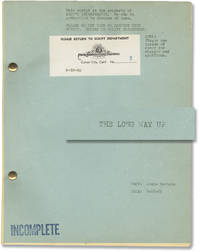
1952154485Culver City CA: Loew's Incorporated 1952. Treatment script for the 1953 film on yellow paper created by screenwriter Louis Morheim who received a story credit in the final film. With a single annotation in manuscript pencil changing the revision date on page five.<br /> <br /> Robert Aldrich's directorial debut wherein a baseball scout at a New York Giants training camp in Florida evaluates prospective hopefuls for a minor league contract. Starring Edward G. Robinson in his first major role after being threatened with blacklisting by the House Un-American Activities Committee HUAC.<br /> <br /> Shot on location in Melbourne Florida. <br /> <br /> Blue titled wrappers rubber-stamped copy No. 2 stamped "Incomplete" dated 6-18-52 with credits for screenwriter Louis Morheim. 42 leaves with last page of text numbered 42. Mimeograph duplication rectos only on yellow pages dated variously between 6-18-52 and 6-20-52. Pages Near Fine wrapper Near Fine bound with two gold brads. Loew's Incorporated unknown
1970144003Simi Valley: N.p. 1970. Draft script for an unproduced film. Written by Lincoln Demyan whose film credits as actor include episodes of "Bonanza" and "The Big Valley" "The Great Impostor" 1961 "Man's Favorite Sport" 1964 "The Brass Bottle" 1964 and "White Lightning" 1973. <br /> <br /> An underground pool hall and poker club is the site of a potential swindle. Local poker sharks con men and politicians clash as the stakes grow and all parties suspect the others are telling lies and cheating. <br /> <br /> Blue untitled wrappers. Title page present with credits for screenwriter Lincoln Demyan. 90 leaves with last page of text numbered 89. Mechanical duplication. Pages Fine wrapper Fine bound with velo binding. N.p. unknown
1956140109Burbank CA: MS Productions 1956. Final Draft script for season six episode 30 of the 1956 television show originally broadcast May 1 1956 on NBC. Copy belonging to Mason Curry who played Grady with his name on the front wrapper in manuscript pencil and manuscript pencil annotations additions and changes to his scenes throughout. <br /> <br /> Episode 30 of season six of the television show "Big Town" a series focused on the adventures of Steve Wilson and his staff at "The Illustrated Press" newspaper as they cover the hard hitting stories and social issues of the day. <br /> <br /> Brown titled wrappers production no. 537. Title page present dated February 3 1956 noted as Final with credits for screenwriter William L. Stuart. 32 leaves with last page of text numbered 30B. Mechanical duplication with revision pages throughout dated February 10 1956. Pages Very Good wrapper Very Good bound with two gold brads. MS Productions unknown
1967149909New York: Andy Warhol Film 1967. Vintage poster for the 1967 film. The film originally screened at the Hudson Theater in a 95-minute version although this cut is considered lost. A 109-minute version would screen in 1968 as the first film shown at the New Andy Warhol Garrick Theater renamed as such after Warhol recovered from being shot by Valerie Solanas. <br /> <br /> One of several sexploitation influenced films made by Warhol an episodic story of a biker who has no bike and is both eroticized by the camera and emasculated by various Warhol superstars throughout. <br /> <br /> 19 x 25 inches rolled. Near Fine with some light soil and an almost imperceptible professional repair to a tear at the top edge. <br /> <br /> Murphy The Black Hole of Cinema. Warholstars. Andy Warhol Film unknown
1967150716Beverly Hills CA: United Artists 1967. Collection of eight vintage color studio still photographs from the US release of the 1967 British film. With a stamp noting production No. 68-43 on the bottom right corner of the recto. <br /> <br /> Based on Len Deighton's 1966 novel. A private eye takes on a case involving a sophisticated computer used by an anticommunist global spy network. The third and last film in the Harry Palmer series preceded by "The Ipcress File" 1965 and "Funeral in Berlin" 1966.<br /> <br /> Set and shot on location throughout Finland and England.<br /> <br /> 10 x 8 inches. Near Fine. United Artists unknown
1961166734N.p.: N.p. 1961. First Draft script for the 1962 film. <br /> <br /> Based on Louis O. Coxe and Robert H. Chapman's 1949 play which was based in turn on Herman Melville's 1924 novella. A seaman's innocence and optimism win him the affection of the entire crew except the abusive master-at-arms who eventually wrongly accuses the seaman of conspiracy to mutiny. The feature film debut of Terence Stamp who was nominated for a Best Supporting Actor Academy Award for his performance.<br /> <br /> Yellow wrappers with a die-cut title window in the British style. Title page present dated March 21 1961 noted as FIRST DRAFT with credit for screenwriter Peter Ustinov. 127 leaves with last page of text numbered 123. Mimeograph duplication rectos only with pink and blue revision pages throughout dated variously between May 5 and August 22 1961. Title page lightly toned else pages Near Fine wrapper about Near Fine bound internally with three silver brads. N.p. unknown
1957166733N.p.: N.p. 1957. Final script for the 1962 film. Early draft preceding the film's release by five years credited to screenwriter Robert Rossen. Rossen was ultimately uncredited in the film but was involved in this early stage of the script's development. <br /> <br /> Based on Louis O. Coxe and Robert H. Chapman's 1949 play which was based in turn on Herman Melville's 1924 novella. A seaman's innocence and natural beauty wins him the affection of the entire crew except the abusive master-at-arms who eventually wrongly accuses the seaman of conspiracy to mutiny. The feature film debut of Terence Stamp who was nominated for a Best Supporting Actor Academy Award for his performance.<br /> <br /> Yellow titled wrappers noted as FINAL SCREENPLAY and dated October 15 1957 with credit for screenwriter Robert Rossen. 122 leaves with last page of text numbered 122. Mimeograph duplication rectos only. Pages Near Fine wrapper Near Fine bound with three gold brads. N.p. unknown
1971160619N.p.: N.p. 1971. Vintage reference photograph from the 1971 film. Printed mimeo snipe affixed to the verso.<br /> <br /> The second film in the Billy Jack series following "The Born Losers" 1967 and preceding "The Trial of Billy Jack" 1974. Although a critical failure the Billy Jack movies were enormously popular and largely successful at the box office. <br /> <br /> 10 x 8 inches. Near Fine. N.p. unknown