Western Female Seminary CatalogBiblio.com

227 résultats
1868167531868. Women's Education Movement. Western Female Seminary Catalog 1868-1869. Oxford OH. Western Female Seminary was founded in 1853 as a daughter school of Mount Holyoke College in South Hadley Massachusetts. Its first principal Helen Peabody and most of the early faculty had been students and teachers at Mount Holyoke. Mary Lyon Residence Hall on the Western campus is named for Mount Holyok's founder Mary Lyon. It later received a charter and became Western College an all-female institution. Women's colleges proliferated in the mid- to late- 19th century to fill the void created by their exclusion from most institutions of higher education. The prevailing notion that women were too delicate for a rigorous academic education was openly challenged when Elizabeth Cady Stanton spoke at the Seneca Falls Convention of 1848 "Man's intellectual superiority cannot be a question until woman has had a fair trial.When we shall have had our colleges our professions our trades for a century a comparison then may be justly instituted." Young women were quick to step up to the challenge; as quickly as female colleges opened they filled up. At the time that this description is being written no copies are recorded in American institutions. OCLC search results are at best an estimate and can vary over time.<br /> <br /> Women's Academy and Seminary Archive recording the first important movement of women into higher education in the United States seminary was synonymous with "academy" and did not have the religious connotation of today. In the 1800's the Female Academy and Seminary Movement transformed American educational norms allowing women the opportunity to receive secular non-religious college-level education. Women's colleges proliferated in the mid- to late- 19th century to fill the void created by their exclusion from most institutions of higher education. The prevailing notion that women were too delicate for a rigorous academic education was openly challenged when Elizabeth Cady Stanton spoke at the Seneca Falls Convention of 1848 "Man's intellectual superiority cannot be a question until woman has had a fair trial.When we shall have had our colleges our professions our trades for a century a comparison then may be justly instituted." Young women were quick to step up to the challenge; as quickly as female colleges opened they filled up. unknown
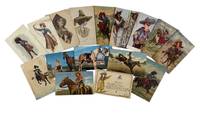
1890212421890. Archive of postcards documenting the popular image of the American cowgirl in Western Americana and early twentieth-century mass visual culture. Working in Cultural / Representational Mode the material illustrates how women participating in rodeo performance equestrian spectacle and frontier-themed entertainment were presented to national audiences during a period when women's public roles remained heavily circumscribed by conventional gender expectations. The postcards emphasize physical skill horseback mobility and frontier self-sufficiency through repeated depictions of women handling lassos firearms and bucking horses. Collectively the archive offers insight into the commercialization of the American West and the circulation of gendered frontier mythology through inexpensive illustrated print media from the late nineteenth century through the postwar period.<br /> Collection consists of 16 postcards dating approximately from the 1890s through the 1950s including early colored lithographs chromolithographs and colored real photo postcards. Each measures approximately 3.5 x 5.25 inches. Images portray cowgirls mounted on horseback in a variety of staged action scenes including lasso throwing galloping bucking and trick riding performances. Many women wear fitted riding outfits cowboy hats bandoliers holsters and western boots while posed with rifles pistols whips or ropes against rugged frontier backdrops. Several postcards emphasize dramatic movement with horses shown rearing trotting or in mid-action poses. The repeated use of lassos and firearms visually aligns the women with iconography traditionally associated with male cowboys in Wild West shows rodeo advertising and popular Western entertainment. Some postcards retain handwritten inscriptions on the versos.<br /> The archive preserves a long-running commercial visual tradition in which the cowgirl functioned simultaneously as frontier worker entertainer and symbol of female independence within American popular culture. Particularly notable is the tension between conventional femininity and the rugged physicality emphasized throughout the imagery with the women consistently portrayed as active riders and performers rather than domestic figures. The postcards also document the persistence of Western mythology across changing photographic and print technologies during the first half of the twentieth century. Minor edgewear and scattered markings to some cards; overall very good condition. A visually cohesive grouping documenting representations of women in frontier and rodeo culture across more than five decades of American postcard production. unknown
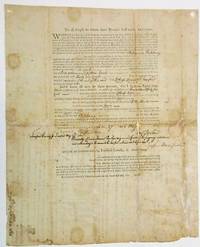
180533731Fairfield County 1805. Broadsheet 12-1/2" x 15-1/2". Printed document completed in ink manuscript. Old folds with some repaired splits and one 6" unrepaired split. Some small chips along a few splits with minimal loss. Light tanning scattered spotting. Good. <br/><br/> The original grant for this land was to Nehemiah Phippeny who lost title for nonpayment of taxes. The land was sold to Lothrop Lewis of Fairfield Connecticut on May 27 1805. On the verso are hand written transfers of the same piece of property: from Lothrop Lewis to William Hawley of Woodbury January 21 1806; from Hawley to Nehemiah Dibble of Stamford February 7 1806; from Dibble to Zalmon & Seymour Wildman of Danbury October 20 1806. There is also a voided transaction crossed out from Hawley to William Lamson of Waterbury January 31 1806. <br/> In 1800 the State of Connecticut granted to her citizens who were sufferers by fire caused by the British during the Revolutionary War a half million acres of land lying within the State of Ohio which was to be taken off the west part of the "Western Connecticut Reserve" now embraced in the counties of Huron and Erie. By an 1803 Act of Ohio the sufferers were incorporated as "The proprietors of the half million acres of land lying south of Lake Erie called 'Sufferers' Land'." The Act required management of the Company by a Board of Directors. The Board was to locate and survey the granted land and to partition it among the different claimants. This part of the Western Reserve was inhabited by Indians who engaged in warfare with the settlers. On July 4 1805 a treaty between the United States and the Wyandot Ottawa Chippewa Munsee and Delaware Shawanee and Pattawatamy nations was signed whereby those Indian nations in consideration of $18916.68 released their claims to all the lands owned by the company. unknown books
180533731Fairfield County 1805. Broadsheet 12-1/2" x 15-1/2". Printed document completed in ink manuscript. Old folds with some repaired splits and one 6" unrepaired split. Some small chips along a few splits with minimal loss. Light tanning scattered spotting. Good. <br /> <br /> The original grant for this land was to Nehemiah Phippeny who lost title for nonpayment of taxes. The land was sold to Lothrop Lewis of Fairfield Connecticut on May 27 1805. On the verso are hand written transfers of the same piece of property: from Lothrop Lewis to William Hawley of Woodbury January 21 1806; from Hawley to Nehemiah Dibble of Stamford February 7 1806; from Dibble to Zalmon & Seymour Wildman of Danbury October 20 1806. There is also a voided transaction crossed out from Hawley to William Lamson of Waterbury January 31 1806. <br /> In 1800 the State of Connecticut granted to her citizens who were sufferers by fire caused by the British during the Revolutionary War a half million acres of land lying within the State of Ohio which was to be taken off the west part of the "Western Connecticut Reserve" now embraced in the counties of Huron and Erie. By an 1803 Act of Ohio the sufferers were incorporated as "The proprietors of the half million acres of land lying south of Lake Erie called 'Sufferers' Land'." The Act required management of the Company by a Board of Directors. The Board was to locate and survey the granted land and to partition it among the different claimants. This part of the Western Reserve was inhabited by Indians who engaged in warfare with the settlers. On July 4 1805 a treaty between the United States and the Wyandot Ottawa Chippewa Munsee and Delaware Shawanee and Pattawatamy nations was signed whereby those Indian nations in consideration of $18916.68 released their claims to all the lands owned by the company. unknown
1875780701875. Western Publishing Association. THE WESTERN: A Journal of Literature Education and Art. Edited by H. H. Morgan. Saint Louis MO: Western Publishing Association January 1875-December 1876. New Series. Vol. I. No. 1. - Vol. II. No. 12. but lacking nos. 5 & 7 May and July 1876 in Vol. II. 22 issues in original printed paper wrappers. Vol. I. No. 1. only has a library seal embossed in blind on the front wrap. Most issues show some dust-soiling and/or light edgewear to wrappers but are clean within; their condition ranges from very good to near fine. unknown books
1887038377New York: American Bank Note Co 1887. First Edition. Very Good. Broadsheet printed in black ink on buff stock opens to 12.25" x 25.5". Includes an inset map 5.75" x 8.75" and a long paragraph of text on Chautauqua Lake. Folds to 6" x 3.25" with different illustrations of Niagara Falls on both cover panels. Dated "August 21 1887. Corrected to Sept. 18." Not found in OCLC nor WorldCat. American Bank Note Co unknown
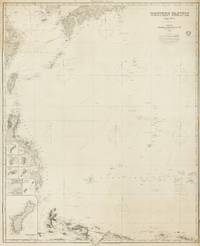
1884143681London: James Imray and Son 1884. Very Good. London James Imray and Son 1884. A very large engraved chart printed on two sheets combined printed surface 1268 × 1015 mm overall total size 1280 × 1048 mm mounted on the original blue backing paper with the publisher's title-label on the verso. Chips and short tears to the margins in a few places clear of the printed surface; a few small light stains and other minor signs of age and handling; in very good condition with faint pencil annotations tracking a voyage to Hangzhou in September 1888. A very large and detailed blueback chart of the western rim of the Pacific Ocean including the East China Sea Philippine Sea and parts of the coastlines of Japan Korea China Taiwan the Philippines and New Guinea. It features eight inset charts: Guajan Island; Borodino Island; Umata Bay; Farralon de Medinilla; Rota; Alamagan; Guguan; and Rosario Island. Both sheets incorporate corrections to June 1884. <p>The title-label on the verso reads 'Chart No 193. Western Pacific in Seven Charts. Chart No. 4. Price 8s.'. James Imray and Son unknown
182867917Cincinnati: Western Magazine and Review. Very Good. 1828-1829. Hardcover. Western Magazine and Review Volume 2 June 1828- May 1829 lacks October and April. rebound in black buckram last page of text is torn. The contents are soiled and foxed but solid. . Western Magazine and Review hardcover books
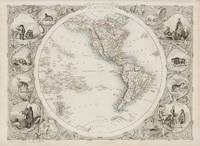
1851200121AG1851. London Edinburgh & Dublin J.& F. Tallis 1851. Original steel engraving / Vintage map. Drawn and engraved by John Rapkin. Partly hand-coloured. Illustrations by H. Warren and Enrgaved by J. Rogers. Plate Size: 34 cm x 25.5 cm. Sheet Size: 37.4 cm x 27 cm. In very good condition with only faintest traces of browning to outer margins. Very slight paper imperfections along edge. Minor tear near upper left corner. Very minor tear to map above the Arctic Circle. Published in the Illustrated Atlas And Modern History Of The World Geographical Political Commercial & Statistical Edited By R. Montgomery Martin. Beautifully bordered and fascinating map of the western hemisphere including North and South America. The Azores and Cape Verde islands and the Caribbean islands are included in the Atlantic Ocean. In the south South Shetland Islands and South Victoria populate a blank area where the Antarctic ought to be found. In the Pacific New Zealand and the Polynesian and Sandwich Hawaiian islands. To the north the end of Asia can be seen and across the Arctic Ocean Greenland is also included. The political divisions are colourfully delineated. Interestingly Alaska is described as 'Russian America' highlighting that the U.S. had still to purchase "Seward's Icebox" from the Tsar when the map was published. John Tallis 7 November 1817 3 June 1876 was an English cartographic publisher. His company John Tallis and Company published views maps and atlases in London from roughly 1838 to 1851. Tallis set up as a publisher with Frederick Tallis in Cripplegate in 1842; the business moved to Smithfield in 1846 and was dissolved in 1849. From 1851 to 1854 Tallis operated as John Tallis and Company. He started The illustrated news of the world and national portrait gallery of eminent personages in 1858 selling it for £1370 in 1861; it folded in 1863. Wikipedia The most important project John Tallis undertook was the 'Illustrated Atlas' from 1851. The original map we offer here was part of this exceptional Atlas and all the maps it contained are still today considered as the last reminder of an era of lavish map production. Tallis worked the project together with John Rapkin 1815-1876 and it was Rapkin's style and talent that we have to thank for when we marvel at these maps today. What makes these maps so special is the detail of engraved vignettes that surround the map and often show indigenous scenes people in their environment and even more so historical buildings or historical views of towns and cities architecture and landscape. The project of 'The Illustrated Atlas' was designed to be finished just in time for the anxiously awaited "Great Exhibition of the Works of Industry of All Nations" or The Great Exhibition sometimes referred to as the Crystal Palace Exhibition in reference to the temporary structure in which it was held was an international exhibition that took place in Hyde Park London from 1 May to 11 October 1851. It was the first in a series of World's Fairs exhibitions of culture and industry that became popular in the 19th century and it was a much-anticipated event. The Great Exhibition was organized by Henry Cole and Prince Albert husband of the reigning monarch Queen Victoria. It was attended by numerous notable figures of the time including Charles Darwin Samuel Colt members of the Orléanist Royal Family and the writers Charlotte Brontë Charles Dickens Lewis Carroll George Eliot and Alfred Tennyson. Music for the opening was under the direction of Sir George Thomas Smart and the continuous music from the exhibited organs for the Queen's procession was "under the superintendence of William Sterndale Bennett". Wikipedia unknown
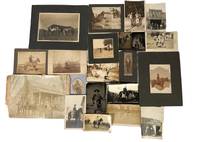
1880194771880. Western Americana Cowboy photograph archive documenting armed riders ranch labor rodeo culture and frontier mobility across the American West between the 1880s and 1920s. Images capture working cowboys on horseback cattle branding scenes and interactions with Native American families during the late frontier period when cattle ranching and horse culture formed the backbone of Western rural economies. These photographs provide visual documentation of occupational practices such as branding long distance riding and mounted travel through difficult terrain during the closing decades of the open range era and the early twentieth century transition toward modern ranching systems.<br /> <br /> Archive of twenty original photographs in multiple photographic formats including tintypes albumen prints and silver gelatin photographs. Images date approximately from the 1880s through the 1920s and depict cowboys riding horses working cattle participating in rodeo competitions and traveling across rugged Western landscapes. Several photographs show armed riders carrying pistols or rifles including one large albumen print showing a mounted cowboy with a rifle across his lap. One photograph depicts cowboys branding livestock with a caption reading "Brother Manzer Branding his Cow." A real photo postcard dated circa 1910 shows several cowboys on horseback crossing a large river with water rising to the horses' necks. Another image shows a cowboy with a Native American family wearing traditional clothing in rocky badlands terrain. Photographs illustrate the working environment and material culture of Western cattle operations including ranch yards feed lots and livery stables. Rodeo imagery reflects the transformation of working ranch skills into organized public competitions during the early twentieth century. Image sizes vary. Overall minor wear consistent with age. Very good condition. A cohesive visual record of cowboy labor frontier mobility and Western ranching culture across four decades of the American West. unknown
182922252London: Baldwin and Cradock 1829. First edition. Hardcover. Good overall. Highly important early Western Australia content with report by Captain Stirling on his expedition to the Swan River undertaken in the year prior to the first settlement. A 7 page report from Captain Stirling's despatches describes the results of his 1827 expedition. <br /> <br /> Other topics include: The Netherlands: Progress of the Insurrection in Java; Russia: Hostilities with Persia renewed; Russia declares War against Turkey; Piracies in the West Indies; Account of Franklin's Second Journey to the shores of the Polar Sea; Present State of the Jews; Steam Boat; American Great Western Canal; and the First English Newspaper established in China.<br /> <br /> Single 8vo volume in two parts. The article appears at pp 510-517. Part I: viii 1 - 267pp 1; Part II: 545pp Index 11. Rebacked with the original leather spine laid down still quite rubbed and worn. Part of the original label loosely inserted inside paper label laid down at top of front board. Text clean and bright. Hard copy not found in Trove. Baldwin and Cradock hardcover
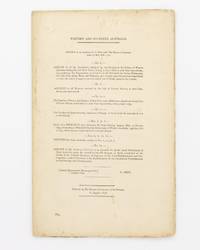
1838131290London: 'Ordered by the House of Commons to be Printed' 1838. Very Good. London 'Ordered by the House of Commons to be Printed' 1838. Foolscap folio 21 1 docket pages with numerous tables. Uncut and sewn as issued; outer pages slightly dusty; light foxing throughout; an excellent copy. Great Britain and Ireland Parliamentary Paper Number 685 of 1838. The bulk of this important paper pages 4-19 is given over to 'Nos. 5 6 7. Copy of a Despatch from Governor Sir James Stirling bearing Date 15 October 1835 forwarding a Memorial from the Inhabitants of Western Australia; together with a Copy of the Answer which has been returned thereto'. It is somewhat more than that. Stirling's covering letter explains that 'The signatures attached to this memorial . belong to about one-third of the adult male population of the settlement and represent also about one third of its property in land and capital. The grievances under which the memorialists consider themselves and their fellow colonists to labour are five in number'. The five grievances are well-aired; all signatories are identified; there are five pages of lists of lands reserved for public purposes individuals or 'Assigned to or Reserved for Civil Naval and Military Officers from commencement of the Colony in June 1829 to 6 October 1835'. The second and third lists provide name rank or situation where applicable number of acres district assigned or reserved - and when and remarks. A sample record for an individual is that pertaining to Robert Ramsay for whom an 'uncertain' number of acres was reserved at Plantagenet on 12 April 1831: 'Master of brig "Britannia". On south shore of Princes Royal Harbour reserved 18 months to form a whaling establishment and then resumed on failure of conditions'. The last four pages in this section contain Lord Glenelg's thoughts on the matter as of 7 March 1837. The limited information relating to the fledgling colony of South Australia occupies only pages 20 and 21. Ferguson 2511. <p>Provenance: the signature 'C.A.S. Hawker' is written in pencil at the head of the first page. Charles Allan Seymour Hawker 1894-1938 politician and pastoralist: his grandfather George Charles Hawker arrived in Adelaide with his brother Charles in September 1840. They settled on land at Bungaree near Clare in December 1841; C.A.S. Hawker he was born there. He was seriously wounded on several occasions at the Western Front losing one eye and 'his legs were in surgical irons to the end of his life'. He was a minister in the Lyons Government from 1932 until he 'was killed on 25 October 1938 when the aircraft "Kyeema" crashed into Mount Dandenong in Victoria. His untimely death was sharply felt. He had been an outstanding and respected figure in the Federal parliament whom some of his own party would have supported as prime minister. John Curtin the Opposition leader believed he had been on the threshold of great achievements' 'Australian Dictionary of Biography'. 'Ordered, by the House of Commons, to be Printed' unknown
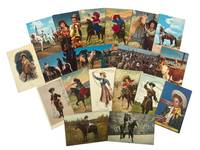
1890212411890. Archive of illustrated and photographic postcards documenting the popular image of the American cowgirl in late nineteenth- and early twentieth-century Western visual culture. Working in Cultural / Representational Mode the material traces how women participating in rodeo equestrian performance and frontier-themed entertainment were presented to mass audiences during a period when gender conventions in the United States remained heavily tied to domestic ideals. The postcards illustrate popular fascination with female riders engaged in activities associated with masculine frontier labor and spectacle including trick riding roping horse handling and armed performance. The archive also provides insight into the commercialization of the American West through souvenir imagery touring exhibitions rodeos and romanticized frontier iconography circulated through postcard publishing during the first half of the twentieth century.<br /> Collection consists of 19 postcards dating from approximately the 1890s through the 1950s including primarily colored lithograph and chromolithograph postcards alongside several later colored real photo postcards. Most measure approximately 3.5 x 5.25 inches. Images depict cowgirls mounted on horseback using lassoes pistols and whips in staged action scenes including bucking galloping roping demonstrations and parade formations. Earlier cards portray women riders wearing skirts or dresses while mounted reflecting transitional equestrian fashions prior to the widespread normalization of riding trousers for women during the 1920s. One postcard depicts a "Grand Entry" scene featuring numerous mounted cowboys and cowgirls carrying national flags from various countries suggesting an international rodeo or exhibition setting. Another early color postcard shows a man and woman posed together on horseback in cowboy attire. A postcard postmarked 1951 depicts a cowgirl tending to her horse and bears the handwritten verso inscription: "How we long for you in Fort Worth horses and more horses cowgirls too" addressed to Alabama. Several additional cards contain handwritten correspondence and postal markings dated between 1906 and 1908.<br /> The archive documents the enduring cultural construction of the cowgirl as both frontier laborer and commercial entertainment figure during the height of Western Americana imagery in American popular culture. The postcards capture changing attitudes toward women's athleticism mobility and public performance while preserving highly stylized depictions disseminated through inexpensive mass-produced print media. Particularly notable is the tension visible between conventional feminine presentation and physically demanding equestrian activity especially in the earlier cards depicting women riding aggressively while still dressed in skirts and formal attire. Minor edgewear scattered markings and light handling wear to some cards; overall very good condition. A cohesive visual archive of cowgirl imagery and the gendered mythology of the American West across more than half a century of postcard production. unknown
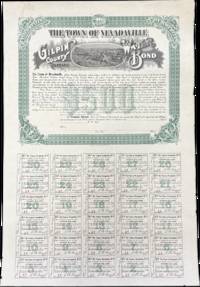
189979680Denver: The Denver Litho Co 1899. Engraved and printed in black green and red on thin cream stock 14 ¾†x 15 ½†this is bond number 54 unsigned. $500 six percent bond issued by the town of Nevadaville in Gilpin County to help fund a “gravity system of water worksâ€. The total issue was $20000 and the bonds’ mature date was 10 years. Includes 30 coupons valued at $15 each.<br /> <br /> Nevadaville was founded in 1859 and is now a gold mining ghost town. It was once one of the most important mining settlements in the area and originally part of the Kansas Territory. It grew to house the miners working the Burroughs lode and the Kansas lode and the population was predominantly Irish. The Denver Litho Co unknown
1877293407Staunton Va: Julius Bien & Co. M. A. Miller 1877. Very Good binding. Dissected linen-backed map in color; 118 x 48 cm 43-1/4" x 18-3/4". Some marginal tears but very little loss.~~The Douthat Survey was produced in 1877 under order of the U.S. Circuit Court for the Western District of Va. by M. A. Miller C.E of Staunton. ~~The survey was made for Hon. Peter McLaren preparatory to purchasing valuable mineral lands for mining ore in that region. The extensive tract of land near Covington Virginia was bought by McLaren a Canadian; he acquired with that purchase leases to mines operated by the Alleghany Mining Company that shipped ore to the Low Moor Iron plants at Covington. Because McLaren was a non-resident the Commonwealth derived no tax revenues from the mining operation. Consternation ensued: "The great value of these properties is beyond question yet neither the owners or the lessees pay any income tax to the state" see Journal of the House of Delegates State of Virginia Session 1893-'94; House Doc. No. 3 p. 5.~~. Very Good binding. Julius Bien & Co. | M. A. Miller unknown books
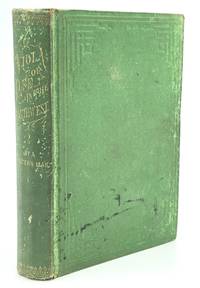
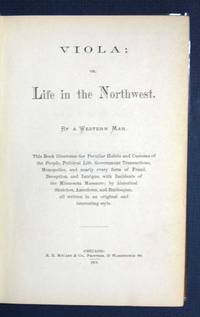
1874901910Chicago: R.R. McCabe & Co. 1874. Bound in green cloth that is quite "mottled". The interior pages are clean and the book is tight. Thomas Sharon cited on copyright page; B&W 2 page frontispiece; previous owners book plate on front paste down; 422pp. Very Scarce!. First Edition. Hard Cover. VG/No Jacket. R.R. McCabe & Co. Hardcover
1874H21740Chicago: R. R. McCabe 1874. First printing. Hardcover. Good. 8vo publisher's green cloth gilt good copy with light ink stains to front cover minor bubbling and mottling to cloth light rubbing and wear old bookplate contents very good and clean. 422 pp. appears to be a novel set in Minnesota; includes material on the Minnesota Massacre. R. R. McCabe hardcover
187429097Chicago: R. R. McCabe & Co 1874. 1st edition Soliday IV 671 incorrectly listing the title as "Life in the Southwest"; Wright II 2193. Original publisher's orange cloth with gilt spine lettering & decorations. Violet colored eps. VG spine a bit faded/board showing at lower tips/po name stamp to ffep & poi to preliminary blank. 422 pp. Illustrated with 2 facing full-page wood engravings prior to t.p. 8vo. 7-1/4" x 5" <br/><br/>Per Soliday "Gives characteristics of western and Indian life from the author's observations and experiences on the Kansas Plains Texas Ranges and in California mines." which in turn relies on the preface verbiage which adds "in the hunter's camp and in the soldier's tent." R. R. McCabe & Co hardcover books
18951422Various locations in Iowa 1895. Very good. 149 albumen photographs on twenty cardstock leaves images measuring 4 x 5 inches. Oblong quarto. Original black cloth cover gilt; leaves laid in formerly string-tied. Light wear and soiling to cloth evidence of slight dampstaining to lower edge of binding and later leaves. Internal numbering sequence indicates first sixteen images lacking. Images generally clean some minor fading; one photograph partially removed and effaced. Wonderful photo album of images documenting late-19th century Iowa assembled by an unidentified young man with a clear passion for both amateur photography and the area's rivers. Internal evidence suggests he was a student at the University of Iowa possibly pursuing a course of study in the geological sciences. Each image is numbered captioned and dated in a tidy hand usually identifying location and any interesting features. The images span a full year from April 1894 to July 1895 ending with a self portrait.<br/><br/>There are two series of eighty-three images the first sixteen of which are not present. The first of these focuses on the area around Iowa City documenting explorations along the Iowa River. Captioned images include: "21 -- Looking across Iowa River - University buildings in the distance. May 3 '94"; "25 -- Looking up Iowa River from Iowa Ave. Bridge. - Water Works in the distance. May 26 '94"; "46 -- Children at play - Iowa River. May 12 '94". There are images of a baseball game between the University and Luther College views of lime kilns and images of natural specimens. Several photographs chart the "Great Hail Storm at Iowa City" on May 5 1894 with images of golfball-size hail and the damage done to the windows of buildings around town. There are also photos of the author's roommate and some of the activities they got up to including catching snakes and hunting. The roommate Bartsch appears to have been studying natural sciences and one photograph shows him seated at his desk "Blowing Bird Eggs."<br/><br/>The second series has a manuscript title of "Oneota Expedition" and documents a trip by boat from Decorah Iowa on the Upper Iowa River and down the Mississippi as far as Muscatine several miles below Davenport. The trip began on June 18 1895 and lasted through July 26th. Scenes along the river include "6. Women wading the river - w. of Decorah June 19 '95"; "14 -- Dragging our boat in the Oneota. June 24 '95" which shows a flat-bottomed boat laden with supplies being both pushed and pulled by a man at either end; a series of views taken from Oneota Bluff near New Albin on the Minnesota border; "37 -- Winnebago Indian Camp - Iowa Slough July 6 '95"; numerous lovely images of camping along the river and river towns as seen from the water; "77 -- Beds of Montpeliar Sandstone at water's edge - Below Montpeliar Ia. - Bartsch & 'Fitz' hunting fossils. July 23 '95." An interesting album full of wonderful and meticulously documented views of the Iowa River as seen through the eyes of a 19th-century university student. unknown books
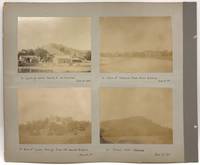
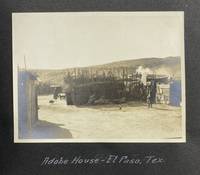
19001880Various locations including the Southwest California Mexico and Colorado 1900. Very good plus. Forty silver gelatin photographs on thirty-eight leaves. Images 3 x 4 inches all but three one per page and captioned. Oblong 12mo album. Original black cloth with black paper leaves. Internally clean most images with good definition and contrast. A charming little photograph album documenting a holiday vacation across the country. The trip begins on a steamer off the Florida Coast with stops at New Orleans Arizona Texas Mexico and on to California. Images in the Southwest include Native American street vendors in Yuma adobe houses in El Paso and the prison and post office in Juarez. In California where the bulk of the images were taken the group visits Los Angeles Ocean Beach the ostrich farm at Pasadena Long Beach Catalina Island Santa Barbara San Francisco and Berkeley. From San Francisco they board a train snapping photos from the railway car. In Colorado they visit Pueblo Cripple Creek Colorado Springs Denver the Cave of Winds and Garden of the Gods -- all the usual tourist stops. The images have good contrast and the compiler has carefully labeled each image in a neat hand elevating this above standard tourist albums. An excellent example of cross-country tourist travel at the turn of the century. unknown books
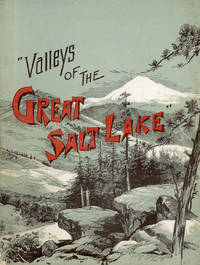
189046818Chicago: R. R. Donnelley and Sons Company 1890. 1890. UTAH. First Edition. 56 pp. Octavo 22 cm Gray illustrated wrappers. Illustrations. Offers a short history of the settlement and growth of Utah and includes profiles of Salt Lake Ogden and the Great Salt Lake. Illustrations include the tramway in Little Cottonwood "The vast improvements wrought by the industrious and frugal pioneers of Utah the great natural resources of the territory the balm of its health giving and invigorating climate the wonders of the majestic mountains the sylvan beauties of its unrivaled valleys the new relations of amity and progress that have sprung into life between all the religious sects of the territory and especially in Salt Lake City the enterprise of energetic railroads the building of great irrigating canals the establishment of manufactories the growth of mining in short all those great strides towards absolute preeminence which Utah has made have been to a great extant ignored in the past." - from the Preface. A small bump to the fore-edges along the upper portion of the front cover and diminishing in size inward very light foxing to the first few pages else a very good tight copy. Not in Flake/Draper. R. R. Donnelley and Sons Company, 1890. unknown
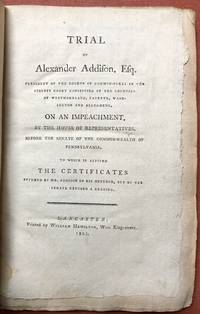
1803H3647Lancaster: William Hamilton 1803. Hardcover. Good. Published 1803. Original paper covered boards 2 154 2 24 pp. Good copy in original paper covered boards recent spine paper some tanning and soil to endpapers contents a little foxed but very good untrimmed. Other copies mention only a 14pp appendix; ours has a 24 pp appendix. William Hamilton hardcover
1875457Cincinnati 1875. Very good. Broadside 11 x 8 inches. Slight worming at edges minor wear. Contemporary ink stamp on lower corner. Broadside advertising the services of George A. Knight ticket agent for the Ohio & Mississippi Railway. "Bear in mind the fact the Ohio & Mississippi is the only line that runs its entire trains through from Cincinnati to St. Louis with NO MIDNIGHT CHANGES!" The broadside bears the ink stamp advertisement of Henry H. Hannan Land and Emigration Agent based in Swan Creek Ohio. A nice ephemeral piece. OCLC records three institutional copies at the University of Missouri the Hagley Library and Southern Methodist University. unknown books
183129035Nelson Ohio 1831. Broadside 7.5" x 34.5" three leaves joined end to end with wax. Manuscript petition written on unlined paper bold calligraphic heading followed by small neat handwriting. Signed by sixty-one petitioners from the Township of Nelson. A dampstain runs through the right edge of the petition light scattered foxing. Very Good. <br/><br/> This is a petition for the Court to provide the village of Garrettsville Ohio with a justice of the peace. Garrettsville was founded in 1804 by Col. John Garrett III and was officially incorporated in 1864. The citizens complain that the township of Nelson had only two justices neither of which was easily accessible to Garrettsville leaving Garrettsville "entirely destitute." The petition is followed by the signatures of sixty-one residents. The Court refused the request. <br/> Among the signers is Elisha Garrett son of Garrettsville's founder; Lyman W. Trask 1809-1863 a physician and editor of the Western Pearl a short-lived literary newspaper of the 1830s; Edwin Atwood who built the Garrettsville Grist-mill with Leman Ferry and the first church with John Garrett; and Abraham Dyson a blacksmith and War of 1812 veteran. Other names include: Willis Hall Robert H. Scott Richard A. Denison Hiram Austin Warren Waste John M. Tilden E.L. Jones Martin McClintock Samuel Fuller Ferriss Couch Henry Gillmore Mylowe Eggleston Joseph Gillmore John Zubull Anson Booth Joseph A. Chapman John Noah by his mark and many more. Brown: HISTORY OF PORTAGE COUNTY OHIO. 1885. unknown books
1868026173London: London & North Western Railway 1868. Book. Very Good. Paperback. First Edition. 4to. Timetable March 1868 front timetable sheet printed on a buff-orange paper with attached folded A3 sheet centre fold map"Map of the London & North Western Railway and its Communication" reverse "Map Shewing London & North Western Railway and its connections in the Neighbourhood of London". and to the rear two small maps to the final side are entitled Enlarged Plan of the London & North Western Railway - between Liverpool Manchester & Leeds and Enlarged Plan of the London & North Western Railway Between Rugby Birmingham Stafford & Shrewsbury. ; thought to be number XV from a series of timetables. A little edge wear and marking to maps no inscriptions appears to have been part of a larger timetable book. London & North Western Railway Paperback