15 résultats
185047093Berlin, G. Reimer, 1850. 4to. Bound in later marbled wrappers, as extracted from ""Journal für die reine und angewandte Mathematik, 28 Band, 4. Heft, 1844"". Very fine and clean. Pp. 160-179" Pp. 224-274 Pp. 275-287 [Entire issue: 289-380 + 2 folded plates].
185047093Berlin G. Reimer 1850. 4to. Bound in later marbled wrappers as extracted from "Journal für die reine und angewandte Mathematik 28 Band 4. Heft 1844". Very fine and clean. Pp. 160-179; Pp. 224-274; Pp. 275-287 Entire issue: 289-380 2 folded plates. <br/><br/><em>First publication of lemniscate function and Eisenstein's Criterion one of the best known irreducibility criteria of polynomials. It is often seen referred to as the Schönemann-Eisenstein. Euler had introduced and studied the arc length of the lemniscate in the 18th century this work laying the ground work for the later development of elliptic functions. The lemniscate function expresses the parameter of the lemnicate in terms of its arc-length. It can be extended to complex values of the parameter and it then makes sense to ask for the points which divide the lemniscate into m equal parts where m is a Gaussian integer a complex number. Abel had shown that the determination of these points reduced to finding the roots of a certain polynomial equation. A crucial point in Eisenstein's extension of Abel's work described in the present papers was to prove that this polynomial is irreducible. Eisenstein developed his eponymous criterion to establish this although today it is most familiar when applied to the more elementary case of a polynomial with ordinary integer coefficients. </em> unknown
184448885Berlin, G. Reimer, 1844. 4to. In contemporary half cloth. In ""Journal für die reine und angewandte Mathematik"", 27. band, Heft 1-4, 1844. Entire volume 27 offered. A small library stamp to lower part of p. 1 and a white label pasted on to upper part of spine. Light occassional brownspotting, otherwise fine and clean.
184448885Berlin G. Reimer 1844. 4to. In contemporary half cloth. In "Journal für die reine und angewandte Mathematik" 27. band Heft 1-4 1844. Entire volume 27 offered. A small library stamp to lower part of p. 1 and a white label pasted on to upper part of spine. Light occassional brownspotting otherwise fine and clean. <br/><br/><em>First printing of these influential papers by the German mathematics prodigy Eisenstein. Even though he died prematurely at the age of 29 he managed to prove Cubic reciprocity presented in the present papers biquadratic reciprocity Quartic reciprocity to be imprisoned by the Prussian army for revolutionary activities in Berlin and making Gauss state that: "There have been only three epoch-making mathematicians: Archimedes Newton and Eisenstein". Alexander von Humboldt then 83 accompanied Eisenstein's remains to the cemetery. The papers presented in the present issue is among his most prominent and made him famous throughout the mathematical world. James Driven to innovate P. 88. "The twenty-seventh the present and most extensive and twenty-eighth volumes of Crelle's Journal published in 1844 contained twenty-five contributions by Eisenstein. These testimonials to his almost unbelievable explosively dynamic productivity rocketed him to fame throughout the mathematical world. They dealt primarily with quadratic and cubic forms the reciprocity theorem for cubic residues fundamental theorems for quadratic and biquadratic residues cyclotomy and forms of the third degree plus some notes on elliptic and Abelian transcendentals. Gauss to whom he had sent some of his writings praised them very highly and looked forward with pleasure to an announced visit. In June 1844 carrying a glowing letter of recommendation from Humboldt Eisenstein went off to see Gauss. He stayed in Göttingen fourteen days. In the course of the visit he won the high respect of the "prince of mathematicians" whom he had revered all his life. The sojourn in Göttingen was important to Eisenstein for another reason: he became friends with Moritz A. Stern-the only lasting friendship he ever made. While the two were in continual correspondence on scientific matters even Stern proved unable to dispel the melancholy that increasingly held Eisenstein in its grip. Even the sensational recognition that came to him while he was still only a third-semester student failed to brighten Eisenstein's spirits more than fleetingly. In February 1845 at the instance of Ernst E. Kummer who was acting on a suggestion from Jacobi possibly inspired by Humboldt Eisenstein was awarded an honorary doctorate in philosophy by the School of Philosophy of the University of Breslau.Eisenstein soon became the subject of legend and the early literature about him is full of errors. His treatises were written at a time when only Gauss Cauchy and Dirichlet had any conception of what a completely rigorous mathematical proof was. Even a man like Jacobi often admitted that his own work sometimes lacked the necessary rigor and self-evidence of methods and proofs." DSB. </em> hardcover
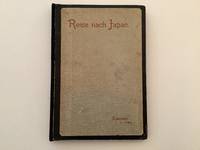
189932880Wien, Carl Gerold?s Sohn, 1899. Gr.-8°. Mit 4 Textfiguren u. einer gefalt. farb. Karte. 2 Bll., 182 S., OKart.
189920016AB1899. Vienna Gerold 1899 235 : 17 cm. 2 leaves 182 pages. Half cloth. Describes a journey from Austria over India and China to Japan. With many interesting details from all the places he visited. - Missing the map. Title-page with stamp binding a bit rubbed at the edges. hardcover
184445139Berlin, G. Reimer, 1844. 4to. In ""Journal für die reine und angewandte Mathematik, 28 Band, 1 Heft, 1844"". In the original printed wrappers, without backstrip. Fine and clean. [Eisenstein:] Pp. 28-35" Pp. 36-43 Pp. 44-48 Pp. 49-52" Pp. 53-67. [Entire issue: IV, 96, (2) pp. + 2 folded plates.].
184445139Berlin G. Reimer 1844. 4to. In "Journal für die reine und angewandte Mathematik 28 Band 1 Heft 1844". In the original printed wrappers without backstrip. Fine and clean. Eisenstein: Pp. 28-35; Pp. 36-43; Pp. 44-48; Pp. 49-52; Pp. 53-67. Entire issue: IV 96 2 pp. 2 folded plates. <br/><br/><em>First printing of six exceedingly influential papers by the German mathematics prodigy Eisenstein. Even though he died prematurely at the age of 29 he managed to prove biquadratic reciprocity Quartic reciprocity Presented in the present: "Lois de réciprocité" Cubic reciprocity Presented in the present: "Nachtrag zum cubischen Reciprocitätssatze." to be imprisoned by the Prussian army for revolutionary activities in Berlin and making Gauss state that: "There have been only three epoch-making mathematicians: Archimedes Newton and Eisenstein". Alexander von Humboldt then 83 accompanied Eisenstein's remains to the cemetery. The papers presented in the present issue is among his most prominent and made him famous throughout the mathematical world. James Driven to innovate P. 88. "The twenty-seventh and twenty-eighth volumes of Crelle's Journal published in 1844 contained twenty-five contributions by Eisenstein. These testimonials to his almost unbelievable explosively dynamic productivity rocketed him to fame throughout the mathematical world. They dealt primarily with quadratic and cubic forms the reciprocity theorem for cubic residues fundamental theorems for quadratic and biquadratic residues cyclotomy and forms of the third degree plus some notes on elliptic and Abelian transcendentals. Gauss to whom he had sent some of his writings praised them very highly and looked forward with pleasure to an announced visit. In June 1844 carrying a glowing letter of recommendation from Humboldt Eisenstein went off to see Gauss. He stayed in Göttingen fourteen days. In the course of the visit he won the high respect of the "prince of mathematicians" whom he had revered all his life. The sojourn in Göttingen was important to Eisenstein for another reason: he became friends with Moritz A. Stern-the only lasting friendship he ever made. While the two were in continual correspondence on scientific matters even Stern proved unable to dispel the melancholy that increasingly held Eisenstein in its grip. Even the sensational recognition that came to him while he was still only a third-semester student failed to brighten Eisenstein's spirits more than fleetingly. In February 1845 at the instance of Ernst E. Kummer who was acting on a suggestion from Jacobi possibly inspired by Humboldt Eisenstein was awarded an honorary doctorate in philosophy by the School of Philosophy of the University of Breslau.Eisenstein soon became the subject of legend and the early literature about him is full of errors. His treatises were written at a time when only Gauss Cauchy and Dirichlet had any conception of what a completely rigorous mathematical proof was. Even a man like Jacobi often admitted that his own work sometimes lacked the necessary rigor and self-evidence of methods and proofs." DSB </em> unknown
18479870504Reimer Berlino 1847. Mit Einer Figurentafel. This is an ex-library book and may have the usual library/used-book markings inside.This book has hardback covers. Clean from markings. In poor condition suitable as a reading copy. No dust jacket. Large quarter leather binding. Marbled boards scuffed and shelfworn. Leather backstrip and corners are faded. Some tears on backstrip. Foxing throughout. Please note the Image in this listing is a stock photo and may not match the covers of the actual item950grams ISBN: Reimer, Berlino hardcover
184445140Berlin, G. Reimer, 1844. 4to. In ""Journal für die reine und angewandte Mathematik, 28 Band, 3. Heft, 1844"". In the original printed wrappers, without backstrip. Last leaf with repair. Fine and clean. [Eisenstein:] Pp. 223-245"" Pp. 246-247. [Entire issue: 193-288, (2), + two folded plates.]
184445140Berlin G. Reimer 1844. 4to. In "Journal für die reine und angewandte Mathematik 28 Band 3. Heft 1844". In the original printed wrappers without backstrip. Last leaf with repair. Fine and clean. Eisenstein: Pp. 223-245; Pp. 246-247. Entire issue: 193-288 2 two folded plates. <br/><br/><em>First printing of two important papers by the German mathematics prodigy Eisenstein. Even though he died prematurely at the age of 29 he managed to prove biquadratic reciprocity Quartic reciprocity Cubic reciprocity to be imprisoned by the Prussian army for revolutionary activities in Berlin and making Gauss state that: "There have been only three epoch-making mathematicians: Archimedes Newton and Eisenstein". Alexander von Humboldt then 83 accompanied Eisenstein's remains to the cemetery. The papers presented in the present issue is among his most prominent and made him famous throughout the mathematical world. James Driven to innovate P. 88. "The twenty-seventh and twenty-eighth volumes of Crelle's Journal published in 1844 contained twenty-five contributions by Eisenstein. These testimonials to his almost unbelievable explosively dynamic productivity rocketed him to fame throughout the mathematical world. They dealt primarily with quadratic and cubic forms the reciprocity theorem for cubic residues fundamental theorems for quadratic and biquadratic residues cyclotomy and forms of the third degree plus some notes on elliptic and Abelian transcendentals. Gauss to whom he had sent some of his writings praised them very highly and looked forward with pleasure to an announced visit. In June 1844 carrying a glowing letter of recommendation from Humboldt Eisenstein went off to see Gauss. He stayed in Göttingen fourteen days. In the course of the visit he won the high respect of the "prince of mathematicians" whom he had revered all his life. The sojourn in Göttingen was important to Eisenstein for another reason: he became friends with Moritz A. Stern-the only lasting friendship he ever made. While the two were in continual correspondence on scientific matters even Stern proved unable to dispel the melancholy that increasingly held Eisenstein in its grip. Even the sensational recognition that came to him while he was still only a third-semester student failed to brighten Eisenstein's spirits more than fleetingly. In February 1845 at the instance of Ernst E. Kummer who was acting on a suggestion from Jacobi possibly inspired by Humboldt Eisenstein was awarded an honorary doctorate in philosophy by the School of Philosophy of the University of Breslau.Eisenstein soon became the subject of legend and the early literature about him is full of errors. His treatises were written at a time when only Gauss Cauchy and Dirichlet had any conception of what a completely rigorous mathematical proof was. Even a man like Jacobi often admitted that his own work sometimes lacked the necessary rigor and self-evidence of methods and proofs." DSB </em> unknown
184645142Berlin, G. Reimer, 1846. 4to. In ""Journal für die reine und angewandte Mathematik, 33 Band, 1. Heft, 1846"". In the original printed wrappers, without backstrip. Fine and clean. Last leaf with repair. [Eisenstein:] Pp. 59-70"" Pp. 71-88. [Entire issue: IV, 92, (2) + 2 plates.].
184645142Berlin G. Reimer 1846. 4to. In "Journal für die reine und angewandte Mathematik 33 Band 1. Heft 1846". In the original printed wrappers without backstrip. Fine and clean. Last leaf with repair. Eisenstein: Pp. 59-70; Pp. 71-88. Entire issue: IV 92 2 2 plates. <br/><br/><em>First printing of two papers by Eisenstein one of them Beiträge zur Theorie. being the first of his 1846-47-period where he mainly occupied himself with the theory of elliptic functions.Even though the German mathematics prodigy Eisenstein's died prematurely at the age of 29 he managed to prove biquadratic reciprocity Quartic reciprocity Cubic reciprocity to be imprisoned by the Prussian army for revolutionary activities in Berlin and making Gauss state that: "There have been only three epoch-making mathematicians: Archimedes Newton and Eisenstein". Alexander von Humboldt then 83 accompanied Eisenstein's remains to the cemetery. The papers presented in the present issue is among his most prominent and made him famous throughout the mathematical world. James Driven to innovate P. 88. The issue also contain papers by famous contemporary mathematicians such as: C. G J. Jacobi A. Cayley Dirichlet and J. Steiner."Eisenstein soon became the subject of legend and the early literature about him is full of errors. His treatises were written at a time when only Gauss Cauchy and Dirichlet had any conception of what a completely rigorous mathematical proof was. Even a man like Jacobi often admitted that his own work sometimes lacked the necessary rigor and self-evidence of methods and proofs." DSB </em> unknown
184445141Berlin, G. Reimer, 1844. 4to. As extracted from ""Journal für die reine und angewandte Mathematik, 28 Band, 4. Heft, 1844"". Without wrappers and backstrip. Fine and clean. [Eisenstein:] Pp. 289-374. [Entire issue: 289-380 + 2 folded plates].
184445141Berlin G. Reimer 1844. 4to. As extracted from "Journal für die reine und angewandte Mathematik 28 Band 4. Heft 1844". Without wrappers and backstrip. Fine and clean. Eisenstein: Pp. 289-374. Entire issue: 289-380 2 folded plates. <br/><br/><em>First printing of German mathematics prodigy Eisenstein's paper on third degree equations with basis in a devided circle. Even though he died prematurely at the age of 29 he managed to prove biquadratic reciprocity Quartic reciprocity Cubic reciprocity to be imprisoned by the Prussian army for revolutionary activities in Berlin and making Gauss state that: "There have been only three epoch-making mathematicians: Archimedes Newton and Eisenstein". Alexander von Humboldt then 83 accompanied Eisenstein's remains to the cemetery. The papers presented in the present issue is among his most prominent and made him famous throughout the mathematical world. James Driven to innovate P. 88. "The twenty-seventh and twenty-eighth volumes of Crelle's Journal published in 1844 contained twenty-five contributions by Eisenstein. These testimonials to his almost unbelievable explosively dynamic productivity rocketed him to fame throughout the mathematical world. They dealt primarily with quadratic and cubic forms the reciprocity theorem for cubic residues fundamental theorems for quadratic and biquadratic residues cyclotomy and forms of the third degree plus some notes on elliptic and Abelian transcendentals. Gauss to whom he had sent some of his writings praised them very highly and looked forward with pleasure to an announced visit. In June 1844 carrying a glowing letter of recommendation from Humboldt Eisenstein went off to see Gauss. He stayed in Göttingen fourteen days. In the course of the visit he won the high respect of the "prince of mathematicians" whom he had revered all his life. The sojourn in Göttingen was important to Eisenstein for another reason: he became friends with Moritz A. Stern-the only lasting friendship he ever made. While the two were in continual correspondence on scientific matters even Stern proved unable to dispel the melancholy that increasingly held Eisenstein in its grip. Even the sensational recognition that came to him while he was still only a third-semester student failed to brighten Eisenstein's spirits more than fleetingly. In February 1845 at the instance of Ernst E. Kummer who was acting on a suggestion from Jacobi possibly inspired by Humboldt Eisenstein was awarded an honorary doctorate in philosophy by the School of Philosophy of the University of Breslau.Eisenstein soon became the subject of legend and the early literature about him is full of errors. His treatises were written at a time when only Gauss Cauchy and Dirichlet had any conception of what a completely rigorous mathematical proof was. Even a man like Jacobi often admitted that his own work sometimes lacked the necessary rigor and self-evidence of methods and proofs." DSB </em> unknown