328 résultats
23566WHASLondon: Printed for the Translator 1929 Original full-leather binding w/ 6 raised bands on spine w/ elaborate gilt decoration and gilt title on red leather spine. This large volume is complete being 2 volumes bound in one as issued. Hinges are tender. Wear to spine ends edges and corners; light scratches. Pages are intact minimal soiling scattered light foxing. Original owners bookplate on front paste-down and name is present on front blank endpaper. Also included is a neatly handwritten note in the original envelope dated 1948 from Sadiko Suzuki to Capt. Tomas telling of obtaining the book for the Capt. and having to borrow money to buy the book for him and could he pay for it kind of confusing but noteworthy anyway. #60 of 150 copies of the 1929 facsimile printing of the 1727 original. Comes in original cardboard slipcase. Illust. w/ 45 copper plates and maps many of the maps are large fold-outs. Hard Cover. Very Good/No Dust Jacket. Folio - over 12" - 15" tall. Limited Edition. Printed for the Translator Hardcover
19291335730Kyoto: Koseikaku 1929. Facsimile Edition #41/150. Hardcover. Folio xiv lii 392 20 plates 4; 393-612 75 6 11 4 25 plates pages; VG; bound in full brown calf paneled spine with morocco label and gilt titling gilt stamping to compartments; newly rebacked with spine and boards preserved; Housed in original G cardboard slipcase some wear and rubbing; with 45 plates; two volumes bound as one; upper fore corner of xxi with small repair; small sticker to ffep; Facsimile Edition #41/150; JS consignment; shelved above case 7. Originally published in 1727 after Kaempfer's death in 1716 it was the chief source of information on Japan's political social and physical state in the 17th century for over a hundred years;. 1335730. Shelved Dupont Bookstore. Koseikaku hardcover books
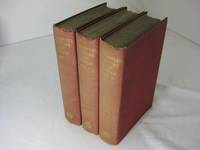
1906BOOKS040121IGlasgow: James MacLehose and Sons. Very good copies in the original gilt-decorated red cloth. 1906. 1st. hardcover. 8vo 337397386 pp Translated by J.G. Scheuchzer; limited to 1000 copies with numerous illustrations and fold-outs Kaempfer was a German physician who recored his scientific and cultural observations of Japan and Southeast Asia in the late 17th century. There is some light dampstaining to the rear board & endpaper of volume II slight fading to spines and some foxing to endpapers as usual else a nice tight set . James MacLehose and Sons hardcover
22003508Glasgow 1906 MacLehose. Red cloth 336398386p. 3 volume set 162 fold out plates maps text illustrations index s reprint copy of London 1727 edition tops gilt 15 x 23 cm. excellent copy untrimmed. !UNCUT! IN COLLECTOR'S CONDITION! A reduced size but exact and complete reprint of the First edition published 1727 by J.G. Scheuchzer. . The 2nd. edition in 1778 was improved containing a second index & a 75-page appendix on the Natural History of the Japanese tea with accurate description of that plant its culture growth preparation and uses. Also of the paper manufacture of the Japanese. Of the Cure of the Cholick sic by the acupuncture or needle-pricking as it is used by the Japanese. An account of Moxa an excellent caustic of the Chinese and Japanese showing how & where to insert the needles & where to burn. In all the original had 45 finely engraved copper plates and maps with early illustrations on Japanese tea plants herb logy & acupuncture adorn this work. SUBTITLE: Giving an Account of the Ancient and Present State of government of that Empire of its Temples Palaces.of the chronology & Succession of the Emperors.Together with a Description of the Kingdom of Siam.Kaempfer 1651-1716 was a German doctor with a passion for traveling. He went to Nagasaki in 1690-91. His work covers Japanese history & a very reliable & lucid description of the political social & physical state of the country in the 17th century. For upwards of 100 years this work remained the chief source of reliable and primary information for the rest of the world. Kaempfer was essentially stationed in Nagasaki harbor on the prison-like island of Dejima the entrance of which was controlled by the Japanese. There he performed his medical duties as Dutch East India Company physician. Once a year a representative of the Company was allowed to go to Edo under very strict military guard to be observed by the Shogun. The entourage went by way of Nagasaki to Kokura Osaka Miaco Kyoto Fammamatz Hamamatsu to Edo basically up the Tokaido highway. Kaempfer was sent to the Shogun's palace in Edo he was ordered to dance sing & eat while being scrutinized by the Shogun who shielded himself behind a Sudare or bamboo curtain. The Shogun secretly watched the Oranda-jin a Dutchman. Kaempfer was a very open & free-thinking educated man who was also an intellectual. The Shogun took to him & granted the favor of free travel throughout Japan unheard of during this period of Japan's & fear of Westerners and isolation to the rest of the world. The Dutch were allowed just so many vessels to visit annually & trade with their "window to the world" at Dejima. Nagasaki became a gathering place for curious Japanese as well as would-be Ran-gaku-sha Japanese Scholars of Dutch Learning who studied science medicine astronomy geography cartography and the Western art of copper plate printing. From this very tiny island "window" Japan's curious intellectuals made a school & began to teach Western style knowledge to an elite Japanese intelligentsia. WHO WAS DR. ENGELBERT KAEMPFER: Kaempfer was one of the scant few who gave favor to the rise of such Japanese and taught them what he could. This most famous primary resource has been celebrated since its publication as THE single most important book on Japan in the 18th century. Over the past two centuries & a half this work has maintained its position as one of the three most important books on Japan done in English in the West. Highly collectable and coveted by connoisseurs historians & librarians renders this a magnificent primary resource with fabulous etchings. The addition of the appendices in 1728 on the Tea Camellia is the first appearance of this in English. Also the first discussion of acupuncture & the use of Moxa Mogusa as a medical remedy. The West is still learning about effectiveness of these two medical treatments to this day. Kaempfer's influence on the Japanese is difficult to assess except that some of Japan's most intellectual scientists physicians reformers and scholars got their Rangaku from Deshima after Kaempfer arrived. Shiba Kokan the "Da Vinci of Japan" Matsukawa Hanzan and a host of others led Japan through the halls of innovation for the next two hundred and fifty years. Even today medicine is still considered as "Rangaku" in Japan. The roots of Japan becoming a modern well educated nation emanates from its first introduction of European learning via Deshima. This book documents the beginning of that era. In just two years' stay in Japan Dr. Kaempfer began Japan's long voyage of equality with the West. RARE in either edition. Kaempfer 1740-1812 was the director of the Deshima factory in 1779-1780 and 1781-1784 in Nagasaki. BIBLIOGRAPHY: . E. Cox: A REFERENCE GULIDE TO THE LITERATURE OF TRAVEL p.332 M. Takahashi: CATALOGUE OF SPECIAL BOOKS ON CHRISTIAN MISSIONS Tenri 1932 vol.1 p.198 no. 4-8; H. Cordier: JAPONICA 414-15. Wellcome III 376. Veith I.: HUANG TI NEI CHING SU WEN: THE YELLOW EMPEROR'S CLASSIC OF INTERNAL MEDICINE illustrates the famous plate on accupuncture found in Kaempfer. VEITH Ilza. THE BEGINNINGS OF JAPANESE OBSTETRICS R A R E. A complete reprint of the original London 1727 edition with all illustrations. . unknown
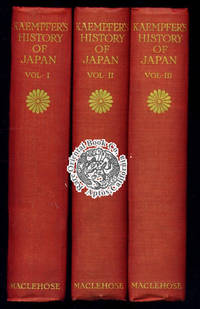
22003503Glasgow 1906 MacLehose. Red cloth 336398386p. 3 volume set many fold out plates index superbly bright fine copy a reprint copy of London 1727 edition tops gilt15 x 23 cm. FINE COPY IN COLLECTOR'S FINE CONDITION A reduced size but exact and complete reprint of the First edition published 1727 by J.G. Scheuchzer. . The 2nd. edition in 1778 was improved containing a second index & a 75-page appendix on the Natural History of the Japanese tea with accurate description of that plant its culture growth preparation and uses. Also of the paper manufacture of the Japanese. Of the Cure of the Cholick sic by the acupuncture or needle-pricking as it is used by the Japanese. An account of Moxa an excellent caustic of the Chinese and Japanese showing how & where to insert the needles & where to burn. In all the original had 45 finely engraved copper plates and maps with early illustrations on Japanese tea plants herb logy & acupuncture adorn this work. SUBTITLE: Giving an Account of the Ancient and Present State of government of that Empire of its Temples Palaces.of the chronology & Succession of the Emperors.Together with a Description of the Kingdom of Siam.Kaempfer 1651-1716 was a German doctor with a passion for traveling. He went to Nagasaki in 1690-91. His work covers Japanese history & a very reliable & lucid description of the political social & physical state of the country in the 17th century. For upwards of 100 years this work remained the chief source of reliable and primary information for the rest of the world. Kaempfer was essentially stationed in Nagasaki harbor on the prison-like island of Dejima the entrance of which was controlled by the Japanese. There he performed his medical duties as Dutch East India Company physician. Once a year a representative of the Company was allowed to go to Edo under very strict military guard to be observed by the Shogun. The entourage went by way of Nagasaki to Kokura Osaka Miaco Kyoto Fammamatz Hamamatsu to Edo basically up the Tokaido highway. Kaempfer was sent to the Shogun's palace in Edo he was ordered to dance sing & eat while being scrutinized by the Shogun who shielded himself behind a Sudare or bamboo curtain. The Shogun secretly watched the Oranda-jin a Dutchman. Kaempfer was a very open & free-thinking educated man who was also an intellectual. The Shogun took to him & granted the favor of free travel throughout Japan unheard of during this period of Japan's & fear of Westerners and isolation to the rest of the world. The Dutch were allowed just so many vessels to visit annually & trade with their "window to the world" at Dejima. Nagasaki became a gathering place for curious Japanese as well as would-be Ran-gaku-sha Japanese Scholars of Dutch Learning who studied science medicine astronomy geography cartography and the Western art of copper plate printing. From this very tiny island "window" Japan's curious intellectuals made a school & began to teach Western style knowledge to an elite Japanese intelligentsia. WHO WAS DR. ENGELBERT KAEMPFER: Kaempfer was one of the scant few who gave favor to the rise of such Japanese and taught them what he could. This most famous primary resource has been celebrated since its publication as THE single most important book on Japan in the 18th century. Over the past two centuries & a half this work has maintained its position as one of the three most important books on Japan done in English in the West. Highly collectable and coveted by connoisseurs historians & librarians renders this a magnificent primary resource with fabulous etchings. The addition of the appendices in 1728 on the Tea Camellia is the first appearance of this in English. Also the first discussion of acupuncture & the use of Moxa Mogusa as a medical remedy. The West is still learning about effectiveness of these two medical treatments to this day. Kaempfer's influence on the Japanese is difficult to assess except that some of Japan's most intellectual scientists physicians reformers and scholars got their Rangaku from Deshima after Kaempfer arrived. Shiba Kokan the "Da Vinci of Japan" Matsukawa Hanzan and a host of others led Japan through the halls of innovation for the next two hundred and fifty years. Even today medicine is still considered as "Rangaku" in Japan. The roots of Japan becoming a modern well educated nation emanates from its first introduction of European learning via Deshima. This book documents the beginning of that era. In just two years' stay in Japan Dr. Kaempfer began Japan's long voyage of equality with the West. RARE in either edition. Kaempfer 1740-1812 was the director of the Deshima factory in 1779-1780 and 1781-1784 in Nagasaki. BIBLIOGRAPHY: . E. Cox: A REFERENCE GULIDE TO THE LITERATURE OF TRAVEL p.332 M. Takahashi: CATALOGUE OF SPECIAL BOOKS ON CHRISTIAN MISSIONS Tenri 1932 vol.1 p.198 no. 4-8; H. Cordier: JAPONICA 414-15. Wellcome III 376. Veith I.: HUANG TI NEI CHING SU WEN: THE YELLOW EMPEROR'S CLASSIC OF INTERNAL MEDICINE illustrates the famous plate on accupuncture found in Kaempfer. VEITH Ilza. THE BEGINNINGS OF JAPANESE OBSTETRICS R A R E. A complete reprint of the original London 1727 edition with all illustrations. . unknown
22003507Glasgow 1906 MacLehose. Red decorated cloth very good copy 3 vol. 336396385p. 162 maps illustrations many folding small margin stain last few page edgestext cleansolid copy untrimmed reprint of London 1727 15 x 22 cm. tops gilt. A reduced size but exact and complete reprint of the First edition published 1727 by J.G. Scheuchzer. . The 2nd. edition in 1778 was improved containing a second index & a 75-page appendix on the Natural History of the Japanese tea with accurate description of that plant its culture growth preparation and uses. Also of the paper manufacture of the Japanese. Of the Cure of the Cholick sic by the acupuncture or needle-pricking as it is used by the Japanese. An account of Moxa an excellent caustic of the Chinese and Japanese showing how & where to insert the needles & where to burn. In all the original had 45 finely engraved copper plates and maps with early illustrations on Japanese tea plants herb logy & acupuncture adorn this work. SUBTITLE: Giving an Account of the Ancient and Present State of government of that Empire of its Temples Palaces.of the chronology & Succession of the Emperors.Together with a Description of the Kingdom of Siam.Kaempfer 1651-1716 was a German doctor with a passion for traveling. He went to Nagasaki in 1690-91. His work covers Japanese history & a very reliable & lucid description of the political social & physical state of the country in the 17th century. For upwards of 100 years this work remained the chief source of reliable and primary information for the rest of the world. Kaempfer was essentially stationed in Nagasaki harbor on the prison-like island of Dejima the entrance of which was controlled by the Japanese. There he performed his medical duties as Dutch East India Company physician. Once a year a representative of the Company was allowed to go to Edo under very strict military guard to be observed by the Shogun. The entourage went by way of Nagasaki to Kokura Osaka Miaco Kyoto Fammamatz Hamamatsu to Edo basically up the Tokaido highway. Kaempfer was sent to the Shogun's palace in Edo he was ordered to dance sing & eat while being scrutinized by the Shogun who shielded himself behind a Sudare or bamboo curtain. The Shogun secretly watched the Oranda-jin a Dutchman. Kaempfer was a very open & free-thinking educated man who was also an intellectual. The Shogun took to him & granted the favor of free travel throughout Japan unheard of during this period of Japan's & fear of Westerners and isolation to the rest of the world. The Dutch were allowed just so many vessels to visit annually & trade with their "window to the world" at Dejima. Nagasaki became a gathering place for curious Japanese as well as would-be Ran-gaku-sha Japanese Scholars of Dutch Learning who studied science medicine astronomy geography cartography and the Western art of copper plate printing. From this very tiny island "window" Japan's curious intellectuals made a school & began to teach Western style knowledge to an elite Japanese intelligentsia. WHO WAS DR. ENGELBERT KAEMPFER: Kaempfer was one of the scant few who gave favor to the rise of such Japanese and taught them what he could. This most famous primary resource has been celebrated since its publication as THE single most important book on Japan in the 18th century. Over the past two centuries & a half this work has maintained its position as one of the three most important books on Japan done in English in the West. Highly collectable and coveted by connoisseurs historians & librarians renders this a magnificent primary resource with fabulous etchings. The addition of the appendices in 1728 on the Tea Camellia is the first appearance of this in English. Also the first discussion of acupuncture & the use of Moxa Mogusa as a medical remedy. The West is still learning about effectiveness of these two medical treatments to this day. Kaempfer's influence on the Japanese is difficult to assess except that some of Japan's most intellectual scientists physicians reformers and scholars got their Rangaku from Deshima after Kaempfer arrived. Shiba Kokan the "Da Vinci of Japan" Matsukawa Hanzan and a host of others led Japan through the halls of innovation for the next two hundred and fifty years. Even today medicine is still considered as "Rangaku" in Japan. The roots of Japan becoming a modern well educated nation emanates from its first introduction of European learning via Deshima. This book documents the beginning of that era. In just two years' stay in Japan Dr. Kaempfer began Japan's long voyage of equality with the West. RARE in either edition. Kaempfer 1740-1812 was the director of the Deshima factory in 1779-1780 and 1781-1784 in Nagasaki. BIBLIOGRAPHY: . E. Cox: A REFERENCE GULIDE TO THE LITERATURE OF TRAVEL p.332 M. Takahashi: CATALOGUE OF SPECIAL BOOKS ON CHRISTIAN MISSIONS Tenri 1932 vol.1 p.198 no. 4-8; H. Cordier: JAPONICA 414-15. Wellcome III 376. Veith I.: HUANG TI NEI CHING SU WEN: THE YELLOW EMPEROR'S CLASSIC OF INTERNAL MEDICINE illustrates the famous plate on accupuncture found in Kaempfer. VEITH Ilza. THE BEGINNINGS OF JAPANESE OBSTETRICS R A R E. A complete reprint of the original London 1727 edition with all illustrations. . unknown
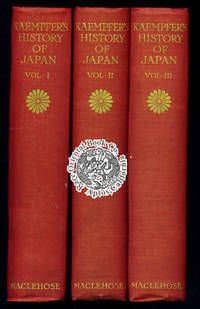
190611375Glasgow: James MacLehose & Sons 1906. First edition thus. Cloth. Very Good. 8vo - over 7¾ - 9¾" tall. 1st edition thus. Three volume set complete. A Very Good set. 8vo. xc 337 x 397 ix. 385 pp folding maps and plates other illustrations. Publisher's red cloth with gilt spine titles. Spines sunned end papers foxed as always else a beautiful set of a lovely production. Handsome armorial book plate in each volume matching. Very tight very clean. A Very Good set. International and expedited shipping only will require additional postage charges. James MacLehose & Sons unknown
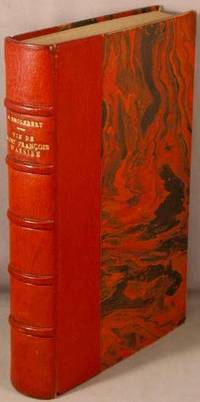
194737781Paris Editions Albin Michel 1947 First Edition. hardcover. Apparent first printing "4. mille" 1947 after the limited edition. S.P. copy that is for review. SIGNED by author Omer Englebert inscribed on half-title dated 29-3-50. -- Hardcover 480 pages beautiful binding red half-leather raised bands marbled boards. Condition: near fine board edges lightly rubbed. -- Important work on St. Francis. Editions Albin Michel hardcover
2019x-0367314762Taylor & Francis 2019. Hardcover. New. 223 pages. 9.02x5.98x0.71 inches. Taylor & Francis hardcover
ria9780367314767_inpHardcover. New. New Book; Fast Shipping from UK; Not signed; Not First Edition; Pierre Englebert highlights the historical and contemporary factors that account for the Burkina Faso's a country in West Africa instability; considers the ethnic religious and social contours of its polity; examines its economic po hardcover
193016645Bruxelles: Miette 1930. Tirage limité dont 90 exx sur Canson à la forme n° 87. Eaux-fortes de Rassenfosse 7 et Apol 6. En feuilles sous chemise et étui Bibliofiele uitgaven Miette, unknown
Features: reproductions of several pages from the 1935 Pierce-Arrow catalog; a (slightly enlarged) reproduction of Chief Engineer David Fergusson's personal copy of the 1911-1912 Dealer Data Book; Reproduction of a Pierce-Arrow ad from a 1906 Life Magazine; Back cover reproduction of an Englebert Tire ad which appears to include the front end of a Pierce-Arrow; Photo of an all-chrome 20" high "Pierce" bike!. Clean and unmarked with moderate wear. A quality copy. Magazine
DADAX0367314762Routledge 2019-08-28. 1. hardcover. New. 6.20x0.70x9.10. Buy with confidence. Excellent Customer Service & Return policy. Routledge hardcover
37729394-nnew. unknown
2018x-3319902059Palgrave Macmillan 2018. Hardcover. New. 501 pages. 8.50x6.25x1.25 inches. Palgrave Macmillan hardcover
37729394like new. unknown
2022BN192163LARCIER 2022. 2022. Softcover. Code annoté - Audience - Judiciaire 2022 - Textes à jour au 1er septembre 2022 <br/><br/>Code annoté - Audience - Judiciaire 2022 - Textes à jour au 1er septembre 2022 Jacques Englebert LARCIER paperback
2000DADAX3484503726De Gruyter 2000-10-11. Reprint 2012. hardcover. New. 6.69x1.06x9.61. Buy with confidence. Excellent Customer Service & Return policy. De Gruyter hardcover
2000__3484503726De Gruyter 2000. Hardcover. New. reprint edition. 500 pages. French language. 9.61x6.69x1.06 inches. De Gruyter hardcover
A9780367314767Hardback. New. hardcover
2000__3484503734De Gruyter 2000. Hardcover. New. reprint edition. 445 pages. French language. 9.61x6.69x1.00 inches. De Gruyter hardcover
2003x-1403900248Palgrave Macmillan 2003. Hardcover. New. 480 pages. 9.75x6.50x1.25 inches. Palgrave Macmillan hardcover
GF22578Photographie format 40 x 30 cm - beau tirage plastique noir et blanc - années 1980 pour l'émission "Apostrophes"-
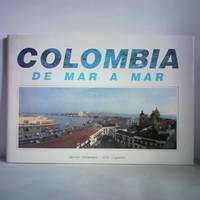
5c6022Ediciones Englebert Ltda. Colombia 1993. 130 S. mit einem Frontispiz und zahlreichen Abbildungen Pappband mit Schutzumschlag folio-quer. - gutes Exemplar / buen espécimen / Text spanisch / von Victor Englebert auf Titel signiert - unknown