Ardito FabrizioMareMagnum

360 résultats
br. 780 chilometri, circa un milione di passi: queste le misure del più famoso pellegrinaggio al mondo che dai Pirenei conduce fino alla tomba dell'Apostolo Giacomo, nel cuore della cattedrale di Santiago di Compostela. Esperienza privata e spirituale che Fabrizio Ardito ci racconta attraversando regioni diverse per storia, tradizioni e paesaggi. Per la prima volta il cammino di ieri e quello di oggi: che cosa è cambiato dal primo viaggio dell'autore a Santiago? In queste pagine un'avventura personale dedicata a un piccolo mondo cosmopolita che si muove lungo salite, discese e interminabili pianure.
Mm 170x240 Atti del convegno organizzato dal "Centro Italiano di Studi Compostellani - Università degli Studi di Perugia" dal 27 al 29 maggio 2016. Volume nella sua brossura originale, 976 pagine con figure in nero nel testo. Copia in condizioni di nuovo, spedizione in 24 ore dalla conferma dell'ordine.
2343190887.Gpaperback. Good. Access codes and supplements are not guaranteed with used items. May be an ex-library book. paperback
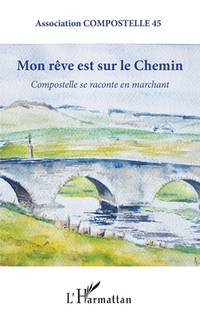
2005RO30100193CHEZ L'AUTEUR. DECEMBRE 2005. In-8. Broché. Bon état, Couv. convenable, Dos satisfaisant, Intérieur frais. 15 pages. Quelques photos en couleurs dans le texte. Bulletin polycopié.. . . . Classification Dewey : 360-Problèmes et services sociaux. Associations
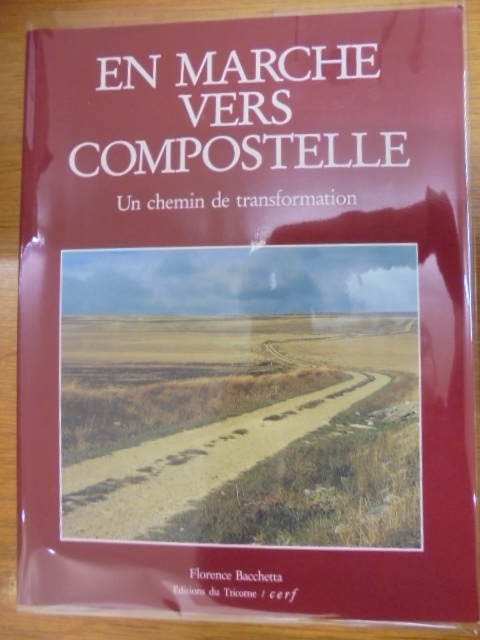
Cerf 1986, grand In-4 cartonnage éditeur sous jaquette illustrée. 150 pages Photos couleurs. Bon état.
2009VOY460MTricorne, 2009. In-4° Broché. 150pp. Largement illustré avec des photographies en couleur dans et hors texte.
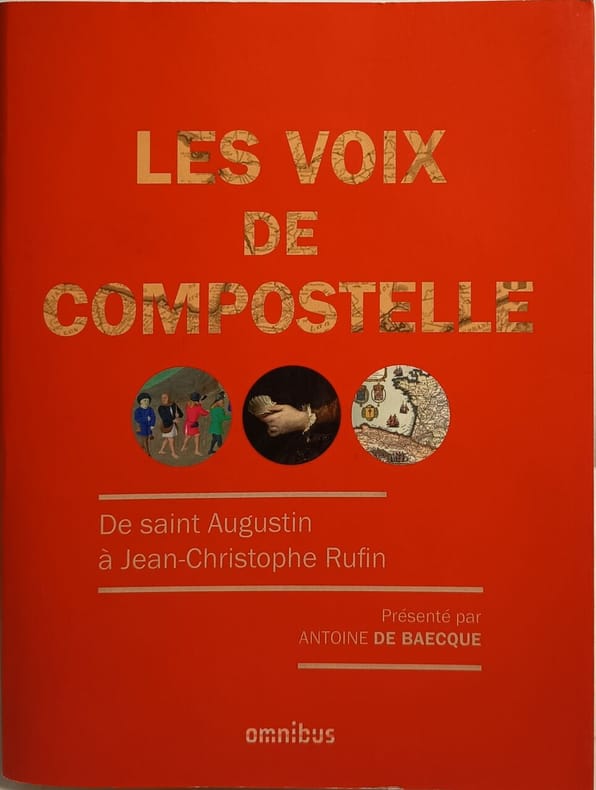
20156279OMNIBUS 2015 602 pages 16x4 8x21cm. 2015. Broché couverture rempliée. 602 pages.
66911Douai (France), Musée de La Chartreuse, 1988. 21 x 21, 69 pp., quelques illustrations et 1 carte, broché, très bon état.
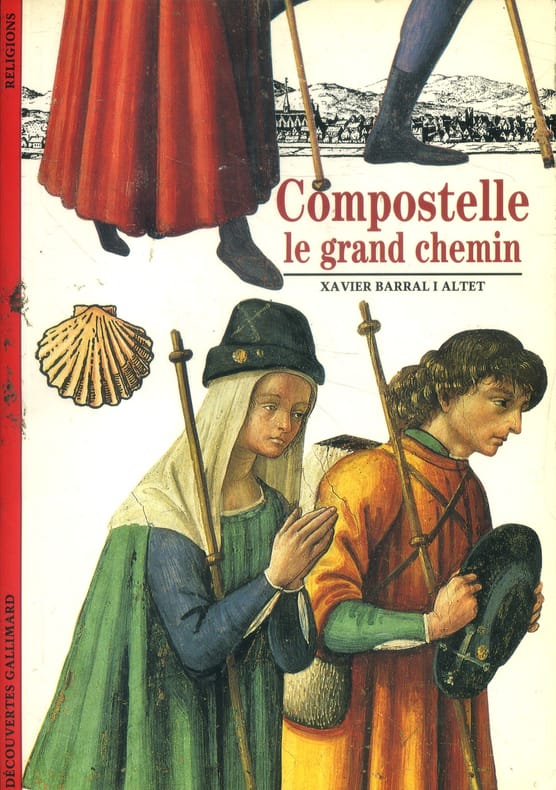
Gallimard, 1995. In-12 broché de 127 pages.Collection Découvertes. Très bon état
1995143426Couverture souple. Broché. 176 pages.
1978177641978 Pazris, Hachette, 1978, in 8°, broché, 348 pages.
42689Paris Hachette 1978 in 8 (22,5x14) 1 volume broché, couverture à rabats illustrée en couleurs, 348 pages [2], avec de nombreuses illustrations en noir et blanc, et en couleurs. Bel exemplaire (
198132581Paris Hachette 1981 In-8 348 pp, carte sur le contre-plat
1978115893Hachette 1978 Hachette, 1978, 348 p., broché, bon état
7602broché - 14x22,5 - 348 pp - 1978 - éditions HACHETTE, Paris.Préface de René DE LA COSTE-MESSELIERE.
in-8°, 348 pp., carte, notes, broche, couverture illustree à rabats. Bel exemplaire. [HA-4]
372P., Hachette littérature, 1978, 1 vol. in-8 br. de 348 pp. Dos insolé et marqué d'un pli.
1539hachette 1978 in 8 broché 348 pages bibliographie
ill. Non solo un diario di viaggio, non solo un reportage fotografico, un appassionato racconto di oltre tre milioni di passi da Saronno (Va) a Santiago de Compostela. Curiosità, avvenimenti, sensazioni, notizie sul cammino sono contenuti in questo volume, inserito nella collana "I libri della conchiglia". Camminare o viaggiare per un periodo di tempo abbastanza lungo può mettere a dura prova la resistenza delle persone. Spesso, perché si cammina per arrivare e non per il piacere di farlo.
2021114146Glénat 2021 In-4 relié 29,0 cm sur 21,8. 192 pages. Petite tâche d’1mm sur le dos . Très bon état d’occasion.
199179507ABFreiburg im Breisgau [u.a.], Herder, 1991. 4°. 199 S. zahlr. Ill., Kt. OPp., OU. Schönes Exemplar.
19913125830Freiburg: Herder (u.a.) 1991. 199 Seiten. Überwiegend Illustrationen. 4° (25-35 cm). Orig.-Pappband mit illustriertem Orig.-Schutzumschlag. [Hardcover / fest gebunden].
19851535201631503HASP-430, Ediciones Akal, Madrid 1985
14822823Strasbourg: : Printer of the 1481 Legenda aurea 22 March 1482. FOURTH EDITION first printed in 1477. . Folio: . 29.2 x 21.8 cm. . 274 unsigned leaves. A-C8 D10; a-m8 n6o-z8 aa-ff8 gg10. Complete with the initial and final blanks. Bound in contemporary blind-stamped calf over wooden boards from the bindery of the Augustinian monastery of St Zeno in Reichenhall Upper Bavaria active c. 1475-1528 EDBD w002516. The binding has been rebacked; the metal corner-pieces and perhaps a central boss have been removed. An original vellum label and shelf-mark are affixed to the front board. There is offsetting from now-removed manuscript pastedowns inside the boards though there are still vellum manuscript strips used for spine lining. The text is in excellent condition throughout with trivial blemishes. The text is rubricated and there some nice are 3- to 8-line initials in red and/or blue the first of which has marginal extensions. Provenance: A contemporary ownership inscription obscured by ink in red ink is to be found at the end of the table. “Ego cristianus emi hunc librum decem solidis denariorum". The name is repeated on the penultimate leaf also crossed through; Another inscription “Cristiannus Shab 1491†is written on the same leaf. With the bookplates of Jean Furstenberg 1890-1982 and E.P. Goldschmidt See his catalogue VII 1925 number 29. The arrival of printed books is so often regarded as one of the inaugural moments of the renaissance that it is sometimes forgotten that the first years of print also represented the last great flowering of the Middle Ages. The “Lumen Anime†Light of the Soul is testament to that. Formerly attributed to the Carmelite friar Mathias Farinator of Vienna who compiled the index the “Lumen Anime†is now known to be Berenger of Landorra General of the Dominican order and archbishop of Campostella from 1317 to 1325. The “Lumen Anime†is a sprawling manual of natural and moral philosophy that gathers together quotations on relevant themes from authors as diverse as Aristotle Theophrastus the elder Pliny Ptolemy Solinus Ambrose Augustine Jerome Isidore Hugh of St Victor and Avicenna. It is broadly organized in three parts beginning with the birth of Christ and other theological material before going on to such worldly matters as abstinence abjection adulation wealth guilt love humility health silence and pride. It then proceeds to the two longer parts: the first concerned with the natural world of plants animals and trees; and the second in more depth with problems of a moral and philosophical kind. It was immensely popular in the fifteenth century as a reference work and despite its Dominican origins found its natural home and use in the Benedictine orders of Central Europe. “The natural historical content of the ‘Lumen Anime’ centers as much on astronomy and meteorology as on flora and fauna; it includes a huge number of largely inauthentic citations of frequently exotic-sounding authors and the vast majority of its exempla have a a tripartite structure – a scientific or pseudo-scientific ‘proprietas’ is followed by a moralizing interpretation whose lesson is then reinforced by a quotation from a theological authority.†In the version of the text edited by Matthias Farinator which is the basis of the printed editions “chapters tend to be much longer and the initial natural historical ‘proprietas’ is often longer and supported by a series of quotations its components are then analyzed allegorically and a moralization follows.â€Nigel Harris “the Light of the Soul†2007 The textual history and authorship of the “Lumen Anime†are matters of considerable complexity. There are some 195 surviving manuscripts and fragments as well as four fifteenth and one sixteenth-century printed editions. Of the 195 manuscripts 35 date from the fourteenth century and the remainder from the fifteenth century including two that derive from the printed editions. Mary and Richard Rouse have established three principal lines of transmission. “Lumen A†is the original version as composed by Berenger of Landorra Archbishop of Compostella between 1317 and his death in 1330. It would appear that the collection took shape with the encouragement and support of Pope John XXII. It is the book’s Spanish origin that explains the presence of both Arabic and Greek material in the collections. By 1332 a copy of the manuscript had reached Austria where it was revised modified and expanded by an otherwise unknown monk Gregory of Vorau. “Lumen B†is the source of the text that was edited by Matthias Farinator and printed by Anton Sorg at Augsburg in 1477 and then reprinted again at Augsburg by Gunther Zainer in 1477 at Reutlingen in 1479 and in 1482 at Strasbourg. The Rouses have proposed that Farinator’s manuscript was a direct copy of the complete text of either Vorau 130 or Klosterneuberg 384 p.51 the earliest surviving witnesses to the B tradition. A third manuscript recension “Lumen C†derives from a compilation of material primarily from the A but also from the B text. This line of descent dates before 1357. As well as these principal traditions other manuscripts indicate that further modifications were made to the collections over time. Even before it was printed the “Lumen Anime†was intensively copied and its success as a printed book was assured. Yet if the “Lumen Anime†was a late medieval bestseller its market was geographically limited. Despite its Spanish origins only two copies of the manuscripts are now to be found outside of an area bounded by Strasbourg in the north and west Austria in the south and Poland and the Czech Republic in the east. The first of these is at Marseilles and belongs to the A tradition. The other is a fifteenth-century copy in the Bodleian Library that originally came from Erfurt where Farinator was based in the mid-1470s. There are otherwise no copies of the manuscripts in England Ireland France Italy Spain or the United States. Copies of the early printed editions are also extremely rare especially outside Central Europe. The Strasbourg edition is the only one that seems to have traveled west and north in the late fifteenth and sixteenth century with copies that can be traced back to this time in England now at All Soul’s Oxford the British Library the Lord Lumley-Prince Henry copy and Cambridge UL John Dee’s copy. If to the fifteenth century the “Lumen Anime†was a preacher’s manual of natural and moral philosophy to the sixteenth century it became more of a compendium and reference guide. BMC I 97; Hain-Copinger 10333; Goff L-396; Proctor 413; Polain 1468; Wellcome I 2175; Klebs 631.3; Thorndyke III 546ff. Sources: Mary A. and Richard H. Rouse ‘The Texts called Lumen Anime’ Archivum Fratrum Praedicatorum 41 Rome 1971 5-113; N.R. Ker Records of All Soul’s College Library. 1437-1600 Oxford 1971 27. Printer of the 1481 Legenda aurea, 22 March unknown books
2006dl2095Editions Jean-Michel Bordessoules Nouvelles Dos carré collé 2006 In-8 (14.5 x 21 cm), dos carré collé, couverture illustrée en couleurs, 206 pages, préface de Don Helda Camara, envoi de l'auteur à la 1ère garde ; coiffes et bords frottés, quelques marques d'usage aux plats, bon état. Livraison a domicile (La Poste) ou en Mondial Relay sur simple demande.