1 275 résultats
IXY-548Traduction de A.J. Alston. Shanti Sadan, London, 2e édition, 1971 [1959], XVI + 269 p. Cartonnage éditeur sous jaquette, 13,3 x 25,5 cm.
About The Book: The Sundara Kanda forms the heart of Valmiki's Ramayana and consists of a detailed, vivid account of Hanuman's adventures. After learning about Sita, Hanuman assumes a gargantuan form and makes a colossal leap across the ocean to Lanka after defeating Surasa, the mother of the nagas, and Simhika, who is sent by the devatas. In Lanka, Hanuman searches for Sita, and finally finds her in the Ashoka Vatika. In the Ashoka Vatika, Sita is wooed and threatened by Ravana and his rakshasi mistresses to marry Ravana. Hanuman reassures her, giving Rama's signet ring as a sign of good faith. He offers to carry Sita back to Rama; however, she refuses, reluctant to allow herself to be rescued by anyone other than her husband. She says that Rama himself must come and avenge the insult of her abduction. Hanuman then wreaks havoc in Lanka by destroying trees and buildings, and kills Ravana's warriors. He allows himself to be captured and produced before Ravana. He gives a bold lecture to Ravana to release Sita. He is condemned and his tail is set on fire, but he escapes his bonds and, leaping from roof to roof, sets fire to Ravana's citadel, and makes the giant leap back from the island. The joyous search party returns to Kishkindha with the news. About The Editor: Manmatha Nath Dutt (1855–1912) Bengali writer, scholar of Sanskrit and Pali, served as rector in educational institutions (Keshab Academy and Serampore College), described as India's most prolific translator of Hindu epics and scriptures. Later known as Manmatha Nath Shastri after getting that degree. Maternal grandfather of Sucheta Kripalani. Partial biography here. Works:Gleanings from Indian Classics (1893); Kamandakiya Nitisara, or, The elements of polity (1896); Buddha-his life, his teachings, his order (1901); Outlines of Hindu Metaphysics (1904); Markandeya Purana (1896).Translations:The Ramayana (1891-94); Bala Kanda; Ayodhya Kanda; Aranya Kanda; Kishkindha Kanda; Sundara Kanda; Yuddha Kanda; Uttara Kanda.
About The Book: The Ramayana of Tulsi Das; On comparing the above sketch with my translation of the corresponding portion of the Hindi poem, it will be seen that the two agree only in the broadest outline. The episodes so freely introduced by both poets are, for the most part, entirely dissimilar; and even in the main narrative some of the most important incidents, such as the breaking of the bow and the contention with Parasuram, are differently placed and assume a very altered complexion. In other passages where the story follows the same lines, whatever Valmiki has condensed as, for example, the description of the marriage festivities Tulsi Das has expanded and wherever the elder poet has lingered longest, his successor has hastened on most rapidly. About The Translator: Frederic Salmon Growse CIE (1836 – 19 May 1893) was a British civil servant of the Indian Civil Service (ICS), Hindi scholar, archaeologist and collector, who served in Mathura and Bulandshahr in the North-Western Provinces during British rule in India. He studied Indian literature and languages, and founded the Catholic Church of the Sacred Heart and the Government Museum, both at Mathura. Between 1876 and 1883, he published in series, the first English translation of the Ramayana of Tulsidas. He also wrote Mathura: A district memoir (1880) and a description of the district of Bulandshahr (1884) and of its new architecture (1886). Described as "never a persona grata to his superiors", he was nonetheless gazetted CIE in 1879. At Bulandshahr between 1878 and 1884 he caused a number of buildings to be constructed using local designs and craftsmen. In 1882, he donated a collection of Indian pottery to the British Museum. In Mathura, he became intrigued by the popularity among its ordinary people of the Ramayana of Tulsidas. In 1876 he published his translation into English of the original text by Tulsidas. Growse published a revised version in 1880 as a four-volume second edition and published a full version in 1883. It was the first illustrated version of the complete English translation of the Ramcharitmanas, which he completed in Bulandshahr. He writes in the introduction that the epic Sanskrit Ramayana of Valmiki had been translated into several languages including English, but the more popular Hindi version, a retelling of Rama's life, titled Ramcharitmanas by Tulsidas, previously had not been translated into English.
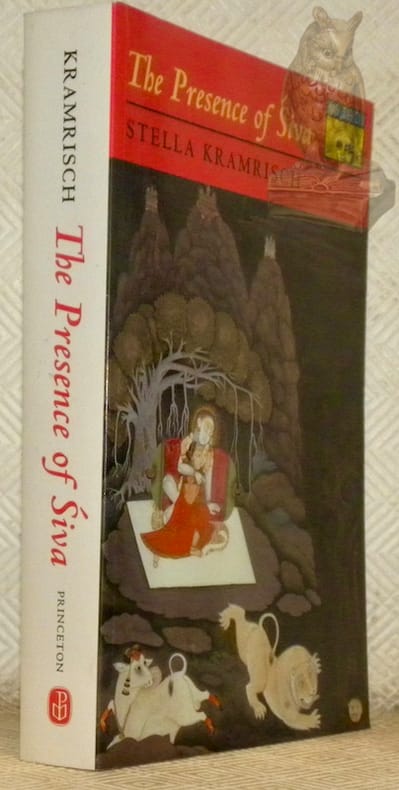
119117Chichester, West Sussex, Princeton University Press 1981, 235x155mm, XI - 514pages, paperback. Book in good condition.
2005100150708Peeters Publishers 2005 230 pages 15 75x1 27x24 13cm. 2005. Broché. 230 pages.
1972100152103BUDDHIST PUBLICATION SOCIETY 1972 in12. 1972. Broché.
1996X112119Roma [Rome], Pontificia Universitas Gregoriana 1996 xi + 138pp., 24cm., text in English, Dissertation (Excerpta ex dissertatione ad Doctoratum in Facultate Philosophiae Pontificiae Universitatis Gregorianae), softcover, stamp at verso of title page, text is clean and bright, X112119
xi + 138pp., 24cm., text in English, Dissertation (Excerpta ex dissertatione ad Doctoratum in Facultate Philosophiae Pontificiae Universitatis Gregorianae), softcover, stamp at verso of title page, text is clean and bright, X112119
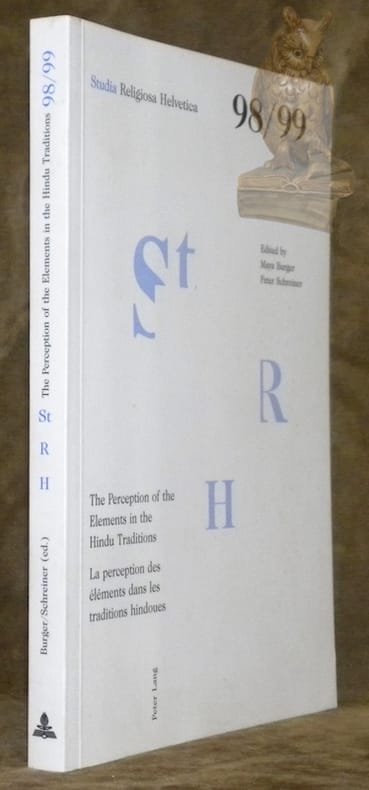
119378Bern, Peter Lang 1999, 225x150mm, VIII - 215pages, broché. Bel exemplaire.
. Softcover, good condition, w. smwht rubbed wraps, marks. Decorative sticker on fr. Tanning, sme lt soil on r. Wear at sp edges. V. ltly slanted sp, ltly bumped corners, lt edgwr.Tanned p. edges, sme lt soil. Tanned ins wraps, pp. 2 cm tear on fr, on 1st
Contents: Introduction; Vedic Antecedent to the Avataric Nature of Visnu; Brahmanic Antecedents to the Avataric Nature of Visnu; The Blink of an Unblinking Eye; Myths of the Narasimhavatara: Motif Analysis & Discussion; Myths of the Vamanavatara: Motif Analysis & Discussion; Conclusions ; SUNY Series in Hindu Studies; 321 pages
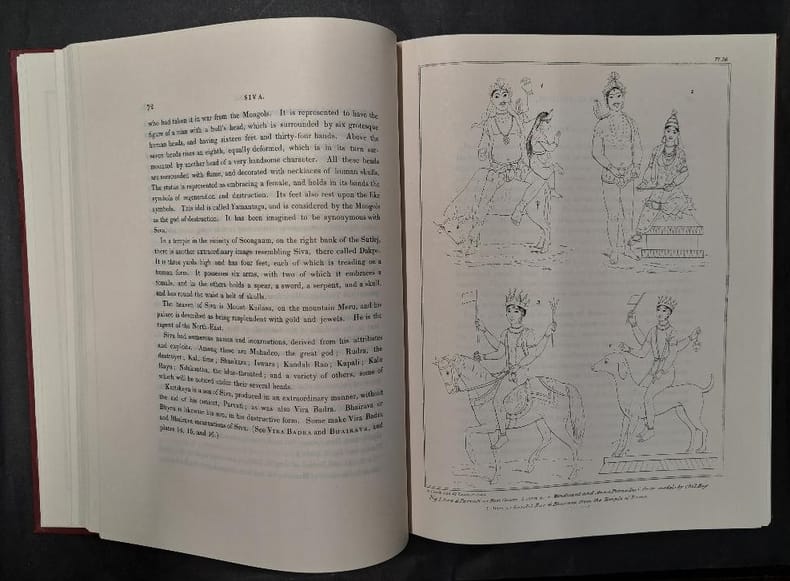
1995126120New Delhi - Madras, Asian Educational Services 1995 In-4 29 x 21,5 cm. Reliure éditeur simili-cuir bordeaux, report auteur & titre dorés sur le dos et le premiers plat de couverture orné d’une figure, XVIII-401 pp., 39 planches hors texte, sommaire, index. Exemplaire en très bon état.
79p. Tall 8vo. Original printed wraps. Second printing. Scarce. OCC 12
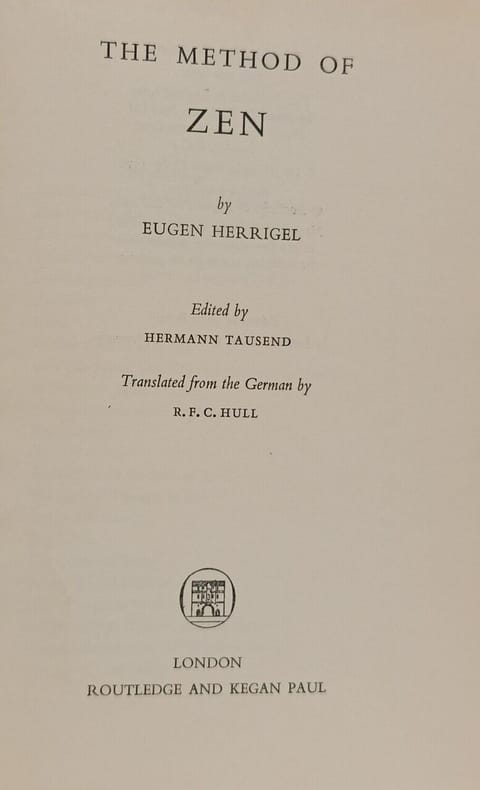
1960100152108Routledge and Kegan Paul 1960 in12. 1960. Cartonné.
100152113in12. Sans date. Broché.
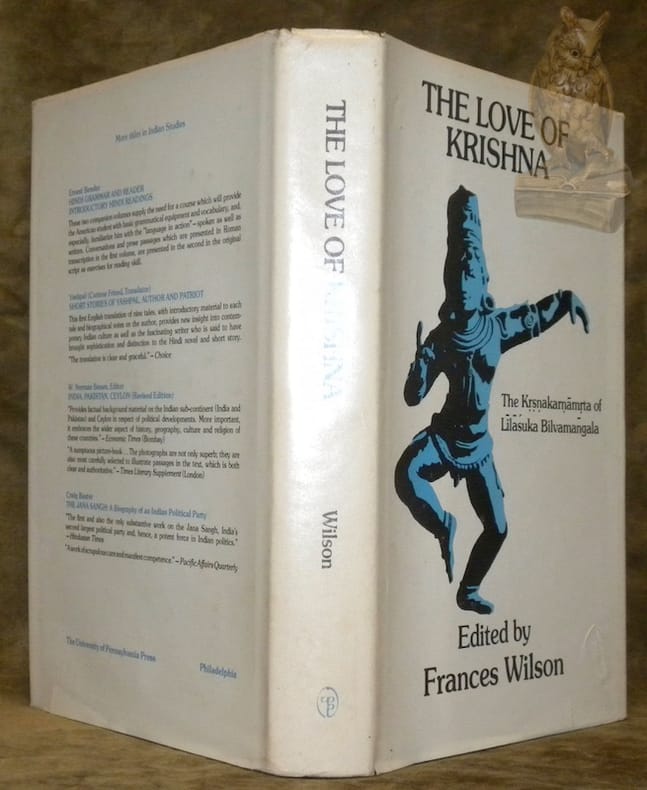
119371Philadelphia, University of Pennsylvania Press 1975, 235x160mm, IX - 463pages, editor's binding with jacket. Small stains on the side edge, interior clean. Book in good condition.
534707Delhi, Motilal Banarsidass, 1970. In-8, rel. d'éditeur pleine toile brune, CXXXVIII- 620 pp., index (Sacred Books of the East series, vol. XXV).
New Delhi, Mosaic Books, 2002. Paperback, 25 cm, 82 pages. Includes bibliography & glossary. This book is a simple account of the Jews of India--- the story of their arrival in the country, their religious beliefs and customs, and their integration into Indian society. While addressed essentially to young people, the book will also serve to introduce adult readers to this minutest of Indian 'minorities. ' Incidentally, it will also provide young Indian Jews an account of their place in the vast mosaic of Indian society and their significance as an Indian community, despite their small numbers. ISBN: 8190129708. (SEF-27-10)
1991X112113Roma, Pontificia Universitas Gregoriana 1991 146pp., 24cm., text in English, Dissertation (Excerpta ex dissertatione ad Doctoratum in Facultate Philosophiae Pontificiae Universitatis Gregorianae), softcover, stamp at verso of title page, text is clean and bright, X112113
146pp., 24cm., text in English, Dissertation (Excerpta ex dissertatione ad Doctoratum in Facultate Philosophiae Pontificiae Universitatis Gregorianae), softcover, stamp at verso of title page, text is clean and bright, X112113
46670Delhi: Motilal Banarsidass 1976. Reprint of the new revised single volume edition. "The Rveda the oldest literary record of the Aryan race and the sacred book of the Hindus.Griffith's is the only translation which though guided by Sayana ventures to deviate from him widely and frequently." 25cms x 19cms x 4cms. Pp.x/707 small thin loss to lower edge of front free endpaper. Blue cloth dustwrapper has wear to spine with small loss to base and top front corner tip but has a removable clear protective wrap. A heavy volume which may need extra to send overseas. VG/G. Delhi: Motilal Banarsidass, 1976. hardcover
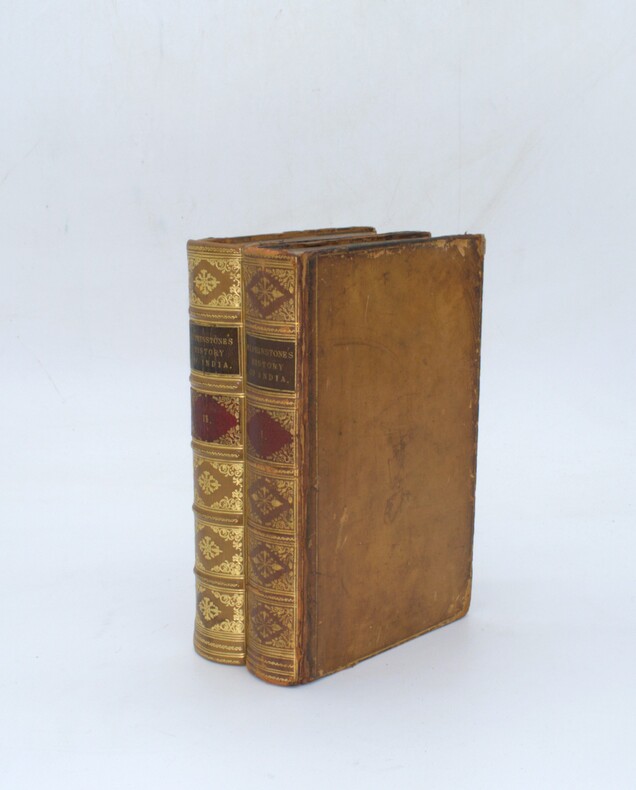
1841PHO-2389London, Murray, 1841, 2 volumes in-8, xix-620pp. et xxxviii-688pp., veau blonds, dos lisses ornés et dorés, mxix-ors restauré au tome 1 et dos refait à l'identique au tome 2. Bien complet de la carte (restaurée), ex-libris gravé en page de garde du New College Oxford, cachet au titre, frottements et épidermures
1989125950Leuven, Peeters Press, coll. « Orientalia Lovaniensia analecta », n° 29 1989 In-8 24,5 x15,5 cm. Reliure éditeur toile verte, titre doré sur le dos et le premier plat, VIII-429 pp., sommaire, notes en bas de page, notes, glossaire, bibliographie, index thématique. Exemplaire à l’état neuf.