328 résultats
1834144054London: Thomas Ward & Co 1834. Very Good. London Thomas Ward & Co. 1834. Duodecimo iv xii 224 pages. Contemporary half diced roan and marbled boards; name clipped from the front free endpaper; some occasional light foxing; minor signs of age and handling; an excellent copy. The brother of South Australian pioneer George Fife Angas William Henry Angas 1781-1832 'was born at Newcastle-on-Tyne 6 Oct. 1781; went to sea and was captured by a French privateer and imprisoned for a year and a half. He afterwards commanded ships of his father's but became a Baptist minister in 1817 after a year's study at Edinburgh. In 1822 he was appointed missionary to seafaring men by the "British and Foreign Seamen's Friend Society and Bethel Union." He travelled to various ports and foreign countries for religious purposes and was serving a chapel at South Shields when he died of cholera 9 Sept. 1832' 'Dictionary of National Biography'. <p>The first appendix comprises nautical aphorisms from his commonplace book. Thomas Ward & Co unknown
190019191Paris: Lib. anti-cléricale 1900. Fine. Lib. anti-cléricale Paris s. d. 12 x 18.50 cm broché First edition published under a pseudonym of which no deluxe copies are mentioned. Joints cracked at foot small tears and slight corner losses to boards handsome interior condition free from foxing. Lib. anti-cléricale hardcover
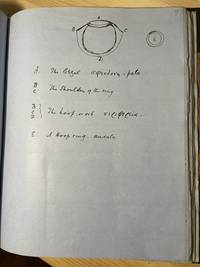
187231740AB1872. Suffolk c.1872. 69 11 pages. Hardcover / Half Morocco with gilt lettering to spine. Very good condition. This unpublished Manuscript of an unfinished Work on the History of Finger - Rings by Reverend James Beck includes for example the following chapters: - History of Finger Rings Eqyptians as true inventors of the Finger Ring "according to Pliny the Greeks could not have known of them at the time of the Trojan Wars as no mention of them is made by Homer" - Beck dissects the meaning of Rings on certain fingers and explains why the "Ring Finger" was chosen as such: "By some this finger is called the digitus medicus or medicinalis but its more correct name is annularis Digitus anularis today known as Ring Finger" ".it was selected as annular finger because it was less employed than any of the others & it was protected by the middle & little finger hence as Atteus Capito says it was better suited for preserving a Ring. Aulus Gellius mentions that the anatomists had discovered a vein which extended from the Heart to the fourth finger of the left hand & that on this account it was selected as the ring finger." The Manuscript makes further cases for Rings worn on the other fingers on the hand. Includes sections on: - Signet Rings / Signet Rings with Crystals and Enamels / Rebus / Letters and Coronets / Signet Heraldic - Rings with angraved Cameos - Sergeant at Law - Rings The manuscript includes a larger section on Rings for Serjeants at Law - Rings of Investiture / Rings for Poet Laureates - Xtian Rings Christian Rings / Iconographic Rings - Rings for Prelates - Doctors of Divinity - Canons & Priests - Rings for Consegrated Virgins / Rings used as Reliquaries "The custom of putting Relics with Rings" - Rings as Gifts at Marriage of Servants / Ring Money - Ad Memoriam Ring etc. etc. - Finger Rings as Charms against Diseases "annali virtuosi" Beck lists here a story of a Charm - Ring against Epilepsy which was found at Kemp Weston in Somerset - Finger Rings as Talisman "Crapaudine - Talismanie" - Rings with merchant Marks Attractive quarto bound in half deep red morocco over cloth covered boards with gilt lettering. Blue endpapers and paper stock throughout; circular stamp of Assay Office Library Birmingham on flyleaf. A sequence of pasted letters about 10 pages in all precede the manuscript starting with a letter to Beck from Thomas Clifford Allbutt inventor of the Clinical Thermometer and co-founder with Sir William Osler of the History of Medicine Society from the Royal Archaeological Institute about works held in their library on finger rings; a book order form from W H Smith; and a brief note from the former Bishop of Glasgow Walter Trower. Becks manuscript has a typed title page and is dated circa 1872. His history of rings runs to 69 pages with an additional 11 pages of notes laid down on the blue paper stock. Beck proceeds from the ancient Egyptians through the classical world occasionally adding illustrations dealing with signet rings and rings of office such as the Serjeant of Law as well as the ring of the poets laureate. The final notes become increasingly fragmentary at the end. James Beck 1819/20-1886 was educated at Corpus Christi College Cambridge serving as Rector of Parham Sussex and subsequently of Bildeston Suffolk; in 1867 he married Caroline Jeannette Bignell Walter. This volumes has the feeling of a family memento probably bound up after Becks death to preserve his hard work on this fascinating subject. Source of Description: Dr.Christian White. hardcover
18896941New York: Phillips & Hunt 1889. First edition. 8vo 3 291pp plus 4 ads at rear. Beige textured cloth backed parchment boards stamped in gilt and blind. Some rubbing and soiling corners worn. Clean internally and very good. <br /> <br /> A strange book with a fun title which tells the cautionary tale of a hypochondriac woman how she brings down those around her and finally rids herself of her condition. She does this more or less through an odd combination of mind and faith-healing. Dr. Homer H. Moore was a Methodist clergyman and author of such other titles as Matter Life & Mind: Their Essence Phenomena & Relations examined with Reference to the Nature of Man & the Problem of His Destiny; and The Anatomy of Atheism As Demonstrated in the Light of the Constitution and Laws of Nature. A blurb from the Methodist Review September 1889 states:<br /> <br /> "Dr. Moore. has discovered the secret of much of the sickness that afflicts the human family and offers in this work a prescription which. will result in a cure. through a common-sense belief in one's health with suitable exercise and an abundance of nourishing food. The professional sick. must be treated not as they desire but according to the facts."<br /> <br /> In the author's preface he mentions all the people he may offend with his book including doctors. It does seem to be a text of belief-based medical denial. <br /> <br /> OCLC cites only 4 holdings.<br /> <br /> <br /> . Phillips & Hunt unknown
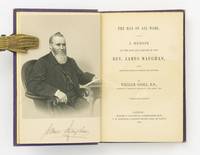
187227371London: Hodder and Stoughton 1872. First Edition. Hardcover. Very Good. London Hodder and Stoughton 1872. Octavo ii catalogue vi 312 pages plus a frontispiece portrait. Blind-stamped cloth; spine a little sunned; trifling stain to the frontispiece; an excellent copy virtually unused. The life of the pioneering South Australian Methodist New Connexion minister after whom Maughan Church in Franklin Street is named consult ADB Volume 5; with the presumably association signature of M. Maughan on the flyleaf. Not in Ferguson. Hodder and Stoughton hardcover
184131857AB1841. Maynooth / Radanstown Meath / Cole Hill Longford etc. 1841-1854. Octavo. 181 pages Diary of William Handcock / 140 pages plus 4 pages of Index Diary of Robert Ball Handcock. Hardcover / Original 19th century half-leather with paper-covered boards. Very good condition with only minor signs of wear. Letters and Petitions and Addresses transcribed in this Manuscript - Diary of William Handcock include many Letters he wrote himself to authorities or Newspapers at the Time Letters he received as Rector of Clontarf Rector of Radanstown Meath and Rector of Kilnagross Diocese of Ross Friends Colleagues etc. but William Handcock also included transcriptions of Letters of contemporaries colleagues and people who had written to Newspapers or the Crown which he found interesting. Letters and Addresses include for example: 1. Address from the Roman Catholic Inhabitants of Clontarf to the Revd. William Handcock page 117 - 119 2. Letter to the Maynooth Grand Diocese of Meath - To the Reverend Samuel Magee - Rector of Rathmolyon Glebe Maynooth June 1848 / Page 107 - 110 3. Letter "To the Rent Charge - To the Landed Proprietors of Ireland - Maynooth Dec.15 / 1848" page 102 - 106 4. Letter from a Lady to Revd. W. Handcock on.the Right of Private Judgment in Matters of Religion - Clifton Vale April 12 - 1841 Page 73 - 77 and followed by the long answer of the Reverend William Hancock on Pages 77 - 86 And many more !!! Biographical Information on Reverend William Handcock 1795-1873 Rev. William Handcock was born on 22 December 1795 in Dublin Ireland. He was the son of Rev Robert Handcock D D and Jane Bryanton. William matriculated at Trinity College Dublin on 1 July 1811. William Handcock pensioner Mr Fea aged 15 son of Robert clericus born Dublin. William late Rector of Kilgariffe Diocese of Ross co. Cork; Leslie states: priest 1820 Dromore Vicar choral St Patrick's Cathedral 1819-21; Curate Ardee Armagh 1820 Prebend and Vicar Ballisodare Achonry 1821-9 exchanged with Charles Mulloy for Rector of Clontarf 1829-40; Rector Radanstown Meath 1840-52; Rector Kilnagross Ross 1852-8; resigned. Succeeded to his father's estate at Cole Hill co. Longford between 1820 and 1858. Rev William Handcock married Sarah Coddington on 6 January 1821. He owned an estate of just over 500 acres in the parish of Aughrim barony and county of Roscommon in the 1850s. In the 1870s Mrs Sarah Handcock of Ballyknockan House Ballypatrick county Tipperary owned 515 acres in county Roscommon. William died on 3 January 1873 aged 77. Source: Linley & Jim Hooper's family history: "The genealogy of George A A Hooper his wife Linley Maree McKenzie & her half sister Jennifer Anne Dunbar Daniels of Melbourne Australia" hardcover
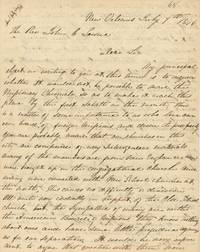
1846List2863New Orleans Louisiana 1846. Single letter three 8 x 10 inch pages. Torn at folds some tears repaired with archival tape; hole at location of seal; otherwise very good to excellent. John Holt Rice 1818–1878 was the son of a Presbyterian minister and nephew of Archibald Alexander founding professor of the Princeton Theological Seminary from which Rice graduated in 1845. When he wrote this letter he was working as a city missionary to the poor in New Orleans. Rice would spend his career ministering around the southern United States before his death from yellow fever. His correspondent is John Cameron Lowrie 1808–1900 a Scottish immigrant fellow Princeton graduate and a missionary in Colonial India. When his health became too precarious to remain abroad Lowrie returned to serve with the Board of Foreign Missions.<br /> <br /> The subject of missions boards was part of the Old School-New School controversy and schism in the Presbyterian Church particularly over whether missionary work should be primary the Old School view or secondary the New School view to the Church’s work.1 Those holding the latter view were satisfied with the work of the American Board of Commissioners for Foreign Missions ABCFM which was not a specifically Presbyterian body. Those of the former view believing that the Church’s missionary board ought to be itself Presbyterian formed the Western Foreign Missionary Society. When the Church’s second schism occurred in 1837 the Western society was <br /> renamed the Board of Foreign Missions BFM and headquartered in New York City.<br /> <br /> In this letter Rev. Rice finds himself in the delicate position of being an Old School supporter of the BFM ministering to Congregationalists and New School-raised supporters of the ABCFM. He writes to Rev. Lowrie requesting that copies of the BFM’s monthly Missionary Chronicle be sent to him in a timely manner as this was “a matter of some importance to us who love our own board of foreign missionsâ€:<br /> <br /> “You are probably aware that our churches in this city are composed of very heterogeneous materials many of the members are from New England and were brought up in the congregational church and many were connected with New School churches at the north. This causes no difficulty or division All unite very cordially in support of the Old School church but the sympathies of many are with the American Board of Missions. They know nothing about ours and have some little prejudice against us for our separation. It would be very impudent to argue that question with them now or attempt to convince them that our own board ought to be patronised by those connected with one of our churches rather than the American. But I feel certain that if they knew more of our operations they would take an interest in them.â€<br /> <br /> Rice also notes that he is an editor for the New Orleans Protestant newspaper and suggests that Lowrie send “something now and then†to excite “missionary zealâ€. Of interest to scholars of Presbyterian history especially the 19th-century Old School-New School schism.<br /> <br /> 1 Rev. Dr. Michael Parker “175 Years of Presbyterian World Mission†Presbyterian Historical Society archived November 1 2023 at https://web.archive.org/web/20231101183954/http://www.history.pcusa.org/history-online/topics-note/history-world-mission. unknown
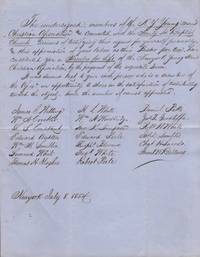
185433600New York and Boston 1854. Paper. Very good. Paper. Three documents. One manuscript and the other two part manuscript and printed form.<br /> <br /> 1. First document is manuscript on blue folded paper measuring approx. 10" x 8". One page with the three other pages blank. The document reads: "The undersigned members of the N.Y. Young Men's Christian Association and Connected with the Amity St. Baptist Church desirous of testifying their regard for yourself personally and their appreciation of your labors as this Pastor pro. tem. have constituted you a Member of Life of the New York Men's Christian Association by the payment of the requisite sum." This document written in one hand has a list of 20 names and is dated July 8 1854 New York. Folded.<br /> <br /> The second document part manuscript and printed form is a certificate with hand written names and dates. Rev. Curtis paid money to the American Baptist Missionary Association for a life time membership. This document is dated May 9th 1854 printed in Boston and signed by the treasurer. Folded paper with splits at the folds. <br /> <br /> The third document is part manuscript and printed form. One page of content two pages blank and one page with the written inscription "Rev. T. F. Curtis. Present". Printed top of the form is "New York Young Men's Christian Association. Rooms 659 Broadway Stuyvesant Institute." Document relates to a "Life Membership in the New York Young Men's Christian Association." It is signed by the Secretary July 8th 1854. Multiple folds to the paper. unknown
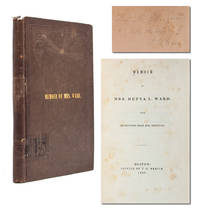
18434025Berkeley: T.R. Marvin 1843. First edition. Very Good . Original publisher's cloth binding with gilt to front board. Minor loss of cloth to crown of spine. Faint residue of removed library label to spine and front board. Peach endpapers. Light scattered foxing as is typical of the period. Inscribed on the front endpaper by Ward's husband the compiler: "Reverend Mr. Ellingwood with the respects of J.W. Ward." Bookplate on the front pastedown reveals that the recipient Rev. Ellingwood went on to donate the volume to the Theological Seminary of Bangor Maine. A scarce and important example of a published American elegiac volume produced in this case by an eminent family to mourn the loss of an educated woman. Memoirs is unrecorded by OCLC and has never appeared at auction. <br /> <br /> In their marriage James Wilson Ward and Hetta Lord Hayes Ward united two prominent Northeastern families. A senator and Congregationalist minister James descended from the founders of Plymouth and had attended Andover and Amherst. Hetta the daughter of a judge and niece of a Dartmouth president was herself a graduate of Miss Grant's Seminary Academy. The present volume released "exclusively for private circulation among the friends of the deceased" is a testament to Hetta's value not as a daughter who married well or a wife who effectively managed a house but as a companion an intellectual and an individual. In this sense it deconstructs the period's expectations of separate spheres or hierarchy between sexes. With an opening letter by Susan Hayes Hetta's mother as well as a copy of the eulogy conducted by her husband the book reveals vast details about who Hetta was as a person. Both describe her as tender and affectionate; but time and again emphasis is placed on her mind. Though Hetta was skillful with a needle as a child according to her mother "her numberless questions interested and surprised me.She acquired a fondness for poetry.She became as much interested in the in the study of the exact sciences as in the works of imagination making herself acquainted with the higher branches of Mathematics Algebra Geometry etc." James similarly eulogizes his wife. What becomes clear is that he is grieving the loss of a companion and equal. "If we have found a friend of distinguished excellence and for years rejoiced with that friend in mutual interchange and warm affections it is natural when death intervenes and separates us from the dear object of our love to contemplate their virtues.First characteristic which I would notice which she possessed in an eminent degree is an ardent love of truth.She possessed great powers of abstraction.She saw with great clearness the point of an argument and was quick to distinguish between sophistry.She loved to trace the workings of the human mind." Not satisfied simply to have their own testaments to Hetta's extraordinary mind the compilers included to the last half of the book a collection of her own poetry and prose.<br /> <br /> A scarce work in a genre underappreciated in American literature and history. Such coterie publications of intimate mourning were uncommon for the time particularly for a woman.<br /> <br /> National Cyclopedia of American Biography 148. Very Good . T.R. Marvin unknown
1840006577Firenze: Passigli 1840-1849. .i nomi di regie e di illustri famiglie di scismi religiosi di parti civili di sette filosofiche dall'origine del mondo. con una raccolta di tavole comparative. 5 volumi in 8vo grande di 1040; 1168; 1200; 1200; 1076 pagine con 15 ritratti o scene storiche incisi fuori testo su cartoncino. Poche fioriture. Bella legatura in mezza pelle verde dorso a nervi con titoli dorati. Ottime condizioni. Il curatore avrebbe voluto concludere l'opera con un Supplemento contenente le annunciate tavole comparative ma non riuscì nel suo intento. L'opera è quindi completa nei suoi cinque volumi con voci riprese dal Dizionario biografico francese ma molte aggiunte o sviluppate secondo criteri italiani. Senza dubbio il miglior dizionario biografico dell''800 in Italia. Spedizione con Paccocelere Extra weight Passigli unknown
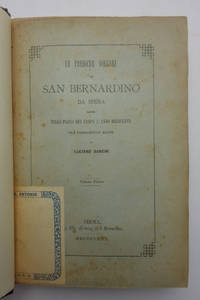
1880033244<p>Siena: All'insegna di S. Bernardino 1880-84-88. Prima edizione. Tre volumi 20 cm di XXIII-388 pp; 4-462 pp e 4-508 pagine. Qualche fioritura o brunitura sparsa peraltro condizioni molto buone. Legatura novecentesca in mezza tela percallina ad angoli; brossure originali conservate all'interno traccia di etichetta. Timbro di possesso alle risguardie. Rara prima edizione completa delle prediche di San Bernardino. Le Prediche volgari di San Bernardino sono la raccolta dei 45 sermoni che il Santo tenne a Siena in piazza del Campo a partire dal 15 agosto 1427 e per 45 giorni. Bernardino che aveva appena rifiutato la nomina papale a Vescovo di Siena venne insistentemente invitato dai governanti della città a tenere un lungo ciclo di prediche per il popolo tutto. Il Santo nonostante la stanchezza dei continui viaggi accettò. Massi. Peso: 1600 gr.</p> All'insegna di S. Bernardino hardcover
1822012805Bologna: Nobili 1822. Opuscolo 19 cm di 45-3 pagine su carta pesante. Fioriture sparse. Brossura coeva in graziosa carta dominotée gialla e azzurra. Contiene versi di: C. Piombanti F. Mancini C. Camilletti P. Tiberti I. Borzaghi C. Montalti L. Muzzi G. Rosini T. Sgricci E. Graziadei. Non comune pubblicazione per nozze. Nobili unknown
189535471895. Chromolithograph. 130mm by 200mm image 170mm by 255mm sheet. Signed 'PJ Smit' in the lithograph bottom right corner of the image. unknown
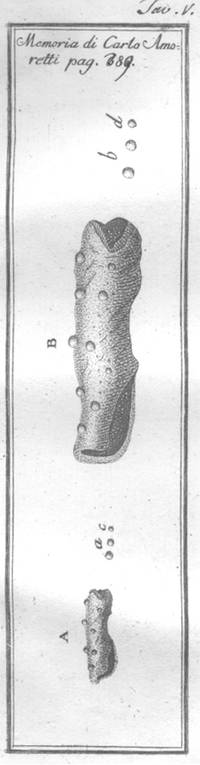
180358964Milano: Marelli 1803. In-8 mm. 241x174 similpelle moderna filetti e titolo oro al dorso pp. 43244 con 6 tavole fuori testo inc. in rame ciascuna con più figure 2 sono carte geografiche. Tomo XXII di questo importante periodico scientifico milanese che raccoglie saggi e memorie dei più grandi scienziati dell'epoca edito dal 1778 al 1803. In Appendice Libri nuovi in Italia e all'estero.Questo volume raccoglie 54 saggi di cui: 18 di Agricoltura ed Arti Del montone idraulico del C. di Montgolfier - Ricerche chimico economiche sull'imbiancamento della seta del Prof. G.A. Giobert - Sulla coltivazione dell'oppio in Toscana del Dr. Carradori26 di Fisica Chimica e Storia Naturale Sopra un Arco-baleno lunare di P. Spadoni - Sulle stelle cadenti di Beuzenberg e Brandes - Transunto d'un viaggio fatto nell'interno dell'Africa di Horneman - Transunto de' viaggi di Mackenzie nell'interno dell'America settentrionale - Osservazioni sulle anguille di C. Amoretti - Ragguaglio del viaggio aereo del C. Zambeccari agli 8 ottobre 1803 ecc.10 di Medicina e Anatomia Sull'applicazione del galvanismo alla medicina di A.M. Vassalli-Eaudi - Della vaccinazione fatta nel dipartimento del Verbano del Dr. L. Sacco - Su alcune cure fatte in Como col voltaismo medico di Laverine - Storia del Galvanismo ecc.Con aloni ma complessivamente un buon esemplare. Marelli, unknown
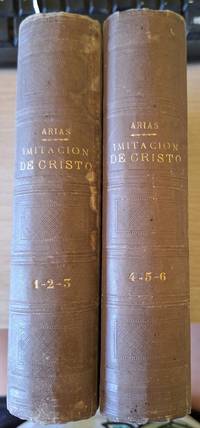
188461843Barcelona: Imprenta de la V. E. H. de J. Subirana. 1884. 19 x 12 cm. Media tela buen estado de conservacion. Tapas deslucidas volumen primero con perdida de papel en la tapa. LEA LAS CONDICIONES DE ENVIO DE LA LIBRERÃA. 140 Imprenta de la V. E. H. de J. Subirana. unknown
1868006787London: John Russell Smith 1868. 1st Edition. Hardcover. Very Good/No Jacket. 6.25" x 8.25" Small 4to. Half calf binding green spine label with gilt titling tan buckram boards. liv 616 pp. All edges yellow. Wear to corners rubbing to joints and spine ends. Some soiling and light staining to buckram. Soiled to top edge of text block. Staining and chipping to edges of front pastedown. Professional repairs to front and rear hinges. Interior is bright and clean. Constitutional Club Library bookplate to front pastedown. Subscriber list at rear. A prodigious treatment of the north-eastern British dialect of Cleveland Northumbria. John Russell Smith hardcover
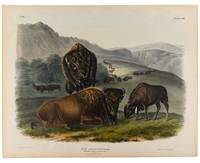
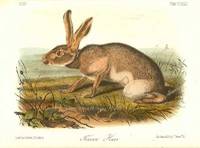
184942915New York: John James Audubon 1849. First edition hand-colored lithograph by John T. Bowen of Philadelphia after John James Audubon. An iconic image of Western Americana from the folio first edition of Audubon's "Quadrupeds of North America" the greatest work of natural history illustration produced in America during the nineteenth century: "As long as our civilization lasts America will be in debt to this genius." Peterson<br/> <br/> This fine plate is from the folio edition of Audubon's The Viviparous Quadrupeds of North America which was produced entirely in the United States. The work was Audubon's last and by 1846 he had to hand over the drawing of the final fifty plates to his sons John Woodhouse and Victor Audubon. The production of the Quadrupeds was begun by Audubon and his sons at about the same time as the commercially-successful octavo edition of The Birds of America. Unlike the double-elephant folio the Quadrupeds was produced entirely in the United States. Reese notes that "By 1843 the Audubon family business was a well-oiled machine involving John James his two sons and various in-laws and friends. The octavo Birds was still in production when Bowen began to produce the plates for the folio edition of the Quadrupeds the largest successful color-plate book project of 19th-century America. It took the family five years to publish 150 plates in thirty parts. The massive project was a commercial success thanks to the close management of Victor. There were about three hundred subscribers." Reese Like Birds of America the Viviparous Quadrupeds was intended to be a comprehensive visual catalog of North America animalia with Audubon's focus here shifting from birds to four-legged land mammals. Accompanying each image was correlating didactic text written primarily by Bachman that informed the reader of the animal's habits diet habitat and gestational period. Totaling 150 prints the project was rushed to completion as Audubon's health declined. Emerging in the shadow of its acclaimed predecessor Birds of America the Viviparous Quadrupeds has not received the adequate attention nor recognition it so richly deserves. This image is of a family of American buffalo the most iconic animal indigenous to North America whose presence was integral for Native American life and whose near-extinction spurred on the conservation movement in the US. The buffalo is today the state animal of Kansas Oklahoma and Wyoming.<br/> <br/> Bennett p.5. Peterson Birds of America passim. Reese Stamped with a National Character 36. Sabin 2367. Wood p.209. John James Audubon unknown
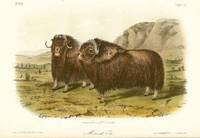
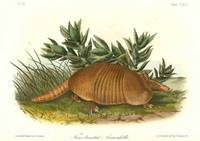
18494369New York:: V.G. Audubon 1849-54. First Royal Octavo Edition. Fine with original hand-coloring. A fine original hand-colored lithograph on paper. Royal Octavo 10.5 x 7 inches. Drawn from nature by John Audubon drawn on stone by William E. Hitchcock and lithographed printed and colored by JT Bowen Philadelphia. Accompanied by the original text written by the Reverend John Bachman DD. The Quadrupeds of North America; portrayals of 155 four-legged mammals native to North America depicted in their natural environment was a collaborative effort between the premier nineteenth century American Ornithologist Naturalist Artist and Frontiersman John James Audubon 1785-1851 his sons John Woodhouse Audubon and Victor Gifford Audubon and the naturalist Reverend John Bachman. The four men were unified in their desire to document and portray what they recognized as a dwindling resource; America's native animals amidst the natural beauty of the untouched American landscape. Their collective wisdom predicted the impending effects of Manifest Destiny- man's encroachment on the wilderness and natural landscape of North America- and as such was the impetus for the journey. To document and then portray America's native animals in the splendor and majesty of the uninhabited North American landscape the team traveled westward from Audubon's home in Mill Grove Pennsylvania up the Missouri River and through territory just previously explored by Lewis and Clark; from the Canadian border of the Northern Russian Territories- now Alaska- then southward to Mexico. Arduous and monumental the journey is recognized in the pathos of the compositions. However the true legacy of the work rests on John James Audubon's prolific vision and mastery of his subject and medium. Heretofore unseen The Quadrupeds of North American is a wildlife classic: an essential and timeless contribution to both Early American culture and the Art of American Wildlife Painting. The American Review a Whig journal heralded the national origin of the Quadrupeds: "We have at last have a Great National Work; originated and completed among us- authors artists and artisans of which are our own citizens the Bible of Nature!" John James Audubon in the West. New York: Henry H. Abrams 2000. Sabin 2368. Wood 208. Matted in Ivory Rag Board 12 x 16 inches. V.G. Audubon, unknown
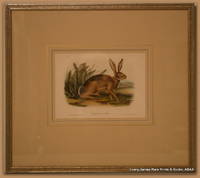
18496425New York:: V.G. Audubon 1849-54. First Royal Octavo Edition. Fine with original hand-coloring. A fine original hand-colored lithograph on paper. Royal Octavo 10.5 x 7 inches. Drawn from nature by John Audubon drawn on stone by William E. Hitchcock and lithographed printed and colored by JT Bowen Philadelphia. Accompanied by the original text written by the Reverend John Bachman DD. The Quadrupeds of North America; portrayals of 155 four-legged mammals native to North America depicted in their natural environment was a collaborative effort between the premier nineteenth century American Ornithologist Naturalist Artist and Frontiersman John James Audubon 1785-1851 his sons John Woodhouse Audubon and Victor Gifford Audubon and the naturalist Reverend John Bachman. The four men were unified in their desire to document and portray what they recognized as a dwindling resource; America's native animals amidst the natural beauty of the untouched American landscape. Their collective wisdom predicted the impending effects of Manifest Destiny- man's encroachment on the wilderness and natural landscape of North America- and as such was the impetus for the journey. To document and then portray America's native animals in the splendor and majesty of the uninhabited North American landscape the team traveled westward from Audubon's home in Mill Grove Pennsylvania up the Missouri River and through territory just previously explored by Lewis and Clark; from the Canadian border of the Northern Russian Territories- now Alaska- then southward to Mexico. Arduous and monumental the journey is recognized in the pathos of the compositions. However the true legacy of the work rests on John James Audubon's prolific vision and mastery of his subject and medium. Heretofore unseen The Quadrupeds of North American is a wildlife classic: an essential and timeless contribution to both Early American culture and the Art of American Wildlife Painting. The American Review a Whig journal heralded the national origin of the Quadrupeds: "We have at last have a Great National Work; originated and completed among us- authors artists and artisans of which are our own citizens the Bible of Nature!" John James Audubon in the West. New York: Henry H. Abrams 2000. Sabin 2368. Wood 208. Archivally matted & framed V.G. Audubon, unknown
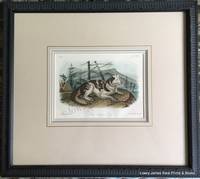
18497317New York:: V.G. Audubon 1849-54. First Royal Octavo Edition. Fine with original hand-coloring. A fine original hand-colored lithograph on paper. Royal Octavo 10.5 x 7 inches. Drawn from nature by John Audubon drawn on stone by William E. Hitchcock and lithographed printed and colored by JT Bowen Philadelphia. Accompanied by the original text written by the Reverend John Bachman DD. The Quadrupeds of North America; portrayals of 155 four-legged mammals native to North America depicted in their natural environment was a collaborative effort between the premier nineteenth century American Ornithologist Naturalist Artist and Frontiersman John James Audubon 1785-1851 his sons John Woodhouse Audubon and Victor Gifford Audubon and the naturalist Reverend John Bachman. The four men were unified in their desire to document and portray what they recognized as a dwindling resource; America's native animals amidst the natural beauty of the untouched American landscape. Their collective wisdom predicted the impending effects of Manifest Destiny- man's encroachment on the wilderness and natural landscape of North America- and as such was the impetus for the journey. To document and then portray America's native animals in the splendor and majesty of the uninhabited North American landscape the team traveled westward from Audubon's home in Mill Grove Pennsylvania up the Missouri River and through territory just previously explored by Lewis and Clark; from the Canadian border of the Northern Russian Territories- now Alaska- then southward to Mexico. Arduous and monumental the journey is recognized in the pathos of the compositions. However the true legacy of the work rests on John James Audubon's prolific vision and mastery of his subject and medium. Heretofore unseen The Quadrupeds of North American is a wildlife classic: an essential and timeless contribution to both Early American culture and the Art of American Wildlife Painting. The American Review a Whig journal heralded the national origin of the Quadrupeds: "We have at last have a Great National Work; originated and completed among us- authors artists and artisans of which are our own citizens the Bible of Nature!" John James Audubon in the West. New York: Henry H. Abrams 2000. Sabin 2368. Wood 208. Archivally matted & framed V.G. Audubon, unknown
18494387New York:: V.G. Audubon 1849-54. First Royal Octavo Edition. Fine with original hand-coloring. A fine original hand-colored lithograph on paper. Royal Octavo 10.5 x 7 inches. Drawn from nature by John Audubon drawn on stone by William E. Hitchcock and lithographed printed and colored by JT Bowen Philadelphia. Accompanied by the original text written by the Reverend John Bachman DD. The Quadrupeds of North America; portrayals of 155 four-legged mammals native to North America depicted in their natural environment was a collaborative effort between the premier nineteenth century American Ornithologist Naturalist Artist and Frontiersman John James Audubon 1785-1851 his sons John Woodhouse Audubon and Victor Gifford Audubon and the naturalist Reverend John Bachman. The four men were unified in their desire to document and portray what they recognized as a dwindling resource; America's native animals amidst the natural beauty of the untouched American landscape. Their collective wisdom predicted the impending effects of Manifest Destiny- man's encroachment on the wilderness and natural landscape of North America- and as such was the impetus for the journey. To document and then portray America's native animals in the splendor and majesty of the uninhabited North American landscape the team traveled westward from Audubon's home in Mill Grove Pennsylvania up the Missouri River and through territory just previously explored by Lewis and Clark; from the Canadian border of the Northern Russian Territories- now Alaska- then southward to Mexico. Arduous and monumental the journey is recognized in the pathos of the compositions. However the true legacy of the work rests on John James Audubon's prolific vision and mastery of his subject and medium. Heretofore unseen The Quadrupeds of North American is a wildlife classic: an essential and timeless contribution to both Early American culture and the Art of American Wildlife Painting. The American Review a Whig journal heralded the national origin of the Quadrupeds: "We have at last have a Great National Work; originated and completed among us- authors artists and artisans of which are our own citizens the Bible of Nature!" John James Audubon in the West. New York: Henry H. Abrams 2000. Sabin 2368. Wood 208. Matted in Ivory Rag Board 12 x 16 inches. V.G. Audubon, unknown
18494396New York:: V.G. Audubon 1849-54. First Royal Octavo Edition. Fine with original hand-coloring. A fine original hand-colored lithograph on paper. Royal Octavo 10.5 x 7 inches. Drawn from nature by John Audubon drawn on stone by William E. Hitchcock and lithographed printed and colored by JT Bowen Philadelphia. Accompanied by the original text written by the Reverend John Bachman DD. The Quadrupeds of North America; portrayals of 155 four-legged mammals native to North America depicted in their natural environment was a collaborative effort between the premier nineteenth century American Ornithologist Naturalist Artist and Frontiersman John James Audubon 1785-1851 his sons John Woodhouse Audubon and Victor Gifford Audubon and the naturalist Reverend John Bachman. The four men were unified in their desire to document and portray what they recognized as a dwindling resource; America's native animals amidst the natural beauty of the untouched American landscape. Their collective wisdom predicted the impending effects of Manifest Destiny- man's encroachment on the wilderness and natural landscape of North America- and as such was the impetus for the journey. To document and then portray America's native animals in the splendor and majesty of the uninhabited North American landscape the team traveled westward from Audubon's home in Mill Grove Pennsylvania up the Missouri River and through territory just previously explored by Lewis and Clark; from the Canadian border of the Northern Russian Territories- now Alaska- then southward to Mexico. Arduous and monumental the journey is recognized in the pathos of the compositions. However the true legacy of the work rests on John James Audubon's prolific vision and mastery of his subject and medium. Heretofore unseen The Quadrupeds of North American is a wildlife classic: an essential and timeless contribution to both Early American culture and the Art of American Wildlife Painting. The American Review a Whig journal heralded the national origin of the Quadrupeds: "We have at last have a Great National Work; originated and completed among us- authors artists and artisans of which are our own citizens the Bible of Nature!" John James Audubon in the West. New York: Henry H. Abrams 2000. Sabin 2368. Wood 208. Matted in Ivory Rag Board 12 x 16 inches. V.G. Audubon, unknown
18977145Baptist Book Concern. Good with no dust jacket. 1897. First Edition. Hardcover. INSCRIBED by Bagby in Pencil on FFEP. Ex-Library with paste-ons and pockets carefully removed. Some stamps present throughout book Hinges show threads considerable edge and corner wear some tears/chips and loose pps but wholly intact. From H.B. Riley Library portrait of Author on Frontispiece. Inscription reads: "To my beloved brother in Christ. 2 lines obscurred by top edge of paste-on. May the subject of this book be the object of your life and your eternal companion in teh payers of. The Author" A few minor notations in text brown cloth with gilt. . Baptist Book Concern hardcover
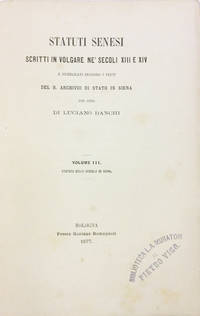
187761059Bologna: Romagnoli 1877. In-8 mm. 230x150 1 volume su 3 brossura originale pp. XXXIII5057. Disponiamo del terzo volume dedicato allo statuto dello Spedale di Santa Maria di Siena 1318-1379 con le addizioni dal 1320 al 1861. Al fine voci e maniere meritevoli di osservazione. Volume della Collezione di opere inedite o rare dei primi tre secoli della lingua. Ben conservato. Romagnoli, unknown
187438390London: Williams and Norgate Ltd. Very Good- with no dust jacket. 1874. First Edition. Hardcover. Original brown cloth gilt with blindstamp detail to front board. Light wear to spine ends/points slight soil to cloth. Minor scattered foxing. Pencilled underlining and notations in text. Firm binding/hinges. ; 8vo 8" - 9" tall . Williams and Norgate Ltd. hardcover