LAPLACE, (Cyrille).Livre Rare Book
1 871 résultats
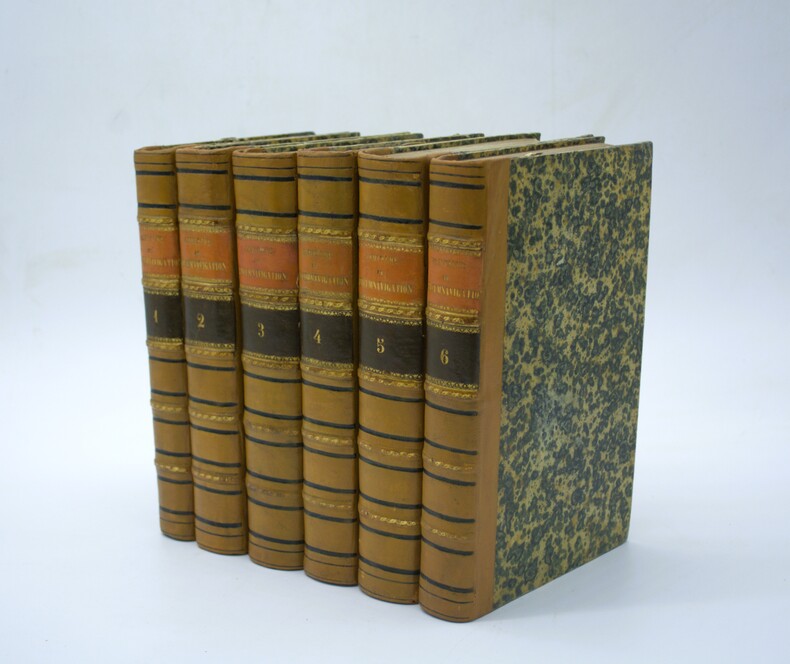
1841PHO-2262Paris, Arthus Bertrand, 1841-1842-1844-1848-1853-1854. 6 vol. in-8° de XXIX, 1 bl., 343 pp., [2] ff., Front., 6 pl. h.-t. et 1 carte dé pl. ; 467 pp., [2] ff. Font., 4 pl. h.-t. et 1 carte ; 548 pp., [1] f. Front. et 5 pl. h.-t. ; 464 pp., [2] ff. 4 pl. h.-t. ; III, 1 bl., 542, [2] pp. 4 pl. h.-t. ; 400 pp. Font. et 5 pl. h.-t. demi-basane fauve, dos à 5 faux-nerfs, p ; de t. en maroquin orange, p. de tomaison en maroquin brun, tranches mouchetées (Reliure du temps). Édition originale, bien complète du sixième volume consacré à la Californie qui manque souvent. 31 pl. gravées sur acier (complet) et 2 cartes dépliante, au Tome IV, la pl. du « Fort de Cornouailles » est reliée en frontispice du tome VI. Des rousseurs et quelques planches brunies.
In -8°, pp. 109, (b), cartonato, tagli rossi. Prima edizione. Francesco Pasio (1551-1612) fu il primo provinciale gesuita in Giappone, residente a Nagasaki; il libro comprende anche una lettera del vice-provinciale Pedro Gomez (1533-1600), autore del “Compendium”, ovvero un trattato di cosmologia e teologia che sarebbe diventata la prima opera a introdurre la cultura occidentale in Giappone; segue un testo di Nicolò Longobardi (1559-1654), gesuita siciliano che in Cina fu il successore di Matteo Ricci (nominato varie volte in questo testo); la quarta e ultima lettera è un resoconto di una missione presso i territori islamici del Mogol (India, Pakistan, Afghanistan). Marca dei gesuiti al frontespizio e capilettera figurati. First edition. Pasio (1551-1612) was the first Jesuit Provincial in Japan: he resided in Nagasaki; the book includes also a letter of his deputy Pedro Gomez (1533-1600), author of the “Compendium”, a cosmology and theology treaty that had to become the first work to introduce western knowledge in Japan; then a text by Nicolò Longoboardi (1559-1654), a sicilian jesuit who replace, in China, Matteo Ricci (mentioned many times in this text); the fourth and last letter is the chronicle of a mission in Islamic areas of Mughal (India, Pakistan, Afghanistan). A Jesuit mark on title page and figurative initials. Pasio (1551-1612) was the first Jesuit Provincial in Japan: he resided in Nagasaki; the book includes also a letter of his deputy Pedro Gomez (1533-1600), author of the “Compendium”, a cosmology and theology treaty that had to become the first work to introduce western knowledge in Japan; then a text by Nicolò Longoboardi (1559-1654), a sicilian jesuit who replace, in China, Matteo Ricci (mentioned many times in this text); the fourth and last letter is the chronicle of a mission in Islamic areas of Mughal (India, Pakistan, Afghanistan). A Jesuit mark on title page and figurative initials.
In -8°, pp. 100; cartonato, tagli rossi; marca dei Gesuiti al frontespizio, iniziale xilografica. Nicolas Pimenta (1546-1614) fu mandato a Goa nel 1596, in ruolo di sovrintendente delle Indie Orientali. Questo è il suo secondo resoconto, in cui dopo aver riferito sullo stato delle sue missioni, descrive un viaggio verso Nord - a tratti avventuroso - intrapreso inizialmente con 11 compagni: nel volume si dà conto di una delle prime missioni cristiane in Bengala. Nicolas Pimenta (1546-1614) was sent to Goa in 1596, as Eastern India supervisor. This is his second report, in which he tells about his travel to North (sometimes adventurous) giving also account of one of the first Christian missions to Bengal.
In-8°, 135 pp, antiporta calcografica illustrata da L. Banzo, ai piatti legatura in pelle alle armi di papa Pio IX con stemma centrale entro doppia cornice riccamente decorata, titolo in oro al dorso, tagli in oro. Buona copia. Prima edizione. La vita di questo avventuroso missionario portoghese (João de Brito) viene descritta da padre Boero, gesuita che dedicò molta parte della sua vita alla compilazione delle biografie di martiri missionari con uno stile che travalica definitivamente l’agiografia barocca e trionfalista. I suoi lavori sono importanti anche per la descrizione dei luoghi in cui si svolge l’operato del padre missionario. João de Brito svolse il suo ministero in India, nella provincia del Marava, dove ritornò dopo esserne stato cacciato. Venuto in insanabile contrasto con il principe locale, subì il martirio a Oriyur il 4 febbraio 1693. Fu beatificato da Pio IX nel 1859 e canonizzato da Pio XII nel 1947. In-8 °, 135 pp, chalcographic frontispiece engraved by L. Banzo, calf covers with the coat of arms of Pope Pius IX with central coat of arms within a richly decorated double frame, gilt title on the back, gilt edges. Good copy. First edition. The life of this adventurous Portuguese missionary (João de Brito) is described by Father Boero, a Jesuit who devoted much of his life to compiling the biographies of missionary martyrs with a style that definitively goes beyond Baroque and triumphalist hagiography. His works are also important for the description of the places where the missionary father's work takes place. João de Brito carried out his ministry in India, in the province of Marava, where he returned after being expelled. Coming into irremediable conflict with the local prince, he suffered martyrdom in Oriyur on February 4, 1693. He was beatified by Pius IX in 1859 and canonized by Pius XII in 1947.
1860PHO-2406Paris, Librairie de L. Hachette et Cie, 1860-65. 2 volumes de texte in-8 (235 x 148 mm) de : I/ lxiv pp., 486 pp., (1) f. d’errata ; II/ (2) ff., 480 pp., iv pp. de table ; et 1 Atlas in-folio (57x40cm). Texte : relié demi veau, dos lisse avec titre et tomaison, dos frotté, coiffes arasés, charnières faibles au tome 2, cachets aux titres. Atlas : sous portefeuille demi toile, titre et tomaison au plat, 2 chemises de livraison comportant 13 planches (16) et 2 planches en double (Fragment de carte et Ruine de l’église Saint Michel), portefeuille frotté, chemises de livraison ébarbées, rousseurs, petites mouillures marginales, une planche plus petite en marge.
1199P., Delahays, 1851-1914. Ensemble de 51 volumes en demi-chagrin, dos à nerfs (quelques dos frottés, quelques mouillures). Bon exemplaire tout de même en reliures uniformes. Manque le tome VII de la première série (1858). Le tome XV bis de la troisième sé
In -8°, pp. 77, (B); cartonato, tagli rossi. Prima edizione. Pasio (1551-1612) fu il primo provinciale gesuita in Giappone, residente a Nagasaki. La lettera compendia le attività dei Gesuiti in Giappone a cavallo dei due secoli, descrive le condizioni di vita in diverse città e si impegna nel racconto delle condizioni culturali del Giappone a quel tempo. First edition. Pasio (1551-1612) was the first Jesuit Provincial in Japan: he resided in Nagasaki. This letter outlines the Jesuits’ activities in Japan, between XVI and XVII century, also giving descriptions of the various life conditions in many cities, and more widely of the Japan culture at that time.
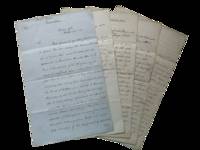
1852List2521London 1852. Five groups of documents measuring 13 x 8 inches various paginations see full description below. Fine condition. A scarce set of primary source documents relating to the protection of British territory in the Caribbean in particular along the Mosquito Coast during the period of varied interests in the area in the period following the Anglo-Spanish agreement on the slave trade. Consisting of a series of secretarial copies of reports delivered to Peter McQuhae Commodore of H.M.S. Imauam stationed in Jamaica these dispatches offer an overview of the issues confronting the British Navy in Jamaica during the period and in the Caribbean more broadly. Most of the documents refer to issues with Cuba the most interesting perhaps being a letter warning of an impending filibustering expedition against Cuba by a pro-slavery faction in the American South. <br /> <br /> The group consists of five groups of bound documents some bound out of order and likely bound later. Contents are as follows: <br /> <br /> 1. Addington A.M. Four Page Report Concerning Placing a Ship of War at Grey Town to Discourage Invasions on the Mosquito Coast March 13 1851. <br /> <br /> Henry Addington writes McQuhae to recommend stationing a warship at Grey Town:<br /> <br /> “.it would be sufficient that a Ship of War should from time to time look in grey Town without remaining there at any time long enough to endanger the health of the crew… to provide for the case which is possiblee tho’ not at all likely that during the interval between the visits of a Ship of War some expedition of Nicaraguan or some of the North Americans returning from California might take advantage of the comparatively unprotected state of the lace to take possession of it and that the cruiser on its return to Grey Town might find the place so occupied Lord Palmerston concieves taht in such an event it would seem to be inconsistent with the Honor of this Country that a British Ship of War should acquiesce in such an aggression and it would be right that the intruder should be expelled if the Commander of the Ship of War should find as he probably would that he had the means of doing so without much difficulty and that in case he should repel the intruders and re-establish the authorities of the Mosquito Government demanding the liberation of any British or Mosquito subjects who might have been made Prisoners and holding hostages for their relief if they should have been removed up into the interior of the Country.<br /> <br /> It It is to be hoped however that all questions of dispute in regard to Grey Town will beoon be settled because Her Majesty’s government has through Her Majesty’s Minister at Washington proposed to the Government of the United States that an arrangement should be made by which the Sovereignty of Grey Town… should be transferred to the State of Costa Rica… Lord Palmerston desires me to add that there are at present at Washington a plenipotentiaries both from Nicaragua and Costa Rica for the purpose of conducting this negotiation…â€<br /> <br /> 2. Addington G.M. Single Page Letter in Secretarial Hand Warning of Incoming Ships to Cuba Carrying Enslaved Individuals January 24 1852. <br /> <br /> Addington writes to McQuhae about two incoming vessels carrying enslaved Africans passing on information received at Rio De janeiro by another British vessel:<br /> <br /> “I am directed by Earl GraH.M. Minister at Rio reporting that he had recieved information that two Slavers had sailed from Havana to… the coast of Africa… with the intention of returning with Cargoes of slaves which are to be landed at the Entrade de Cuchillo in Cuba.â€<br /> <br /> 3. Seymour G.F. et al. Four Reports Bound Together on Varied Subjects including the Case of the Creole British Fishing Rights in Spanish Waters off of Cuba and Porto Rico and the Case of a Detained British Vessel in Cuba 1852. <br /> <br /> A series of four reports addressed to McQuhae on various subject as follows:<br /> <br /> A. Report dated May 17 1852 from Seymour discussing the case of the Creole detained in 1851:<br /> <br /> “.enclosing copies of a letter from the Under Secretary of State for Foreign Affairs approving of the course I had pursued with regard to the Creole and of a despatch from the Earl of Malmesbury to Her Majesty’s Minister at Madrid relative to the rights of British Subjects to fish on the coast of Cuba…â€<br /> <br /> B. Letter from Augustus Stafford Apriul 23 1852 discussing the Creole mostly discussing the enclosure of varied reports on the subjects but with little specific information. <br /> <br /> C. Addington A.M. April 21 1852 letter discussing the Creole case and the enclosure of documents. <br /> <br /> D. Earl of Malmesbury April 14 1852 letter discussing the Creole case in more detail:<br /> <br /> “ The Right thus claimed rests on this universally admitted precept of international Law “dominium finitur ubi finitur armorum vis†which in modern practice has been construed to mean “about one marine league from the mainland†and H.M.’s Govt are clearly justified in demanding that the Spanish authorities shall be ordered not to meddle or interfere with British fishermen outside that three mile boundary…â€<br /> <br /> 4. Earl of Malmesbury et al. Series of Three Secretarial Copies of Reports Concerning Impending Filibuster Raids on Cuba Giving Instructions for Assisting Spanish Forces. <br /> <br /> A very interesting series of reports detailing the planned response to pending “Piratical Attacks†showing the extent to which British forces were prepared for an American filibuster attack on the island and the degree to which they intended on assisting the Spanish forces. As follows:<br /> <br /> A. Seymour G.F. Secretarial Copy of Letter Written on May 5 1852 from Cumberland at Bermuda relaying the transmission of a full report of instructions to the British forces regarding an impending filibuster raid:<br /> <br /> “ I hereby enclose for your guidance… orders… relative to the assistance which is to be afforded by Her Majesty’s Ships on the application of the Captain General of Cuba in the Transport of Troops in the event of a Piratical attack being again made on that island by which you will govern your conduct…â€<br /> <br /> B. Earl of Malmesbury. Secretarial Copy of a Letter Dated April 10 1862 discussing piratical attacks:<br /> <br /> “.that in the event of a Piratical Attach being made upon that island… HM’s ships might assist in conveying troops to any poiunt of the Coast of Cuba at which the invading Party might effect a landing…â€<br /> <br /> C. Honley P. Secretarial Copy of an Undated Letter c. 1852 regarding piratical attacks:<br /> <br /> “Her Majesty’s ships might assist in coveying Troops to any point off the Coast of Cubat at which the invading Party might effect a landing… you should be instructed until further ORders that if the Captain General of Cuba should require your assistance for the transport of troops in the manner pointed out in your abovementioned dispatch you should comply with that demand…â€<br /> <br /> 5. Crampton Sir John. Copy of a Letter in Secretarial Hand Relaying the Impending Danger of a Pro-Slavery Filibuster Mission from Florida May 17 1852. <br /> <br /> A fascinating letter relaying information received from M. Calderon de la Barca concerning an impending filibuster mission against Cuba led by a Dr. Wren part of an organization called “The Lone Star Association:â€<br /> <br /> “.it would appear that the government of the United States has also received an intimation that something of the sort is on foot for the President informed M. Calderon that orders had already been sent to the U.S. Authorities at the different Ports of the Union to be prepared to take vigorous measures for the repression of any such attempts… an expedition is in fact meditated by certain parties in the South and that it is intended that it should leave some Port of Florida. The real object of this expedition however as as I am told not Cuba… but San Domingo for the purpose of acting as auxiliaries to the Dominicans against the Haytians… it is by no means impossible that its ultimate aim would be Cuba… the persons I am given to understand engaged in the expedition are a Dr. Wren who is president of a society called “The Lone Star State Association…â€<br /> <br /> The letter is worthy of further study - we find references to a Dr. Wren in newspaper articles from the period but were unable to pinpoint his identity or the history of his organization. An article from a Loudon Tennessee newspaper describes Dr. Wren as a “representative of New Orleans societies†and described a meeting in Loudon in 1852 trying to recruit for the overthrow of the Spanish colonial government of Cuba through an invasion. unknown
1919124931à Lyon, chez M. P. Rusand, imprimeur-libraire, Librairie ecclésiastique de Poussielgue-Rusand 1919 72 volumes. In-8 20,5 x 12,5 cm. Reliures de l’époque composites demi-basane aubergine, dos lisses ornés de filets dorés encadrés de petits fers à froid & à partir du vol. n 48, demi-basane vert-émeraude, dos lisses ornés de filets à froid, environ 550 pp. par volume, table en fin de chaque volume. Ex-libris marquis de Monteynard.
"In-8°, xxxii, 237pp, (3). Vignetta calcografica sul frontespizio, iniziali e finalini xilografici, legatura in pieno marocchino alle armi di papa Pio VI Braschi in oro in doppia cornice su entrambi i piatti, titolo in oro al dorso, nervature e fregi dorati al dorso, tagli in oro. Diego José Abad, gesuita messicano, poeta e amante della saggezza, intellettuale, maestro riformatore dell'insegnamento filosofico, trascorse le sue giornate nel XVIII secolo della Nuova Spagna. Esiliato in Europa nel 1767 assieme a Clavigero, ha lasciato nelle sue opere la testimonianza del «caro amore per la patria, pieno di sentimento, nostalgia e anche un po' di tristezza» Missionalia hispanica, vol.15, 1958, p.317 Cortes, Dictionary of Mexican literature, vol. 1, p.1 Medina, Biblioteca Hispano-Americana, 4714 In-8 °, xxxii, 237pp, (3). Woodcut vignette on the title page, woodcut initials and tail ornaments, binding in full Moroccan, gilt coat of arms of Pope Pius VI Braschi within gilt double frame on both plates, gilt title bands and gilt friezes on the spine, gilt edges. Diego José Abad, Mexican Jesuit, poet and lover of wisdom, intellectual, reforming teacher of philosophical teaching, spent his days in the 18th century of New Spain. Exiled to Europe in 1767 together with Clavigero, he left in his works the testimony of ""dear love for the homeland, full of sentiment, nostalgia and even a little sadness"""
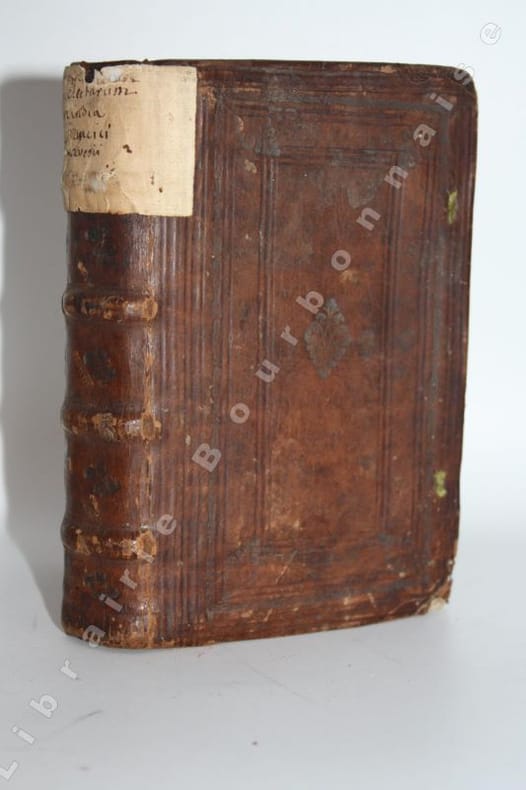
13014[Venise], s.n., s.d. ; [1588] ; in-16. 461 pp.-12 ff. (table). Plein veau brun, dos à nerfs fleurons à froid entre les nerfs, encadrement de filets et roulette à froid sur les plats avec fleurons aux angles et un fleuron doré au centre ors effacés). Tranches dorées guillochées. Trous de vers aux coins inf. Pâles mouillures. Étiquette papier ancienne sur le dos avec titre manuscrit. Reliure de la fin du XVIe siècle.
168010841Amsterdam Jacob de Meurs 1680 -in-folio plein-veau 2 parties reliées en un volume, reliure plein veau havane (binding full calfskin) in-folio (359 x 240mm), dos à nerfs (spine with raised bands) décoré or (gilt decoration) filets or (gilt line) et filets à froid (blind-stamping line decoration), entre-nerfs à compartiments or à fleuron central dans un encadrement d'un filet or et un filet perlé or avec rinceaux aux angles, titre frappé or (gilt title), pièce de titre sur fond rouge-foncé (label of title) avec filet or (label of title with gilt line), coiffes anciennement restaurées mais proprement (head and tail of the spine restored), dos frotté avec manques de dorure, plats décorés à froid (cover blind-stamping) d'un double filet à froid en encadrement, angles et charnières anciennement restaurées (corners and joints renovated), toutes tranches lisses (all edges smoothes), orné d'un Titre frontispice gravé (with 1 engraved frontispiece) papier restauré en marge + une gravure en bas de la page de titre + 25 gravures hors-texte (full page engraving) en noir sur 26 (manque la gravure page 222/223 "le temple de Dayro" dont j'ai mis une photocopie à la place) et 70 gravures in-texte en noir + lettrines et fronts de chapitres gravés sur bois en noir (engraved initials and head-pieces), la gravure : "Le Chateau d'Osacca" qui devait se trouver initialement page 220/221 à été reliée page 120/121 avec la gravure du "palais de Dayro à Miaco", autre erreur : le relieur à inséré la gravure : " Entrée des Ambassadeurs à Mia" page 138/139 alors qu'il aurait du la placer page 138/139 de la 2ème partie ou c'était sa place, présence d'une tache brune claire n'empéchant a aucun moment la compréhension du texte de la page 63 à la page 70 sur une surface de 3 centimètres carrés environ, réparation ancienne du bas de la page 79/80 une partie du texte de la page 80 est manuscrit à l'encre brune, quelques reparations anciennes en bas de page n'atteignant pas le texte ou au dos de certaines gravures mais n'atteignant jamais la gravure, très rares et légères rousseurs (rares and lights redness marks), (4 p. de préface + 227 + 8 pages de tables + un page blanche) + (146 + 6 pages de tables) Pages avec Approbation & Privilège du Roy, 1680 Amsterdam Jacob de Meurs Editeur,
1680PHO-1962Paris, Charles Angot, 1680, in-8° (20x13cm), veau brun, dos à nerfs orné avec pièce de titre grenat, coupes dorées (reliure de l’époque), quelques usures, manque à la pièce de titre, mouillures, rousseurs, dernier feuillet de garde changé.
Signed and inscribed by author inside front board. Laid-in is a signed letter by the author to the recipients of this copy, listing the publishers which refused to print it. 210 pages. Index. Lists of Hebrew and Christian spiritual references. Footnotes. Suggested reading list. "The purpose of this book is to demonstrate that Judaism is the most appropriate religion for contemporary Americans and to promote their mass conversion to it." - from Introduction. Clean, bright and unmarked with very light wear to red boards. An excellent copy. Book
1686108421686 un volume (one book), reliure plein veau brun in-quarto (binding full calfskin in-quarto), dos à nerfs (spine with raised bands) - filets or et filets à froid (gilt lines and blind-stamping line decoration) - entre-nerfs à fleuron fleurette (between the raised bands floweret)- titre frappé or (gilt title), coiffes supérieures et inférieures manquantes (head and tail of the spine lightly faded), toutes tranches lisses (all edges smooth), cahiers légèrement déboîtés (leafs lightly dislodged), illustrations : orné de 19 planches en noir hors-texte dont 9 doubles de Vermeulen - manque une planche (illustrations : 19 black plates full page engraving of Vermeulen of which 9 double plates - it misses a plate) - cartes - plans - vues et animaux et 7 gravures-Vignettes in-texte en noir par Sevin (maps - plans - views and animals and 7 black pictures-engravings by Sevin) - légères taches brunes sur les gravures pages 108 et 109 (light brown marks on the engravings on the pages 108 and 109), nombreuses remarques manuscrites à l'encre brune en marge (old handwritten annotations in margin with brown ink), XVI+424+VIII pages avec Approbation & Privilège du Roy, 1686 Paris Seneuze et Horthemels Editeurs,
107951aafLyon, Bureaux des Missions / Paris Challamel / Bruxelles H. Goemaere, (Lyon - Imprimerie Pitrat), 1875 - 1927, in-4to, env. 650 p. à double colonne par vol., richement illustré aussi avec des cartes, cartonnage original imprimée de l’éditeur. Généralement en excellante état.
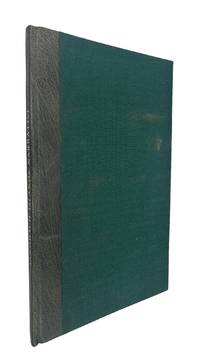
1816271<p>New York: J. Seymour American Board of Commissioners for Foreign Missions Agents Appointed to Establish a School for Heathen Youth 1816. first edition. modern 1/4 niger morocco. Good. Inspiration for the First Mission to Hawaii. <br /><br />Rare in commerce most copies have been acquired by American institutions. Few copies have come to documented auction in the past 100 years. Of those made available about half are decommissioned library copies including a copy that sold for over $15000 at a 2006 Sotheby's auction.<br /><br />Condition: Very Good<br /><br />IMPORTANCE & BACKGROUND<br /><br />A biographical account of the lives of five Hawaiian youths who would come to form a core of initial students enrolled at the new Foreign Mission School established at Cornwall Connecticut in 1816. The vivid accounts of Captain Cook's and others explorers' voyages to the Sandwich Islands Hawaii and other Pacific islands generated interest in the U.S. to properly educative Hawaiians in both academic and Christian teachings. The school formed under the direction of the American Board of Commissioners for Foreign Missions ABCFM would serve to educate foreign students in preparation for missionary work in their native lands and elsewhere. <br /><br />A Narrative of Five Youth from the Sandwich Islands was the first of many publications intended to raise funds and stir up popular support for the new school as well as for the first Christian mission sent to the Hawaiian Islands three years later. The publications were a great success leading to the significant funding and public support critical to early efforts to fold Hawaii within the cultural and commercial influence of the United States.<br /><br />BOOK INFO<br /><br />Published in 1816 in New York by J. Seymour under the direction of ".agents appointed to establish a school for heathen youth" e.g. American Board of Commissioners for Foreign Missions. First edition first printing. Bound in modern 1/4 green niger morocco with gilt spine lettering over finely woven green cloth backed boards. Refreshed endpapers. Thin Octavo 8 1/2" x 5 1/8". Collated and complete: 3 4-44 p. <br /><br />ABOUT THE WORK & HISTORICAL CONTEXT<br /><br />By the early 1800s Hawaii had become a key aspect of America's growing trade with China. It was a critical resupply port for American ships on the trade route to China and a lucrative source for sandalwood. American merchants saw commercial possibilities that could be expanded. Protestant missionaries saw heathens in need of salvation via Christian conversion.<br /><br />This is a biographical account of and strong bit of fundraising propaganda on how five Hawaiian youths were saved from their heathen ways and savage pasts through a civilized education and Christian conversion. While the backgrounds of the youth vary - one was the son of a chief and another the survivor of brutal inter-tribal warfare for example-- the stories of these five youths share a number of common elements. All had spent time as sailors on American trade ships. Three had served at sea in the War of 1812. Most had experienced periods of extreme hardship after reaching New England. All found sponsors teachers and spiritual guides who helped them on their path to converting to Protestantism.<br /><br />CONDITION INFO<br /><br />The book is Good to Very Good by early 19th century American imprint standards.<br /><br />Binding is tight. Leather is supple. Areas of dust and light soiling to cloth. Lightly toned pages overall with light foxing. Some abrasion to paper along gutter margins of first few pages. Browning to first and last page with some brittleness and chipping. The paper used by the printer was quite thin so the text block background is darkened a bit by opposing page text on the same leaf as in all copies. No writing ex libris marks or library markings. Slight loosening at the head of the first few leaves where binding cords are exposed. A few smudges marginal paper nicks and other signs of light handling.<br /><br />.</p> J. Seymour, American Board of Commissioners for Foreign Missions (Agents Appointed to Establish a School for Heathen Youth)
18688202Lyon et Paris, 1868-1919, 50 années en 47 vol. in-4°, 640 pp, environ chacun, très nombreuses gravures sur bois in et hors texte, cartes dépliantes hors texte, précieux index dans chaque volume, tous les volumes sont reliés en demi-chagrin rouge époque, sauf 8 vol. reliés pleine toile
1875126715à Lyon - à Paris, chez M. P. Rusand, imprimeur-libraire, à la Librairie écclésiastique 1875 42 volumes. In-8 20,5 x 12,5 cm. Reliures de l’époque composites demi-basane aubergine, dos lisses ornés de filets dorés encadrés de petits fers à froid, environ 550 pp. par volume, table des matières en fin de chaque volume. Ex-libris Monteynard. Manque en pied de dos vol. 28. Intérieur frais. Ensemble en bon état.
1827R97587Lyon, chez l'éditeur des Annales/ Rusand 1827-1840 Tête de série; collection complète de l'année 1 (1823) jusqu'à et inclus l'année 12 (1840), ensemble de 73 livraisons, reliés par tome en 12 volumes uniformes, belles reliures cart. (dos en cuir avec titre et décorations dorés, plats marbrés, avec texte doré sur le premier plat: "Propagation de la foi. Hommage de la commission de Liège, 1841"), toutes tranches marbrées, feuilles de garde marbrées, qqs. rousseurs, 21cm., tout complet avec les quelques gravures et cartes hors-texte (souvent en frontispice), bon état, ["Recueil périodique des lettres des évèques et des missionnaires des missions des deux mondes, et de tous les documens relatifs aux missions et à l'association de la propagation de la foi. Collection faisant suite à toutes les éditions des Lettres édifiantes"". Contenu détaillé: Volume 1 (1823-août 1825, livraisons 1 à 6): 40 + 72 + 32 + 164 + 78 + 107pp. (en 2e ou 3e édition éditée en 1827-1837) // Volume 2 (mars 1826-novembre 1827, livraisons 7 à 12)): 436pp. // Volume 3 (1828-septembre 1829, livraisons 13 à 18): 586pp. // Volume 4 (janvier 1830 - avril 1831, livraisons 19 à 24): 726pp. // Volume 5 (juillet 1831 à octobre 1832, livraisons 25 à 30): 734pp. // Volume 6 (de janvier 1833 à janvier 1834, livraisons 31 à 35): 638pp. // Volume 7 (avril 1834 à avril 1835, livraisons 36 à 40): 688pp. // Volume 8 (juillet 1835 à juillet 1836, livraisons 41 à 47): 600pp. // Volume 9 (septembre 1836 à juillet 1837, livraisons 48 à 53): 592pp. // Volume 10 (septembre 1837 à septembre 1838, livraisons 54 à 60): 560pp. // Volume 11 (novembre 1838 à novembre 1839, livraisons 61 à 67): 672pp. // Volume 12 (janvier 1840 (probablement à décembre 1840), livraisons 68 à 73): 618pp.], poids total: 8kg., rare, R97587
Tête de série; collection complète de l'année 1 (1823) jusqu'à et inclus l'année 12 (1840), ensemble de 73 livraisons, reliés par tome en 12 volumes uniformes, belles reliures cart. (dos en cuir avec titre et décorations dorés, plats marbrés, avec texte doré sur le premier plat: "Propagation de la foi. Hommage de la commission de Liège, 1841"), toutes tranches marbrées, feuilles de garde marbrées, qqs. rousseurs, 21cm., tout complet avec les quelques gravures et cartes hors-texte (souvent en frontispice), bon état, ["Recueil périodique des lettres des évèques et des missionnaires des missions des deux mondes, et de tous les documens relatifs aux missions et à l'association de la propagation de la foi. Collection faisant suite à toutes les éditions des Lettres édifiantes"". Contenu détaillé: Volume 1 (1823-août 1825, livraisons 1 à 6): 40 + 72 + 32 + 164 + 78 + 107pp. (en 2e ou 3e édition éditée en 1827-1837) // Volume 2 (mars 1826-novembre 1827, livraisons 7 à 12)): 436pp. // Volume 3 (1828-septembre 1829, livraisons 13 à 18): 586pp. // Volume 4 (janvier 1830 - avril 1831, livraisons 19 à 24): 726pp. // Volume 5 (juillet 1831 à octobre 1832, livraisons 25 à 30): 734pp. // Volume 6 (de janvier 1833 à janvier 1834, livraisons 31 à 35): 638pp. // Volume 7 (avril 1834 à avril 1835, livraisons 36 à 40): 688pp. // Volume 8 (juillet 1835 à juillet 1836, livraisons 41 à 47): 600pp. // Volume 9 (septembre 1836 à juillet 1837, livraisons 48 à 53): 592pp. // Volume 10 (septembre 1837 à septembre 1838, livraisons 54 à 60): 560pp. // Volume 11 (novembre 1838 à novembre 1839, livraisons 61 à 67): 672pp. // Volume 12 (janvier 1840 (probablement à décembre 1840), livraisons 68 à 73): 618pp.], poids total: 8kg., rare, R97587
13970657Roma: Presso Giuseppe Mauri, 1827 4 tomes in-8 reliés en 2 volumes, xii-239, 262, 256, 247 pages, grande carte se dépliant en couleurs in fine (qq petites taches d'encre sans gravité). Par suite d'une erreur de reliure, le tome IV a été transposé et placé en tête du volume avant le tome III. Demi reliure veau marbré brun d'époque, dos lisses, pièces de titres et de tomaison basane verte et rouge, roulettes dorées, tranches mouchetées, bel exemplaire. Très rare voyage au Amérique latine.
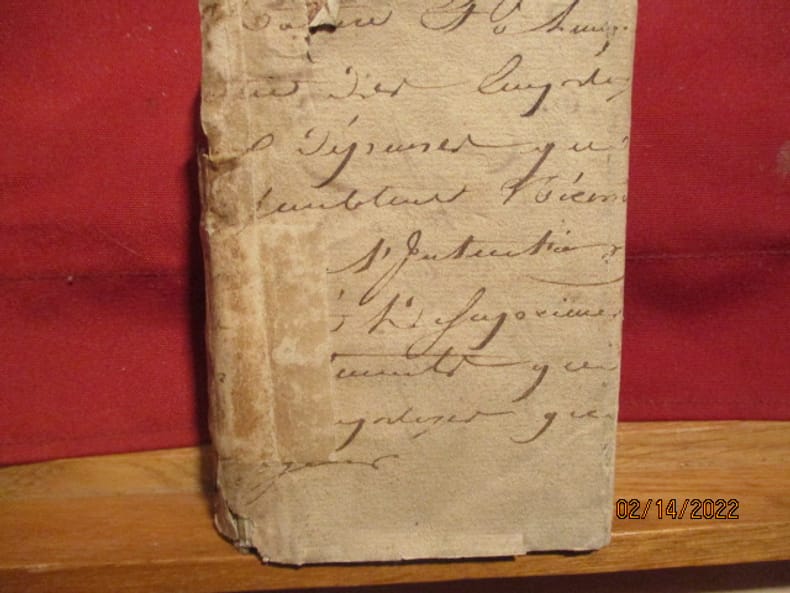
1571486271571 (Lyon) Lugduni, Apud Ioan. Tornaesivm (Jean de Tournes), Typogr. Regium (Typographe royal). MDLXXI - 1571 - In-16, 12 x 8,5 x 3,8 cm - Edition Originale - Reliure vélin de récupération avec manque -Collationné complet des 110 gravures sur bois- 637 pagers + Index (3) manque pages d'index- fortes mouillures - Envoi rapide et soigné - Réf. 48627
35162Paris Chez Tavernier, Libraire. An VIII (1800) 1800 in 12 (17x10) 3 volumes brochés, couvertures d'attente de papier marbré de l'époque, étiquettes manuscrites de titre au dos, non rognés. Volume I: XVI et 407 pages. Volume II: 358 pages. Volume III: 383 pages. L'atlas manque (without Atlas volume). Première édition (First edition). Bon exemplaire ( Photographies sur demande / We can send pictures of this book on simple request )
1892124929à Paris - à Lyon, Perisse, frères, impr. Imprimerie de Rusand, à Lyon 1892 24 volumes. In-8 20,5 x 12,5 cm. Reliures de l’époque demi-basane vert-émeraude, dos lisses ornés de filets dorés, environ 400 pp. par volume. Ensemble en bon état.