71 résultats
178128962Philadelphia and Lancaster: John Dunlap and Francis Bailey 1781. 18 session laws in one small folio. 12 1/8 x 7 3/4 inches. 71 2 51-177 1 177-417 1 395-432 2 459-488pp. Early twentieth century black morocco spine with raised bands lettered in gilt<br/> <br/>The extraordinarily rare session laws from the Revolution including the flight to Lancaster.<br/> <br/>First editions with the exception of the first two parts which are second printings of the so-called "Dunlap Laws" the excessively rare session laws of Pennsylvania passed during the Revolution and printed by John Dunlap and in some instances Francis Bailey. Both the meetings of the Assembly and the printing of the laws themselves were conducted under gravely difficult conditions as witness the displacement of the meeting and printings from Philadelphia to Lancaster when the British occupied the city between September 1777 and June 1778. This collection includes all four of Dunlap and Bailey's Lancaster printings which are the most difficult examples to find of the early Pennsylvania session laws. The onset of the Revolution ushered in an exciting and innovative period in American politics as states made the transition from colonial political systems to independent legislatures. New constitutions were written Pennsylvania's being among the most radical and new classes of men came into political office often displacing entrenched aristocrats and men of capital. The state legislatures functioned as miniature "laboratories of democracy" as new laws were passed for governance the raising of public money and the training and outfitting of a military force to contribute to the Revolutionary cause. Pennsylvania's Assembly was especially noteworthy for its sharp political divisions between ardent supporters of independence and those suspected of being Loyalists. The session laws collected here document the creation of the state's new political and civic structure spelling out the roles and responsibilities of the governor the Assembly and the courts the organization of the state militia and the requirements for serving therein the creation of taxes and other means for raising public funds and much much more. This collection contains the journals of eighteen sessions of the Pennsylvania legislature representing the period from November 28 1776 the first meeting of the Pennsylvania General Assembly through the fourth sitting of the Fifth General Assembly in 1781 this last work and one other here known only in two copies. The only two comparable collections of Pennsylvania laws are those formed in the 19th century by Pennsylvania lawyer Charlemagne Tower and one set of twenty-eight laws sold by William Reese Company lacking one very rare imprint included here. In his catalogue of the Tower collection noted bibliographer Charles Hildeburn called Tower's grouping of Pennsylvania laws "unequalled" and rightly so as it spanned more than 100 years and contained more than 150 separate items. Tower's collection of colonial American laws which contained all of the Pennsylvania laws found in the present collection was given to the Historical Society of Pennsylvania in 1890. The collection here includes Tower's numbers 757 through 773 a complete run of Pennsylvania session laws for the years 1776 to 1781. The present collection of eighteen session laws from 1776 to 1785 outstrips the holdings of the next nearest institutions - the Library of Congress which has only sixteen of the titles and the American Antiquarian Society which holds only twelve. The next nearest after that is the University of Pennsylvania with only seven of the titles. Of the eighteen printings of laws in this collection two are known in only one other copy each the fifth and last items; most other works are known in less than three four or six copies. It is likely that the laws were produced in very small numbers mainly for the use of the legislators and the earlier ones would have suffered losses in the British invasion of Philadelphia and eastern Pennsylvania in 1777. Within these laws are found much of the day-to-day politics and business of running a state during the Revolution with details of the war dominating. The very first laws establish a quorum authorize the courts issue Continental currency establish a militia and cover many military matters. By the third session the legislature had been forced to flee Philadelphia in front of the British invasion and the next four session laws are printed in Lancaster by Francis Bailey and John Dunlap. The fourth sitting of the second General Assembly reconvened in Philadelphia on August 4 1778. Virtually all of the laws in this period are concerned with the prosecution of the war whether attainting traitors organizing supplies passing military regulations or controlling prices. But there is much of importance besides; in January 1780 the Assembly passed "An Act for the Gradual Abolition of Slavery" as well as incorporating the American Philosophical Society. Beginning with the Fourth General Assembly in October 1779 Thomas Paine became the Clerk and all the published laws are subscribed by him in type until September 1780. The contents here include the following: 1 Laws Enacted in the First Sitting of the First General Assembly of Pennsylvania which began at Philadelphia November 28 1776 and was continued by adjournments to March 21 1777. Philadelphia. 1779. Evans 16427; Hildeburn 3902; Tower Collection 763. 2 Laws Enacted in the Second Sitting of the First General Assembly.which commenced at Philadelphia the Twelfth day of May One Thousand Seven Hundred and Seventy-Seven and continued to the Nineteenth day of June in the same year. Philadelphia. 1779. Evans 16427; Hildeburn 3902; Tower Collection 763. 3 Laws Enacted in a General Assembly.held at Philadelphia the 12th day of May 1777 and continued by adjournment to Lancaster until the 14th day of Oct. 1777. Lancaster. 1777. Evans 15540; Hildeburn 3580; Tower Collection 757. 4 Laws Enacted in the Second General Assembly.At the Sitting which began at Lancaster on the Twenty-Seventh day of October A.D. One Thousand Seven Hundred and Seventy-Seven and continued by adjournment to the Second day of January A.D. One Thousand Seven Hundred and Seventy-Eight. Lancaster. 1778. Evans 15968; Hildeburn 3730; Tower Collection 758. 5 Laws Enacted in the Second Sitting of the Second General Assembly.which began at Lancaster on Wednesday the Eighteenth day of February A.D. One Thousand Seven Hundred and Seventy-Eight. Lancaster. 1778. Evans 15969; Hildeburn 3730; Tower Collection 759. 6 Laws Enacted in the Third Sitting of the Second General Assembly.which began at Lancaster on Wednesday the 13th day of May 1778. Lancaster. 1778. Evans 15970; Hildeburn 3730; Tower Collection 760. 7 Laws Enacted in the Fourth Sitting of the Second General Assembly.which commenced at Philadelphia on the Fourth day of August A.D. One Thousand Seven Hundred and Seventy-Eight. Philadelphia. 1778. Evans 15971; Hildeburn 3730; Tower Collection 761. 8 Laws Enacted in the Third General Assembly.which met at Philadelphia on Monday the Twenty-Sixth day of October in the year of Our Lord A.D. One Thousand Seven Hundred and Seventy-Eight and in the Third Year of the Independence of the United States of North-America. Philadelphia. 1778. Evans 15972; Hildeburn 3731; Tower Collection 762. 9 Laws Enacted in the Second Sitting of the Third General Assembly.which commenced at Philadelphia on Monday the First day of February A.D. One Thousand Seven Hundred and Seventy-Nine and continued till Monday the Fifth day of April of the same year. Philadelphia. 1779. Evans 16428; Hildeburn 3901; Tower Collection 764. 10 Laws Enacted in the Third Sitting of the Third General Assembly.which commenced at Philadelphia on Monday the Thirtieth day of August A.D. One Thousand Seven Hundred and Seventy-Nine. Philadelphia. 1779. Evans 16429; Hildeburn 3901; Tower Collection 765. 11 Laws Enacted in the First Sitting of the Fourth General Assembly.which met at Philadelphia on Monday the Twenty-Fifth day of October in the Year of Our Lord One Thousand Seven Hundred and Seventy-Nine. Philadelphia. 1779. Evans 16430; Hildeburn 3902; Tower Collection 766. 12 Laws Enacted in the Second Sitting of the Fourth General Assembly.which commenced at Philadelphia on Wednesday the 19th day of January in the Year of Our Lord One Thousand Seven Hundred and Eighty. Philadelphia. 1780. Evans 16930; Hildeburn 4016; Tower Collection 767. 13 Laws Enacted in the Third Sitting of the Fourth General Assembly.which commenced at Philadelphia on Wednesday the Tenth day of May One Thousand Seven Hundred and Eighty. Philadelphia. 1780. Evans 16931; Hildeburn 4016; Tower Collection 768. 14 Laws Enacted in the Fourth Sitting of the Fourth General Assembly.which commenced at Philadelphia on Friday the First day of September One Thousand Eeven Hundred and Eighty. Philadelphia. 1780. Evans 16932; Hildeburn 4016; Tower Collection 769. 15 Laws of the First Sitting of the Fifth General Assembly.which met at Philadelphia on Tuesday the Twenty-Third day of October in the Year One Thousand Seven Hundred and Eighty. Philadelphia. 1780. Evans 16933; Hildeburn 4017; Tower Collection 770. 16 Laws Enacted in the Second Sitting of the Fifth General Assembly.which commenced at Philadelphia on Tuesday the Sixth day of February in the Year of Our Lord One Thousand Seven Hundred Eighty and One. Philadelphia. 1781. The first issue printed as pp. 395-434; a later issue bears the correct continuous pagination pp. 419-458. Evans 17289; Hildeburn 4120; Tower Collection 771. 17 Laws Enacted in the Third Sitting of the Fifth General Assembly.which commenced at Philadelphia on Thursday the Twenty-Fourth day of May in the Year of Our Lord One Thousand Seven Hundred Eighty and One. Philadelphia. 1781. Evans 17290; Hildeburn 4017; Tower Collection 772. 18 Laws Enacted in the Fourth Sitting of the Fifth General Assembly.which commenced at Philadelphia on Tuesday the Fourth day of September in the Year of Our Lord One Thousand Seven Hundred and Eighty-One. Philadelphia. 1781. Evans 17291; Hildeburn 4120; Tower Collection 773. A remarkable collection of rare and important Revolutionary era Pennsylvania laws. John Dunlap [and Francis Bailey] unknown books
174229116Williamsburg: William Parks 1742. 6 volumes in one folio. 12 7/8 x 8 1/8 inches. Caption titles as issued. 1-51; 1-48; 1-52; 1-21; 1-2; 1-58pp. Expertly bound to style in full period calf spine with raised bands ruled in blind morocco lettering piece.<br/> <br/>A remarkable run of early Virginia imprints.<br/> <br/>An extraordinary run of the earliest Virginia imprints the most extensive group of material to come on the market in perhaps a century. This remarkable volume contains six Assembly session laws published in Williamsburg between 1734 and 1742 from the press of Virginia's first printer William Parks. The beginnings of printing in Virginia can be traced in a sense to 1682 when William Nuthead went to Jamestown with a press to print the acts of the Assembly; Governor Thomas Culpeper tossed him out and Nuthead left without issuing a single publication. Culpeper's successor Francis Howard banned printing entirely and it was fifty years before another attempt was made. In February 1728 William Parks the official printer to the Maryland Assembly since 1726 seeking to expand his business petitioned the Virginia Assembly for a similar position. Receiving the commission Parks opened an office in Williamsburg in 1730. That year he published what is generally credited as Virginia's first imprint: John Markland's Typographia: an ode to printing a 15pp. paean to Sir William Gooch the governor who had approved the invitation to Parks. This survives in a single copy at the John Carter Brown Library. Indeed the handful of early Virginia imprints prior to 1735 that are not laws only survive in unique copies. Parks moved to Williamsburg himself in 1731 although he would continue to maintain his Annapolis press until 1737. In 1733 he published the first locally printed collection of Virginia laws. The present imprints follow directly after that volume with new legislation issued over the next decade. He was certainly with Benjamin Franklin the most significant and enterprising printer in the American colonies south of Boston in the first half of the 18th century prior to his death in 1750. During this time Parks sometimes quarreled with the Virginia House of Burgesses over fees and articles in his newspaper but always retained the lucrative contract for printing the legislative materials of the colony. The present collection of session laws contains the fourth and final session of the 1727-1734 Assembly all four sessions of the 1735-1740 Assembly and the first session of the 1742-1747 Assembly. The first of the above is significant as it was "the first time the public and private acts of a session were printed in full" Swem the previous session laws including the titles of the private acts only. The acts within these sessions includes those addressing tobacco duties on slaves judicial matters regulating liquor for the encouragement of the College of William and Mary dividing counties relating to Native Americans the raising of the militia for an expedition against the Spanish among other matters. Of particular note is an act within the final session which establishes the town of Richmond on the falls of the James River. All early Virginia imprints are of great rarity. The legislative material was probably printed in editions of several hundred copies at the most. Berg locates eight to ten copies of each of the imprints listed here; in virtually all cases these copies have been held since before the First World War and only a few individual imprints can be traced in sale records. The collection is comprised of: 1 Virginia General Assembly of 1727-1734 fourth session Anno Regni Georgii II . At a General Assembly begun and held at Williamsburg the First Day of February in the First Year of the Reign of our Sovereign Lord George II . to the Twenty Second Day of August 1734. Being the Fourth Session of this present General Assembly caption title. Williamsburg: William Parks 1734. 51pp. Berg Williamsburg Imprints 14 "The economy education and public safety were matters of concern for the burgesses and councilmen at this session." - Berg; Clayton-Torrence 127; Evans 3849; Swem III:22518. 2 Virginia General Assembly of 1735-1740 first session Anno Regni Georgii II . At a General Assembly summoned to be held at the Capitol in the City of Williamsburg on the First Day of August in the Ninth Year of the Reign of our Sovereign Lord George II . to the Fifth Day of August in the Tenth Year of His said Majesty's Reign in the Year of our Lord 1736 caption title. Williamsburg: William Parks 1736. 48pp. Berg Williamsburg Imprints 20. ".the Assembly passed legislation which affected many aspects of daily life in the Virginia colony."- Berg; Clayton-Torrence 136; Evans 4094; Swem III:22521. 3 Virginia General Assembly of 1735-1740 second session Anno Regni Georgii II . At a General Assembly summoned to be held at the Capitol in the City of Williamsburg on the First Day of August in the Ninth Year of the Reign of our Sovereign Lord George II . to the First Day of November in the Twelfth Year of His said Majesty's Reign in the Year of our Lord 1738 caption title. Williamsburg: William Parks 1738. 52pp. Berg Williamsburg Imprints 25; Clayton-Torrence 152; Evans 4317; Swem III:22526. Much information on the duties of officials fines and fees. 4 Virginia General Assembly of 1735-1740 third session Anno Regni Georgii II . At a General Assembly summoned to be held at the Capitol in the City of Williamsburg on Friday the First Day of August in the Ninth Year of the Reign of our Sovereign Lord George II . to the Twenty Second Day of May in the Thirteenth Year of His said Majesty's Reign in the Year of our Lord MDCCXL caption title. Williamsburg: William Parks 1740. 21pp. Berg Williamsburg Imprints 34; Clayton-Torrence 164; Evans 4616; Swem III:22531. Important information on public expenditures for the War of Jenkins' Ear against Spain. 5 Virginia General Assembly of 1735-1740 fourth session Anno Regni Georgii II . At a General Assembly summoned to be held at the Capitol in the City of Williamsburg on Friday the First Day of August in the Ninth Year of the Reign of our Sovereign Lord George II . to the Twenty First Day of August in the Fourteenth Year of His said Majesty's Reign in the Year of our Lord MDCCXL: Being the Fourth Session of this present General Assembly caption title. Williamsburg: William Parks 1740. 2pp. BergWilliamsburg Imprints 35; Clayton-Torrence 165; Evans 4617; Swem III:22534. Another imprint devoted to expenditures due to the war with Spain. 6 Virginia General Assembly of 1742-1747 first session Anno Regni Georgii II . At a General Assembly begun and held at the Capitol in the City of Williamsburg the Sixth Day of May in the Fifteenth Year of the Reign of our Sovereign Lord George II . in the Year of our Lord 1742: Being the First Session of this Assembly caption title. Williamsburg: William Parks 1742. 58pp. BergWilliamsburg Imprints 43; Bristol B1192; Clayton-Torrence 171; Swem III:22537. Includes the act founding Richmond. A unique opportunity to acquire some of the earliest Virginia imprints.<br/> <br/>A. Franklin Parks William Parks The Colonial Printer In The Transatlantic World. University Park 2012. William Parks unknown books
1776287591Williamsburg: Printed by Alexander Purdie Printer to the Commonwealth 1776. First Edition. Quarter Leather. Very Good binding. First Edition of the Journal of the House of Delegates of Virginia. Anno Domini 1776. The first session of the Virginia House of Delegates after the Declaration of Independence in the midst of the American Revolution. An important document which includes among others an act guaranteeing religious liberty to citizens of Prince Edwards County the raising of Continental regiments and the confiscation of Lord Dunmore's property. John Murray 4th Earl of Dunmore was the last royal governor of Virginia who famously offered freedom to any slave to defect from the Patriots. Thomas Jefferson features heavily in the journal as do the other prominent Virginia statesmen of their day. Previous owner's name on the title page of Abraham Hite an important Virginia landowner and representative who served as a member of the Virginia House of Burgesses from 1769 to 1774 in the State Convention of 1776 and a listed member of the Virginia boycott of British manufactures 1774. Three leaves are lacking R2; T1; Mm1 and facsimile pages are bound in. Else collates complete; 145 1 pp. The title page is original though has been "silked" for reinforcement. Modern rebinding. Quarter leather over marbled paper covered boards. Red leather label with gilt lettering on the spine. Ten institutional holdings listed on OCLC. ESTC W23645. Evans 15204. Bellet Some Prominent Virginia Families pp. 343-344 . Very Good binding. Printed by Alexander Purdie, Printer to the Commonwealth unknown books
172628889New York: William Bradford 1726. Folio. 12 1/4 x 7 5/8 inches. 10 124 i.e. 128 121-252 261-319 1 blank pp. mispaginated as issued. Woodcut arms of King George I on the title. Head of title clipped without loss of text and expertly repaired. Expertly bound to style in half calf over period marbled paper covered boards spine with raised bands in six compartments ruled in gilt on either side of each band red morocco lettering piece<br/> <br/>Provenance: Richard Price early owner's signature on title and manuscript additions to the final page of the table<br/> <br/>An early New York imprint from the press of William Bradford the "pioneering printer of the English middle colonies" DAB and first printer of New York.<br/> <br/>Bradford 1663-1752 originally settled in Pennsylvania where he began operating a printing press in 1685 and a bookstore in 1688. Controversies within the Quaker community with Bradford supporting the dissident George Keith led to the temporary seizure of his type and paper in 1692 and in 1693 he moved to New York. The present acts of Assembly cover the legislation passed between 1691 and 1725. Laws here include acts "for quieting and settling the Disorders that have lately happened within this Province" 1691 "for restraining and punishing Privateers and Pyrates" 1693 and 1698 and "against Jesuites and Popish Priests" 1700 as well as numerous acts "for Regulating Slaves" and one for "Baptizing them" 1706. Other Acts include those relating to Queen Anne's War as well as the continuing conflicts with the French and Indians. A major early New York imprint from the press of its first printer.<br/> <br/>Evans 2785; Tower 613. William Bradford unknown books
144688hardcover. Began the 9th Day of April 1691; and Ended the 27th of September 1743. Vol. I. Published by Order of the General Assembly. title vignette. iv 840 2pp. folio contemporay calf; expertly rebacked in modern calf with leather labels; first few and last few leaves heavily foxed in margins; some light browning to text; binding moderately rubbed edges of corners worn small rubberstamp of a former owner on margin of t.p. N.Y.: Hugh Gaine 1764.<br/><br/> "The largest issue of Gaine's press and the first piece of government printing he secured. The pp. 2 is `An Act of reversing the Attainder of Jacob Leisler and others' and is often lacking. The work was edited and the index made by Abraham Lott Junr." Ford The Journals of Hugh Gaine I p. 113 This work is complete in itself vol. II was published in 1766. Evans 9756.<br/><br/> unknown books
176928883Williamsburg: W. Rind A. Purdie and J. Dixon 1769. Folio. 13 3/4 x 8 5/8 inches. 2 577 1 blank pp. Woodcut arms of Virginia on the title title within an ornamental border. Expertly bound to style in half eighteenth century russia over period marbled paper covered boards spine with raised bands in seven compartments red morocco lettering piece in the second the others with a repeat decoration in gilt<br/> <br/>The final compilation of Virginia laws published before the Revolution: a beautifully printed work from the Williamsburg press.<br/> <br/>Printed by William Rind this compilation of the laws passed by the General Assembly details the legal code of the colony beginning in 1661 and spanning over a century. The Acts of Assembly cover many issues pertinent to Virginians in this era most notably laws regarding slavery and tobacco farming. An Appendix containing the titles of all the private acts passed since 1748 is included in the rear pp.489-497 as is a comprehensive index by subject pp. 499-577. A beautifully printed work 1200 copies were ordered to be printed by the Assembly who interestingly chose Williamsburg printing rivals William Rind and Alexander Purdie to jointly publish the large work.<br/> <br/>Evans 11511; Sabin 100391; ESTC W14164; Tower 921; Swem III:22646; Clayton-Torrence 359. W. Rind, A. Purdie and J. Dixon unknown books
1768WRCAM37724Boston: Printed by William M'Alpine 1768. 33pp. Sewn into contemporary plain paper wrappers manuscript paper label. Contemporary ink inscriptions on titlepage the word "Catechism" beside title and verso of terminal leaf signatures of Eunice Barnard and Hepzibah Flagg. Wrappers worn. Titlepage creased and slightly chipped near gutter affecting a few words of text. Fore-edge of second leaf frayed with loss of several words on pp.3-4. Wear and mild foxing and soiling throughout. Good. In a half morocco and cloth box. A very rare Boston catechism this issue not in Evans Bristol or Shipton & Mooney. The so-called "Shorter Catechism" was codified in 1647 by the Westminster Assembly and remains to this day part of the doctrinal standards of many Presbyterian churches. It was first printed in America at Cambridge in 1665 and frequently reprinted though many of these are represented by a single surviving copy. The single other known copy is held by the American Antiquarian Society and has a damaged titlepage. The AAS copy of a variant of this issue Evans 11115 lacks pages 29- 34. ESTC W24488. EVANS 11115 variant. Printed by William M'Alpine hardcover books
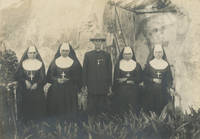
1900List518Most Cuba or Jacksonville 1900. Silver gelatin or albumen photographs various sizes ranging from 3 x 3 to 6 x 8 most captioned to verso. With handwritten manuscript four leaves discussing various diseases. The Spanish-American War was the first war in which nurses formed their own dedicated units as well as the first war in which they were accepted within military hospitals. While no nurses died in battle 153 died during the war from disease. Nurses were responsible for both treating soldiers as well as maintaining sanitary conditions within the camps. Conditions were often poor leading some to work until they were too sick to continue. <br /><br /> The current collection of photographs documents the experiences of a Mrs. Waters who was originally from Groton Massachusetts. The collection begins with a couple early photographs including a portrait as a young woman and a cyanotype of one of Waters' leprosy patients at Johns Hopkins Hospital in Baltimore. The next section shows Waters' training in Jacksonville Florida with either the Fourth or Seventh Army Corps at what was called Camp Cuba Libre both Corps trained there in 1898. The photographs of Jacksonville show life around the military camp and environs with some notable photographs of African-American inhabitants of the region. Three photographs quite notably show the Congregation of American Sisters a small group of American Indian nuns led by Reverend Francis Craft. The photographs taken in Cuba are notable for their portrayal of local life. Several photographs of military installations are taken around the "trocha" or line established by General Valeriana Weyler from Mariel to Majana. Another notable photograph is a cabinet card of a large group of nurses taken by the Havana photographer R. Testar. <br /><br /> The group overall shows very early photographic records of military nurses in training as well as a scarce photographic record from a woman in a combat situation. The photographs are generally well preserved in very good to excellent condition with some light fading. Accompanying the photographs is a four page manuscript essay presumably by Waters discussing leprosy as well as the booklet Spanish Phrase Book for American Soldiers and Sailors published by the National Relief Commission of Philadelphia. <br /><br /> Offered in partnership with Daniel / Oliver Gallery. books
1771WRCAM42530N.p. but likely New Haven 1771. 1p. plus integral docketing leaf. Folio. Backed with tissue. Faint old fold lines. A few small edge tears at folds repaired. Minor soiling. Very good. In a red half morocco and cloth clamshell case spine gilt. List of monies paid to twelve members of the House of Assistants of the Connecticut General Assembly signed by several of them including two future signers of the Declaration of Independence Roger Sherman and Oliver Wolcott. Sherman is notable as the only person to sign all four of the major foundational documents of United States: the Continental Association the Declaration of Independence the Articles of Confederation and the U.S. Constitution. He also served on the Committee of Five that drafted the Declaration of Independence and later drafted the Connecticut Compromise for the U.S. Constitution which proposed a bicameral representative government and guaranteed equal representation in the Senate for every state no matter its size. Wolcott signed not only the Declaration but also the Articles of Confederation and later served as Connecticut's fourth governor. <br> <br> This document was likely written in New Haven which served as the joint capital of Connecticut with Hartford until 1776 hosting the October legislative sessions. In addition to Sherman and Wolcott it is signed by representatives William Pitkin Robert Walker Abraham Davenport William Samuel Johnson and Joseph Spencer. The remaining members are noted as having been "paid by receipt." It is docketed on the verso and signed by Joseph Trumbull deputy to the Assembly. For his time in the House of Assistants later the Connecticut Senate Sherman was paid £6/18/0; Wolcott £5/15/4. hardcover books
178229845Philadelphia: Printed and sold by Francis Bailey 1782. Folio. 11 3/4 x 7 1/2 inches. 4 xxxi 1 527 1 viii pp. Expertly bound to style in half russia and period marbled paper covered board flat spine ruled and lettered in gilt<br/> <br/>The first collection of Pennsylvania laws to be published following the American Revolution.<br/> <br/>Edited by Pennsylvania Chief Justice and Signer of the Declaration Thomas McKean this collection of Pennsylvania laws from the Revolutionary period includes printings of the Declaration of Independence the Pennsylvania constitution and the Articles of Confederation.<br/> <br/>Evans 17656; Sabin 59821; NAIP W006513; Hildeburn 4179; Tower 774. Printed and sold by Francis Bailey unknown books
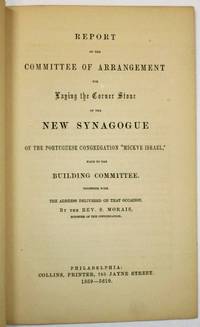
36315Philadelphia: Collins Printer 705 Jayne Street 5619. 15 1 blank pp. Stitched in original printed wrappers blindstamp and 'withdrawn' rubberstamp in blank upper portion of front wrapper. Else Very Good. <br/> <br/> Mickve Israel Hope of Israel one of the oldest Philadelphia synagogues was founded in the 1740s by Sephardic Jews. Known as the 'Synagogue of the American Revolution' its early members included Haym Solomon and the Gratz family. Benjamin Franklin contributed to its first building fund. This was its third building constructed on 7th Street north of Arch. Isaac Leeser presided over the congregation from 1829 to 1850; Sabato Morais succeeded him. Morais was its Rabbi for 46 years. <br/> The list of corner-stone and door-post purchasers included A.S. Wolf who purchased the North door-post of the north door for fifteen dollars in honor of H. Polock. Other luminaries of Philadelphia Jewry participated in the ceremonies. Wolf was treasurer and Gabay of the Congregation. Articles deposited in the cornerstone are listed including newspapers coins and tokens dated 1859 "A gold quarter dollar of California mintage being deposited by Clarence A. Hart aged 9 years." The Committee of Arrangement consisted of Edwd. S. Mawson Joseph L. Moss and Isaac J. Phillips. Rabbi Morais's discourse is printed. Morais an abolitionist and founder of the Jewish Theological Seminary of New York counsels "If there be pride in us if the vanity of exhibiting a more sightly structure than others possess impelled us to designate this place as our future Synagogue.let us then bury first such unholy feelings in the bosom of the earth." Also printed is a prayer in Hebrew composed by Morais. <br/>Singerman 1593. OCLC 21968693 6 U PA JTS Yeshiva U NYPL Hebrew Union Natl Lib. Israel as of October 2019. Collins, Printer, 705 Jayne Street unknown books
176437800New York: Hugh Gaine 1764. First edition. Original full sheep five raided bands red morocco spine label lettered in gilt. Boards very worn front board detached repaired owner's bookplate Historical Society stamp on title and a few leaves first two blanks and first three leaves browned and ragged at the edges two small holes from erasure of name on title leaf one just nicking the V in Votes old but expert repairs to edges of first dozen leaves worming to the margins of about a dozen middle leaves affecting a few words on one leaf only last leaf ragged with a few worm holes affecting a few letters last two blanks lacking portions of lower corner and ragged occasional light dampstaining mostly marginal otherwise leaves clean and impressions sharp. Good. iv 840 2. Signed in type by the editor Abraham Lott Junr. Signed in manuscript "Bound by Rob. McAlpine" at the conclusion of the preface. Contains the added leaf with the "Act of Parliament for reversing the Attainder of Jacob Leisler Jacob Milbourne and Abraham Governeur who were executed for not delivering the Fort at New York to Richard Ingoldsby 1690" Sabin. Evans states that this leaf is "often lacking." Page numbers 665-666 omitted from pagination. Evans 9756. Sabin 53719. ESTC W6332. Marke p. 80. Larned 161. Hugh Gaine hardcover books
16581272108London: Printed by E. M. for the Company of Stationers 1658. Second Edition. 8vo. 329pp.; VG; paneled brown spine with red label and gilt lettering; spine rebound; moderate bumping and shelfwear to boards; single bookworm hole from front pastedown through to page 30 on upper corner near gutter; inscriptions on ffep; "An Ordinance of the Lords and Commons Assembled at Parliament for the Calling of an Assembly." 16pp. and "A Table of the Chief Points Spoken to in the Confession." 8pp. bound in at rear; EH consignment; shelved case 3. 1272108. Shelved Dupont Bookstore. Printed by E. M. for the Company of Stationers unknown books
183643732Providence: Printed by William Simons Jr. 1836. Stitched self wrappers. A very good uncut unopened and untrimmed copy signed on front and rear wrappers edges worn light dampstain on lower fore-margin contents lightly soiled. 112 pp. 8vo. Signed in ink by Henry Bowen as "Sec'ry" on the rear under "True copy-witness." Henry Bowen 1785-1867 son of Jabez Bowen Jr was R.I. Secretary of State from 1819 to 1849. William Simons Jr. was appointed state printer during the May 1836 session of the General Assembly. Noted on the front cover: "Town Clerk Glocester." Rare. Not in American Imprints or Sabin. OCLC locates only one copy of this document at the American Antiquarian Society but without any notation of a signature OCLC: 83805212. [Printed by William Simons, Jr.] unknown books
17884739Madrid: En la Imprenta de D. Joseph Doblado 1788. Sm. 8vo. 166251pp. Index. Copper engraved title-page vignette and double-page table. Cont. vellum soiled hand-lettered spine. Title-page with an oval library stamp that extends into the vignette. The rules & constitution of the Carmelite Order. Palau 254013. Note: Palau records the first edition as 1582. En la Imprenta de D. Joseph Doblado hardcover books
185857010Charleston: Harper & Calvo Printers 1858. Paperback. Good. 40p. Partial wrapper lacking back cover. 23cm. Soft crease. Old paper and glue remnants along left side of front cover some lettering slightly obscured. Blank bottom corner of one leaf torn off. Minor scattered foxing. Contents sound and clean. First published in 1857. The author of this report and minority of one was James Johnston Pettigrew 1828-1863. The question being considered was apparently whether South Carolina should revive the slave trade. Pettigrew argued against its revival although he was not against slavery. Pettigrew later served with distinction in the Confederate army rising to the rank of Brigadier General. He was killed in 1863 during the Confederate retreat from Gettysburg. <br/><br/> Harper & Calvo, Printers paperback books
1902291158Richmond Virginia: Clyde W. Saunders Printer 1902. Hard Cover. Good binding. An uncommon account of the impeachment trial against Clarence J. Campbell judge of the county court of Amherst in 1902 by the Virginia General Assembly. The story begins when Campbell dismissed the case of a druggist having sold twenty-five barrels of whiskey in a year despite local Temperance laws. A Richmond minister then wrote an article calling Judge Campbell practically corrupt and certainly pro-liqueur trafficking to which the Judge responded by bringing him to court. Despite failing to land a contempt of court charge The Honorable Clarence Campbell found his revenge by striking the minister with a riding crop multiple times after the court adjourned though circumstances leading to this altercation are inconclusive. A stacked court then acquitted Judge Campbell of felonious assault strangely enough with the defense that a Virginian had a right to beat any Yankee that insulted them. This resulted in mass rioting in the streets by pro- and anti-Campbell factions all while the judge and his circle hosted a raucous into-the-wee-hours party which of course respected the Temperance laws and presumably contained only prescribed whiskey. In this account Judge Campbell becomes one of the few circuit court judges to be successfully impeached after outrage and a petition calling for his dismissal. Cheers to that! Binding is fragile and somewhat shaken; front hinge cracked. Quarter black cloth over contemporary paper boards with a paper spine label. OCLC notes two institutional holdings. Good binding. Clyde W. Saunders, Printer unknown books
183227635Providence: William Marshall State Printer 1832. First edition. Removed. Scattered foxing light dampstain to one corner some pages offset last few leaves darkened still about very good. 72149 pp. 8vo. Political Anti-Masonry which first began in New York gained a strong foothold in Rhode Island beginning in 1829. By 1831 the Anti-Masons convinced the state legislature to investigate Freemasonry: "Whereas the crimes and enormities within a few years committed in a neighboring State by certain Freemasons avowedly in the cause of masonry have excited universal indignation and abhorrence and have awakened jealousies and suspicions very unfavorable to all masonic institutions. Therefore in the hope of allaying the great and increasing excitement thus occasioned and that the innocent may be distinguished from the guilty if in this state there are any who can justly be charged with advocating the criminal doctrines imputed to freemasonry. are hereby appointed a committee fully to investigate and inquire into its causes." This is the 72 page report of that committee with 149 pages of appendices. Sabin 70652. Amer. Imprints 14514. Cohen 9356. William Marshall, State Printer unknown books
1891286218Richmond VA: Everett Waddey Company 1891. Half Leather. Very Good binding. The Acts of Assembly Concerning the James River Company the James River and Kanawha Company and the Richmond and Alleghany Railroad and Richmond and Alleghany Railway Companies. Acts passed by the General Assembly of Virginia concerning some railway and river companies of the Richmond area. Very scattered marginalia in ink. Previous owner's name stamped on the front pastedown and stamped on the front board in gilt. Fully rebacked by a conservator using black Japanese tissue. Section of the original spine laid in. Half black leather over dark cloth covered boards. Overall in Very Good condition. Very Good binding. Everett Waddey Company unknown books
18201362Harrisburg PA: Pr. by J. Wyeth 1820. 8vo. 2 ff. 275 1 blank 19 1 blank 26 50 19 1 blank pp. <br><br>Findlay was accused of accepting payments and loans from his appointees. The General Assembly cleared him of all charges and he went on to serve as senator from Pennsylvania and director of the U.S. Mint. <br>Â Â Â Â <br>Â Â Â Â Shoemaker 2690. Good. Removed from a nonce volume. First four leaves detached and brittle with shallow chipping in the margins. Pages lightly browned with scattered staining and occasional foxing. Rubber-stamps from a now-defunct library including one on title-page. A manuscript index of two leaves has been pasted in before p. 1. Pr. by J. Wyeth unknown books
1808288891Richmond: Printed by Samuel Pleasants Junior 1808. Full Leather. Very Good binding. Volume II only of a collection of acts passed by the General Assembly of Virginia covering 1802 to 1808 published by Samuel Pleasants. Collates complete; vi 167 322 pp. with lengthy appendices and index at the rear. Toning to the text. Creasing to a few leaves near the rear. Contemporary owner's name in ink on the front endpaper booksellers plate on the front pastedown lacking the rear endpaper. Spots of loss to the spine and rear joint. Full calf with red leather label. Very Good binding. Printed by Samuel Pleasants, Junior unknown books
1819643Harrisburg 1819. 8vo. 26 pp. <br><br>Sergeant is alleged to have solicited $2000 a year from applicants for the post of clerk the money to be paid to a relative; and in other ways here enumerated to have misused his office to the detriment of the government all while serving as Secretary of the Commonwealth.<br>Â Â Â Â The American Antiquarian Society catalog record for this work gives the pagination as "26 2 p." and says "Text stops in midsentence on p. 27." Shaw & Shoemaker give the pagination as "26 p. <br>Â Â Â Â <br>Â Â Â Â Shaw & Shoemaker 49050. Folded and stitched as issued. Lacks the wrappers. Uncut unopened. Staining to last leaf. unknown books
18273439baFHarrisburg PA: Office of the Reporter 1827. Book. Very good- condition. Hardcover. Americana; Pennsylvania law; highways; 141p. 16p. index; 21cm; full old leather rubbed; spine label lacking; foxed. Office of the Reporter Hardcover books
181257676New York: Whiting and Watson no. 96 Broadway 1812. First edition 8vo pp. 3 4-56; uncut; original printed brown wrappers; ex-N.Y. State Library with small inoffensive rubberstamp on the wrapper; very good. Wrapper dated 1813. American Imprints 26519; Sabin 65218. <br/><br/> Whiting and Watson, no. 96 Broadway unknown books
181437315Washington D.C.: A. & G. Way Printers 1814. First edition. Disbound. Removed from a larger volume browned still quite good. 4 pp. 8vo. February 12 1814. Referred to the Committee on the Public Lands. February 25 1814. Bill .reported and committed to a committee of the whole house on Monday next." Concerns the series of major quakes that hit New Madrid in what was later renamed the Missouri Territory. It was said the quake was so strong the Mississippi ran backward for a while. Signed in print by George Bullitt Speaker of the Missouri House; S. Hammond President of the Legislative Council; and by William Clark Governor. An early example of a request for disaster relief from the U.S. Government. Shaw & Shoemaker 33500. A. & G. Way, Printers unknown books