236 résultats
Hugonis Grotii in consultationem G. Cassandri annotata. Cum necessariis animadversionibus Andreæ Riveti. Accessit tractatus de Christianæ pacificationis & Ecclesiæ reformandæ vera ratione, ab eximo quodam Theologo, ante annos LXXX editus. L'opera di Grotio cerca di appianare i gravi contrasti sorti con lo scisma calvinista, convinto quale era di ritrovare un punto di riconciliazione tra cattolici e protestanti. A tale propositi pubblica l'opera di George Cassander, teologo fiammingo,il quale aveva esposto i punti della dottrina che separano i protestanti dai cattolici. L'opera contempla quindi tre distinte opere. Esemplare perfetto con unghie. Assoluta mancanza di fori di tarlo o macchie d'umido. Pergamena coeva, titoli ad inchiostro al dorso, pp. XVIII, 272, 117, 3, 8, 206, in 8°
Genève, Editions du Mont-Blanc, 1977, in-16, br. edit., pp. 253, (3). Con bibliografia.
1955R73462's-Gravenhagen / Groningen, Stichting Geestelijke Liederen uit den Schat van de Kerk der Eeuwen / De Vuurbaak 1955 774pp.geïll., 31cm., linnen band, 2 stempeltjes, goede staat, R73462
774pp.geïll., 31cm., linnen band, 2 stempeltjes, goede staat, R73462
2004R78272Oxford, Oxford University Press 2004 ix + 438pp., hardback (editor's cart.cover), dustwrapper, 24cm., pages bit curled/waved, else in very good condition, ISBN 0-19-925569-5, R78272
ix + 438pp., hardback (editor's cart.cover), dustwrapper, 24cm., pages bit curled/waved, else in very good condition, ISBN 0-19-925569-5, R78272
1665141061665 PARIS, Compagnie des Libraires du Palais, 1665 - In-16 - 1 ère partie, complète en elle-même (sans les discours politique) Reliure frottée plein veau brun de l'époque, Dos à nerfs, avec manques - 1 mors fragilisé - (8), 352 pages - Propre intérieurement
PARIS, Compagnie des Libraires du Palais, 1665 - In-16 - 1 ère partie, complète en elle-même (sans les discours politique) Reliure frottée plein veau brun de l'époque, Dos à nerfs, avec manques - 1 mors fragilisé - (8), 352 pages - Propre intérieurement Henri II de Rohan, duc de Rohan, Pair de France, Gendre de Sully, né à Blain le 21 août 1579 et mort le 13 avril 1638,Chef du parti calviniste sous Louis XIII fut l'un des plus habiles capitaines et homme politique de son temps. Par la paix d'Alais (27 juin 1629), il obtint le rétablissement de l'édit de Nantes, la restitution des temples aux réformés et, pour lui-même une indemnité de 300 000 livres, qu'il distribua presque entièrement à ceux de son parti. Ces mémoires constituent une source de première importance sur l'histoire politique et militaire de la France sous Louis XIII.
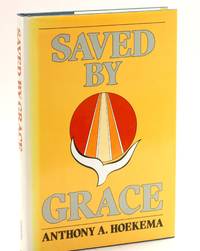
1989509030W. B. Eerdmans / Paternoster Press 1989. Hardcover with Dust Jacket. NEAR FINE/NEAR FINE. xiii 277pp. As new. Perfectbound. Bright and clean paper over board hardcover with silver gilt lettering on spine. Tiny dent to back of DJ not impacting cover. Pages of varying Exceedingly clean bright unmarked copy. 'A comprehensive dynamic and eminently practical presentation of the biblical teaching on salvation. In discussing the facets of the working out of salvation -- the role of the Spirit union with Christ the gospel call regeneration conversion repentance and so on -- Hoekema does away with the classical ordo salutis 'order of salvation' by viewing these facets largely as simultaneous aspects in the process of salvation rather than sequential steps on the way to salvation.'. W. B. Eerdmans / Paternoster Press hardcover
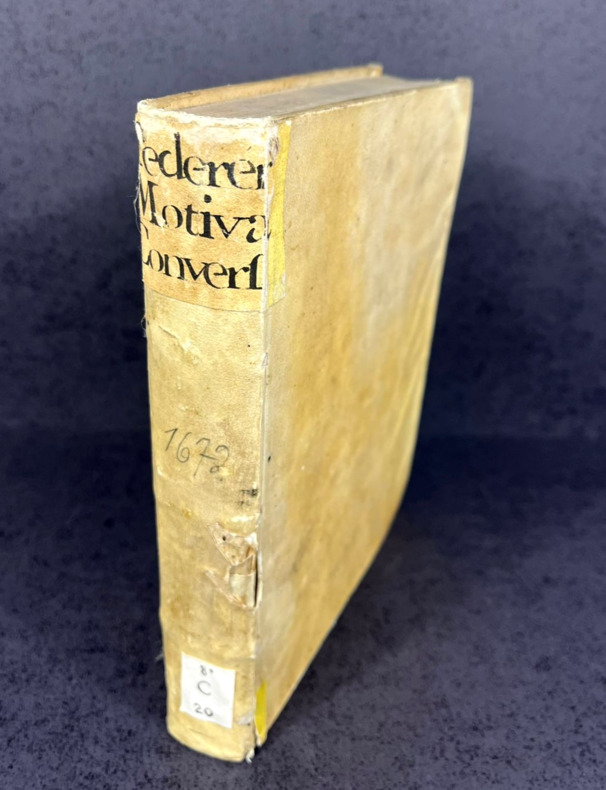
16720533Innsbruck, Wagner, 1672. Épais volume in-4 de 160 x 203 mm, 440 (23) pp. Relié plein vélin blanc d'époque. Étiquette d'époque en coiffe, autre étiquette (bibliothèque) plus récente en queue, année d'édition au crayon au milieu du dos. Marque d'ancienne bibliothèque au premier contreplat surmontée d'une référence au crayon. Première garde blanche avec deux inscriptions en latin et allemand. Page de titre principale placée en fin d'ouvrage (!), qui commence par la page signalant la première partie, avec une inscription à la plume en haut de cette page d'ouverture. Rarissime titre polémique anticalviniste. L'auteur, Ioannes ou Johannes Federer (1645-1706), était prêtre jésuite. Professeur et théologien, il s'est fait remarquer en particulier avec "Calvinismus Detectus, & dedoctus", un livre érudit et vigoureux qui condamne le protestantisme calviniste dans les termes les plus fermes. L'auteur y répond à deux lettres calvinistes, l'une du philologue Johann Georg Grævius (1632-1703), converti, l'autre de Johann Jakob Vedrosi (1624-1706). Avec bandeaux, lettrines et culs-de-lampe. Léger manque au dos, petits trous de mite aux toutes premières pages sans aucun autre dégât, deux morceaux de papier vierges collés pour couvrir les tampons du monastère d'origine, sinon intérieur très pur, exempt de rousseurs ou d'annotations. ***************************************************** Innsbruck, Wagner, 1672. Thick in-quarto volume, 160 x 203 mm, 440 (23) pp. Bound in full contemporary white vellum. Contemporary label at the endpaper, another more recent (library) label at the tail, year of publication in pencil in the center of the spine. Old library mark on the front cover surmounted by a pencil reference. First white endpaper with two inscriptions in Latin and German. Main title page placed at the end of the book (!), which begins with the page indicating the first part, with a pen inscription at the top of this opening page. An extremely rare anti-Calvinist polemical title. The author, Ioannes or Johannes Federer (1645-1706), was a Jesuit priest. A professor and theologian, he made a name for himself in particular with "Calvinismus Detectus, & dedoctus," a scholarly and vigorous book that condemns Calvinist Protestantism in the strongest terms. In it, the author responds to two Calvinist letters, one from the philologist Johann Georg Grævius (1632-1703), a convert, and the other from Johann Jakob Vedrosi (1624-1706). With headbands, initials, and tailpieces. Slight loss to the spine, small moth holes in the very first pages with no other damage, two small blank pieces of paper glued to cover the original monastery stamps. Otherwise, the interior is very clean, free of foxing or annotations.
Traité historique et theologique, ou l'on expose la naissance, les progres, les revolutions, les dogmes, et les sectes diverses des Predestinatiens… - Un volume in 4o di (16)-477 pagine. Legatura coeva in piena pelle (qualche usura). Raro e importante testo gesuitico di polemica anticalvinista e anti-baianista.
2005LFA-126735215Un ouvrage de 152 pages, format 165 x 240 mm, illustré, broché couverture rempliée, publié en 2005, BNF, collection "Conférences Léopold Delisle", bon état
Vg/Vg (one small tear to unclipped dj at tail of spine and edges lightly darkened ,the soft brown cloth boards are clean but rubbed, internally contents clean and tight with no marks or inscriptions, light yellowing to outside edges of deckle-edged pages) octavo 295pp. First edition. Biography of Henry R. Luce, the missionary's son who invented a new kind of journalism, created a publishing empire, and throughout his career struggled to abide by the Calvinistic ideals his father had installed in him.
1374883Paris: Imprimerie Nationale, 1994 in-8, 523 pages. Broché, couv. lég. défr. (Collection Acteurs de l'Histoire). Pierre Jurieu, né à Mer le 24 décembre 1637 et mort à Rotterdam le 11 janvier 1713, est un pasteur calviniste, théologien, écrivain et pamphlétaire prolifique français. Réédition de "L'accomplissement des propéeties ou la délivrance prochaine de l'Eglise. Ouvrage dans lequel il est prouvé, que le papisme est l'empire antichrêtien" paru en 1686.
192597769Paris, Bossard, coll. « Chefs-d’oeuvre méconnus » 1925 In-12 19 x 13,5 cm. Broché, couvertures vertes, titre en noir sur le dos et le premier plat, portrait de La Rochefoucauld en frontispice, 315 pp., bibliographie, notes, table des matières. Très bon exemplaire sur papier Bibliophile inaltérable pur chiffon des Papeteries Montgolfier Frères.
1680113351680 reliure plein veau brun moucheté (binding full calfskin) in-douze (duodecimo), dos 5 nerfs (spine with raised bands) - roulettes sur les nerfs (fillets on the raised bands) - entre-nerfs à fleuron au fer évidé (floweret with hollowed out blocking stamp) - pièce de titre sur fond grenat avec filet or (label of title with gilt line), coiffe supérieure défraîchie (head of the spine faded), roulettes sur les coupes (fillets on the cuts), tranches jaspées (marbled edges), texte à manchette (marginal note), sans illustration (no illustration), travail de vers in fine sur quelques pages sans conséquence sur le texte (worm's work at rear on some pages no consequence for the understanding of the text), XXIV+320 pages avec Privilège du Roy, 1680 à Paris Chez Estienne Michallet,
in-8°, 657 pages, -, index, broche, couv. illustree. Tres bel exemplaire [LA-2]
R117535Princeton, Princeton Theological Seminary 196 133pp., signed with handwritten dedication by the author, 23cm., softcover, in the series "Studies in Reformed Theology and History" New Series No.1, good condition, R117535
1864B87948Bruxelles-Gand-Leipzig, Mucquardt 1864 xiii + 178pp. (+ 9pp. "élégie sur la mort d'Anneessens"), 22cm., reliure cart., br.orig. conservée, dans la série "Collection de mémoires relatifs à l'histoire de Belgique. XVIe siècle", imprimé sur papier de luxe, bon état, B87948
xiii + 178pp. (+ 9pp. "élégie sur la mort d'Anneessens"), 22cm., reliure cart., br.orig. conservée, dans la série "Collection de mémoires relatifs à l'histoire de Belgique. XVIe siècle", imprimé sur papier de luxe, bon état, B87948
195723791Paris Éditions De Paris 1957 In-12 414 pp, présenté et commenté par M-R Mayeux, nombreuses illustrations N&B in-texte, une carte in-fine. Couvertures ( rempliées ) illustrées Exemplaire non coupé
192725748Paris Payot 1927 In-12 carré 319 pp . Introduction de Charly Clerc. Exemplaire non coupé avec des reproductions de gravures anciennes d'un anonyme du XVIème siècle
In 18° (13,3×7,5 cm); 2 parti in un volume: (16), 224 pp. e 264, (24) pp. Bella legatura coeva in piena pelle con dorso a 4 nervi, titolo e ricchi fregi in oro ai tasselli (strofinature e qualche minima mancanza ai margini). Alcune interessanti sottolineature e correzioni chiosate da mano coeva nel testo. Leggerissimo ed ininfluente alone in alcune pagine. Tagli marmorizzati. Prima edizione francese non comune di questa celebre polemica antipapale di Gregorio Leti nella quale si ridicolizza l’usanza papale del nepotismo. Figlio di un noble di origine bolognese e di una nobildonna milanese, Gregorio Leti nacque a Milano nel 1630. Dopo aver studiato presso i gesuiti, alla morte del padre, si trasferì a Roma nel 1644 da uno zio. Dopo vari sposatmenti che lo portarono anche a Orvieto nel 1655 seguì lo zio ad Acquapendente dove il parente era assunto a Vescovo. Nel 1660 lascia l’italia per Ginevra e in seguito al matrimonio con la figlia di un medico ginevrino si converte al calvinismo. Da questo momento in poi iniziano i suoi scritti polemici e satirici verso i papi. Il linguaggio e le immagini che Leti riproduceva nei suoi scritti erano assai licenziose tanto che fu costretto dalle autorità cittadine di Ginevra ad abbandonare la Svizzera. Raggiunse Colbert a Parigi e questi gli propose di ricoprire la carica di “Historico di Lingua Italiana” di Luigi XIV ma decise di rifiutare la proposta perchè non voleva riconvertirsi al cristianesimo. Passò quindi in Inghilterra, siamo nel 1680. Ma anche qui la sua verve polemica e difficile ai compromessi lo portò a scontrarsi con il mondo politico inglese e fu di nuovo costretto alla fuga che lo portò in Olanda. Qui stretta amicizia con Pierre Bayle rimase fino alla morte avvenuta ad Amsterdam nel 1701. Prima edizione francese in buone condizioni di conservazione. Due soli esemplari censiti in ICCU. Vinciana 391 l’ed. in francese s.l. 1669: “violenta satira”. Olschki 17402 cita l’ediz. in francese S.l.1669
In 24, cm 7,5 x 14,5, pp. XXXVI + 446 + (2). Piena pergamena coeva con segni d'uso ai tagli dei piatti. Mancanza a piccola parte bianca dell'occhietto.
Calvino non fu originale, l'analisi della sua apostasia ci dice che fu attratto nell'orbita di Lutero, si appoggiò a Lutero, ne seguì i medesimi principii: i suoi dogmi fondamentali sono infine i dogmi del protestantesimo, cioè della dottrina di Lutero; ma il suo ingegno, il suo carattere personale, la sua forma mentis hanno dato a quella dottrina delle particolari caratteristiche: Calvino ha preso il pensiero di Lutero, ma l'ha fatto suo. Sostituire la Chiesa di Calvino a quella del Papa: questo fu il suo scopo. Assolutista nella difesa di questo suo diritto, di sicuro rappresentante ed interprete della verità, della volontà di Dio, cercò, per garantirlo, un sostegno nella forza materiale e perciò per lui lo Stato non era che il servo della Chiesa (la sua) con la missione di farla ad ogni costo trionfare. Egli perciò fu un intransigente nel peggior senso della parola. Autori: Luigi Nigra.