1509-1564, Calvin JeanBiblio.com
8 407 résultats
1344842453.Ghardcover. Good. Access codes and supplements are not guaranteed with used items. May be an ex-library book. hardcover
1376916967.Gpaperback. Good. Access codes and supplements are not guaranteed with used items. May be an ex-library book. paperback
1018587063.Gpaperback. Good. Access codes and supplements are not guaranteed with used items. May be an ex-library book. paperback
1340480220.Ghardcover. Good. Access codes and supplements are not guaranteed with used items. May be an ex-library book. hardcover
1016080670.Ghardcover. Good. Access codes and supplements are not guaranteed with used items. May be an ex-library book. hardcover
1016089635.Gpaperback. Good. Access codes and supplements are not guaranteed with used items. May be an ex-library book. paperback
A9781016740999Hardback. New. hardcover
ria9781016740999_inpHardcover. New. New Book; Fast Shipping from UK; Not signed; Not First Edition; This work has been selected by scholars as being culturally important and is part of the knowledge base of civilization as we know it.This work is in the "public domain in the United States of America and possibly other nations. Withi hardcover
45132299like new. unknown
B9781016740999Hardback. New. hardcover
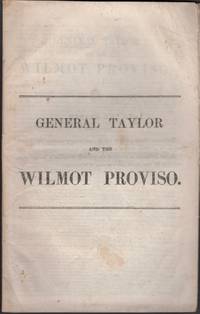
184832327Boston: Wilson & Damrell 1848. First Edition. Wraps. Very good. Wraps. Approx. 9" x 5.5". Stitched wraps with title on outer wrap and printed heading on the rear wrapper "Magnitude of the Question!" Double column text. A few scattered brown spots to contents. Light creases and edge wear to paper. <br /> <br /> Contents concern the nomination of Whig candidate Zachary Taylor and the Wilmot Proviso. The Wilmot Proviso would prohibit expansion of slavery in the newly acquired territories after the Mexican War. General Taylor a Southerner Mexican War hero and a Whig and Louisiana slave holder was seen by the author as a proponent of expanding slavery. However Taylor had expressed his view that he would not veto the Wilmot Proviso if he was elected. To the surprise of many who supported him in the south Taylor took anti slavery positions during his short term in office. <br /> <br /> Not in Sabin. Wilson & Damrell unknown
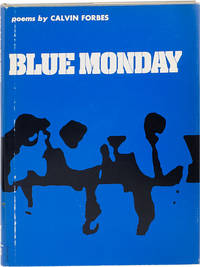
197463762Middletown CT: Wesleyan University Press 1974. First Edition. First Printing a review copy with the publisher's typed slip laid in. Octavo 20.75cm; light gray cloth with titles stamped in black and blue on spine; dustjacket; 1011-631pp. Fine in a Near Fine dustjacket unclipped priced $6.00 with some light rubbing to spine ends and along the left edge of the front panel. The Newark NJ author's first book-length collection of poems most of which first appeared in the pages of Omega The Emerson Review Plowshares and the Monmouth Review. Wesleyan University Press unknown
1970166395London: Weidenfeld and Nicholson 1970. Hardcover. First UK Edition. Published in conjunction with a traveling retrospective exhibition of Warhol's work. <br /> <br /> Near Fine in a Very Good plus dust jacket. Weidenfeld and Nicholson unknown
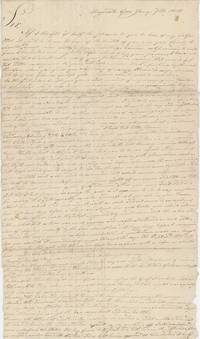
1818List2715Augusta Georgia 1818. Single letter three 9 x 16 inch pages letters with some tape repairs and stray holes at folds still quite legible. Very good. A letter written by Calvin Barnard to his friend Asa Holman of Bolton Massachusetts describing the former’s trip from Boston to Augusta South Carolina from November 25 to January 1. Barnard first traveled from Boston to Charleston South Carolina by boat from which he notes “almost a continual gagging and vomiting†from the passengers. In Charleston Barnard observes that the city is inelegant the unpaved streets “filled with mud†and views “the breastworks which were thrown up during the last warâ€. This would have been the War of 1812 of which Barnard was likely a veteran. South Carolina had engaged upwards of 5000 soldiers and had put up defenses along the coastline in anticipation of the war but it did not come to the mainland – although South Carolina was under naval blockade and the Sea Islands were targeted by the British.<br /> <br /> Barnard reaches Savannah Georgia on the 25th of December; similarly he finds it “although a place of considerable business†“about as dissatisfactory a place I ever was in.†Augusta which he reaches by foot “is much handsomer built and situated than Savannah but not less dissipated†– he remarks that “Being the first day of the year is in this part of the country another great day for getting drunk.†After spending some time in Augusta he finishes the letter with some pointed observations about its residents:<br /> <br /> “I have had a better opportunity of becoming acquainted with the manners customs and dispositions of the citizens of Augusta . I shall not do them injustice by dividing them into three classes in which the Negroes are excepted. The first class of which are the gentry as they would expect to be called made up of men from all parts who have become rich here mostly by avaricious and unjust means . And this class we cannot expect to see drink more than once a week. The second is mostly the natives of this state and South Carolina who are men of a little property of a little education and very little of an honorable principle of any kind and these are not often seen drunk in the forenoon. The third class appears to me to be made up of the off-scouring of every bad place on earth for I never saw their equal for drunkenness lying stealing fighting swearing from morning till morning again. It is not possible that the continent of America has in any other place their equal. If it had I think the whole world soon be sunk.â€<br /> <br /> He finds Augusta’s African-American residents the only trustworthy ones despite local opinions:<br /> <br /> “If any stealing is done here it is laid to the Negroes but I had my surtout a shirt and handkerchief stolen on Friday night last but have too good an opinion of the blacks to think they have them.â€<br /> <br /> Of interest as an outsider’s views on the early Antebellum South and on drinking – another pressing social issue of the day. unknown
196162280New York: The Macmillan Co. 1961. Tall 8vo. 12 169 1 pp. With photo illustrations text illustrations diagrams floor plans. Green & blue publisher’s cloth minor shelfwear offset toning from clippings on ffep. w/ d.j. slight scuffing shelfwear still VG/VG copy from the library of Charles H. “Brig†Belvin IV b. 1937 w/ ownership markings on ffep. First edition stated of Calvin Rutstrum’s well-illustrated and organized how-to book on building your own cabin in the wilderness with detailed instructions and floor plans for log frame and adobe cabins with advice on location heating units and more. Rutstrum 1895-1982 worked as a Montana cowboy Marine Corps medical corpsman during World War I sold real estate and autos in Minneapolis in the 1920’s and later worked as a bank robbery investigator until World War II. Later while working as the director of wilderness camping at Lake Hubert Camp he developed his passion for writing about camping cabins and canoeing. The Macmillan Co., hardcover
40821showing him head and shoulders in an oval 4" x 2½" no place no date John Calvin was a French theologian pastor and reformer in Geneva during the Protestant Reformation. unknown
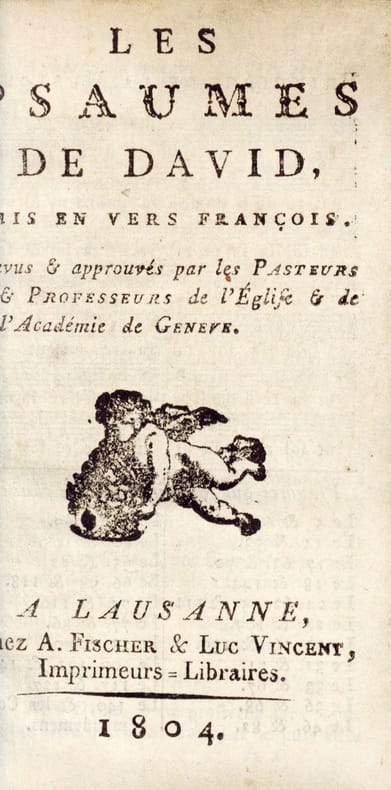
18041559Lausanne : chez A. Fischer & Luc Vincent, imprimeurs-librairies, 1804. PSAUTIER DE GENÈVE IMPRIMÉ À LAUSANNE
198020075Saint-Germain-En-Laye, La Revue Réformée, 1980, in-8, 204, (6)pp, broché, Tome XXXI (i Mars, 1980) de La Revue Reformée, périodique trimestriel 204, (6)pp.
200600438Paris, Hors collection, 1996 ; in-4, 64 pp., cartonnage de l'éditeur. N° 12 - tampons.
200600307, Editions Hors-Collection, 1994 ; bande dessinée, 64 pp., br. E.O. Tampon sur la 1ere page.
200600306, Editions Hors-Collection, 1995 ; bande dessinée, 64 pp., broché, couverture illustr. E.O. Tampon présent sur la 1ere page.
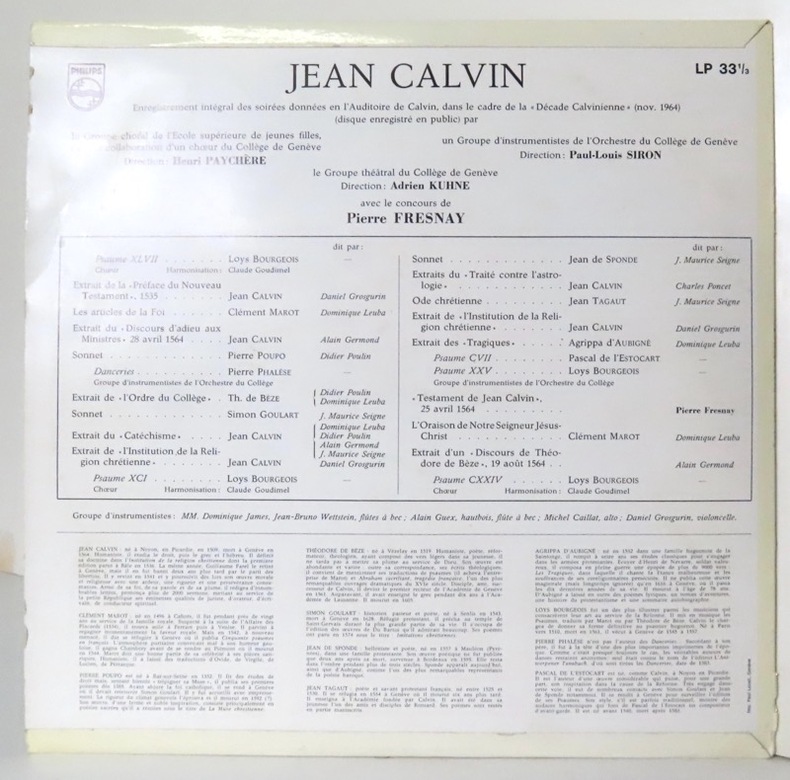
196416625Philips, [1964]. Disque vinyle 33 tours/30 cm., pochette ornée d'un portrait de Calvin. Disque et pochette en belle condition.
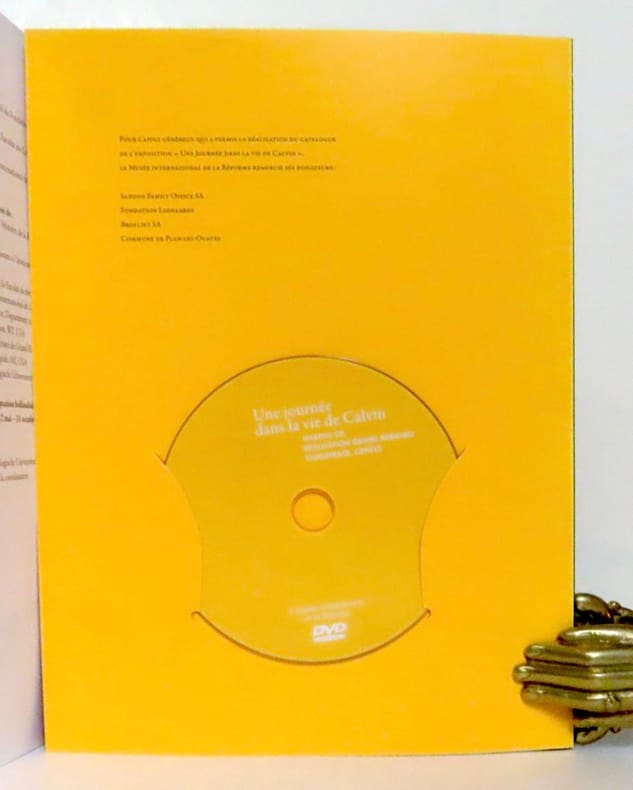
200915715Genève, Musée international de la Réforme, 2009. In-4 broché, couverture à grands rabats. En belle condition, bien complet du DVD inséré en fin de volume.
190947042Philadelphia: Reformed Church Publication House 1909. First Edition. Octavo 23.5cm.; publisher's maroon gilt-lettered cloth; 4208pp. Some minor shelf wear title page starting to separate but holding else Very Good and sound. Collection of essays first published in the "Reformed Church Review" April 1909. Reformed Church Publication House unknown
190048443Nieuwkoop, B. de Graaf, 1979 (Nachdruck der Ausgabe Berlin, 1900). 8°. 2 Bll., 161 S., OKart.