22 résultats
162215233Geneva:: Franciscum Helvidium 1622. 20 x 33cm. Title page. Red and black print. Adhered to larger plain leaf. Trimmed. Soiled but overall still a nice leaf. Suitable fro framing. Because Calvin was a Protestant this text ended up on the famous Index Prohibitorum in 1659. Despite being on the list at least 14 editions were printed between 1600 and 1673. Franciscum Helvidium, unknown
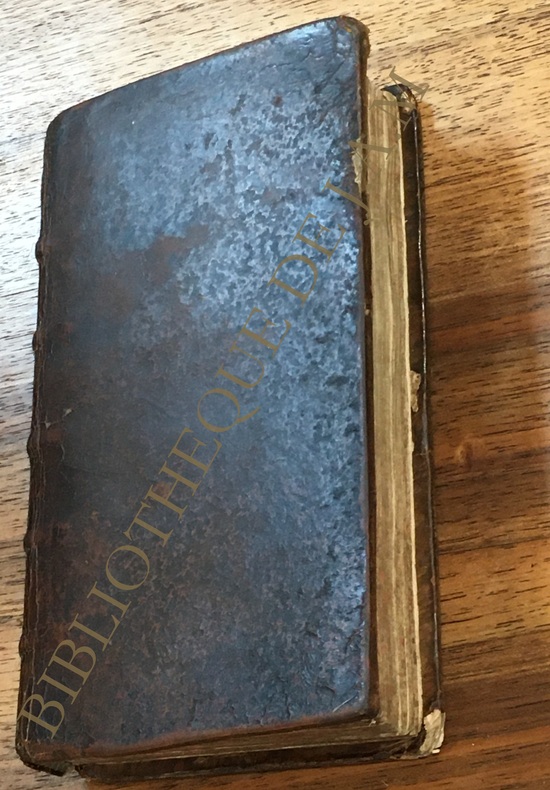
1678344961678 Aix - Charles David - 1678 - 1 volume in8 de 36 - 649 - 11 pages - Reliure demi basane postérieure - dos lisse orné - épidermures - mors frottés - tranches marbrées -
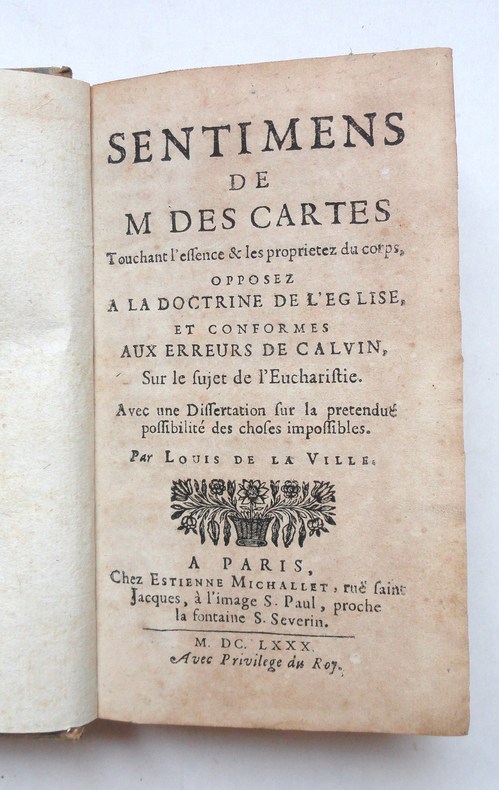
1680ZNC-213A Paris, Chez Estienne Michallet, 1680, in-12°, 13 feuillets non chiffrés (page de titre, Epistre, Avertissement et Table des chapitres)-317 pages-2 feuillets non chiffrés (fautes survenues dans l'impression, Approbation et Privilège du Roi), cartonnage recouvert de papier à la cuve.
1682102018BBParis, S. Marbre-Cramoisy für J. Girin et B. Riviere in Lyon, 1682. Kl.-8°. [12] Bl., 376 S.; [4] Bl., 391 S., [11] Bl. mit Druckermarken und einigen Schmuckvignetten. Ldr. d. Zt. mit goldgepr. Rückensch. u. reicher floraler Rückenverg. 2 Bände. [7 Warenabbildungen] Seconde édition.
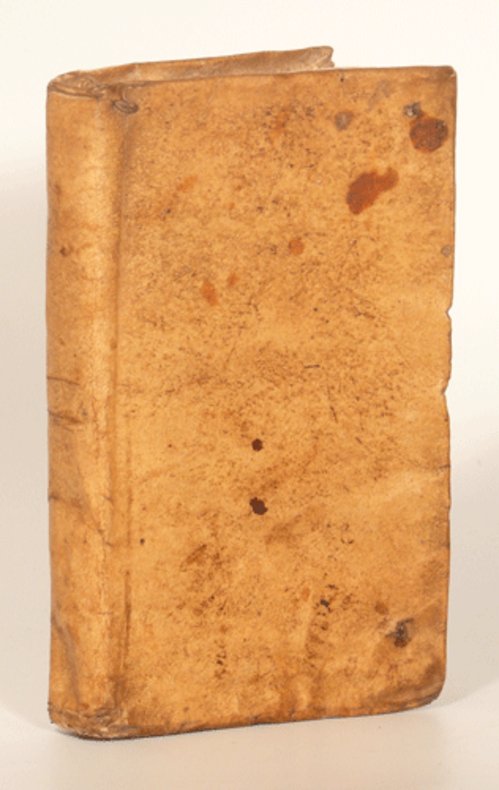
16870018451687 A Paris, Chez Antoine Lambin, 1687. In-12 (87 X 151) vélin doré souple à petites coutures apparentes (reliure de l'époque) ; (1) f. blanc, titre, (17) ff. (Epître, Avertissement, Table, Approbations), 274 pages, (1) f. (privilège), (1) f. blanc. Tranches blanchies.
1687Blache-calvinisme-1-1In-12, 1 volume, portrait de louis XIV, plein cuir de l'époque, dos à cinq nerfs, pièce de titre et titre dorés, caissons ornés de fleurons, 274 pages. Mors du plat de devant fendu en tête, sur le même plat coin haut effondré, usures sur les plats, petit manque en pied de queue. Tranches jaspées rouges. Cul-de-lampe. Pas de rousseur. Intérieur frais. Chez ANTOINE LAMBIN. L'ensemble est plaisant. Bon état général.
169825711Amsterdam, Wetstein 1698.
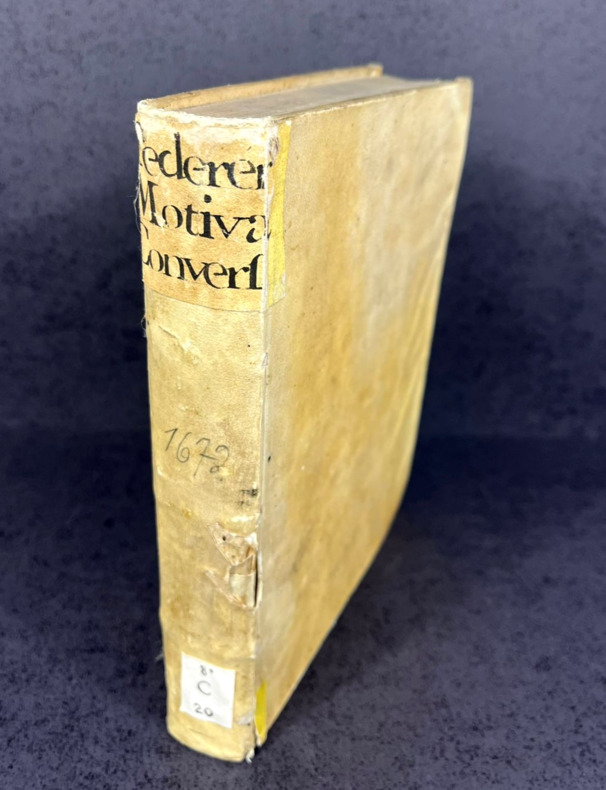
16720533Innsbruck, Wagner, 1672. Épais volume in-4 de 160 x 203 mm, 440 (23) pp. Relié plein vélin blanc d'époque. Étiquette d'époque en coiffe, autre étiquette (bibliothèque) plus récente en queue, année d'édition au crayon au milieu du dos. Marque d'ancienne bibliothèque au premier contreplat surmontée d'une référence au crayon. Première garde blanche avec deux inscriptions en latin et allemand. Page de titre principale placée en fin d'ouvrage (!), qui commence par la page signalant la première partie, avec une inscription à la plume en haut de cette page d'ouverture. Rarissime titre polémique anticalviniste. L'auteur, Ioannes ou Johannes Federer (1645-1706), était prêtre jésuite. Professeur et théologien, il s'est fait remarquer en particulier avec "Calvinismus Detectus, & dedoctus", un livre érudit et vigoureux qui condamne le protestantisme calviniste dans les termes les plus fermes. L'auteur y répond à deux lettres calvinistes, l'une du philologue Johann Georg Grævius (1632-1703), converti, l'autre de Johann Jakob Vedrosi (1624-1706). Avec bandeaux, lettrines et culs-de-lampe. Léger manque au dos, petits trous de mite aux toutes premières pages sans aucun autre dégât, deux morceaux de papier vierges collés pour couvrir les tampons du monastère d'origine, sinon intérieur très pur, exempt de rousseurs ou d'annotations. ***************************************************** Innsbruck, Wagner, 1672. Thick in-quarto volume, 160 x 203 mm, 440 (23) pp. Bound in full contemporary white vellum. Contemporary label at the endpaper, another more recent (library) label at the tail, year of publication in pencil in the center of the spine. Old library mark on the front cover surmounted by a pencil reference. First white endpaper with two inscriptions in Latin and German. Main title page placed at the end of the book (!), which begins with the page indicating the first part, with a pen inscription at the top of this opening page. An extremely rare anti-Calvinist polemical title. The author, Ioannes or Johannes Federer (1645-1706), was a Jesuit priest. A professor and theologian, he made a name for himself in particular with "Calvinismus Detectus, & dedoctus," a scholarly and vigorous book that condemns Calvinist Protestantism in the strongest terms. In it, the author responds to two Calvinist letters, one from the philologist Johann Georg Grævius (1632-1703), a convert, and the other from Johann Jakob Vedrosi (1624-1706). With headbands, initials, and tailpieces. Slight loss to the spine, small moth holes in the very first pages with no other damage, two small blank pieces of paper glued to cover the original monastery stamps. Otherwise, the interior is very clean, free of foxing or annotations.
161841582Genevae: Apud Iacobum Stoer 1618. 8vo 20 cm 7.87". 16 541 85 index ff. <br><br>The first systematic statement of a Reformed Church . . . the most important doctrinal work of the Reformation as a whole" as described by Printing and the Mind of Man. Calvin's magnum opus originally published in significantly briefer form in 1536 was revised throughout the remainder of the author's lifetime; it appears here printed at the start of the Thirty Years' War in => an attractive Geneva edition featuring a striking woodcut printer's vignette on the title-page as well as decorative headpieces and capitals. <br>Â Â Â Â <br>Â Â Â Â PMM 65 for first ed. Contemporary vellum covers framed in blind double fillets surrounding central blind-tooled medallion spine with early hand-inked title all edges speckled brown; spine and back cover darkened moderate wear overall. 19th-century seminary bookplate laid in. Foxing throughout generally light; final portion of volume with pinhole-type and short slim-track worming in from small areas of fore-edge touching a few letters in index only but otherwise not affecting text. Otherwise early inked underlining; one page with small ink smear in outer portion touching but not obscuring two shouldernotes and one page with similar smear in lower margin; one index leaf with lower outer corner torn away costing a few letters on one side. => A sturdy satisfactory and very usable copy. Apud Iacobum Stoer hardcover books
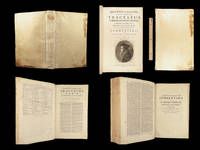
166726597<p><strong>1667 John CALVIN Bible Calvinism Astrology Protestant Reformation Servetus FOLIO</strong></p><p><em>"We should ask God to increase our hope when it is small awaken it when it is dormant confirm it when it is wavering strengthen it when it is weak and raise it up when it is overthrown."</em></p><p>― John Calvin</p><p>John Calvin was a 16th-century French theologian who was known for his role in the Protestant Reformation. He held firm to his doctrines of predestination which were made evident in his book "<em>Institutes of the Christian Religion</em>". Along with his sermons and other teachings Calvin laid the foundation for Calvinism and its spread throughout Europe.</p><p>This 16th-century folio printing of the works of Calvin includes works such as:</p><p><!-- if !supportLists-->· <!--endif-->"De Scandalis" – on the scandals within the church and the conduct of the leaders</p><p><!-- if !supportLists-->· <!--endif-->"Vera Chrstianae Pacificationis" – Calvin's vision for achieving true peace within the church through reforms with a focus on Scripture and adhering to the truth</p><p><!-- if !supportLists-->· <!--endif-->"Censura seu Caumniarum Antonii Cathalani" – Calvin's response to the accusations and slanders made by Antonio Cathalano. Defense of his own teachings against Cathalani's anti-reformation attacks.</p><p><!-- if !supportLists-->· <!--endif-->"Admonitio adversus astrologiam" – attack on the <strong>practice of astrology</strong> claiming it to be superstition</p><p><!-- if !supportLists-->· <!--endif-->"Fidelis Expositio errorum Michaelis Serveti" – Calvin's address of the heresies and errors in the doctrine of Spanish theologian Michael Servetus. <strong>This treatise led to Servetus' trial and ultimate execution in Geneva.</strong></p><p><!-- if !supportLists-->· <!--endif--><strong>"De aeterna dei praedestinatione"</strong> – one of Calvin's most important works focused entirely <u>on the doctrine of predestination</u>. Often considered to be <strong><u>the key to understanding Calvinism</u></strong>.</p><p>Item number: #26597</p><p>Price: $950</p><p>CALVIN John</p><p><strong><em>Joannis Calvini magni theologi tractatus theologici omnes in unum volumen certis classibus congesti</em></strong></p><p>Amstelodami: J.J. Schipper 1667.</p><p><u>Details</u>: </p><p><!-- if !supportLists-->· <!--endif-->Collation: Complete with all pages</p><p><!-- if !supportLists-->o <!--endif-->8 744 59 1 </p><p><!-- if !supportLists-->· <!--endif-->Language: Latin</p><p><!-- if !supportLists-->· <!--endif-->Binding: Vellum; tight and secure</p><p><!-- if !supportLists-->· <!--endif-->Size: ~15.25in X 9.75in X 2.25in 38.5cm x 24.5cm x 6cm</p><p><!-- if !supportLists-->· <!--endif-->RARE</p><p>Our Guarantee:</p><p>Very Fast. Very Safe. Free Shipping Worldwide.</p><p>Customer satisfaction is our priority! Notify us with 7 days of receiving and we will offer a full refund without reservation!</p><p>26597</p><p>Photos available upon request. </p> J.J. Schipper hardcover
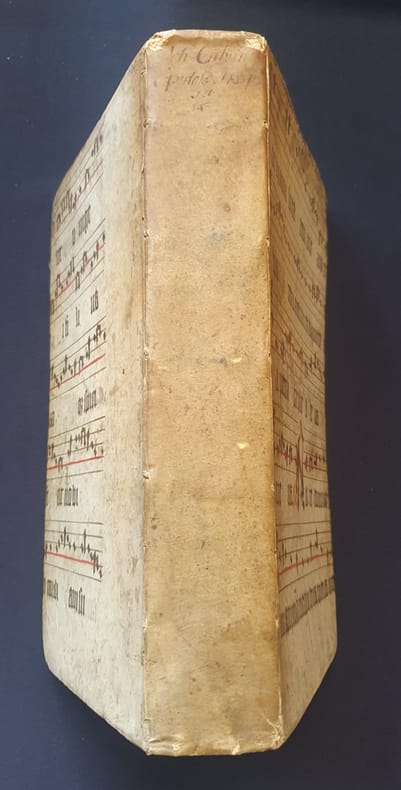
1617Arm139Genève Vignon & Chouet 1617 CALVINI IOANNIS (Jean CALVIN) - Epistolae et responsa. Quibus Interiectae sunt infignium in Ecclesia Dei virorum aliquot etiam Epistolae. Indice rerum insigniorum. Tomi Sexti : Pars altera - Il s'agit du Tome 6 des 7 volumes composant l'"Opéra omnia théologica" paru chez Vignon & Choué en 1617 -Genève, Vignon & Chouet, 1617 - Grand in4, plein vélin en parchemin de réemploi d'une partition ancienne, avec notes et lettres calligraphiées et peintes - 3ff + 598 colonnes + 5ff - Interfolié d'un grand nombre de pages vierges, certaines comportant des inscriptions manuscrites d'époque. Menus défauts à la reliure, mouillures claires sur la quasi totalité des pages. 3e édition de cette correspondance de Calvin qui fut compilée par Théodore de Bèze en 1575 dès la mort de Calvin. Dans une reliure d'époque ou antérieure.
1617Arm139Genève Vignon & Chouet 1617 CALVINI IOANNIS (Jean CALVIN) - Epistolae et responsa. Quibus Interiectae sunt infignium in Ecclesia Dei virorum aliquot etiam Epistolae. Indice rerum insigniorum. Tomi Sexti : Pars altera - Il s'agit du Tome 6 des 7 volumes composant l'"Opéra omnia théologica" paru chez Vignon & Choué en 1617 -Genève, Vignon & Chouet, 1617 - Grand in4, plein vélin en parchemin de réemploi d'une partition ancienne, avec notes et lettres calligraphiées et peintes - 3ff + 598 colonnes + 5ff - Interfolié d'un grand nombre de pages vierges, certaines comportant des inscriptions manuscrites d'époque. Menus défauts à la reliure, mouillures claires sur la quasi totalité des pages. 3e édition de cette correspondance de Calvin qui fut compilée par Théodore de Bèze en 1575 dès la mort de Calvin. Dans une reliure d'époque ou antérieure.
1605303239London: Felix Kingston for Arthur Iohnson 1605. First English translation. Woodcut printer's device McKerrow 273 on title initials and headpieces. viii 335 1 10 pp. Collation: AⴠB-Y⸠Zⴠ2A² -A2 blank. 8vo. 19th-century sheep and marbled boards spine labels rubbed and illegible with ticket of bookbinder Hugh Dunne of Zanesville Ohio. Covers worn title and upper margin of first few leaves soiled shallow gouge from fore-edge of B1-D8 small burn hole in margin of Z4 piece torn from gutter of 2A1. Contemporary ownership signature of Thomas Burroughs with price paid and later 18th- and 19th-century ownership inscriptions. First English translation. Woodcut printer's device McKerrow 273 on title initials and headpieces. viii 335 1 10 pp. Collation: AⴠB-Y⸠Zⴠ2A² -A2 blank. 8vo. The first English translation by Clement Cotton of Protestant theologian John Calvin's Commentary on the Epistle to the Hebrews one of Calvin's many commentaries on the Pauline Epistles. ESTC S107380 Felix Kingston, for Arthur Iohnson unknown books
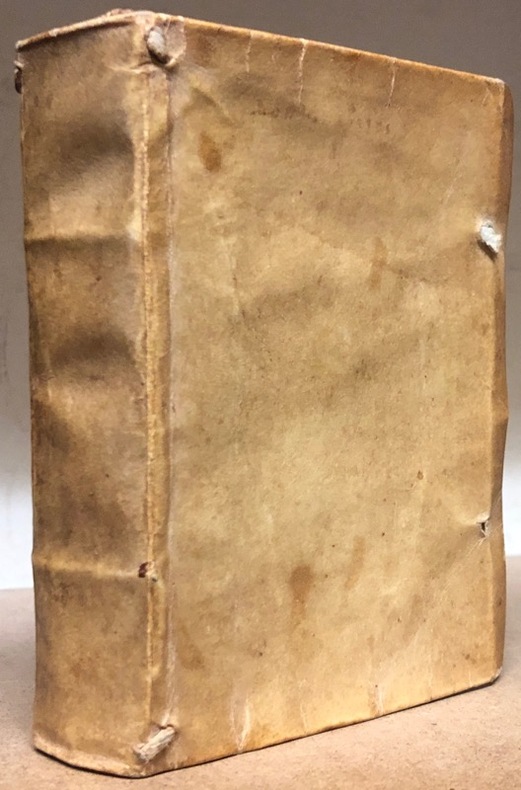
160139715Genève, Pierre de La Rovière, 1601. In-16 de de (16)-282 pp. (sign. *8 A-R8 S4) vélin à rabats, traces de lacets (reliures de l'époque).
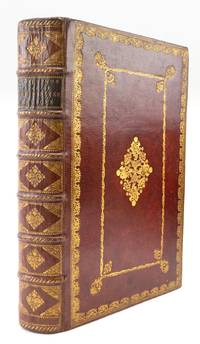
1650ST18306Amsterdam: Paulus Aertsz van Ravesteyn 1650. First Edition of this Translation of "Institutues. 372 x 240 mm. 14 5/8 x 9 3/8". 26 p.l. 315 11 leaves; 2 p.l. 54 leaves. Two works in one volume. Institutie translated into Dutch from Latin and French by Wilhelmus Corsmannus; "Supplicatie" translated by Carolus Agricola. With a life of Calvin by Theodore Beza. <br/> HANDSOME 18TH CENTURY BURGUNDY MOROCCO GILT BY THE BAROQUE FLOWER BINDERY covers with central gilt lozenge composed of two vases Storm van Leeuwen tool 18 four flower-and-rocaille ornaments tool 2 and four flower baskets tool 3 and framed by a floral roll roll I with oblique flora sprig tool 15 and flower basket tool 3 at corners all enclosed in a thick lacy gilt border formed by Storm van Leeuwen roll II and repeated tool 4 raised bands tooled in gilt compartments with floral lozenge at center scrolling cornerpieces green morocco label with gilt lettering gilt turn-ins marbled endpapers all edges gilt. With vignette on title page woodcut initials and engraved portrait of Calvin in his library by C. J. Visscher. Front fly-leaf with large initials A. J. E. written in blue crayon or pencil. For the binding: Storm van Leeuwen IIA 3.2.33 fig. 67 tools 2 3 4 9 15 18 rolls I and II. ◆Spine faintly sunned back cover with a few superficial abrasions lower corners a bit rubbed occasional rust spot or other negligible imperfection internally but AN EXTRAORDINARILY FINE COPY inside and out the contents especially fresh clean and bright and the unsophisticated binding lustrous and with only minor signs of use.<br/> <br/> This is a superb example of a binding by a workshop dubbed the Baroque Flower Bindery for the distinctive flower tendril and rocaille tool that is prominently used in the centerpiece on our boards. The cover design here is identical to that on a folio edition of the Psalms pictured in figure 67 of Jan Storm van Leeuwen's "Dutch Decorated Bookbinding in the Eighteenth Century." According to that work the Baroque Flower Bindery was active in The Hague between 1778 and 1783; the Dutch Royal Library Koninklijke Bibliotheek holds four bindings executed there. One is the folio Psalms mentioned above and the others are presentation bindings. The Baroque Flower Bindery used some tools that had been employed by an earlier Hague workshop known as the Flower Bindery fl. ca. 1751-80 and its tools including the flower basket used here later turned up on bindings by Cornelius A. Matthijs fl. ca. 1795-1801 indicating the way artisans and their tools migrated from one workshop to another. The text here is the second Dutch translation of the magnum opus of John Calvin 1509-64. First published in Latin in 1536 and in Dutch translated by Carolus Agricola in 1578 the present work sets forth the tenets of Calvin's theology. In the words of Britannica the "interpretation of Christianity advanced above all in his . . . 'Institutes of the Christian Religion' and the institutional and social patterns he worked out for Geneva deeply influenced Protestantism elsewhere in Europe and in North America. The Calvinist form of Protestantism is widely thought to have had a major impact on the formation of the modern world." The four parts of this work--covering Knowledge of God the Creator Knowledge of God the Redeemer Christ the Way to Obtain the Grace of Christ and the True Church and Articles of Faith--are supplemented in this edition by Calvin's "Supplication" calling for reform of the Catholic Church. Britannica notes that "the 'Institutes' also reflected the findings of Calvin's massive biblical commentaries" and that influence is epitomized in the fine portrait of the great Reformer in his library by Cornelis Visscher 1629-58. Calvin stands at his desk a copy of the "Institutio" open in his hands the Geneva Bible and his many commentaries on Scripture displayed on his desk and bookshelves. It is a scene that shows the gentler scholarly side of Calvin who is more often depicted as a stern ascetic zealot. RBH seems to list no other bindings by the Baroque Flower Bindery at auction. Paulus Aertsz van Ravesteyn unknown
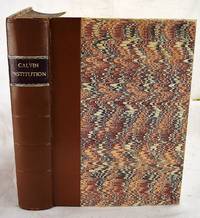
16341912300004London: Anne Griffin for Joyce Norton 1634. Hardcover. Very Good. English translation of Calvin's Institutio Christianae Religionis Folio 28 x 19.5 cm. Bound in modern calf-backed marbled boards. Fine binding and cover. Title within woodcut historiated border. Collated: 20 749 159 pages. Translation by Thomas Norton originally published in 1561. "Calvin's 'Institution of the Christian Religion' was the first systematic statement of a Reformed Church. It is the most important doctrinal work of the Reformation as a whole and provided a comprehensive theological system rivaling those of the Middle Ages"- Printing and the Mind of Man 65. STC 4425 ; ESTC S107163. <br> This is an oversized or heavy book which requires additional postage for international delivery outside the US. London: Anne Griffin, for Joyce Norton hardcover
1604002788Paris, Veuve de Sébastien Nivelle, 1604
160977387London: Felix Kyngston & william Cotton 1609. 664 pages plus tables etc. Back cover is separated but still present. Front hinge is starting. Spine has 5 bands plus label "CALVIN ON ISAIAH" Inside pages are complete and binding is tight. Leatherbound Hardback. Worn But Complete Condition. 8 By 12 By 2 Inches . Felix Kyngston & william Cotton Hardcover
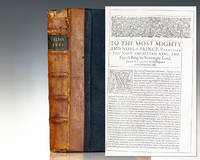
1611105432London: John Norton 1611. 1611 edition of Calvin's seminal work on systematic theology regarded as one of the most influential works of Protestant theology. Quarto bound in full contemporary leather with six raised bands to the spine elaborate architectural borders to the title page woodcut headpieces and tailpieces. In very good condition with reinforcement to the hinges. Rare. Written as an introductory textbook on the Protestant creed for those with some previous knowledge of theology John Calvin's Institutes of the Christian Religion was first published in Latin in 1536. The text covers theological topics from the doctrines of church and sacraments to justification by faith alone and Christian liberty. It vigorously attacked the teachings of those Calvin considered unorthodox particularly Roman Catholicism. The Institution Of Christian Religion overshadowed earlier Protestant theologies and is regarded as a classic in theology on the level of Augustine's The City of God and Aquinas's Summa Theologica. John Norton hardcover books
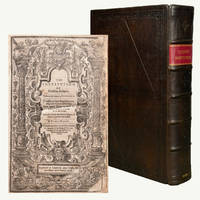
1634U27<p><strong>Summary: </strong>Folio 11" x 7.5".An attractive copy of this significant work that is John Calvin's magnum opus considered one of the most important works to emerge from the Reformation.</p><p><strong>Description: </strong>Woodcut title page 1634 within ornamental frame. Each of the four chapters begins within a headpiece and decorative initial. Text presented in single-column Roman font within ruled border. Outer margin contains cross-references and few notes. Includes two indexes at the rear.</p><p>Calvin explores both "knowledge of God" and "knowledge of ourselves" with profound theological insight in four books. The first book discusses God the Father; the second God the Son; the third the Holy Spirit; the fourth the Church. Calvin began his work as a catechism in 1536 and it grew to an extensive systematic theology by 1560.</p><p><strong>Pagination: </strong>20 749 159 pp. Complete.</p><p><strong>Collation: </strong>6 A4 B-Z6 Aa-Zz6 Aaa-Zzz6 Aaaa-Gggg6 Hhhh4.</p><p><strong>Binding: </strong>Attractively rebound in blind paneled black calf. Spine with five raised bands and a red gilt-lined label with the words "Calvin's Institution" and the date "1634" lettered in gilt. Endpapers renewed.</p><p><strong>Condition: </strong>Intermittent staining; title page frayed to fore-edge and upper corner with loss of printed outer border otherwise good margins throughout; T with small marginal hole to fore-edge; lower marginal loss to final leaf of Tables; an attractive copy of Calvin's most important work.</p><p><strong>References: </strong>ESTC S107163; STC 4425.</p> Anne Griffin for Joyce Norton hardcover
1611132719London: John Norton 1611. Rare 1611 edition of Calvin's seminal work on systematic theology regarded as one of the most influential works of Protestant theology. Quarto bound in three quarter calf with five raised bands to the spine elaborate architectural borders to the title page woodcut headpieces and tailpieces. In good condition. Upper portion of title page removed. Written as an introductory textbook on the Protestant creed for those with some previous knowledge of theology John Calvin's Institutes of the Christian Religion was first published in Latin in 1536. The text covers theological topics from the doctrines of church and sacraments to justification by faith alone and Christian liberty. It vigorously attacked the teachings of those Calvin considered unorthodox particularly Roman Catholicism. The Institution Of Christian Religion overshadowed earlier Protestant theologies and is regarded as a classic in theology on the level of Augustine's The City of God and Aquinas's Summa Theologica. John Norton hardcover
16341301631634. CALVIN John. The Institution of Christian Religion Written in Latine by M. John Calvin Translated Into English according to the Authours last Edition By Thomas Norton. London: Anne Griffin for Joyce Norton and R. Whitaker 1634. Folio 7-1/2 by 11 inches 19th-century full olive calf raised bands black morocco spine label elaborately gilt-decorated spine and boards marbled endpapers and edges. $7500.1634 edition of Calvin's magnum opus""a comprehensive theological system rivaling those of the Middle Ages particularly Thomas Aquinas""of paramount importance in ultimately supporting a global ""movement for liberty and independence"" PMM.This seminal work ""is considered by many to be one of the finest systematic theologies ever written John T. McNeill argued that Calvin's Institutes is 'one of the few books that have profoundly affected the course of history'"" Haykin To the Ends of the Earth 29. His first theological publication it initially appeared in Latin in a draft of six chapters in 1536. Calvin constantly revised and expanded it until 1559 with publication of the final revised edition of 80 chapters. Institutes ""provided a comprehensive theological system rivaling those of the Middle Ages particularly Thomas Aquinas' Calvinism is the `Reformed' as distinct from the `Lutheran' Church Its cardinal point was the absolute rule of God in the natural and spiritual world by whose grace only is man relieved of the consequence of sin Its most important role despite Calvin's authoritarian influence was to support the movement for liberty and independence in many parts of the world. Outside Switzerland its most potent influence was exercised in Holland and Britain. Puritanism and the ruling theology of the late 16th and early 17th century in England was Calvinistic; the Scottish Reformation was Calvinistic throughout. Through these countries Calvinism exerted considerable influence on the recognition of the liberal rights of the individual as eventually expressed in the Constitution of the United States of America"" PMM 65; emphasis added. ""Norton's gifts were such that Calvin was fortunate in his English translator"" McNeill ed. Calvin xliii. ""Latin editions prior to that of 1559 had been circulated in England and Scotland but only the chapters on the Christian life Book III chapters vi-x in the final order of the work had been put into English."" First published in English in 1561 after the 1559 Geneva edition. With extensive series of Tables at rear. Woodcut-engraved title page; with ornamental initials head- and tail-pieces throughout. Occasional mispagination as issued without loss of text. ESTC S107163. STC 4425. Bookplate.Text with occasional marginal wormholing not affecting text marginal faint dampstain to last few leaves of Tables one small burn mark affecting a few letters on FF2. Beautifully bound. hardcover