Calvin JohnABAA

26 résultats
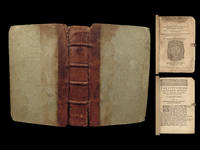
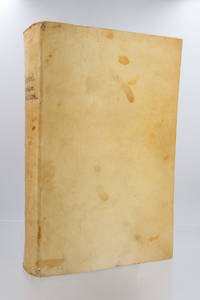
157796188London: Imprinted by Thomas Dawson for John Harison and George Byshop 1577. First edition in English of John Calvin's commentaries on the Pauline Epistles. Octavo bound in full speckled calf with raised bands to the spine all edges red rebacked. Title within architectual woodcut border woodcut initials. In very good condition. First editions are rare. One of the earliest extant Christian documents the Pauline Epistles constitute thirteen books of the New Testament and are largely attributed to Paul the Apostle. As part of the canon of Christian theology and ethics the Epistles offer an unprecedented insight into the beliefs and controversies of early Christianity. The Pauline epistles are usually placed between the Acts of the Apostles and the general epistles in modern editions of the New Testament. Most Greek manuscripts however place the General epistles first and a few minuscules place the Pauline epistles at the end of the New Testament. French theologian and reformer John Calvin produced commentaries on most of the books of the Bible. He devoted four years in compiling his commentaries on the Pauline epistles before turning his attention to the general epistles which he dedicated to Edward of England. Imprinted by Thomas Dawson for John Harison and George Byshop hardcover books
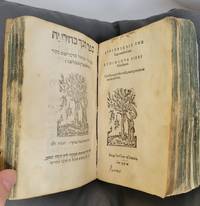
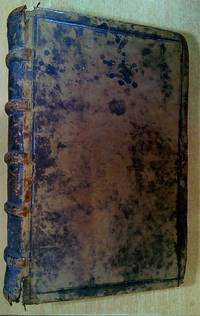
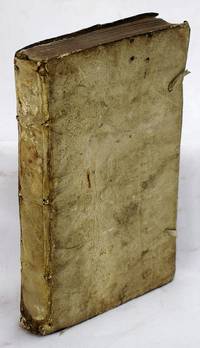
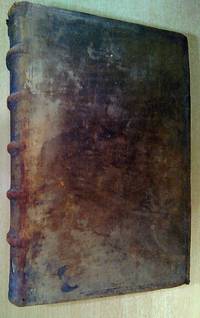
15251403641Geneva; Genevae; Argentoriati i.e. Strassburg; Hagenau; Coloniae: Robertus Stephanus; Roberto Stephano; Johann Knobloch d. Ä.; Setzer; Apud Ioan. Gymnicum Johann Gymnich 1554; 1551; 1526; 1525; 1531. Octavo 5 parts. In Very Good condition. Bound in contemporary worn vellum. Ties at front hinge separated. Edges of text block dyed blue/black. Part three with rubrication and red ink marginalia.<br /> <br> <br /> <br> <br /> A sammelband in 5 parts of Calvinistic theology.<br /> <br> <br /> <br> <br /> 1 Calvin John Jean; Tremellius Immanuel translator; SEFER HINUKH BEHIRE YAH; Geneva : Nidpas be-bet Robertus Stephanus 1554. 8 152 8 pages.<br /> Translation by Immanuel Tremellius of Jean Calvin's Catéchisme de l'Eglise de Genève. Hebrew title romanized. Primarily in Hebrew; afterword a letter from Tremellius to Duke Christoph of Württemberg dated April 3 1554 in Strasbourg in Latin. First Edition. Tremellius was the first professor of Hebrew at Cambridge University. He converted to Christianity and died in 1580.<br /> USTC: 450063. GLN-306. Index Aureliensis; 129.892. Vinograd Geneva 1.<br /> <br> <br /> <br> <br /> 2 Calvin John Jean; STOICHEIOSIS TES CHRISTIANON PISTEOS = RUDIMENTA FIDEI CHRISTIANAE : LIBELLUS APPRIME UTILIS NUNC PRIMUM IN LUCEM AEDITUS; Genevae : Para RÅvertÅ tÅ StephanÅ etei Roberto Stephano Robert Estienne 1551. 126 2 pages.<br /> First book printed at Geneva by Robert Estienne. Greek translation by Henri Estienne of Calvin's Catéchisme de l'église de Genève. Greek colophon dated 14 Dec. 1551.<br /> USTC: 450041. Renouard: I 80. GLN-222. <br /> <br> <br /> <br> <br /> 3 Bader Johann; Meyer Tobias; AD ILLUSTREM PRINCIPEM D. LUDOVICUM COMITEM PALATINUM RHENI DUCEM BAUARIAE COMITEM VELDENSEM ETC. DE ANSERE QUI SACRAMENTUM EDISSE DICITUR; Argentoriati i.e. Strassburg: Johann Knobloch d. Ä. 1526;<br /> 20 leaves.<br /> USTC: 608905. VD16 B 106. VD16 B 114<br /> Index Aureliensis; 111.457<br /> <br> <br /> <br> <br /> 4 Bugenhagen Johannes; Georg Spalatin; POSTILLATIO IOAN. BVGENHAGII POMERANI IN EVANGELIA USUI TEMPORUM&SANCTORUM TOTIUS ANNI SERUIENTIA; Hagenau: Setzer ca. 1525; <br /> 32 leaves.<br /> USTC: 685333. VD16 B 9351.<br /> <br> <br /> <br> <br /> 5 Augustine of Hippo Saint; D. AURELI AUGUSTINI HIPPONENSIS EPISCOPI DE BONO CONJUGALI LIBER UNUS. EIUSDEM DE SANCTA VIRGINITATE LIBER UNUS.; Coloniae : Apud Ioan. Gymnicum Johann Gymnich 1531<br /> 56 unnumbered leaves. Title within woodcut border with date 1530.<br /> USTC: 625891. VD16 ZV 27243.<br /> <br> <br /> <br> <br /> RW consignment. Shelved case 3. The present sammelband presents a cross-section of sixteenth-century theological writing encapsulating both the intellectual and polemical ferment of the Reformation as well as the enduring theological authority of the patristic tradition. At its heart are two translations of Jean Calvin's Catechism of the Church of Geneva one in Hebrew by Immanuel Tremellius and the other in Greek by Henri Estienne each printed by Robert Estienne at Geneva. The existence of these translations are illustrative of Reformation theologian's claim to return ad fontes back to the languages of Scripture itself. By representing a catechetical summary of Christian doctrine in both Hebrew and Greek the reformers in Geneva sought to demonstrate that their theology was rooted in the sources of revelation and the 'pure' teachings of the early Church in a manner capable of addressing both learned audiences and hoped-for Jewish or Eastern interlocutors. <br /> <br /> <br> <br> Alongside Calvin's catechisms are two early Lutheran texts: Johann Bader and Tobias Meyer's sacramental tract printed in Strasbourg in 1526 and Johannes Bugenhagen's postils printed at Hagenau ca.1525. These works reflect both the polemical and pastoral concerns of the early Lutheran movement on the one hand grappling with the meaning of the Eucharist and on the other providing sermons for the liturgical year. A close ally of Luther Bugenhagen sought to stabilize the reformation communities through pragmatic instruction. Bader's text by contrast exemplifies the more combative dimension of then current theological controversies. Taken together these two texts are illustrative of how Reformation figures not only produced works of doctrinal innovation but also sought new forms of preaching and pastoral practice.<br /> <br /> <br> <br> Also present is a Cologne edition of two treatises by St. Augustine of Hippo De bono coniugali and De sancta virginitate. Augustine's authority among the reformers Lutheran and Calvinist with John Calvin and his followers in particular invoking him as a guarantor of continuity with the early church. In this sammelband which includes works by both Lutherans and Reform theologians the presence of these texts demonstrate how Augustine's writings on marriage and virginity provided a moral theology that could be appropriated across these still-porous confessional divisions. By binding Augustine with Calvin Bugenhagen and other reformers the volume exemplifies how early Protestants claimed authority from the Church Fathers attempting to demonstrate that their reforms did not represent a novelty within the Christian but rather a recovery of the authentic early Christian church. <br /> <br /> <br> <br> The assemblage of these particular and diverse works in this volume suggests that they were likely bound together in the mid-16th century. The presence of Calvinist catechisms Lutheran sermons and polemics and works by Augustine indicates that these texts were brought together during a time in which the boundaries between "Lutheran" and "Reformed" identities were still porous likely before the Lutheran Formula of Concord in 1577 and the Reformed Synod of Dordt in 1618. After these key moments confessional lines between the two traditions became far sharper. In the period between 1540 and 1570 the Reformation was still a popular evangelical movement with significant overlapping sympathies and theological tendencies sharing both a robust humanist disposition and a common appeal to the authority of Scripture and the patristic tradition. A collector of these works during this period would likely have seen these as complementary expressions of the same reforming enterprise. The translations of Calvin's catechism into Greek and Hebrew in particular suggest a distinct cosmopolitanism: a theology that could be directed outward to Jews Eastern Orthodox Christians and the broader "republic of letters".<br /> <br /> <br> <br> Taken together the works gathered in this sammelband are representative of the emergence of a distinctly Protestant culture one that sought to articulate a developing form of Christianity across languages confessions and centuries. The significance of the present volume lies not only in the rarity and importance of its individual components but in their relation to one another - their diversity and unity consonance and dissonance - and is a fine example of the breadth of Reformation theological and cultural engagement across confessional lines and with both the humanist and patristic traditions. 1403641. Shelved Dupont Bookstore. Robertus Stephanus; [Roberto Stephano]; [Johann Knobloch d. Ä.]; [Setzer]; Apud Ioan. Gymnicum [Johann Gymnich] unknown
159265633(Lübeck, Aswer Kröger, 1592). 8°. 56 nn. Bll., Mod. Kart.
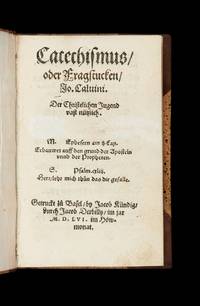
155612421Basle: J. Derbilley at the press of J. Kündig 1556. 18th-century half-sheep and speckled pastepaper over thin wooden boards rear board wormed initials P.S. gilt-lettered on the front panel. <p>      ONLY EDITION EARLY ISSUE OF THE FIRST CALVINIST CATECHISM IN GERMAN AND THE ONLY LITERAL GERMAN TRANSLATION OF CALVIN’S TEXT. No American library holds a copy.<br />       First published in 1537 Calvin’s first attempt at rudimentary religious instruction was a complex reduction of his Institutes. Five years later he simplified his approach couched his ideas in catechistic format and created the standard Calvinist manual — the so-called Second Geneva Catechism. Its first printing in French is lost. In 1545 Calvin published his own Latin translation the basis of our anonymous word-for-word German rendering.<br />       This is Derbilley’s first book. Vagaries and errors in the opening quire suggest he had yet to perfect his new trade many of these idiosyncrasies are reset in digitized copies I examined. In good condition outer margins trimmed with some loss to the shoulder notes repair to the final leaf’s outer blank margin from a removed thumb tab. Inexplicably absent from Peter and Gilmont Bibliotheca Calviniana.<br /> ¶Neuser “Die Ãœbersetzung des Genfer Katechismus 1542/1545 ins Deutsche durch Zacharias Ursinus im Jahr 1563†in Koers 74 2009 683-700; Erichson Bibliographia Calviniana 16; Bietenholz Basle and France in the Sixteenth Century 226; Brüggemann & Brunken Handbuch zur Kinder- und Jugendliteratur 69 & illus. Sp. 268; VD 16 C 311.</p> J. Derbilley at the press of J. Kündig unknown
15618210CB1561. Genève Imprimé par Conrad Badius 1561. 8°. 595 22 1 Bl. Etwas späterer Lederband mit reicher Deckelvergoldung sowie dreiseitig geprägtem Goldschnitt. Spätere ca 4. Ausgabe. Der Einband leicht berieben. Das Papier sauber. Der Text mit feinen roten Tuschlinienen eingerahmt. unknown
157039538Geneva: Ioannem Crispinum. Good. 1570. Hardcover. Old half leather with paper-covered boards 4 spine bands. Ex-College library. Title page handwritten many years ago lacking original title page. The next page with heading "N. Gallasius Joanni" is mounted. 13 4-560 34 index. Some dampstaining to margins and the occasional spot. Front board a bit loose. ; quarto . Ioannem Crispinum hardcover
155961666Tiguri Zurich Bâle Basel: Excudebat Christophorus FroschoverusApud Bartholomaeum VincentiumPer Ioannem Oporinum 1559. Fine. Excudebat Christophorus Froschoverus Apud Bartholomaeum Vincentium Per Ioannem Oporinum Tiguri Zurich Bâle Basel 1559-1573 21.50 x 33.50 cm relié Rare Collection of Three Theological Commentaries: -In libros Paralipomenon sive Chronicorum Commentarius. Ludwig Lavater. Printed by Christophorus Froschoverus Zurich 1573. First edition with the printers mark on the title-page. Preface by Ludwig Lavater dated February 1573. Numerous genealogical tables. - Praelectiones Ioannis Calvini in librum prophetiarum Danielis. Jean Calvin. Edited by Jean Budée and Charles de Jonvilliers. Apud Bartholomaeum Vincentium 1571. Place not indicated but almost certainly Geneva based on typographical evidence and the preface dated 14 September 1571. Hebrew text in bold with translation to the left and commentary in smaller type beneath. First edition. - In Apocalypsim Iesu Christi revelatam quidem per angelum domini. Heinrich Bullinger. Bâle. Ioannem Oporinum. 1559. Printer's device on title-page. First edition illustrated with two large historiated initials. Contemporary pigskin binding spine with five plain raised bands large Renaissance blind-stamped panel on the boards comprising a succession of decorative frames: the two central with floral motifs the next with medallions depicting profile figures then the virtues Faith Fortune Charity and finally another floral frieze with medallions and profiles. Traces of clasps. Three tears to the spine with losses. Wormholes on the upper board. Restorations to the lower right corner of the upper board to the corners and clasps of the lower board. Losses to the lower joint at head and tail of the lower board. All three volumes are the work of Swiss Protestant theologians. Ludwig Lavater thus worked within the circle of his father-in-law Heinrich Bullinger both based in Zurich. At that time German-speaking Switzerland was predominantly Lutheran and hostile to Geneva and Calvin undertook a major agreement to unify Swiss Protestantism resulting in the Consensus Tigurinus signed by Calvin and Bullinger on behalf of Zurich. The gathering of these three theological works symbolically represents the unity of Swiss Protestantism setting it apart from Lutheranism. The first commentary book to establish a chronicle of events and genealogies within the Paralipomena. The second work is Calvins commentary on the Book of Daniel while the third offers an exegesis of the Apocalypse according to the Revelation of Christ. Excudebat Christophorus FroschoverusApud Bartholomaeum VincentiumPer Ioannem Oporinum hardcover
1562000029No place: No publisher 1562. Hardcover. Good/not applicable. No publisher no place. - Large 4to. 34.5x21 cm. - 11683 24 pages. - In contemporary hard vellum quite worn and soiled. At the end a separately titled unpaginated section:"Table ov brief Sommarie des Principales matieres concontenues enseste Institution de la religion Chretienne dresse selon l'ordre de l'Alphabet" printed in double columns. - Printed marginalia. - Many pages soiled and partially browned. - On verso of front cover a small book label with decorated borders: "Robert Stokes"; an engraved book-plate: "Stokes"; as well as another label as follows: "This Book formed part of the Library of George Stokes Esq the founder A.D. 1840 while living in Colchester of the Parker Society ." - Calvin's seminal work on Protestant theology which serves the basis for the system of doctrines by the Reformed Churches i.e. Calvinism. - First published in Latin in 1536 and then in Calvin's native French in 1541. This volume is a somewhat later printing of the definitive French edition of 1560. - Exremely rare: not in WorldCat which lists a volume as "s.l. s.n. 1562" with a single location at the Biblioteca Nazionale Centrale di Roma - but that is with a different pagination of 16 62250 p.; 4to and with a note of "Luogo di pubblicazione presunto: Ginevra. <br/> <br/> No publisher hardcover
157633142-158Lausanne François Le Preux 1576. 16 380 72 leaves. With coat of armes of the city of Berne in woodcut on title. 8vo. Old calf blind-stamped back with title red edges. Lausanne François Le Preux 1576. First systematical statement of the Reformed Church PMM here present in a re-edition of the authorative Latin text. Taking its final form in 1559 and subsequently much revised enlarged and later re-oublished again from this present edition. The "Institutio Christianae" is certainly one of the most influential books of all time. It was composed in its first form when Jean Calvin 1509-1564 was twenty-six and dedicated his book to Francis I. Highly influential in the Western world and still widely read by theological students today. The book was written as an introductory textbook on the Protestant faith for those with some previous knowledge of theology and covered a broad range of theological topics from the doctrines of church and sacraments to justification by faith alone and Christian liberty. This edition was prepered by: 1 Nicolas Colladon c. 1530 - 1586 a French Calvinist pastor and son of French parents who in 1536 took shelter in Switzerland for religious reasons. He studied theology at Lausanne and Geneva and was a friend of John Calvin and pastor at Vandoevres and Geneva. In 1564 he became chancellor of the Academy where he taught theology until the death of Calvin. With Theodore Beza he worked on a famous monography on the French Reformed Church in France 1560. 2 Augustinus Marlorat du Pasquier 1506 - 1562 a French later a Protestant Reformer after he became indoctrinated with the principles of Protestantism. He left France in 1535 and took refuge in Geneva where he worked as a proof-reader for Greek and Hebrew. The dismissal of Viret in the controversy on excommunication however led Pasquier who approved the rigidly Calvinistic procedure to resign. After a short time in Geneva he went in July to Paris as pastor of the Evangelical congregation there. A nice copy with some contemp. marginalia. _ _ _ - Erichson 34; Adams C 364; Peter/Gilmont 76/3; Index aurel. no. 130.146; Senebier Histoire littéraire de Genevè I. 398; vlg. PMM 65. Lausanne, François Le Preux unknown
158423599<p><strong>1584 John Calvin Institutes of Christian Religion Geneva Bible Catechism FAMOUS</strong></p><p><em>"We should ask God to increase our hope when it is small awaken it when it is dormant confirm it when it is wavering strengthen it when it is weak and raise it up when it is overthrown." </em></p><p>― John Calvin</p><p>A rare 16th-century Latin translation of John Calvin's "<em>Institutio Christianae relgionis</em>" or "<em>Institutes of the Christian Religion</em>." It is still widely read and considered highly influential in Western world Christianity. At its core "Institutes" was intended to provide Christians inspiration in their living as well as being an introductory work to those new to the faith. It attacked those who opposed Calvin's teachings most notably Roman Catholicism.</p><p>"<em>Institutes</em>" was immensely popular during the 16th-century and has since been held in the same respect as Augustine's "<em>City of God</em>" Aquinas's "<em>Summa Theologica"</em> Melanchthon's "<em>Loci Communes</em>" and other important Christian doctrines.</p><p>This 1584 edition of Calvin was published in London by Vautrollier.</p><p>Item number: #23599</p><p>Price: $1950</p><p>CALVIN John</p><p><strong><em>Institutionis Christianæ religionis</em></strong></p><p>Londini: Excudebat Thomas Vautrollerius typographus 1584.</p><p><u>Details</u>:</p><p>· Collation: Complete with all pages</p><p>o 32 373 35</p><p>o Signatures: par8 28-28 A-2B8 2C4</p><p>· References: USTC 509950</p><p>· Provenance: Handwritten</p><p>o <em>Dr. Lorimer Haddn.</em></p><p>Robert Lorimer 1765-1848 a Presbyterian minister who served in Haddington Scotland. After nearly 50 years in ministry in the Church of Scotland he joined with around 450 other Scottish ministers and walked out during the schism known as The Disruption to join the Free Church of Scotland. He was also one of the earliest-born people ever photographed.</p><p>o <em>Robert Lorimer 1868</em></p><p>o <em>Robert Lorimer 1967</em></p><p>· Language: Latin</p><p>· Binding: Leather; secure</p><p>· Size: ~6.5in X 4.5in 16.5cm x 11.5cm</p><p>· exceedingly rare valuable and desirable</p><p>Our Guarantee:</p><p>Very Fast. Very Safe. Free Shipping Worldwide.</p><p>Customer satisfaction is our priority! Notify us with 7 days of receiving and we will offer a full refund without reservation!</p><p>23599</p><p>Photos available upon request.</p> Thomas Vautrollerius typographus hardcover
1561V75517Geneva: Antonius Rebulius 1561. Hardcover. Good. Woodcut emblem with surrounding text from Matthew 7 verse 13 . 198 x 120mm contempory leather blindstamped central ornament and panels blind ruled on 4 raised spine bands Hinges rubbed but sound wihtout any spliting/lower cover with some scratching else sound and tight 30 980 80pp Index with colophon on verso of last leaf. Two names crossed out to blank areas of title 1709 German ownership. Two corners torn off one just affecting a few letters of the side-notes on one side of the paper and some areas of worm holes in the margins touching two letters of a side-note otherwise clear of any printed area. There is pale damp marking and some neat old marginal comments but nothing affecting the clear legibility of the text. The endpapers however are not original although an original blank leaf preceeds the titlepage. This is the first Reboul octavo edition and the last edition published in Calvin's lifetime. He had continually revised and augmented the work starting with a 21 chapter book and finally ending with a nearly four fold increase in length. With the 1559 edition an extensive alphabetical index was added with header topics under which were summaries of the chapter contents. This was Calvins most important work and was translated into many languages. Referenced by: Adams C-362. Antonius Rebulius hardcover
159290388Geneva: Apud Iohannem le Preux 1592. Rare early printing of Calvin's seminal work on systematic theology and one of the most influential works of Protestant theology. Folio bound in full contemporary vellum with a burgundy spine label lettered in gilt elaborate woodcut printer's device to the title page woodcut headpiece and initial to the first page of text. In near fine condition with ownership inscriptions to the front free endpaper. An exceptional example. One of the most influential works of Protestant theology John Calvin's Institutes of the Christian Religion was first published in Latin in 1536 at the same time as Henry VIII of England's Dissolution of the Monasteries and soon in his native French language in 1541 with the definitive editions appearing in 1559 Latin and in 1560 French. Calvin published the work with the intention of publishing an introductory textbook on the Protestant creed covering a broad range of theological topics from the doctrines of church and sacraments to justification by faith alone and Christian liberty. Throughout the work Calvin vigorously attacked the religious teachings he considered unorthodox particularly Roman Catholicism which he was previously strongly devoted to before his conversion into Protestantism. Institutes in its first form was not merely an exposition of Reformation doctrine; it proved the inspiration to a new form of Christian life for many. It is indebted to Martin Luther in the treatment of faith and sacraments to Martin Bucer in what is said of divine will and predestination and to the later scholastics for teaching involving unsuspected implications of freedom in the relation of church and state. Apud Iohannem le Preux hardcover books
1545314899Argentorati Strasbourg: Vuendelinus Rihelius Wendelin Rihel 1545. Fourth edition of the Calvin; second Froben folio edition of the Erasmus. Collation alpha-gamma6 delta4 A-Z6 a-s6 t-v4 v4 blank present. Pp. 431 505 3 blank. Errata at foot of index p. 43. 1 vols. Folio 11-3/4 x 8 inches. Contemporary blindstamped pigskin over wooden boards with metal clasps. With 8 pages of contemporary Latin notes loosely inserted; contemporary marginalia throughout second work. L2 in Calvin with old ink stains not affecting legibility; some wear along one bottom edge of binding. Manuscript prayer in Latin on lower pastedown. Small later paper label on upper cover "Bibliothèque de Spietz". A handsome copy. Fourth edition of the Calvin; second Froben folio edition of the Erasmus. Collation alpha-gamma6 delta4 A-Z6 a-s6 t-v4 v4 blank present. Pp. 431 505 3 blank. Errata at foot of index p. 43. 1 vols. Folio 11-3/4 x 8 inches. Calvin's 'Instutitio': Cornerstone of Liberty. "Calvin's 'Institution of the Christian Religion' was the first systematic statement of a Reformed Church. It is the most important doctrinal work of the Reformation as a whole and provided a comprehensive theological system rivaling those of the Middle Ages . Calvinism's most important role despite Calvin's authoritarian influences was to support the movement for liberty and independence in many parts of the world" Printing and the Mind of Man 65. First published in Basel in 1536 the "Institutio was much revised taking its final form in 1559" PMM. Calvin understood the importance of vernacular translations in the transmission of ideas made possible by the printing press and prepared a French edition in 1541. This fourth edition follows closely and corrects the third edition printed in 1543. All early editions are uncommon.<br/><br/>Calvin 1509-64 drew upon St. Augustine and Luther as well as upon classical sources including Plato and Seneca; his work addressed theological issues and also notably the relations between ecclesiastical and civil government. The contemporary annotations often callouts of classical authors and shoulder notes with a few pointing hands are most extensive in the first six chapters again in chapter sixteen on the Lord's Prayer where Melanchthon is cited but appear throughout. <br/><br/>The first work in this well preserved contemporary binding is the second Froben folio edition of Erasmus Ecclesiastes Basel: Froben 1539. OCLC 632887280 BSB Augsburg Univ. Basel. Collation a-z6A-M6N4O-Q6. Pp. 439 1 blank 18 index imprint date 1540 1 blank 1 Froben's device. This was first published in Basel in 1535. The manuscript notes refer to in the early passages of this work. The Bibliotheque de Spietz was dispersed at auction in 1874. The von Erlach family had been established at Bern since the early sixteenth century. Calvin: PMM 65; Adams C357; VD16 C 291; Peter & Gilmont Bib. Calviniana 45/5; En français dans le texte 59 for 1560 ed. Erasmus: Bezzel 823 Adams E632; VD16 E 2723 Vuendelinus Rihelius [Wendelin Rihel] unknown books
156141397Ohne Ort (Straßburg), ohne Drucker (Josias Rihel), 1561. Fol. Mit großer Holzschn.-Druckermarke a. Titel u. einigen Holzschn.-Initialen. 10 Bll., 564 S., 18 Bll. (das letzte weiß), Blindgepr. Schweinsldr.-Bd. d. Zt. über Holzdeckeln a. 4 Bünden m. handschriftl. Rückentitel u. 2 Schließen.
156620503Genf, François Perrin, 12. XI. 1566. 12 Bll., 1034 SS., 1 w. Bl., 46 Bll., mit Druckermarke auf dem Titel und radiertem Portrait Calvins von Pierre II. Woeirot de Bouzey auf der Titelrückseite. Fol., Holzdeckelband. d. Zt. mit blindgepr. Schweinslederbezug, 8 ziselierten Messingecken, 2 Schließen u. späteren roten Rückenschildchen.
1595280753United Kingdom: In Officina Sanctandreana Geneva 1595. Book. Good. hardback. hardback small folio measuring 13" x 9" bound in reverse calf worn and scuffed and with some loss to the bottom leading corner of the lower board. The stitching remains tight. Full title reads - Ioannis Caluini in quinque libros Mosis commentarii : Genesi seorsum reliqui quatuor in formam harmoniae digesti : cum triplici indice quorum primus Geneseos alter quatuor librorum in formam harmoniae dispositorum res notabiliores tertius singulorum harmoniae capitum versus sparsim explicatos continet : eiusdem Caluini in librum Iosue commentarius. A good copy pastedowns have lifted from the boards. Creased and rubbed to the bottom leading corner of the title page and two leaves following. The front and rear blanks are creased and worn with some loss and while the body of text is unmarked these blanks have been used to list a large number of names in a neat and uniform hand of the period. The purpose of these names is unclear and seems to include Masons Princes Clarks & Common-Labourers. Printers device head and tail pieces divisional title for the Book of Joshua. xii 320 594 xxvi 79 2pp . In Officina Sanctandreana [Geneva] Hardcover
156582337Genevae Genève Geneva: Ex officina Francisci Perrini 1565. Fine. Ex officina Francisci Perrini Genevae Genève Geneva 1565 12 x 19.50 cm relié CALVIN Jean & BèZE Théodore de Ioannis Caluini in viginti prima Ezechielis Prophetae capita Praelectiones Ioannis Budaei & Caroli Ionuillaei labore & industria exceptae. Com Praefatione Theodori Bazae ad generosis. Gasparem Colignio Gallia Amiralium. Ex officina Francisci Perrini Genevae Geneva 1565 in-8 12 x 195 cm 10 f. 412 ff 20 f. Sig: 10 a-z8 A-Z8 Aa-Hh8 mid-19th-century half morocco The very rare posthumous first edition first printing known as type a with all the typographical characteristics capitals in the fifth line of the title in Roman letter ii instead of ij and identical initials on ii and p.1. This edition contains a preface by Théodore de Bèze Calvin's successor in the form of an exhortation to the head of the Protestants in France Admiral Gaspard de Coligny. Another edition by the same printer appeared a few months later in French translation. Thirty-four lines per page woodcut initials printer's device. Mid-19th century half navy blue morocco by Galette spine in six compartments with richly decorated frames marbled pastedowns and endpapers all edges red. Two corners slightly rubbed small repair to upper inside margin of title a few leaves repaired in margins occasional marginal dampstaining. Contemporary inscription to title. Calvin began his lessons on Ezekiel on the 20th January 1562. Very soon however his state of health compelled him to call upon Théodore de Bèze's help. In a letter to the Daniel family François Perrot notes this double teaching: Our good tutor and common father has got into the habit of commenting on Ezekiel still in hand which is to say on the first three days every second week this year while our Théodore in his turn is commenting on the Catechism in Greek the first three days of the week.Because of his illness Calvin can often hardly finish his bit. Calvin interrupted his unfinished lessons once and for all on the 2nd February 1564. These lessons on the first twenty chapters of the revelations of the Prophet Ezekiel are the last preached by Calvin before his death on the 27th May 1564. Like the previous lessons these too were collected in Latin by Jean Budé and Calvin's secretary Charles de Jonviller who on the 9th October 1564 asked the Council for permission to have printed the lessons of Monseigneur Calvin on the first 20 chapters of Ezekiel reviewed by the deceased. Agreed that he has permission for as many as Monseigneur de Bèze has witnessed. In his dedicatory epistle to Admiral de Coligny de Bèze who succeeded Calvin to the Chair of Theology at the Academy pays elegant homage to his friend and spiritual guide: In him we find the only person in our time who has left behind so many works which contain so whole and so pure a doctrine. But that it had pleased God to leave us the benefit of this shining light for another year or two; it seems to me in truth that one could not demand a more perfect knowledge of the Old and New Testaments.His death of which he was forewarned prevented his finishing Ezekiel which is all the greater a loss to the Church since he was the most obscure of the Prophets as we know.and who knows when we will find someone to complete this painting begun by our Apelles. Only 16 copies in various libraries of the first printing cf. Bibliotheca Calviniana. A handsome and very rare copy of the first printing with good margins. Ex officina Francisci Perrini unknown
15641907280011Genevae : Ex officina Francisci Perrini M.D. LXIIII 1564. First Edition. Hardcover. Good. Calvin's 16th century commentary on the book of Joshua and Beza'z Biography of Calvin Bound in contemporary vellum. Some soiling to cover. Octavo. 32 316 p. Printer's woodcut device on title-page. Slight worming in inner margin towards beginning not affecting text. Bookplate of Duncan Shaw and early inscription of Franciscus Saluardus. Calvin's last work. Includes the Latin translation Theodore de Besze's Life of Calvin. Adams C280. The French edition was printed in 1565. Genevae : Ex officina Francisci Perrini, M.D. LXIIII hardcover
160082166Francofurti Francfort Frankfurt am Main: Apud haeredes Andreae Wecheli Andreas Wechel 1600. Fine. Apud haeredes Andreae Wecheli Andreas Wechel Francofurti Francfort Frankfurt am Main 1600 21.50 x 34 cm relié Rare first edition. Text in two columns. Very fine printer's device on the title page and at the colophon. Contemporary full vellum binding smooth spine with pen-and-ink title some stains on boards. Some worming without touching the text as well as scattered dampstains. Originally from Hesse Calvin was professor of jurisprudence at the University of Heidelberg as well as a compiler and author of manuals on politics Roman law and Mosaic law. Apud haeredes Andreae Wecheli [Andreas Wechel] hardcover
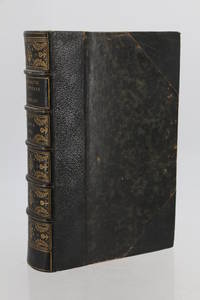
15323803Parisiis Paris: apud Ludovicum Cyaneum sub duobus Gallis in via Jacobaea Louis Blauwbloem 1532. First edition. In near-contemporary black calf binding with double gilt fillet border on the covers each board gilt-stamped with the bachelor supralibros of Jacques-Auguste de Thou-an oval laurel wreath enclosing his family arms a chevron and three black horseflies used until 1587. Spine with raised bands and gilt fillets. Large-margined clean copy. Provenance marks: de Thou supralibros and shelfmark inked on the inner front panel; bookplate of G.-E. Stroehlin on the inner front panel; additional armorial bookplate "C. V." on the front flyleaf; and a mounted clipping from the 1912 Stroehlin sale catalogue noting that the binding was "restored." Spine compartments worn with losses to the leather; joints rubbed with small losses along the bands. Corners rubbed; rear cover with an area of surface loss; front cover with a diagonal abrasion. Otherwise well preserved. First edition. In near-contemporary black calf binding with double gilt fillet border on the covers each board gilt-stamped with the bachelor supralibros of Jacques-Auguste de Thou-an oval laurel wreath enclosing his family arms a chevron and three black horseflies used until 1587. Spine with raised bands and gilt fillets. Large-margined clean copy. In-4°: A4 a4-v4. 8 157 3 pp. <p><br /> First edition of Calvin's first published work here in a binding from the library of Jacques-Auguste de Thou.<br /> <p><p><br /> First edition of Calvin's first published work his only classical commentary written on the eve of his "conversion" and printed in Paris in 1532 as a humanist calling-card rather than a theological treatise. He composed it while a young law student licencié ès loix between Bourges and Paris at the height of his immersion in the humanist culture of the Collège Royal and the philological circles around Budé and Erasmus. His choice of Seneca's De Clementia reflects these environments and his interest in ethics sovereignty and political authority. It also provided a classical framework through which a Picard jurist under Francis I could explore questions of justice clemency and political conduct Battles-Hugo 1969.<br /> <p><p><br /> The origins of the edition are well documented. According to Bibliotheca Calviniana Calvin composed the commentary mainly at Bourges before March 1531 and it was printed between February and April 1532. Two letters-one to the Orléans bookseller Philippe Loré and another to François Daniel-show that the book was produced at Calvin's own expense and involved considerable cost; to recover part of this outlay he encouraged professors in Paris Bourges and Orléans to lecture on De Clementia and offered to supply Loré with one hundred copies Peter-Gilmont 1991; Battles-Hugo 1969. In 1533-34 Calvin himself lectured on the treatise at the Collège de Fortet in Paris complementing his efforts to have it adopted in university teaching Gilmont 2005.<br /> <p><p><br /> The dedicatory framework reflects the central role of the Hangest family in his youth. Raised and educated alongside the Hangest sons and effectively integrated into their household Calvin benefited throughout his early career from their patronage most notably through the benefice of Pont-l'Évêque which financed his studies and gave him clerical standing Gordon 2009. In the dedicatory epistle to Claude de Hangest abbot of Saint-Éloi in Noyon he acknowledges that he owes to the family "all I am and all I have" presenting the commentary as the "first-fruits of our harvest" Battles-Hugo 1969.<br /> <p><p><br /> The edition survives in two forms: one with the imprint of Ludovicus Cyaneus Louis Blauwbloem as here and another with a replacement title-page for Loré at Orléans the latter a small sub-issue likely limited to c. 20-25 copies Peter 1971. Battles and Hugo further note two slightly variant impressions of the Cyaneus issue differing in certain pages of gatherings a b d e and g across the four copies they examined at Leiden Wolfenbüttel the Bibliothèque nationale and the British Museum Battles-Hugo 1969.<br /> <p><p><br /> Provenance connects the volume with two significant owners. The binding is one of the de Thou family decorated with the bachelor supralibros of Jacques-Auguste de Thou 1553-1617 président à mortier of the Parlement of Paris and founder of one of the great private libraries of early modern France. De Thou moved in the same magistrate-humanist milieu as the Hangest family-Calvin's early patrons-and the link between the two houses was later reinforced when a niece of de Thou married into the Hangest line. His library noted for its scale and systematic organisation became one of the best-documented collections of the period; the present copy is recorded in the seventeenth-century printed catalogue Catalogus bibliothecae Thuanae where it appears on p. 258. <br /> <p><p><br /> A later owner Gaspard-Ernest Stroehlin 1844-1907 was a Geneva historian of Protestantism doctor of theology and professor of the history of religion at the University of Geneva. His library focused on Reformation history and early Protestant literature was well known and later auctioned in Paris from which this copy derives. His bookplate-showing Calvin teaching in St Pierre Cathedral with the motto Mente libera "think freely" and the word "Champel" a reference to the site of Servetus's execution-remains in this copy. A clipping from the 1912 Stroehlin sale catalogue giving the entry for the present book is mounted on the front pastedown.<br /> <p><p><br /> Calvin's commentary offers a sustained engagement with De Clementia as a work of political ethics. The volume is organised in three parts: his dedicatory epistle to Claude de Hangest his biographical sketch of Seneca and the text of De Clementia printed with Calvin's continuous scholia which regularly exceed Seneca's own text and supply the philological historical legal and rhetorical apparatus expected of a humanist classroom edition. Addressed to Nero Seneca's treatise contrasts principled rule with tyranny through exempla drawn from Roman history law and philosophy. Calvin treats it as a historical and ethical document shaping his annotations around philological historical rhetorical and literary observations.<br /> <p><p><br /> His use of Seneca is informed by close reading of Erasmus's Basel editions of 1515 and 1529 and he responds to Erasmus-whose revised preface of 1529 sharply qualified his earlier praise-by contesting his diminished appraisal of Seneca's philosophical and stylistic worth. Using the 1529 text as his base Calvin revises punctuation and orthography restores earlier readings where they better represent Senecan usage expands the historical framework modifies the explanatory apparatus and draws on additional authorities including Beroaldus Beatus Rhenanus Cicero Plutarch Tacitus and the Roman jurists Battles-Hugo 1969; Bibliotheca Calviniana. The commentary reflects broader early sixteenth-century interest in classical political ethics-especially the contrast between king and tyrant-as a means of analysing authority justice and the operation of law in contemporary France.<br /> <p><p><br /> Rarity is significant. The total print run of the Cyaneus edition is plausibly estimated at around 700 copies Peter 1971. USTC lists eight surviving examples while Bibliotheca Calviniana records additional holdings not included there; taken together the two sources indicate 16 extant copies of the Cyaneus issue. The Loré sub-issue is far scarcer with only two examples listed in Bibliotheca Calviniana. We find no trace of another copy in the market in modern times either in auction records or in dealers' catalogues.<br /> <p><p><br /> Literature: Battles F. L. & Hugo A. M. 1969. Calvin's commentary on Seneca's De Clementia. Brill.; Boulliau I. Quesnel J. & Levesque D. Eds. 1679. Catalogus bibliothecae Thouanae . Paris: Dominique Levesque.; Dreyer W. A. 2018. John Calvin as "public theologian" in view of his Commentary on Seneca's De Clementia. HTS Teologiese Studies / Theological Studies 744 Article a4928; Gilmont J.-F. 2005. John Calvin and the printed book. Truman State University Press.; Gordon B. 2009. Calvin. Yale University Press.; Gordon B. & Trueman C. R. Eds. 2021. The Oxford handbook of Calvin and Calvinism. Oxford University Press.; Peter R. 1971. Calvin's commentary on Seneca's De clementia with introduction translation and notes by Ford Lewis Battles and André Malan Hugo Renaissance Text Series 3; The Renaissance Society of America 1969 Review. Revue d'histoire et de philosophie religieuses 511 79-81.; Peter R. & Gilmont J.-F. 1991. Bibliotheca calviniana: Les œuvres de Jean Calvin publiées au XVIe siècle. I Écrits théologiques littéraires et juridiques 1532-1554. Droz.<br /> <p><p><br /> References: USTC 138123; Bibiotheca Calviniana 32/1 Cat. Stroehlin n° 599.<br /> <p>. apud Ludovicum Cyaneum sub duobus Gallis in via Jacobaea [Louis Blauwbloem] unknown
1589280752United Kingdom: Geneva 1589. Book. Good. hardback. hardback folio measuring 13" x 9" and bound in reverse calf. Raised bands to the spine Calf lifting at the front leading edge return front and rear pastedowns lifted and creased brief gift inscription to a previous owner at the head of the creased front free endpaper. Light marginal stain to the top leading corner of the title page and leaves following. The binding remains tight free of markings and the text collated complete leaves numbered recto side only vi 436 x. Geneva Hardcover
1574GT1274London: Henri Binneman for Lucas Harison and George Bishop 1574. 1st Edition . Hardback. Vg. Folio. English edition translated by Arthur Golding. Woodcut decorative initials throughout and final leaf with woodcut device to the foot. Lacking the illus. title-page. Original full calf panelled binding incomplete with worn covers. A rare copy in the original state. Sadly the illus. title-page lacking as often with early books. Spine missing and gatherings loose. Fine illus. rear page with 'Imprinted at London by Henri Binneman for Lucas Harison and Geoge Bishop Anno 1574 followed by complete 24pp index. Engraved illus. initials throughout the volume. ORIGINAL BINDING <br/> <br/> [Henri Binneman] for Lucas Harison and George Bishop hardcover
15601560GEN<p>PRESENTING FOR YOUR CONSIDERATION EXQUISITE GENUINE 465 YEAR OLD FIRST EDITION OF THE HISTORIC GENEVA BIBLE PRINTED BY ROULAND HALL AT GENEVA SWITZERLAND IN 1560. Quarto 9 3/4" x 7" x 2 1/2" HERBERT #107 D & M #77 STC # 2093. Known as the Breeches Bible for its rendering of Genesis 3:7 </p><p><em><strong>" Then the eyes of them both were opened and they knewe that they were naked and they sewed figge tree leaues together and made them selues breeches. "</strong></em></p><p><strong>SHORT DESCRIPTION</strong></p><p>The General title supplied in fine facsimile lacks all three leaves of the preliminaries has all 26 engravings within the text and <strong>all 5 maps</strong> Old Testament and Apocrypha are complete without facsimiles. New Testament Title page dated 1560 is original and the New Testament is complete without facsimiles both tables at the end are incomplete and defective.</p><p><strong>COLLATION AND CONDITION</strong> </p><p><strong><em>GENERAL TITLE PAGE</em></strong> 1 page supplied in fine facsimile on sympathetically aged cotton linen paper. Imprinted at Geneva by Rouland Hall MDLX. Features a wonderful engraving of the scene at the Red Sea surrounded with the passages Exodus 14:14 Psalm 34:19 and Exodus 14:13. Verso is blank.</p><p>lacking the following three leaves of the preliminaries</p><p><strong><em>THE OLD TESTAMENT</em></strong> foliated 1- 385b 63 lines of Roman type to the full page in double columns. Beautiful floriated and historiated initials begin each book along with the arguments. Within the text features the full complement of 26 engravings such as: The situation of the Garden of Eden The flood The crossing of the Red Sea the Tabernacle and the Temple with their furniture Solomon's throne and Ezekiel's vision. Also found here are <strong>3 maps as called for at: Numbers 23 Joshua 15 and the end of Ezekiel. </strong> the remaining 2 maps are listed below where they are found in the n.t. Leaves 1 & 2 with repaired blank outer margins resulting in the loss of a few letters of the printed notes only. Leaves 196-202 with quarter sized stains to the blank footer margins. Leaf 217 stained to the upper half most likely from an ancient floral pressing. Top and bottom of the verso of leaf 238 is smudged. Leaf 263 has a stain in the center approx. 1" x 2" Leaf 286 has a stain in the lower left column approx. 1" x 2". The paper is clean crisp and bright with only very minor staining and soiling. There are no loose missing or torn pages. The edges are straight the gutters are clean the corners are strong. The footer and fore edge margins are excellent while the occasional header margins are trimmed touching and also into the running headlines but without obscuring the words. A Very Good example <strong><em>.</em></strong><strong><em>COMPLETE.</em></strong></p><p><strong><em>THE APOCRYPHA</em></strong> foliated 386-474 63 lines of Roman type to the full page in double columns.Beautiful floriated and historiated initials begin each book. The paper is clean crisp and bright with only very minor staining and soiling. There are no loose missing or torn pages. The edges are straight the gutters are clean the corners are strong. The margins are very good all around. A Very Good example <strong><em>.</em></strong><strong><em>COMPLETE.</em></strong></p><p><strong><em>THE NEW TESTAMENT TITLE PAGE</em></strong> 1 page folio #1. Imprinted at Geneva by Rouland Hall MDLX. Features a wonderful engraving of the scene at the Red Sea surrounded with the passages Exodus 14:14 Psalm 34:19 and Exodus 14:13. Verso is blank. Lightly stained Good. <strong><em>COMPLETE.</em></strong></p><p><strong><em>THE DESCRIPTION OF THE HOLIE LAND </em></strong>3 pages The double page map of the places found in the four evangelists. <strong>Map #4 </strong>of five found in this edition. Clean and crisp verso is blank. Very Good <strong><em>COMPLETE.</em></strong></p><p><strong><em>THE NEW TESTAMENT</em></strong> foliated 2- 122 63 lines of Roman type to the full page in double columns.Beautiful floriated and historiated initials begin each book along with the arguments. Leaf 7 has a somewhat crudely repaired tear without loss of the text Leaves 50-63 have minor chipping to the upper blank corner tips. <strong>Map # 5 </strong>the description of the countries and places mentioned in Acts bound at the end of the text. Leaf 74 has the lower blank corner repaired with loss to a few letters of the notes. Leaf 91 printed slightly skewed. Leaf 94 misnumbered as 84 without a break in the collation. Leaves 120-122 faintly stained. The paper is clean crisp and bright with only very minor staining and soiling. There are no loose missing or torn pages. The edges are straight the gutters are clean the corners are strong. The footer and fore edge margins are excellent while the occasional header margins are trimmed touching the running headlines. A Very Good example <strong><em>COMPLETE.</em></strong></p><p>The following two tables concordances are incomplete. The first table lacks the last page. The second table lacks the first page the next two leaves the final four leaves and all thereafter. Their condition is fair to poor with various faults including tear outs with loss cropped outer margins chipped corners and edges etc.</p><p><strong>ABOUT THE BINDING</strong></p><p>This Bible is bound in a full brown leather Victorian binding that has been neatly rebacked featuring a new burgundy morocco label. All joints are unsplit uncracked and holding firmly. The plain end papers appear to be 18th century and features the inscription of Jacob Elton who was possibly a British Naval Captain. The text block is firm square and unshaken with its fore edges dyed red as was the practice of Victorian binders. The custom fitted brown half leather clamshell case was recently made and features a maroon morocco label and is titled directly to the foot "1560 GENEVA".</p><p><strong>ABOUT THE GENEVA BIBLE</strong></p><p>The Geneva Bible is one of the most historically significant translations of the Bible into English preceding the King James Version by 51 years. It was the primary Bible of 16th-century English Protestantism and was the Bible used by William Shakespeare Oliver Cromwell John Knox John Donne and John Bunyan author of Pilgrim's Progress 1678. It was one of the Bibles taken to America on the Mayflower Pilgrim Hall Museum and Dr. Jiang have collected several bibles of Mayflower passengers. The Geneva Bible was used by many English Dissenters and it was still respected by Oliver Cromwell's soldiers at the time of the English Civil War in the booklet "Cromwell's Soldiers' Pocket Bible".</p><p>This version of the Bible is significant because for the very first time a mechanically printed mass-produced Bible was made available directly to the general public which came with a variety of scriptural study guides and aids collectively called an apparatus which included verse citations that allow the reader to cross-reference one verse with numerous relevant verses in the rest of the Bible introductions to each book of the Bible that acted to summarize all of the material that each book would cover maps tables woodcut illustrations and indices.</p><p>Because the language of the Geneva Bible was more forceful and vigorous most readers strongly preferred this version to the Great Bible. In the words of Cleland Boyd McAfee "it drove the Great Bible off the field by sheer power of excellence".</p><p>During the reign of Queen Mary I of England 1553–58 a number of Protestant scholars fled from England to Geneva Switzerland which was then ruled as a republic in which John Calvin and later Theodore Beza provided the primary spiritual and theological leadership. Among these scholars was William Whittingham who supervised the translation now known as the Geneva Bible in collaboration with Myles Coverdale Christopher Goodman Anthony Gilby Thomas Sampson and William Cole; several of this group later became prominent figures in the Vestments controversy. Whittingham was directly responsible for the New Testament which was complete and published in 1557 while Gilby oversaw the Old Testament.</p><p><em><strong>The first full edition of this Bible with a further revised New Testament appeared in 1560</strong> </em>but it was not printed in England until 1575 New Testament and 1576 complete Bible. Over 150 editions were issued; the last probably in 1644. The very first Bible printed in Scotland was a Geneva Bible which was first issued in 1579. In fact the involvement of Knox and Calvin in the creation of the Geneva Bible made it especially appealing in Scotland where a law was passed in 1579 requiring every household of sufficient means to buy a copy.</p><p>Some editions from 1576 onwards included Laurence Tomson's revisions of the New Testament. Some editions from 1599 onwards used a new "Junius" version of the Book of Revelation in which the notes were translated from a new Latin commentary by Franciscus Junius.</p><p>The annotations which are an important part of the Geneva Bible were Calvinist and Puritan in character and as such they were disliked by the ruling pro-government Anglicans of the Church of England as well as King James I who commissioned the "Authorized Version" or King James Bible in order to replace it. The Geneva Bible had also motivated the earlier production of the Bishops' Bible under Elizabeth I for the same reason and the later Rheims-Douai edition by the Catholic community. The Geneva Bible remained popular among Puritans and remained in widespread use until after the English Civil War. The Geneva notes were surprisingly included in a few editions of the King James version even as late as 1715</p> Rouland Hall
1585D8191London: Printed by Thomas Dawson Impensis George Bishop 1585. Hardcover. Very Good. 4to 180 x 130mm. 16 298pp. i.e. 598 34 P. 598 misnumbered 298. Signatures: A-2P8; 2Q-2V4. Edited by Henry Beveridge Esq. Period calf rebacked with five raised bands modern morocco label; hinge splitting affecting first gathering title in facsimile slightly browned lacking final blank. Period pen trials on the final verso leaf varying the phrase For if thou possibly beginning proverb. <br/><br/>1585 English translation of Calvins Commentary on the Acts of the Apostles; plentiful in spiritual gifts for the common good. Calvins Commentary was faithfully translated into English by Christopher Fetherstone a student of Divinity; this forms the basis of the Calvin Translation Societys edition. John Calvin the father of modern reformed theology was after Martin Luther a premiere leader in the Protestant movement. One of the goals of Calvins reformed thought was to unite a people with a sense of community and concern for one another he did especially by commenting on the imperative parts of the Gospel which motivated readers to contribute generously to common interest. The present commentary on the Acts of the Apostles is more historical than doctrinal; and hence does not contain so much profound theological discussion as some of Calvins other Commentaries. The leading topic is the progress of the Gospel under the inspired teachers to whom its first propagation was entrusted and the Constitution of the Apostolic Church including privileges enjoyed by its members. To this latter point the controversy is especially directed. From Spurgeons Commenting and Commentaries 1876 quoting Arminius I affirm that he excels beyond comparison in the interpretation of Scripture and that his commentaries ought to be more highly valued than all that is handed down to us by the Library of the Fathers; so that I acknowledge him to have possessed above most others or rather above all other men what may be called an eminent gift of prophecy The Translation appears to be well executed. It is perhaps not so strictly literal as that of the Commentary on the Romans which the Calvin Society has already published; but any difference in this respect is more than compensated by the general superiority of its style. There are occasional obscurities or mistranslations which the editor has endeavored as in the Commentary on the Romans to remove by footnotes; but on the whole it is believed that the present Translation will not suffer by comparison with that of any Theological Translation of the same period. ESTC locates 13 copies in North America institutions and 12 in the United Kingdom. STC 2nd ed. 4398. [Printed by Thomas Dawson] Impensis George Bishop hardcover
1585D8191London: Printed by Thomas Dawson Impensis George Bishop 1585. Hardcover. Very Good. 4to 180 x 130mm. 16 298pp. i.e. 598 34 P. 598 misnumbered 298. Signatures: A-2P8; 2Q-2V4. Edited by Henry Beveridge Esq. Period calf rebacked with five raised bands modern morocco label; hinge splitting affecting first gathering title in facsimile slightly browned lacking final blank. Period pen trials on the final verso leaf varying the phrase For if thou possibly beginning proverb. <br/><br/>1585 English translation of Calvins Commentary on the Acts of the Apostles; plentiful in spiritual gifts for the common good. Calvins Commentary was faithfully translated into English by Christopher Fetherstone a student of Divinity; this forms the basis of the Calvin Translation Societys edition. John Calvin the father of modern reformed theology was after Martin Luther a premiere leader in the Protestant movement. One of the goals of Calvins reformed thought was to unite a people with a sense of community and concern for one another he did especially by commenting on the imperative parts of the Gospel which motivated readers to contribute generously to common interest. The present commentary on the Acts of the Apostles is more historical than doctrinal; and hence does not contain so much profound theological discussion as some of Calvins other Commentaries. The leading topic is the progress of the Gospel under the inspired teachers to whom its first propagation was entrusted and the Constitution of the Apostolic Church including privileges enjoyed by its members. To this latter point the controversy is especially directed. From Spurgeons Commenting and Commentaries 1876 quoting Arminius I affirm that he excels beyond comparison in the interpretation of Scripture and that his commentaries ought to be more highly valued than all that is handed down to us by the Library of the Fathers; so that I acknowledge him to have possessed above most others or rather above all other men what may be called an eminent gift of prophecy The Translation appears to be well executed. It is perhaps not so strictly literal as that of the Commentary on the Romans which the Calvin Society has already published; but any difference in this respect is more than compensated by the general superiority of its style. There are occasional obscurities or mistranslations which the editor has endeavored as in the Commentary on the Romans to remove by footnotes; but on the whole it is believed that the present Translation will not suffer by comparison with that of any Theological Translation of the same period. ESTC locates 13 copies in North America institutions and 12 in the United Kingdom. STC 2nd ed. 4398. [Printed by Thomas Dawson] Impensis George Bishop hardcover books