941 résultats
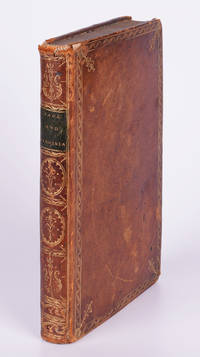
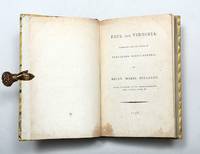
1795144669London: G. G. and J. Robinson 1795. First separate edition in English translated by the celebrated bluestocking Helen Maria Williams 1759-1827 "amidst the horrors of Robespierre's tyranny" as she explains colourfully in her Preface; it became "the standard English edition well into the nineteenth century" Deborah Kennedy Helen Maria Williams and the Age of Revolution 2002 p. 122. The circumstances under which Williams completed her translation were trying to say the least "she was subject to frequent house searches and on several occasions had parts of the translation and other papers seized and taken to 'the Municipality of Paris in order to be examined as English papers; where they still remain mingled with revolutionary placards motions and harangues; and are not likely to be restored to my possession'" ibid. Paul and Virginia was first published in French as part of Bernardin de Saint-Pierre's Études de la nature in 1788 and received its first English translation the same year. "ESTC shows 17 English forms of this work between 1795 when Helen Maria William's Paul and Virginia was published and 1800" Garside Raven and Schöwerling. Though published without an imprint this edition was almost certainly issued by the radical and printer John Hurford Stone 1763-1818 with whom Williams was involved. Another edition was published in London the same year by G. G. and J. Robinson. Precedence has not been established. "Although excessively sentimental this little work contains many charming passages especially the descriptions in which Rousseau's influence can be seen of an idyllic life in strange surroundings. It had an immense vogue was translated into many languages and still retains its popular fame. Bonaparte considered it the language of the soul and he pensioned and decorated the author" The Oxford Companion to French Literature. Octavo in fours 205 x 133 mm. With 6 engraved plates by Clément after drawings by Dutailly. Recent quarter calf and marbled boards to style spine ruled in gilt red morocco label. Small rust hole to one leaf touching one letter; a very good copy. See Garside Raven and Schöwerling 1788:71 hardcover
74557Paris F. Klincksieck 1855. Folio 43.2 x 30.4 cm. Half-title title page viii 12 pp.; 12 lithographed plates of which six colour-printed. Contemporary blind quarter vellum over marbled boards. Marbled endpapers. Speckled edges. = A seldom-seen work by the French botanist Ernest Germain de Saint-Pierre 1814-1882. The illustrations by the author are well-executed and finely detailed. The second suite of six plates is printed in colour. This publication was never completed. The plates remained unnumbered. The text stops mid-sentence on page 12. With author's dedication to Etienne Geoffroy Saint-Hilaire which he called the Goethe of France and Goethe which he called the German Geoffroy Saint-Hilaire!. The preface is dated December 1855 so publication may have run into 1856. OCLC reports just seven copies in all of which five in France four in Paris and two in the U.S.A. Boards a bit rubbed at edges; one plate with some very light spotting otherwise very good clean and unmarked. Pritzel 3290. Neither in Nissen BBI nor in Stafleu and Cowan. hardcover
194311388Paris: F. Guillot 1943. One of only 3 copies on Japon imperial numbered 23 to 25 this no.24 the total edition was 525. With an original watercolour signed by Brunelleschi. 12 full page illustrations 3 headpieces and 3 initials by Brunelleschi vibrantly coloured in pochoir by Vairel. 4to. original printed wrappers housed in the original chemise with blue lettering on spine and card slipcase. An extremely good bright and unopened copy the slipcase has a little wear.A tale of two childhood friends set on the Ile de France Mauritius which was published in 1788 and supported the philosophy of Rousseau. Although Paul and Virginie do own slaves the book does argue for the emancipation of slaves. <br>The watercolour is particularly striking being a strong full length portrait of a Mauritian slave. A fine display of pochoir with an original signed watercolour of a Mauritian slave by Brunelleschi F. Guillot unknown
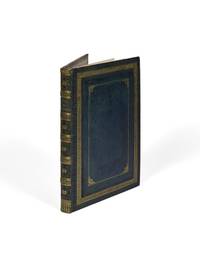
30088Paris De l'Imprimerie P. Didot l'aîné 1806. 1 vol. 235 x 320 mm de faux-titre front. titre xcii 194 p. et 3 f. Maroquin bleu à long grain plats à encadrements ornés de larges roulettes et filets à froid et dorés dos richement orné roulette intérieure tranches dorées reliure signée de Simier R. du Roi. . La plus luxueuse édition illustrée de Paul et Virgnie en partie originale et qui fixe le texte définitif. Elle est illustrée d'un portrait de l'auteur et de 6 planches hors texte gravées sur cuivre par Bourgeois de la Richardière Bovinet Mecou Prot Ribault Roger et Tillement. . Les éditions de Paul et Virginie sont nombreuses : c'est le best-seller de l'époque dès le XVIIIe siècle. Si l'édition la plus célèbre est évidemment la fameuse édition Curmer de 1838 richement illustrée et destinée à un large public la plus luxueuse et la plus belle des éditions est éditée trente ans auparavant par l'imprimerie de Firmin Didot en 1806 sur un beau papier d'Essone. Une édition à l'opposé de la Curmer : peu d'illustrations un tirage très limité un grand format et un prix élevé. Les exemplaires en sont le plus souvent luxueusement reliés par les meilleurs ateliers de l'époque. Cette édition est supervisés par l'auteur y adjoignant un préambule inédit où il revient sur la création des gravures oeuvre de Lafitte « Enfance de Paul et Virginie » Girodet « Le Passage du torrent » Baron Gérard « Arrivée de M. de la Bourdonnais » Moreau le jeune « Les Adieux de Paul et Virginie » Isabey « Les tombeaux » et Prudhon pour la plus célèbre d'entre elles : « Le Naufrage de Virginie ». « Comment M. Prud'hon a-t-il pu renfermer de si grands objets dans un si petit espace où a-t-il trouvé les modèles de ces mobiles et fugitifs effets que l'art ne peut poser et dont la nature seule ne nous présente que de rapides images . Si M. Prud'hon réussit par la pureté de ses crayons et l'élégance de ses formes à rendre des divinités il intéresse encore davantage selon moi en représentant des mortelles . Il est selon moi le La Fontaine des dessinateurs. » C'est la dernière édition parue du vivant de l'auteur et revue par ses soins. Cachet armorié au faux-titre non identifié ; ex-libris Joël Dupont ancien conservateur du Musée Barbey d'Aurevilly. Bel exemplaire très frais. Cohen 993 ; P. Thoinet « Répertoire bibliographique et iconographique de Paul et Virginie » Bulletin du bibliophile n° 41 1961 p. 167 « rien n'égale la noblesse de cette composition in-4. . C'est à mon avis une très belle réussite de l'art du livre ». Paris, De l'Imprimerie P. Didot l'aîné, 1806. 1 vol. (235 x 320 mm) de faux-titre, front., titre, xcii, 194 p. et [3] f. Maroq unknown
65944Amsterdam Villard & Changuion 1719. 12mo. 265 19 pp. Title printed in red and black. The title-leaf with browning and a large stain spot a minor stain mark in upper margin throughout. Somewhat worn contemporary calf blindstamped spine with raised bands marbled edges. From the library of Ericsberg. Einaudi 931. Second enlarged edition. The first printed in Paris in 1718 was supressed and banned.Detta är ett viktigt idelologisk arbete som pläderar mot enväldiga ministerstyrelser och för oligarki. Idealet är ett aristokratiskt välde en â€aristomonarchieâ€. Förslagets revolutionära radikalitet underströks t.o.m. av Rousseau. I Sverige blev hans ideéer givevis intressanta vid frihetstidens början och bl.a. Nikodemus Tessin var influerad av honom. Se Lennart Thanner â€Revolutionen i Sverige efter Karl XII:s död†1953 s. 345ff. Abbé de Saint Pierre 1658-1743 var redan känd genom ett förslag till ett folkens förbund i samband med freden i Utrecht. Första upplagan av â€Discours sur la polysynodie†utkom i april 1718 och väckte stort uppseende. Den konfiskerades författaren uteslöts ur Franska akademien och boktryckaren kastades i fängelse. Denna andra utökade upplaga kom ut i Amsterdam 1719. hardcover
181886072Paris: Méquignon - Marvis 1818. Fine. Méquignon - Marvis Paris 1818 14 x 21.50 cm 12 volumes reliés First collected edition partly first edition illustrated with a frontispiece portrait by Girodet and 26 plates by Girodet Desenne Lafitte Moreau le Jeune Prudhon; Vernet and Isabey were even commissioned for the figures of Paul et Virginie. As in almost all copies the plates have been bound in some disorder as several sets of engravings bear the same numbering but the whole is complete. Half red Russia leather Bradel binding. Smooth spine decorated with fillets. Covers of paper imitating Russia leather. Scattered foxing. Some soiling to some covers but superb set with well-preserved binding. Contents: Volumes 1 and 2: Voyage à l'isle de France Mauritius Voyage en Hollande Observations sur la Prusse Observations sur la Russie. Volumes 3 to 7: Etudes de la nature with Paul et Virginie and La Chaumière indienne in the sixth volume; the seventh volume contains L'arcadie and Fragments de l'Amazone imaginary account of a journey to the Amazon. Volumes 8 to 10: Harmonies de la nature. Volume 11: Voeux d'un solitaire. Various memoirs. Volume 12: Essai sur la vie de Jean-Jacques Rousseau Discours sur l'éducation des femmes Empsael La pierre d'Abraham Mémoire sur la ménagerie du jardin des plantes. Writer botanist great traveler in his early life political thinker Bernardin de Saint-Pierre achieved fame with his Etudes de la nature and Paul et Virginie a fable about the fall and misfortunes of virtue a poetic narrative whose protagonists' deaths establish a new theodicy regarding death and providence. It should be added that the Voyage à L'île de France is undoubtedly one of the journeys not only among the best written but also among the most finely observed. Beyond this the anecdotes about Rousseau are of the greatest appeal and the essay on the philosopher of great interest; Bernardin de Saint-Pierre was not only Jean-Jacques Rousseau's friend but his principal disciple. Méquignon - Marvis hardcover
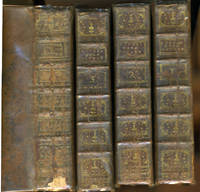
17848497Paris: Pierre F. Didot & Mequignon 1784. Hardcover. 1784 -1788. 4 volumes 12mo with a difficult publication history. The 1st 3 volumes are the 1st edition; although the 4th volume states it is the 3rd edition this is the first edition published containing the containing the story of "PAUL ET VIRGINIE" which became wildly popular. The fourth volume also contains a 70Ppp "Avis" in which the author attempts to prove his geographical beliefs by drawing on all three of Cook's voyages and his barimetric readings; pere Charlevoix in Nouvelle-France; Crevecoeur in Ohio; Linschoten & Barents; Byron; Middleton. <br /> <br /> Volume 1 - 623pp black and white frontis by Moreau le jeune a folding map of the Western Hemisphere "Hemisphere Atlantique" showing the ship route which goes around Cape Horn and approaches the ice at the Antarctic entitled "Route de Cook autour du Pole"'; Volume 2 - 631pp 3 folding plates of flowers & botanical subjects; Volume 3 - 574 pp; Volume 4 "Troisieme Edition revue corrigee et augmentee" and lists both printers Didot and Mequignon - 532pp 4pp approbations & privilege du Roi. Copper engraved plates. Bound in period full mottled calf spine in compartments. Gilt decoration somewhat dulled & spines generally worn with large chip of lower spine of vol. 4 which also has a long verticle split but a most pleasant set all edges red pristine internally. Spence 1024. Includes the widely read 18th century story "PAUL ET VIRGINIE" which is set on the Isle de France considered part of the Antarctic territories thus it is included in Spence.<br /> <br /> This copy conforms to a copy held by the Bayerische Staatsbibliothek listed separately as <br /> OCLC: 1657965; OCLC: 165796566; 165796569; OCLC: 165796572. The 1st 3 volumes published by Didot 1784; the 4th vol Didot and Mequignon and "Troisieme Edition revue corrigee et augmentee Pierre F. Didot & Mequignon hardcover
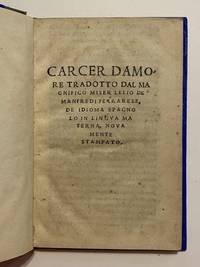
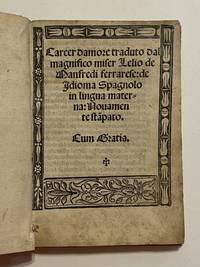
15254542Venice: Gregorio di Gregorii 1525. Very good. Small 8vo 143 x 95 mm. 44 ff. Collation: A-E8 F4 COMPLETE title-page with light toning fols. A1-2 with unimportant wormholes in blank gutter margin. Very attractive late 19th- or early 20th-century blue embossed boards gray cloth spine. In excellent condition the paper crisp and fresh. ITALIAN POST-INCUNABLE EDITION OF THE CARCEL DE AMOR ONE OF THE MOST ENDURING OF ALL LATE MEDIEVAL ROMANCES. <br /> <br /> Written in Spanish in the late 15th century the work is a key example of the "star-crossed lovers" romance tradition. It combines allegory with chivalric narrative while its epistolary form intensifies the themes of distance miscommunication and emotional crisis. Widely popular it was quickly translated and circulated across Europe as is attested by this Italian translation published in Venice in 1525. The story continues to be celebrated for its emotional intensity and its refined articulation of courtly love.<br /> <br /> The romance was first translated into Italian by Lelio de Manfredi of Ferrara in 1514 and represents a moment when literature language and print culture intersected across political and cultural borders. For years the story was reshaped and redistributed in Renaissance Europe and contributed to a shared literary tradition. On the title-page of our edition we find only Manfredi's name and the dedicatee is Isabella d'Esta his former pupil. The translator has added his own closing epistle to the Carcel de Amor which praises Isabella; the author's name Diego de San Pedro is nowhere to be found.<br /> <br /> The Carcel de amor is told almost entirely through letters speeches and monologues rather than dialogue. It centers on Leriano a young nobleman in love with Laureola daughter of the King of Macedonia. His condition is figured as an allegorical "PRISON OF LOVE" and he communicates with her only through a mediator. A rival Persio sometimes Theseus/Perseus accuses Laureola of having an affair leading to her imprisonment. Leriano rescues her and kills his rival but Laureola ultimately rejects him in a letter. In despair he chooses to starve himself to death but not before delivering a speech in praise of women.<br /> <br /> CATALOGUER'S NOTE: Italian translations of the Carcel de Amor "Carcer Damore" are uncommon. We have located just three copies of ANY Italian language post-incunable edition at auction in the last century:<br /> <br /> 1518: sold at Ader Paris 2024<br /> 1521: sold at Sotheby's London 1970<br /> 1518: sold through Quaritch Catalogue 494 1934. <br /> <br /> EDIT16 CNCE 44982. See. Gregorio di Gregorii unknown
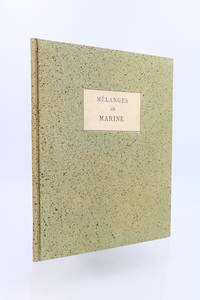
180190455Paris: Sans nom d'éditeur 1801. Fine. Sans nom d'éditeur Paris s. d. 1801 19.3 x 25 cm Relié Rare group of six fascicules all in the original edition.Bradel-style binding in green mottled boards smooth unlettered spine printed title label mounted at the centre of the upper cover; modern binding.Not recorded by Polak. Apparently no copy located in the CCFr.A stain at the head of the title page.This curious compilation bearing almost no identifying information appears to be particularly rare.It contains:- 1. A notice to mariners concerning the change in the lighting of the lighthouse in the Bay of the Somme scheduled for 25 Pluviôse Year IX 14 February 1801.- 2. An instruction on filters for purifying water signed by the health officers Dubrueil Thaumur Dupré and Billard.- 3. A notice on naval provisions signed by Rivoire.- 4. A description of the sillomètre an instrument for measuring longitude at sea addressed to the editor of the Moniteur by the former journalist Charles Mozard 17551810 who had served as Commissioner of Frances commercial relations in Boston from 1794 to 1799 and was at that time among the contributors to the Moniteur.- 5. A discourse by Bernardin de Saint-Pierre delivered at the Institut Nautical experiments and dietary and moral observations proposed for the benefit and health of sailors on long-distance voyages. This contribution had already been printed in La Décade philosophique littéraire et politique of 30 Vendémiaire Year IX 22 October 1800.- 6. Two practical notices on means of preserving ships from fire water and rats. The nature of these texts and their immediate sources suggest that this publication was probably conceived as a trial maritime periodical intended to make available sea-related articles previously published in other journals. For reasons unknown the experiment was not continued a circumstance that is fairly common in the history of periodicals. Sans nom d'éditeur hardcover
15184543Venice: Georgio de Rusconi 1518. Very good. Small 8vo 145 x 97 mm. 48 ff. Collation: A-F8 COMPLETE some soiling traces of damp in outer margins of D1-F8 for which SEE IMAGES. Old 18th-century vellum. In excellent unsophisticated condition. ITALIAN POST-INCUNABLE EDITION OF THE CARCEL DE AMOR THE MOST IMPORTANT SPANISH NOVEL OF COURTLY LOVE. <br /> <br /> Written in the late 15th century the work is a key example of the "star-crossed lovers" romance tradition. It combines allegory with chivalric narrative while its epistolary form intensifies the themes of miscommunication and emotional crisis. Widely popular it was quickly translated and circulated across Europe as is attested by this Italian translation published in Venice in 1518. The story continues to be celebrated for its emotional intensity and its refined articulation of courtly love.<br /> <br /> The romance was first translated from the Spanish into Italian by Lelio de Manfredi of Ferrara in 1514 and represents a moment when literature language and print culture intersected across political and cultural borders. For years the story was reshaped and redistributed in Renaissance Europe and contributed to a shared literary tradition. On the title-page of our edition we find only Manfredi's name and the dedicatee is Isabella d'Esta his former pupil. The translator has added his own closing epistle to the Carcel de Amor which praises Isabella; the author's name Diego de San Pedro is nowhere to be found.<br /> <br /> The Carcel de amor is told almost entirely through letters speeches and monologues rather than dialogue. It centers on Leriano a young nobleman in love with Laureola daughter of the King of Macedonia. His condition is figured as an allegorical "PRISON OF LOVE" and he communicates with her only through a mediator. A rival Persio sometimes Theseus/Perseus accuses Laureola of having an affair leading to her imprisonment. Leriano rescues her and kills his rival but Laureola ultimately rejects him in a letter. In despair he chooses to starve himself to death but not before delivering a speech in praise of women.<br /> <br /> CATALOGUER'S NOTE: Italian translations of the Carcel de Amor "Carcer Damore" are uncommon. We have located just three copies of ANY Italian language post-incunable edition at auction in the last century:<br /> <br /> 1518: sold at Ader Paris 2024<br /> 1521: sold at Sotheby's London 1970<br /> 1518: sold through Quaritch Catalogue 494 1934.<br /> <br /> EDIT16 CNCE 66997. Georgio de Rusconi unknown
15374403Venice: Francesco Bindoni & Mapheo Pasini compagni 1537. 8vo 145 x 94 mm. 48 leaves. Italic types. Large title woodcut of the prison of love in flames 19 woodcut text illustrations printed from 13 blocks most showing two scenes; initial spaces with guide letters unrubricated. 19th-century green straight-grained morocco sides with double fillet border enclosing central gold-blocked arms of Gómez de la Cortina his gilt crowned ciphers in the corners gilt edges. Provenance: Joaquin Gómez de La Cortina 1st Marquis de Morante 1808-1868 supralibros & bookplate; with Quaritch their collation note at end; sold in 1996 to Kenneth Rapoport bookplate. <br /> <br /> Lelio Manfredi’s Italian translation of the Carcel de amor 1st ed. 1492 was among the most popular sentimental romances of its time. Many wept over the thwarted love of the noble Leriano and Laureola heir to the throne of Macedonia. Captive in an allegorical tower of love communicating with his beloved only through mediators the hero eventually renounces her in order to preserve her honor threatened by a rival’s false aspersions. There are duels and battles Leriano stops eating and finally dies after shredding and swallowing her letters. The tragedy touched a nerve and dozens of editions appeared in Spain as well as translations into Italian French English Catalan and in the 17th century German. Few remembered the true author whose name is omitted from most of these editions.<br /> <br /> One of several Castilian romances that were widely adapted and translated into other western European languages the Carcel de amor was the only one to appear first in print and to be consistently illustrated. It permeated the European reading public. The tale is told through letters and monologues rather than dialogue and much has been written about its hybrid forms and elaborate rhetoric “a reflection of vernacular humanism and a fictional tour de force of rhetorical precepts†Francomano p. 10 and about its literary sources and later influence or lack of it: While many scholars note its influence on the development of later European Renaissance fiction through its use of epistolary exchanges and of a narrative voice L’autore who acts as intermediary as well as its tragic ending and exploration of class differences between the lovers one commentator has called it “a dead-end in the history of literature†A. West: “In general the Prison of Love is a book of vestiges: of ways of believing that no longer obtain of customs that already were dying out of a manner of writing soon to be eclipsed by the realism of the picaresque novel.â€<br /> <br /> The humanist Lelio Manfredi d. 1528 translated the work into Italian at the request of Isabella d’Este to whom the printed editions are dedicated the first appearing in Venice in 1514. Eight more editions of his translation are recorded by USTC all but one Venetian the last in 1546. This edition is the third of four recorded editions by the partners Fr. Bindoni & Maffeo Pasini who specialized in vernacular literature and devotional works. <br /> <br /> The title woodcut used in the Bindoni and Pasini editions is a close copy of woodcuts from earlier Venetian editions see for example an anonymously published Spanish edition from 1523 Sander 6729 not in USTC whose title is reproduced in the Heredia catalogue vol. 2 no. 2468. Its iconography dates to the earliest Spanish editions as does that of the small primitive text woodcuts which relate to the text and are based on the more elaborate cuts from the Spanish incunable editions cf. Deyermond. Blind copying was the order of the day: note the anachronism of a cheaply printed edition of the 1530s retaining blank initial spaces with guide letters to be filled by nonexistent rubricators or illuminators who by this late date would only have been hired to embellish costly imprints or luxury manuscripts. <br /> <br />  I locate two US holdings of this edition UCLA and Folger and six holdings of other editions of Manfredi’s translation. <br /> <br /> USTC 854438; EDIT-16 CNCE 66994; Sander 6732 note; Palau 293388; Brunet V 112. Not in Essling. Cf. Alan Deyermond “The Woodcuts of Diego de San Pedro's Cárcel de Amor 1492-1496â€Â Bulletin hispanique 2002 104-2: 511-528; Emily Francomano The Prison of Love: Romance Translation and the Book in the Sixteenth Century Toronto 2018; Adrian West “On Translating Diego de San Pedro's The Prison of Love†Asymptote Oct. 2012 online. Francesco Bindoni & Mapheo Pasini, compagni unknown
17953334The scarce first edition of Helen Maria Williams' translation of Saint-Pierre's best-selling Paul et Virginie. This English translation was also to prove enormously popular with many printings in England but this first appearance thought to have been printed in Paris at the English press of Williams' lover John Hurford Stone is scarce. Additionally this copy includes the suite of six engraved plates found only in a few copies.<br /> In 1792 two years after her first visit to Paris Helen Maria Williams returned to live there permanently. Her salon on the rue Helvétius became a meeting place not only for her Girondist circle but also for a large number of British American and Irish radicals writers and public figures including Mary Wollstonecraft Thomas Paine Joel Barlow and Charles James Fox. It was at this time that she became involved with John Hurford Stone 1763-1818 a radical English coal dealer who was working as a printer in Paris. Their involvement caused huge scandal in England as Stone was married. He divorced his wife in 1794 and it may be that he was married to Williams in the same year. On October 11th 1793 during tea with Bernardin de Saint-Pierre Williams had learnt that all British citizens in France were to be arrested following the French defeat at Toulon. The next day she and her family were taken to the Luxembourg prison where they stayed until 26th October when they were moved to the English Conceptionist Convent otherwise known as the Couvent des Anglaises. It was here that Williams began this translation. She was released in April of the following year on the condition that she left Paris: she and Stone went together to Switzerland until they were able to return to Paris in 1795 when Stone printed the completed work.<br /> Of the copies listed in ESTC only three copies Virginia Morgan and Penn have the plates although the BN copy also has the plates. Of the Morgan copy John Bidwell writes in their catalogue: 'Given the French origins of the paper type plates and binding and the quality of the typesetting this edition was printed in Paris almost certainly at the English press of the expatriate radical John Hurford Stone who was living with Helen Maria Williams at the time. Cf. Madeleine B. Stern "The English Press in Paris and its successors" PBSA 74 1980: 307-89'. Adding another level to the interchange of nationalities in this edition although French the type was of English origin being cast from Baskerville's punches by the Dépôt des caractères de Baskerville in Paris established by Beaumarchais in 1791 and closed c.1795–6. Beaumarchais a great admirer of Baskerville purchased the bulk of the Birmingham printer's punches from his widow after his death John Dreyfus 'The Baskerville punches 1750–1950' The Library 5th series 5 1951 26–48.<br /> 'The following translation of Paul and Virginia was written at Paris amidst the horrors of Robespierre's tyranny. During that gloomy epocha it was difficult to find occupations which might cheat the days of calamity of their weary length . In this situation I gave myself the task of employing a few hours every day in translating the charming little novel . and I found the most soothing relief in wandering from my own gloomy reflections to those enchanting scenes of the Mauritius which he has so admirably described . the public will perhaps receive with indulgence a work written under such peculiar circumstances; not composed in the calm of literary leisure or in pursuit of literary fame; but amidst the turbulence of the most cruel sensations and in order to escape from overwhelming misery' Preface signed Helen Maria Williams Paris June 1795. <br /><br /><i>8vo pp. ii viii 2 9-274 with six stipple engraved plates by Lingée Lefebvre and Clément two after designs by Dutailly tissue guards to all but one of the plates some scattered foxing the text printed on mixed stock much of which is slightly blue-tinted and watermarked 'P Lentaigne' occasional light spotting small marginal hole on D1 one gathering sprung in contemporary calf worn at extremities head and foot of spine chipped roll tool border to covers within double fillet gilt corner fleurons and circles gilt flat spine gilt in compartments blue morocco label lettered in gilt both covers badly scratched with bright marbled endpapers and gilt edges.</i><br /><br />ESTC t131741 listing BL Bodleian Wisbech; Cornell Harvard Morgan Penn Princeton Smith College Toronto UCLA Chicago Illinois Virginia and Yale.<br /><br />Cohen-de Ricci 932 calling for only 5 plates; no details given in Garside Raven & Schöwerling see note on HMW's translation in 1788:71. John Hurford Stone at the English Press.
17891321872London; Paris: J. Dodsley; De L'Imprimerie de Monsieur 1789. Hardcover. A unique collection of both the original French and the English translation of the famed novel together with a remarkable collection of proofs before letters by esteemed French artists.<br /> <br> <br /> <br> <br /> Three volumes housed in a custom three-part black and red leather box with gilt titling to spine. Box solid with some wear and cracking to edges.<br /> <br> <br /> <br> <br /> Paul et Virginie. Paris: De L'Imprimerie de Monsieur 1789. 12mo. xxxv 243 pages. is bound in full burgundy morocco triple gilt rules to boards spine with gilt titling and tooling all edges of text block gilt marbled endpapers bookplate to front endpaper. Unsigned binding but early invoice states it was bound by Derome. With half-title and four black and white plates. Light foxing to plate edges. "Prix papier vélin d'Essone 6. liv."<br /> <br> <br /> <br> <br /> Paul and Mary. London: printed for J. Dodsley Pall-Mall 1789. Small Octavos Two Volumes. In Near Fine condition. Both volumes of are bound in matching full green morocco with elegant gilt tooling and paneled spines similarly gilt. Burgundy morocco doublures with matching design to boards embroidered silk endpapers facing doublures marbled endpapers following. Incredibly tight binding; bookplate to marbled endpaper; Bound by Chambolle-Duru with their gilt stamp to front doublure. All edges gilt. <br /> CONTENTS: Vol. I. 8 xii 4 191 pages interspersed with numerous unpaginated plates -- Vol. II. 8 158 pages interspersed with numerous unpaginated plates.<br /> <br> <br /> <br> <br /> With an Autograph Letter Signed by Saint-Pierre addressed "Au Citoyen Le Danois" André Bazile Le Danois de La Soisière a member of the Council of Ancients. Measuring 9 in. x 6.7 in. with integral address leaf attached. Small tear to upper left corner where seal was attached small archival repair to upper right corner neither impacting and writing. Four Postal stamps present on integral address leaf. Actual text is 25 lines in Saint-Pierre's hand responding to a letter by Le Danois about a meeting countering his proposed date of the 8th with the 10th. He then goes on to discuss how he was tricked by a man that he had not seen for twenty years as well as by a young woman. He defends himself that he in no way was compromising the interests of the Republic. The letter is dated "Paris ce 7 ventose an 7" February 26th 1799.<br /> <br> <br /> <br> <br /> With invoice circa 1895 from E. F. Bonaventure containing a handwritten description of the three volumes in purple ink. "Unique copy in an exquisite Binding by Chambolle extra illustrated with rare set all proofs before letters"<br /> <br> <br /> <br> <br /> "1. Set of proofs by Achille Devéria<br /> <br> <br /> 2. Set of proofs by Corboald<br /> <br> <br /> 3. Set of proofs <br /> <br> <br /> 4. Set of proofs Medallions in color <br /> <br> <br /> 5. Set of proofs Medallions in color by Dutailly Guyot sculp<br /> <br> <br /> 6. Set of proofs by Desenne<br /> <br> <br /> 7. Set proofs by Jean-Michel Moreau<br /> <br> <br /> 8. Set proofs by Tony Johannot<br /> <br> <br /> 9. Set proofs by Corboald small<br /> <br> <br /> 10. Set proofs by Lery<br /> <br> <br /> 11. Set proofs by Jean-Antoine-Valentin Foulquier<br /> <br> <br /> 12. Autographed Letter<br /> <br> <br /> In All 70 Plates All proofs."<br /> <br> <br /> <br> <br /> MW Consignment. Shelved in Case 0. Paul et Virginie or Paul and Virginia is a novel by Jacques-Henri Bernardin de Saint-Pierre first published in 1788. The novel's title characters are friends since birth who fall in love. The story is set on the island of Mauritius under French rule then named Île de France. Written on the eve of the French Revolution the novel is recognized as Bernardin's finest work. It records the fate of a child of nature corrupted by the artificial sentimentality of the French upper classes in the late eighteenth century. Bernardin de Saint-Pierre lived on the island for a time and based part of the novel on a shipwreck he witnessed there.The French volume included here is the first separate edition of this famous novel published the year before in the fourth volume of Saint-Pierre's Etudes de Nature.<br /> <br> <br /> <br> <br /> The English translation by Jane Dalton changed the name of Virginia to Mary. References: Malcolm Cook "Bernardin de Saint-Pierre's English correspondents during the French Revolution" in "British-French exchanges in the eighteenth century" edited by K. H. Doig & D. Medlin 10-11. CSP 2007. Patricia James in "Population Malthus" 1979 also attributes this translation to Jane Dalton. For an earlier attribution to Daniel Malthus see "The New Cambridge Bibliography of English Literature" Vol. 2 1971. 1008 1531. <br /> <br> <br /> <br> <br /> References: ESTC T70721. 1321872. Shelved Dupont Bookstore. J. Dodsley; De L'Imprimerie de Monsieur hardcover
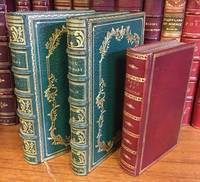
1878ST16926Paris: Printed by Ch. Unsinger for Alphonse Le Merre 1878. No. 12 OF 50 COPIES on Whatman paper and 50 copies on paper de Chine. 225 x 140 mm. 8 7/8 x 5 5/8". 2 p.l. 240 pp. 2 leaves.With notice of the author's life and notes on the text by Anatole France. <br/> FINE DARK BLUE JANSENIST CRUSHED MOROCCO BY MARIUS MICHEL stamp-signed in gilt on front doublure raised bands gilt titling CITRON MOROCCO DOUBLURES GILT AND INLAID diagonal gilt fillets intersecting to form lozenge-shaped compartments each containing an inlaid dark purple violet bud or flower on a slender gilt stem the intersection of the fillets inlaid with a small or large violet leaf the panel enclosed by a frame of repeated curling leaf tools leather hinges pale green patterned silk endleaves marbled flyleaves all edges gilt fore edges untrimmed. With original printed paper wrappers bound in. Portrait frontispiece and six etchings all before letters by P. E. A. Hédouin. A Large Paper Copy. Text framed in red. Tail margin of portrait with light pencilled inscription signed by the artist. ◆Trivial imperfections if you are very unkind but A VERY FINE COPY especially clean fresh and bright internally in a virtually unworn binding.<br/> <br/> The austere exterior of this Jansenist binding encloses a riot of luxury where the exquisite inlaid floral doublures by Marius Michel fils the stately margins of the Large Paper Copy printed on thick smooth Whatman paper and the elegant illustrations by Edmond Hédouin add to the allure of Saint-Pierre's popular romance. First issued in 1788 and subsequently widely translated and often printed "Paul et Virginie" is the tale of two childhood friends on the unspoiled French island colony of Mauritius who grow up to fall in love. Their island paradise governed by socialist principles embraced by a contented populace living in harmony serves as an allegory for the corrupting influence of the French upper classes on the innocent "child of nature." Bernardin de Saint-Pierre 1737-1814 was a botanist as well as a literary writer and spent time in Mauritius studying its flora. His love of the tropical island and the influence of his friend and mentor Jean-Jacques Rousseau are both evident in the present work. Our edition benefits from the notes on the text and on the life of the author by prominent man of letters Anatole France 1844-1924 who would win the 1921 Nobel Prize for literature "in recognition of his brilliant literary achievements characterized as they are by a nobility of style a profound human sympathy grace and a true Gallic temperament." <br /> <br /> Considered the best binder of his generation as well as the founder of modern French bookbinding Henri Marius Michel 1846-1925 began his career in the atelier established by his father Jean in Paris in 1849 where they produced distinguished work in the prevailing historical styles for two decades. After the father's death in 1890 the firm came to even greater prominence when Henri began producing bindings in a completely new and original style that did nothing less than change the course of modern bookbinding in France. According to Duncan & De Bartha Henri believed passionately "that bookbinding needed a new vocabulary of ornamentation in order to express the mood and spirit of contemporary authors." The "vocabulary of ornamentation" he developed was based on nature the revolutionary "La Flore Ornamentale" style that he unveiled at the 1878 International Exposition. The doublures here give a hint of this new style using a delicate violet motif for the repeating mosaic design. [Printed by Ch. Unsinger for] Alphonse Le Merre unknown
30655Paris De l'Imprimerie de Monsieur 1789. 1 vol. 75 x 130 mm de 1 f. xxxv et 243 p. Maroquin rouge deux filets dorés bordant une chaînette d'encadrement dorée sur les plats dos lisse orné pièce de titre de maroquin vert monogramme doré « SM » au centre des plats roulette intérieure reliure de l'époque. . Première édition séparée. Elle est ordonnée par Pierre François Didot le jeune avec une édition luxueuse sur un papier de choix provenant de ses papeteries d’Essonne qu’il enrichit d’illustrations – l’édition sur papier ordinaire n’en contenant pas : 4 figures de Moreau le Jeune la dernière en collaboration avec Joseph Vernet gravées sur cuivre par Girardet Halbou et Longueil. Envoi signé : « pour Mademoiselle Mesnard de Conichard par l’auteur De Saint-Pierre ». . Paul et Virginie est une oeuvre difficile à définir y compris pour son auteur qui y voyait un « petit ouvrage » une « fable essai » et même une « espèce de pastorale ». L'ouvrage fut d'abord écrit comme un complément à une deuxième édition à Voyage à l'île de France puis à la troisième édition des Études de la nature dont il devait illustrer les thèses par la fiction. Il entendait mettre en application « les lois des Études de la nature au bonheur de deux familles malheureuses » par le dénouement tragique qu'il donne à son récit en brisant le rêve d'un idylle. Il se démarque ainsi du goût de l'époque pour la pastorale même s'il applique les règles de simplicité du genre : deux jeunes gens grandissent ensemble dans le cadre enchanteur et paisible de l'île de France l'île Maurice actuelle s'aiment sont séparés par la civilisation avant d'en être définitivement écartés au cours du drame du Saint-Géran. Bernardin de Saint-Pierre - formé aux récits de Daniel Defoe et de son Robinson Crusoé - embarqua à douze ans pour la Martinique sur le bateau d'un de ses oncles : une révélation mais aussi la découverte du gouffre séparant l'imagination de la réalité supportant mal les ardeurs du climat les fatigues du voyage et surtout la discipline des navires. Après cette déconvenue ses parents le mettent au collège des jésuites de Caen où il caresse un temps l'idée de devenir missionnaire puis à Rouen avant d'entrer en 1757 à l'École nationale des ponts et chaussées. Il intègre à la fin de ses études le corps des ingénieurs militaires. Dès 1773 il dénonce le crime de l'esclavage dans son Voyage à l'Île de France à l'Île Bourbon au cap de Bonne-Espérance : il fait partie des auteurs qui s'opposent alors sans ambiguïté à l'esclavage et au racisme au nom de l'égalité de tous les hommes d'autant que natif du Havre l'un des principaux ports où transitent les esclaves il n'a eu de cesse d'en voir les ravages. Il y reviendra dans Paul et Virginie faisant des esclaves Marie et Domingue qui vivent en harmonie avec leurs maîtres des figures importantes de son récit. Ce récit inspirera nombre d'écrits postérieurs de l'Atala de Chateaubriand au Coeur simple de Flaubert. « Comme la plupart des chefs-d'oeuvre celui-ci apporte au genre et à la mode qu'il illustre à la fois son accomplissement et son démenti. » Jean Favre Paul et Virginie connut un vif succès dès sa publication et fut un des livres les plus réédités jusqu'au début du XXe siècle ; et preuve de son immense réussite Lamartine Balzac et Flaubert ont fait de leurs héroïnes Graziella Véronique et Emma Bovary des lectrices de Paul et Virginie : « Emma cherchait à savoir ce que l'on entendait au juste dans la vie par les mots de félicité de passion et d'ivresse qui lui avaient paru si beaux dans les livres. Elle avait lu Paul et Virginie et elle avait rêvé la maisonnette de bambous le nègre Domingo le chien Fidèle mais surtout l'amitié douce de quelque bon petit frère qui va chercher pour vous des fruits rouges dans des grands arbres plus hauts que des clochers ou qui court pieds nus sur le sable vous apportant un nid d'oiseau. » Madame Bovary 1857 p. 36. Très bel exemplaire de grande rareté avec envoi circonstancié et des plus pertinents : Mlle Mesnard était la fille d'un correspondant et ami proche de Bernardin de Saint-Pierre François Mesnard de Conichard 1727-1792 premier commis des Finances. Ce dernier était intervenu en faveur de Bernardin de Saint-Pierre pour l'obtention d'une gratification annuelle à son retour de l'Île Bourbon ; la correspondance entre les deux hommes témoigne d'une longue amitié et d'une relation quasi-familiale. C'est à François de Conichard que l'auteur à l'automne 1784 envisage et propose de dédicacer ses Études de la nature. Très élégamment il la refusa ayant « toujours évité par-dessus tout de faire parler de moi et je suis trop vieux pour changer ma marche à cet égard je vous supplie donc qu'il ne soit plus question de cette dédicace . N'en parlons plus je vous prie » lettre à Bernardin de Saint-Pierre octobre 1784. L'auteur respecta la demande et offrit la dédicace à un autre de ses amis Hennin. Néanmoins lors de la troisième édition parue en 1788 et contenant au quatrième tome le roman de Paul et Virginie Bernardin de Saint-Pierre réussit discrètement à faire imprimer sa reconnaissance envers « mes respectables amis MM. Hennin & Mesnard de Conichard » ; et à offrir l'année suivante et pour cette première édition séparée du roman cet exemplaire à la fille de son dédicataire. Une lettre de Mesnard à Bernardin en date du 30 avril 1773 fait mention de sa fille pour la première fois et Bernardin de Saint-Pierre lui-même parle de « Mlle Mesnard fille d'un de mes meilleurs amis et que j'ai vu naître » dans une lettre à l'auteur du poème « Le Tombeau de Virginie » en 1789 citée dans Rebecca Ford « Une correspondance amicale : Bernardin et Mesnard de Conichard » Autour de Bernardin de Saint-Pierre Mont-Saint-Aignan P.U. de Rouen et du Havre 2010. Cette dernière n'a au moment de la parution du volume que dix-sept ans : soit l'âge exact de l'héroïne de Bernardin de Saint-Pierre puisque Virginie quitte l'île à quinze ans pour n'y revenir que deux ans et demi plus tard pour la fin tragique que l'on sait. Marie-Françoise Mesnard de Conichard épousera quelques années plus tard Jean-François Pierre Puy de Rosny futur baron d'Empire. En 1792 Bernardin de Saint-Pierre épousera quant à lui la fille de son imprimeur Didot avec laquelle il aura deux enfants qu'il prénommera naturellement Virginie née en 1794 et Paul né en 1798. Des bibliothèques Marie-Françoise Mesnard de Conichard ; Pierre Bergé ex-libris ; II n° 191. Tchemerzine V p. 649 ; Cohen 931. Paris, De l'Imprimerie de Monsieur, 1789. 1 vol. (75 x 130 mm) de 1 f., xxxv et 243 p. Maroquin rouge, deux filets dorés bordan unknown
BIBLIO-LIVE-4-24<p>Paris de l'Imprimerie de P. Didot l'aîné 1806.</p><p>Large folio 464 x 303 mm of 2 ll. 1 portrait xcii pp. 194 pp. 3 ll. of <i>Liste des souscripteurs</i>6 colored plates out of pagination. Quarter red straight grained morocco elegantly decorated flat spine olive green morocco lettering piece gilt edges. Case. <i>Slightly later binding.</i> </p><p><b>The most beautiful ancient edition</b><i>of Paul et Virginie</i> illustrated "with a <b>portrait</b><i>by Laffite engraved by Ribault and <b>6 </b><b>figures</b> by Gérard Girodet Isabey Laffite Moreau et Prudhonengraved by Bourgeois de la Richardière Bovinet Mecou Pillement fils Prot et Roger. </i></p><p><b>The figures are very beautiful.</b><i>The touching composition of Moreau and especially his dramatic figure of Virginie's drowning by Prudhon make this volume very interesting." </i>Cohen 931.</p><p>Graesse <i>Trésor de Livres rares</i> VI 226</p><p><i>Paul et Virginie marks a phase in the French novel. Bernardin de Saint-Pierre crystalized in his work and in this novel all the travel literature so abundant in those times but didn't offered big literary merit. </i></p><p><i>He carried the thesis of Rousseay who he only knew Switzerland and France in the tropics. Even better he succeeded in showing - what Rousseau couldn't do living men in state of nature at least as one could imagine at the end of the 18th century. </i></p><p><i>As a novelist and painter he is the predecessor of Chateaubriand. For example peaking of the aurora borealis he writes: "The brilliancy of its fires joined to the trembling light of the moon renders the nights of a singular magnificence; the landscape is lit up by a dark and soft day." </i></p><p><i>And by this Bernardin de Saint-Pierre is at the origin of a vast current that goes from Chateaubriand to Pierre Loti."</i></p><p>The present work was printed in 6 different issues: ordinary 75 fr.; before the letter 120 fr.; with painted figures 240 fr.; folio 120 fr. folio before the letter 168 fr. folio with colored figures 288 fr. </p><p><b>The present copy belongs to the most luxurious and rarest issue folio with colored figures. </b></p><p> "<i>Few copies off the press were issued in folio</i>" Rahir <i>Bibliothèque de l'amateur</i> 628.</p><p><b>Precious copy belonging to the very luxurious issue in large folio with colored figures which is very rare preserved in its elegant fine decorated quarter red morocco binding.</b></p><p><br /></p><p><u>FR</u></p><p>Paris de l'Imprimerie de P. Didot l'aîné 1806.</p><p>Grand in-folio de 2 ff. 1 portrait xcii pp. 194 pp. 3 ff. de <i>Liste des souscripteurs</i> 6 planches hors-texte en couleurs. Portrait piqué. Demi-maroquin rouge à grain long à coins dos lisse finement orné pièce de titre de maroquin olive tranches dorées. Etui. <i>Reliure légèrement postérieure</i>.</p><p>464 x 303 mm.</p><p><b>La plus belle édition ancienne de</b><i>Paul et Virginie</i> <b>ornée </b>" d'un <b>portrait </b><i>par Laffite gravé par Ribaultet </i><b>6 figures </b><i>par Gérard Girodet Isabey Laffite Moreau et Prudhon gravées par Bourgeois de la Richardière Bovinet Mecou Pillement fils Prot et Roger.</i></p><p><b>Les figures sont très belles</b><b>. </b><i><b>La composition touchante de Moreau et surtout la dramatique figure du Naufrage de Virginie par Prudhon rendent ce volume très intéressant</b></i>. " Cohen 931.</p><p>Graesse <i>Trésor de Livres rares</i> VI 226</p><p><i>" Paul et Virginie " marque une étape dans le roman français. Bernardin de Saint-Pierre a cristallisé dans son œuvre et dans ce roman toute la littérature de voyage si abondante en ce temps mais qui n'offrait pas grand mérite littéraire. Il a transporté les thèses de Rousseau qui lui ne connaissait que la Suisse et la France sous les Tropiques. Bien mieux il a réussi à montrer - ce que Rousseau n'avait pu faire - des hommes vivant à l'état de nature tels du moins qu'on pouvait les imaginer en cette fin du XVIIIe siècle.</i></p><p><i>Comme romancier et comme peintre il est le prédécesseur de Châteaubriand. Parlant des aurores boréales par exemple il écrit : " l'éclat de ses feux joint à la lumière tremblante de la lune rend les nuis d'une magnificence singulière ; le paysage est éclairé d'un jour sombre et doux ".</i></p><p><i>Et par là Bernardin de Saint-Pierre est bien à l'origine d'un vaste courant qui va de Châteaubriand à Pierre Loti. "</i></p><p><b>Le présent ouvrage fut imprimé en six états différents</b><b> :</b> ordinaire 72 fr. ; avant la lettre 120 fr. ; avec figures peintes 240 fr. ; in-folio 120 fr. ; in-folio avant la lettre 168 fr. ; in-folio figures coloriées 288 fr.</p><p><b>Le présent exemplaire appartient au rare tirage le plus luxueux et le plus rare in-folio avec les figures coloriées.</b></p><p>" <i>Quelques exemplaires ont été tirés de format in-folio</i> " Rahir <i>Bibliothèque de l'amateur</i> 628.</p><p><b>Précieux exemplaire l'un des rares au format grand in-folio avec les figures dans le rare état en couleurs conservé dans son élégante reliure en demi-maroquin rouge finement orné.</b></p> hardcover