Saint-Pierre, Bernardin DeBiblio.com

941 résultats
1385390336.Ghardcover. Good. Access codes and supplements are not guaranteed with used items. May be an ex-library book. hardcover
3368318209.Gpaperback. Good. Access codes and supplements are not guaranteed with used items. May be an ex-library book. paperback
3368318217.Ghardcover. Good. Access codes and supplements are not guaranteed with used items. May be an ex-library book. hardcover
1161447555.Ghardcover. Good. Access codes and supplements are not guaranteed with used items. May be an ex-library book. hardcover
Z1-F-061-00217BiblioBazaar. Used - Like New. Used - Like New. Book is new and unread but may have minor shelf wear. Ships from UK in 48 hours or less usually same day. Your purchase helps support Sri Lankan Children's Charity 'The Rainbow Centre'. 100% money back guarantee. We are a world class secondhand bookstore based in Hertfordshire United Kingdom and specialize in high quality textbooks across an enormous variety of subjects. We aim to provide a vast range of textbooks rare and collectible books at a great price. Our donations to The Rainbow Centre have helped provide an education and a safe haven to hundreds of children who live in appalling conditions. We provide a 100% money back guarantee and are dedicated to providing our customers with the highest standards of service in the bookselling industry. BiblioBazaar unknown
1888BOOKS242854London UK: George Routledge and Sons. G/NO DUSTJACKET. 1888. Ltd Edition. Cloth. No. 221 of 800 copies . 4to. 208 pp. cover rubbed. bumped fraued yellowing . George Routledge and Sons hardcover
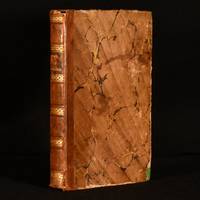
1819220336London : Printed for John Sharpe; Longman Hurst Rees Orme and Brown; Baldwin Cradock and Joy; and George Cowie and Co. 1819 i.e.1820 1819. 1st Edition in this form. Hardback. Very good copy bound in contemporary full aniline calf. Raised bands and gilt-blocked titles to spine with compartments uniformly tooled in gilt. Decorative gilt-stamped border to upper and lower boards. Spine bands and panel edges somewhat worn and rubbed as with age. All edges gilt. Marbled endpapers. Some age toning and tanning internally especially around the prelims and plates. Small bookseller's label on blank prelim. leaf: Wm. A. Colman Broadway New York. Previous owner's inscription and signature to half title and engraved title pages. Remains particularly well-preserved overall; tight and strong. Further scans images etc. and additional bibliographical material available on request.; 8vo 8"" - 9"" tall; 168 pages; Physical description: viii 168 p. 4 leaves of plates : ill. ; 19 cm. 12mo. Added engraved title page with vignette dated 1820.The plates and title vignette are drawn by Richard Westfall engraved by Charles Heath; three of the plates are dated 1820.Printer's imprint on verso of title leaf and at foot of p. 168: C. Whittingham printer College House Chiswick. Translation of: Paul et Virginie. Subjects: French literature -- Children's books -- Translations into English. London : Printed for John Sharpe; Longman, Hurst, Rees, Orme, and Brown; Baldwin, Cradock, and Joy; and George Cowie and Co., 18 hardcover
189152357Philadelphia: Henry Altemus. As New. 1891. Hardcover. FREE UPGRADE to Courier/Priority Shipping Upon Request IN STOCK AND IMMEDIATELY AVAILABLE FOR SHIPMENT - Text pristine clean & unmarked - Text in English with lovely black and white illustrations by Leloir. 296 pages. Includes a brief biographical essay on Saint-Pierre. -- with a bonus offer-- . Henry Altemus hardcover
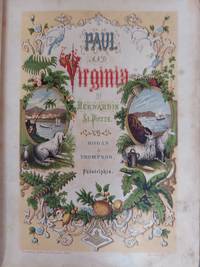
1849230721-MB15Philadelphia: Hogan & Thompson 1849. Embossed cloth hardcover embellished with illuminations and Engravings in Tint by Devereux glue residie on front cover pages heavily foxed does not marr engravings full color frontispiece and title plus plus 12 tinted engravings . First Edition. Hard Cover. Good/No Dust Cover. Hogan & Thompson Hardcover
19512081402110005132Kawaideshobo 1951. Soft Cover. Fine. Volume: 177 Kawaideshobo paperback
1795144669London: G. G. and J. Robinson 1795. First separate edition in English translated by the celebrated bluestocking Helen Maria Williams 1759-1827 "amidst the horrors of Robespierre's tyranny" as she explains colourfully in her Preface; it became "the standard English edition well into the nineteenth century" Deborah Kennedy Helen Maria Williams and the Age of Revolution 2002 p. 122. The circumstances under which Williams completed her translation were trying to say the least "she was subject to frequent house searches and on several occasions had parts of the translation and other papers seized and taken to 'the Municipality of Paris in order to be examined as English papers; where they still remain mingled with revolutionary placards motions and harangues; and are not likely to be restored to my possession'" ibid. Paul and Virginia was first published in French as part of Bernardin de Saint-Pierre's Études de la nature in 1788 and received its first English translation the same year. "ESTC shows 17 English forms of this work between 1795 when Helen Maria William's Paul and Virginia was published and 1800" Garside Raven and Schöwerling. Though published without an imprint this edition was almost certainly issued by the radical and printer John Hurford Stone 1763-1818 with whom Williams was involved. Another edition was published in London the same year by G. G. and J. Robinson. Precedence has not been established. "Although excessively sentimental this little work contains many charming passages especially the descriptions in which Rousseau's influence can be seen of an idyllic life in strange surroundings. It had an immense vogue was translated into many languages and still retains its popular fame. Bonaparte considered it the language of the soul and he pensioned and decorated the author" The Oxford Companion to French Literature. Octavo in fours 205 x 133 mm. With 6 engraved plates by Clément after drawings by Dutailly. Recent quarter calf and marbled boards to style spine ruled in gilt red morocco label. Small rust hole to one leaf touching one letter; a very good copy. See Garside Raven and Schöwerling 1788:71 hardcover
19602080202103704779Shiromizu-sha 1960. Soft Cover. Fine. Page number: 202p Size: 21cm A5 Shiromizu-sha paperback
19892080502106603311Iwanamishoten 1989. Soft Cover. Fine. Volume: 1 Iwanamishoten paperback
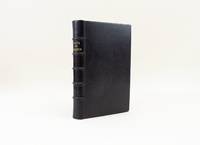
1878ST16926Paris: Printed by Ch. Unsinger for Alphonse Le Merre 1878. No. 12 OF 50 COPIES on Whatman paper and 50 copies on paper de Chine. 225 x 140 mm. 8 7/8 x 5 5/8". 2 p.l. 240 pp. 2 leaves.With notice of the author's life and notes on the text by Anatole France. <br/> FINE DARK BLUE JANSENIST CRUSHED MOROCCO BY MARIUS MICHEL stamp-signed in gilt on front doublure raised bands gilt titling CITRON MOROCCO DOUBLURES GILT AND INLAID diagonal gilt fillets intersecting to form lozenge-shaped compartments each containing an inlaid dark purple violet bud or flower on a slender gilt stem the intersection of the fillets inlaid with a small or large violet leaf the panel enclosed by a frame of repeated curling leaf tools leather hinges pale green patterned silk endleaves marbled flyleaves all edges gilt fore edges untrimmed. With original printed paper wrappers bound in. Portrait frontispiece and six etchings all before letters by P. E. A. Hédouin. A Large Paper Copy. Text framed in red. Tail margin of portrait with light pencilled inscription signed by the artist. ◆Trivial imperfections if you are very unkind but A VERY FINE COPY especially clean fresh and bright internally in a virtually unworn binding.<br/> <br/> The austere exterior of this Jansenist binding encloses a riot of luxury where the exquisite inlaid floral doublures by Marius Michel fils the stately margins of the Large Paper Copy printed on thick smooth Whatman paper and the elegant illustrations by Edmond Hédouin add to the allure of Saint-Pierre's popular romance. First issued in 1788 and subsequently widely translated and often printed "Paul et Virginie" is the tale of two childhood friends on the unspoiled French island colony of Mauritius who grow up to fall in love. Their island paradise governed by socialist principles embraced by a contented populace living in harmony serves as an allegory for the corrupting influence of the French upper classes on the innocent "child of nature." Bernardin de Saint-Pierre 1737-1814 was a botanist as well as a literary writer and spent time in Mauritius studying its flora. His love of the tropical island and the influence of his friend and mentor Jean-Jacques Rousseau are both evident in the present work. Our edition benefits from the notes on the text and on the life of the author by prominent man of letters Anatole France 1844-1924 who would win the 1921 Nobel Prize for literature "in recognition of his brilliant literary achievements characterized as they are by a nobility of style a profound human sympathy grace and a true Gallic temperament." <br /> <br /> Considered the best binder of his generation as well as the founder of modern French bookbinding Henri Marius Michel 1846-1925 began his career in the atelier established by his father Jean in Paris in 1849 where they produced distinguished work in the prevailing historical styles for two decades. After the father's death in 1890 the firm came to even greater prominence when Henri began producing bindings in a completely new and original style that did nothing less than change the course of modern bookbinding in France. According to Duncan & De Bartha Henri believed passionately "that bookbinding needed a new vocabulary of ornamentation in order to express the mood and spirit of contemporary authors." The "vocabulary of ornamentation" he developed was based on nature the revolutionary "La Flore Ornamentale" style that he unveiled at the 1878 International Exposition. The doublures here give a hint of this new style using a delicate violet motif for the repeating mosaic design. [Printed by Ch. Unsinger for] Alphonse Le Merre unknown
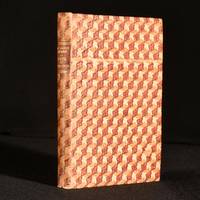
1797850P4Londres; London: L'Imprimerie de Baylis; Vernor & Hoos; Boosey 1797. Hardback. Good. 7" by 5". Not Stated. A scarce early edition of Bernardin de Saint-Pierre's best novel work a touching novel set in Mauritius complete with the original plates. An early and scarce edition of this popular work in the original French.ESTC citation number T130651.Half-title is present.'Paul et Virginie' follows the titular characters set on the island of Mauritius whilst under French rule. The two friends have been raised as brother and sister since birth and grow to fall in love.Illustrated with five plates.By Bernardin de Saint-Pierre a botanist and author who is best known for this novel.Collated complete. Collated from Jisc from a copy held at the University of Oxford Libraries. Rebound in patterned paper covered boards with new endpapers. Externally smart with only a few light marks. Very light rubbing to the joints. Spine is a little discoloured. Ribbon marker is present but a little worn. Prior owner's ink inscription to the recto of the front free endpaper. Internally firmly bound. Pages are age toned with some spots and a tide mark to the textblock including to the plates. Repair to the reverse of the half-title. Leaf E4 is torn with a small repair to the margin no loss of text. Small repair to leaf B8. Good L'Imprimerie de Baylis; Vernor & Hoos; Boosey hardcover
1906102381Houghton Mifflin 1906. Hard cover. Good/No jacket. 250cc. Designed by Bruce Rogers. Reprinted from the French text of 1789 with 4 copper engravings from the original book. Printed on Japanese paper. deckle edges. Cover shelfworn and chipped. Bookplate inside front cover. Houghton Mifflin unknown
1837859N46Paris: Henriot 1837. Leather. Good Only. 8" by 5". Not stated. A leather bound copy of Jacques-Henri Bernardin de Saint-Pierre's best known novel Paul et Virginie. Published in French. A leather bound copy of Jacques-Henri Bernardin de Saint-Pierre's best known novel Paul et Virginie. Published in French. Despite being very popular with children in the Victorian era this novel by Bernardin de Saint-Pierre is now largely forgotten. Originally published in 1788 on the eve of the French Revolution the novel critiques of the French social class within the story of two best friends who fall in love in French colonial Mauritius. Prior owner's ink inscription to the front and rear pastedowns 'Celine Galhout'. In a quarter leather binding over marbled boards. Externally generally smart. Lightly rubbed to the boards particularly to the edges of the boards and the extremities which are all missing some paper. The head of the spine has lost a little calf as has the tail of the spine which is lightly rubbed. The front hinge is starting but firm. Internally firmly bound with light to moderate foxing throughout the volume. Good Only Henriot hardcover
0243856296.Gpaperback. Good. Access codes and supplements are not guaranteed with used items. May be an ex-library book. paperback
0266465358.Ghardcover. Good. Access codes and supplements are not guaranteed with used items. May be an ex-library book. hardcover
190648768Boston: Houghton Mifflin. Very Good. 1906. Hardcover. Original paper-covered boards spine label. Limited edition #164 of 280 copies. Covers grubby slight insecting slightly canted. PO gift inscription. Text in French. Four engraved plates with tissue guards. Spare label at rear. Many pages unopened. ; quarto; 155 pages . Houghton Mifflin hardcover
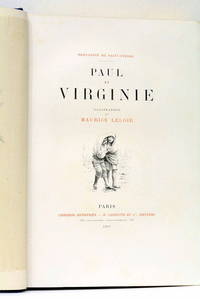
117270Paris Librairie Artistique H. Launette et Cie. 1887. xxvii. 208 pages. 1 feuillet. 12 planches hors-texte. 285x20 Cm. Pleine reliure en soie satiné bleu dans son étui. Le titre apparaît dans une plaque figurative dorée sur le plat et le dos. Reliure signée Engel. Charnières et dos frottés. Coins et coiffes un peu émoussés. 12 belles eaux-fortes hors-texte gravées par Auguste Boullard et très nombreuses vignettes dans le texte gravées sur bois d'après les dessins de Maurice Leloir. Rare exemplaire sous luxueux cartonnage en soie. Imprimée sur grand papier. Faux-titre titre table des eaux-fortes préambule et avant-propos. Très bon exemplaire. Paris, Librairie Artistique H. Launette et Cie. 1887. unknown
feb72300Used. For more details please contact me unknown
1874100131670Lemerre 1874. Bon état tranche ternie intérieur propre couverture un peu défraîchie. in12. 1874. Cartonné. 186 pages. Lemerre unknown
1838309191838. Paris ˆ la Librairie de l'enfance et de la jeunesse P. C. Lehuby 1850. Un vol. au format in-12 188 x 123 mm de 2 ff. bl. 1 frontispice gravÂŽ n.fol. x pp. 1 f. n.fol. et 415 pp. Reliure de l'ÂŽpoque de demi-chagrin maroquinÂŽ ÂŽmeraude filets gras et maigres ˆ froid encadrant les plats dos ˆ nerfs ornÂŽ de filets gras en noir filets maigres dorÂŽs filet en pointillÂŽs dorÂŽs sur les nefs triples caissons d'encadrement dorÂŽs titre dorÂŽ tranches dorÂŽes. Exemplaire revÂtu d'une reliure dÂŽcorative du temps. L'ouvrage s'agrÂŽmente de 20 sur 20 planches ; dont frontispice par Jules David. BÂŽnÂŽzit III Dictionnaire des peintres p. 388. Dos passÂŽ. Claires rousseurs dans le corps d'ouvrage davantage marquÂŽes aux premiers et derniers feuillets. Du reste bonne condition. b42961 unknown
30655Paris De l'Imprimerie de Monsieur 1789. 1 vol. 75 x 130 mm de 1 f. xxxv et 243 p. Maroquin rouge deux filets dorés bordant une chaînette d'encadrement dorée sur les plats dos lisse orné pièce de titre de maroquin vert monogramme doré « SM » au centre des plats roulette intérieure reliure de l'époque. . Première édition séparée. Elle est ordonnée par Pierre François Didot le jeune avec une édition luxueuse sur un papier de choix provenant de ses papeteries d’Essonne qu’il enrichit d’illustrations – l’édition sur papier ordinaire n’en contenant pas : 4 figures de Moreau le Jeune la dernière en collaboration avec Joseph Vernet gravées sur cuivre par Girardet Halbou et Longueil. Envoi signé : « pour Mademoiselle Mesnard de Conichard par l’auteur De Saint-Pierre ». . Paul et Virginie est une oeuvre difficile à définir y compris pour son auteur qui y voyait un « petit ouvrage » une « fable essai » et même une « espèce de pastorale ». L'ouvrage fut d'abord écrit comme un complément à une deuxième édition à Voyage à l'île de France puis à la troisième édition des Études de la nature dont il devait illustrer les thèses par la fiction. Il entendait mettre en application « les lois des Études de la nature au bonheur de deux familles malheureuses » par le dénouement tragique qu'il donne à son récit en brisant le rêve d'un idylle. Il se démarque ainsi du goût de l'époque pour la pastorale même s'il applique les règles de simplicité du genre : deux jeunes gens grandissent ensemble dans le cadre enchanteur et paisible de l'île de France l'île Maurice actuelle s'aiment sont séparés par la civilisation avant d'en être définitivement écartés au cours du drame du Saint-Géran. Bernardin de Saint-Pierre - formé aux récits de Daniel Defoe et de son Robinson Crusoé - embarqua à douze ans pour la Martinique sur le bateau d'un de ses oncles : une révélation mais aussi la découverte du gouffre séparant l'imagination de la réalité supportant mal les ardeurs du climat les fatigues du voyage et surtout la discipline des navires. Après cette déconvenue ses parents le mettent au collège des jésuites de Caen où il caresse un temps l'idée de devenir missionnaire puis à Rouen avant d'entrer en 1757 à l'École nationale des ponts et chaussées. Il intègre à la fin de ses études le corps des ingénieurs militaires. Dès 1773 il dénonce le crime de l'esclavage dans son Voyage à l'Île de France à l'Île Bourbon au cap de Bonne-Espérance : il fait partie des auteurs qui s'opposent alors sans ambiguïté à l'esclavage et au racisme au nom de l'égalité de tous les hommes d'autant que natif du Havre l'un des principaux ports où transitent les esclaves il n'a eu de cesse d'en voir les ravages. Il y reviendra dans Paul et Virginie faisant des esclaves Marie et Domingue qui vivent en harmonie avec leurs maîtres des figures importantes de son récit. Ce récit inspirera nombre d'écrits postérieurs de l'Atala de Chateaubriand au Coeur simple de Flaubert. « Comme la plupart des chefs-d'oeuvre celui-ci apporte au genre et à la mode qu'il illustre à la fois son accomplissement et son démenti. » Jean Favre Paul et Virginie connut un vif succès dès sa publication et fut un des livres les plus réédités jusqu'au début du XXe siècle ; et preuve de son immense réussite Lamartine Balzac et Flaubert ont fait de leurs héroïnes Graziella Véronique et Emma Bovary des lectrices de Paul et Virginie : « Emma cherchait à savoir ce que l'on entendait au juste dans la vie par les mots de félicité de passion et d'ivresse qui lui avaient paru si beaux dans les livres. Elle avait lu Paul et Virginie et elle avait rêvé la maisonnette de bambous le nègre Domingo le chien Fidèle mais surtout l'amitié douce de quelque bon petit frère qui va chercher pour vous des fruits rouges dans des grands arbres plus hauts que des clochers ou qui court pieds nus sur le sable vous apportant un nid d'oiseau. » Madame Bovary 1857 p. 36. Très bel exemplaire de grande rareté avec envoi circonstancié et des plus pertinents : Mlle Mesnard était la fille d'un correspondant et ami proche de Bernardin de Saint-Pierre François Mesnard de Conichard 1727-1792 premier commis des Finances. Ce dernier était intervenu en faveur de Bernardin de Saint-Pierre pour l'obtention d'une gratification annuelle à son retour de l'Île Bourbon ; la correspondance entre les deux hommes témoigne d'une longue amitié et d'une relation quasi-familiale. C'est à François de Conichard que l'auteur à l'automne 1784 envisage et propose de dédicacer ses Études de la nature. Très élégamment il la refusa ayant « toujours évité par-dessus tout de faire parler de moi et je suis trop vieux pour changer ma marche à cet égard je vous supplie donc qu'il ne soit plus question de cette dédicace . N'en parlons plus je vous prie » lettre à Bernardin de Saint-Pierre octobre 1784. L'auteur respecta la demande et offrit la dédicace à un autre de ses amis Hennin. Néanmoins lors de la troisième édition parue en 1788 et contenant au quatrième tome le roman de Paul et Virginie Bernardin de Saint-Pierre réussit discrètement à faire imprimer sa reconnaissance envers « mes respectables amis MM. Hennin & Mesnard de Conichard » ; et à offrir l'année suivante et pour cette première édition séparée du roman cet exemplaire à la fille de son dédicataire. Une lettre de Mesnard à Bernardin en date du 30 avril 1773 fait mention de sa fille pour la première fois et Bernardin de Saint-Pierre lui-même parle de « Mlle Mesnard fille d'un de mes meilleurs amis et que j'ai vu naître » dans une lettre à l'auteur du poème « Le Tombeau de Virginie » en 1789 citée dans Rebecca Ford « Une correspondance amicale : Bernardin et Mesnard de Conichard » Autour de Bernardin de Saint-Pierre Mont-Saint-Aignan P.U. de Rouen et du Havre 2010. Cette dernière n'a au moment de la parution du volume que dix-sept ans : soit l'âge exact de l'héroïne de Bernardin de Saint-Pierre puisque Virginie quitte l'île à quinze ans pour n'y revenir que deux ans et demi plus tard pour la fin tragique que l'on sait. Marie-Françoise Mesnard de Conichard épousera quelques années plus tard Jean-François Pierre Puy de Rosny futur baron d'Empire. En 1792 Bernardin de Saint-Pierre épousera quant à lui la fille de son imprimeur Didot avec laquelle il aura deux enfants qu'il prénommera naturellement Virginie née en 1794 et Paul né en 1798. Des bibliothèques Marie-Françoise Mesnard de Conichard ; Pierre Bergé ex-libris ; II n° 191. Tchemerzine V p. 649 ; Cohen 931. Paris, De l'Imprimerie de Monsieur, 1789. 1 vol. (75 x 130 mm) de 1 f., xxxv et 243 p. Maroquin rouge, deux filets dorés bordan unknown