86 résultats
1824AQ21699London: William Darton 1824. 180pp. With an engraved frontispiece and two further engraved plates. Original publisher's red roan-backed marbled boards ruled and lettered in gilt. Rubbed surface loss to bumped corners and head of spine upper joint split. Near contemporary inked gift inscription to recto of FFEP plates a trifle browned and spotted offsetting to title. The first edition of a juvenile tale of libricide sure to make the blood of any bibliophile run cold. The chance discovery of a printer's woodblock representing the head of an elderly man leads to the reading of a manuscript account of the great-grandfather of a young group of siblings relating his time as a student at Christ's Hospital from 1725-28 alongside a collection of his poetry. It is mentioned that the young pupil spending a day in London is given the task - by a tea-dealer - of picking apart old books which have been purchased as waste paper and folding the sheets into bags. As for the manuscript poems it is agreed that they should be sent to 'the well-known friend of youth on Holborn-Hill' for publication - a thinly veiled reference to publisher William Darton. OCLC records copies at eight locations California Cambridge Florida Oxford Pennsylvania Princeton Toronto and V&A; COPAC adds no further. Darton H271 1. First edition. 12mo. William Darton hardcover
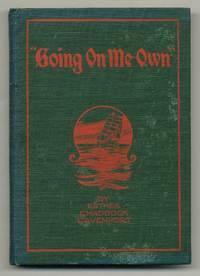
1900564168Buffalo New York: The Matthews-Northrup Co 1900. Hardcover. Very Good. First edition. 12mo. 163pp. Green cloth decorated in red. Scuffing on the boards else very good or better. Memoir of a female traveler from Buffalo New York in Europe. Inscribed by the author: "To Miss Mary Keller from the author. Esther C. Davenport. June 18th 1903. The Matthews-Northrup Co hardcover
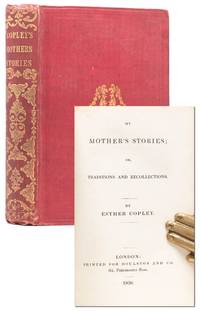
18387282London: Printed for Houlston and Co 1838. First edition. Very Good . Twelvemo. 252 1 ads pp. Complete with the frontispiece. Publisher's red cloth with gilt spine. All edges gilt. A bright and attractive copy with just a bit of foxing to verso of frontispiece and toning to last few leaves. Contemporary ink gift inscription to upper flyleaf: "Mary Tollmash Clements - A birthday gift from her affectionate father." Very Good<br /> <br /> A collection of six stories by Esther Copley 1786 - 1851 an abolitionist children's author and public health advocate born in London to parents of Huguenot origin. Her tracts included Hints on the Cholera morbus 1832 a guide to remedies and prevention of cholera and domestic tracts for the working class that included information on childbirth and other health topics. Her numerous works for young readers included collections of stories for middle- and working-class children as well as nonfiction like The Young Reviewers 1821 which introduced children to literary criticism; Scripture Natural History for Youth 1828; and A History of Slavery and its Abolition 1836. A History of Slavery was a crucial work "tracing the course of slavery from scriptural times to Copley's own day. Her youthful audience was spared neither graphic descriptions of the sufferings of black slaves in the West Indies nor lengthy accounts of the proceedings of the anti-slavery movement" Oxford DNB. Copley's work remains "a witness to the significant commitment of nonconformist women to the anti-slavery cause" ibid. Very Good . Printed for Houlston and Co unknown
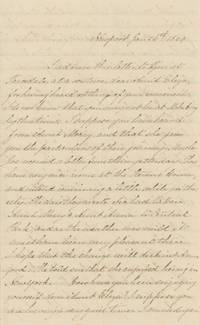
1871List3241Rhode Island Massachusetts and New York 1871. Thirty-two letters two apparently missing final pages; with fifteen pages of incomplete letter material. Excellent to Near Fine. Letters from some of the young ladies of the Hazard family primarily Gertrude Minturn 1843–1877 Anna Peace 1845–1868 and Esther Robinson 1848–d. Hazard with some from other family and friends. The family was descended from Thomas Hazard one of the founding settlers of Newport Rhode Island.1<br /> <br /> The girls were educated and often write from school; Anna and Esther attend the ‘Friends School’ in Providence which is probably the Moses Brown School and Gertrude attends Dr. Dio Lewis’s School for Young Ladies in Lexington Massachusetts. Founded by Diocletian Lewis a temperance and physical culture advocate the school incorporated his exercise system developed to condition weaker individuals. Gertrude describes a regimen of thirty minutes of walking plus an hour and a half of exercise and discusses Dr. Lewis:<br /> <br /> “Dr Lewis gives familiar lectures on any subject which the scholars propose. He is a very pleasant genial man and takes part in the games & dancing with the greatest spirit. There are about 20 scholars. Some of them board in the village but are subject to the rules of the school. This building is very large and is mostly occupied by the patients of Dr Lewis’ ‘Movement Cures’ to whom most of his time is devoted. The scholars and patients associate together. Indeed we are under very little constraint the teachers leaving our actions to be regulated by our own sense of propriety; and they seldom find occasion to reprove the scholars for misdemeanors.†November 23 1864<br /> <br /> Meanwhile Anna and Esther’s education is more on the religious side; Esther writes:<br /> <br /> “We have not been to meeting very often since we returned from our lovely visit to Newport but the first Sunday morning I did think all the time of it as I said I was going to. We were edified this morning by a sermon from Elizabeth Meader or rather a torrent of noise so that I am nearly deafened now. I don’t think I ever heard a more horrible combination of sounds from the mouth of any human being.†January 8 1865<br /> <br /> Though speaking in tongues is most strongly associated with Pentecostalism it is not unheard of in Quakerism. In his book of genealogy and reflections the girls’ father Thomas Hazard 1797–1886 connects the family’s “strong religious tendencies†to his own interest in spiritualism.2 This interest in mediumship comes up several times in the letters first in 1864 when one of the girls reports that “Pa writes us that at a circle which he attended a few days ago a clairvoyant medium described our house at Vaucluse perfectly†February 24 1864 and later when one of the girls attends a circle with their father in Philadelphia:<br /> <br /> “Yesterday morning Pa & I had a sitting with a Mrs. Robinson a trance speaking medium. The communication from mother was the most beautiful I ever heard. She spoke to us just as she used to on earth using the same expressions. It seemed as if I could almost see her – we are going again on Monday.†February 8 1867<br /> <br /> That is the pair spoke to Frances Minturn Hazard who had died in 1854.<br /> <br /> Of interest to researchers of the Hazard family and Rhode Island Quakers.<br /> <br /> 1 Caroline Elizabeth Robinson The Hazard Family of Rhode Island 1635–1894 Printed for the Author 1896.<br /> 2 Thomas R. Hazard Recollections of Olden Times Sanborn 1879 228. unknown
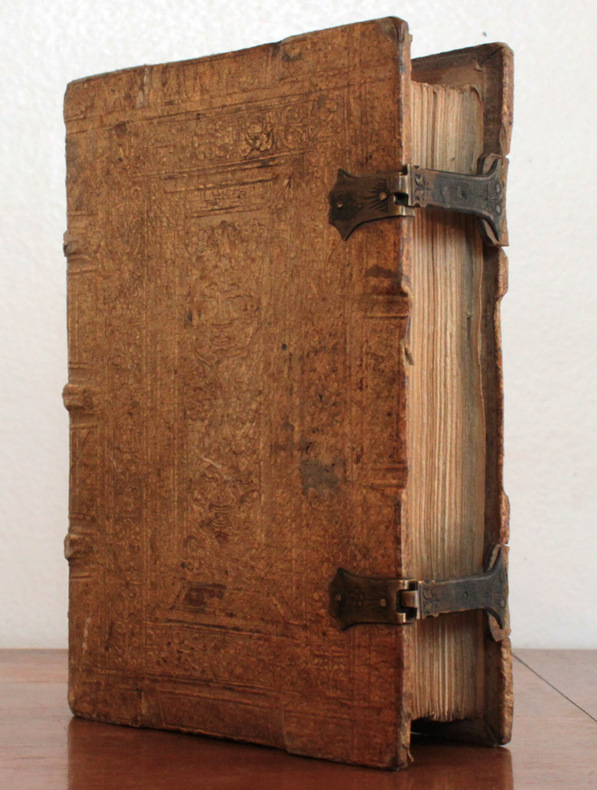
190024341900 London, Eragny Press [Lucien & Esther Pissarro], 1900-1901. 16 x 11 cm (R), 113 (3) - 92 (3) - 103 (3) pp., 3 frontispices gravés sur bois par Lucien Pissarro, lettrines, bordures et ornements gravés sur bois par Esther Pissarro, grande marque d'imprimeur gravée sur bois répétée trois fois, réemboîté dans une reliure du XVIe siècle de pleine peau de truie richement estampée, dos à trois nerfs, fermoirs.
18950001725LYCOMING COUNTY PENNSYLVANIA STEUBEN COUNTY NY. Good. 1895. On offer is the super original manuscript diary handwritten by Esther Marie Gernit Bullock b.1852 who lived in or around Lycoming County Pennsylvania or Steuben County New York. She is married to Francis Joseph Bullock and they have four children; Charles Edgar Walter Herbert Allen Gernit and Edna Maria. This is a very large very full diary measuring about 7 ¾" x 13" with 250 pages of daily entries covering September 30th 1897 all the way through to April 6th 1900. We learn that three of her four children are no longer living with them or soon on their way out. This greatly affects Esther and on many occasions she talks about being so lonely and missing her children greatly. The family moves two times during the time span the diary represents but only to a different house or location in the village. The boys seem to work for the railroad and she doesn't like it at all because of how dangerous the work is. Frank is retired but seems to be looking for work. There is also talk of the Spanish American War her first grandchild born to Charles Edgar her grandmother Bullock passing away and the funeral traveling to the near by villages talk about how the New York Central Railroad Company has taken over the Fall Brook Central RR Company line Cyclone flooding and so much more. On numerous occasions she says her days are "terrible and tedious". She also writes a very intriguing entry on October 6th 1898 telling that something so terrible has happened and filled them all with so much grief that she can't write it down. Here are some snippets: 1897 "October 4th Froze hard last night and was real cold this morning. Warm in the afternoon. Frank helped me wash in the forenoon. After dinner he went over town. Walter went to Hornellsville to see about getting on to the Erie road but it seems as if I never can stand it to have another boy on the railroad. It has caused me a great many tears and unhappy hours. I rather he would do most anything else. Edna went over to Charles Edgar's a little while. He got back from Williamsport about noon." "November 18th Snowed and blowed. Frank is not much better. Walter worked but was so rough Allen did not start out. Charles Edgar invited us over there to eat dinner with them. It is a year today since they were married and it seems a long year to me since he went away from home. He ought to have gotten back from his trip about noon but it was nearly night but we did not eat dinner until he came. Edna got dinner and supper here at home. Jarvis expects to go to work in a few days." "December 2nd Pleasant but cold. Walter worked in shop. Jarvis and Allen have found work and are going to begin tomorrow. After diner I went over to Charles Edgar's a while. He has to go to Williamsport tonight. Frank came home from the 4 roads tonight. He says Foster is very sick. Dr. thinks he has typhoid fever and they are very much worried about him." 1898 "February 16th This has been a terrible tedious day. The wind blew very hard and snowed all day. There are some drifts around the house. I dreaded to have Walter go to work this morning. It is not quiet so tedious this evening but will be a cold night and Charles Edgar goes to Williamsport. I am afraid he will suffer with the cold." "March 5th Real pleasant. Frank worked for Mr. Buck. Walter and Allen worked. Mrs. Saxton went home this afternoon. Frank and I went over on Bridge Street to look at a house. We have decided to rent but do not know just when we will move. Mr. Lamb owns the house. It is only a little ways from Charles Edgar's so we went up there a few minutes." "April 6th Cold and snowed nearly all day. We have had a hard day. We finished moving. Charles Edgar and Walter both helped or I don't know as we would have got through today. Libbie came over and helped me straightened around some. She and Charles Edgar put down the carpet in my room and the boys and made up the beds. If they had not I am afraid we wouldn't have got much done for I am tired out and sick. I wish Allen could have been here to dinner then we could have all eaten together. Charles has gone to Williamsport tonight." "April 21st Cold again and rained some. Frank and the boys worked. Charles Edgar and Libbie have not got back from the 4 Roads yet but I shall be glad to see them. Edna went over town this afternoon and while she was over there she heard that war has begun between the United States and Spain. And the papers are all full of war talk. There has not been a battle yet but everything seems to be about ready." "April 22nd Rained nearly all day and has been a cold day. Frank and the boys worked. Charles Edgar and Libbie came and I was ever so glad to see them. Frank Edgar Allen and I went up there a little while this evening. Everybody seems to be excited over war. We read in the papers tonight that the United States had captured 2 Spanish vessels." "May 1st Real pleasant and is the warmest day we have had but is raining again this evening. Charles Edgar got back just as we had dinner ready so he and Libbie stayed to dinner with me. The boys Edna and Glenn and I went over to the Erie depot this evening to see 5 train loads of soldiers on their way to war. It was a sad sight. Walter went down to Elmira on his wheel in company with several others to see the soldiers start from there. He says it was a solemn occasion." "May 2nd Rainy early this morning then the sun shone out for awhile but it soon began to rain again. Frank did not get in a full day but Walter and Allen did. This evening Edna Glenn and I went up to see the Fire Building to see the fire works. It is all war excitement. They raised a flag on the building. Some more Corning boys enlisted but I am happy to think none of mine are on the list." "July 8th Very warm. Frank and the boys worked. Charles Edgar has been down home a while. Mr. and Mrs. Sonnerson started for New York tonight and tomorrow afternoon the ship will sail that will carry them back to their old home Denmark. I was sorry to have them go for they are nice people." "September 7th Rained nearly all day. At the time we were having such a terrible rain here last night down to Troy 4 Roads and Springfield Pa there was a terrible cyclone. The greatest damage done at any one place was at Steve Brace's. His large barn blew down killed Will Brace and 14 of their cows and 3 horses. It must have been an awful shock to his parents." "September 18th About 5 o'clock this morning we had a hard thunder shower but soon cleared off and has been a nice day. Walter started for the 4 Roads about 20 minutes of 8 this morning on his wheel and expects to get there about noon if he has good luck. Tomorrow will be father's 79th birthday but they will have the gathering today at Edgar's for some of them could not be there tomorrow. It makes me very unhappy to think I could not be there. I never failed but once before. I hope Walter will get there in time for dinner." "October 4th Cloudy but did not rain until toward night. Frank worked. Allen has been around home. Oh how many more tears will I have to shed over my family I cannot bear to have one of them away from home but a few days at a time but this afternoon Walter has gone to Avoca to run a barber shop that is if he likes it there. Of course I want all of them to do what is best for them but Oh! How lonely I will be. Charles Edgar went to Lyons." "October 5th Rained hard nearly all day. And it has been fitting to the happenings and what did happen I never will write for everyone of us are bowed with grief but I believe the day will come ere long that we are all happy together for that is my prayer. Frank nor Allen worked. Charles Edgar went to Lyons." "December 25th Christmas and it has always been a merry one to us before this but today tears take the place of joy. Of course I am so glad the other children could be here but poor Allen. Oh How I miss him. Walter came home and Charles Edgar and Libbie came down. Emma Shaw was here too. All seemed to be pleased with their presents and I am sure I was with mine for they were all very nice but I must have Allen home before next Christmas. Walter and Edna were going to church tonight and they coaxed me to go with them." 1899 "January 19th Very pleasant but chilly. Frank worked. Charles Edgar went to Lyons. Libbie came up and took dinner with us and at noon I stared for the 4 Roads. She went over to the depot with me. At half past 5 o'clock this afternoon I got here at the 4 Roads. Allen met me at the depot and Oh! How glad I was to see his dear face. Every time I looked at him it seems as if I am dreaming. Julia Stuart Dell and Edgar are all sick. Edgar is under the Dr.'s care. I have been sick all day but fell better tonight. Jesse Bullock's folks have a daughter It was born the morning of January 19th." "March 1st It has been a beautiful day but tonight the wind blows like a storm. Frank worked but his foot isn't any better. Charles Edgar went to Lyons. Edna was over home this afternoon and went over town of an errand for Frank. I went with Mrs. Lindsey this afternoon down to the Congregation Church to a funeral of an old man who died in the Insane Asylum. It is no one that I knew but his name was James Littlefield." "April 18th Very pleasant and quite warm. Frank commenced work at the mill. Charles Edgar did not get back from Williamsport until 5 o'clock to night but ought to have been here about that time last night. I got very nervous about him but they were waiting for cars. I went up to his house this morning a little while. I had a letter from Allen he says Warren Gernit has enlisted in the war and is on his way to Manila. Edna is over to Mary Nichol's yet." "April 28th This has been a beautiful day but the wind blew hard. Frank worked. Charles Edgar went to Williamsport. I suppose this will be his last trip for the Fall Brook Company for next Monday the New York Central will take possession of the road and will be known as the Pennsylvania division of the New York Central and Hudson River Railroad. Edna and I cleaned house. This evening she has gone to a party." "June 9th Rather cool all forenoon but think it is some warmer this afternoon. Charles Edgar went to Lyons this noon. Mrs. Smith Housel Nell Westcott died this forenoon. Her baby was born the next day after Libbie's and it seems so sad she must die and leave it. I have been down to Charles Edgar's this afternoon. Frank worked." "July 2nd Toward night after it got cooler I went up to Charles Edgar's but hadn't been there but a few minutes before Frank came after me and had a dispatch from Edna and wanted me to come to Watkins tonight for she was sick. Of course I hurried around but it was only 10 minutes before the train would leave but I went over hoping the train would be late but started before I got there. Now I shall have to wait until morning but it don't seem as if I ever could " "July 3rd Awfully warm but I am so thankful I didn't have to make the trip to Watkins. Edna got home here about 11 o'clock last night. She had a bad time with her heart and they were so frightened about her that she sent for me but she was some better and came home. She doesn't look as if she would be able to go back very soon." "November 18th Froze some last night but has been a lovely day. Frank worked. Charles Edgar started for Williamsport early this morning but before he got there he got hurt and had to come home. He fell and struck on his foot and cut it open so he had to go to the Dr. and have it sewed up. It is a great wonder it didn't break his neck. It scared me terribly when I saw hat had happened but I guess it will get along all right. This is the third time I have had to write in my book of an accident to him since he had been on the road. And I pray that this is the last trouble he will have. We were all invited down there for supper as it is their wedding anniversary and we went and stayed the evening too. Coral Paine brought his phonograph up there and we had some fine music but we would all enjoyed it better if it hadn't been for Charles Edgar's accident." Many names are mentioned: Mary Nichols Ida and Olive Edwards she says that Olive took poison and died Emma Shaw Frank Jarvis Foster and Lill King George and Kate Cornell Saxton Mahlon Nichols Lamb Holmes Ellenberger Cole Sonnerson Blanch Fries Billy Hope Hollenbeck Townley Dr. Lane Lindsey Ned Hallstead Ed Hogaboom Dr. Miller Elder Fuller Dutcher Colvin Prof. Blodgett Zelda Mulligan and more. HISTORICAL NOTE: The 1880 census shows her in Springfield Bradford County Pennsylvania but they have moved since the census was taken because in this diary she mentions going to places such as Dundee Avoca Williamsport Lyons Elmira and it looks like Murray Hill is close to them so I'm not quite sure exactly where she is in Pennsylvania or New York. They must be close to the border too because most of the towns are along it. The diary's cover is very worn and torn but the pages and binding are very good. Overall G.; Manuscript; Folio - over 12" - 15" tall; KEYWORDS: HISTORY OF ESTHER MARIE GERNIT BULLOCK SPRINGFIELD WILLIAMSPORT AVOCA LYCOMING COUNTY STEUBEN COUNTY NEW YORK PENNSYLVANIA WOMEN'S STUDIES PRE SUFFRAGE RURAL LIVING GENDER STUDIES SOCIAL STUDIES FRANCIS JOSEPH BULLOCK HANDWRITTEN 19TH CENTURY HANDWRITTEN MANUSCRIPT DOCUMENT LETTER AUTOGRAPH DIARY JOURNAL LOG KEEPSAKE WRITER HAND WRITTEN DOCUMENTS SIGNED LETTERS MANUSCRIPTS HISTORICAL HOLOGRAPH WRITERS DIARIES JOURNALS LOGS AUTOGRAPHS PERSONAL MEMOIR MEMORIAL PERSONAL HISTORY AMERICANA ANTIQUITÉ CONTRAT VÉLIN DOCUMENT MANUSCRIT PAPIER ANTIKE BRIEF PERGAMENT DOKUMENT MANUSKRIPT PAPIER OGGETTO D'ANTIQUARIATO ATTO VELINA DOCUMENTO MANOSCRITTO CARTA ANTIGÜEDAD HECHO VITELA DOCUMENTO MANUSCRITO PAPEL . unknown
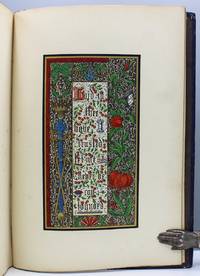
186817465<p>London: Emily Faithfull Victoria Press n.d. 1868 First edition. Original blue cloth stamped in gilt. . Twenty-nine chromolithograph plates each with a blank protective page plus 9 pages of descriptions of the plates. The plates include depictions of the Ark of the Covenant with cherubim enclosed in a 15th century-style border plate #4; the emblems of 12 saints including Saint Peter's keys plate #7; and church windows with the cross anchor and heart symbols worked into the glass plate #10. Some soiling and wear to cloth. All edges gilt. Dark brown endpapers. Contemporary ink ownership signature to front flyleaf. Some foxing to blanks as usual. A very good clean copy of a beautiful book. Emily Faithfull 1835 - 1895 was Queen Victoria's official printer the founder of Victoria Press a founding member of the Society for Promoting the Employment of Women and a popular novelist and memoirist. Upon establishing the Victoria Press in 1860 she provided training for women interested in printing and employed mostly women as typesetters and proofreaders. Other important Victoria Press publications included The Victoria Regia 1861 which earned Faithfull her position as the official printer to Queen Victoria and A Welcome a collection of poetry edited by Isa Craig that included the first appearances of poems by D.G. Rosetti Harriet Martineau and more. Faithfull also published the periodical Victoria Magazine which ran from 1863 to 1880 and often featured Faithfull's own writing on the importance of employment opportunities for women. Esther Faithfull Fleet 1823 - 1908 was also the illustrator of 38 Texts 1872 which was published by her younger sister Emily and included contributions by their father Ferdinand 1789 – 1871; Roses With and Without Thorns 1878; and The Dayspring from on High 1904.</p> Emily Faithfull, Victoria Press, hardcover
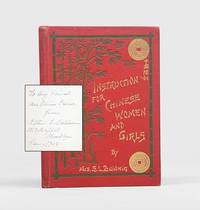
1900173952New York: Eaton & Mains; Jennings & Pye Cincinnati 1900. China's most influential female scholar First edition first printing presentation copy inscribed by the author on the first blank "To my friend Mrs Oliver Crane from Esther E. Baldwin 1218 Pacific St Brooklyn Jan. 1902". Crane was an accomplished musician a keen traveller and a member of several New England societies including the American Oriental Society. Esther E. Baldwin 1840-1910 known to contemporaries as the "Chinese Champion" because of her advocacy for Chinese immigrants in the United States served in Fuzhou as a missionary throughout the 1860s and 1870s. In The Chinese Book of Etiquette she offered the first adaptation into English of the Nu Jie by Ban Zhao c.45-120 CE a leading Han dynasty literatus. The daughter of the court historian Ban Biao Ban enjoyed a privileged education at a time when the majority of Han women were not given formal tutoring in the classics. Her Nu Jie written to prepare her daughters and nieces for life was a cornerstone of Confucian thought for 2000 years. Drawing from ideas contained in the Confucian Li Ji Classic of Rites it stressed the virtues of obedience and self-sacrifice: "All girls everywhere first should learn to cultivate virtue. Of cultivating virtue's methods the most important is to be pure and upright in morals" p. 1. After the death of her brother Ban Gu Ban completed his Han Shu Book of Han the standard official history of the Western Han Dynasty. Sibylla Bailey Crane born Sibylla Adelaide Bailey 1851-1902 was actively involved in many learned societies and co-founded the Castilian Club a women's study group based in Boston. Together with her husband Revd Oliver Crane she collected art and antiquities donating several pieces to the Museum of Fine Arts Boston. She died suddenly in the same month as she received this copy likely having returned from visiting the author at her Pacific Street house in Brooklyn. Octavo. With 12 illustrations after drawings by Pang Sun Yow; title page and text pages framed with green bamboo design. Original red diagonally ribbed cloth front cover elaborately blocked in gilt and green after a design by Pang Sun Yow red endpapers edges gilt. First blank with traces of pencilled gift inscription from Mary B. Safford 1869-1937 to Barbara Badger Hennessey 1910-1992; Hennessey's signature and pressmark on front free endpaper recto and first blank. Spine sunned and rubbed gilt bright light marking on rear covers contents clean: a very good copy. hardcover
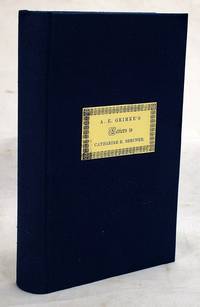
18382006080076Boston Printed by Isaac Knapp 1838-12-31. First Edition. Hardcover. Good. Powerful women and dangerous women: Early Abolitionist works Bound in contemporary boards. Yellow printed title label on front board. Rebacked with renewed spine. Housed in custom clam shell case. Library markings. Intermittent water stain generally faint. 130 pp. <br> "First edition of the third work in a series of literary exchanges between Beecher and Grimke that began in 1836 with Grimke's Appeal to Christian Women of the South. This was followed by Beecher's Essay on Slavery and Abolitionism with Reference to the Duty of American Females 1837 in turn followed by the present work by Grimke. Although born into the Southern elite of South Carolina Angelina Grimke 1805-1879 spent most of her life in the North advocating for the abolition of slavery and women's rights. Catherine Beecher was an educator and shared similar views." - Swann Galleries Sale 2377 Lot 59 March 26 2015. Angela Grimke and her sister Sarah Moore were highly unusual women for their era. They converted to Quakerism and advocated not only the emancipation of slaves but also racial and gender equality. Quite radical for a southern woman in the 1830s. Boston, Printed by Isaac Knapp hardcover
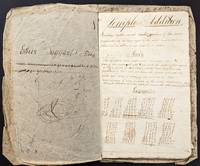
18141160Middletown CT. 1814. <p>Folio. 320 x 200 mm. 12 ½ x 8 inches. 424 leaves. Textblock sewn with original drab paper wrappers. Wrappers with a few tears and folds at the edges some staining and a few ink marks; otherwise a remarkably well preserved manuscript work book.</p> <br /> <p>Fine example of an early American arithmetic work book filled with examples applicable to the mercantile or dry goods trade. Includes exercises in simple addition addition of Federal Money simple subtraction subtraction of Federal Money simple multiplication and the application and use of multiplication in making out bills determining quantity and finding the value of goods. This part includes examples of establishing the cost of paper pairs of men’s shoes bushels of oats and other grains and food commodities. This is followed by exercises in division compound addition Sterling money weights and measures Troy weight Avoirdupois apothecaries cloth wine and the measurement of land.</p> <br /> <p>Of the examples we especially note math problems concerning distances on the East Coast including New York to Philadelphia; a wine merchant’s dwindling quantity of ‘pipe wine’; and a tailor’s bill for materials and making of a silk coat vest and buttons.â€Â   A final question to be solved reads as follows: “The war between England and America commenced April 19 1775 and a general peace took place January 20th 1783 how long did the war continueâ€Â Miss Taggart’s calculations break down the problem into years months and days to arrive at the correct answer. </p> <br /> <p>The contents of the manuscript suggest that Ms. Taggart may have been training to work in a commercial setting selling goods such as the one listed in the fictional Bill of Parcels. Although it is well known that women especially wives of the owners of general stores managed the business side of a mercantile enterprise it is very rare to have an exercise book penned by a woman that documents the method of learning complex mathematics and business practices.</p> <br /> <p>In this case Esther Taggart was very proud of the work she was doing and she signed the book four different time; once on the inside cover; once on p. 9 “Esther Taggart’s Manuscriptâ€; once on p. 45 again signing it “Esther Taggart’s Manuscript†and finally on the inside rear wrapper. </p> <br /> <p>Although we are not sure which New England town named Middletown was Esther’s home we think it was Connecticut. On the sample “Bill of Parcel†that appears on the verso of leaf 11 the example cites New London as the origin of the invoice. </p> . unknown
187174060Philadelphia: W.S. Turner 1871. Rare first <span class="glossaryQtip qTip">edition</span> of the first Jewish cookbook published in America with extensive instructions on keeping a kosher household in addition to recipes.<i> </i>Octavo original cloth. In very good condition rebacked. Housed in a custom half morocco clamshell box. First editions are exceptionally scarce of this milestone in American Jewish history. The introductory sections provide an overview of kosher dining household economy and table-setting. Later sections include household tips "to cement broken china" "to revive the color of black silk" lists of seasonable foods by month and a two-page summary of the Jewish calendar. A longer section titled "Hints for Housekeepers" suggests a weekly routine in detail. For Sunday dinner Levy points out that "this is the day the husbands are at home then something good must be prepared in honor of the lords of the household." Most of the book consists of recipes as expected including some classics from Jewish cuisine. Macaroons matzo cleis soup German kouglauff kugel grimslechs chremslachs and "potato souffle for Passover." Some recipes have apparently been adapted from American neighbors such as macaroni hominy fritters and "ochre soup or gumbo" which is reported to be "much used in the South." Throughout Levy's recipes are more impressionistic than scientific pepper pot soup: "in a pint and a half of water put such vegetables as you wish . . . cut them very small and stew them with a couple of pounds of mutton and a piece of nice beef" and the requirements of kashrut are strongly emphasized. "This book offers us a vivid look into the daily lives of the American Jewish community just before the period of its most rapid growth. In the recipes you can see the dynamic between the requirements of keeping kosher the cultural traditions brought over from Europe and the American ingredients at hand but it's also rich in detail on the day-to-day management of a 19th-century Jewish household. It's an interesting and important cultural document" Rick Stattler The New York Jewish Week. Only one copy listed in OCLC. W.S. Turner hardcover books