34 192 résultats
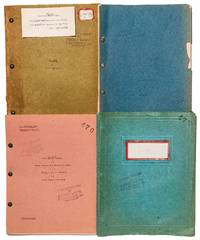
1933422891Santa Monica: RKO Radio Pictures 1933. Softcover. Near Fine. An important archive of four significantly different scripts for the landmark and iconic 1933 film King Kong tracing the evolution of the screenplay from conception to execution. Included is the First Draft by mystery writer Edgar Wallace entitled The Beast dated January 5 1932 completed shortly before his unexpected death; two further drafts by veteran screenwriter James Ashmore Creelman The Eighth Wonder and Kong dated March 9 and June 16 1932; and a fourth undated preproduction script detailing the camera setups for the entire film. Each of the scripts come from the archive of Nan Cochrane head of the RKO Story Department. Additionally included is the three-part script for Creation an aborted RKO fantasy film whose groundbreaking stop-motion special effects and story directly influenced King Kong. Together this is an unparalleled group of scripts tracking the development of one of the most notable and iconic film of all time and likely not to be duplicated. RKO Radio Pictures unknown
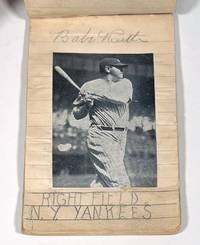
3029Yankee Stadium Bronx New York: np. first edition. card wrappers. SIGNED BY BABE RUTH LOU GEHRIG CHARLIE GEHRINGER EARLE COMBS TONY LAZZERI JOE MCCARTHY LEFTY GOMEZ ET AL.<br /> <br /> Autograph book lovingly assembled by a young baseball fan in 1931 at Yankee Stadium with over 40 autographs of players including Ruth and Gehrig and eight other members of the Baseball Hall of Fame. ––––––––––<br /> <br /> Imagine being a kid in 1931 and you’re a baseball fan. This was during the glory days of baseball when players were national heroes and big games were national news. You also happen to live in New York the center of the baseball universe with a heated rivalry between three local teams every year. If you were lucky enough to go to a few games perhaps you could get close to one of your heroes maybe even get an autograph.<br /> <br /> Young Seymour Kessler did much better than “get an autograph†– he carried a little booklet with him to games at Yankee Stadium in 1931 and collected over forty autographs of players including the biggest stars of the day – Babe Ruth and Lou Gehrig – along with eight other Hall-of-Famers including Charlie Gehringer Lefty Gomez Earle Combs Tony Lazzeri and others. He carefully and lovingly curated his autograph collection pasting pictures from newspapers beneath the signatures whenever he could find them and writing in clean block letters the position and team of the player.<br /> <br /> He titled his booklet on the cover “Autographs of Baseball Players / Yankee Stadium / 1931 / Property of Seymour Kessler†and on the first page added with great care to make the writing neat:<br /> <br /> “An autograph collection of American League Baseball Players. The autographs were obtained during the 1931 season at the Yankee Stadium The Bronx New York. Property of Seymour Kessler. 1858 West 5th Street Brooklyn New York.â€<br /> <br /> It’s a remarkable collection of names and autographs – a snapshot of many of the stars of the American League – and so lovingly curated by Kessler. He brings us right back to being a kid and a baseball fan sharing the magic of meeting your heroes.<br /> <br /> 1931 by the way wasn’t all wonderful for young Seymour. The Yankees only finished in second place and it must have been challenging for him living in Brooklyn and being a Yankees fan although in 1931 the Brooklyn team was called “The Robins†only becoming the Dodgers in 1932.<br /> <br /> Kessler was able to find newspaper pictures of many of the players but not all of them. Generally if they were minor players or out-of-town players he had difficulty finding pictures.<br /> <br /> The booklet contains the autographs of:<br /> <br /> The Baseball Hall-of-Famers:<br /> <br /> –Babe Ruth
<br /> –Lou Gehrig<br /> 
–Charlie Gehringer Tigers Hall-of-Fame Second Baseman
<br /> –Earle Combs Yankees Hall-of-Fame centerfielder
<br /> –Tony Lazzeri Yankees Hall-of Fame Second Baseman<br /> 
–Joe McCarthy Yankees Hall-of-Fame Manager
<br /> –Vernon “Lefty†Gomez Yankees Hall-of-Fame Pitcher<br /> 
–Herb Pennock Yankees Hall-of-Fame Pitche<br /> r
–Joe Sewell Yankees and Cleveland Hall-of Fame shortstop and third baseman famous for his ridiculously few times striking out<br /> 
–Charles “Red†Ruffing Yankees Hall-of-Fame pitcher
<br /> <br /> as well as:<br /> <br /> –Ken Strong NFL Hall-of-Famer College Football Hall of Fame baseball minor leaguer
<br /> –Lyn Lary Yankees Shortstop<br /> 
–Lou McEvoy Yankees Pitcher no picture signed on two pages
<br /> –Luke Sewell Cleveland Catcher<br /> 
–Henry “Hank†Johnson Yankees Pitcher
<br /> –George Pipgrass Yankees Pitcher
<br /> –Arndt Jorgens Yankees Catcher
<br /> –Jim Weaver Yankees Pitcher<br /> 
–Sam Byrd Yankees Outfielder<br /> 
–Gordon “Dusty†Rhodes Yankees Pitcher<br /> 
–Art Fletcher Yankees Coach and Former Shortstop
<br /> –Lu Blue White Sox First Baseman<br /> –Billy Sullivan White Sox
<br /> –Art Herring Tigers Pitcher
<br /> –Bob Kline Red Sox Pitcher no picture<br /> 
–Earl Webb Red Sox Outfielder no picture<br /> 
–Hal Rhyne Red Sox Shortstop no picture<br /> 
–Joe Boley Athletics Shortstop no picture
<br /> –Eddie Bennett Yankees Mascot picture and obituary<br /> 
–Ben Chapman Yankees Outfielder<br /> 
–Roy Sherid Yankees Pitcher no picture<br /> 
–Jimmie Reese Yankees Second Baseman no picture
<br /> –Red Rolfe Yankees Infielder
<br /> –Charlie Sullivan Tigers Pitcher no picture<br /> 
–Bob Fothergill Tigers Left Fielder no picture<br /> 
–Butch Henline White Sox Catcher no picture
<br /> –Bennie Tate White Sox catcher no picture
<br /> –John Kerr White Sox Second Baseman no picture
<br /> –Roy Johnson Tigers Outfielder no picture<br /> 
–Lin Storti St. Louis Browns no picture<br /> 
–John Stone Tigers Outfielder no picture<br /> 
–Hank Garrity White Sox Catcher no picture<br /> 
–Bill Norman White Sox Outfielder no picture<br /> 
–Al Van Camp Red Sox Outfielder no picture<br /> 
–Tom Oliver Red Sox Outfielder no picture<br /> <br /> Size: approx. 3.5 x 5.75 inches closed. Signatures in pencil. Original card wrappers; housed in custom box. Only minor general wear; overall in a remarkable state of preservation. np unknown
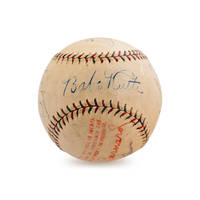
148863Rare Reach Official American League Baseball signed by a legendary group of baseball legends and Hall of Famers. Signed by Babe Ruth on the sweetspot setting the tone for one of the most remarkable gatherings of baseball legends captured on a single ball. Surrounding the "Sultan of Swat" are the signatures of Lou Gehrig Jimmie Foxx and Al Simmons — for a total of four of the five Hall of Famers famously struck out in succession by Carl Hubbell during the 1934 All-Star Game. Additionally signed by Connie Mack Lefty Grove and George Earnshaw. Crowning the collection is the autograph of Hank Aaron the man who ultimately eclipsed Ruth’s career home run record bridging two eras of baseball greatness. In fine condition. Housed in a plastic case. Accompanied by a letter of authenticity from Beckett Authentication Services. Babe Ruth Lou Gehrig Hank Aaron Jimmie Foxx Al Simmons Connie Mack Lefty Grove and George Earnshaw collectively embody the pantheon of Major League Baseball legends whose careers span the sport’s formative decades and its evolution into a national institution. Each figure holds a distinct place in the game’s legacy: Ruth and Gehrig as the iconic heart of the New York Yankees’ dominance in the 1920s and 1930s; Aaron as the embodiment of consistent excellence and the breaking of Babe Ruth’s home run record; Foxx and Simmons as prolific sluggers of the Philadelphia Athletics’ golden years; Mack as the longest-serving and most storied manager in baseball history; and Grove and Earnshaw as dominant pitchers who shaped the Athletics’ championship success. Together these figures represent a cross-generational legacy that defines baseball’s golden age and its enduring mythos. unknown
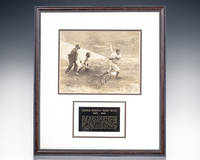
1930145338c. 1930s. Photograph of George Herman 'Babe' Ruth boldly signed by him. Sepia-toned glossy photograph of George Herman 'Babe' Ruth. Signed by Babe Ruth near the bottom of the photograph. Matted and framed with a plaque describing Ruth's claim to fame which reads "George Herman 'Babe' Ruth 1895-1948 'Babe' Ruth won fame as one of the greatest baseball players of all time. His record of 714 home runs stood for 39 years until Hank Aaron beat the record in 1974. In 1914 Ruth joined the Boston Red Sox and became a successful pitcher. In 1920 he was traded to the New York Yankees playing in the outfield regularly. In 1927 Ruth set a record of 60 home runs in a season. The Yankees released Ruth after the 1934 season. He finished his career with the Boston Braves in 1935 and was named to the National Baseball Hall of Fame in 1936. In near fine condition. The entire piece measures 18.1 inches by 15.9 inches. American baseball legend George Herman "Babe" Ruth Jr. began his MLB career as a stellar left-handed pitcher for the Boston Red Sox but achieved his greatest fame as a slugging outfielder for the New York Yankees. He established a record number of MLB batting records including career home runs 714 runs batted in 2213 and slugging percentage .690. During his career he was the target of intense press and public attention and his sometimes controversial lifestyle was tempered by his willingness to do good by visiting children at hospitals and orphanages. unknown
GOR007726318Paperback. Very Good. paperback
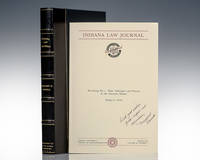
148412Indiana University School of Law/Bloomington: Indiana Law Journal 1993. Original Spring 1993 issue of the Indiana Law Journal containing Margaret G. Farrell's Revisiting Roe v. Wade. Octavo original wrappers Indiana Law Journal Volume 68 Number 2 Spring 1993. Inscribed by the author on the front wrapper "With good wishes great respect and admiration Margaret Farrell." The recipient Ruth Bader Ginsburg American lawyer and jurist served as an associate justice of the Supreme Court of the United States from 1993 until her death in 2020 and was responsible for some of the most eventful legal decisions of the past half-century. Nominated by President Bill Clinton in 1993 to replace retiring justice Byron White Ginsburg became the first Jewish woman and the second woman to serve on the Court after Sandra Day O’Connor. Ginsburg spent much of her legal career as an advocate for gender equality and women’s rights winning many arguments before the Supreme Court. During her tenure as associate justice of the Supreme Court Ginsburg received attention for her fiery and passionate dissents that reflected liberal views of the law. She was popularly dubbed “the Notorious R.B.G.†a moniker she later embraced. She authored several important majority opinions related to gender discrimination voting rights and affirmative action in cases such as United States v. Virginia 1996 which struck down the Virginia Military Institute’s male-only admissions policy as violating the Equal Protection Clause of the Fourteenth Amendment Olmstead v. L.C. 1999 in which the Court ruled that mental illness is a form of disability covered under the Americans with Disabilities Act of 1990 and Friends of the Earth Inc. v. Laidlaw Environmental Services Inc. 2000 in which the Court held that residents have standing to seek fines for an industrial polluter that affected their interests and that is able to continue doing so. In fine condition. Housed in a custom half morocco clamshell box from the Harcourt Bindery. A unique piece of history. In her 1993 article Revisiting Roe v. Wade: Substance and Process in the Abortion Debate Margaret G. Farrell critically examines the Supreme Court’s reasoning in Roe v. Wade arguing that the decision's focus on substantive rights overshadowed essential procedural considerations. Farrell contends that by emphasizing a constitutional right to privacy the Court neglected the importance of democratic deliberation and the role of legislative processes in shaping abortion policy. She advocates for a jurisprudential approach that balances individual rights with procedural legitimacy suggesting that such a framework would better accommodate the complex ethical and social dimensions of the abortion debate. Indiana Law Journal unknown
17989HOLOGRAPHIC CUT SIGNATURE ON A LARGER PIECE OF PAPER. Ready to be framed and mounted. Scribner unknown
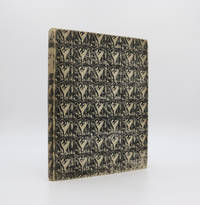
29638London: The Curwen Press for The Fleuron Ltd. 1928. First edition. First edition. Limited edition. Quarto. Publisher's original white cloth printed in black with a wood engraving design by Paul Nash title in black to the spine. Title page vignette head-piece and decorated initial letter by Edward Bawden coloured in green and pink. With 31 sheets of pattern papers printed at The Curwen Press 10 of which are produced from wood engravings. Each sheet is folded twice and uncut to the folded edge as issued. A very good copy the binding square and firm with bumping to the spine tips and corners and rubbing to the black printed design at the edges. The contents with a little offsetting to the endpapers and the occasional finger mark to the margins of the introduction are otherwise fine bright and fresh throughout. Issued in an edition of 145 copies for sale in the UK from which this example is numbered 49. There was also an edition of 75 copies issued by Random House for sale in America. With an eight page introduction by Paul Nash in which he relates the history of patterned papers. A beautiful volume. Further details and images for any of the items listed are available on request. Lucius Books welcomes direct contact with our customers. London: The Curwen Press for The Fleuron Ltd. 1928 hardcover
2018__0198428855Oxford University Press 2018. Paperback. New. 27.95x21.26x10.63 inches. Oxford University Press paperback
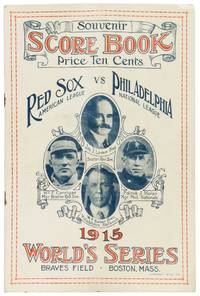
1915412828Boston Mass: Lincoln Eng. Co 1915. Softcover. Very Good. Quarto. Stapled illustrated wrappers printed in blue and red with halftone images. Vertical crease with a little rubbing on the crease slightly misfolded and a bit of oxidizing on the staples about very good. Scored in pencil. Program for the third game of Babe Ruth's first World Series. The Red Sox won the game 2-1 Dutch Leonard getting the win over Grover Cleveland Alexander to go up in the series two games to one. The Red Sox featuring future Hall of Famers Harry Hooper Herb Pennock Tris Speaker and Ruth eventually won the series four games to one. The series featured terrific pitching three of the five games ending with scores of 2-1 another with a score of 3-1 and the final game a comparative offensive barrage was won by the Red Sox 5-4.<br /> <br /> Ruth a pitcher at the time didn't pitch. He appeared in only Game One grounding out as a pinch hitter in the 9th inning. Although Fenway Park was home to the Red Sox the Boston games were played at Braves Field in order to take advantage of the larger newly renovated park. The program includes two team photos of the Red Sox: one an official image the other on the rear cover advertising the team in their Stag Wear brand sweaters. Both are in blue-toned ink and both images picture a cheerful Babe Ruth in the back row. Lincoln Eng. Co unknown
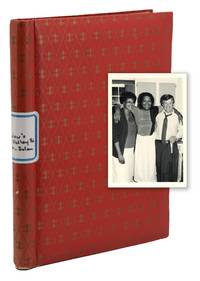
140947542Winston-Salem NC: No publisher 1980. Very Good. Photo album containing candid snapshots of Maya Angelou and her friends and associates. Fifty-seven photos of which 23 are in color and 34 in black and white under glassine on sticky album pages. Bound in padded red and gold paper-covered boards handlettered label sticker to spine internal spiral binding. Very Good with rubbed lower edges fading to spine and split to paper at lower rear joint. Pages toned adhesive coating weak; most pictures have shifted around and are loose behind the glassine. <p>Most of the photos were taken at the same event at Angelou's house during the 1980s though several near-duplicates depict Eugene B. Redmond and Ruth Love standing in front of an art installation. One street scene portrait of Redmond is inscribed on the back: "To Ruth - Best Imani. Street scene New York Fall '85." <p>Maya Angelou moved to the North Carolinian city of Winston-Salem after accepting a lifetime professorship at Wake Forest University in 1981 which she held until her death in 2014. Angelou who appears in eleven of these photos found the experience transformative. She once told a USA Today reporter that “I’m not a writer who teaches. I’m a teacher who writes. But I had to work at Wake Forest to know that.†<p>Among Angelou's many guests was the poet and professor Eugene B. Redmond a longtime close friend who appears twenty-four times in this album and who stamped many of the photos on verso with “Compliments Poet-Eugene B. Redmond.†The educator Ruth Love appears in forty of the photographs. As the Superintendent of the Oakland School system in the late 1970s she created programming to bring prominent African Americans including Maya Angelou face to face with students in order to inspire and educate them. The two women maintained their friendship and traveled to Ghana together in 1993. <p>An intimate look into the personal life of one of the greatest figures of American writing touching in its ordinariness. [No publisher] unknown
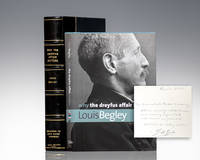
147322New Haven: Yale University Press 2009. First edition of this case study on corruption in the justice system. Octavo original publisher's boards. Association copy inscribed by Bill Bader to Ruth Bader Ginsburg on the front free endpaper "March 2012. For Justice Ruth Bader Ginsburg Whose courage and brilliance are rarely equaled and never surpassed. With best birthday wishes - Bill Bader." From the library of Ruth Bader Ginsburg. Arguably the most famous Supreme Court Justice in American history lawyer and jurist Ruth Bader Ginsburg served as an associate justice of the Supreme Court of the United States from 1993 until her death in 2020. Popularly dubbed “the Notorious R.B.G.†a play on the name of famed 90s rapper The Notorious B.I.G. Ginsburg was responsible for some of the most eventful legal decisions of the past half-century. When she was nominated by President Bill Clinton in 1993 to replace retiring justice Byron White Ginsburg became both the first Jewish woman and the second woman to serve on the Court after Sandra Day O’Connor. Ginsburg was born and grew up in Brooklyn New York earned degrees at Cornell University and Columbia Law School and began her career as a professor at Rutgers Law School and Columbia Law School teaching civil procedure as one of the few women in her field. She spent much of her early legal career as an advocate for gender equality and women’s rights winning many arguments before the Supreme Court and in 1972 co-founded the Women’s Rights Project at the American Civil Liberties Union which participated in more than 300 gender discrimination cases by 1974. In 1980 President Jimmy Carter appointed her to the U.S. Court of Appeals for the District of Columbia Circuit where she served until her appointment to the Supreme Court in 1993. During her tenure as associate justice of the Supreme Court Ginsburg received increasing attention for her fiery and passionate dissents that reflected liberal views of the law. She authored several important majority opinions related to gender discrimination voting rights and affirmative action in cases such as United States v. Virginia 1996 which struck down the Virginia Military Institute’s male-only admissions policy as violating the Equal Protection Clause of the Fourteenth Amendment Olmstead v. L.C. 1999 in which the Court ruled that mental illness is a form of disability covered under the Americans with Disabilities Act of 1990 and Friends of the Earth Inc. v. Laidlaw Environmental Services Inc. 2000 in which the Court held that residents have standing to seek fines for an industrial polluter that affected their interests and that is able to continue doing so. In 2002 Ginsburg was inducted into the National Women’s Hall of Fame she was named one of Forbes’ 100 Most Powerful Women in 2009 and one of Time magazine’s 100 most influential people in 2015. Her powerful and fiery dissent in the 2013 Supreme Court case Shelby County v. Holder in which she argued against the majority’s decision to strike down key provisions of the Voting Rights Act of 1965 emphasizing the continued need for its protections against racial discrimination in voting earned her the nickname “The Notorious R.B.G.†– a moniker she came to embrace which has since become a celebration of her important legal career and legacy. Widely regarded as one of the most remarkable women in American history Ginsburg redefined and transcended the traditional role of Supreme Court justice ascending to the status of intergenerational feminist pop culture icon. Fine in a near fine dust jacket. Housed in a custom half morocco clamshell box by the Harcourt Bindery. An exceptional association. "No other work in English on the Dreyfus Affair matches the clarity the concision and the passion of this one. A lawyer and novelist Louis Begley explains the legal technicalities and untangles the byzantine narrative. He shows why this abuse of power should still concern us today" Robert O. Paxton author of The Anatomy of Fascism. Yale University Press hardcover
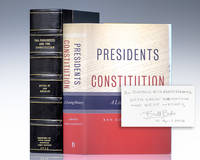
146581New York: New York University Press 2016. First edition of this "fluidly fashioned collection of essays about how the roster of American presidents shaped the executive duties as defined in the Constitution" Kirkus Reviews. Octavo original half cloth original red silk ribbon illustrated with black and white images. Association copy inscribed by Bill Bader on the front free endpaper "For Justice Ruth Bader Ginsburg with great admiration and best wishes - Bill Bader 12 April 2016." From the library of Ruth Bader Ginsburg. Arguably the most famous Supreme Court Justice in American history lawyer and jurist Ruth Bader Ginsburg served as an associate justice of the Supreme Court of the United States from 1993 until her death in 2020. Popularly dubbed “the Notorious R.B.G.†a play on the name of famed 90s rapper The Notorious B.I.G. Ginsburg was responsible for some of the most eventful legal decisions of the past half-century. When she was nominated by President Bill Clinton in 1993 to replace retiring justice Byron White Ginsburg became both the first Jewish woman and the second woman to serve on the Court after Sandra Day O’Connor. Ginsburg was born and grew up in Brooklyn New York earned degrees at Cornell University and Columbia Law School and began her career as a professor at Rutgers Law School and Columbia Law School teaching civil procedure as one of the few women in her field. She spent much of her early legal career as an advocate for gender equality and women’s rights winning many arguments before the Supreme Court and in 1972 co-founded the Women’s Rights Project at the American Civil Liberties Union which participated in more than 300 gender discrimination cases by 1974. In 1980 President Jimmy Carter appointed her to the U.S. Court of Appeals for the District of Columbia Circuit where she served until her appointment to the Supreme Court in 1993. During her tenure as associate justice of the Supreme Court Ginsburg received increasing attention for her fiery and passionate dissents that reflected liberal views of the law. She authored several important majority opinions related to gender discrimination voting rights and affirmative action in cases such as United States v. Virginia 1996 which struck down the Virginia Military Institute’s male-only admissions policy as violating the Equal Protection Clause of the Fourteenth Amendment Olmstead v. L.C. 1999 in which the Court ruled that mental illness is a form of disability covered under the Americans with Disabilities Act of 1990 and Friends of the Earth Inc. v. Laidlaw Environmental Services Inc. 2000 in which the Court held that residents have standing to seek fines for an industrial polluter that affected their interests and that is able to continue doing so. In 2002 Ginsburg was inducted into the National Women’s Hall of Fame she was named one of Forbes’ 100 Most Powerful Women in 2009 and one of Time magazine’s 100 most influential people in 2015. Her powerful and fiery dissent in the 2013 Supreme Court case Shelby County v. Holder in which she argued against the majority’s decision to strike down key provisions of the Voting Rights Act of 1965 emphasizing the continued need for its protections against racial discrimination in voting earned her the nickname “The Notorious R.B.G.†– a moniker she came to embrace which has since become a celebration of her important legal career and legacy. Widely regarded as one of the most remarkable women in American history Ginsburg redefined and transcended the traditional role of Supreme Court justice ascending to the status of intergenerational feminist pop culture icon. Fine in a near fine dust jacket. Jacket design by Mindy Basinger Hill. Housed in a custom half morocco clamshell box by the Harcourt Bindery. "An indispensable book . Reviewing the constant ongoing battle between each successive president and the laws that limited his power Gormley offers a perspective that we haven't seen. This is a book about human nature and the struggle for power. As we can see getting to the White House was not the end of that struggle. It was just the beginning" Doug Wead author of 'The Raising of a President: The Mothers and Fathers of Our Nation's Leaders'. New York University Press hardcover
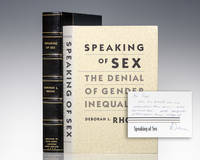
147158Cambridge MA: Harvard University Press 1997. First edition of this analysis of sex and gender-based inequality in the United States. Octavo original half cloth. Association copy lengthily inscribed by the author on the half-title page "For Ruth Who has taught me so much about these issues - and so much else. With deepest admiration and respect Deborah." From the library of Ruth Bader Ginsburg. Arguably the most famous Supreme Court Justice in American history lawyer and jurist Ruth Bader Ginsburg served as an associate justice of the Supreme Court of the United States from 1993 until her death in 2020. Popularly dubbed “the Notorious R.B.G.†a play on the name of famed 90s rapper The Notorious B.I.G. Ginsburg was responsible for some of the most eventful legal decisions of the past half-century. When she was nominated by President Bill Clinton in 1993 to replace retiring justice Byron White Ginsburg became both the first Jewish woman and the second woman to serve on the Court after Sandra Day O’Connor. Ginsburg was born and grew up in Brooklyn New York earned degrees at Cornell University and Columbia Law School and began her career as a professor at Rutgers Law School and Columbia Law School teaching civil procedure as one of the few women in her field. She spent much of her early legal career as an advocate for gender equality and women’s rights winning many arguments before the Supreme Court and in 1972 co-founded the Women’s Rights Project at the American Civil Liberties Union which participated in more than 300 gender discrimination cases by 1974. In 1980 President Jimmy Carter appointed her to the U.S. Court of Appeals for the District of Columbia Circuit where she served until her appointment to the Supreme Court in 1993. During her tenure as associate justice of the Supreme Court Ginsburg received increasing attention for her fiery and passionate dissents that reflected liberal views of the law. She authored several important majority opinions related to gender discrimination voting rights and affirmative action in cases such as United States v. Virginia 1996 which struck down the Virginia Military Institute’s male-only admissions policy as violating the Equal Protection Clause of the Fourteenth Amendment Olmstead v. L.C. 1999 in which the Court ruled that mental illness is a form of disability covered under the Americans with Disabilities Act of 1990 and Friends of the Earth Inc. v. Laidlaw Environmental Services Inc. 2000 in which the Court held that residents have standing to seek fines for an industrial polluter that affected their interests and that is able to continue doing so. In 2002 Ginsburg was inducted into the National Women’s Hall of Fame she was named one of Forbes’ 100 Most Powerful Women in 2009 and one of Time magazine’s 100 most influential people in 2015. Her powerful and fiery dissent in the 2013 Supreme Court case Shelby County v. Holder in which she argued against the majority’s decision to strike down key provisions of the Voting Rights Act of 1965 emphasizing the continued need for its protections against racial discrimination in voting earned her the nickname “The Notorious R.B.G.†– a moniker she came to embrace which has since become a celebration of her important legal career and legacy. Widely regarded as one of the most remarkable women in American history Ginsburg redefined and transcended the traditional role of Supreme Court justice ascending to the status of intergenerational feminist pop culture icon. Fine in a fine dust jacket. Housed in a custom half morocco clamshell box by the Harcourt Bindery. "Deborah L. Rhode was the Ernest W. McFarland Professor of Law and the Director of the Center on the Legal Profession. She graduated Phi Beta Kappa and summa cum laude from Yale College and received her JD from Yale Law School. She clerked for United States Supreme Court Justice Thurgood Marshall before joining the Stanford Law School faculty in 1979. She was the nation's most frequently cited scholar on legal ethics" Stanford Law. "In 'Speaking of Sex' Deborah Rhode smartly and persuasively shows that for all the chatter about sex and sex roles on TV talk shows silence is still the rule when it comes to speaking candidly about women's second-class status. This is one problem the culture still wants to deny" Susan Faludi author of Backlash: The Undeclared War Against American Women. Harvard University Press hardcover
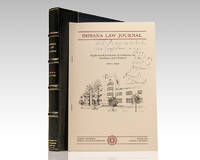
150834Indiana University School of Law/Bloomington: Indiana Law Journal 1998. Original Winter 1998 offprint of the Indiana Law Journal containing David L. Shapiro's Supplemental Jurisdiction: A Confession an Avoidance and a Proposal. Octavo original wrappers Indiana Law Journal Volume 74 Number 1 Winter 1998. Association copy inscribed by the author on the front wrapper "Ruth - As my contribution to a Symposium a war story about my first argument. Regards David." The recipient Ruth Bader Ginsburg American lawyer and jurist served as an associate justice of the Supreme Court of the United States from 1993 until her death in 2020 and was responsible for some of the most eventful legal decisions of the past half-century. Nominated by President Bill Clinton in 1993 to replace retiring justice Byron White Ginsburg became the first Jewish woman and the second woman to serve on the Court after Sandra Day O’Connor. Ginsburg spent much of her legal career as an advocate for gender equality and women’s rights winning many arguments before the Supreme Court. During her tenure as associate justice of the Supreme Court Ginsburg received attention for her fiery and passionate dissents that reflected liberal views of the law. She was popularly dubbed “the Notorious R.B.G.†a moniker she later embraced. She authored several important majority opinions related to gender discrimination voting rights and affirmative action in cases such as United States v. Virginia 1996 which struck down the Virginia Military Institute’s male-only admissions policy as violating the Equal Protection Clause of the Fourteenth Amendment Olmstead v. L.C. 1999 in which the Court ruled that mental illness is a form of disability covered under the Americans with Disabilities Act of 1990 and Friends of the Earth Inc. v. Laidlaw Environmental Services Inc. 2000 in which the Court held that residents have standing to seek fines for an industrial polluter that affected their interests and that is able to continue doing so. In fine condition with light creasing. Housed in a custom half morocco clamshell box from the Harcourt Bindery. A unique piece of history. David L. Shapiro 1932–2023 was a distinguished Harvard Law School professor and a leading authority on federal courts and civil procedure widely regarded as an influential figure in modern federal courts jurisprudence. Over a career spanning several decades at Harvard Shapiro shaped scholarly and judicial understanding of jurisdiction judicial review and the institutional role of federal courts within the constitutional system. Ruth Bader Ginsburg remembered him in his Harvard Law Review In Memoriam issue "Among members of the legal academy David L. Shapiro impressed me as the very best the most devoted to his teaching and writing the least self-regarding. He was ever mindful of the importance of facts and of the law's impact on the people law exists or should exist to serve. And I will miss our correspondence about the Court's jurisprudence his applause for some of our decisions his worries about others. But I count it my good fortune to have known David L. Shapiro a man as kind and caring as he was brilliant." Indiana Law Journal unknown
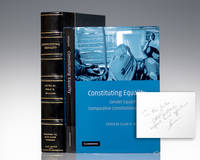
147321Cambridge: Cambridge University Press 2009. First edition of this interdisciplinary collection of essays on women's issues. Octavo original publisher's boards. Association copy inscribed by the editor on the front free endpaper "To the Justice With gratitude respect and affection. Susan." From the library of Ruth Bader Ginsburg. Arguably the most famous Supreme Court Justice in American history lawyer and jurist Ruth Bader Ginsburg served as an associate justice of the Supreme Court of the United States from 1993 until her death in 2020. Popularly dubbed “the Notorious R.B.G.†a play on the name of famed 90s rapper The Notorious B.I.G. Ginsburg was responsible for some of the most eventful legal decisions of the past half-century. When she was nominated by President Bill Clinton in 1993 to replace retiring justice Byron White Ginsburg became both the first Jewish woman and the second woman to serve on the Court after Sandra Day O’Connor. Ginsburg was born and grew up in Brooklyn New York earned degrees at Cornell University and Columbia Law School and began her career as a professor at Rutgers Law School and Columbia Law School teaching civil procedure as one of the few women in her field. She spent much of her early legal career as an advocate for gender equality and women’s rights winning many arguments before the Supreme Court and in 1972 co-founded the Women’s Rights Project at the American Civil Liberties Union which participated in more than 300 gender discrimination cases by 1974. In 1980 President Jimmy Carter appointed her to the U.S. Court of Appeals for the District of Columbia Circuit where she served until her appointment to the Supreme Court in 1993. During her tenure as associate justice of the Supreme Court Ginsburg received increasing attention for her fiery and passionate dissents that reflected liberal views of the law. She authored several important majority opinions related to gender discrimination voting rights and affirmative action in cases such as United States v. Virginia 1996 which struck down the Virginia Military Institute’s male-only admissions policy as violating the Equal Protection Clause of the Fourteenth Amendment Olmstead v. L.C. 1999 in which the Court ruled that mental illness is a form of disability covered under the Americans with Disabilities Act of 1990 and Friends of the Earth Inc. v. Laidlaw Environmental Services Inc. 2000 in which the Court held that residents have standing to seek fines for an industrial polluter that affected their interests and that is able to continue doing so. In 2002 Ginsburg was inducted into the National Women’s Hall of Fame she was named one of Forbes’ 100 Most Powerful Women in 2009 and one of Time magazine’s 100 most influential people in 2015. Her powerful and fiery dissent in the 2013 Supreme Court case Shelby County v. Holder in which she argued against the majority’s decision to strike down key provisions of the Voting Rights Act of 1965 emphasizing the continued need for its protections against racial discrimination in voting earned her the nickname “The Notorious R.B.G.†– a moniker she came to embrace which has since become a celebration of her important legal career and legacy. Widely regarded as one of the most remarkable women in American history Ginsburg redefined and transcended the traditional role of Supreme Court justice ascending to the status of intergenerational feminist pop culture icon. Near fine in a near fine dust jacket. Housed in a custom half morocco clamshell box by the Harcourt Bindery. An exceptional association. Dedicated to Justice Ruth Bader Ginsburg "who has been for me as for so many others a mentor a role model and an inspiration" Susan H. Williams' 'Constituting Equality' draws a scrutinizing gaze to the issues that arise in constitutional drafting concerning gender equality. The essays in the book address a range of issues of concern to women across the globe which can be and are often overlooked in the drafting of constitutional law. Cambridge University Press hardcover
1871140939518Hartford CT: Case Lockwood & Brainard Printers 1871. First Edition. Fine. 4 pp. Self-wrappers. First edition. Fine. An announcement by famous feminist Susan B. Anthony and five other suffragettes of the formation of a National Woman Suffrage and Educational Committee and their intent to pursue recognition of voting rights for women under the 14th and 15th amendments. These were recent amendments around three and one years old respectively but this salvo relies on them heavily as well as on a taxation-without-representation argument harking back to the origins of the republic. In 1875 the Supreme Court would close the door on this line of thinking and suffragettes would have to change strategies but this leaflet proceeds all that; it's still heady with fresh ideas and a brand new organization appealing for funds and women's names for a pledge book compiled by the NWSEC Secretary. A rare document of a brief glimmer of optimism in what would be a long hard slog-- the struggle for equal rights-- in excellent condition. Case, Lockwood & Brainard, Printers unknown
195553395N. P.: Privately printed by Ruth R. Ealy 1955. 1955. First edition. 8vo. Red cloth 5 243 pp. preface introduction illustrated from photographs. The author's father Dr. T. F. Ealy was a medical missionary in Indian Territory and New Mexico Territory. His first assignment was Fort Arbuckle Chickasaw Reservation Oklahoma Territory; his second was in Lincoln New Mexico Territory; and his final assignment was Zuni Pueblo New Mexico Territory. Dr. Ealy arrived in Lincoln the day after John Henry Tunstall was murdered and so officiated at Tunstall's funeral. The murder of Tunstall kicked off the bloody Lincoln County War. Much on the Lincoln County War information of the burning of McSween's home new material on Billy the Kid and with information of the cattle industry in New Mexico. From Lincoln Dr. Ealy went to Zuni Pueblo. His keen observations are one of the primary early sources of life in Zuni in 1878. An unusual copy with an inked inscription on the front free fly leaf the reads :"To top expert Jeff Dykes with all good wishes of Bob Mullen 12/1/55." Laid-in are four letters; two letters from 1955 and 1956 between R. N. Mullin and Jeff Dykes about Mullin's attempts to purchase a copy of the book from Ealy; a letter from Ealy to Jeff Dykes dated May 9 1956; plus a letter from Mullin to W. M Morrison about the attempt to purchase a copy of Ealy's book. Jeff Dykes' Rare Western Outlaw Books says that 100 copies were printed with only 33 copies being for sale. Dykes provides additional information about the book. Robert N. Mullin 1893–1982 was a writer of Western history and the author of several publications about Billy the Kid and the Lincoln County War. One of 100 copies 33 for sale in fine and bright condition of a rare book. Housed in a modern cloth slipcase. Privately printed by Ruth R. Ealy, 1955. hardcover
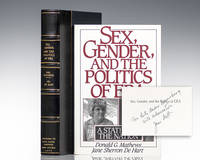
146580New York: Oxford University Press 1992. First paperback edition of this "comprehensive analysis of the politics of the Equal Rights Amendment" Journal of American History. Octavo original publisher's pictorial wrappers illustrated with black and white photographs. Presentation copy inscribed by co-author Jane Sherron de Hart on the half title page "For Ruth Bader Ginsberg sic with admiration Jane De H." From the library of Ruth Bader Ginsburg. Arguably the most famous Supreme Court Justice in American history lawyer and jurist Ruth Bader Ginsburg served as an associate justice of the Supreme Court of the United States from 1993 until her death in 2020. Popularly dubbed “the Notorious R.B.G.†a play on the name of famed 90s rapper The Notorious B.I.G. Ginsburg was responsible for some of the most eventful legal decisions of the past half-century. When she was nominated by President Bill Clinton in 1993 to replace retiring justice Byron White Ginsburg became both the first Jewish woman and the second woman to serve on the Court after Sandra Day O’Connor. Ginsburg was born and grew up in Brooklyn New York earned degrees at Cornell University and Columbia Law School and began her career as a professor at Rutgers Law School and Columbia Law School teaching civil procedure as one of the few women in her field. She spent much of her early legal career as an advocate for gender equality and women’s rights winning many arguments before the Supreme Court and in 1972 co-founded the Women’s Rights Project at the American Civil Liberties Union which participated in more than 300 gender discrimination cases by 1974. In 1980 President Jimmy Carter appointed her to the U.S. Court of Appeals for the District of Columbia Circuit where she served until her appointment to the Supreme Court in 1993. During her tenure as associate justice of the Supreme Court Ginsburg received increasing attention for her fiery and passionate dissents that reflected liberal views of the law. She authored several important majority opinions related to gender discrimination voting rights and affirmative action in cases such as United States v. Virginia 1996 which struck down the Virginia Military Institute’s male-only admissions policy as violating the Equal Protection Clause of the Fourteenth Amendment Olmstead v. L.C. 1999 in which the Court ruled that mental illness is a form of disability covered under the Americans with Disabilities Act of 1990 and Friends of the Earth Inc. v. Laidlaw Environmental Services Inc. 2000 in which the Court held that residents have standing to seek fines for an industrial polluter that affected their interests and that is able to continue doing so. In 2002 Ginsburg was inducted into the National Women’s Hall of Fame she was named one of Forbes’ 100 Most Powerful Women in 2009 and one of Time magazine’s 100 most influential people in 2015. Her powerful and fiery dissent in the 2013 Supreme Court case Shelby County v. Holder in which she argued against the majority’s decision to strike down key provisions of the Voting Rights Act of 1965 emphasizing the continued need for its protections against racial discrimination in voting earned her the nickname “The Notorious R.B.G.†– a moniker she came to embrace which has since become a celebration of her important legal career and legacy. Widely regarded as one of the most remarkable women in American history Ginsburg redefined and transcended the traditional role of Supreme Court justice ascending to the status of intergenerational feminist pop culture icon. In near fine condition. Wrapper design by Ben Santora. Housed in a custom half morocco clamshell box by the Harcourt Bindery. "Sex Gender and the Politics of ERA Reveals the deeply felt meanings that activated participants on both sides of the battle . A fine contribution to our understanding of the increasingly salient politics of gender in the United States" Frances Fox Piven City University of New York. "Much more than a narrative account of the ratification process at the state level . The authors are to be commended for their balanced dispassionate treatment of a topic for which no middle ground exists" North Carolina Historical Review. Oxford University Press paperback
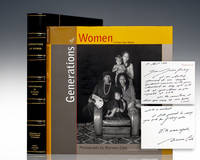
149944San Francisco: Chronicle Books 1998. First edition of this multidimensional visual portrayal of women’s lives. Quarto original publisher's cloth illustrated with black and white photographs. Presentation copy with a lengthy autograph notecard inscribed by the photographer Mariana Cook to Ruth Bader Ginsburg laid in. The recipient American lawyer and jurist Ruth Bader Ginsburg served as an associate justice of the Supreme Court of the United States from 1993 until her death in 2020 and was responsible for some of the most eventful legal decisions of the past half-century. Nominated by President Bill Clinton in 1993 to replace retiring justice Byron White Ginsburg became the first Jewish woman and the second woman to serve on the Court after Sandra Day O’Connor. Ginsburg spent much of her legal career as an advocate for gender equality and women’s rights winning many arguments before the Supreme Court. During her tenure as associate justice of the Supreme Court Ginsburg received attention for her fiery and passionate dissents that reflected liberal views of the law. She was popularly dubbed “the Notorious R.B.G.†a moniker she later embraced. She authored several important majority opinions related to gender discrimination voting rights and affirmative action in cases such as United States v. Virginia 1996 which struck down the Virginia Military Institute’s male-only admissions policy as violating the Equal Protection Clause of the Fourteenth Amendment Olmstead v. L.C. 1999 in which the Court ruled that mental illness is a form of disability covered under the Americans with Disabilities Act of 1990 and Friends of the Earth Inc. v. Laidlaw Environmental Services Inc. 2000 in which the Court held that residents have standing to seek fines for an industrial polluter that affected their interests and that is able to continue doing so. Fine in a fine dust jacket. From the library of American lawyer and jurist Ruth Bader Ginsburg. Housed in a custom half morocco clamshell box. Photographic and literary exploration of the relationships between women across different generations. The book features intimate black-and-white portraits of grandmothers mothers and daughters accompanied by personal narratives that reflect on themes of heritage identity and familial bonds. Through these stories Cook captures the complexities of womanhood emphasizing both the shared experiences and the individuality of each subject. Chronicle Books hardcover
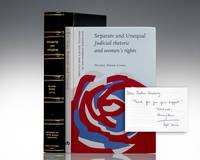
148300Amsterdam/Philadelphia: John Benjamins Publishing Company 2002. First edition of this examination of the language of judges with respect to the issues of gender discrimination. Octavo original pictorial boards. Association copy inscribed by the author on the title page to Ruth Bader Ginsburg "Dear Justice Ginsburg Thank you for your support! Take care Huang Hoon - Sept. 2002." American lawyer and jurist Ruth Bader Ginsburg served as an associate justice of the Supreme Court of the United States from 1993 until her death in 2020 and was responsible for some of the most eventful legal decisions of the past half-century. Nominated by President Bill Clinton in 1993 to replace retiring justice Byron White Ginsburg became the first Jewish woman and the second woman to serve on the Court after Sandra Day O’Connor. Ginsburg spent much of her legal career as an advocate for gender equality and women’s rights winning many arguments before the Supreme Court. During her tenure as associate justice of the Supreme Court Ginsburg received attention for her fiery and passionate dissents that reflected liberal views of the law. She was popularly dubbed “the Notorious R.B.G.†a moniker she later embraced. She authored several important majority opinions related to gender discrimination voting rights and affirmative action in cases such as United States v. Virginia 1996 which struck down the Virginia Military Institute’s male-only admissions policy as violating the Equal Protection Clause of the Fourteenth Amendment Olmstead v. L.C. 1999 in which the Court ruled that mental illness is a form of disability covered under the Americans with Disabilities Act of 1990 and Friends of the Earth Inc. v. Laidlaw Environmental Services Inc. 2000 in which the Court held that residents have standing to seek fines for an industrial polluter that affected their interests and that is able to continue doing so. In fine condition. Housed in a custom half morocco clamshell box by the Harcourt Bindery. "This book brings together many issues that are situated at the crossroads of discourse gender discrimination law and ideology. Working from the perspective of discourse analysis and gender studies this work argues for and demonstrates the importance of multidisciplinarity in contemporary scholarship when addressing issues as complex as women's rights judicial discourse and power" Professor Joel Sherzer UT-Austin. John Benjamins Publishing Company hardcover
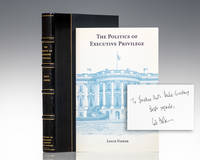
147159Durham: Carolina Academic Press 2004. First edition of this discussion of constitutional principles and political settlements. Octavo original wrappers. Presentation copy inscribed by the author on the half-title page "To Justice Ruth Bader Ginsburg Best regards Lou Fisher." From the library of Ruth Bader Ginsburg. Arguably the most famous Supreme Court Justice in American history lawyer and jurist Ruth Bader Ginsburg served as an associate justice of the Supreme Court of the United States from 1993 until her death in 2020. Popularly dubbed “the Notorious R.B.G.†a play on the name of famed 90s rapper The Notorious B.I.G. Ginsburg was responsible for some of the most eventful legal decisions of the past half-century. When she was nominated by President Bill Clinton in 1993 to replace retiring justice Byron White Ginsburg became both the first Jewish woman and the second woman to serve on the Court after Sandra Day O’Connor. Ginsburg was born and grew up in Brooklyn New York earned degrees at Cornell University and Columbia Law School and began her career as a professor at Rutgers Law School and Columbia Law School teaching civil procedure as one of the few women in her field. She spent much of her early legal career as an advocate for gender equality and women’s rights winning many arguments before the Supreme Court and in 1972 co-founded the Women’s Rights Project at the American Civil Liberties Union which participated in more than 300 gender discrimination cases by 1974. In 1980 President Jimmy Carter appointed her to the U.S. Court of Appeals for the District of Columbia Circuit where she served until her appointment to the Supreme Court in 1993. During her tenure as associate justice of the Supreme Court Ginsburg received increasing attention for her fiery and passionate dissents that reflected liberal views of the law. She authored several important majority opinions related to gender discrimination voting rights and affirmative action in cases such as United States v. Virginia 1996 which struck down the Virginia Military Institute’s male-only admissions policy as violating the Equal Protection Clause of the Fourteenth Amendment Olmstead v. L.C. 1999 in which the Court ruled that mental illness is a form of disability covered under the Americans with Disabilities Act of 1990 and Friends of the Earth Inc. v. Laidlaw Environmental Services Inc. 2000 in which the Court held that residents have standing to seek fines for an industrial polluter that affected their interests and that is able to continue doing so. In 2002 Ginsburg was inducted into the National Women’s Hall of Fame she was named one of Forbes’ 100 Most Powerful Women in 2009 and one of Time magazine’s 100 most influential people in 2015. Her powerful and fiery dissent in the 2013 Supreme Court case Shelby County v. Holder in which she argued against the majority’s decision to strike down key provisions of the Voting Rights Act of 1965 emphasizing the continued need for its protections against racial discrimination in voting earned her the nickname “The Notorious R.B.G.†– a moniker she came to embrace which has since become a celebration of her important legal career and legacy. Widely regarded as one of the most remarkable women in American history Ginsburg redefined and transcended the traditional role of Supreme Court justice ascending to the status of intergenerational feminist pop culture icon. In near fine condition. Housed in a custom half morocco clamshell box by the Harcourt Bindery. Since completing his doctoral work in political science at the New School for Social Research in 1967 constitutional scholar Louis Fisher has taught at multiple universities and authored several books on American law and government including a textbook and four-volume encyclopedia. He has been invited to testify before Congress more than 50 times on issues ranging from war powers and CIA whistleblowing to executive lobbying and the pocket veto. Among many achievements Fisher has received the Hubert H. Humphrey Award from the American Political Science Association in recognition of notable public service by a political scientist. Carolina Academic Press unknown
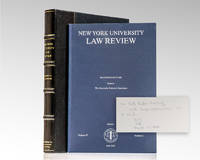
151268New York: New York University Law Review 2012. Original June 2012 offprint of the New York University Law Review containing Robert A. Katzmann's Madison Lecture: Statutes. Octavo original publisher's wrappers volume 87 number 3. Presentation copy inscribed by the author on the verso of the front panel "For Ruth Bader Ginsburg with deep appreciation for so much Yours Bob August 25 2012." The recipient Ruth Bader Ginsburg served as an associate justice of the Supreme Court of the United States from 1993 until her death in 2020 and was responsible for some of the most eventful legal decisions of the past half-century. Nominated by President Bill Clinton in 1993 to replace retiring justice Byron White Ginsburg became the first Jewish woman and the second woman to serve on the Court after Sandra Day O’Connor. Ginsburg spent much of her legal career as an advocate for gender equality and women’s rights winning many arguments before the Supreme Court. During her tenure as associate justice of the Supreme Court Ginsburg received attention for her fiery and passionate dissents that reflected liberal views of the law. She was popularly dubbed “the Notorious R.B.G.†a moniker she later embraced. She authored several important majority opinions related to gender discrimination voting rights and affirmative action in cases such as United States v. Virginia 1996 which struck down the Virginia Military Institute’s male-only admissions policy as violating the Equal Protection Clause of the Fourteenth Amendment Olmstead v. L.C. 1999 in which the Court ruled that mental illness is a form of disability covered under the Americans with Disabilities Act of 1990 and Friends of the Earth Inc. v. Laidlaw Environmental Services Inc. 2000 in which the Court held that residents have standing to seek fines for an industrial polluter that affected their interests and that is able to continue doing so. In near fine condition. Housed in a custom half morocco clamshell box by the Harcourt Bindery. Robert A. Katzmann 1953–2021 was an American jurist and legal scholar who served as a judge on the United States Court of Appeals for the Second Circuit from 1999 until his death and as the court’s Chief Judge from 2013 to 2020. Appointed by President Bill Clinton Katzmann was widely respected for his scholarship in administrative law statutory interpretation and the relationship between courts and Congress. Before joining the federal bench he was a professor of law and public policy at Georgetown University and authored several influential works examining how legislation is created and interpreted within the American legal system. New York University Law Review unknown
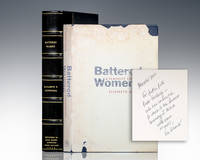
147156New Haven: Yale University Press 2000. First edition of this seminal work in feminist legal activism. Octavo original half cloth. Association copy inscribed by the author on the front free endpaper "November 2000. For Justice Ruth Bader Ginsburg - who has contributed so much to the feminist lawmaking I desire. With warm regards Liz Schneider." From the library of Ruth Bader Ginsburg. Arguably the most famous Supreme Court Justice in American history lawyer and jurist Ruth Bader Ginsburg served as an associate justice of the Supreme Court of the United States from 1993 until her death in 2020. Popularly dubbed “the Notorious R.B.G.†a play on the name of famed 90s rapper The Notorious B.I.G. Ginsburg was responsible for some of the most eventful legal decisions of the past half-century. When she was nominated by President Bill Clinton in 1993 to replace retiring justice Byron White Ginsburg became both the first Jewish woman and the second woman to serve on the Court after Sandra Day O’Connor. Ginsburg was born and grew up in Brooklyn New York earned degrees at Cornell University and Columbia Law School and began her career as a professor at Rutgers Law School and Columbia Law School teaching civil procedure as one of the few women in her field. She spent much of her early legal career as an advocate for gender equality and women’s rights winning many arguments before the Supreme Court and in 1972 co-founded the Women’s Rights Project at the American Civil Liberties Union which participated in more than 300 gender discrimination cases by 1974. In 1980 President Jimmy Carter appointed her to the U.S. Court of Appeals for the District of Columbia Circuit where she served until her appointment to the Supreme Court in 1993. During her tenure as associate justice of the Supreme Court Ginsburg received increasing attention for her fiery and passionate dissents that reflected liberal views of the law. She authored several important majority opinions related to gender discrimination voting rights and affirmative action in cases such as United States v. Virginia 1996 which struck down the Virginia Military Institute’s male-only admissions policy as violating the Equal Protection Clause of the Fourteenth Amendment Olmstead v. L.C. 1999 in which the Court ruled that mental illness is a form of disability covered under the Americans with Disabilities Act of 1990 and Friends of the Earth Inc. v. Laidlaw Environmental Services Inc. 2000 in which the Court held that residents have standing to seek fines for an industrial polluter that affected their interests and that is able to continue doing so. In 2002 Ginsburg was inducted into the National Women’s Hall of Fame she was named one of Forbes’ 100 Most Powerful Women in 2009 and one of Time magazine’s 100 most influential people in 2015. Her powerful and fiery dissent in the 2013 Supreme Court case Shelby County v. Holder in which she argued against the majority’s decision to strike down key provisions of the Voting Rights Act of 1965 emphasizing the continued need for its protections against racial discrimination in voting earned her the nickname “The Notorious R.B.G.†– a moniker she came to embrace which has since become a celebration of her important legal career and legacy. Widely regarded as one of the most remarkable women in American history Ginsburg redefined and transcended the traditional role of Supreme Court justice ascending to the status of intergenerational feminist pop culture icon. Near fine in a very good dust jacket with some chips and wear. Housed in a custom half morocco clamshell box by the Harcourt Bindery. "'Battered Women and Feminist Lawmaking' is a magnificent analysis of law social movements and challenges confronting women and their advocated. Schneider vividly recounts the complex lessons of two decades of experience as one of the nation's leading scholars activists and teachers on these difficult issues. This is a must read for anyone concerned about social change equality or the law" Sylvia A. Law New York University Law School. Yale University Press hardcover
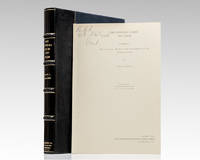
151277Cambridge Massachusetts: The Harvard Law Review Association 1984. Original November 1984 offprint Harvard Law Review containing David L. Shapiro’s "Wrong Turns: The Eleventh Amendment and the Pennhurst Case." Octavo original publisher’s wrappers Volume 98 Number 1. Presentation copy inscribed by the author on the front wrapper "For Ruth With all best regards David."  The recipient Ruth Bader Ginsburg served as an associate justice of the Supreme Court of the United States from 1993 until her death in 2020 and was responsible for some of the most eventful legal decisions of the past half-century. Nominated by President Bill Clinton in 1993 to replace retiring justice Byron White Ginsburg became the first Jewish woman and the second woman to serve on the Court after Sandra Day O’Connor. Ginsburg spent much of her legal career as an advocate for gender equality and women’s rights winning many arguments before the Supreme Court. During her tenure as associate justice of the Supreme Court Ginsburg received attention for her fiery and passionate dissents that reflected liberal views of the law. She was popularly dubbed “the Notorious R.B.G.†a moniker she later embraced. She authored several important majority opinions related to gender discrimination voting rights and affirmative action in cases such as United States v. Virginia 1996 which struck down the Virginia Military Institute’s male-only admissions policy as violating the Equal Protection Clause of the Fourteenth Amendment Olmstead v. L.C. 1999 in which the Court ruled that mental illness is a form of disability covered under the Americans with Disabilities Act of 1990 and Friends of the Earth Inc. v. Laidlaw Environmental Services Inc. 2000 in which the Court held that residents have standing to seek fines for an industrial polluter that affected their interests and that is able to continue doing so. In fine condition with a few pencil notations. Housed in a custom half morocco clamshell box by the Harcourt Bindery. David L. Shapiro 1932–2023 was a distinguished Harvard Law School professor and a leading authority on federal courts and civil procedure widely regarded as an influential figure in modern federal courts jurisprudence. Over a career spanning several decades at Harvard Shapiro shaped scholarly and judicial understanding of jurisdiction judicial review and the institutional role of federal courts within the constitutional system. Ruth Bader Ginsburg remembered him in his Harvard Law Review In Memoriam issue "Among members of the legal academy David L. Shapiro impressed me as the very best the most devoted to his teaching and writing the least self-regarding. He was ever mindful of the importance of facts and of the law's impact on the people law exists or should exist to serve. And I will miss our correspondence about the Court's jurisprudence his applause for some of our decisions his worries about others. But I count it my good fortune to have known David L. Shapiro a man as kind and caring as he was brilliant." The Harvard Law Review Association unknown