ROSENBERG, Harold, Saul SteinbergBiblio.com
6 525 résultats
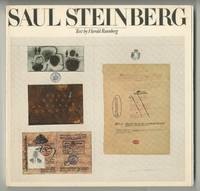
1978511765New York: Alfred A. Knopf in association with the Whitney Museum of American Art 1978. Softcover. Fine. First edition wrappered issue. Quarto. 256pp. Illustrated with the art works of Steinberg. Pictorial wrappers. Slight rubbing on the wrappers very near fine. Inscribed by Steinberg to author Mary McCarthy on the half-title page in the year of publication: "For Mary and Jim from Saul and the dear memory of Harold. Oct 78." Jim is Jim West McCarthy's fourth and final husband. Alfred A. Knopf in association with the Whitney Museum of American Art unknown
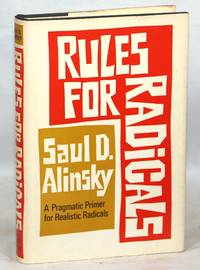
1971000014453New York: Random House 1971 1971. First edition. Hardcover. Very Good/Very Good. 8vo. 14 xiv-xxvi 3 4-196 2 pp. Black cloth with red lettering on the front board and gold lettering on the spine. Price of $6.95 on the front flap of the dust jacket. Jacket design by Jay J. Smith. Vox Dylan Matthews "Who is Saul Alinsky and why does the right hate him so much". This was Alinksy's final publication before his death in 1972. The author was a hugely influential American social activist and his methods for community organizing influenced later activists like Dolores Huerta and Cesar Chavez. According to Matthews the Vox journalist Alinsky's tactics would also influence the organizational methods of the American Tea Party movement. Alinksy was proud to help working people and people living in poverty demand better living and working conditions from political leaders and from corporations. A ripple to the paper on the front pastedown foxing to the pastedowns endpapers and top textblock; light foxing to the jacket. Random House [1971] hardcover
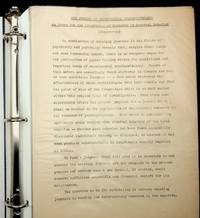
193027588various: various 1930. First Edition. Three Ring Binder. Very Good. First Edition. An archive of material which documents the attempted founding of a new journal "The Journal of Experimental Psychopathology" by American psychologist Saul Rosenzweig. The three page initial Prospectus explains the need for a journal focused on the "specialized but important domain of experimental psychopathology." A list of proposed consulting and corresponding editors and their addresses in 10 different fields is included and letters were sent out many acceptances from known names were received. Unfortunately another competing proposal was received by the National Research Council N.R.C. Committee from the Macy Foundation which was eventually accepted. A letter dated August 1 1938 communicates the bad news that Dr. Rosenzweig's proposal will be dropped. A second group of letters follows from contributing editors back to Rosenzweig expressing their condolences. Often this sort of activity happens behind the scenes - in this case we get to see both the timeline and some of the inner workings of the process. Three Ring Binder. "Saul Rosenzweig 1907–2004 was an American psychologist and therapist who studied subjects such as repression psychotherapy and aggression. Rosenzweig who with a co-author has been credited with being the first to attempt to "elicit repression" in a laboratory setting became well known after publishing a paper discussing "common factors" underlying competing approaches to psychotherapy.In the 1930s Rosenzweig studied repression. With G. Mason Rosenzweig criticized H. Meltzer's survey of studies of repression in an article published in the British Journal of Psychology. Rosenzweig and Mason argued that the studies reviewed by Meltzer worked with sensory stimuli unrelated to the theory of repression and "failed to develop under laboratory control the experiences which are subsequently to be tested for recall." Donald W. MacKinnon and William F. Dukes credit Rosenzweig and Mason with being "the first to make an explicit attempt to elicit repression under conditions of laboratory control and observation." Sigmund Freud was sent reprints of Rosenzweig's attempts to study repression but replied to Rosenzweig that while he had examined his "experimental studies for the verification of the psychoanalytic assertions with interest" he could not "put much value on these confirmations because the wealth of reliable observations on which these assertions rest make them independent of experimental verification."<br /> <br /> Rosenzweig became well known after publishing a paper discussing "common factors" underlying competing approaches to psychotherapy. He argued that all models of therapy could be equally successful due to competent therapists sharing common factors that aided their patients. His premise became known as the Dodo Bird Verdict or Dodo Bird Hypothesis — a reference to Lewis Carroll's Alice's Adventures in Wonderland 1865 in which a dodo bird declares at the end of a race designed to dry everyone off: "Everybody has won and all must have prizes."<br /> <br /> Rosenzweig's study of aggression led to the development of the Rosenzweig Picture-Frustration Study a test of latent hostility. The Rosenzweig Picture Frustration Study is usually considered a semi-projective technique and involves an examinee responding verbally to a semi-ambiguous picture scenario. Each of the three forms child adolescent and adult consists of 24 comic strip pictures that portray a situation that might induce frustration. The overall purpose of the study is to assess how the examinee responds to frustration and frustrating situations. The test assumes that the way that the examinee responds to each frustrating situation depicts how they behave in the face of frustration. The worth of this test is based on how aggression is conceptualized into three types. The first direction of aggression can be extragressive meaning that it is turned onto the environment. The second direction is intraggressive meaning that it is turned by the examinee onto the self. The final direction is imaggressive which means that it is evaded in an attempt to gloss over the frustration. In terms of reliability and validity the P-F Study interscorer reliability is in the range of .80 to .85. The test-retest reliability is fair to marginal. The test became popular in Europe and was featured in Stanley Kubrick's film A Clockwork Orange 1971.<br /> <br /> A collection of Rosenzweig's papers has been maintained in the Archives of the History of American Psychology at the University of Akron." Wikipedia. various unknown
198645554HEYNE WILHELM 1986. 1. softcover. Deutsche Erstveröffentlichung! HEYNE, WILHELM paperback
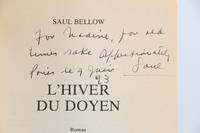
198279466Paris: Flammarion 1982. Fine. Flammarion Paris 1982 15 x 21 cm broché First edition in French of which there were no deluxe copies. Handsome copy with newspaper clipping included. Autograph inscription dated and signed by Saul Bellow to his friend Nadine Nimier wife and widow of Roger Nimier. Flammarion unknown
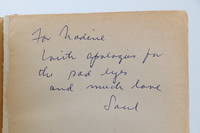
196180665Paris: Gallimard 1961. Fine. Gallimard Paris 1961 14.50 x 20.50 cm broché First edition of the French translation on ordinary paper. Boards marginally and slightly soiled Autograph inscription dated and signed by Saul Bellow to his friend Nadine Nimier wife and widow of Roger Nimier: ""For Nadine with apologiers for the sad eyes and much love. Saul."" Gallimard hardcover
2023Adhya-9780323834766ELSEVIER MEDICAL 2023. Hardcover. New. ELSEVIER MEDICAL hardcover
2023Adhya-9780323834766ELSEVIER MEDICAL 2023. Hardcover. New. ELSEVIER MEDICAL hardcover
17308578London: Printed for A. Bettesworth. and C. Hitch 1730. 1730 12 100 p. First edition. Contemporary panelled calf binding neatly rebacked with the original spine re-laid and a replacement label. The text is clean and crisp. An informed review of the early history of the barometer examining the contributions of Galileo Torricelli Boyle and Halley to its development. London: Printed for A. Bettesworth. and C. Hitch, unknown
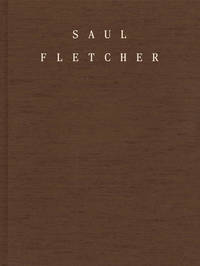
2019010459Inventory Press. A self-taught photographer from the northeastern coast of England Berlin-based Saul Fletcher born 1967 has been working for more than two decades to create images of fragmented bodies found-object assemblages and most famously the artist's own studio wall. Neither staged nor real neither fast-moving nor static neither intimate nor detached Fletcher's images create distinct ruptures in everyday temporalities. This substantial volume reproduces more than 300 photographs alongside essays by Ralph Rugoff and Kirsty Bell that touch on the haunting feeling produced by Fletcher's imagery - fitted with a removable clear mylar sleeve - All my books are always securely packed with plenty of bubblewrap in professional boxes and promptly dispatched within 2-3 days - SIGNED BY SAUL FLETCHER - Pictures available upon request. . Fine. Hardcover. 1st Edition. 1st Printing. 2019. Inventory Press hardcover
195946888(No place), The Association for Symbolic Logic, 1959. 8vo. Wrappers blank with printed title on spine. Entire issue No. 1 of vol. 24, offered. Fine and clean.
195948378(No place), The Association for Symbolic Logic, 1959. Lev8vo. Bound in red half cloth with gilt lettering to spine. In ""Journal of Symbolic Logic"", Volume 24. Barcode label pasted on to back board. Small library stamp to lower part of 6 pages. A very fine copy. Pp. (1) - 14. [Entire volume: VI, 374 pp.).
195948378No place The Association for Symbolic Logic 1959. Lev8vo. Bound in red half cloth with gilt lettering to spine. In "Journal of Symbolic Logic" Volume 24. Barcode label pasted on to back board. Small library stamp to lower part of 6 pages. A very fine copy. Pp. 1 - 14. Entire volume: VI 374 pp. <br/><br/><em>The seminal first printing of Kripke's debut article which provided the basis for his logic and for the model theory for modal logic in general. The work constitutes the very beginning of Kripke Semantics often called possible world semantics. Kripke's works in general are rare in fist editions. Many of them remain unpublished and are only known in privately circulated manuscripts.The American philosopher Saul A. Kripke born 1940 is an exceedingly important logician and philosopher of language and one of the most powerful and influential thinkers of analytic and Anglo-American philosophy. He is considered the greatest living philosopher and perhaps the greatest since Wittgenstein. In 2001 he was awarded the Schock Prize in Logic and Philosophy which is considered the philosopical equivalent of the Nobel Prize.Kripke who grew up in Omaha in a religious Jewish family was somewhat of a prodigy child. During grammar school he got intimately acquainted with and mastered to perfection algebra geometry and calculus and very early on he took up philosophy which later became his career. Still a teenager in high school he wrote a work that was to change the face of philosophical logic forever namely the groundbreaking paper "A Completeness Theorem for Modal Logic" which was printed a few years later in 1959 in the Journal of Symbolic Logic while he was in his first year at Harvard University. This seminal debut work proposed what later came to be known as Kripke models for modal logic. The story goes that the paper earned a letter from the department of mathematics urging Kripke to apply for a job there to which he is said to have written an answer explaining "My mother said that I should finish high school and go to college first."In 1962 he graduated from Harvard University where he remained until 1968 first as a member of the Harvard Society of Fellows and then as a lecturer. During these years he developed the logical theories founded in the "Completeness Theorem" further and made seminal contributions to the field of logic and semantics. Kripke Semantics is a formal semantics for non-classical logic systems that Kripke began developing in his teenage years first published something on in 1959 the present work and further developed in the 60'ies and. The development of Kripke Semantics was no less than a breakthrough in the making of non-classical logics of which no model theory existed before Kripke's. With this work Kripke laid the foundation for proving completeness theorems for modal logic and for identifying the weakest normal modal logic which is now named K after him. </em> hardcover
195946888No place The Association for Symbolic Logic 1959. 8vo. Wrappers blank with printed title on spine. Entire issue No. 1 of vol. 24 offered. Fine and clean. <br/><br/><em>The seminal first printing of Kripke's debut article which provided the basis for his logic and for the model theory for modal logic in general. The work constitutes the very beginning of Kripke Semantics often called possible world semantics. Kripke's works in general are rare in fist editions. Many of them remain unpublished and are only known in privately circulated manuscripts.The American philosopher Saul A. Kripke born 1940 is an exceedingly important logician and philosopher of language and one of the most powerful and influential thinkers of analytic and Anglo-American philosophy. He is considered the greatest living philosopher and perhaps the greatest since Wittgenstein. In 2001 he was awarded the Schock Prize in Logic and Philosophy which is considered the philosopical equivalent of the Nobel Prize.Kripke who grew up in Omaha in a religious Jewish family was somewhat of a prodigy child. During grammar school he got intimately acquainted with and mastered to perfection algebra geometry and calculus and very early on he took up philosophy which later became his career. Still a teenager in high school he wrote a work that was to change the face of philosophical logic forever namely the groundbreaking paper "A Completeness Theorem for Modal Logic" which was printed a few years later in 1959 in the Journal of Symbolic Logic while he was in his first year at Harvard University. This seminal debut work proposed what later came to be known as Kripke models for modal logic. The story goes that the paper earned a letter from the department of mathematics urging Kripke to apply for a job there to which he is said to have written an answer explaining "My mother said that I should finish high school and go to college first."In 1962 he graduated from Harvard University where he remained until 1968 first as a member of the Harvard Society of Fellows and then as a lecturer. During these years he developed the logical theories founded in the "Completeness Theorem" further and made seminal contributions to the field of logic and semantics. Kripke Semantics is a formal semantics for non-classical logic systems that Kripke began developing in his teenage years first published something on in 1959 the present work and further developed in the 60'ies and. The development of Kripke Semantics was no less than a breakthrough in the making of non-classical logics of which no model theory existed before Kripke's. With this work Kripke laid the foundation for proving completeness theorems for modal logic and for identifying the weakest normal modal logic which is now named K after him. </em> unknown
198845839HEYNE WILHELM 1988. 3. softcover. Deutsche Erstausgabe! HEYNE, WILHELM paperback
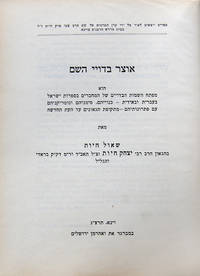
113114Vienna Bamberger & Wahrman 1933. . First edition. Small 4to publisher's vellum backed marbled boards with Hebrew title pastedown to spine corners rubbed; slight browning to first few leaves pages crisp and clean; text in Hebrew and Yiddish; XIV 335 1 10 5 66 pp.<br /> Index of pen-names in Hebrew and Yiddish literature; an unnumbered copy out of a limited edition of 250.<br /> Vienna, Bamberger & Wahrman, 1933. hardcover
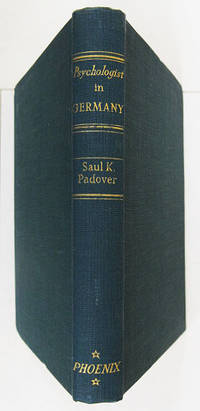
1946901368London.: Phoenix House. 1946. 1st Edition . Hardcover. Very Good. Psychologist in Germany. Subtitle: The Story of an American Intelligence Officer. By Saul K. Padover. Hard covers and in very good condition. 1st Edition 1946. Very Scarce. <br/> <br/> Phoenix House. hardcover
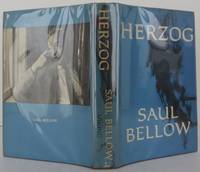
1965118261London: Weidenfeld & Nicholson 1965. First British edition of the author's second of three National Book Award winning novels which was and remains an unprecedented literary accomplishment. Octavo original cloth. Presentation copy inscribed by the author on the title page "For Sally S. from S. Bellow Best wishes Oct 10 '91 Chicago Ill." The recipient British photojournalist Sally Soames worked for The Sunday Times from 1968 until 2000 and was highly regarded for her exclusively black and white portraits of many of the most prominent figures of the 20th century including Menachem Begin Margaret Atwood Margaret Thatcher Sean Connery Rudolf Nureyev Alec Guinness and Andy Warhol. Soames who was known to be a warm and personal journalist performed extensive research on the subjects of her photographs and developed intimate rapports with them during her process resulting in intimate and revealing portraits. In addition to the several world leaders Soames came to know and photograph she captured the creative energy and personality of some of the world's most gifted authors poets and playwrights. She published two books of photographs during her lifetime Manpower 1987 with text by Robin Morgan and an introduction by Harold Evans and Writers 1995 with a preface by Norman Mailer. Near fine in a very good dust jacket. Jacket design by John Griffiths. A novel complex compelling absurd and realistic Herzog became a classic almost as soon as it was published in 1964. In it Saul Bellow tells the tale of Moses E. Herzog a tragically confused intellectual who suffers from the breakup of his second marriage the general failure of his life and the specter of growing up Jewish in the middle part of the 20th century. He responds to his personal crisis by sending out a series of letters to all kinds of people. The letters in total constitute a thoughtful examination of his own life and that which has occurred around him. What emerges is not always pretty but serves as gritty foundation for this absorbing novel. "A masterpiece" The New York Times. Named by Time Magazine as one of the 100 best novels in the English language since Time's founding in 1923. Weidenfeld & Nicholson hardcover books
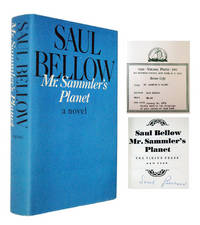
1970184New York: The Viking Press 1970. First edition of the author's third and final National Book Award-winning novel. Octavo original half cloth. Signed by Saul Bellow on the title page. Review copy with the slip laid in fine in a fine dust jacket. Jacket design by Mel Williamsom. Saul Bellow is the only author to have received three National Book Awards for The Adventures of Augie March Herzog and Mr. Sammlers Planet in addition to both the Pulitzer and Nobel Prizes. The Sunday Times praised these achievements when it revered "Bellows oeuvre as both timeless and ruthlessly contemporary." The Viking Press hardcover books
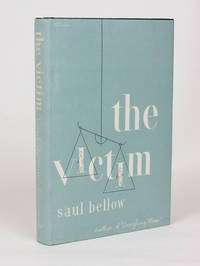
194764666First Edition In Dust Jacket BELLOW Saul. The Victim. New York: The Vanguard Press Inc. 1947. First edition. Octavo 8 1/8 x 5 1/2 inches; 205 x 140 mm. 8 1-294 2 blank pp. Original full black cloth blue lettering on spine. Top edge blue fore-edge uncut. With original pictorial dust jacket. Sight foxing to endpapers and inner flaps of the dust jacket. Back panel of the dust jacket with a small closed tear. Otherwise near fine. This authorÃs first two books Dangling Man and The Victim 1947 had a profound impact on the mid-twentieth century literary scene. ìTogether they effectively introduced a new style of American fiction. The ìGentileî era of Fitzgerald Hemingway and Faulkner began with Bellow to give way to a new Jewish tradition and a sense of moral and social alarm. BellowÃs characters are generally anti-heroes caught up in the existential dilemma of trying to define themselves with some measure of dignity despite the constant impediments of objective and subjective circumstances.î BenetÃs The ReaderÃs Encyclopedia fourth edition. Bellow is the recipient of the Pulitzer Prize for HumboltÃs Gift 1975 and the Nobel Prize in Literature in 1976. HBS 64666. $750 The Vanguard Press, Inc. hardcover books
19642308210New York: Viking 1964. First. hardcover. Fine/Fine. A fine first edition in a fine dust jacket signed by Saul Bellow on the front free endpaper. Viking unknown
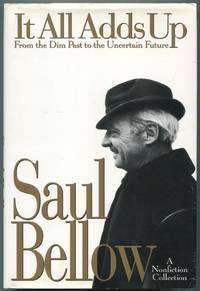
1994620513New York: Viking 1994. Hardcover. Fine/Fine. First edition. Tall octavo. 327pp. Fine in fine dust jacket. Inscribed by Bellow: "For Joseph Cobent with good wishes Saul Bellow." Laid into the book is a card sent by "Sue" last name not present inscribed to the recipient that reads: "Dear Joe Once again Happy Birthday! I could not get this book before this past Monday as the Bellows were away. You should know that Professor Bellow wanted you to have a copy of his book from his own shelf rather than my buying it. It's a double Mitzvah - not only has he personalized it it's a personal copy! Love & best wishes Sue." Thus one of Bellow's own copies of this collection of articles lectures essays travel pieces and an "Autobiography of Ideas." Bellow won the 1976 Nobel Prize in Literature. Viking hardcover
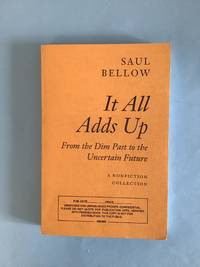
199425008New York: Viking Press 1994. Uncorrected proofs of the first edition. Printed wrappers. Fine. 8vo. A selection of Bellow's nonfiction articles. Between the issuance of this proof and the published book several essays some 40 pages were expunged for unknown reasons. The only copy of this textually significant text we've seen. <br /> Viking Press
1970184New York: The Viking Press 1970. First edition of the author's third and final National Book Award-winning novel. Octavo original half cloth. Signed by Saul Bellow on the title page. Review copy with the slip laid in fine in a fine dust jacket. Jacket design by Mel Williamsom. Saul Bellow is the only author to have received three National Book Awards for The Adventures of Augie March Herzog and Mr. Sammlers Planet in addition to both the Pulitzer and Nobel Prizes. The Sunday Times praised these achievements when it revered "Bellows oeuvre as both timeless and ruthlessly contemporary. The Viking Press hardcover
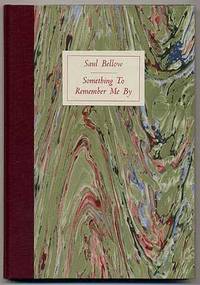
1991362364New York: Albondocani Press 1991. Hardcover. Near Fine/Near Fine. First edition. Quarter cloth and marbled papercovered boards. Prospectus laid in. Fine in fine unprinted acetate dustwrapper. Copy number 2 of 350 numbered copies Signed by Bellow. Ray Roberts's copy. Roberts was an influential editor with Viking Henry Holt and then Little Brown and he worked closely with John Fowles Martha Grimes Thomas Pynchon and Jacqueline Kennedy Onassis. Albondocani Press hardcover