John C SaulBiblio.com
6 525 résultats
1528442946.Ghardcover. Good. Access codes and supplements are not guaranteed with used items. May be an ex-library book. hardcover
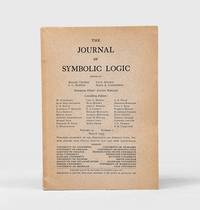
1959164968No place: The Association for Symbolic Logic Inc. March 1959. A seminal work of modern philosophy First edition first printing of the author's first major work published when he was only 18 years old which provided the foundations for Kripke's innovations in modal logic and semantics. Saul Kripke 1940-2022 was "one of the most penetrating minds of our time. His achievements span the disciplines of philosophy logic and mathematics. From his post at Princeton University where he was James McCosh Professor of Philosophy and his previous post at Rockefeller University Kripke established a towering reputation as one of the two or three most eminent philosophers in the English-speaking world.Kripke's contributions to philosophy have extended the boundaries of the most unfamiliar and technical regions of modern analytic philosophy - where philosophical reasoning intermingles with abstract mathematic theory. He worked in the field of modal logic a branch of formal logic that has introduced ways to distinguish kinds of true statements. Before Kripke modal logicians - including the inventor of modal logic C. I. Lewis - did not have the mathematical tools to analyze many of the most important kinds of English sentences. One of Kripke's major achievements was the invention of 'possible world semantics' a form of modal logic that has shown to the satisfaction of most philosophers that the common-sense understanding of the concepts 'possibility' and 'necessity' in true statements can be mathematically proved" Branch p. 180. Octavo pp. 1-14 in the journal. Original buff wrappers printed in black. A couple of tears to spine chip at foot neatly reglued contents clean: a near-fine copy. Taylor Branch "New Frontiers in American Philosophy" The New York Times 14 August 1977. unknown
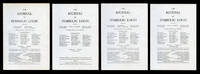
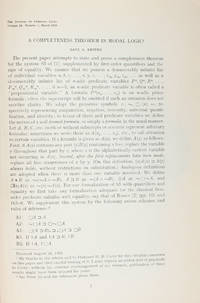
1959731Princeton: Association for Symbolic Logic 1959. 1st Edition. FIRST EDITION FIRST IMPRESSION IN PRISTINE ORIGINAL WRAPS OF SAUL KRIPKE'S SEMINAL FIRST PAPER ON MODAL LOGIC "A Completeness Theorem in Modal Logic". The paper presents Kripke's important ideas on the semantics of modal logic or the logic of modal notions like necessity and possibility. Included are all 4 Journal issues for 1959 one of which is inclusive of abstracts of 3 other papers Kripke sent to the Journal. <br /> <br /> "Universally hailed" for this work in this paper Kripke both proves the formal completeness of modal logic supplemented by first-order quantifiers and the sign of equality and "creates a semantics now called Kripke semantics" Hurley Logic: The Essentials 217. Kripke semantics "is a formals semantics for non-classical logic systems. first conceived for modal logics and later adapted to intuitionistic logic and other non-classical systems. The discovery of Kripke semantics was a breakthrough in the theory of non-classical logics because the model theory of such logics was almost non-existent before Kripke algebraic semantics existed but were considered 'syntax in disguise'. Wikipedia. <br /> <br /> Saul Kripke grew up in Omaha Nebraska and in 1959 he mailed this paper to The Journal of Symbolic Logic. As the story goes the Kripke wrote his completeness theorem in modal logic at age 17; the paper was sent out for comments to among a number of others the head of the Harvard mathematics department. This person then wrote Kripke urging him to apply for a job at Harvard. The reply he received read: "My mother said that I should finish high school and go to college first" ibid. <br /> <br /> Kripke's initial intuitive idea was that a proposition is necessary if and only if it is true in all possible worlds. In this paper Kripke begins by stating: "The present paper attempts to state and prove a completeness theorem for the system S5 supplemented by first-order quantifiers and the sign of equality" Kripke JSL 241 1959 1. He then notes: ""The basis of the informal analysis which motivated these definitions is that a proposition is necessary if and only if it is true in all "possible worlds". It is not necessary for our present purposes to analyze the concept of a "possible world" any further. . In modal logic however we wish to know not only about the 6 real world but about other conceivable worlds" Kripke 2 <br /> <br /> Shortly Kripke then wrote "In trying to construct a definition of universal logical validity it seems plausible to assume not only that the universe of discourse may contain an arbitrary number of elements and that predicates may be assigned any given interpretations in the actual world but also that any combination of possible worlds may be associated with the real world with respect to some group of predicates. In other words it is plausible to assume that no further restrictions need be placed on D G and K except the standard one that D be non-empty. This assumption leads directly to our definition of universal validity." Kripke 3. <br /> <br /> The December issue of the Journal is also included as it contains abstracts of other Kripke papers received by the Journal in 1959: "Distinguished Constituents" "Semantical Analysis of Modal Logic" "The Problem of Entailment". Also included are the three other issues of The Journal of Symbolic Logic from 1959 this to make a complete set. All four issues are in near fine condition. <br /> <br /> Saul Kripke 1940- is an American philosopher and logician who was awarded the Rolf Schock Prize in Logic and Philosophy in 2001. He is best known for five major contributions to philosophy beginning with this paper the starting point for Kripke Semantics. In 1962 Kripke graduated from Harvard University where he remained until 1968 first as a member of the Harvard Society of Fellows and then as a lecturer. Subsequently his 1970 lectures "Naming and Necessity" was a focal point for restructuring the philosophy of language. Now associated with Princeton additional areas of note include his contributions to set theory his theory of truth and his interpretation of Wittgenstein's work. CONDITION & DETAILS: Four first edition first impression issues in original wraps. New Jersey: The Association for Symbolic Logic. Octavo. 10 x 7 inches; 250 x 150mm. All four issues are in near fine condition both inside and out. Association for Symbolic Logic paperback
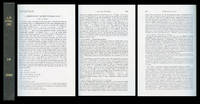
1959962Princeton: Association for Symbolic Logic 1959. 1st Edition. FULL VOLUME BOUND FIRST EDITION OF SAUL KRIPKE'S SEMINAL FIRST PAPER ON MODAL LOGIC "A Completeness Theorem in Modal Logic". The paper presents Kripke's important ideas on the semantics of modal logic or the logic of modal notions like necessity and possibility. Included are all 4 journal issues for 1959 one of which is inclusive of abstracts of 3 other papers Kripke sent to the Journal. <br /> <br /> Kripke was "universally hailed" for "A Completeness Theorem in Modal Logic" this paper In it he both proves the formal completeness of modal logic supplemented by first-order quantifiers and the sign of equality and "creates a semantics now called Kripke semantics" Hurley Logic 217. Kripke semantics "is a formals semantics for non-classical logic systems. first conceived for modal logics and later adapted to intuitionistic logic and other non-classical systems. The discovery of Kripke semantics was a breakthrough in the theory of non-classical logics because the model theory of such logics was almost non-existent before Kripke" Wikipedia. <br /> <br /> As the story goes in 1959 and at the age of seventeen Kripke wrote his completeness theorem in modal logic at age 17; he mailed the paper to the journal and it was sent out for comments to among a number of others the head of the Mathematics at Harvard. This person then wrote Kripke urging him to apply for a job at Harvard. The reply he received read: "My mother said that I should finish high school and go to college first" ibid. <br /> <br /> Kripke's initial intuitive idea was that a proposition is necessary if and only if it is true in all possible worlds. Kripke's paper begins: "The present paper attempts to state and prove a completeness theorem for the system S5 supplemented by first-order quantifiers and the sign of equality" Kripke JSL 241 1959 1. He then notes: ""The basis of the informal analysis which motivated these definitions is that a proposition is necessary if and only if it is true in all "possible worlds". It is not necessary for our present purposes to analyze the concept of a "possible world" any further. . In modal logic however we wish to know not only about the 6 real world but about other conceivable worlds" ibid. <br /> <br /> Shortly Kripke then wrote "In trying to construct a definition of universal logical validity it seems plausible to assume not only that the universe of discourse may contain an arbitrary number of elements and that predicates may be assigned any given interpretations in the actual world but also that any combination of possible worlds may be associated with the real world with respect to some group of predicates. In other words it is plausible to assume that no further restrictions need be placed on D G and K except the standard one that D be non-empty. This assumption leads directly to our definition of universal validity." ibid.<br /> <br /> The December issue of the journal is also bound in; it contains abstracts of the other Kripke papers received the Journal in 1959: "Distinguished Constituents" "Semantical Analysis of Modal Logic" "The Problem of Entailment". Also included are the two other issues of The Journal of Symbolic Logic from 1959 this to make a complete set. We separately offer Issue No. 4 alone.<br /> <br /> Saul Kripke 1940- is an American philosopher and logician who was awarded the Rolf Schock Prize in Logic and Philosophy in 2001. He is best known for five major contributions to philosophy beginning with this paper the starting point for Kripke Semantics. In 1962 Kripke graduated from Harvard University. Now associated with Princeton additional areas of note include his contributions to set theory his theory of truth and his interpretation of Wittgenstein's work. CONDITION & DETAILS: Princeton: Association for Symbolic Logic 1959. 4to. 9.75 x 7 inches. Light institutional stamps on text block and one small stamp at the foot of the front pastedown. Tightly bound in black cloth gilt-lettered at the spine. Bright and clean inside and out. Near fine condition. Association for Symbolic Logic hardcover
195936506No place The Association for Symbolic Logic 1959. 8vo. Orig. printed wrappers. An excellent copy in near mint condition in- as well as externally. Pp. 1 - 14. The entire volume: 96 pp. <br/><br/><em>The seminal first printing of Kripke's debut article which provided the basis for his logic and for the model theory for modal logic in general. The work constitutes the very beginning of Kripke Semantics often called possible world semantics. Kripke's works in general are rare in fist editions. Many of them remain unpublished and are only known in privately circulated manuscripts.The American philosopher Saul A. Kripke born 1940 is an exceedingly important logician and philosopher of language and one of the most powerful and influential thinkers of analytic and Anglo-American philosophy. He is considered the greatest living philosopher and perhaps the greatest since Wittgenstein. In 2001 he was awarded the Schock Prize in Logic and Philosophy which is considered the philosopical equivalent of the Nobel Prize.Kripke who grew up in Omaha in a religious Jewish family was somewhat of a prodigy child. During grammar school he got intimately acquainted with and mastered to perfection algebra geometry and calculus and very early on he took up philosophy which later became his career. Still a teenager in high school he wrote a work that was to change the face of philosophical logic forever namely the groundbreaking paper "A Completeness Theorem for Modal Logic" which was printed a few years later in 1959 in the Journal of Symbolic Logic while he was in his first year at Harvard University. This seminal debut work proposed what later came to be known as Kripke models for modal logic. The story goes that the paper earned a letter from the department of mathematics urging Kripke to apply for a job there to which he is said to have written an answer explaining "My mother said that I should finish high school and go to college first."In 1962 he graduated from Harvard University where he remained until 1968 first as a member of the Harvard Society of Fellows and then as a lecturer. During these years he developed the logical theories founded in the "Completeness Theorem" further and made seminal contributions to the field of logic and semantics. Kripke Semantics is a formal semantics for non-classical logic systems that Kripke began developing in his teenage years first published something on in 1959 the present work and further developed in the 60'ies and. The development of Kripke Semantics was no less than a breakthrough in the making of non-classical logics of which no model theory existed before Kripke's. With this work Kripke laid the foundation for proving completeness theorems for modal logic and for identifying the weakest normal modal logic which is now named K after him. </em> unknown
195948378No place The Association for Symbolic Logic 1959. Lev8vo. Bound in red half cloth with gilt lettering to spine. In "Journal of Symbolic Logic" Volume 24. Barcode label pasted on to back board. Small library stamp to lower part of 6 pages. A very fine copy. Pp. 1 - 14. Entire volume: VI 374 pp. <br/><br/><em>The seminal first printing of Kripke's debut article which provided the basis for his logic and for the model theory for modal logic in general. The work constitutes the very beginning of Kripke Semantics often called possible world semantics. Kripke's works in general are rare in fist editions. Many of them remain unpublished and are only known in privately circulated manuscripts.The American philosopher Saul A. Kripke born 1940 is an exceedingly important logician and philosopher of language and one of the most powerful and influential thinkers of analytic and Anglo-American philosophy. He is considered the greatest living philosopher and perhaps the greatest since Wittgenstein. In 2001 he was awarded the Schock Prize in Logic and Philosophy which is considered the philosopical equivalent of the Nobel Prize.Kripke who grew up in Omaha in a religious Jewish family was somewhat of a prodigy child. During grammar school he got intimately acquainted with and mastered to perfection algebra geometry and calculus and very early on he took up philosophy which later became his career. Still a teenager in high school he wrote a work that was to change the face of philosophical logic forever namely the groundbreaking paper "A Completeness Theorem for Modal Logic" which was printed a few years later in 1959 in the Journal of Symbolic Logic while he was in his first year at Harvard University. This seminal debut work proposed what later came to be known as Kripke models for modal logic. The story goes that the paper earned a letter from the department of mathematics urging Kripke to apply for a job there to which he is said to have written an answer explaining "My mother said that I should finish high school and go to college first."In 1962 he graduated from Harvard University where he remained until 1968 first as a member of the Harvard Society of Fellows and then as a lecturer. During these years he developed the logical theories founded in the "Completeness Theorem" further and made seminal contributions to the field of logic and semantics. Kripke Semantics is a formal semantics for non-classical logic systems that Kripke began developing in his teenage years first published something on in 1959 the present work and further developed in the 60'ies and. The development of Kripke Semantics was no less than a breakthrough in the making of non-classical logics of which no model theory existed before Kripke's. With this work Kripke laid the foundation for proving completeness theorems for modal logic and for identifying the weakest normal modal logic which is now named K after him. </em> hardcover
195946888No place The Association for Symbolic Logic 1959. 8vo. Wrappers blank with printed title on spine. Entire issue No. 1 of vol. 24 offered. Fine and clean. <br/><br/><em>The seminal first printing of Kripke's debut article which provided the basis for his logic and for the model theory for modal logic in general. The work constitutes the very beginning of Kripke Semantics often called possible world semantics. Kripke's works in general are rare in fist editions. Many of them remain unpublished and are only known in privately circulated manuscripts.The American philosopher Saul A. Kripke born 1940 is an exceedingly important logician and philosopher of language and one of the most powerful and influential thinkers of analytic and Anglo-American philosophy. He is considered the greatest living philosopher and perhaps the greatest since Wittgenstein. In 2001 he was awarded the Schock Prize in Logic and Philosophy which is considered the philosopical equivalent of the Nobel Prize.Kripke who grew up in Omaha in a religious Jewish family was somewhat of a prodigy child. During grammar school he got intimately acquainted with and mastered to perfection algebra geometry and calculus and very early on he took up philosophy which later became his career. Still a teenager in high school he wrote a work that was to change the face of philosophical logic forever namely the groundbreaking paper "A Completeness Theorem for Modal Logic" which was printed a few years later in 1959 in the Journal of Symbolic Logic while he was in his first year at Harvard University. This seminal debut work proposed what later came to be known as Kripke models for modal logic. The story goes that the paper earned a letter from the department of mathematics urging Kripke to apply for a job there to which he is said to have written an answer explaining "My mother said that I should finish high school and go to college first."In 1962 he graduated from Harvard University where he remained until 1968 first as a member of the Harvard Society of Fellows and then as a lecturer. During these years he developed the logical theories founded in the "Completeness Theorem" further and made seminal contributions to the field of logic and semantics. Kripke Semantics is a formal semantics for non-classical logic systems that Kripke began developing in his teenage years first published something on in 1959 the present work and further developed in the 60'ies and. The development of Kripke Semantics was no less than a breakthrough in the making of non-classical logics of which no model theory existed before Kripke's. With this work Kripke laid the foundation for proving completeness theorems for modal logic and for identifying the weakest normal modal logic which is now named K after him. </em> unknown
1345611390.Ghardcover. Good. Access codes and supplements are not guaranteed with used items. May be an ex-library book. hardcover
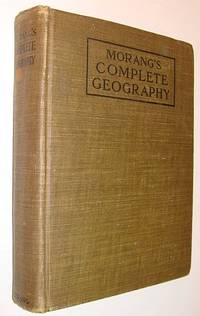
1906611c5931Toronto: Morang & Co. Limited 1906. Book. Fair. Hardcover. Second Edition. 8vo - over 7¾" - 9¾" tall. 506 pages. Lovely vintage geography textbook authorized for use in the public schools of Manitoba. Many black and white photos plus lovely fold-out double-hinged colour maps of Canadian provinces regions of the U.S. and other areas of the world. Front free endpaper removed. Somewhat above-average wear. Binding somewhat shaken but still intact. The vintage illustrations make this volume a treat to peruse. Morang & Co. Limited Hardcover
CA06A-00568Association for Symbolic Logic. Collectible - Very Good. Groningen: Published for the Association for Symbolic Logic Inc. by N. V. Erven P. Noordhoff 1959. 1 vols bound in 4. 1st Edition. 1-96; 97-192; 192-286; 287-3742vi. Small 4to. Original printed tan wrappers. Wrappers lightly soiled & chipped with a watermark to the lower wrapper corner at the foot of volume 1 some chipping to spine ends dates in faded ink to the spines of vol 1 and 2 lightly bumped corners; VG copies. Quite uncommon. All four issues of volume 24 included. Weight: 1 pound 7.0 ounces = 655 grams. Size: 10.0 x 7.0 x 1.1 inches = 25 x 17.5 x 2.8cm. Lars Svenonius's copy unsigned. Inquire if you need further information. Gach. Association for Symbolic Logic unknown books
195948378(No place), The Association for Symbolic Logic, 1959. Lev8vo. Bound in red half cloth with gilt lettering to spine. In ""Journal of Symbolic Logic"", Volume 24. Barcode label pasted on to back board. Small library stamp to lower part of 6 pages. A very fine copy. Pp. (1) - 14. [Entire volume: VI, 374 pp.).
195936506(No place), The Association for Symbolic Logic, 1959. 8vo. Orig. printed wrappers. An excellent copy in near mint condition, in- as well as externally. Pp. (1) - 14. (The entire volume: 96 pp.).
195946888(No place), The Association for Symbolic Logic, 1959. 8vo. Wrappers blank with printed title on spine. Entire issue No. 1 of vol. 24, offered. Fine and clean.
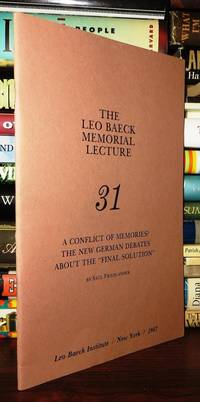
198865742New York: Leo Baeck Institute 1988. First Edition; First Printing. Softcover. Very Good in wrappers. ; Leo Baeck Memorial Lecture 31; 8vo 8" - 9" tall. Leo Baeck Institute unknown
196640727Amsterdam, North-Holland, 1966. Orig. boards. XI,163 pp.
0888640161.Ghardcover. Good. Access codes and supplements are not guaranteed with used items. May be an ex-library book. hardcover
1985Q-0853455910Monthly Review Press 1985-01-01. Hardcover. New. In shrink wrap. Looks like an interesting title! Monthly Review Press hardcover
2008Q-0670068047Viking 2008-09-16. Hardcover. New. In shrink wrap. Looks like an interesting title! Viking hardcover
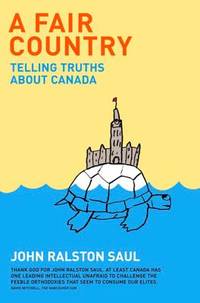
2009Q-0143168428Penguin Canada 2009-09-22. Paperback. New. In shrink wrap. Looks like an interesting title! Penguin Canada paperback
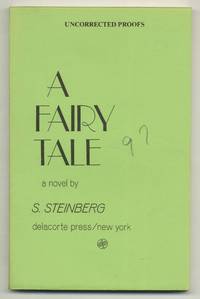
1980569813New York: Delacorte Press 1980. Softcover. Fine. Uncorrected proof. Fine in green printed wrappers with a number penciled on the front cover. The story of a gay Jewish thirty-something set in 1970s San Francisco. The author is reportedly John Saul author of dozens of bestselling thrillers. Delacorte Press unknown
44284064-nnew. unknown
44284064like new. unknown
697538886Pluto Press pp. 208 . Papeback. New. Pluto Press unknown
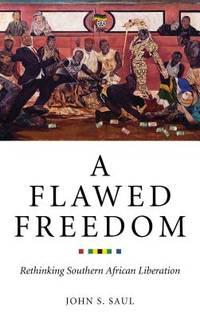
DADAX0745334792Pluto Press 2014-04-20. paperback. New. 5.32x0.60x8.46. Buy with confidence. Excellent Customer Service & Return policy. Pluto Press paperback
0745334806.Ghardcover. Good. Access codes and supplements are not guaranteed with used items. May be an ex-library book. hardcover