Cardozo, Isaac NBiblio.com

1 081 résultats
1827305824Charleston SC: James S. Burges 1827. First and only edition. 18 2 blank pp. 1 vols. 12mo. Modern pale yellow wrappers. Custom chemise and quarter morocco slipcase. Some pale foxing to title otherwise clean. First and only edition. 18 2 blank pp. 1 vols. 12mo. A rare pamphlet issued by the first Jewish Reform movement in the United States the Sephardic Reformed Society of Israelites in Charleston South Carolina recording an address by one of the movement's leaders. The Reformed Society of Israelites formed in 1824 when it split off from the Kahal Kadosh Beth Elohim KKBE synagogue in Charleston seeking to implement a number of reforms it deemed crucial to engaging the rising generation. In the process the Society posited a distinctly American form of practice. <br /> Led by Isaac Harby Abraham Moise and David Nunes Carvalho the Reformed Society of Israelites reflected the fact that as Jonathan Sarna has phrased it: "Jews who did not feel at home in synagogue no longer had to compromise their principles for the sake of consensus; they felt free to withdraw and start their own congregations. In free and democratic America congregational autonomy became the rule resulting in a new American Judaism - a Judaism of diversity and pluralism."<br /> <br /> The present address was delivered on the third anniversary of the Society by Isaac Cardozo 1786-1855 who served as the group's Vice-President from 1828-1832. Cardozo invokes a "spirit of reform in all existing institutions which is abroad" and reminds the group of its origin as "a society that was instituted mainly for effecting the observance of order and decorum in Hebrew worship: for adapting it to the feelings and propensities of the enlightened Israelite of the present day; and for endeavoring to bring about by argument and petition what neither necessity nor persuasion could before accomplish" before he goes on to defend the mission against various critiques. <br /> <br /> Apart from being a leader within Charleston's Sephardic Jewish community Cardozo was also the patriarch of an important southern African-American family. He had six children with his common-law wife Lydia Weston a free black woman from a prominent Charleston family--one of a number of openly mixed-race households in antebellum Charleston. One of their sons was Francis Cardozo 1836-1903 who became the first African-American to hold statewide office in the United States serving as Secretary of State in South Carolina from 1868 to 1872. Another son Thomas served as State Superintendent of Education from 1873 to 1876. <br /> <br /> RARE: OCLC reports only four institutional copies and A.S.W. Rosenbach in his American Jewish Bibliography located only one copy in a private collection. Rosenbach 289 locating one copy in a private collection; OCLC Princeton Am. Jewish Hist. Soc. USC Presbyterian College; American Imprints 28385; Singerman 0442 James S. Burges unknown
18481803065Daniel Adee 1848. 1st Edition. Hardcover. Near Fine/No Jacket. Near fine TRUE first American edition 1st issue as stated on the title page. Some water stains on page edges. Previous owner's bookplate on front pastedown. Rubbing on outside spine and corners and at bottom of spine. Tape at endpapers and pastedowns along gutters. Housed in custom-made slip case. Daniel Adee hardcover
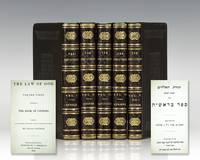
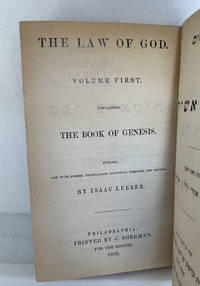
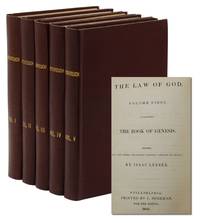
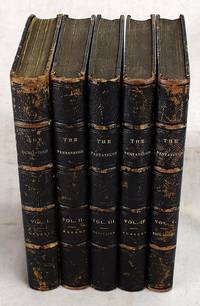
184549020Philadelphia: C. Sherman 5605 1845-46. First edition of the “first English translation of the Pentateuch in America†the 1845 Hebrew-English Bible by one of the most prominent and influential figures in American Jewish history. Octavo 5 volumes. Translated by Isaac Leeser. Bound in contemporary polished calf gilt titles and tooling to the spine rebacked. Lightly rubbed moderate wear. A very nice example of a scarce and important work. Previous editions published by Jews in England had simply utilized the King James translation. The translator was Isaac Leeser 1806-1868 who worked without assistance. In his preface he apologizes for any errors: "How can it be expected that I should escape when I have no Jewish compositors and have necessarily to be often away when the work goes to press" Despite these obstacles Leeser doubted that "the precious word of God ever appeared among us in a more beautiful form than the volumes in which I am now engaged." Leeser avoided reliance on earlier English translations though he made some use of German translations and noted that "the arrangement is strictly Jewish. My intention was to furnish a book for the service of the Synagogue both German and Portuguese." Leeser’s “contributions to every area of Jewish culture and religion made him a major builder of American Judaism.†The publication of his Pentateuch was the first time that any portion of the Bible was published in America under Jewish auspices. “The translation of the Bible was Leeser’s great literary achievement and represented many years of patient labor and devotion to a task which he considered sacred… He made good use of the various German translations by Jews of the collective commentary known as the Biur and of other Jewish exegetic works. As a result his translation though based in style upon the King James version can be considered an independent work for the changes he produced are numerous and great… until the new Jewish Publication Society version was issued in 1917 it was the only source from which many Jews not conversant with Hebrew derived their knowledge of the Bible in accordance with Jewish tradition†Waxman 1090. C. Sherman, 5605 unknown
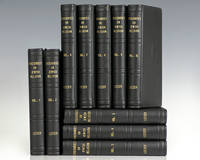
1866107732Philadelphia: Sherman & Co 1866-68. Rare first editions of one of the 'major builders of American Judaism' Isaac Leeser's Discourses on the Jewish Religion. Octavo 10 volumes bound in full leather gilt titles to the spine raised bands. In near fine condition. Complete sets are of the utmost rarity. American Jewish lay minister author translator and publisher Issac Leeser’s “contributions to every area of Jewish culture and religion made him a major builder of American Judaism." In addition to his influence on the Jewish pulpit in the United States Leeser became the first American Jewish publisher and produced the first Jewish translation of the bible into English. “The translation of the Bible was Leeser’s great literary achievement and represented many years of patient labor and devotion to a task which he considered sacred…until the new Jewish Publication Society version was issued in 1917 it was the only source from which many Jews not conversant with Hebrew derived their knowledge of the Bible in accordance with Jewish tradition†Waxman 1090. Sherman & Co hardcover
184578547Philadelphia: C. Sherman 5605 1845-46. First edition of the “first English translation of the Pentateuch in America†the 1845 Hebrew-English Bible by one of the most prominent and influential figures in American Jewish history. Octavo 5 volumes. Translated by Isaac Leeser. Bound in full contemporary calf gilt titles and tooling to the spine. In near fine condition. A nice example rare in contemporary binding. Previous editions published by Jews in England had simply utilized the King James translation. The translator was Isaac Leeser 1806-1868 who worked without assistance. In his preface he apologizes for any errors: "How can it be expected that I should escape when I have no Jewish compositors and have necessarily to be often away when the work goes to press" Despite these obstacles Leeser doubted that "the precious word of God ever appeared among us in a more beautiful form than the volumes in which I am now engaged." Leeser avoided reliance on earlier English translations though he made some use of German translations and noted that "the arrangement is strictly Jewish. My intention was to furnish a book for the service of the Synagogue both German and Portuguese." Leeser’s “contributions to every area of Jewish culture and religion made him a major builder of American Judaism.†The publication of his Pentateuch was the first time that any portion of the Bible was published in America under Jewish auspices. “The translation of the Bible was Leeser’s great literary achievement and represented many years of patient labor and devotion to a task which he considered sacred… He made good use of the various German translations by Jews of the collective commentary known as the Biur and of other Jewish exegetic works. As a result his translation though based in style upon the King James version can be considered an independent work for the changes he produced are numerous and great… until the new Jewish Publication Society version was issued in 1917 it was the only source from which many Jews not conversant with Hebrew derived their knowledge of the Bible in accordance with Jewish tradition†Waxman 1090. C. Sherman, 5605 unknown
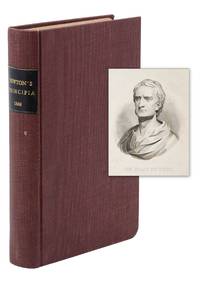
1848140949208New York: Daniel Adee 1848. First American Edition. Very Good. First American edition first printing with date 1848 on title page and publisher's address listed as 107 Fulton-Street. 4 v-viii 9-581 pp. illustrated with engraved frontispiece protected by tissue guard. Recently bound in maroon buckram title label to spine. Very Good with light wear to covers and slight bumping to lower corners; title label beginning to lift at one corner. Band of paper residue to front free endpaper. Light toning and moderate foxing to textblock edges and contents dampstain to outer textblock edge and outer margin throughout. Cohen pp. 347-352.<br /> <br /> <p>The first American edition of the foundational physics text first published in Latin in 1687. Andrew Motte's 1729 translation was reprinted in 1803 and 1819 in Britain but subsequent 19th century editions were printed only in the United States and Germany. The New York-based publisher Daniel Adee deposited a copyright for the Principia in 1846 then printed five issues between 1848 and 1850. A contemporary notice in the Scientific American declared:<br /> <br /> <p>"For a long time the 'Principia' was kept far out of the reach of the mere English Scholar as if Newton had written it exclusively for the classical student and philosopher. It was a scarce book when printed in the Latin language; it is now thanks to the spirit of an American publisher printed in our mother tongue and should find a place in every family library. Daniel Adee unknown
184542820862<p>FIRST EDITION IN ENGLISH of the Pentateuch translated by a Jew and the first American translation of the Torah. Isaac Leeser was the single most influential Jewish figure in 19th-century America. His many accomplishments include establishing the vernacular sermon as a permanent feature in the American synagogue publishing the first successful American Jewish newspaper and founding the first American rabbinical school.</p><p>"When Leeser commences his public career the scattered Jewish individuals and the members of the congregation in the United States did not number more than from 12000 to 15000. His purpose to mold these into a community was to be achieved in part by the pulpit and in part by the press. … Leeser participated in all Jewish movements. He was the earliest promoter of all the national enterprises—the first congregational union the first Hebrew day-schools the first Hebrew college the first Jewish publication society—and of numberless local undertakings. The 'Occident' acquired a national and even an international reputation; the Maimonides' College of which he was president paved the way for future Jewish colleges in the United States; and his translation of the Bible became an authorized version for the Jews of America" Jewish Encyclopedia.</p><p>"Practically every form of Jewish activity which supports American Jewish life today as either established or envisaged by this one man" and "almost every kind of publication which is essential to Jewish survival was written translated or fostered by him" B. W. Korn.</p><p>Leeser's greatest contribution was his translation of the Bible and these volumes contain the first printing of the first and most important portion of this monumental work Leeser's English translation of the Torah. This translation was not superseded until well into the 20th century.</p><p>Emphasizing that this is an American work Leeser notes in the introduction that "I have to state that I have not looked at a single work issued by English Jews and that hence I have not borrowed a single idea or suggestion from any one of them living or dead."</p><p>Five volumes. Hebrew and English text on facing pages. Finely bound in mottled calf spines gilt a.e.g. Title neatly restored several restored perforated and ink stamps. A very handsome set in a splendid binding.</p> C. Sherman, 5605-6 hardcover
1874188323Beijing: American Board of Commissioners for Foreign Missions 1874. No man of that day equaled him in idiomatic command of the spoken Mandarin First edition of a sinological milestone: the first translation of the Old Testament into northern colloquial "Mandarin" Chinese the language spoken by most potential Chinese converts. Schereschewsky was also the first sinologist to translate directly from the Hebrew masoretic text and his efforts formed the basis of the 1919 Union Bible the most widely used Bible among Chinese Protestants in the 20th century. Born to Jewish parents in Russian Lithuania Schereschewsky 1831-1906 converted to Christianity the early 1850s. After studying for a time in New York in 1857 he volunteered for missionary work in China arriving in 1860. In 1862 he accepted a position as an interpreter to Anson Burlingame and devoted himself to textual translation spending the next 14 years working on this translation his greatest accomplishment. While earlier missionaries had produced versions of the Bible in classical Chinese and minor southern dialects Schereschewsky's was the first to make the Old Testament accessible to the country's biggest language group. After completing the mammoth project Schereschewsky returned to New York with his family where he was elected Bishop of China. Back in China in the late 1870s he founded St John's College in Shanghai and his skills as a translator excited comment for decades to come. Evaluating Schereschewsky's contributions to the missionary cause in the 1890s his contemporary Henry Blodget observed that "the translation into the Mandarin was made by a master hand seemingly raised up by God for this purpose." According to W. A. P. Martin himself a skilled translator Schereschewsky's Old Testament "stands by itself and is not likely to be superseded. For that task his qualifications were exceptional. By birth a Hebrew of the Hebrews and running over with rabbinic lore he had made himself a Chinese by adoption and by successful study. No man of that day equaled him in idiomatic command of the spoken Mandarin" both quoted in Biographical Dictionary of Chinese Christianity. Of this rare translation WorldCat records only ten copies New York Public Library Columbia Harvard Stanford Kansas Peabody Essex Emory National Library of Australia SOAS and Leiden. This is the only complete copy traced in recent commerce. In 2025 Peter Harrington also sold a presentation copy from the library of General Theological Seminary but that copy lacked the table of contents. Octavo 274 x 170 mm pp. iv title page and table of contents 4 preface 1042 = 1045 page register duplicating p. 124 and pp. 730-1 3 blank. Text in Chinese. Contemporary brown half sheep rebacked with original spine laid down spine with printed title label repurposed from original wrappers green pebble-grain cloth sides. Smattering of old blue ink marks and annotations internally. Binding refurbished and lightly soiled second and third leaves repaired at fore edge without loss to text occasional stains to contents: very good. Darlow & Moule 2683. hardcover
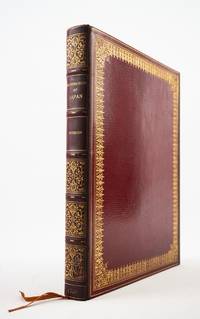
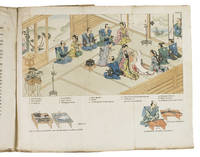
1822ST20877London: Printed for R. Ackermann 1822. First English Edition. 300 x 235 mm. 11 3/4 x 9 1/2". xvi 325 1 pp.Translated by Frederic Shoberl. <br/> Imposing contemporary crimson straight-grain morocco gilt covers with filigree frame with densely massed scrolling fleurons raised bands spine gilt in compartments with radiating viny scrolls surrounded by leaves and annular dots marbled endleaves all edges gilt. WITH 13 HAND-COLORED PLATES in etching and aquatint many after Japanese artworks one folding. Bookplate removed from front flyleaf. Bookseller's ticket of J. L. Thompson & Co Kobe Japan on front pastedown. Abbey Travel 557; Tooley 489; Martin Hardie "English Coloured Books" pp. 113-14. See also E. F. Strange "Japanese Illustration" pp. xxiii-xxiv. Spine and fore-edge of upper board slightly darkened a few minute flakes to lowest spine compartment but the binding extremely well preserved with very lustrous boards. Final 10 leaves slightly creased one repaired marginal tear but still A FINE COPY INTERNALLY exceptionally bright smooth and entirely fresh and clean.<br/> <br/> This generously proportioned production illustrated with 13 vibrant colored plates is a rare European account of Japan during the period in which the country was "closed" to the west offered here in its first English edition. Originally published in French in 1820 "Illustrations of Japan" is comprised of a history and description of the Tokugawa shogunate which Titsingh had translated from the Japanese plus Titsingh's own observations on the language customs and ceremonies of the Japanese people. The present English edition is accompanied by plates in etching and aquatint enhanced with hand coloring. Our author Dutch diplomat Isaac Titsingh 1745-1812 spent 14 years in Nagasaki for the Dutch East India company and between 1779-84 he served as trade director-cum-ambassador travelling to Edo now Tokyo for audiences with the shogun and other high officials in the shogunate. Unlike most of his Western contemporaries Titsingh was open-minded and curious about the people he encountered engaging with their art and culture; in fact art historian and Victoria & Albert Museum keeper Edward F. Strange tells us that Titsingh is the earliest known European collector of Japanese prints of which a number appear in the present volume. Our publisher Rudolph Ackermann 1764-1834 made his living issuing sumptuously illustrated books such as the present volume and was an early adopter of color aquatint and lithography technologies; Hardie writes that he was "the great presiding genius before whose magic wand so many pictorial books sprang into existence." In very attractive period morocco this is a particularly appealing copy of the work free of the foxing and offsetting that often plague copies of this and other large-format color illustrated books. Printed for R. Ackermann unknown
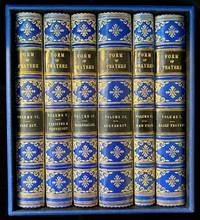
183842121Philadelphia: Printed by Haswell Barrington and Haswell 1838. Hardback. 1st Edition. Gorgeous Period-style gilt-tooled leather. 8vo. <br> Vol. 1: "Part one - Prayers for the Whole Year" siddur. VII 216 216 pages. <br> Vol. 2: "Part 2 - Prayers for Rosh Hashana". 120 121 page 121 page. <br> Vol. 3: "Part 3 - Prayers for Yom Kippur". 4 245 246 1 3 pages. <br> Vol. 4: "Part 4 - Prayers for the Festival of Succot". 175 176 1 pages. <br> Vol. 5: "Part 5 - Prayers for Pesach and for Shavuot". 182 182 pages. <br> Vol. 6 - Prayers for Fast Days". 4 184 186 4 12 pages. <br> Hebrew and English on facing pages parallel pagination. Goldman 36; Singerman 630. <br> The First Complete Machzor Jewish Prayer Book Set for the full year printed in America a stunning complete set. <br> Isaac Leeser 1806-1868 was a central leader of American Jewry in the mid-19th Century the stalwart defender of Orthodoxy against the rise of the Reform movement. He was the head of the Jewish community of Philadelphia and acted as a cantor philosopher publisher and author of many sermons and essays. He was key in the founding Jewish institutions and publications central to the building of Judaism in America including the original Jewish Publication Society the Jewish Sunday School movement and many key translations of Hebrew texts into English. <br> As such he was the first Jew to translate the Hebrew Bible into English publishing The Five Books of Moses in 1845 followed by the full Twenty-Four Books of the Old Testament in 1853. His other major translation is that offered here the first Machzor Prayer Book set for the full year published in America in 1837-1838.Publication in this case was a complex project. Leeser based his new translation on an earlier London edition improving upon both the English translation and the original Hebrew which are presented in facing pages. Once the translation was ready for publication he ordered new Hebrew types from Europe but could not find printers who were familiar with Hebrew–so he taught two Christian printers Hebrew in order to prepare them for the printing. <br> In spite of the difficulties involved all six volumes of the machzor set were published in a total of only 13 months. Leeser marketed his prayer book to audiences in both America and the British Empire and therefore included prayers on behalf of a monarch British and a republican government America. The work also includes a fascinating two-page list of subscribers spanning the Eastern US as well as Jamaica at the end of Vol. VI. The same volume here includes interesting margin notes in pen from a period Rabbi or service leader. <br> With an original run of only 500 sets complete sets of the first edition such as this are very rare. A set sold at Christies in 2006 for $60000.<br> SUBJECTS: Seder -- Liturgy -- Texts. Passover -- Judaism -- Sephardic rite -- Fasts and feasts -- Judaism -- Liturgy -- Texts. Paque -- Liturgie -- Textes. Judai¨sme -- Rite sefardi -- Liturgie -- Textes. Fetes religieuses -- Seder -- Passover -- OCLC: 18532819.<br> All pages professionally washed before rebinding the quality paper very clean and bright with beautiful marbled endpapers. Stunning matching blue leather binding with raised bands and gilt tooling in custom slipcase. Very Good Condition. Rarely found as a complete set. Gorgeous and important. KH-1-1. Philadelphia: Printed by Haswell, Barrington, and Haswell unknown
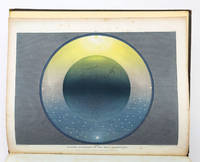
1846ST19286London: Printed by Catchpool & Trent for Simpkin Marshall & Co 1846. FIRST EDITION. 320 x 255 mm. 12 1/2 x 10". xiii 3 96 pp. <br/> Publisher's original blind-decorated dun-colored cloth gilt titling to upper cover smooth spine newer endpapers. WITH 11 COLOR ENGRAVINGS after Frost by W. P. Chubb & Son printed in oil colors by George Baxter all with original tissue guards. Front free endpaper with small ink signature of John Hill. See: Francis Reid "Isaac Frost's 'Two Systems of Astronomy' 1846: Plebeian Resistance and Scriptural Astronomy" in "The British Journal for the History of Science" Vol. 38 No. 2 Jun. 2005 pp. 161-177. Cloth rather spotted corners bumped but the binding solid with no wear to joints or hinges. A few spots of foxing to title page half of the tissue guards with overall very faint foxing/browning the illustrations with minor foxing at edges and in margins but the images themselves clean and bright and all in all a really excellent copy the text wide-margined and quite clean and fresh and the plates with rich coloring.<br/> <br/> Illustrated with beautiful color plates this anti-Newtonian work promotes a view of the universe based on the backward-looking beliefs professed by a Protestant sect known as the Muggletonians. Named after co-founder Lodowicke Muggleton the Muggletonians emerged in London in 1651 based on the claims of two tailors who professed to be the "Last Witnesses" described in the Book of Revelation. Rejecting the new directions in philosophical reason Muggletonians believed in a purely scriptural interpretation of the universe. According to E. P. Thompson's 1994 "Witness Against the Beast" the Muggletonians had curious notions quite contrary to other Protestant denominations: they believed that the soul is mortal that Jesus and God are one and the same that Heaven was left without divine supervision from Jesus' death until the day of judgment that Heaven resides six miles above the Earth that God stands between five and six feet tall and other unconventional things. Although the sect initially avoided both worship and evangelizing during the 19th century some followers became more outspoken about their beliefs and even published books appealing to the general public. Our author Isaac Frost 1793-1858 was a prominent Muggletonian and successful owner of a brass foundry who along with his brother Joseph invested large sums to promote their belief system--the present work being an especially notable example. Divided into two main sections the text first describes the Newtonian system of heliocentric astronomy and then turns to Frost's scriptural interpretation and geocentric views. As Reid tells us "According to Frost Scripture clearly states that the Sun the Moon and the Stars are embedded in a firmament made of congealed water and revolve around the Earth that Heaven has a physical reality above and beyond the stars and that the planets and the Moon do not reflect the Sun's rays but are themselves independent sources of light. Our book was apparently written as a reaction against the lecturers who expressed Newtonian astronomy--which was often for them and their audiences simply shorthand for heliocentrism." The 11 plates that illustrate these extraordinary ideas are the work of George Baxter a pioneering printer who revolutionized color printing techniques by combining metal engravings with woodblock printing using oil-based inks to produce high-quality affordable prints. The plates here are appropriately ethereal and otherworldly utilizing a beautiful palette with subtle gradations and esoteric figures to create memorable pseudo-scientific imagery. Although this work appears at auction with some regularity it is almost always incomplete no doubt because the attractiveness of its plates encourages harvesting. Useful price comparisons include a complete copy said to be in fine condition selling for £7500 in 2016 and six loose prints from the book fetching £6875 in 2015. [Printed by Catchpool & Trent for] Simpkin, Marshall, & Co unknown
1845140942075Philadelphia: Printed by C. Sherman 1845. First American Edition. Near Fine. The first edition of the first English translation of any part the Hebrew Bible in America. Also referred to as the Pentatuech or the Five Books of Moses presented here in five volumes each containing one of the Books of Moses: Genesis Exodus Leviticus Numbers and Deuteronomy. Text in English and Hebrew. Bound in a simple yet elegant mid-19th century pebbled maroon cloth ruled in blind with titles lettered in gilt on the spines. Near Fine light rubbing to bindings pages toned. Slight lean to binding of Volume III. An important milestone of Judaism in the America. Leeser's Pentateuch remained the standard English version for American Jews until 1917 when the Jewish Publication Society translation appeared. Printed by C. Sherman unknown
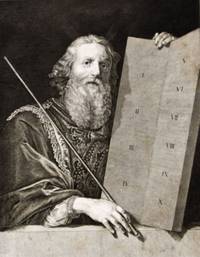
188034197Cincinnati: Published for the Rev. Abraham DeSola by The Bloch Publishing and Printing Company 1880. Third edition. Hardcover. vg. Large quarto. vii 1011 4pp. Custom period full brown pebbled leather biding with blind-stamped ruling and tooling. Gilt lettering including the owner's name on the front cover as well as on the spine. Raised bands. Dentelles. All edges of book block in red and gilt. Lustrous white silk textured endpapers. <br /> <br /> This incredibly rare and completely unrecorded third edition of the groundbreaking Leeser Bible was produced after Bloch had taken over the publishing rights sometime circa 1880. For this edition like the preceding Miller's Bible and Publishing House printing of 1878 5638 the publisher reverted to the large quarto size format and pagination of the original 1854 first edition. Additionally the preface includes the original text and September 20th 1853 date of first edition. The explanatory notes of the original edition at the bottom of each page removed in the smaller format starting with the 1857 second edition are here present again as well. Retained from those subsequent smaller format editions however is the "general remarks" section which follows the preface text. Added likely for the first time is a new table of contents directly preceding the main biblical text. Includes the traditional four blank leaves for the recording of marriages births and deaths at rear. <br /> <br /> When it was originally published in 1854 the Leeser Bible marked a major milestone in scripture translation as it is the first complete English translation of the Hebrew Bible Tanakh by a Jew. Indeed in the early 19th century most American Jews couldn't read the Bible in Hebrew and an adequate complete English translation didn't exist. Isaac Leeser's "The Twenty-Four Books of the Holy Scriptures" attempted to fill this need. Leeser spent 17 years on this landmark translation relying almost exclusively on Jewish scholarship. Soon after its publication this work became the standard for American Jews not conversant in Hebrew as well as an important contribution to Jewish American culture.<br /> <br /> This edition was issued for pioneering Canadian Rabbi Abraham De Sola 1825-1882 who was among the most prominent proponents of Orthodox Judaism in North America during the 19th century and close associate of Isaac Leeser. As the last pre-Bloch printing of the work produced for De Sola was known to have been issued in 1878 5638 our undated third edition has to have been published sometime between 1878 and De Sola's death in 1882.<br /> <br /> This unique copy of the Leeser Bible was beautifully custom bound for the owner Mathilda Friendly with 23 full-page illustrated plates which includes a half-title and frontispiece. The plates include many of the the same images which were incorporated into the Old Testament sections of similarly-illustrated Victorian-era family Bibles of the later half of the 19th century. They include finely rendered steel-plate engravings and reproductions after wood-engraved images from a number of acclaimed artists. The result is that this book ends up becoming a interesting and unique "Jewish version" of an Illustrated Family Bible of the same sort prevalent in that era.<br /> <br /> Like those Family Bibles the illustrated plates here include at least 10 reproductions after images by acclaimed French artist Gustave Dore 1832-1883 from his famous series of wood engravings originally created for the "La Grande Bible de Tours" 1866. These images include "The Deluge" "The Egyptians Drowned in the Red Sea" "Joshua Commanding the Sun to Stand Still" "David and Goliath" "Elijah Taken Up To Heaven in a Chariot of Fire" and "Esther Before the King" among others.<br /> <br /> Also present are beautifully rendered steel plate engravings. These include a gorgeous engraving of "Moses with the Ten Commandments" frontispiece by Edward Schuler 1806-1882 after the original painting by Philippe de Champaigne "Moses in the Bullrushes" half-title at the front after a lost painting by Paul Delaroche "Hagar and Ishmael" James Charles Armytage after Joseph Clark a gorgeous engraved image after the James Sant painting "The Infant Samuel" "Speak Lord for thy Servant Heareth" and "Happy Days of Job" by after a the painting by William Charles Thomas Dobson 1817-1898. Other images include work by British illustrator David Henry Friston 1820-1906 and Edouard Willmann 1820-1877 as well as engraved landscapes of Hebron Tabor and Petra. Many of the plates are protected with tissue guards.<br /> <br /> In comparing our copy with another found copy of this same scarce edition ours is extra-illustrated. It includes the steel-plate engravings not present in the other copy except for the Moses frontispiece found in both. Additionally it also contains many more of the reproduced wood-engraved plates.<br /> <br /> Binding professionally restored and re-backed retaining the original spine. Minor rubbing to extremities. Endpapers with some light stains and smudging particularly along the edges with light chipping to the edge of the rear endpaper. Interior with very sporadic minor to light foxing and stains to some of the text pages throughout. Images are mostly still very vibrant and mostly clean. Binding and interior in very good condition overall. Hebrew title: תורה × ×‘×™××™× ×•×›×ª×•×‘×™× <br /> <br /> This third edition is completely unrecorded anywhere. It is not in Singerman with no OCLC records.<br /> <br /> Bibliographic resources: Hills Margaret ed. The English Bible in America. 1962. p. 244.<br /> <br /> We are aware of copies of both the 1878 Miller printing and the scarce 1891 official fourth edition of the work with illustrated plates bound in. Published for the Rev. Abraham DeSola by The Bloch Publishing and Printing Company hardcover
1803327150London: Symonds 1803. hardcover. near fine. 3 volumes. 55 folding copper engravings and small engravings throughout the text frontispiece copperplate portrait of Isaac Newton in volume 1. 8vo handsomely rebound in full dark brown calf with blind-stamped design on covers and spine black leather spine labels. Some scattered age toning and spotting; neat small ownership name at top of title pages and half titles. London: H. D. Symonds 1803. A scarce set in a handsome binding.<br/> <br/> Symonds unknown
18452109210003Philadelphia : Printed by C. Sherman for the editor 5605 1845. First Edition. Hardcover. Very Good. First Jewish Translation of the Pentateuch into English: The Standard American Jewish Bible during the 19th Century 5 volume set; 20 cm. Bound in contemporary tooled calf. Good bindings and covers. Minor shelf wear rubbing but sound. Marbled end sheets. Added title page in Hebrew. Text is printed in Hebrew and English on facing pages. Clean unmarked pages. p. 22 in Leviticus is creased. Early inscription from 1881 to "Mosley from Brother Abraham 1881 Cincinnati." v.2 lacks the blank end pages. Contents: v.1. The book of Genesis.; v. 2. The book of Exodus.; v. 3. The book of Leviticus.; v. 4. The book of Numbers.; v.5. Deuteronomy. <br> Leeser's was the first English translation of the Torah by a Jewish translator. Prior to its publications English Jews used the King James translation. Isaac Lesser 1806-1868 was a Jewish-American newspaper editor The Occident religious leader Congregation Mikveh Israel in Philadelpha publisher and scholar. Born in Germany Leeser studied Latin German and Hebrew under the chief rabbi of Munster. Leeser helped found the Jewish press of America. His work laid the foundations for Modern Orthodox and Conservative Judaism. Leeser doubted that "the precious word of God ever appeared among us in a more beautiful form than the volumes in which I am now engaged." Leeser avoided reliance on earlier English translations though he made some use of German translations and noted that "the arrangement is strictly Jewish. My intention was to furnish a book for the service of the Synagogue both German and Portuguese." References: Goldman 7; Hills 1273; Rosenbach 569. Philadelphia : Printed by C. Sherman, for the editor, 5605 hardcover
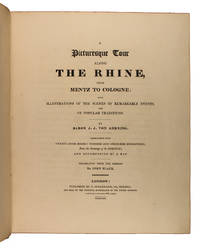
1820ST12078London: R. Ackermann 1820. First Edition in English First Issue. ONE OF 50 LARGE PAPER COPIES. 422 x 324 mm. 16 5/8 x 12 3/4". sheets 407 x 318 mm. 16 x 12 1/2". xiv ii 178 pp.Translated from the German by John Black. <br/> Excellent contemporary red half morocco over marbled boards by Charles Hering stamp-signed on verso of front free endpaper newly rebacked and recornered to style by Courtland Benson wide raised bands and panels attractively gilt in scrolling designs gilt titling all edges gilt. 24 HAND-COLORED PLATES OF THE RHINE plus one folding map taken from the drawings of Christian Georg Schütz and engraved by Sutherland Havell and Bartlett. A Large Paper Copy. Front pastedown with armorial bookplate of "R G V"; front free endpaper with evidence of bookplate removal. Abbey "Travel" I 217; Tooley 234. ◆Offsetting onto tissue guards indicating that they have done their job one tissue guard missing but no offsetting onto text in this case isolated trivial thumbing foxing or rust spots but A FINE AND ESPECIALLY DESIRABLE COPY the beautifully restored binding unworn the text and plates with only the most minor imperfections and the margins of this special copy remarkably broad.<br/> <br/> This is one of Ackermann's major color plate books and apparently the first in his "Picturesque Tours" series others of which explore the Seine the Ganges and the Thames. The book describes a trip down the Rhine on that part of the river generally considered most romantic and charming. The account contains not only topographical descriptions but considerable historical information and details of popular traditions. The tone is frankly advocative the book being written "with a view chiefly to the information of travellers of cultivated minds who may be induced to visit this interesting portion of Germany." The main appeal of the book for us today of course resides in its spacious and richly colored plates. The irresistibly scenic views seem to justify the book's claim that the region depicted is "a portion of heaven fallen down to earth." Our plates are early impressions and as in other contexts size matters here: the sheets in our volume are 407 mm. tall appreciably larger than most of the copies seen in auction records which measure on average approximately 330 mm. Abbey's untrimmed copy measured 425 mm. and a Large Paper Copy sold at Sotheby's in 2007 had sheets 402 mm. tall. As the limitation would indicate copies on Large Paper are very uncommonly seen and our copy is beautiful with especially well-preserved text and plates and an exceedingly handsome replica spine. R. Ackermann unknown
18201045181820. First Edition. ACKERMANN Rudolph GERNING Baron Johann Isaac von. A Picturesque Tour Along the Rhine from Mentz to Cologne. London: R. Ackermann 1820. Folio 11-1/2 by 13-1/2 inches period-style full green straight-grain morocco gilt-decorated spine and boards. $8800.First edition first issue of one of Ackermanns wonderful Picturesque Tours beautifully illustrated with 24 hand-colored folio aquatints and large folding map. A lovely copy beautifully bound to style.In the history of book production ""there is no more attractive figure than that of Rudolph Ackermann through whose extraordinary enterprise and spirit of adventure aquatint was successfully applied to the illustration of books"" Prideaux 120-23. One of Ackermann's most lucrative projects was his remarkable Picturesque Tours a series of seven books produced between 1820-28. This is his Tour Along the Rhine with beautifully hand-colored aquatints by Daniel Havell and Thomas Sutherland after paintings by Christian Georg Schutz depicting views of Mentz the Castle of Furstenberg the Church of Johannes Pfalz Castle and the town of Kaub the salmon fishery at Lurley Coblentz Bornhofen Cologne and other sites along the river. The plates were pulled and hand-colored in the Ackermann studio whose reputation for producing splendid illustrated publications and disseminating fine aquatint prints spanned over two centuries. The folding map shows the course of the Rhine from Mentz to Cologne. With accompanying text by Baron von Gerning describing the history and culture of the area first published in German in 1819 without illustrations. First issue without plate numbers in the top right corners. Tooley notes that plates 2 and 3 have variants dated either September or October; Abbey argues persuasively that to call either state an issue ""must remain doubtful"" particularly given that large-paper copies have also been seen with the two plates dated October. At any rate the quality of plates in either state are the same high standard; Abbey notes that ""there are definitely some later issues of the book and these can be recognized by having plate numbers at the top right-hand corner. The impressions in these plates are poor and the coloring less good"" Abbey 217. This copy has plates 2 and 3 dated October but most importantly none of the plates bear numbers in the upper right. Text watermarked 1817 and 1818; plates watermarked 1818 and 1819. Abbey Travel 217. Prideaux 337. Tooley 234. Title page neatly rehinged plates fine and fresh hand-coloring vivid. An excellent attractive copy of this beautifully illustrated work. hardcover
182418968The Hague 1824. 8vo. the widow of J. Allart Contemporary marbled boards with a paper title label on the spine. With 4 hand-coloured folding aquatint plates and a hand-coloured engraved vignette on the title page of each volume. 2 volumes. XVI 250; 1 1 blank 264 pp. First Dutch edition of a beautifully illustrated work on the Japanese festive ceremonies and customs. The work was written by Isaac Titsingh 1745-1812 then Head of the Dutch Factory at Decima the only place in Japan from where connections with the rest of the world were maintained until far into the 19th century. Titsingh was allowed to visit the Japanese court several times and is therefore one of the very few European observers and eye-witnesses of Japanese culture and customs in the 18th century.The first volume consists of essays on Japanese marriage and funeral ceremonies an account of "dosia" powder and some notes on the works of Confucius. It is concluded by a catalogue of books manuscript plans and artefacts collected by Titsingh. The second volume includes a series of anecdotes about the shoguns followed by several short essay amongst others on seppuku ritual suicide and Japanese poetry ending with explanations of the plans of the Dutch and Chinese factories at Nagasaki. The plates show a wedding ceremony a volcanic eruption of Mount Asama and the Dutch Factory at Decima.Titsingh was a diplomat historian and merchant who had a great interest in Japan. He moved to the East Indies in 1766 and stayed for most of his life. He spent a total of three years and eight months in Japan between 1778-1788 and amassed a large collection of authentic source materials on Japan during this time including printed books manuscripts prints maps city plans and coins. He came back to Holland in 1809 but quickly moved to Paris on account of the political situation. In Paris he began preparations for a monumental work on Japan based on the artefacts in his collection as well as his own notes but he died suddenly in 1812. When his son Willem went bankrupt he sold his father's collection which was then scattered all over Europe. Both a French and English publisher must have acquired some of the material as selections of it were printed in both countries. They were published in two volumes in Paris as Cérémonies usitées en Japon pour les mariages et les funérailles 1819 and Mémoires et anecdotes de la dynastie regnante des Djogouns 1820. The London edition Illustrations of Japan 1822 which was only printed in one volume was not a direct translation of the French works but clearly used the same source material. The present Dutch version is a translation of the English edition. Due to the impact of his collection and scholarly activities Titsingh can be seen as the founder of European Japanology.The boards of both volumes are somewhat scratched the spine of both volumes has cracked but the structural integrity of the binding is still intact. The first and last two leaves of each volume have browned around the edges likely from a past protective wrapper the work is slightly browned and foxed throughout the final quire and the two plates in volume 2 have detached but are still present annotations in pencil in the margins on some of the leaves. Otherwise in good condition.l Alt Japan Kat. 1520; Cordier Japonica col. 451; Landwehr Coloured plates 456; Tiele 1096. ABE CAT Anthropology & Ethnography hardcover
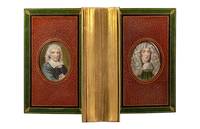
18086230London: Samuel Bagster 1808. First Bagster edition. Octavo 8 x 4 7/8 inches; 204 x 124 mm. iv vi vii-512 pp. Hand-colored frontispiece and nineteen engraved plates and two sheets of music. Ten of the plates are engraved by Audinet eight after Wale two after Samuel; two music plate; two plates of fishing tackle and flies. There are seventeen fine engravings of fish and two large woodcuts in the text. Extra-illustrated by the insertion of fifty-five engraved plates of which ten are hand-colored. Bound ca. 1925 by Bayntun stamp-signed in gilt "Bayntun. Binder. Bath. Eng." on front turn-in. Full green crushed levant morocco over beveled boards covers with elaborate gilt frames spine with five raised bands elaborately decorated and lettered in gilt in compartments gilt decorated board edges wide gilt turn-ins all edges gilt. Front doublure of brown morocco surrounded by a frame of inlaid maroon morocco. Set into the front doublure is a fine oval miniature painting of Isaac Walton under beveled glass within a double gilt frame. Set into the rear doublure is a fine oval miniature painting of Charles Cotton under beveled glass within a double gilt frame. Both miniatures measure 3 1/4 x 2 1/2 inches; 82 x 63 mm. Green watered silk end-leaves. Expertly and almost invisibly rebacked with the original spine laid down spine very slightly sunned otherwise a fine example housed in its original felt-lined green cloth clamshell case spine lettered in gilt.<br /> <br /> Walton's famous pastoral work on fishing The Compleat Angler is combined here with additions by Robert Venables and Charles Cotton on the art of fly fishing in particular. Walton the son of innkeepers moved to London to become an ironmonger but would spend the last forty years of his life collecting information and writing on fishing. The book was first published in 1653 but re-released in numerous editions both due to its popularity and Walton's propensity to revise and contribute more chapters to it. It has stayed in print since it was first published and is noted for its well observed descriptions of English country life. "The Compleat Angler has something in common with 'Lady Chatterley's Lover:' while many know the title few have actually read it. Yet it's the most frequently reprinted book in the English language after the Bible" The Guardian.<br /> <br /> George Bayntun 1873-1940 was the founder of Bayntun Bindery 1894 dedicated to using traditional hand-crafted techniques and high-quality materials. "The Riviere Bindery was one of the most notable and prolific shops in London's West End from about 1840 through 1939" Princeton. Bath-based Bayntun Bindery acquired the firm in 1939 transforming into the "Bayntun-Riviere bindery" which is still in existence and family owned. Although named after the English miniaturist Richard Cosway 1742-1821 the desirable "Cosway Binding" with its jewel-like portrait miniature set into a fine binding was first developed at the turn of the century by J.H. Stonehouse director of London's Henry Sotheran Booksellers. Their miniatures were painstakingly crafted by the talented painter Miss C. B. Currie 1849-1940. As the style grew in popularity other publishing houses quickly began to reproduce this technique-each developing their own desirable take on the aesthetic-referred to as "Cosway style." <br /> <br /> Coigney 18. Samuel Bagster unknown
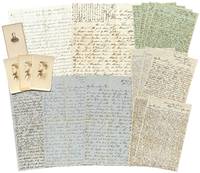
18674614261867. Unbound. Near Fine. A collection of 11 long letters written by a young paymaster’s clerk and officer in the U.S. Navy in which he gives detailed accounts of voyages to Central America China and South Africa in 1867-68. Also included is a gripping account of a terrific storm while crossing the Atlantic and of a dramatic rescue of sailors cast off their capsized ship off the coast of France. All 11 letters are densely written in Merrill’s neat small hand and are addressed to his parents at Bangor Maine. One letter has three or four small tears with partial loss to three or four words else near fine overall. Also included are six of the original mailing envelopes and four cabinet card portraits of Merrill: one of Merrill in uniform taken by “Pun-Lun†at Hong Kong and three duplicate portraits taken at Bangor Maine.<br /> <br /> Here is an excerpt from Merrill’s first seven-page letter written on board the storeship Brig Executive in January 1867 in which he describes his first voyage from Bangor to Cette France:<br /> <br /> “… Wednesday night – a gale commenced – and it was a screamer … day and night did every soul labor for dear life … we felt that our doom – by sinking – was sure … Buzzell and Chase and I worked with the rest – and by our aid the exhausted men were enabled to get a little sleep – until the forecastle was flooded and the galley stove in … we lived on raw meat for three days … Such mountainous waves! … they were as high as the upper-topsail yard – and often higher still – and when they would board us – and sweep over the decks – we all clinging to the main rigging … it seemed to us … that we should drown before it all passed over us … so long were we in the wave … During the whole gale … we sped onward in our course …â€<br /> <br /> They ran into another terrific storm off the coast of France near Montpelier where they encountered several ships in peril and participated along with soldiers on the shore in a dramatic rescue of two sailors and a pilot from their capsized boat one of whom later died. They went on to Paris and London where Merrill wrote his next two letters and returned home from Liverpool at the end of January.<br /> <br /> Merrill next writes at length about his voyage on board two Steamships Henry Chauncey and Sacramento and the storeship USS Supply. Setting off in November he sailed first to Aspinwall Colón on the Atlantic coast of Panama went across the isthmus by rail road to the City of Panama and then on to Acapulco and San Francisco. In two letters from November he gives descriptive accounts of Aspinwall including several disparaging remarks about the crowds of “natives and negroes along the plaza … the street was thronged with dusky vendors of fruit claret cakes &c. jabbering the virtues of their merchandise in the most conglomerate mixture of English Spanish and Samboish …†He also describes the structure of the “many isolated negro huts†along the 48-mile railroad trip to Panama City where they transfer their baggage etc. onto the Sacramento:<br /> <br /> “The sea has been as smooth as a pan of milk ever since we left Panama … Among the more noted of our passengers is Gen. Beuham of So. Carolina late of C.S. Army … Bishop Williams of the Episcopal Mission in China … and other missionaries of China … Spanish gentlemen and their families merchants of China & Japan … This morning early a poor fellow died in the Steerage of Panama fever. Another one is sick and will not live till evening … The sharks have followed our ship all the time from Panama … the surgeon said privately that there are other cases also …â€<br /> <br /> In a letter from December Merrill gives a long description of Acapulco: its harbor streets and street vendors the military fort and evidence of the French bombardment etc. In San Francisco his time in the city itself which he loves is curtailed by preparations on board Supply for the voyage to Japan and China. In a long six-page letter from February 1868 he describes various excursions in Canton and Hong Kong:<br /> <br /> “All of us officers went to Canton … and saw all the Elephants including the Temple of 500 Gods … Hong Kong has all the business that was formerly done in Canton … In some places where we went – but few Europeans had ever been and we were curious objects of interest to the population … One walled town we entered – contrary to the permission of the natives and there we met a ‘Sing-Song’ procession – marching about in fantastic costumes celebrating the advent of the Chinese New Year – and when they saw us you may believe there was a scattering and scampering! They perhaps thought that the ‘Fan-Kwei’ foreign devils as they call foreigners had come to kill and destroy … At one town which I entered alone the natives were much pleased to see a Fan-Kwei and they pressed me to take oranges paper cigarettes &c. ad libitum … We saw the forts ruins of at the Bocca Tigris and the Barrier Forts near Canton which were reduced by … the American & English fleet in the China Squabble of 1858-9 … Last Tuesday W. & Thursday were the Annual Races here in Hong Kong. All the fashionable of the Colony were there … We were invited to the whole course 3 days and had quarters in the booths of Russell & Co. and Oliphant & Co. … People and costumes of all nations mingled to make a dashing looking concourse …â€<br /> <br /> He concludes the letter with news about the Satsuma Samurai Rebellion of 1868: “You will probably hear about the outbreak and warfare in Japan … the Hartford and Aroostook are preparing to go there … the Prince of Satsuma … has landed ten thousand men below Osaka under the nose of one of the Tycoon’s frigates without molestation and marched them inland toward … the City of the Mikado or Spiritual ruler and had conflict with the Jap. national troops … the life of Sir Harry Parkes … has been attempted and one or two of our U.S. sailors … killed and it is reported that the Tycoon has taken refuge on the U.S.S. Iroquois …â€<br /> <br /> On the voyage back from China Merrill writes one letter in March from Java and two letters in April from South Africa in which he gives descriptions of Good Hope Cape Agulhas whaling grounds at Algoa Bay and of his excursion to Cape Town. He concludes his account of the voyage with a final letter written at Charlestown Massachusetts.<br /> <br /> A remarkable and historically important cache of letters all rich in content and deserving of further research. A list of the letters with a few quoted extracts is available. unknown
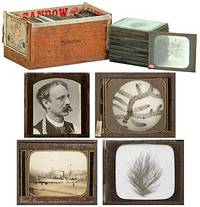
1897394021Bridgeport Connecticut 1897. Good. A unique collection of 87 glass lantern slides permanent positive images from the library of Isaac Holden an important Connecticut based phycologist and founding editor and contributor to the monumental: Phycotheca Boreali-Americana: A Collection of Dried Specimens of the Algae of North America. The collection consists of two sets totaling nearly 60 slides of images of dried marine algae specimens “Exsiccatae†and a set of about 25 slides taken in and around the town of St. John’s on the coast of Newfoundland. There are also a few slides of fauna insects and Holden as a dashing young man.<br /> <br /> The marine algae specimens were collected by Holden at Seaside Park along the Connecticut coast and Long Island Sound in the mid-1880s. About half of the species are identified in manuscript with the Latin name place date and Holden’s signature reproduced in the image. Three images have been dyed in red. It’s very likely that the unidentified specimens were collected by Holden and his close friend and colleague Frank Shipley Collins who co-edited and also contributed to the Phycotheca. Both sets of specimens include a few charts and figures.<br /> <br /> The set of Newfoundland views date from Holden’s 1897 trip to collect specimens of marine algae many of which were distributed in the Phycotheca. The views are of the rocky coastline and adjoining seascapes including a few snow-covered areas and several images of fishermen and other inhabitants at work in the harbor or in boats along the coast.<br /> <br /> The glass lantern slides measure 4†x 3¼†or 3¼†x 3¼†a subset of about 20 specimen slides consisting of the image plate and clear cover plate held together with plain paper folded over the edges. Many slides have glossy paper frames mounted in between the plates. The slides range in condition from fair to very good with scattered spotting and soiling. Several of the original paper edges are detached or missing a very few have been replaced with masking tape about 15 slides lack most or all of the original paper edges and are separated including a few lacking a cover plate. About five specimen slides are damaged with cracks to the glass and some deterioration to the image. About half are housed in a contemporary wooden box with chromolithographic labels from Bridgeport Connecticut.<br /> <br /> A unique and historically important research collection of early photographic images of marine algae and of the remote coastline of Newfoundland. The collection is divided into four sections:<br /> <br /> Set 1. 40 slides: North American Algae Specimens & Miscellaneous: Images of various types of seaweed and related algae.<br /> <br /> Set 2. 18 slides including three dyed in red: Seaweed and related algae signed and dated in the image: “Bridgeport Conn. 1885â€.<br /> <br /> Subset 3. 4 slides: Fauna/insects.<br /> <br /> Set 4. 25 slides: Views of Newfoundland: Images of St. Johns Newfoundland and vicinity: about half include local people. There are also five additional slides reproducing various maps. unknown
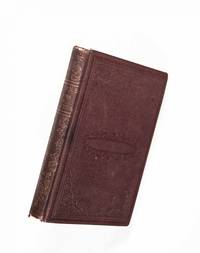
186847609Cincinnati: Bloch & Co 1868. First edition. Hardcover. vg- to vg. Duodecimo. 263pp. Period burgundy cloth boards with blind-stamped tooling and ruling on the covers gilt lettering and tooling on the spine. Edges of book block gilt. Published as the final piece of his magnum opus project for American-Jewish liturgy titled "Minhag America" this work offers the compilation of litergical hymns psalms and other prayers with text in English and German as collected and edited by the pionneering German-born American Refrom Rabbi Isaac Mayer Wise 1819-1900.<br /> <br /> The original two volumes of the Minhag America siddur prayer book had both been published in 1857 one with Hebrew-English text Prayer Book for Public and Private Worship and the other with Hebrew-German text Gebet-Buch fur den offentlichen Gottesdienst und die Privat-Andacht. As stated by Wise in his introduction this volume rather then simply being a mutl-lingual direct translation of that text is a specifically designed and compiled collection of hymns psalms and other prayers translated with care and consideration especially for this publication in only the vernacular languages of English and German with additional new writings by Wise himself and others. Text in English with the corresponding German text on the facing page. Also includes detailed service instructions religious notes a table of torah readings and a table of contents. The influential Minhag America would become the standard liturgy of American Refom congragations from its original publication until the introduction of the Union Prayer Book in the 1890s.<br /> <br /> Text throughout in English and German.<br /> <br /> Binding with light rubbing to corners some rubbing tand light chipping to the head and tail of the spine. Covers lightly smudged. Starting at the gutter of the interior front cover. Some pages throughout with light creasing. Text still clean bright and ledgible throughout. Book block tight overall. Binding in very good- interior in very good condition overall. Hebrew title: שירו ליהוה שיר חדש<br /> <br /> Singerman #2109. Bloch & Co hardcover
182012116London: R. Ackermann 1820. 330x275mm. 13x10¾". London R. Ackermann 1820. Folio 330 x 275mm. xvi-178 pp. 1 mapa plegado y 24 láminas coloreadas a mano al aguatinta. Encuadernación en holandesa marroquén con puntas lomera cuajada de adornos dorados. Primera edición inglesa temprana emisión con las finas láminas fechadas en 1817-1818 sin numerar y con buena impresión y color. Se trata de una de las mejores publicaciones de Ackermann y aparentemente es el primero de la serie "Picturesque Tours" que se continuaría luego con las exploraciones del Sena Ganges Tamesis etc. Se imprimieron sólo 750 ejemplares en formato similar a otras publicaciones del propio Ackermann como la dedicada a los Colegios Ingleses a la Abadía de Westminster y el Microcosmos de Londres. El libro describe un viaje por el Rhin que transcurre por la rivera considerada generalmente como más elegante y romántica. La relación contiene no sólo descripciones topográficas sino que incluye también información histórica de los lugares que recorre así como detalles de sus tradiciones populares. Contiene en total 1 mapa plegado y 24 finas láminas coloreadas a mano en la época al aguatinta. Muy buen ejemplar. R. Ackermann hardcover
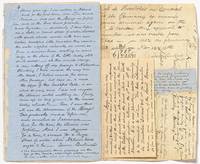
1860601691Salem Massachusetts 1860. Unbound. Very Good. A collection of autobiographical writings retained by two prominent seamen father and son from Salem Massachusetts. The archive was compiled by the son Isaac Bullock 1800-70: a self-taught scholar and artist who first went to sea aboard fishing vessels and later as chief mate aboard ships owned by the famous Salem merchant Joseph Peabody. As he recounts in a manuscript note on his father's 1799 Seaman's Protection Certificate: his father "died of yellow fever July 1800 in his 25th year on a voyage to Havana - when I was about 3 months old." The Certificate issued to protect American sailors from the British practice of impressment is signed by Benjamin Lincoln: a famous Major General during the Revolutionary War as George Washington's second in command he formally accepted the British surrender at Yorktown and the first United States Secretary of War.<br /> <br /> Also included is the elder Isaac Bullock's shipboard account of a meteor shower written in manuscript on a quarto sheet titled: "Some particular remarks of the appearance of the sky on the 12 November 1799 at sea - in Latt. of 49:20 North & Longt. of 22:00 West." This was the first recorded meteor shower in North America by American astronomer Andrew Ellicot who had witnessed it from a ship off the Florida Keys. Bullock witnessed it "on the Brig Helen Andrew Haraden Master - from Boston bound to London": "At 4 am being my watch on deck . I saw with astonishment the stars shooting or otherwise falling repeatedly from the sky down to the horizon as if they were compelled to leave their native abodes and dwell in the lore lower world. Some leaving after them a stream of fire which continued in the sky for the space of a minute . These continued shooting or otherwise falling till day light . we could see their blaze shooting in every direction till almost sun rise. What it is foreboding we cannot tell . ." Tipped onto the 1799 quarto manuscript sheet are several smaller sheets of appended manuscript notes and comments by Bullock's son dating from the early 1850s including a pencil sketch portrait of the great German naturalist Alexander von Humboldt who had observed the meteor shower from Central America.<br /> <br /> The rest of the archive consists of five gatherings of miscellaneous autobiographical writings and musings compiled by the son Isaac Bullock in which he relates various notable voyages including being pursued by an armed pirate ship "off the double headed shot Keys Cay Sal Bank" and barely surviving a shipwreck in the English Channel. <br /> <br /> Also included are accounts of two trips to California he twice spent time prospecting and mining on the South Fork of the American River first in 1850 at Salmon Falls and then in 1852 at Mormon Island: ". in 1849 the gold Crusade to California enticed me to try if Fortune would smile on me as a Miner. I shipped as 2d mate of ship Nestor of Salem for San Francisco and started from Boston in the autumn of '49 with a large number of passengers bound to See the Elephant! - I saw him! and have survived the sight! . A year of privation and excessive labour broke me down in a long fever and in partial recovery I started for home - Returned through the Nicaraguan route and escaping its perils and privations I once more reached home .". Soon thereafter he decides to try his luck in the mines again: "hoping for better success . I landed in Aspinwall traveled on foot through the dense tropic forest to Panama losing all my baggage by robbers . At last I reached San Francisco again . ."<br /> <br /> Most if not all of Bullock's reminiscences and musings were written and compiled upon his return from California: one manuscript is dated 1853 and another 1862. He was well read in classical literature and ancient history and comments on Alexander von Humboldt and Hester Thrale in the manuscripts. When not abroad he lived in Salem where some his other papers are held at the Peabody Essex Museum.<br /> <br /> An entertaining and historically important collection of writings documenting the lives of two prominent seamen who sailed out of Salem when it was among the most significant seaports in America. A detailed list of the manuscripts with selected excerpts is available. unknown
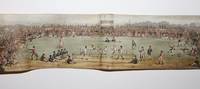
181919883London: Sherwood Neely & Jones 1819. First Edition. Scroll with wooden exterior base crown sides. Housed in a modern clamshell box quarter morocco cloth boards felt cushioning. Isaac Cruikshank. Most unusual and uncommon sporting/processional scroll with its narrow width of only 60 mm and its length of slightly over 3800 mm which depicts four different scenes in its 42 numbered and conjoined separate pieces. The first which accounts for over half of its length is the parade to an outdoor boxing match. This is actually a few distinct scenes with clear breaks between them but since they are all depicting a parade one can virtually see them as a single unbroken parade as we have chosen to do for purposes of this description and also to treat them as we believe most people would take them in. Then there is the match held on an expansive river-side meadow. In this second scene is shown the final stage of the procession to the grounds when the spectators and their vehicles had to cross the Thames all in long rowboats. The third scene is of a man being thrown from a bull. This we believe was a sideshow to the main event. The last scene is of the more respectable element probably the end of the day. In the first stretch of the scroll we see coaches and other horse-drawn vehicles some of which are rather eccentric and perhaps improvisational men atop the coaches men on horseback and on foot a man pedalling an early bicycle. All kinds of street life and local color enliven the proceeding and distinguish this one from so many that are simply a stilted parade. Accidents and mishaps punctuate the event. Horses are spooked and kick up the dirt as they suddenly race. There are the high jinx of children. As fitting the march to a boxing match there is a brawling incident. And there are spectators and bystanders that pull in a broad spectrum of London street life and do so without making an express statement about it as would a formal costume book of the day. The second panorama of the scroll the boxing match scene is teeming with people and activity the boxing match here is at the center but almost overshadowed by the fights erupting in the audience and other shenanigans. The bull fight is also teeming with movement and life. Only the fourth scene is somewhat staid an intentional anti-climax perhaps and certainly a deliberate contrast to the two middle scenes. The scroll is housed in a wooden drum with a boxing scene and the title on a paper pastedown attached to its side wall. The drum itself is a lovely piece of treen in and of itself with its crown turning pin a fine piece of wood turned work. The drum is about 10 cm tall and with the turning pin about 12 cm tall and it is about 5 cm in diameter. The paper pastedown illustration on the drum wall is very darkened obscuring in particular the print at its base but one can still with effort make out the words and the same with the illustration of the boxing match. The wooden pull pin that was at the end of the scroll is now detached along with a tiny amount of the paper part of the scroll -- this part is cloth backed the cloth surely added later. The scroll itself is heavily darkened at the outer end gradually lightening until the third conjoined panel at which the issue has gone away. Similarly at the pull's end there are a number of closed tears vertical cracks along the edge some paper repairs of these visible on the pictorial side and also some staining especially along the upper edge. This issue or these issues recedes but doesn't entirely disappear by the third panel. The paper is such that it was susceptible to what we are describing as cracking by way of explanation. Notwithstanding all the detailing of issues we are comfortable describing the original object as Very Good with the clear understanding that this is also in relation to other copies one might encounter. The modern clamshell box was very well constructed and it remains in Fine condition. Sherwood, Neely & Jones unknown