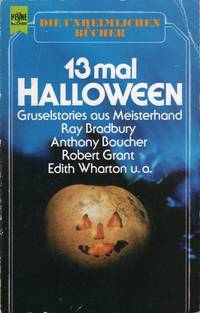
13mal Halloween
198511378HEYNE WILHELM 1985. 1. softcover. HEYNE, WILHELM paperback
26 496 résultats
1979217293doubleday 1979 first edition. fine book fine jacket like new doubleday unknown
198511378HEYNE WILHELM 1985. 1. softcover. HEYNE, WILHELM paperback
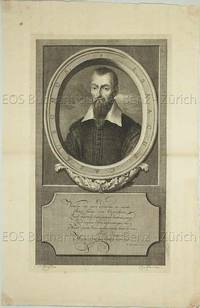
16801639AG1680. O.O. um 1680. Kupferstich. Plattengrösse: 315 x 18 cm. Blattgrösse: 38 x 253 cm. Isaac Casaubon studierte in Genf und Leiden lehrte ab 1596 an den Universitäten Montpellier Lyon Paris und London Griechisch. unknown
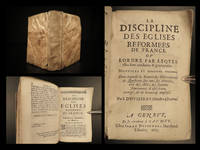
166718277<p><b>1667 Discipline of Reformed Church HUGUENOT France Calvinism Protestant Huisseau</b></p><p>Isaac D'Huisseau's "<i>Discipline of the Reformed Church of France</i>" is a rare 17th-century history of Calvinism and Huguenots in Europe. This book provides a description of the political and religious influences of the Huguenots in the 1600s France. However the main focus of "<i>Discipline</i>" was according to Nicholas Must was to</p><p>"offer the French Reformed Churches a comprehensive program to organize and regulate themselves as it had chapters concerning specific vocations ministers elders deacons different assemblies colloquies and synods and actions required of a minster baptism communion and marriages.</p><p>Item number: #18277</p><p>Price: $599</p><p>D'HUISSEAU Isaac</p><p><b><i>La discipline des eglises reformeÌes de France ov l'ordre par leqvel elles sont conduites & gouverneÌes.</i></b></p><p>A Geneve et se vendent aÌ€ Savmvr : chez Isaac Desbordes 1667.</p><p><u>Details</u>: </p><p>· Collation: Complete with all pages</p><p>o 4 452</p><p>· References: Nicholas Must '<i>Preaching a Dual Identity'</i> p. 51</p><p>· Language: French</p><p>· Binding: Vellum; tight and secure</p><p>· Size: ~5.75in X 3.75in 14.5cm x 9.5cm</p><p>Our Guarantee:</p><p>Very Fast. Very Safe. Free Shipping Worldwide.</p><p>Customer satisfaction is our priority! Notify us with 7 days of receiving and we will offer a full refund without reservation!</p><p>18277</p><p>Photos available upon request. </p> Isaac Desbordes hardcover
1697BTETM0001513London: J.H for Brabazon Aylmer at the Three Pigeons over against the Royal Exchange 1697. Leather. Good/No Jacket. Octavo Standard 8vo 6 נ9 in 152 נ229 mm . Please email for Photographs or further information. Good - Previous owner inscription on FEP and title page some mild water/damp damage to some pages. With engraved frontispiece. Collation: 8 312 4 353459 1. Please see Photos as part of condition report. References: Wing B929 ESTC R20454 1697 1st Edition A BRIEF EXPOSITION OF THE CREED To which is added The Doctrine of the Sacraments. This on the Creed never before published. The first appearance of Barrows exposition of the Creed here issued together with his previously published exposition of the Lords Prayer and Decalogue. By Isaac Barrow Author Bio: Isaac Barrow 16301677 was an English theologian classical scholar and mathematician. Educated at Cambridge he became the first Lucasian Professor of Mathematics a chair later held by his pupil Isaac Newton. Barrow was also a prominent Anglican divine and was appointed Master of Trinity College Cambridge in 1672. His sermons and devotional writings were widely respected for their learning clarity and orthodox Anglican theology. Format: Leather Octavo Standard 8vo 6 × 9 in 152 × 229 mm Note: Binding/size selection follows standard bibliographic conventions and is approximate; exact measurements may vary. Language: English Published By: J.H for Brabazon Aylmer at the Three Pigeons over against the Royal Exchange London Condition Report: Dust Jacket: No Jacket Dust Jacket Condition: No Jacket Good - Previous owner inscription on FEP and title page some mild water/damp damage to some pages. With engraved frontispiece. Collation: 8 312 4 353459 1. Please see Photos as part of condition report. References: Wing B929 ESTC R20454 SKU: BTETM0001513 Shipping Info: Approximate Package Dimensions H: 12.5 L: 30 W: 25 Units: cm W: 2Kg Tracked Shipping Insurance Coverage as per Customer Request J.H for Brabazon Aylmer, at the Three Pigeons, over against the Royal Exchange hardcover
1700000819Boston Massachusetts MA 1700. On offer is a superb and important piece of Americana specifically a handwritten deed concerning the very important geographic area of Fort Warren which defends the harbor in Boston Massachusetts and has done so from 1861 through the end of World War II. To buffs of the Civil War it was also the location where the famous Union marching anthem 'John Brown' was written using a tune from an old Methodist camp song 'Glory Glory Hallelujah!' and signed by Isaac Addington who served on the Salem Witch Trial Grand Jury and Adam Winthrop the son of John Winthrop First Governor of Massachusetts. John Winthrop 1588-1649 is perhaps best remembered for the famous sermon in which he likened the Massachusetts Bay Colony to a 'city upon a hill' a model to the world of social and religious order." Ref: Wikipedia. This manuscript document is dated Boston 27 Dec 1700. Folded into thirds Calligraphic initials. SIGNED BY ADAM WINTHROP son of John Winthrop First Governor of Massachusetts and ISAAC ADDINGTON clerk of the Grand Jury during the Salem Witch Trials. This is the original deed referenced by Holmes Abiel 1763-1837. Cambridge : Hilliard and Brown 1829. from the Coll. Mass. HiM. Soc. iii. 299. which states: "In 1700 Adam conveyed the island to his son-in-law and daughter to be transmitted to their descendants. The Indenture handsomely written on parchment is now before me. It covenants and grants the island to "John Wainwright and to Ann his wife during the term of their natural lives and afterward to the use and behoof of the heires of their two body. begotten or to be begotten forever." The island was next owned by their son John Winthrop Professor of Mathematics and Natural Philosophy In Harvard College; and next by his sons Hines and William of Cambridge lately deceased. James purchased of William his share and a few years since sold to the United States about five acres in two parcels at the east and west end of the island with a passage way rota the one to the other for the purpose of fortifications. On the west end has been erected Fort Warren which defends the entrance of the harbour." CONDITION: signatures are strong and legible majority of the deed legible though with age-wear sometimes serious rubbing and fading discoloration some holes; certainly not in the presumed fine condition when Abiel Holmes held the document in 1829 but certainly very presentable with the red wax seal still intact. This document is a wonderful tapestry comprised of the strands of early Colonial history. Inherited by his son Adam it links the famous Winthrop name from his namesake Grandfather Adam Winthrop 1548-1623 an English lawyer and famous Puritan reformer in the Elizabethan and Jacobean periods through his great grandson Professor John Winthrop who was intimately connected to Harvard University's early history. The document is also witnessed and signed by Isaac Addington the first Secretary of the Mass. Bay Colony from 1692 to 1714 who additionally served on the grand jury in the Salem witch trials. The trials famously resulted in the executions of 20 people 14 women 6 men. PROVENANCE: Most recently from a private collector the present condition suggests this deed has long been in private hands and not an institutional archive. While in the 1820s the deed was possibly present in the archives of the Mass Historical Society it did not remain in the archives long thereafter and entered less protected private circulation. That stated Mr. Jeremy B. Dibbell of the Massachusetts Historical Society has kindly confirmed that this document like others that have entered private hands is not the property of the Massachusetts Historical Society. . Good. Atlas Folio - over 23" - 25" tall. Manuscript. unknown
0656436832.Ghardcover. Good. Access codes and supplements are not guaranteed with used items. May be an ex-library book. hardcover
1333379528.Gpaperback. Good. Access codes and supplements are not guaranteed with used items. May be an ex-library book. paperback
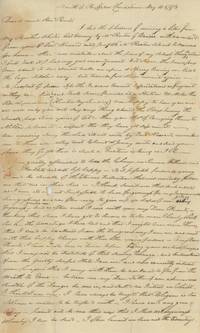
1793List2998Charlestown Ohio County Virginia now Brooke County West Virginia 1793. Single two-page letter measuring 7 ½ x 12 ½ inches. Folded with small tears at folds some holes intersecting with text; overall excellent. A letter from Isaac Prince Robbins 1770–1846 in what is now West Virginia to his parents Rev. Chandler Robbins 1738–1799 and Jane Prince 1740–1800 in Plymouth Massachusetts. Isaac Robbins was likely teaching in the area as he mentions the “price of my school†and that the oncoming spring had “call’d the larger scholars away†to farm. He also notes that smallpox had been running through the area and inquires about the family’s health as they had contracted the disease the previous October.<br /> <br /> Robbins also informs his family that there is “No prospect of peace while the Indians commit depredations as frequent as they do. Kill’d and took seven families at a station 30 miles this side Lymestone Kentucky Landingâ€. It is not clear whether he is referring to “Hartshorne’s defeat†part of the Northwest Indian War where the Northwestern Confederacy attacked Euro-American settlers near Limestone now Maysville—this attack occurred in 1790 though it is possible that Robbins had not contacted his family since prior to this event.<br /> <br /> He closes by ruminating on his own sin telling his parents “I have erred and gone astray point out to me the way that I shall ask forgiveness whereby I can be saved.†This letter probably predates Isaac Robbins’ following in his father’s footsteps and becoming a minister.<br /> <br /> Of interest to historians of the settlement of West Virginia and related conflicts with Indigenous tribes. unknown
179931012Baltimore 1799. Letter. Very good. Paper. Approx. 4.5" x 8" sheet of paper . Light toning to the paper. Contents reads: This may certify that I inspected Six Barrels flour Baranded on the end E. KREMER four of Which was condemn'd to Midlings Middlings being too course and Shky the other two had too much rye in the flour and could not be pass'd and branded for Merchantable Wheat Flour of any Quality signed Isaac Trimble Balt 12th of 3 mo 1799." From wikipedia:<br /> <br /> Wheat middlings also known as millfeed wheat mill run or wheat midds are the product of the wheat milling process that is not flour. A good source of protein fiber phosphorus and other nutrients they are used to produce foods like pasta breakfast cereals puddings and couscous for humans as well as fodder for livestock and pets. 1 They are also being researched for use as a biofuel. unknown
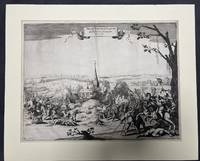
1651016056Amsterdam: Jodocus Janssonius 1651 Book. Illus. by Isaac Commelijn. Good. No Binding. 1651 Good Condition Presented in a passe-partout. Passe-partout size: 46 × 37 cm; Image size: 38 × 29 cm Original 17th-century copper engraving from Frederick Hendrick van Nassauw Prince van Orangien zyn leven en Bedryf published by Jodocus Janssonius 1651. Depiction of the Battle of Angerhausen 1592 in which Count Johann of Nassau the younger is defeated and taken prisoner. The scene presents a dynamic battlefield tableau with cavalry infantry smoke and the small church of Angerhausen in the background. At the top a cartouche bears the title: "Graef Ian van Nassou geslagen en ghevangen. Anno 1592." The engraving is rich in detail-typical of Janssonius editions-and stands as a fine example of early modern military iconography within Nassau historiography. Condition: Attractive even impression with good plate margins. Light age-related toning otherwise very well preserved. Presentation: Mounted in a passe-partout. Passe-partout size: 46 × 37 cm Image size: 38 × 29 cm. Jodocus Janssonius unknown
18000012301Britain. Very Good with no dust jacket. 1800. Non-Book. On offer are two autograph letters signed: 1 Autograph letter signed. Two pages 4to. Dated "Stanford Rivers Monday morning no year." A friendly letter making a visiting arrangement. 2 Autograph letter signed. Three pages 4to. Dated "Amen Corner" February 1835 with one page of draft response from the recipient on fourth page. Concerning the steeling of a legal matter. Isaac Taylor 1787-1865 was an English philosophical and historical writer artist and inventor. In 1825 he settled at Stanford Rivers about two miles from Ongar in a rambling old-fashioned farmhouse. Taylor was interested in mechanical devices and inventions and he had workshop that he fitted up at Stanford Rivers. Early in life he invented a beer-tap patented 20 November 1824 which came into wide use and he designed a machine for engraving on copper pat. 12248 21 August 1848. Originally trained as an artist Isaac Taylor at an early age abandoned his profession for that literary career in which so many members of his family had attained distinction. Taylor translated and wrote books including Natural History of Enthusiasm published in 1829 anonymously and was reprinted with eight or nine editions. Taylor was granted a civil list pension of £200 in 1862 as acknowledgment of his services to literature and he died at Stanford Rivers three years later on 28 June 1865.; Manuscripts; 8vo 8" - 9" tall; 2 pages; Signed by Author . unknown
18050009106CINCINNATI OHIO OH to TRENTON NEW JERSEY NJ 1805. On offer is a unique and gorgeously written letter from an lawyer by the name of Isaac G. Barnetwho has recently relocated to Cincinnati Ohio from England. He is writing to a friend Garret D. Wall in Trenton New Jersey. Garret Wall was at the time just a practicing attorney in New Jersey however he would go on to serve a long illustrious life first as a clerk for the New Jersey Supreme Court then as the U.S. Attorney for New Jersey then being elected a New Jersey Senator from 1835 to 1841 and finishing his life as a high court judge. In language that is often elegant and very obviously from an educated man the Mr. Barnets writes of many topics such as his recent departure from Trenton New Jersey to Cincinnati his new professional life in Cincinnati his old practice in Westminster in London England and the ease at which he finds that people can pass the Bar exam in his new home and the consequences this seems to have had. He begins the letter as such: The most difficult part of a letter is said to be the beginning but I have found it the easiest in this instance having already begun without knowing how to continue the fact is I feel in but an indifferent mood this evening and you shall pay for it by being obliged to read what will neither be amusing enough to ____ a smile nor entertaining enough to please. This letter will give you no other pleasure than that which a sensible mind will always feel on hearing from an absent friend. He continues apologizing for events that seem to have just transpired recently his relocating to Cincinnati from Trenton New Jersey: I hope you are convinced before this that my abrupt departure from Trenton was not intentional that neither you nor Mr. Pemberton were selected as objects of neglect but that the _____ of my mind on the occasion will be a sufficient apology for any apparent neglect on my fact. He also speaks of the timeless trope that continues to this day the observation that: The sentiments of the people in general as in all other Democratic societies appear very much opposed to the lawyers. He writes that this is even more so in his new home where seemingly anyone can pass the Bar exam and become a lawyer: The facility of admission to the bar has introduced a norm of worthless and ignorant creatures into the profession who would sell an opinion for a grile of whiskey and require themselves for a pint. Things in Cincinnati are different than in Westminster Mr. Barnet opines. Yet he writes I have obtained more knowledge of the law since my short residence here than during all the rest of my studies - I have no other way to employ my time than in reading. He finishes the letter with the usual pleasantries asking Mr. Wall to remember me to the girls and to all my juvenile friends - I will conclude by giving you my sincere regards - Isaac G. Barnet. The letter is four pages long consisting of two unbound sheets of paper. The pages are in fair to good condition showing a good deal of discoloration and repaired rips and tears. The letters must be handled with care. The handwriting is done in black ink which is still in good shape showing little fading or smudging. The entirety of the letter can be read easily and legibly. Background: Garret Dorset Wall March 10 1783 November 22 1850 was a military officer and politician from New Jersey. Born in Middletown Township he completed preparatory studies studied law was licensed as an attorney in 1804 and as a counselor in 1807 and commenced practice in Burlington New Jersey. He served in the War of 1812 and commanded a volunteer regiment from Trenton. He was clerk of the New Jersey Supreme Court from 1812 to 1817 and was Quartermaster General of New Jersey from 1815 to 1837. He was a member of the New Jersey General Assembly in 1827 and was U.S. Attorney for the District of New Jersey in 1829; Wall was elected Governor of New Jersey in 1829 but declined to serve; he was then elected as a Jacksonian later a Democrat to the U.S. Senate and served from March 4 1835 to March 4 1841; he was an unsuccessful candidate for reelection. While in the Senate he was chairman of the Committee on the Militia Twenty-fourth and Twenty-fifth Congresses and a member of the Committees on the Judiciary Twenty-fifth and Twenty-sixth Congresses and Military Affairs Twenty-fifth Congress. From 1848 until his death Wall was a judge of the New Jersey Court of Errors and Appeals of New Jersey from 1848 until his death in Burlington in 1850. He was buried in Saint Mary's Episcopal Churchyard in Burlington. Garret D. Wall was the father of James Walter Wall also a U.S. Senator from New Jersey. Good. 4to - over 9¾" - 12" tall. Manuscript. unknown
18274288<p>Original 1827 Psalms Hymns & Spiritual Songs of the Rev. Isaac Watts Gilt owners name on front cover 'Elizabeth R. Noble'</p><p>published by Samuel T. Armstrong Boston</p><p>Condition: Very Good to Fine Full Red Leather bound pocket size with leather clasp tuck gilt page edges 2.7" x 4.4" tall with 654 pages plus index.</p> hardcover
18450411241845. Original document. Good. Broadside 17.75" x 22.5" partly printed accomplished by hand. Provides that George W. Smith and his wife Catherine H. Smith sold to Isaac G. Rothwell a parcel in Cranberry Township Butler County adjacent to the lands of George Carroll bounded by a white oak a Quaking Ash and a Black Jack for the sum of $425 &c. &c. Dated 7 October 1845. Signed by both Carrolls and by Rothwell and notarized by Oren Baldwin. Light staining; archival repairs to several folds on verso. unknown
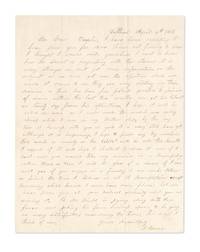
3734227<p>Waltham Massachusetts. April 4 1858. Quarto. One full page. Near fine.</p> <p>Writing from Waltham Massachusetts Isaac Moore’s letter reveals the frustrations and ambitions of a mid-19th-century inventor navigating patent delays. Moore writes to Mr. Gove regarding slow progress in the patent process for a “steerer†developed by Mr. Serrill remarking with frustration that despite resolving initial objections the decision remains “dilatory†while “four patents have been granted to friends of mine within the last two months†one issued within “twenty days from his application.†</p> <p>Moore reflects on his access to a shop where he can make models cheaply updating Gove on business conditions which he describes as “quiet but improving.†He mentions nearing completion of a “Peg machine†and expresses interest in joining Gove’s manufacturing projects in either wood or ironwork offering his expertise in pattern making and iron finishing though he notes he has not done molding. He closes with a postscript mentioning Mr. Field’s steady iron fence business which Moore considers a positive sign “considering the times.â€</p> <p>A full transcript is included with the letter.</p> unknown
18620009086CAMBRIDGE BOSTON MASSACHUSETTS MA. Good. 1862. On offer is the 1862 diary of Isaac S. Pear owner of a Massachusetts factory and business manufacturing spring and cot beds and specialties in folding furniture. Pear speaks often of his day-to-day activities and his business which he writes have been negatively affected by the ongoing and bloody Civil War. The entries range from short concise entries of the weather to longer ones directly related to his business activities at the time. There are also reports of the Civil War battles won and lost and the general feeling of the people around him usually a mixture of exhaustion and anxiety. He obviously keeps tabs on the war especially as it reflects the effect on regiments and people from Massachusetts and his entries reflect this often. It seems about the middle of the year Pears factory begins making cots and beds for the Union Army. A call goes out in August for men to volunteer for the Union. For a few weeks Pear closes his store and factory at 2pm in aid of recruiting. He mentions that stores that did not close early were shut down by a mob. There also seems to be a dour attitude about the situation as Pear often reports the amount who have died in the war and the despondent look of the soldiers who return. The situation does not look good at all through Pears eyes. He also mentions people he knew by name who have died in the war. The Memoranda and Cash Accounts section of the diary contain a number of pages of detailed lists of items bought and paid for money received from clients at the store and money paid out to employees many of whom seem to be family. The book is approximately 380 pages of which there is writing in 300 or so. The cover is soft black leather with a wrap around portion meant to slide into a little loop however the loop no longer exists. It says Diary 1862 on the front. It shows a good bit of wear throughout. The pages show some discoloration and wear especially near the front and back but nothing that affects legibility. Pear wrote in pencil throughout the book and there is some smudging on certain pages that can affect legibility however these entries can be read with a bit of effort made easier under direct light. His handwriting is easy to read and legible throughout. The book is in overall good condition. Sample entries: Friday February 7 1862. Quite and warm all day. The snow thawed considerably. News of the taking of Fort Henry on the Tennessee River read to-day. People feel elated. This evening took tea at Mrs. Williams.; February 8. Comes in pleasant but colder than yesterday. A little trade at store though still poor. The war affects business very much and all are anxious for a short but honorable termination.; March 19. Pleasant all day. The taking of Newberne N.C. continued. The 21st 23rd 24th 25th Mass. Regts were in the action. Our cas. About ninety killed and 400 wounded.; June 19. Warm and pleasant all day. Busy at factory making spring cots for Army use.; August 5. Talk of a draft to fill the quota for 600000 more men for the army. Cities and towns offering bounties for volunteers for $100 to $200.; August 10. Visited Camp Cameron today.A large number of troops there under the new call of 300000 by President Lincoln.; September 3. All account go to show that the Rebels have an overwhelming Army and are determined to get into Washington and Maryland or die in the attempt.; December 13. John E. Noone was killed at the Battle of Fredericksburg this day aged 27 years. Background: In 1852 Mr. Pear went to California. He traded in San Francisco three years and worked in the mines one year and then returned to Cambridge in 1857. The same year he entered his present business as manufacturer of spring and cot beds and specialties in folding furniture his factory being situated on Brattle street Boston. In the presidential campaign of 1856 Mr. Pear cast his vote in California for the free soil candidate John C. Fremont. In 1860 he voted the Bell and Everett ticket in 18564 for Lincoln and has been a republican ever since. Mr. Pear was a member of the common council with William E. Russell and in the board of aldermen the next two years. In 1887-88 he was a member of the legislature serving upon the committee on elections and giving valuable aid upon the committee on water supply in the taking of land around Fresh pond. He worked for the Australian ballot which was then secured. During his legislative career he was an intimate of the late Chester F. Sanger who occupied the adjoining seat in the house. Mr. Pear has been on the Republican City committee for the past dozen years. He is to-day a director in the Cambridge Mutual Fire Insurance company and also in the Colombian Cooperative bank. He is also an esteemed member of the California Pioneers of New England.; Manuscript; 8vo - over 7¾" - 9¾" tall; KEYWORDS: HISTORY OF ISAAC S. PEAR CIVIL WAR ERA BRATTLE STREET CAMBRIDGE BOSTON MASSACHUSETTS BUSINESS OWNER COT AND BED MANUFACTURING UNION ARMY SUPPLIER REPORTS OF THE CIVIL WAR CIVILIAN LIFE ON THE UNION SIDE RECRUITMENT OF SOLDIERS EFFECT OF THE CIVIL WAR ON CIVILIANS WAR TIME COMMERCE ECONOMY SUPPLIERS TO THE UNION ARMY AMERICANA HANDWRITTEN MANUSCRIPT DOCUMENT LETTER AUTOGRAPH WRITER HAND WRITTEN DOCUMENTS SIGNED LETTERS MANUSCRIPTS HISTORICAL HOLOGRAPH WRITERS AUTOGRAPHS PERSONAL MEMOIR MEMORIAL ANTIQUITÉ CONTRAT VÉLIN DOCUMENT MANUSCRIT PAPIER ANTIKE BRIEF PERGAMENT DOKUMENT MANUSKRIPT PAPIER OGGETTO D'ANTIQUARIATO ATTO VELINA DOCUMENTO MANUSCRITTO CARTA ANTIGÜEDAD HECHO VITELA DOCUMENTO MANUSCRITO PAPEL . hardcover
186932728Virginia City California 1869. Paper. Very good. Approx. 8" x 3" check with printed green borders information and 2 stamps. Check is drawn on the account and signed by Isaac L. Requa. The information printed on the check is "Gould & Curry Silver Mining Company W. C. Ralston Treasurer. Agency of the Bank of California Virginia City. The written date is Aug 3 1869. <br /> <br /> Requa was a mining engineer early Oakland pioneer and later President of Oakland Bank and Savings. unknown
18780001064AUGUSTA MAINE ME. Good. 1878. On offer is a super original archive of five 5 handwritten manuscript diaries authored by Reverend Isaac J. Mead of Augusta Maine. He was the son of Albert Manley Read who died in 1861 fighting in the Civil War. Research finds that Mead is listed in the Universalist Register of 1895 as editor of THE GOSPEL BANNER. His handwritten diaries are for 1878 he is 37 years old 1882 1887 1888 and 1889 when he is 48. Mead is an enthusiastic prolific writer rarely failing to write a diary entry rarely failing to detail his visits his works his travels and to set these writings apart Isaac Mead proves to be a rather political churchman who rarely fails to press the Universalist Church's approach. His daily entries include the weather his work on the Banner Universalist meetings conferences Sunday services his preaching funeral duties etc. He makes many 'insider' remarks on Church doings and of other Church communities' doings. Historians and collectors of Maine and the neighboring states will have a treasure trove of information on religious matters of the day plus Mead also details: politics of the day; the Blaine and Harrison presidential contest local news like the Dexter Bank case Stain-Cromwell were defendants stabbing on the mail train soldier jumps fight leads to death collision of ocean steamers muster week-encamped on Leonard Farm Glencarin finished race faster etc. Took trip to New York City-Coleman House Coney Island "great playground of this city" Fleetwood Park Eden Museum wax Madison Square - 2 plays. Mr. Fairburn got him his Remington rifle -"a very pretty gun". Mead mentions many hundreds of names of his colleagues visitors family et al. Many entries about gun club target practice etc. Reverend Mead does not provide holographic ownership markings but this archive of diaries came from a larger archive of his estate ephemera. Some nibbling to the books but overall G.; 24mo - over 5" - 5¾" tall; MAINE ME RELIGION UNIVERSALISM CHRISTIANITY EVANGELISM EVANGELICAL CIRCUIT RIDER HANDWRITTEN MANUSCRIPT DOCUMENT LETTER AUTOGRAPH DIARY JOURNAL LOG KEEPSAKE WRITER HAND WRITTEN DOCUMENTS SIGNED LETTERS MANUSCRIPTS HISTORICAL HOLOGRAPH WRITERS DIARIES JOURNALS LOGS AUTOGRAPHS PERSONAL MEMOIR MEMORIAL PERSONAL HISTORY AMERICANA; Signed by Autograph . unknown
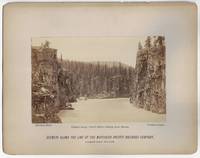
188323168Portland Oregon: Davidson Photo 1883. Very good. 5.5" x 8" albumen photograph on a 9.25" x 12" mount. Titled "Cabinet Gorge Clark's River looking down stream" with further caption for the series: "Scenery Along the Line of the Northern Pacific Railroad Company Clarke's Fork Division." Credited "Davidson Photo. Portland Oregon." Very good condition with small chips at corners of mount contrast a bit light. This series of views was apparently taken to celebrate and promote the completion of the Northern Pacific Railroad. Construction had begun in Minnesota in 1870 and the final section was completed on September 8 1883. An article published in the Helena Montana Semi-Weekly Herald on July 19 1883 reports that "Mr. Ed Stone General Agent of the Land Department of the Northern Pacific Railroad is the possessor of a large album of views entitled "Oregon and the Pacific Northwest." Glimpses of pretty sports along the valley of the Columbia River from northern Montana to the Pacific Ocean. Scenery along the line of the Northern Pacific railroad showing the new Trans-continental route. The photographs were made by I.G. Davidson of Portland Oregon.There can be no grander promise of pictures of fine scenery given to any travelers than will be viewed by the tourists over the Northern Pacific railroad when it is completed through to the Pacific ocean this fall." Isaac Grundy Davidson 1845-1922 moved to Oregon from Illinois in 1850 and opened a photography studio in Portland in 1878. Mautz describes him as "one of the Northwest's premier photographers. Davidson Photo unknown
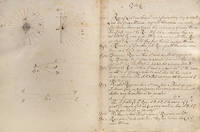
115619England late 18th century. . 100-leaf manuscript rectos and most versos filled wax seal remnants to front pastedown leaves wavy at the edges some spotting and marks to contents; contemporary calf-backed blue paper boards gilt floral tools to spine compartments binding marked and worn with spine cords partially exposed and loss of the blue paper morocco label lacking naphthalene smell good condition housed in a black cloth folding case.<br /> An unusual late 18th century manuscript on classical physics that cites Isaac Newton Blaise Pascal William Harvey Henry Power and others.<br /><br />The text approximately 200 pages presents an ordered and detailed account of a number of related topics: optics; hydrostatics and pneumatics; mechanics including simple machines such as the lever and screw the behaviour of descending bodies and pendulums; phosphorus and its chemical transformations; and fortifications and architecture. The notes are dense but generally neat and legible with carefully prepared diagrams so this seems to be a fair copy rather than a working notebook. <br /><br />Newton is cited in the section on light and colour: 'What Sir I.N. has said by way of in the last edit of his Opticks will appear to be an established truth from most if not all the following examples some of which he mentions himself". And Harvey in a short section on chemical transformations: "Harvey had says he the opportunity as well as the curiosity upon several occasions to examine the weight of when some of them taken up in places very distant from one another.'.<br /><br />The origin of much of the material is unclear though the long section on hydrostaticks was taken from Hydrostatical and Pneumatical Lectures by Roger Cotes 1682-1716 originally published privately in 1738 and with a second edition at Cambridge in 1747. <br /><br />Cotes was 'probably the most talented British mathematician of the generation after Newton'. He was nominated as the first Plumian professor of astronomy at Cambridge in 1706 and 'his appointment was favoured by his influential mentor Richard Bentley master of Trinity; by Newton's successor as Lucasian professor William Whiston who claimed to be in mathematics "a child to Mr Cotes" Whiston 133; and by Newton himself. In 1709 Cotes became heavily involved in the work for which he is best remembered namely the revisions for the second edition of Newton's Philosophia naturalis principia mathematica the first being out of print' Oxford Dictionary of National Biography. Cotes died young and Newton was reported to have said that 'if he had lived we might have known something'. A number of Cotes's lectures and mathematical analyses were published posthumously by his executor Robert Smith the Hydrostatical and Pneumatical Lectures being one of them. It is tempting to question whether other portions of the present manuscript are also based on Cotes's work and further academic scrutiny might be fruitful.<br /> England, late 18th century. hardcover
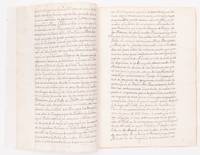
17521862Spain 1752. 18th-century manuscript. Text in Spanish. 24 handwritten pages in ink in three different hands. Later binding of blank paper using old material. Tiny wormholes at the lower edge of the pages on the first 7 leaves not affecting the legibility. Occasional foxing ink ghosting. Water stains on the last 2 leaves. Overall in fine condition. 18th-century manuscript. Text in Spanish. 24 handwritten pages in ink in three different hands. ff 12. <p><br /> 18th-Century Spanish manuscript about the Spanish involvement in the French Geodesic Mission of 1735 and the Ellipsoid Model of the Earth.<br /> <p><p><br /> The manuscript is an interesting collection of contemporary reports proving the importance of the Spanish role performed by Jorge Juan y Santacilia and Antonio de Ulloa in the so-called French Geodesic Mission 1735 with a particular focus on the polemic over the shape of the Earth. The quotations are conjugated with connecting texts by an anonymous author.<br /> <p><p><br /> One of the important scientific disputes of the late 17th early 18th century was the debate on the shape of the Earth. The assumption of the spherical shape was dominating until the late 17th century when Sir Isaac Newton determined that the Earth was oblate a spheroid stretched over the Equator however at the same time Giovanni Domenico Cassini and his son Jacques supposed that the Earth was prolate stretched along the poles. Eventually in 1735 two expeditions were sent by Louis XV and the French Academy to the Arctic Circle Lapland and to the Equator Ecuador and Peru to gain certainty by measuring the meridian arcs at polar and equatorial latitudes. The equatorial mission was accompanied by two Spanish geographers Jorge Juan y Santacilia and Antonio de Ulloa thus it became the first major international scientific expedition. The findings of the missions confirmed Newton’s hypothesis that the Earth was oblate a rotational ellipsoid.<br /> <p><p><br /> The first part of the manuscript is a lengthy citation of an early Spanish report on the equatorial mission published in the Mercurio histórico y político February 1745; pp. 99–107 which is followed by further references and quotations related to the geographer’s their work and the figure of the Earth such as Benito Jerónimo Feijóo y Montenegro’s Theatro critico universal 1751 Bernardo’s de Ulloa’s Antonio’s father Restablecimento de las fabricas y comercio español 1749 and articles from the Journal de Trévoux or the Gaceta de Zaragoza. The second part is Diego de Torres Villarroel’s 1693–1770 study Prevenciones in: Libros en que estan reatados. Vol. IV.; 1752 in which de Torres the almanac writer and professor of mathematics of a dubious repute opposes the findings of the missions and Newton’s hypothesis of the oblate Earth.<br /> <p><p><br /> Antonio de Ulloa 1716–1795 was a Spanish scientist and explorer the first Spanish governor of Louisiana who is also credited as the discoverer of the element platinum. De Ulloa was a Fellow of the Royal Society and a foreign member of the Royal Swedish Academy of Sciences. His associate Spanish scientist in the Geodesic Mission to Peru was Jorge Juan y Santacilia 1713–1773 who during the mission also measured the heights of the mountains of the Andes. Jorge Juan was the founder of the Real Observatorio de Madrid Royal Observatory of Madrid and he became a Fellow of the Royal Society too. Their co-written memoirs were published in Spanish from 1748 on and their books were very soon translated into French English and German.<br /> <p><p><br /> Literature: Lafuente A.; Mazuecos A.: Gentlemen of the Fixed Point: Science Politics and Adventure in the Geodesic Expedition to the Viceroyalty of Peru in the XVIII Century. pp. 171–203. Retrieved on July 8 2020 from Mayboudi L. S.: chapter 5.1 In: Geometry Creation and Import With COMSOL Multiphysics. Dulles VA USA: Mercury Learning & Information 2019.; Richardson D.; et al: The International Encyclopedia of Geography People the Earth Environment and Technology: Chichester UK; Hoboken NJ: John Wiley & Sons 2017.<br /> <p>. unknown
1906764R34London: J. B. Nichols and Sons 1906 . Cloth. Very Good. 11" by 8.5". None. A lovely collection of the letters of Philip Gawdy a prolific letter writer of the Tudor times. Philip Gawdy 1562-1617 was an English letter writer and landowner from a family of politicians; his letters are held at the British Library. During his lifetime he joined the crew of the 'Revenge' under Sir Richard Grenville's command and was captured and imprisoned in Portugal at the Battle of Flores.Contains a family tree of the Gawdy family.Printed by the Roxburghe Club. In a quarter morocco binding. Externally generally smart with slight rubbing to the head and tail of the spine and extremities. Internally firmly bound. Pages are uncut and bright and clean. Very Good J. B. Nichols and Sons hardcover
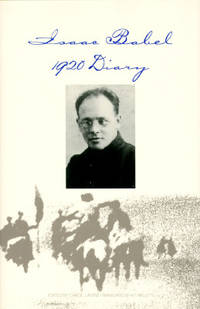
1995Q-0300059663Yale University Press 1995-04-26. Hardcover. New. In shrink wrap. Looks like an interesting title! Yale University Press hardcover
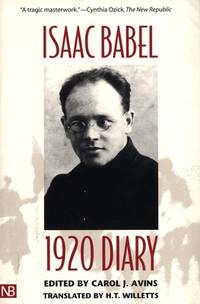
2002Q-0300093136Yale University Press 2002-03-01. Paperback. New. In shrink wrap. Looks like an interesting title! Yale University Press paperback