ISAIAH THOMASABAA
1 447 résultats
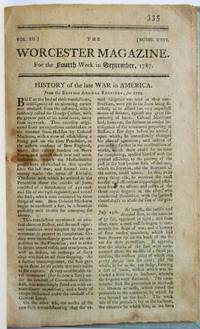
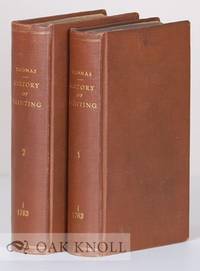
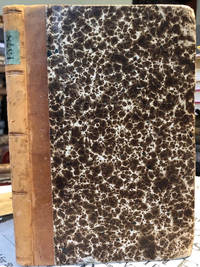
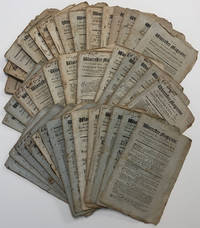
178624829<p>In 1785 the state of Massachusetts instituted a stamp tax on newspapers but soon replaced it with a tax on newspaper advertisements. To protest the tax on advertisements Thomas suspended his weekly newspaper <i>Thomas's Massachusetts Spy; or the Worcester Gazette</i> at the end of March 1786. In April 1786 Thomas began publishing the <i>Worcester Magazine</i> which was not subject to the tax as a substitute for the <i>Massachusetts Spy</i>. Although a magazine in name the <i>Worcester Magazine</i>continued the same kind of news as Thomas had printed in his newspaper. Its most valuable features were political pieces and "intelligence" including essays for and against the new proposed U.S. Constitution. It also included a series entitled "The Worcester Speculator" 16 essays from September 1787 to March 1788 along with agricultural articles medical notes recipes anecdotes and other items.</p><p>Thomas continued publishing the <i>Worcester Magazine</i> for twenty-four months approximately 104 issues until Massachusetts repealed the advertising tax effective in March 1788 then Thomas resumed publishing the <i>Massachusetts Spy</i> on April 3 1788. The <i>Worcester Magazine</i>includes extensive coverage of the Massachusetts Ratifying Convention to consider the proposed federal Constitution which met from January 9 to February 6 1788.</p><p>Ownership signatures of "<i>Col<u>n</u> E. Crafts</i>" on some issues indicate they belonged to Ebenezer Crafts 1740-1810. Crafts was born in Connecticut and graduated from Yale College in 1759. He purchased a farm and built a tavern in Sturbridge Massachusetts. During the Revolutionary War he commanded a company of cavalry as captain. From 1785 to 1791 Crafts led a regiment of cavalry from Worcester County Massachusetts and he helped suppress Shays' Rebellion in 1786-1787. He was one of the founders of Leicester Academy in Leicester Massachusetts and later moved to northern Vermont where he helped found Craftsbury which was named after him.</p> <b>ISAIAH THOMAS.</b>Magazine. <i>Worcester Magazine</i> 56 issues from September 1786 to March 1788. Worcester MA: Isaiah Thomas. Each issue approximately 16 pp. 5½ x 9½ in.<br /><p><b><i>Worcester Magazine</i></b> 1786-1788 was a weekly magazine published in Worcester Massachusetts by Isaiah Thomas 1749-1831. To protest a state tax on newspaper advertisements Thomas suspended his weekly newspaper <i>Thomas's Massachusetts Spy; or the Worcester Gazette</i> at the end of March 1786 and began publishing the <i>Worcester Magazine</i> which was not subject to the tax as a substitute. Thomas published the <i>Worcester Magazine</i> until Massachusetts repealed the advertising tax in March 1788.</p><p>This collection includes 56 issues:</p><p>1786: Numbers 24-26 30-37 39 12 issues</p><p>1787: Numbers 43-44 3:6-15 17-25 4:1-13 34 issues</p><p>1788: Numbers 4:16-17 19-26 10 issues</p><p>"The Worcester Speculator": Numbers 2 4-9 12-16</p><p><b>Condition</b></p><p>Specific damage to the following issues—Second Week of September 1786: 3 x 3 in. tear to lower right/left corner of pp. 289-90; Fourth Week of October 1786: 2 x 1 in. tears to pp. 355-360 2 x 4 in. irregular tear to top center of pp. 361-62; Fourth Week of December 1786: lacking back cover; Fourth Week of January 1787: 1-2 in. loss across top of back cover page; First Week of February 1787: lacking front and back cover; First Week of July 1787: lacking front cover; Fourth Week of August 1787: lacking pp. 291-94; First Week of October 1787: lacking front cover and pp. 13-16; Fourth Week of December 1787: lacking back cover; Fourth Week of January 1788: lacking front cover; First Week of February 1788: lacking front cover loss of 1 x 7½ in. portion of right/left margin of pp. 235-36 barely affecting text; Second Week of February 1788: lacking front cover; First Week of March 1788: lacking pp. 301-2; Second Week of March 1788: lacking front cover; Fourth Week of March 1788: lacking pp. 341-42 and back cover. Generally Good or better condition.</p><p><b>Highlights and Excerpts:</b></p><p>Second Week of September 1786</p><p>Proceedings of Congress August 8 1786</p><p>"<i>Resolved That the board of treasury endeavor to negociate with the legal proprietor of West Point on Hudson's river the purchase of the same for the United States on an equitable appraisement together with so much land contiguous thereto as shall be deemed by the secretary at war necessary to be included within the limits of the garrison.</i>" p285/c1</p><p>"<i>Resolved That the standard of the United States of America for gold and silver shall be eleven parts fine and one part alloy. That the money unit of the United States being by the resolve of Congress of the 6th July 1785 a dollar shall contain of fine silver three hundred and seventy-five grains and sixty-four hundredths of a grain.</i>" p285/c1</p><p>First Week of November 1786</p><p>Shays' Rebellion Content</p><p>Reports of Courts in Taunton and Middlesex. inside back cover</p><p>Second Week of November 1786</p><p>Shays' Rebellion Content</p><p>"<i>An ACT to prevent Routs Riots and tumultuous Assemblies and the evil consequences thereof</i>." p388/c1-p389/c2</p><p>Third Week of November 1786</p><p>Shays' Rebellion Content</p><p>Adjournment of courts in Springfield and suspension of writ of habeas corpus. p402-inside back cover</p><p>Fourth Week of November 1786</p><p>"<i>An ORDINANCE for the establishing of the MINT of the United States of America; and for regulating the VALUE and ALLOY of COIN</i>" passed by Confederation Congress October 16 1786. pp. 413-414</p><p>Address of Governor James Bowdoin to Militia p416</p><p>First Week of December 1786</p><p>Shays' Rebellion Content</p><p>"<i>An ACT granting INDEMNITY to sundry offenders on certain conditions…</i>" p434</p><p>"<i>An ACT for suspending the privilege of the Writ of HABEAS CORPUS.</i>" p435</p><p>"<i>An ACT for suspending the laws for the collection of private Debts under certain limitations.</i>" p436-37</p><p>Second Week of December 1786</p><p>Shays' Rebellion Content</p><p>Petition of Shays' rebels to Governor James Bowdoin December 1786 p452/c1-p453/c1</p><p>Fourth Week of January 1787</p><p>Shays' Rebellion Content</p><p>Petition of Shays' rebels to Governor James Bowdoin January 17 1787 p520/c1-2</p><p>Address of Governor James Bowdoin January 12 1787 p522/c1-p523/c2</p><p>Arrival of General Lincoln and militia in Worcester p526/c1</p><p>First Week of February 1787</p><p>Shays' Rebellion Content</p><p>Daniel Shays to Major General Benjamin Lincoln January 25 1787</p><p>"<i>Unwilling to be any way accessary to the shedding of blood and greatly desirous of restoring peace and harmony to this convulsed Commonwealth we propose that all the troops on the part of the government be disbanded immediately and that all and every person who has been acting or any way aiding or assisting in any of the late risings of the people may be indemnified in their person and property until the sitting of the next General Court. On which conditions the people now in arms in defence of their lives and liberties will quietly return to their respective habitations patiently waiting and hoping for constitutional relief from the insupportable burdens they now labour under.</i>" p534/c1-p535/c2</p><p>Second Week of May 1787</p><p>Circular Letter from Confederation Congress to Governors of the States regarding state laws in violation of treaty with Great Britain</p><p>"<i>Resolved That the legislatures of the several states cannot of right pass any act or acts for interpreting explaining or construing a national treaty or any part or clause of it; nor for restraining limiting or in any manner impeding retarding or counteracting the operation and execution of the same.</i>" p69/c1-2</p><p>Massachusetts "<i>Report of the Committee for pardoning Persons concerned in the REBELLION</i>." p70/c1-p72/c2</p><p>Fourth Week of May 1787</p><p>Shays' Rebellion Content</p><p>"<i>letters.contain accounts of the Rebels to the amount of 7 or 800 being collected in the state of Vermont in the vicinity of this Commonwealth and that it was given out by them that they intended in the course of the present week to make incursions into several parts of this state and to kill plunder burn and destroy whatever comes in their way. That Shays Day and Parsons &c. had been seen at Crown Point on their way to join them.</i>" p100/c1</p><p>Last Week of May 1787</p><p>Shays' Rebellion Content</p><p>"<i>Judge Cushing's CHARGE to the Middlesex Grand Jury</i>" May 9 1787 p106/c1-p111/c2</p><p>"<i>PHILADELPHIA May 18. Monday last being the day appointed for the meeting of the Federal Convention in this city a number of Gentlemen Delegates from the states of Pennsylvania Delaware Virginia and North Carolina assembled at the State House.</i>" p112/c1</p><p>First Week of June 1787</p><p>Shays' Rebellion Content</p><p>"<i>Sentence of Death Against John Wheeler Henry McCullock Jason Parmiter Daniel Luddington Alpheus Colten and James White for TREASON passed at the Supreme Judicial Court at Northampton the 21st of April 1787. Pronounced by the Hon. William Cushing Esq; Chief Justice.</i>" p117/c1-p119/c2</p><p>General Election Results; John Hancock elected Governor p119/c1-p123/c2</p><p>"<i>Whether the shattered fabric of the original constitution is to be repaired and enlarged or a new and stately building erected upon the old foundation—whether on the one hand the vast continent is to be distributed into distinct republicks or on the other the majesty of a world centered in an individual are questions that respect only the forms and not the objects of government; for there are immutable laws in civil societies independent of times places and circumstances.</i>" p125/c1</p><p>"<i>A majority of the States being fully represented in Convention at Philadelphia on Friday the 25th of May they proceeded to the choice of a President when his Excellency General Washington was unanimously elected to that important office.</i>" p127/c2</p><p>Third Week of June 1787</p><p>Shays' Rebellion Content</p><p>"<i>Act for Raising TROOPS and granting INDEMNITY</i>" June 13 1787 p148/c1-p149/c2</p><p>Governor John Hancock to General Court June 5 1787 regarding troops in western counties p152/c1-2</p><p>Fourth Week of June 1787</p><p>Shays' Rebellion Content</p><p>Proclamation by John Hancock June 15 1787</p><p>"<i>the Legislature of this Commonwealth with an intention not only to adopt every vigorous and efficacious method necessary to suppress the present traitorous opposition to the laws and to restore peace and harmony to the Commonwealth but also to repeat the offers of grace and mercy to the penitent citizen and to extend the same as far as may be consistent with the true interest of the Commonwealth and the security of her citizens in future; have.made provision for the raising and supporting a force to defend the Commonwealth against all wicked and rebellious men; and have also with a very extensive clemency by the same resolve provided that 'each and every citizen of this Commonwealth who have committed any treasons or misprisions of treasons against the same.be and they thereby are indemnified for the same.'</i>" p161/c1-p162/c1</p><p>Reprieve of several Shays' rebels sentenced to death</p><p>"<i>It is hoped the lenient measures adopted by government will have the happy tendency of restoring the tranquility of this Commonwealth; but should they fail it is said those of a different complexion will be pursued.</i>" p167/c2</p><p>First Week of July 1787</p><p>"<i>Advertisement of the expected return of the COMET of 1532 and 1661 in the year 1789. By the Rev. Nevil Makelyne D.D. F.R.S. and Astronomer Royal.</i>" p172/c1-p174/c2</p><p>Case of Mistaken Identity: "<i>Whereas.the clemency of government is extended to all persons who have committed any treasons.during the present rebellion excepting certain persons therein described and named: And whereas one of the persons so excepted is therein named David Dunham which Christian name was inserted by a mistake; and the person thereby intended is Gideon Dunham of Sheffield in the county of Berkshire yeoman. And the said Gideon Dunham being a malignant and incorrigible offender.the said Gideon Dunham shall not by virtue thereof receive any benefit or advantage whatsoever but is excepted therefrom and shall be so adjudged. the said David Dunham shall not be considered as within the exceptions of the said resolution.</i>" p174/c1-2</p><p>"<i>Whatever measure may be recommended by the Federal Convention whether an addition to the old constitution or the adoption of a new one it will in effect be a revolution in government accomplished by reasoning and deliberation; an event that has never occurred since the formation of society and which will be strongly characteristick of the philosophick and tolerant spirit of the age.</i>" p177/c2</p><p>List of delegates to the "<i>Federal Convention</i>"</p><p>"<i>By this very respectable delegation ELEVEN States are represented. The delegates from the State of New Hampshire though appointed have not yet made their appearance. Rhode Island is the only State in the Union that has refused to take a seat at this honourable board of counsellors; but a very short period will unfold whether her refusal will redound to her honour or disgrace.</i>" p178/c1-2</p><p>Second Week of July 1787</p><p>"<i>The present Confederation may be compared to a hut or tent accommodated to the emergencies of war—but it is now time to erect a castle of durable materials with a tight roof and substantial bolts and bars to secure our persons and property from violence and external injuries of all kinds. May this building rise like a pyramid upon the broad basis of the people! and may they have wisdom to see that if they delegate a little more power to their rulers the more liberty they will possess themselves provided they take care to secure their sovereignty and importance by frequent elections and rotation of offices.</i>" p191/c1</p><p>Petition of Shays' rebel Henry Gale to Governor John Hancock and Council June 11 1787</p><p>"<i>Your petitioner.pleads for that mercy he has so justly forfeited—and prays your Excellency and Honours in your great wisdom and justly acknowledged goodness would be pleased to pardon your guilty distressed petitioner who has aged parents bowed with grief.</i>" p195/c1-2</p><p>Gale was marched to the scaffold had a noose placed around his neck and then the sheriff read a pardon by Governor Hancock. He was released in September 1787.</p><p>Last Week of July 1787</p><p>"<i>An Ordinance for the Government of the Territory of the United States North-West of the River Ohio</i>" popularly known as the Northwest Ordinance passed by the Confederation Congress on July 13 1787. p225/c1-p228/c2</p><p>The ordinance created the Northwest Territory prohibited slavery in the territory encouraged education and created a mechanism for the admission of new states. The First Congress reaffirmed and renewed it through the Northwest Ordinance of 1789.</p><p>Report of Commencement at Harvard College at which the college awarded an Honorary Doctor of Laws degree to Thomas Jefferson p230/c2</p><p>More than a year later in September 1788 President Joseph Willard of Harvard sent the diploma to Jefferson in France via a French naval lieutenant; Jefferson received it in February 1789.</p><p>Third Week of August 1787</p><p>"<i>The whole of the United States are now waiting with anxious expectation for the result of the Federal Convention which it is expected will in a few days be made publick.</i>" p279/c2</p><p>Fourth Week of August 1787</p><p>"<i>We are well informed that many letters have been written to the members of the federal convention from different quarters respecting the reports idly circulating that it is intended to establish a monarchical government to send for the Bishop of Osnaburgh &c. &c.—to which it has been uniformly answered 'tho' we cannot affirmatively tell you what we are doing; we can negatively tell you what we are not doing—we never once thought of a king.'</i>" p290/c1</p><p>Second Week of September 1787</p><p>"<i>The Worcester Speculator. No. I.</i>" p311/c1-p313/c2</p><p>"<i>The end proposed by the creation of man was undoubtedly the communication of happiness. How to bring this design into effect demands the earliest and ripest thoughts of the human mind. Infinitely various are the means fitted for the accomplishment of this design; and innumerable are the ways which may with success be pursued for this purpose.</i>" p311/c1-2</p><p>"<i>Every enterprize publick as well as private in the United States says a correspondent seems suspended until it is known what kind of government we are to receive from our National Convention. In short the pulse of industry ingenuity and enterprize in every art and occupation of man now stands still in the United States and every look—and wish—and hope—is only to and every prayer to heaven that has for its object the safety of our country is only for the present august National Convention.</i>" p318/c2</p><p>First Week of October 1787</p><p>Beginning of letter from George Washington to Congress accompanying proposed Federal Constitution September 17 1787:</p><p>"<i>We now have the honour to submit to the consideration of the United States in Congress assembled that Constitution which has appeared to us the most adviseable</i>.</p><p>"<i>The friends of our country have long seen and desired that the power of making war peace and treaties that of levying money and regulating commerce and the correspondent executive and judicial authorities should be fully and effectually vested in the general government of the Union: But the impropriety of delegating such extensive trust to one body of men is evident—Hence results the necessity of a different organization</i>.</p><p>"<i>It is obviously impractical in the federal government of these states to secure all rights of independent sovereignty to each and yet provide for the interest and safety of all: Individuals entering into society must give up a share of liberty to preserve the rest. The magnitude of the sacrifice must depend as well on situation and circumstances as on the object to be obtained.</i>" p12/c1-2 Text incomplete: lacking front cover and pp. 13-16</p><p>Second Week of October 1787</p><p>"<i>We are informed that the Constitution proposed by the late Federal Convention promises to be highly popular with the citizens in New York; and that the distinguished person from whom an opposition was predicted has expressed himself in terms favorably to the plan. Perhaps there never was a subject indeed upon which men were more unanimous for even those who cavil at the system itself are impressed with the necessity of adopting it.</i>" p25/c2</p><p>"<i>George Washington Esq; has already been destined by a thousand voices to fill the place of the first President of the United States under the new frame of government. While the deliverers of a nation in other countries have hewn out a way to power with the sword or seized upon it by stratagems and fraud our illustrious hero peaceably retired to his farm after the war from whence it is expected he will be called by the suffrages of three millions of people to govern that country by his wisdom agreeably to fixed laws which he had previously made free by his arms. Can Europe boast of such a man—Or can the history of the world shew an instance of such a voluntary compact between the Deliverer and the Delivered of any country as will probably soon take place in the United States</i>" p26/c2</p><p>Third Week of October 1787</p><p>"<i>PROCEEDINGS of the UNITED STATES in CONGRESS assembled Friday September 28 1787.</i></p><p>"<i>Congress having received the report of the Convention lately assembled in Philadelphia.</i></p><p>"<i>Resolved unanimously That the said report with the resolutions and letter accompanying the same be transmitted to the several legislatures in order to be submitted to a convention of delegates chosen in each state by the people thereof in conformity to the resolves of the Convention made and provided in that case.</i>" p34/c1</p><p>First Week of November 1787</p><p>"<i>Summary of late Intelligence. / New York October 26.</i> <b>Excerpt from <i>Federalist</i> No. 1</b></p><p>"<i>Among the most formidable of the obstacles which the new Constitution will have to encounter may readily be distinguished the obvious interest of a certain class of men in every State to resist all changes which may hazard a diminution of the power emolument and consequence of the offices they hold under the State establishments; and the perverted ambition of another class of men who will either hope to aggrandize themselves by the confusions of their country or will flatter themselves with fairer prospects of elevation from the subdivision of the empire into several partial confederacies than from its union under one government</i>." p75/c1</p><p>"<i>The Federal Constitution is now the subject of conversation from Newhampshire to Georgia. In some places there are persons who appear to be raving mad both for and against the plan. It is but reasonable to observe that if ever there was occasion for a people to deliberate with calmness on as important a measure as ever did or ever will come under their consideration now is the time. The federal system ought to have a fair examination—it is a plan of government not for one particular state but for all the states—we therefore should not approve or disapprove of the measure until we have given it a most thorough and impartial examination.</i>" p76/c1-2</p><p>"<i>We wish not to prejudice our readers either one way or the other by our publications—we wish them to judge for themselves—it will therefore be needless for us to republish the flighty rhapsodies for and the ill natured anathemas against the federal constitution which have appeared in some newspapers. We mean to give them facts and to extract from other periodical publications such observations only as are made by gentlemen who are known to be fully acquainted with the subject—we think it our duty to lay before our readers Mr. Gerry's letter addressed to the Hon. President of the Senate and the Hon. Speaker of the House of Representatives of this Commonwealth together with Mr. Wilson's address to the citizens of Philadelphia. These gentlemen were both members of the Federal Convention Mr. Gerry from this State and Mr. Wilson from Pennsylvania. Mr. Gerry appears to be opposed to the plan and Mr. Wilson is in favor of it—they both candidly give their opinions and the reasons on which their opinions are grounded.</i>" p76/c2</p><p>Second Week of November 1787</p><p>Elbridge Gerry to Samuel Adams President of the Senate and James Warren Speaker of the House of Representatives of Massachusetts October 18 1787.</p><p>"<i>I have the honour to inclose pursuant to my commission the constitution proposed by the Federal Convention.</i></p><p>"<i>To this system I gave my dissent and shall submit my objections to the honourable Legislature.</i></p><p>"<i>It was painful for me on a subject of such national importance to differ from the respectable members who signed the constitution: but conceiving as I did that the liberties of America were not secured by the system it was my duty to oppose it.</i></p><p>"<i>My principal objections to the plan are that there is no adequate provision for a representation of the people—that they have no security for the right of election—that some of the powers of the Legislature are ambiguous and others indefinite and dangerous—that the Executive is blended with and will have an undue influence over the Legislature—that the judicial department will be oppressive—that treaties of the highest importance may be formed by the President with the advice of two thirds of a quorum of the Senate—and that the system is without the security of a bill of rights. These are objections which are not local but apply equally to all the States.</i>" p79/c1-2</p><p>Speech of James Wilson at the State House in Philadelphia</p><p>"<i>It will be proper however before I enter into the refutation of the charges that are alledged to mark the leading discrimination between the state constitutions and the constitution of the United States. When the people established the powers of legislation under their separate governments they invested their representatives with every right and authority which they did not in explicit terms reserve: and therefore upon every question respecting the jurisdiction of the house of assembly if the frame of government is silent the jurisdiction is efficient and complete. But in delegating federal powers another criterion was necessarily introduced and the congressional authority is to be collected not from tacit implication but from the positive grant expressed in the instrument of union. Hence it is evident that in the former case everything which is not reserved is given but in the latter the reverse of the proposition prevails and every thing which is not given is reserved. This distinction being recognized will furnish an answer to those who think the omission of a bill of rights a defect in the proposed constitution.</i>" p81/c1</p><p>"<i>This constitution it has been further argued is of pernicious tendency because it tolerates a standing army in the time of peace.—This has always been a topic of popular declamation; and yet I do not know a nation in the world which has not found it necessary and useful to maintain the appearance of strength in a season of the most profound tranquility. But what would be our national situation were it otherwise Every principle of policy must be subverted and the government must declare war before they are prepared to carry it on. no man who regards the dignity and safety of his country can deny the necessity of a military force under the control and with the restrictions which the new constitution provides.</i>" p82/c1-2</p><p>"<i>The power of direct taxation has likewise been treated as an improper delegation to the federal government; but when we consider it as the duty of that body to provide for the national safety to support the dignity of the union and to discharge the debts contracted upon the collective faith of the states for their common benefit it must be acknowledged that those upon whom such important obligations are imposed ought in justice and in policy to possess every means requisite for a faithful performance of their trust.</i>" p83/c2</p><p>"<i>After all my fellow citizens it is neither extraordinary or unexpected that the constitution offered to your consideration should meet with opposition. It is the nature of man to pursue his own interest in preference to the public good; and I do not mean to make any personal reflection when I add that it is the interest of a very numerous powerful and respectable body to counteract and destroy the excellent work produced by the late Convention. I will confess indeed that I am not a blind admirer of this plan of government and that there are some parts of it which if my wish had prevailed would certainly have been altered. But when I reflect how widely men differ in their opinions and that every man and the observation applies likewise to every State has an equal pretention to assert his own I am satisfied that <b>any thing nearer to perfection could not have been accomplished</b>. Regarding it then in every point of view with a candid and disinterested mind I am bold to assert that <b>it is the best form of government which has ever been offered to the world.</b></i>" p84/c1-2</p><p>Roger Sherman and Oliver Ellsworth to Governor Samuel Huntington of Connecticut regarding proposed Constitution September 26 1787. p85/c1-2</p><p>Fourth Week of November 1787</p><p>"<i>The town of Northampton and the District of Easthampton assembled together on Thursday last in legal town meeting and made choice of the Hon. Caleb Strong Esq; and Mr. Benjamin Sheldon to represent them in Convention for the purpose of ratifying the reported Federal Constitution.</i></p><p>"<i>In conformity to a resolution of the General Court passed the 25th of October last we have delegated you to meet in State Convention on the second Wednesday of January next for the purpose of adopting or rejecting the reported Constitution for the United States of America.</i>" p113/c1</p><p>First Week of December 1787</p><p>"<i>The following ADDRESS of His Excellency BENJAMIN FRANKLIN Esquire to the President of the late CONTINENTAL CONVENTION was delivered by him immediately before his signing the proposed Constitution for the United States.</i>" inside front cover</p><p>"<i>I confess that I do not entirely approve of this Constitution at present; but sir I am not sure I shall never approve of it: For having lived long I have experienced many instances of being obliged by better information or fuller consideration to change opinions even on important subjects which I once thought right but found to be otherwise. It is therefore that the older I grow the more apt I am to doubt my own judgment and to pay more respect to the judgment of others.</i>" inside front cover/c1</p><p>"<i>I doubt too whether any other convention we can obtain may be able to make a better Constitution. For when you assemble a number of men to have the advantage of their joint wisdom you inevitably assemble with those men all their prejudices their passions their errors of opinion their local interests and their selfish views. From such an assembly can a perfect production be expected <b>It therefore astonishes me Sir to find this system approaching so near to perfection as it does</b>.</i>" inside front cover/c1-2</p><p>"<i>Thus I consent Sir to this Constitution because I expect no better and because I am not sure that it is not the best.</i>" inside front cover/c2</p><p>"<i>On the whole Sir I cannot help expressing a wish that every Member of the Convention who may still have objections to it would with me on this occasion doubt a little of his own infallibility and to make manifest our unanimity put his name to this instrument.</i>" inside front cover/c2</p><p>Second Week of December 1787</p><p>"AGAINST the New Federal Constitution.</p><p>"<i>The following are the so much talked of Objections against the New Federal Constitution of the Hon. GEORGE MASON Esq; one of the Delegates to the late Federal Convention from the State of Virginia.</i>" p130/c1-p132/c2</p><p>"<i>FOR the New Federal Constitution.</i></p><p>"<i>REMARKS on the OBJECTIONS made by the Hon. ELBRIDGE GERRY to the NEW CONSTITUTIION.</i>" p132/c1-p134/c2</p><p>Third Week of December 1787</p><p>"<i>Another SPEECH of Mr. WILSON's so much talked of</i>" to Pennsylvania State Convention November 24 1787. p141/c1-p147/c2</p><p>"<i>The deputies of the State Convention of Delaware met at Dover on Monday the 3d instant December and a house being formed they elected James Latimer Esq; President. On Thursday they ratified the New Federal Constitution by an unanimous vote and on Friday every member signed the ratification as follows:</i></p><p>"<i>'WE the Deputies of the people of the Delaware State in Convention met having taken into our serious consideration the Federal Constitution proposed in a General Convention held at the city of Philadelphia on the seventeenth day of September in the year of our Lord one thousand seven hundred and eightyseven have approved of assented to ratified and confirmed and by these presents DO in virtue of the power and authority to us given for that purpose for and in behalf of ourselves and our constituents fully freely and entirely approve of assent to ratify and confirm the said CONSTITUTION.'</i>" p152/c2</p><p>Fourth Week of December 1787</p><p>"<i>FOR the Federal Constitution.</i></p><p>"<i>Continuation of the REMARKS on the Hon. ELBRIDGE GERRY's Objections to the new Constitution.</i>" p155/c1-p157/c2</p><p>"<i>REMARKS on Col. MASON's OBJECTIONS to the proposed Federal Constitution.</i>" p157/c1-p160/c2</p><p>"AGAINST the Federal Constitution.</p><p>"<i>From the FREEMAN's JOURNAL of November 7. / To the CITIZENS of PHILADELPHIA</i>." by "<i>An Officer of the late Continental Army</i>." p160/c1-p162/c2</p><p>Third Week of January 1788</p><p>Proceedings of the Massachusetts State Convention in Boston January 9-12 p199/c1-p201/c2</p><p>Proceedings of the Connecticut State Convention in Hartford January 9 1788 p201/c1-2</p><p> Connecticut ratified the Constitution on January 9 by a vote of 128-40.</p><p>"<i>The Conventions of Four States have adopted the Federal Constitution viz. Pennsylvania Delaware Newjersey and Connecticut. It is said Georgia has also adopted it but of this we have no authentick account</i>.</p><p>"<i>At present we cannot venture a conjecture of what will be the fate of the Federal Constitution in the Convention of this state now assembled in our metropolis; we have not the least doubt but it will be thoroughly discussed; and we hope the arguments on both sides will have a fair and candid hearing.</i>" p204/c2</p><p> The Georgia Convention ratified the Constitution on January 2 by a vote of 26-0.</p><p>Fourth Week of January 1788</p><p>"<i>OBJECTIONS to the FEDERAL CONSTITUTION by his Excellency EDMUND RANDOLPH Governour of Virginia</i>" October 10 1787. p205/c1-p210/c2</p><p>Proceedings of the Massachusetts State Convention in Boston January 14-16 p211/c1-p215/c2</p><p>List of Delegates to the Massachusetts State Convention up to January 15 p217-p218</p><p>First Week of February 1788</p><p>Proceedings of the Massachusetts State Convention in Boston January 18-22 p233/c1-p242/c2</p><p>"A WATCHMAN" "To the CITIZENS of the UNITED STATES."</p><p>"<i>The following was a few days since sent us for publication; as it is the first piece written in this county against the Federal Constitution that has been offered to us for publication we think proper in order to shew impartiality to publish it notwithstanding the author evidently appears to be much mistaken in some of his assertions.</i>" p242/c1-p243/c2</p><p>Governor John Hancock President of the Convention proposed the following:</p><p>"<i>The Convention having impartially discussed and fully considered the Constitution of the United States of America reported to Congress by the Convention of delegates from the United States of America an submitted to us by a resolution of the General Court of the said Commonwealth passed the twentyfifth day of October last past; and acknowledging with grateful hearts the goodness of the supreme Ruler of the universe in affording the people of the United States in the course of his providence an opportunity deliberately and peaceably without fraud or surprise of entering into an explicit and solemn compact with each other by assenting to and ratifying a new Constitution in order to form a more perfect union establish justice insure domestick tranquillity provide for the common defence promote the general welfare and secure the blessings of liberty to themselves and their posterity; do in the name and in behalf of the Commonwealth of Massachusetts assent to and ratify the said Constitution of the United States of America.</i></p><p>"<i>And as it is the opinion of this Convention that certain amendments and alterations in the said Constitution would remove the fears and quiet the apprehensions of many of the good people of this Commonwealth and more especially guard against an undue administration of the federal government; the Convention do therefore recommend that the following alterations and provisions be introduced into the said Constitution:</i>"</p><p>Followed by a list of nine proposed amendments. p244/c2-p245/c1</p><p>Second Week of February 1788</p><p>Proceedings of the Massachusetts State Convention in Boston January 22-23 p247/c1-p254/c2</p><p>"<i>RATIFICATION of the Federal Constitution by the Convention of the Commonwealth of Massachusetts.</i> / <i>Proceedings of the Convention of this Commonwealth on Tuesday Wednesday and Thursday last week.</i>"</p><p>"<i>On Tuesday in the forenoon a motion which had been expected for some days was made by Capt. Gilbert Dench to this purport:—That for the purpose of informing the good people of this Commonwealth of the principles of the proposed Constitution and the amendments offered by his Excellency the President this Convention do adjourn to a future day. This motion occasioned much debate—it was warmly advocated by the gentlemen who were against the adoption of the Constitution and strongly opposed by the friends of the proposed system. The question on the motion was taken in the evening when his Excellency the President said he had the great pleasure to declare that the motion for adjournment had not obtained.</i></p><p>"<i>Wednesday afternoon at five o'clock the Convention of this Commonwealth ASSENTED TO and on Thursday RATIFIED the CONSTITUTION proposed by the late Federal Convention.</i>"</p><p>Includes names of 187 in favor of and 168 opposed to ratification. p254/c1-p258/c2</p><p>The Massachusetts Convention ratified the Constitution on February 6 1788.</p><p>"<i>ORDER of the PROCESSION of the Inhabitants of Boston &c. upon the Ratification of the Federal Constitution.</i>" p258/c1-p259/c2</p><p>Third Week of February 1788</p><p>"<i>ANSWER to the OBJECTIONS of RICHARD HENRY LEE Esq; against the FEDERAL CONSTITUTION</i>" by "<i>An AMERICAN</i>." p261/c1-p264/c2</p><p>Proceedings of the Massachusetts State Convention in Boston January 23 p265/c1-p268/c2</p><p>Ordinance renaming street by the Meeting House in Boston where Convention ratified Constitution from "Long Lane" to "Federal Street" p268/c1-p269/c2</p><p>"<i>WE the delegates of the People of the State of Georgia in Convention met having taken into our serious consideration the Federal Constitution agreed upon and proposed by the Deputies of the United States in General Convention held in the city of Philadelphia on the 17th day of September in the year of our Lord 1787—Have assented to ratified and adopted and by these presents do in virtue of the powers and authority to us given by the people of the said State for that purpose for and in behalf of ourselves and our constituents fully and entirely assent to ratify and adopt the said Constitution which is hereunto annexed under the great seal of the said State</i>." p270/c1</p><p>"<i>The Convention of the State of Newhampshire are now in meeting deliberating on the Federal Constitution: But we have not received any intelligence whatever respecting it.</i>"</p><p>The New Hampshire Convention after initially rejecting the Constitution voted to reconvene in mid-June 1788 when it ratified the Constitution by a vote of 57 to 47.</p><p>Fourth Week of February 1788</p><p>Proceedings of the Massachusetts State Convention in Boston January 23-26 p275/c1-p285/c2</p><p>First Week of March 1788</p><p>Proceedings of the Massachusetts State Convention in Boston January 28-31 p293/c1-p297/c2</p><p>Second Week of March 1788</p><p>Proceedings of the Massachusetts State Convention in Boston January 31-February 1 p307/c1-p314/c2</p><p>"<i>The great length of the debate in our late Convention has obliged us to omit many things which we should otherwise have presented to our readers; but as this matter was truly important we thought it our duty to give as fair a statement of the debates as was in our power and doubt not it has been satisfactory to our readers. These debates will be finished in the course of a week or two.</i>" p315/c2</p><p>Third Week of March 1788</p><p>Proceedings of the Massachusetts State Convention in Boston February 1-5 p317/c1-p325/c2</p><p>Shays' Rebellion Content</p><p>Petition of Daniel Shays and Eli Parsons to the General Court</p><p>"<i>Your petitioners penetrated by the melancholy sense of their late errours and anxious once more to return to the bosom of their country and enjoy again the blessings of peace under the mild operation of the laws—humbly beg leave to supplicate the mercy of the legislature in their favor.</i>" p330/c1</p><p>Early in April 1788 Governor John Hancock canceled the rewards for the capture of Shays and Parsons and in June the legislature offered both a full pardon. Shays returned to Massachusetts but in 1795 he moved to New York.</p><p>Fourth Week of March 1788</p><p>Proceedings of the Massachusetts State Convention in Boston February 6 p331/c1-p335/c2</p><br /> Isaiah Thomas books
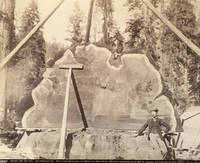
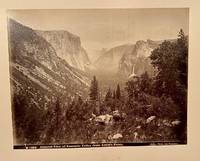
188032820416<p>32 albumen prints sizes vary; see list below of Yosemite and selected other scenes in the American West on light gray card mounts. All but four signed in the negative by Taber of San Francisco. Contemporary dark blue morocco measuring approx. 18 x 12 in. upper board stamped in gilt "AMERIKA" rebacked brass fittings lacking clasp. Silk patterned endpapers. Mounts foxed slight staining occasional foxing or fading to images. An outstanding album with beautiful rich prints.<br /><br />Giants of American West photography. This beautiful album contains many splendid views of the scenic wonders of Yosemite including splendid Watkins and Taber views. Subjects include the many magnificent falls the Mariposa Grove of sequoias and the great geological formations. At least two and likely many more of the views in this collection were taken by Carleton Watkins. Those for which attribution to Watkins has been confirmed are singled out below but this collection merits further investigation to identify Watkins photographs.<br /><br />Isaiah Taber was a dominant figure in Western photography after the Civil War. In 1864 he came to San Francisco founding his gallery in 1871. In the winter of 1875-76 Taber acquired Carleton Watkins's collection of Pacific Coast Views negatives and Yosemite Gallery in the aftermath of Watkins's bankruptcy. "Once he had acquired Watkins's gallery and negatives Taber began his bid for the exalted position of premier photographer of the west coast." Many of Watkins's prints were released with Taber's imprint. Over the next three decades Taber became the dominant figure in photography in the Far West. In 1906 the San Francisco earthquake ended his career destroying his premises and an estimated twenty tons of view negatives and eighty tons of portrait negatives. Please inquire for details.</p> hardcover
178624829<p>In 1785 the state of Massachusetts instituted a stamp tax on newspapers but soon replaced it with a tax on newspaper advertisements. To protest the tax on advertisements Thomas suspended his weekly newspaper <em>Thomas's Massachusetts Spy; or the Worcester Gazette</em> at the end of March 1786. In April 1786 Thomas began publishing the <em>Worcester Magazine</em> which was not subject to the tax as a substitute for the <em>Massachusetts Spy</em>. Although a magazine in name the <em>Worcester Magazine</em> continued the same kind of news as Thomas had printed in his newspaper. Its most valuable features were political pieces and "intelligence" including essays for and against the new proposed U.S. Constitution. It also included a series entitled "The Worcester Speculator" 16 essays from September 1787 to March 1788 along with agricultural articles medical notes recipes anecdotes and other items.</p><p>Thomas continued publishing the <em>Worcester Magazine</em> for twenty-four months approximately 104 issues until Massachusetts repealed the advertising tax effective in March 1788 then Thomas resumed publishing the <em>Massachusetts Spy</em> on April 3 1788. The <em>Worcester Magazine</em> includes extensive coverage of the Massachusetts Ratifying Convention to consider the proposed federal Constitution which met from January 9 to February 6 1788.</p><p>Ownership signatures of "<em>Col<u>n</u> E. Crafts</em>" on some issues indicate they belonged to Ebenezer Crafts 1740-1810. Crafts was born in Connecticut and graduated from Yale College in 1759. He purchased a farm and built a tavern in Sturbridge Massachusetts. During the Revolutionary War he commanded a company of cavalry as captain. From 1785 to 1791 Crafts led a regiment of cavalry from Worcester County Massachusetts and he helped suppress Shays' Rebellion in 1786-1787. He was one of the founders of Leicester Academy in Leicester Massachusetts and later moved to northern Vermont where he helped found Craftsbury which was named after him.</p><p><strong>ISAIAH THOMAS.</strong> Magazine. <em>Worcester Magazine</em> 56 issues from September 1786 to March 1788. Worcester MA: Isaiah Thomas. Each issue approximately 16 pp. 5½ x 9½ in.</p><p><strong><em>Worcester Magazine</em></strong> 1786-1788 was a weekly magazine published in Worcester Massachusetts by Isaiah Thomas 1749-1831. To protest a state tax on newspaper advertisements Thomas suspended his weekly newspaper <em>Thomas's Massachusetts Spy; or the Worcester Gazette</em> at the end of March 1786 and began publishing the <em>Worcester Magazine</em> which was not subject to the tax as a substitute. Thomas published the <em>Worcester Magazine</em> until Massachusetts repealed the advertising tax in March 1788.</p><p>This collection includes 56 issues:</p><p>1786: Numbers 24-26 30-37 39 12 issues</p><p>1787: Numbers 43-44 3:6-15 17-25 4:1-13 34 issues</p><p>1788: Numbers 4:16-17 19-26 10 issues</p><p>"The Worcester Speculator": Numbers 2 4-9 12-16</p><p><strong>Condition</strong></p><p>Specific damage to the following issues—Second Week of September 1786: 3 x 3 in. tear to lower right/left corner of pp. 289-90; Fourth Week of October 1786: 2 x 1 in. tears to pp. 355-360 2 x 4 in. irregular tear to top center of pp. 361-62; Fourth Week of December 1786: lacking back cover; Fourth Week of January 1787: 1-2 in. loss across top of back cover page; First Week of February 1787: lacking front and back cover; First Week of July 1787: lacking front cover; Fourth Week of August 1787: lacking pp. 291-94; First Week of October 1787: lacking front cover and pp. 13-16; Fourth Week of December 1787: lacking back cover; Fourth Week of January 1788: lacking front cover; First Week of February 1788: lacking front cover loss of 1 x 7½ in. portion of right/left margin of pp. 235-36 barely affecting text; Second Week of February 1788: lacking front cover; First Week of March 1788: lacking pp. 301-2; Second Week of March 1788: lacking front cover; Fourth Week of March 1788: lacking pp. 341-42 and back cover. Generally Good or better condition.</p><p><strong>Highlights and Excerpts:</strong></p><p>Second Week of September 1786</p><p>Proceedings of Congress August 8 1786</p><p>"<em>Resolved That the board of treasury endeavor to negociate with the legal proprietor of West Point on Hudson's river the purchase of the same for the United States on an equitable appraisement together with so much land contiguous thereto as shall be deemed by the secretary at war necessary to be included within the limits of the garrison.</em>" p285/c1</p><p>"<em>Resolved That the standard of the United States of America for gold and silver shall be eleven parts fine and one part alloy. That the money unit of the United States being by the resolve of Congress of the 6th July 1785 a dollar shall contain of fine silver three hundred and seventy-five grains and sixty-four hundredths of a grain.</em>" p285/c1</p><p>First Week of November 1786</p><p>Shays' Rebellion Content</p><p>Reports of Courts in Taunton and Middlesex. inside back cover</p><p>Second Week of November 1786</p><p>Shays' Rebellion Content</p><p>"<em>An ACT to prevent Routs Riots and tumultuous Assemblies and the evil consequences thereof</em>." p388/c1-p389/c2</p><p>Third Week of November 1786</p><p>Shays' Rebellion Content</p><p>Adjournment of courts in Springfield and suspension of writ of habeas corpus. p402-inside back cover</p><p>Fourth Week of November 1786</p><p>"<em>An ORDINANCE for the establishing of the MINT of the United States of America; and for regulating the VALUE and ALLOY of COIN</em>" passed by Confederation Congress October 16 1786. pp. 413-414</p><p>Address of Governor James Bowdoin to Militia p416</p><p>First Week of December 1786</p><p>Shays' Rebellion Content</p><p>"<em>An ACT granting INDEMNITY to sundry offenders on certain conditions…</em>" p434</p><p>"<em>An ACT for suspending the privilege of the Writ of HABEAS CORPUS.</em>" p435</p><p>"<em>An ACT for suspending the laws for the collection of private Debts under certain limitations.</em>" p436-37</p><p>Second Week of December 1786</p><p>Shays' Rebellion Content</p><p>Petition of Shays' rebels to Governor James Bowdoin December 1786 p452/c1-p453/c1</p><p>Fourth Week of January 1787</p><p>Shays' Rebellion Content</p><p>Petition of Shays' rebels to Governor James Bowdoin January 17 1787 p520/c1-2</p><p>Address of Governor James Bowdoin January 12 1787 p522/c1-p523/c2</p><p>Arrival of General Lincoln and militia in Worcester p526/c1</p><p>First Week of February 1787</p><p>Shays' Rebellion Content</p><p>Daniel Shays to Major General Benjamin Lincoln January 25 1787</p><p>"<em>Unwilling to be any way accessary to the shedding of blood and greatly desirous of restoring peace and harmony to this convulsed Commonwealth we propose that all the troops on the part of the government be disbanded immediately and that all and every person who has been acting or any way aiding or assisting in any of the late risings of the people may be indemnified in their person and property until the sitting of the next General Court. On which conditions the people now in arms in defence of their lives and liberties will quietly return to their respective habitations patiently waiting and hoping for constitutional relief from the insupportable burdens they now labour under.</em>" p534/c1-p535/c2</p><p>Second Week of May 1787</p><p>Circular Letter from Confederation Congress to Governors of the States regarding state laws in violation of treaty with Great Britain</p><p>"<em>Resolved That the legislatures of the several states cannot of right pass any act or acts for interpreting explaining or construing a national treaty or any part or clause of it; nor for restraining limiting or in any manner impeding retarding or counteracting the operation and execution of the same.</em>" p69/c1-2</p><p>Massachusetts "<em>Report of the Committee for pardoning Persons concerned in the REBELLION</em>." p70/c1-p72/c2</p><p>Fourth Week of May 1787</p><p>Shays' Rebellion Content</p><p>"<em>letters.contain accounts of the Rebels to the amount of 7 or 800 being collected in the state of Vermont in the vicinity of this Commonwealth and that it was given out by them that they intended in the course of the present week to make incursions into several parts of this state and to kill plunder burn and destroy whatever comes in their way. That Shays Day and Parsons &c. had been seen at Crown Point on their way to join them.</em>" p100/c1</p><p>Last Week of May 1787</p><p>Shays' Rebellion Content</p><p>"<em>Judge Cushing's CHARGE to the Middlesex Grand Jury</em>" May 9 1787 p106/c1-p111/c2</p><p>"<em>PHILADELPHIA May 18. Monday last being the day appointed for the meeting of the Federal Convention in this city a number of Gentlemen Delegates from the states of Pennsylvania Delaware Virginia and North Carolina assembled at the State House.</em>" p112/c1</p><p>First Week of June 1787</p><p>Shays' Rebellion Content</p><p>"<em>Sentence of Death Against John Wheeler Henry McCullock Jason Parmiter Daniel Luddington Alpheus Colten and James White for TREASON passed at the Supreme Judicial Court at Northampton the 21st of April 1787. Pronounced by the Hon. William Cushing Esq; Chief Justice.</em>" p117/c1-p119/c2</p><p>General Election Results; John Hancock elected Governor p119/c1-p123/c2</p><p>"<em>Whether the shattered fabric of the original constitution is to be repaired and enlarged or a new and stately building erected upon the old foundation—whether on the one hand the vast continent is to be distributed into distinct republicks or on the other the majesty of a world centered in an individual are questions that respect only the forms and not the objects of government; for there are immutable laws in civil societies independent of times places and circumstances.</em>" p125/c1</p><p>"<em>A majority of the States being fully represented in Convention at Philadelphia on Friday the 25th of May they proceeded to the choice of a President when his Excellency General Washington was unanimously elected to that important office.</em>" p127/c2</p><p>Third Week of June 1787</p><p>Shays' Rebellion Content</p><p>"<em>Act for Raising TROOPS and granting INDEMNITY</em>" June 13 1787 p148/c1-p149/c2</p><p>Governor John Hancock to General Court June 5 1787 regarding troops in western counties p152/c1-2</p><p>Fourth Week of June 1787</p><p>Shays' Rebellion Content</p><p>Proclamation by John Hancock June 15 1787</p><p>"<em>the Legislature of this Commonwealth with an intention not only to adopt every vigorous and efficacious method necessary to suppress the present traitorous opposition to the laws and to restore peace and harmony to the Commonwealth but also to repeat the offers of grace and mercy to the penitent citizen and to extend the same as far as may be consistent with the true interest of the Commonwealth and the security of her citizens in future; have.made provision for the raising and supporting a force to defend the Commonwealth against all wicked and rebellious men; and have also with a very extensive clemency by the same resolve provided that 'each and every citizen of this Commonwealth who have committed any treasons or misprisions of treasons against the same.be and they thereby are indemnified for the same.'</em>" p161/c1-p162/c1</p><p>Reprieve of several Shays' rebels sentenced to death</p><p>"<em>It is hoped the lenient measures adopted by government will have the happy tendency of restoring the tranquility of this Commonwealth; but should they fail it is said those of a different complexion will be pursued.</em>" p167/c2</p><p>First Week of July 1787</p><p>"<em>Advertisement of the expected return of the COMET of 1532 and 1661 in the year 1789. By the Rev. Nevil Makelyne D.D. F.R.S. and Astronomer Royal.</em>" p172/c1-p174/c2</p><p>Case of Mistaken Identity: "<em>Whereas.the clemency of government is extended to all persons who have committed any treasons.during the present rebellion excepting certain persons therein described and named: And whereas one of the persons so excepted is therein named David Dunham which Christian name was inserted by a mistake; and the person thereby intended is Gideon Dunham of Sheffield in the county of Berkshire yeoman. And the said Gideon Dunham being a malignant and incorrigible offender.the said Gideon Dunham shall not by virtue thereof receive any benefit or advantage whatsoever but is excepted therefrom and shall be so adjudged. the said David Dunham shall not be considered as within the exceptions of the said resolution.</em>" p174/c1-2</p><p>"<em>Whatever measure may be recommended by the Federal Convention whether an addition to the old constitution or the adoption of a new one it will in effect be a revolution in government accomplished by reasoning and deliberation; an event that has never occurred since the formation of society and which will be strongly characteristick of the philosophick and tolerant spirit of the age.</em>" p177/c2</p><p>List of delegates to the "<em>Federal Convention</em>"</p><p>"<em>By this very respectable delegation ELEVEN States are represented. The delegates from the State of New Hampshire though appointed have not yet made their appearance. Rhode Island is the only State in the Union that has refused to take a seat at this honourable board of counsellors; but a very short period will unfold whether her refusal will redound to her honour or disgrace.</em>" p178/c1-2</p><p>Second Week of July 1787</p><p>"<em>The present Confederation may be compared to a hut or tent accommodated to the emergencies of war—but it is now time to erect a castle of durable materials with a tight roof and substantial bolts and bars to secure our persons and property from violence and external injuries of all kinds. May this building rise like a pyramid upon the broad basis of the people! and may they have wisdom to see that if they delegate a little more power to their rulers the more liberty they will possess themselves provided they take care to secure their sovereignty and importance by frequent elections and rotation of offices.</em>" p191/c1</p><p>Petition of Shays' rebel Henry Gale to Governor John Hancock and Council June 11 1787</p><p>"<em>Your petitioner.pleads for that mercy he has so justly forfeited—and prays your Excellency and Honours in your great wisdom and justly acknowledged goodness would be pleased to pardon your guilty distressed petitioner who has aged parents bowed with grief.</em>" p195/c1-2</p><p>Gale was marched to the scaffold had a noose placed around his neck and then the sheriff read a pardon by Governor Hancock. He was released in September 1787.</p><p>Last Week of July 1787</p><p>"<em>An Ordinance for the Government of the Territory of the United States North-West of the River Ohio</em>" popularly known as the Northwest Ordinance passed by the Confederation Congress on July 13 1787. p225/c1-p228/c2</p><p>The ordinance created the Northwest Territory prohibited slavery in the territory encouraged education and created a mechanism for the admission of new states. The First Congress reaffirmed and renewed it through the Northwest Ordinance of 1789.</p><p>Report of Commencement at Harvard College at which the college awarded an Honorary Doctor of Laws degree to Thomas Jefferson p230/c2</p><p>More than a year later in September 1788 President Joseph Willard of Harvard sent the diploma to Jefferson in France via a French naval lieutenant; Jefferson received it in February 1789.</p><p>Third Week of August 1787</p><p>"<em>The whole of the United States are now waiting with anxious expectation for the result of the Federal Convention which it is expected will in a few days be made publick.</em>" p279/c2</p><p>Fourth Week of August 1787</p><p>"<em>We are well informed that many letters have been written to the members of the federal convention from different quarters respecting the reports idly circulating that it is intended to establish a monarchical government to send for the Bishop of Osnaburgh &c. &c.—to which it has been uniformly answered 'tho' we cannot affirmatively tell you what we are doing; we can negatively tell you what we are not doing—we never once thought of a king.'</em>" p290/c1</p><p>Second Week of September 1787</p><p>"<em>The Worcester Speculator. No. I.</em>" p311/c1-p313/c2</p><p>"<em>The end proposed by the creation of man was undoubtedly the communication of happiness. How to bring this design into effect demands the earliest and ripest thoughts of the human mind. Infinitely various are the means fitted for the accomplishment of this design; and innumerable are the ways which may with success be pursued for this purpose.</em>" p311/c1-2</p><p>"<em>Every enterprize publick as well as private in the United States says a correspondent seems suspended until it is known what kind of government we are to receive from our National Convention. In short the pulse of industry ingenuity and enterprize in every art and occupation of man now stands still in the United States and every look—and wish—and hope—is only to and every prayer to heaven that has for its object the safety of our country is only for the present august National Convention.</em>" p318/c2</p><p>First Week of October 1787</p><p>Beginning of letter from George Washington to Congress accompanying proposed Federal Constitution September 17 1787:</p><p>"<em>We now have the honour to submit to the consideration of the United States in Congress assembled that Constitution which has appeared to us the most adviseable</em>.</p><p>"<em>The friends of our country have long seen and desired that the power of making war peace and treaties that of levying money and regulating commerce and the correspondent executive and judicial authorities should be fully and effectually vested in the general government of the Union: But the impropriety of delegating such extensive trust to one body of men is evident—Hence results the necessity of a different organization</em>.</p><p>"<em>It is obviously impractical in the federal government of these states to secure all rights of independent sovereignty to each and yet provide for the interest and safety of all: Individuals entering into society must give up a share of liberty to preserve the rest. The magnitude of the sacrifice must depend as well on situation and circumstances as on the object to be obtained.</em>" p12/c1-2 Text incomplete: lacking front cover and pp. 13-16</p><p>Second Week of October 1787</p><p>"<em>We are informed that the Constitution proposed by the late Federal Convention promises to be highly popular with the citizens in New York; and that the distinguished person from whom an opposition was predicted has expressed himself in terms favorably to the plan. Perhaps there never was a subject indeed upon which men were more unanimous for even those who cavil at the system itself are impressed with the necessity of adopting it.</em>" p25/c2</p><p>"<em>George Washington Esq; has already been destined by a thousand voices to fill the place of the first President of the United States under the new frame of government. While the deliverers of a nation in other countries have hewn out a way to power with the sword or seized upon it by stratagems and fraud our illustrious hero peaceably retired to his farm after the war from whence it is expected he will be called by the suffrages of three millions of people to govern that country by his wisdom agreeably to fixed laws which he had previously made free by his arms. Can Europe boast of such a man—Or can the history of the world shew an instance of such a voluntary compact between the Deliverer and the Delivered of any country as will probably soon take place in the United States</em>" p26/c2</p><p>Third Week of October 1787</p><p>"<em>PROCEEDINGS of the UNITED STATES in CONGRESS assembled Friday September 28 1787.</em></p><p>"<em>Congress having received the report of the Convention lately assembled in Philadelphia.</em></p><p>"<em>Resolved unanimously That the said report with the resolutions and letter accompanying the same be transmitted to the several legislatures in order to be submitted to a convention of delegates chosen in each state by the people thereof in conformity to the resolves of the Convention made and provided in that case.</em>" p34/c1</p><p>First Week of November 1787</p><p>"<em>Summary of late Intelligence. / New York October 26.</em> <strong>Excerpt from <em>Federalist</em> No. 1</strong></p><p>"<em>Among the most formidable of the obstacles which the new Constitution will have to encounter may readily be distinguished the obvious interest of a certain class of men in every State to resist all changes which may hazard a diminution of the power emolument and consequence of the offices they hold under the State establishments; and the perverted ambition of another class of men who will either hope to aggrandize themselves by the confusions of their country or will flatter themselves with fairer prospects of elevation from the subdivision of the empire into several partial confederacies than from its union under one government</em>." p75/c1</p><p>"<em>The Federal Constitution is now the subject of conversation from Newhampshire to Georgia. In some places there are persons who appear to be raving mad both for and against the plan. It is but reasonable to observe that if ever there was occasion for a people to deliberate with calmness on as important a measure as ever did or ever will come under their consideration now is the time. The federal system ought to have a fair examination—it is a plan of government not for one particular state but for all the states—we therefore should not approve or disapprove of the measure until we have given it a most thorough and impartial examination.</em>" p76/c1-2</p><p>"<em>We wish not to prejudice our readers either one way or the other by our publications—we wish them to judge for themselves—it will therefore be needless for us to republish the flighty rhapsodies for and the ill natured anathemas against the federal constitution which have appeared in some newspapers. We mean to give them facts and to extract from other periodical publications such observations only as are made by gentlemen who are known to be fully acquainted with the subject—we think it our duty to lay before our readers Mr. Gerry's letter addressed to the Hon. President of the Senate and the Hon. Speaker of the House of Representatives of this Commonwealth together with Mr. Wilson's address to the citizens of Philadelphia. These gentlemen were both members of the Federal Convention Mr. Gerry from this State and Mr. Wilson from Pennsylvania. Mr. Gerry appears to be opposed to the plan and Mr. Wilson is in favor of it—they both candidly give their opinions and the reasons on which their opinions are grounded.</em>" p76/c2</p><p>Second Week of November 1787</p><p>Elbridge Gerry to Samuel Adams President of the Senate and James Warren Speaker of the House of Representatives of Massachusetts October 18 1787.</p><p>"<em>I have the honour to inclose pursuant to my commission the constitution proposed by the Federal Convention.</em></p><p>"<em>To this system I gave my dissent and shall submit my objections to the honourable Legislature.</em></p><p>"<em>It was painful for me on a subject of such national importance to differ from the respectable members who signed the constitution: but conceiving as I did that the liberties of America were not secured by the system it was my duty to oppose it.</em></p><p>"<em>My principal objections to the plan are that there is no adequate provision for a representation of the people—that they have no security for the right of election—that some of the powers of the Legislature are ambiguous and others indefinite and dangerous—that the Executive is blended with and will have an undue influence over the Legislature—that the judicial department will be oppressive—that treaties of the highest importance may be formed by the President with the advice of two thirds of a quorum of the Senate—and that the system is without the security of a bill of rights. These are objections which are not local but apply equally to all the States.</em>" p79/c1-2</p><p>Speech of James Wilson at the State House in Philadelphia</p><p>"<em>It will be proper however before I enter into the refutation of the charges that are alledged to mark the leading discrimination between the state constitutions and the constitution of the United States. When the people established the powers of legislation under their separate governments they invested their representatives with every right and authority which they did not in explicit terms reserve: and therefore upon every question respecting the jurisdiction of the house of assembly if the frame of government is silent the jurisdiction is efficient and complete. But in delegating federal powers another criterion was necessarily introduced and the congressional authority is to be collected not from tacit implication but from the positive grant expressed in the instrument of union. Hence it is evident that in the former case everything which is not reserved is given but in the latter the reverse of the proposition prevails and every thing which is not given is reserved. This distinction being recognized will furnish an answer to those who think the omission of a bill of rights a defect in the proposed constitution.</em>" p81/c1</p><p>"<em>This constitution it has been further argued is of pernicious tendency because it tolerates a standing army in the time of peace.—This has always been a topic of popular declamation; and yet I do not know a nation in the world which has not found it necessary and useful to maintain the appearance of strength in a season of the most profound tranquility. But what would be our national situation were it otherwise Every principle of policy must be subverted and the government must declare war before they are prepared to carry it on. no man who regards the dignity and safety of his country can deny the necessity of a military force under the control and with the restrictions which the new constitution provides.</em>" p82/c1-2</p><p>"<em>The power of direct taxation has likewise been treated as an improper delegation to the federal government; but when we consider it as the duty of that body to provide for the national safety to support the dignity of the union and to discharge the debts contracted upon the collective faith of the states for their common benefit it must be acknowledged that those upon whom such important obligations are imposed ought in justice and in policy to possess every means requisite for a faithful performance of their trust.</em>" p83/c2</p><p>"<em>After all my fellow citizens it is neither extraordinary or unexpected that the constitution offered to your consideration should meet with opposition. It is the nature of man to pursue his own interest in preference to the public good; and I do not mean to make any personal reflection when I add that it is the interest of a very numerous powerful and respectable body to counteract and destroy the excellent work produced by the late Convention. I will confess indeed that I am not a blind admirer of this plan of government and that there are some parts of it which if my wish had prevailed would certainly have been altered. But when I reflect how widely men differ in their opinions and that every man and the observation applies likewise to every State has an equal pretention to assert his own I am satisfied that <strong>any thing nearer to perfection could not have been accomplished</strong>. Regarding it then in every point of view with a candid and disinterested mind I am bold to assert that <strong>it is the best form of government which has ever been offered to the world.</strong></em>" p84/c1-2</p><p>Roger Sherman and Oliver Ellsworth to Governor Samuel Huntington of Connecticut regarding proposed Constitution September 26 1787. p85/c1-2</p><p>Fourth Week of November 1787</p><p>"<em>The town of Northampton and the District of Easthampton assembled together on Thursday last in legal town meeting and made choice of the Hon. Caleb Strong Esq; and Mr. Benjamin Sheldon to represent them in Convention for the purpose of ratifying the reported Federal Constitution.</em></p><p>"<em>In conformity to a resolution of the General Court passed the 25th of October last we have delegated you to meet in State Convention on the second Wednesday of January next for the purpose of adopting or rejecting the reported Constitution for the United States of America.</em>" p113/c1</p><p>First Week of December 1787</p><p>"<em>The following ADDRESS of His Excellency BENJAMIN FRANKLIN Esquire to the President of the late CONTINENTAL CONVENTION was delivered by him immediately before his signing the proposed Constitution for the United States.</em>" inside front cover</p><p>"<em>I confess that I do not entirely approve of this Constitution at present; but sir I am not sure I shall never approve of it: For having lived long I have experienced many instances of being obliged by better information or fuller consideration to change opinions even on important subjects which I once thought right but found to be otherwise. It is therefore that the older I grow the more apt I am to doubt my own judgment and to pay more respect to the judgment of others.</em>" inside front cover/c1</p><p>"<em>I doubt too whether any other convention we can obtain may be able to make a better Constitution. For when you assemble a number of men to have the advantage of their joint wisdom you inevitably assemble with those men all their prejudices their passions their errors of opinion their local interests and their selfish views. From such an assembly can a perfect production be expected <strong>It therefore astonishes me Sir to find this system approaching so near to perfection as it does</strong>.</em>" inside front cover/c1-2</p><p>"<em>Thus I consent Sir to this Constitution because I expect no better and because I am not sure that it is not the best.</em>" inside front cover/c2</p><p>"<em>On the whole Sir I cannot help expressing a wish that every Member of the Convention who may still have objections to it would with me on this occasion doubt a little of his own infallibility and to make manifest our unanimity put his name to this instrument.</em>" inside front cover/c2</p><p>Second Week of December 1787</p><p>"AGAINST the New Federal Constitution.</p><p>"<em>The following are the so much talked of Objections against the New Federal Constitution of the Hon. GEORGE MASON Esq; one of the Delegates to the late Federal Convention from the State of Virginia.</em>" p130/c1-p132/c2</p><p>"<em>FOR the New Federal Constitution.</em></p><p>"<em>REMARKS on the OBJECTIONS made by the Hon. ELBRIDGE GERRY to the NEW CONSTITUTIION.</em>" p132/c1-p134/c2</p><p>Third Week of December 1787</p><p>"<em>Another SPEECH of Mr. WILSON's so much talked of</em>" to Pennsylvania State Convention November 24 1787. p141/c1-p147/c2</p><p>"<em>The deputies of the State Convention of Delaware met at Dover on Monday the 3d instant December and a house being formed they elected James Latimer Esq; President. On Thursday they ratified the New Federal Constitution by an unanimous vote and on Friday every member signed the ratification as follows:</em></p><p>"<em>'WE the Deputies of the people of the Delaware State in Convention met having taken into our serious consideration the Federal Constitution proposed in a General Convention held at the city of Philadelphia on the seventeenth day of September in the year of our Lord one thousand seven hundred and eightyseven have approved of assented to ratified and confirmed and by these presents DO in virtue of the power and authority to us given for that purpose for and in behalf of ourselves and our constituents fully freely and entirely approve of assent to ratify and confirm the said CONSTITUTION.'</em>" p152/c2</p><p>Fourth Week of December 1787</p><p>"<em>FOR the Federal Constitution.</em></p><p>"<em>Continuation of the REMARKS on the Hon. ELBRIDGE GERRY's Objections to the new Constitution.</em>" p155/c1-p157/c2</p><p>"<em>REMARKS on Col. MASON's OBJECTIONS to the proposed Federal Constitution.</em>" p157/c1-p160/c2</p><p>"AGAINST the Federal Constitution.</p><p>"<em>From the FREEMAN's JOURNAL of November 7. / To the CITIZENS of PHILADELPHIA</em>." by "<em>An Officer of the late Continental Army</em>." p160/c1-p162/c2</p><p>Third Week of January 1788</p><p>Proceedings of the Massachusetts State Convention in Boston January 9-12 p199/c1-p201/c2</p><p>Proceedings of the Connecticut State Convention in Hartford January 9 1788 p201/c1-2</p><p>Connecticut ratified the Constitution on January 9 by a vote of 128-40.</p><p>"<em>The Conventions of Four States have adopted the Federal Constitution viz. Pennsylvania Delaware Newjersey and Connecticut. It is said Georgia has also adopted it but of this we have no authentick account</em>.</p><p>"<em>At present we cannot venture a conjecture of what will be the fate of the Federal Constitution in the Convention of this state now assembled in our metropolis; we have not the least doubt but it will be thoroughly discussed; and we hope the arguments on both sides will have a fair and candid hearing.</em>" p204/c2</p><p>The Georgia Convention ratified the Constitution on January 2 by a vote of 26-0.</p><p>Fourth Week of January 1788</p><p>"<em>OBJECTIONS to the FEDERAL CONSTITUTION by his Excellency EDMUND RANDOLPH Governour of Virginia</em>" October 10 1787. p205/c1-p210/c2</p><p>Proceedings of the Massachusetts State Convention in Boston January 14-16 p211/c1-p215/c2</p><p>List of Delegates to the Massachusetts State Convention up to January 15 p217-p218</p><p>First Week of February 1788</p><p>Proceedings of the Massachusetts State Convention in Boston January 18-22 p233/c1-p242/c2</p><p>"A WATCHMAN" "To the CITIZENS of the UNITED STATES."</p><p>"<em>The following was a few days since sent us for publication; as it is the first piece written in this county against the Federal Constitution that has been offered to us for publication we think proper in order to shew impartiality to publish it notwithstanding the author evidently appears to be much mistaken in some of his assertions.</em>" p242/c1-p243/c2</p><p>Governor John Hancock President of the Convention proposed the following:</p><p>"<em>The Convention having impartially discussed and fully considered the Constitution of the United States of America reported to Congress by the Convention of delegates from the United States of America an submitted to us by a resolution of the General Court of the said Commonwealth passed the twentyfifth day of October last past; and acknowledging with grateful hearts the goodness of the supreme Ruler of the universe in affording the people of the United States in the course of his providence an opportunity deliberately and peaceably without fraud or surprise of entering into an explicit and solemn compact with each other by assenting to and ratifying a new Constitution in order to form a more perfect union establish justice insure domestick tranquillity provide for the common defence promote the general welfare and secure the blessings of liberty to themselves and their posterity; do in the name and in behalf of the Commonwealth of Massachusetts assent to and ratify the said Constitution of the United States of America.</em></p><p>"<em>And as it is the opinion of this Convention that certain amendments and alterations in the said Constitution would remove the fears and quiet the apprehensions of many of the good people of this Commonwealth and more especially guard against an undue administration of the federal government; the Convention do therefore recommend that the following alterations and provisions be introduced into the said Constitution:</em>"</p><p>Followed by a list of nine proposed amendments. p244/c2-p245/c1</p><p>Second Week of February 1788</p><p>Proceedings of the Massachusetts State Convention in Boston January 22-23 p247/c1-p254/c2</p><p>"<em>RATIFICATION of the Federal Constitution by the Convention of the Commonwealth of Massachusetts.</em> / <em>Proceedings of the Convention of this Commonwealth on Tuesday Wednesday and Thursday last week.</em>"</p><p>"<em>On Tuesday in the forenoon a motion which had been expected for some days was made by Capt. Gilbert Dench to this purport:—That for the purpose of informing the good people of this Commonwealth of the principles of the proposed Constitution and the amendments offered by his Excellency the President this Convention do adjourn to a future day. This motion occasioned much debate—it was warmly advocated by the gentlemen who were against the adoption of the Constitution and strongly opposed by the friends of the proposed system. The question on the motion was taken in the evening when his Excellency the President said he had the great pleasure to declare that the motion for adjournment had not obtained.</em></p><p>"<em>Wednesday afternoon at five o'clock the Convention of this Commonwealth ASSENTED TO and on Thursday RATIFIED the CONSTITUTION proposed by the late Federal Convention.</em>"</p><p>Includes names of 187 in favor of and 168 opposed to ratification. p254/c1-p258/c2</p><p>The Massachusetts Convention ratified the Constitution on February 6 1788.</p><p>"<em>ORDER of the PROCESSION of the Inhabitants of Boston &c. upon the Ratification of the Federal Constitution.</em>" p258/c1-p259/c2</p><p>Third Week of February 1788</p><p>"<em>ANSWER to the OBJECTIONS of RICHARD HENRY LEE Esq; against the FEDERAL CONSTITUTION</em>" by "<em>An AMERICAN</em>." p261/c1-p264/c2</p><p>Proceedings of the Massachusetts State Convention in Boston January 23 p265/c1-p268/c2</p><p>Ordinance renaming street by the Meeting House in Boston where Convention ratified Constitution from "Long Lane" to "Federal Street" p268/c1-p269/c2</p><p>"<em>WE the delegates of the People of the State of Georgia in Convention met having taken into our serious consideration the Federal Constitution agreed upon and proposed by the Deputies of the United States in General Convention held in the city of Philadelphia on the 17th day of September in the year of our Lord 1787—Have assented to ratified and adopted and by these presents do in virtue of the powers and authority to us given by the people of the said State for that purpose for and in behalf of ourselves and our constituents fully and entirely assent to ratify and adopt the said Constitution which is hereunto annexed under the great seal of the said State</em>." p270/c1</p><p>"<em>The Convention of the State of Newhampshire are now in meeting deliberating on the Federal Constitution: But we have not received any intelligence whatever respecting it.</em>"</p><p>The New Hampshire Convention after initially rejecting the Constitution voted to reconvene in mid-June 1788 when it ratified the Constitution by a vote of 57 to 47.</p><p>Fourth Week of February 1788</p><p>Proceedings of the Massachusetts State Convention in Boston January 23-26 p275/c1-p285/c2</p><p>First Week of March 1788</p><p>Proceedings of the Massachusetts State Convention in Boston January 28-31 p293/c1-p297/c2</p><p>Second Week of March 1788</p><p>Proceedings of the Massachusetts State Convention in Boston January 31-February 1 p307/c1-p314/c2</p><p>"<em>The great length of the debate in our late Convention has obliged us to omit many things which we should otherwise have presented to our readers; but as this matter was truly important we thought it our duty to give as fair a statement of the debates as was in our power and doubt not it has been satisfactory to our readers. These debates will be finished in the course of a week or two.</em>" p315/c2</p><p>Third Week of March 1788</p><p>Proceedings of the Massachusetts State Convention in Boston February 1-5 p317/c1-p325/c2</p><p>Shays' Rebellion Content</p><p>Petition of Daniel Shays and Eli Parsons to the General Court</p><p>"<em>Your petitioners penetrated by the melancholy sense of their late errours and anxious once more to return to the bosom of their country and enjoy again the blessings of peace under the mild operation of the laws—humbly beg leave to supplicate the mercy of the legislature in their favor.</em>" p330/c1</p><p>Early in April 1788 Governor John Hancock canceled the rewards for the capture of Shays and Parsons and in June the legislature offered both a full pardon. Shays returned to Massachusetts but in 1795 he moved to New York.</p><p>Fourth Week of March 1788</p><p>Proceedings of the Massachusetts State Convention in Boston February 6 p331/c1-p335/c2</p> Isaiah Thomas
1810WRCAM55296Worcester: From the press of Isaiah Thomas Jun. Isaac Sturtevant printer 1810. Two volumes. Five engraved plates two folding. Expertly bound to style in period calf spines gilt with red morocco labels. Very good. Provenance: Timothy Bigelow presentation inscription by the author. "Thomas who began life as a printer's apprentice fought at Lexington and Concord and settled finally in Worcester Mass. in 1778 where he became the country's leading printer putting out more than 400 titles before he retired in 1802 to devote himself to scholarship and first to this book. The source materials were obtained from voluminous correspondence and from his own personal library.Although a printed work it is always considered a primary source and is today the recognized authority on printing in the United States from 1640 to 1800. Much of the material which it contains can be found no where else" - GROLIER AMERICAN HUNDRED. "An interesting and now scarce work" - Lowndes. <br> <br> This copy bears a presentation inscription to founding American Antiquarian Society member Timothy Bigelow who apprenticed to Thomas for two years but ended up becoming a lawyer and politician. HOWES T168 "aa." SHAW & SHOEMAKER 21483. STREETER SALE 4176. GROLIER AMERICAN 100 29. PILLING PROOF-SHEETS 3850. BIGMORE & WYMAN III:9. LOWNDES IV p.2666. From the press of Isaiah Thomas, Jun., Isaac Sturtevant, printer unknown books
1960265014Brooklyn: 'Zagar Press' 1960. One of 4 copies signed and dated "I. Zagar 1960" on last leaf. Artist book in folding concertina format: double-page manuscript coloured title; 5 double-page manuscript coloured text openings each with a colored etching accompanying text. 1 vols. Oblong folio. Original decorated cloth over boards endpapers with decorated crayon images of fish trees etc. Fine. One of 4 copies signed and dated "I. Zagar 1960" on last leaf. Artist book in folding concertina format: double-page manuscript coloured title; 5 double-page manuscript coloured text openings each with a colored etching accompanying text. 1 vols. Oblong folio. Early Work by Zagar. Exceedingly rare early work by Isaiah Zagar b. 1939 visionary vernacular artist who is most widely known for his mosaic installation the Magic Gardens site on South Street in Philadelphia.<br/><br/>One of four copies of illustrations to the familiar nursery rhyme a work produced while the artist studied under Fritz Eichenberg at Pratt. Visual elements expressed during his later career can be discerned here at the outset.<br/><br/>From the artist's mission statement : "It is true to a certain extent; I have been copying Clarence Schmidt my whole career trying to make a total encyclopedic vision that has no parameters and no end. My work is marked by events and is a mirror of the mind that is building and falling apart having a logic but close to chaos refusing to stay still for the camera and giving one a sense of heaven and hell simultaneously."<br/><br/>RARE. Not in OCLC 'Zagar Press' unknown books
1960265014Brooklyn: 'Zagar Press' 1960. One of 4 copies signed and dated "I. Zagar 1960" on last leaf. Artist book in folding concertina format: double-page manuscript coloured title; 5 double-page manuscript coloured text openings each with a colored etching accompanying text. 1 vols. Oblong folio. Original decorated cloth over boards endpapers with decorated crayon images of fish trees etc. Fine. One of 4 copies signed and dated "I. Zagar 1960" on last leaf. Artist book in folding concertina format: double-page manuscript coloured title; 5 double-page manuscript coloured text openings each with a colored etching accompanying text. 1 vols. Oblong folio. Exceedingly rare early work by Isaiah Zagar b. 1939 visionary vernacular artist who is most widely known for his mosaic installation the Magic Gardens site on South Street in Philadelphia.<br /> <br /> One of four copies of illustrations to the familiar nursery rhyme a work produced while the artist studied under Fritz Eichenberg at Pratt. Visual elements expressed during his later career can be discerned here at the outset.<br /> <br /> From the artist's mission statement : "It is true to a certain extent; I have been copying Clarence Schmidt my whole career trying to make a total encyclopedic vision that has no parameters and no end. My work is marked by events and is a mirror of the mind that is building and falling apart having a logic but close to chaos refusing to stay still for the camera and giving one a sense of heaven and hell simultaneously."<br /> <br /> RARE. Not in OCLC 'Zagar Press' unknown
1810140948330Worcester MA: From the press of Isaiah Thomas Jun 1810. First Edition. Near Fine. First edition. In two volumes. vi 7 - 487; iv 5 - 576 pp. Complete with eight plates including three portraits of the author and two foldout plates. Bound in contemporary mottled calf gilt floral stamping to spines and ruled borders to boards gilt dentelles top edge gilt marbled endpapers. Near Fine skillfully recased with repairs to joints and renewed morocco title labels; binding square and strong. Marbled endpapers preserved with bookplate of Senator Charles B. Farwell 1823 - 1903 to front pastedown of each volume. Contents lightly toned with scattered foxing and occasional smudges and faint stains. Professional edge repairs to three plates and at least one page. Howes T-168 Grolier American 29. <br /> <br /> <p>A very attractive first edition of an important reference work. The radical patriot Isaiah Thomas began his long printing career as a child of seven in 1756 eventually establishing himself in Worcester as the owner of a paper mill bindery and several presses. As the country's leading printer Thomas was well placed to conduct the survey of American printing presented in these volumes. They draw extensively from his own library and from his network of friends and acquaintances and contain material that can be found nowhere else. From the press of Isaiah Thomas, Jun unknown
1810133261Worcester: Isaiah Thomas 1810. First edition of this work by the famed printer. Octavo bound in contemporary sheep morocco spine labels illustrated with five engraved plates four folding. Gift inscription of Thomas's grandson Benjamin Franklin Thomas on each of the front free endpapers as well as his signature on title page in first volume. Benjamin Franklin Thomas was a member of the United States House of Representatives from Massachusetts and an associate justice of the Massachusetts Supreme Judicial Court. In good condition. Housed in a custom half morocco chemise and clamshell box. Grolier American 29; Howes T 168; Sabin 95495; Streeter 7:4176. Isaiah Thomas was born in Boston and apprenticed to printer Zechariah Fowle with whom he formed a partnership in 1770. They published the Massachusetts Spy but after three months Thomas continued the publication alone. The royal governor ordered the attorney general to prosecute Thomas for his Whig views but the grand jury refused to indict him. In 1774 Thomas published the Royal American Magazine for a short time. Three days before the Battle of Concord in which he participated Thomas moved his presses from Boston to Worcester. Thomas continued publication of the Massachusetts Spy there until 1802 with gaps from 1776 to 1778 and from 1786 to 1788; published and sold books; and built a paper mill and bindery. In 1802 he transferred the business to his son. From 1775 to 1803 Thomas published the New England Almanac which his son continued until 1819. In 1786 he was the first printer in the United States to use music type and in 1791 he printed a folio edition of the Bible and of Isaac Watts’ Psalms and Hymns. He began a project on the history of printing in 1808 and he published it in two volumes in 1810. His grandson published a second edition in 1874. In 1812 Thomas founded what became the American Antiquarian Society and he donated 8000 volumes from his collection and one of the most valuable files of newspapers in the country to the Society. On his death he bequeathed his entire library and collection of early American newspapers to the American Antiquarian Society. Isaiah Thomas unknown
1810794581810. THOMAS Isaiah. The History of Printing in America. With a Biography of Printers and an Account of Newspapers. To which is Prefixed a Concise View of the Discovery and Progress of the Art in Other Parts of the World. Worcester: from the press of Isaiah Thomas Jun. Isaac Sturtevant printer 1810. 2 Vols. 8vo. 487;576pp. 5 engraved plates 2 folding. Period-styled calf-backed marbled boards gilt-ruled spines red morocco spine labels. Light scattered toning else very good. Grolier One Hundred Influential American Books Printed Before 1900 #29; Howes T-168; Lowndes IVp.2666 "An interesting and now scarce work". "Thomas who began life as a printer's apprentice fought at Lexington and Concord and settled finally in Worcester Mass. in 1778 where he became the country's leading printer putting out more than 400 titles before he retired in 1802 to devote himself to scholarship and first to this book. The source materials were obtained from voluminous correspondence and from his own personal library . Although a printed work it is always considered a primary source and is today the recognized authority on printing in the United States from 1640 to 1800. Much of the material which it contains can be found nowhere else" Grolier American 100. Philadelphia jurist and the author of Hail Columbia. unknown
1810129753Worcester MA: The Press of Isaiah Thomas Jun 1810. bound in mid-19th century calf gilt on spine. 8vo. bound in mid-19th century calf gilt on spine. vi 7-4871; 576 pages. 2 Volumes. First edition Howes T-168; Shaw and Shoemaker 21483; Bigmore and Wyman III:9. Dedication table of contents preface. Endnotes included in each volume. Appendix and index at end of second volume. Frontispiece illustration of Thomas. Five plates including two foldouts. This is the first published history of printing in the United States. The author was a noted printer newspaper publisher and a founder of the American Antiquarian Society. Rubbing to the bindings. Gutters of both volumes tender. Small waterstain to lower corner of frontispiece effecting the portrait in the bottom left corner of vol 1. Newspaper clipping glued onto page 37 of vol 2. Toning to the textblock throughout in both volumes. Beautiful exlibris bookplate of the Kennebec Natural History & Antiquarian Society in both volumes on the front pastedown. The Press of Isaiah Thomas, Jun unknown
1791000015094Worcester Massachusetts: Isaiah Thomas 1791. First Thomas edition. Hardcover. Good or better. 4to. 2 3-1310 pp. Contemporary paneled sheep with the spine in six compartments. Illustrated with two engraved frontispieces. Completing the title page: And with the former translations diligently compared and revised by the special command of King James I of England. With marginal notes and references. To which are added an index and an alphabetical table of the names in the Old and New Testaments with their significations. American Antiquarian Society "Isaiah Thomas’s Printing Press: "Old Number One". Darlow and Moule 1353. Isaiah Thomas' printing press first operated out of Boston: producing a newspaper and materials that encouraged American colonists to rebel against the British imperial government. Thomas moved his press to Worcester at the behest of his friends who suspected that it would be impounded by the British authorities. Thomas' Bible was produced in several quarto octavo and duodecimo editions. Darlow and Moule note that Thomas enlisted the help of clergymen and others to compare nearly thirty different editions of the scripture. The Thomas Bible is one of the more attractive productions of early American printing. The clasps largely perished quite a bit of rubbing to the leather's edges. Lacks leaves K3 and K4 the final verses of Maccabees also lacks the endpapers. An armorial bookplate that states "Williams" on the front pastedown an inscription reading Thomas Williams Jr. 1792 on the verso of the Apocrypha title page. Isaiah Thomas hardcover
178737046Worcester: Isaiah Thomas 1787. Pages 335-352 with caption title as issued. Upper margins of several leaves trimmed closely shaving portions of several page numbers a couple of printer flaws with effect on a few letters. Good in modern pale grey paper over boards.<br/><br/> This early rare printing of the proposed Constitution-- certainly one of the earliest-- appears at pages 349-352 under the heading "Proceedings of the Federal Convention." Isaiah Thomas started the Worcester Magazine in April 1786. It was "The octavo continuation of Isaiah Thomas' newspaper The Massachusetts Spy necessitated by his opposition to the tariffs on paper and the tax upon advertisements in newspapers which were repealed in April 1788" Lomazow. <br/>Lomazow 20. Evans 20159. Mott 92-93. Isaiah Thomas unknown books
181036656Worcester: Isaiah Thomas 1810. library brown buckrum. small 8vo. library brown buckrum. 487; 576 pages. Two volumes. First edition. Bigmore & Wyman III 9; S-K 3602 for binding references. All five plates are present. An invaluable book to the student of American printing and certainly the cornerstone in any collection of books on U.S. printing and publishing history. Also has information on newspapers and publishing. Thomas was the right person to write this title as he was one of the most important American publishers - booksellers of this early American period. His comments on his friends in the field and the beginnings of printing in different locations in the country based on personal knowledge make this a primary source. <BR><br /> <BR><br /> Bound in a later library buckrum binding with gilt on spine. The plate facing page 70 is present but has separated from the binding and torn into three pieces along the creases. Some tears with one effecting the page numbers 495-500 of volume II. Some marks obscuring the text on pages 152-153. A torn sheet on page 221-222 page 491-492 and 493-494. Ex-library stamp from the De Mill Library. Else a lovely copy. Isaiah Thomas unknown books
198251679Penguin Books. As New. 1982. Paperback. 0140063137 . FREE UPGRADE to Courier/Priority Shipping Upon Request IN STOCK AND IMMEDIATELY AVAILABLE FOR SHIPMENT - Text pristine clean & unmarked - 210 pages. -- with a bonus offer-- . Penguin Books paperback
185062042Wien: Carl Gerold 1850. 8vo. 226 pp. Contemporary quarter sheep over marbled boards. Ex-institutional library of Bibliothek der Musse Riga with usual markings. Rubbing to spine and board edges. Internally clean. Bookplate to the front pastedown of Manoug Parikian British concert violinist and professor at the Royal Academy of Music London. Loosely inserted are three TLS by Isaiah Berlin dated 1972-73 on 'Headington House Oxford' letterhead in which he thanks Parikian for the loan of the book and then apologises for not returning it in a timely manner as the book had become buried somewhere in his library. The author Wilhelm von Lenz was born in Riga and studied with Liszt and Chopin in Paris. He is best known for his research on Beethoven. The final chapter in this book deals with Beethoven's violin concerto as performed in St. Petersburg by Vieuxtemps. Text in German. . Good. 1/4 Sheep. 1850. Carl Gerold 1850 unknown
1876054986Viyana - Vienna Wien: Adolf Holshausen Matbaasi / Amerikan Kitab-i Mukaddes Sirketi = Adolf Holzhausen Printing House on behalf of the American Bible Society 1876. 1st Edition . Hardcover. Fine. 8vo - over 7¾ - 9¾" tall. Original cloth bdg. with gilt lettering in a very calligraphic style on the front board embossed decoratively. Demy 8vo. 22 x 14 cm. In Ottoman script Old Turkish with Arabic letters. 107 p. Slightly fading on cloth and sporadically foxing on endpapers otherwise a fine copy. Extremely rare first and only edition of this early Wien imprint of the "Book of Isaiah" translated into Ottoman script. It is the earliest example of three imprints in Adolf Holzhausen Printing House of Wien in the Ottoman Turkish language according to the Özege catalogue. Adolf Holzhausen 1868-1931 was an Austrian publisher and bookseller. He was the son of Adolf Holzhausen the Elder 1827-1892 the head of the Viennese court and the university's book printing company. He was trained in the family business his father had owned the Manzsche book printing company since 1858. Holzhausen learned the typesetting of oriental scripts and also provided the company with oriental letters. He later founded the university book printing company and his own publishing house which mainly published art books and historical works. After the First World War he was promoted to the head of the Military Geography Institute. Also he suggested that Austrian educational book publishers worked together. Özege 18043.; TBTK 10281.; Only one copy in OCLC in Bogaziçi University Library of Turkey: 949512980. <br/> <br/> Adolf Holshausen Matbaasi / Amerikan Kitab-i Mukaddes Sirketi [= Adolf Holzhausen Printing House on behalf of the American Bible hardcover
1890223061890. Oblong 4to. 10.5" x 15.5". With 26 albumen prints mounted recto only on thick card landscape and portrait format approximately from 195 x 260 to 124 x 200 mm. or the reverse. 12 captioned in the negative by Taber's studio 3 captioned in the negative by Pollock's studio 14 photographs captioned on the mount in ink in French. The photographs are beautifully presented in a contemporary red morocco binding likely collected by a French traveller. Leather slightly mottled with a few faint marks neatly recolored in places mounts slightly foxed and cockled a few photographs with marginal silver mirroring or faint surface abrasions. Else a near fine copy. An excellent photographic record of San Francisco and Yosemite by the multitalented photographer Isiah West Taber. The album also contains evocative images of New York Washington DC and Niagara Falls with some by the Boston-based photographer Charles Pollock. The adventurous Taber 1830-1912 arrived in San Francisco at the beginning of the gold rush in 1849. Quickly deciding there was more money in trade than digging for gold Taber eventually established his photography studio in San Francisco during which time he acquired the entire archive of the landscape photographer Carleton Watkins. In 1888 he was appointed a Yosemite commissioner in appreciation of his work to spread its beauty. Sadly Taber's studio was destroyed in the 1906 San Francisco earthquake and fired with an estimated loss of about 20 tons of view negatives and 80 tons of portrait negatives; he never reopened his gallery. <br /> <br /> The photograph album shows images of San Francisco including Market Street Cliff House and an attractive birdseye view. In Yosemite the photographs by Taber show El Capitan Table Rock and Mariposa Grove. The section of photographs of East Coast America includes the White House Capitol Brooklyn Bridge and Niagara in both summer and winter. Three images of New York are by Pollock 1828-1900 who specialized in celebrity portraiture. unknown
1987222098Oxford 1987. unbound. 3 pages front and back on "Headington House" stationery 8.25 x 5.75 inches Oxford April 28 1987. Written to noted Civil Rights attorney Howard N. Meyer responding to an article that Meyer had written about Wilson and "Patriotic Gore" in small part: ".There was an element of permanent as it were un-critical radicalism in Wilson - hatred of establishments suspicion of the motives of all public men natural reaction to slogans and clarion calls and eloquence in political or national causes within the framework of the establishments of what he regarded as hopelessly bourgeois countries - he thought that all wars certainly since Napoleon were monstrous bloodshed of a horrible kind in the interests of groups disguised as ideals - all that he got from Marx and similar writers - this applied to both World Wars and obviously to the Civil War and rather more plausibly to Vietnam. He obviously did not mind sheer killing as such because that does not emerge in for example 'To the Finland Station' - it was only towards the end of his life partly under the influence of Solzhenitsyn and other irrefutable evidence that he turned against the Soviet Union and became nauseated by Stalin and everything to do with him - and his distaste even turned to the once-hallowed Lenin. I had a conversation with him in which he reminded me that I had said that he was too nice about Lenin - he agreed and the Introduction to the second or a later edition of 'To the Finland Station' altered this approach.I realize and from my knowledge of Edmund whose memory I still revere and of whom I am deeply fond. His loss of faith in Russia which began after his visit in the thirties but still persisted when I first met him was I suppose true of an entire generation of American leftists and British ones too; It was a marvelous mass delusion which I think perhaps has no parallel in history. Of course he must have been right in part about the crushing of the Southern states the exploitation and the bullying.but this should not have extended to respect for his violent and irrational political prejudices ferocious suspicion and desire to discredit honorable human motives just wars general idealism above all Lincoln's reputation. He simply wanted to attack icons and fetishes as such - and in the course of this said a great many untrue unjust and silly things." This letter contains much more fine content and is effectively an unpublished essay and critique of one of the most distinguished writers of the 20th century. Horizontal folds tiny stains and a paperclip impression in the top margins. Still very good condition.<br/><br/> Russian-British philosopher and historian of ideas regarded as one of the leading thinkers of the twentieth century and as the dominant liberal scholar of his generation.<br/><br/> unknown books
222098Oxford 1987. unbound. 3 pages front and back on "Headington House" stationery 8.25 x 5.75 inches Oxford April 28 1987. Written to noted Civil Rights attorney Howard N. Meyer responding to an article that Meyer had written about Wilson and "Patriotic Gore" in small part: ".There was an element of permanent as it were un-critical radicalism in Wilson - hatred of establishments suspicion of the motives of all public men natural reaction to slogans and clarion calls and eloquence in political or national causes within the framework of the establishments of what he regarded as hopelessly bourgeois countries - he thought that all wars certainly since Napoleon were monstrous bloodshed of a horrible kind in the interests of groups disguised as ideals - all that he got from Marx and similar writers - this applied to both World Wars and obviously to the Civil War and rather more plausibly to Vietnam. He obviously did not mind sheer killing as such because that does not emerge in for example 'To the Finland Station' - it was only towards the end of his life partly under the influence of Solzhenitsyn and other irrefutable evidence that he turned against the Soviet Union and became nauseated by Stalin and everything to do with him - and his distaste even turned to the once-hallowed Lenin. I had a conversation with him in which he reminded me that I had said that he was too nice about Lenin - he agreed and the Introduction to the second or a later edition of 'To the Finland Station' altered this approach.I realize and from my knowledge of Edmund whose memory I still revere and of whom I am deeply fond. His loss of faith in Russia which began after his visit in the thirties but still persisted when I first met him was I suppose true of an entire generation of American leftists and British ones too; It was a marvelous mass delusion which I think perhaps has no parallel in history. Of course he must have been right in part about the crushing of the Southern states the exploitation and the bullying.but this should not have extended to respect for his violent and irrational political prejudices ferocious suspicion and desire to discredit honorable human motives just wars general idealism above all Lincoln's reputation. He simply wanted to attack icons and fetishes as such - and in the course of this said a great many untrue unjust and silly things." This letter contains much more fine content and is effectively an unpublished essay and critique of one of the most distinguished writers of the 20th century. Horizontal folds tiny stains and a paperclip impression in the top margins. Still very good condition.<br/> <br/> Russian-British philosopher and historian of ideas regarded as one of the leading thinkers of the twentieth century and as the dominant liberal scholar of his generation.<br/> <br/> unknown
2002128587Oxford University Press. New. 2002. Paperback. 019924989X .IN STOCK AND IMMEDIATELY AVAILABLE FOR SHIPMENT - FLAWLESS COPY BRAND NEW PRISTINE NEVER OPENED; - .-- with a bonus offer-- . Oxford University Press paperback
199853570New York: Farrar Straus & Giroux. New. 1998. Paperback. 0374525692 . FREE UPGRADE to Courier/Priority Shipping Upon Request IN STOCK AND IMMEDIATELY AVAILABLE FOR SHIPMENT - FLAWLESS COPY BRAND NEW PRISTINE NEVER OPENED -- - 278 pages. -- with a bonus offer-- . Farrar Straus & Giroux paperback
200052124London England: Pimlico. New. 2000. Paperback. 0712664920 . FREE UPGRADE to Courier/Priority Shipping Upon Request IN STOCK AND IMMEDIATELY AVAILABLE FOR SHIPMENT - Text pristine clean & unmarked - 382 pages. Book Description: "Isaiah Berlin was deeply admired during his life but his full contribution was perhaps underestimated because of his preference for the long essay form. The efforts of Henry Hardy to edit Berlin's work and reintroduce it to a broad eager readership have gone far to remedy this. Now Princeton is pleased to return to print under one cover Berlin's essays on Vico Hamann and Herder. These essays on three relatively uncelebrated thinkers are not marginal ruminations but rather among Berlin's most important studies in the history of ideas. They are integral to his central project: the critical recovery of the ideas of the Counter-Enlightenment and the explanation of its appeal and consequences--both positive and often tragic. " -- with a bonus offer-- . Pimlico paperback
198112442New York New York U.S.A.: Viking Press. As New. 1981. Paperback. 0140058052 . FREE UPGRADE to Courier/Priority Shipping Upon Request - IN STOCK AND IMMEDIATELY AVAILABLE FOR SHIPMENT - -- with a bonus offer-- . Viking Press paperback
196618451Simon & Schuster / Essandess. As New. 1966. Paperback. FREE UPGRADE to Courier/Priority Shipping Upon Request - IN STOCK AND IMMEDIATELY AVAILABLE FOR SHIPMENT - AS NEW THE TEXT BLOCK IS PRISTINE CLEAN UNMARKED AND IN EXCELLENT CONDITION - -- with a bonus offer-- . Simon & Schuster / Essandess paperback
199710675Gordonsville Virginia U.S.A.: Farrar Straus & Giroux. New. 1997. Hardcover. 0374260923 . FREE UPGRADE to Courier/Priority Shipping Upon Request - IN STOCK AND IMMEDIATELY AVAILABLE FOR SHIPMENT - FLAWLESS COPY BRAND NEW PRISTINE NEVER OPENED -- with a bonus offer-- . Farrar Straus & Giroux hardcover