1 102 résultats
1817000359<p>Boston: Cummings and Hilliard 1817. 1st Edition . Half-Leather. Good/None. Oversized. Three volumes in one.This is a nicely rebound copy of the first edition. Half rred/maroon leather and marble boards. Internally there is red library tape to both hinges which are tight. The leather corners are bumped. The boards darkened some. Interior boards are lined with scuffed marble papers that rubbing of some kind. One library stamp oval in red stating this copy belonged to the free library of New Bedford Ma. There is a crudely patched tear to the title page of volume 1. The heaviest foxing occurs between page 147 of vol.1 and page 17 of volume 2. There is foxing of some plates. All plates are present. This was the first American book with color printing and a seminal work in botanical studies. While there is some disagreement about whether the first 10 plates are handcolored most agree that the last 50 plates are aquatint. a rare first edition. <br /><br /></p> Cummings and Hilliard hardcover
1812283558Berlin: In der Realschulbuchhandlung 1812. First. hardcover. good. 2 384 lx pages. Short thick 12mo bound in 20th century gray boards with paper spine label. The text block has extensive expert repairs at margins and Japanese tissue overlays to re-enforce the numerous torn and chipped pages; approximately 12 leaves have actual loss of text although some pages are missing lacking the entire 23 page prologue and last 4 pages of text which contain half of tale 84 and all of tales 85-86 and the errata leaf. Some occasional staining and light penciling. Berlin: In der Realschulbuchhandlung 1812. First edition.<br/> <br/> The first volume only others followed in 1815 & 1822 of the first edition of Grimm's Fairy Tales. A flawed copy but extraordinarily scarce nonetheless and containing classics such as Hansel & Gretel Rapunzel Little Red Riding Hood and Snow White.<br/> <br/> In der Realschulbuchhandlung unknown
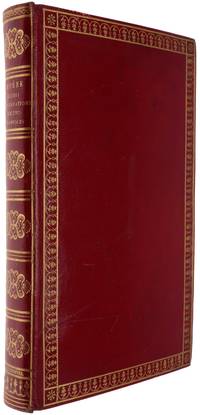
18234768Paris: Crochard 1823. <p>A beautiful copy bound in contemporary red morocco of the definitive version of this continually evolving collection of important memoirs on electrodynamics by Ampère 1775-1836 and others over the period 1820-1823 beginning with his 'Premier Mémoire' the "first great memoir on electrodynamics" DSB.</p>. DOCUMENTING THE BIRTH OF ELECTRODYNAMICS. <p>A beautiful copy bound in contemporary red morocco of the definitive version of this continually evolving collection of important memoirs on electrodynamics by Ampère 1775-1836 and others over the period 1820-1823 beginning with his 'Premier Mémoire' the "first great memoir on electrodynamics" DSB. "Ampère had originally intended the collection to contain all the articles published on his theory of electrodynamics since 1820 but as he prepared copy new articles on the subject continued to appear so that the fascicles which apparently began publication in 1821 were in a constant state of revision with at least five versions of the collection appearing between 1821 and 1823 under different titles" Norman. Some of the 25 pieces in the collection are published here for the first time others appeared earlier in journals such as Arago's Annales de Chimie et de Physique and the Journal de Physique. But even the articles that had appeared earlier are modified for the Receuil or have additional notes by Ampère to reflect his progress and changes in viewpoint in the intervening period. Many of the articles that are new to the present work concern Ampère's reaction to Faraday's first paper on electromagnetism 'On some new electro-magnetical motions and on the theory of magnetism' originally published in the 21 October 1821 issue of the Quarterly Journal of Science which records the first conversion of electrical into mechanical energy and contains the first enunciation of the notion of a line of force. Faraday's work on electromagnetic rotations would lead him to become the principal opponent of Ampère's mathematically formulated explanation of electromagnetism as a manifestation of currents of electrical fluids surrounding 'electrodynamic' molecules. The Receuil contains the first French translation of Faraday's paper followed by extended notes by Ampère and his brilliant student Félix Savary 1797-1841. Ampère's reaction to Faraday's criticisms are the subject of several of the articles in the second half of the Receuil. The collection also includes Ampère's important response to a letter from the Dutch physicist Albert van Beek 1787-1856 in which "Ampère argued eloquently for his model insisting that it could be used to explain not only magnetism but also chemical combination and elective affinity. In short it was to be considered the foundation of a new theory of matter. This was one of the reasons why Ampère's theory of electrodynamics was not immediately and universally accepted. To accept it meant to accept as well a theory of the ultimate structure of matter itself" DSB. The volume concludes with a résumé of a paper read by Savary to the Académie des Sciences on 3 February 1823 and a letter from Ampère to Faraday dated 18 April 1823 which does not appear in the Table of Contents showing that this definitive version of the Receuil was in fact published in 1823. Only three other copies of this work listed by ABPC/RBH. </p> <br /> <p>Provenance: Marcel Gompel 1883-1944 ex-libris on front paste-down - Répertoire général des ex-libris français: G1896. A Jewish professor at the Collège de France Gompel worked in the Laboratoire d'Histoire naturelle des corps organisés from 1922 to 1940 under the direction of André Mayer. In World War II he became a hero of the French resistance and was finally tortured and executed on orders from Klaus Barbie the chief of the Gestapo in Lyon. When Barbie came to trial the prosecutors used Gompel's case as a particularly clear and egregious example of his guilt of crimes against humanity. His superb library was stolen by the Nazis. </p> <br /> <p>The collection opens with the 'Premier Mémoire' 1 numbering as in the list of contents below first published in Arago's Annales at the end of 1820. This was Ampère's "first great memoir on electrodynamics" DSB representing his first response to the demonstration on 21 April 1820 by the Danish physicist Hans Christian Oersted 1777-1851 that electric currents create magnetic fields; this had been reported by François Arago 1786-1853 to an astonished Académie des Sciences on 4 September. In this memoir Ampère "demonstrated for the first time that two parallel conductors carrying currents traveling in the same direction attract each other; conversely if the currents are traveling in opposite directions they repel each other" Sparrow Milestones p. 33. </p> <br /> <p>The first quantitative expression for the force between current carrying conductors appeared in Ampère's less well-known 'Note sur les expériences électro-magnétiques' 2 which originally appeared in the Annales des Mines. Ampère stated without proof that if two infinitely small portions of electric current A and B with intensities g and h separated by a distance r set at angles α and β to AB and in directions which created with AB two planes at an angle γ with each other the action they exert on each other is </p> <br /> <p>gh sin α sin β sin γ k cos α cos β/r2</p> <br /> <p>where k is an unknown constant which he stated could 'conveniently' be taken to be zero. This last assumption was an error which significantly retarded his progress in the next two years before he stated correctly that k = − 1/2 in his article 13 published for the first time in the Receuil. This article comprised 'notes' on a lecture 12 delivered to the Institut in April 1822 in which he surveyed experimental work carried out by himself and others since 1821 he also published for the first time there the words 'electro-static' and 'electro-dynamic'. The full theoretical and experimental proof of the correct value of k appeared in two articles in Arago's Annales in 1822 19 and 20 in an article by Savary 22 and in experiments with de la Rive 17 see below. </p> <br /> <p>On 20 January 1821 Ampère performed an experiment together with César-Mansuète Despretz 1798-1863 intended to support his own theory of the interaction of electric currents against a rival theory of Jean-Baptiste Biot 1774-1862 and Félix Savart 1791-1841 presented to the Académie on 30 October 1820. This was reported in article 21 the first "experimentally based semi-axiomatic presentation of electrodynamics" Hofmann p. 316. A small cylindrical magnet was placed at the same distance from two perpendicular current carrying wires. The Biot-Savart theory predicted that the magnet would experience no net force; Ampère's theory predicted that the magnet would experience a non-zero torque from the nearby currents. But when Ampère and Despretz performed the experiment the magnet did not move p. 343. This defeat together with illness and fatigue caused Ampère to suspend his electrodynamical researches for several months. What little energy he could muster for electrodynamics was mainly devoted to correspondence.</p> <br /> <p>According to Ampère magnetic forces were the result of the motion of two electric fluids; permanent magnets contained these currents running in circles concentric to the axis of the magnet and in a plane perpendicular to this axis. By implication the earth also contained currents which gave rise to its magnetism. It was not long however before Auguste Fresnel 1788-1827 pointed out to his friend Ampère that his theory had several difficulties notably the fact that the supposed currents in magnets should have a heating effect which was not observed. Fresnel suggested that the electric currents circulated around each molecule rather than around the axis of the magnet. In January 1821 Ampère publicly accepted Fresnel's idea. </p> <br /> <p>Not everyone was convinced of the identity of electricity and magnetism however. Humphry Davy 1778-1829 expressed doubts in a letter to Ampère of 20 February 1821 7. Ampère's idea of magnetism created by circulating electric currents was also in direct opposition to a theory put forward by Johann Joseph von Prechtl 1778-1854 and supported by the great Swedish chemist Jöns Jacob Berzelius 1779-1848 according to which electromagnetism was 'transverse magnetism' - whereas Ampère eliminated magnetism and showed how all the phenomena could be accounted for by the action of two electric fluids Prechtl and Berzelius reduced electromagnetism to magnetic action. Berzelius expressed this view in his letter 3; Ampère responded in a letter to Arago 4. </p> <br /> <p>In April 1821 Ampère wrote to Paul Erman 1764-1851 professor of physics at the University of Berlin and perpetual secretary of Berlin's Royal Academy in response to Erman's Umrisse zu den physischen verhältnissen des von Herrn Professor Oersted entdeckten elektro-chemischen Magnetismus Berlin 1821. Ampère declared that his electric theory of magnetism was established "as solidly as a physical theory can be since in only admitting it at first as a hypothesis it serves to predict and make known in advance all the magnetic phenomena formerly known those which M. Oersted has discovered and the new properties whose existence in voltaic conductors I have made known. When one finds such an agreement between the facts and the hypothesis from which one started can one recognize it merely as a simple hypothesis Is it not on the contrary a truth founded on incontestable proofs" In the same letter Ampère calmly harvested Erman's experimental discoveries as further confirmatory evidence. "The observations described in the memoir which you have been so good as to send me are all the more new proofs of it. For if I am not mistaken they could all be predicted according to the theory in which magnets are considered to be assemblages of what I call electric currents" Hofmann pp. 277-8. Erman's experiments influenced Ampère's investigations of induction in July 1821 in which he very nearly anticipated Faraday's landmark discovery of electromagnetic induction a decade later see below.</p> <br /> <p>Ampère again stressed the 'identity' of electricity and magnetism in a lecture to the Académie on 2 April 1821 5. He also expressed his views on the nature of magnetism in a letter to Gaspard de la Rive 1770-1834 8. "Perhaps in an attempt to accommodate the positivistic inclinations of some of his Parisian colleagues or to avoid the adoption of hypotheses Ampère normally wrote on electricity and magnetism in a phenomenological vein eschewing noumenal questions. But there were exceptions: an example occurred in a letter of 15 May 1821 to the Swiss physicist Gaspard de la Rive which was published in the recipient's journal Bibliotheque universelle. Adopting the two-fluid theory of electricity then prevalent in France he spoke rather in passing of "the series of decompositions and of recompositions of the fluid formed by the reunion of the two electricities of which one regards electrical currents as composed" p. 122. Thus at this time Ampère's aetherian framework was based on electric current regarded as de- and recomposition of fluids and magnetism construed in terms of these currents rotating around each magnetic molecule" Grattan-Guinness p. 927.</p> <br /> <p>As far as Ampère was concerned "The physical theory of electrodynamics was now complete. Given the concepts of the ether and the electromotive force of matter as Ampère had formulated them all the observed effects could be explained; not only explained but subjected to mathematical analysis. The combination was a potent one and the accuracy of Ampère's calculations and the depths of his insight led many to embrace his theory. Ampère however was not satisfied with merely creating a model of electrodynamic action. By 1821 he was intoxicated by his vision and convinced that his electrodynamic molecules really existed. They must then also explain other areas of physics and chemistry.</p> <br /> <p>"In his 'Answer to the Letter of M. van Beck' i.e. van Beek 11 published in October 1821 Ampère turned his attention once again to the problem of chemical combination . What determined whether a reaction would take place and if so with what violence was the electrical condition of the participating molecules. To explain the mechanism of chemical combination Ampère had recourse to another analogy; molecules were not only like voltaic piles but also like Leyden jars. The facts of electrochemistry proved "that the particles of substances are essentially in two opposed electrical states." In order to preserve its electrical neutrality each molecule therefore decomposed the ambient ether to attract the electricity of the opposite sign. Ampère did not say if this was why each molecule was surrounded by electric currents but his use of the Leyden jar analogy would appear to rule out this possibility. The molecule presumably had both an inherent electrical charge and electric currents associated with it. It was the inherent static charge that caused chemical combination; the resultant combination of the two electricities gave rise to heat and light and both the material and energy relations of reactions could be understood in terms of the same mechanism . There can be no doubt that he took his own theory seriously as a general theory of matter. Nor was he alone in this. During the 1820's Becquerel in Paris and Auguste de la Rive 1801-73 in Geneva used the electrodynamic model in their researches in electrochemistry" Williams pp. 150-1.</p> <br /> <p>Late in 1821 however Ampère's satisfaction with his theory of magnetism was seriously challenged by Faraday's discovery of electromagnetic rotation a development which thrust Faraday immediately into the first rank of European scientists. "In the autumn he had to face a powerful criticism from Faraday whose paper 'On some new electro-magnetical motions' came out in a French translation 9 in Arago's Annales soon after its appearance in a London journal. A seminal paper in Faraday's contributions to the topic it announced that continuous rotation could occur if a pivoted cylindrical magnet moved around a fixed wire and also if a pivoted wire moved round a fixed magnet. In October he sent to Ampère and Jean-Nicolas-Pierre Hachette 1769-1834 one of his pieces of apparatus and Ampère demonstrated its working to the Académie in November.</p> <br /> <p>"From the theoretical point of view the chief challenge to Ampère's view was Faraday's conviction that such motions could not be explained by theories based on inter-molecular forces. Faraday's alternative drawn from this and other experiments was to give preference to curved 'lines of force'; but Ampère was anxious to preserve his own approach. Accordingly when the translation was prepared he had a set of appendicial notes 10 made by a new helper Félix Savary polytechnicien of the promotion of 1815 and thus one of Ampère's old students and in 1821 principally a geographer by profession. Ampère added his name to these notes to indicate his agreement with them. In his second note Savary rejected Faraday's implicit claim in the paper that the rotatory motion could be taken as a 'primitive fact' in electromagnetic phenomena and in the next note he showed how that motion could be explained in Ampère's terms" Grattan-Guinness p. 928.</p> <br /> <p>"In his original article describing the discovery of a continuous rotation of one extremity of a current-carrying wire around a magnet as well as the rotation of one extremity of a magnet around a current-carrying wire Faraday stated the following: "Having succeeded thus far I endeavoured to make a wire and a magnet revolve on their own axis by preventing the rotation in a circle round them but have not been able to get the slightest indications that such can be the case; nor does it on consideration appear probable." Ampère on the other hand considered that this new kind of motion might be produced in the laboratory. He was also the first to obtain it experimentally. He communicated his discovery to the Academy of Sciences of Paris in 7 January 1822 14. In order to obtain continuous rotation of a magnet around its axis Ampère initially floated it in mercury by the help of a counterweight in its lower extremity. By closing the circuit a constant current flowed vertically downwards through the upper extremity of the magnet leaving laterally along its lower portion and going through the mercury. When this constant current was flowing through the magnet it rotated around its axis relative to the ground" Assis & Chaib p. 123. Ampère wrote to Faraday in April 1823 describing these electromagnetic rotation experiments 24.</p> <br /> <p>In the letter to van Beek 11 described earlier Ampère described an experiment suggested by Fresnel to decide whether in a ring of copper macroscopic currents would be induced by a nearby coil or magnet. A first trial in July 1821 produced a negative result which fitted well into Ampère's theory of molecular currents. When he repeated the experiment with a more powerful magnet in August 1822 however he indeed obtained an effect and realized that this was the induction of currents by magnets. But as a consequence of his struggle with Faraday's rotations he concentrated on his magnetic theory. Although the positive result of the induction experiment again opened the way for both interpretations of magnetization it did not provide any positive hint concerning which of them should be preferred. Thus Ampère declared only that the result did not refer to his theory and decided not to pursue it further. A decade later when Faraday again discovered electromagnetic induction and gained great publicity Ampère bitterly complained about his former disregard of the result.</p> <br /> <p>Between 1821 and 1822 Gaspard de la Rive van Beek and Faraday performed some experiments showing that the poles of a cylindrical magnet are not located exactly at the extremities of the magnet as was predicted by Ampère's theory. These experiments forced Ampère to modify his conception of microscopic currents. In a letter addressed to Gaspard de la Rive dated 12 June 1822 15 Ampère included a figure which presents the equilibrium configuration of the microscopic currents around the particles of the magnet due to the interaction of all microscopic currents. That is due to the collective interactions between the small current-carrying loops the planes of these molecular currents should no longer remain orthogonal to its magnetic axis . This final conception of molecular currents presented by Ampère with their planes inclined relative to the axis of an uniformly magnetized bar is accepted in its essence up to the present time" Assis & Chaib p. 105.</p> <br /> <p>As described earlier Ampère had concluded in his article 13 that the constant k in his law for the force between current carting wires should be equal to −1/2. This implied however that two collinear and parallel current elements should repel one another when both currents flowed in the same direction towards the same point in space. Sceptical about this prediction he performed with Auguste de la Rive in September 1822 in Geneva an experiment to test it reported in 17 pp. 284-5 . This experiment has received several names in the literature: "Ampère's floating wire experiment" "Ampère's hairpin experiment" and "Ampère's bridge experiment." Ampère himself gave a very clear description: "Two very interesting electro-magnetic experiments have lately been made by M. Ampère in the laboratory of M. de la Rive at Geneva. M. Ampère had been induced from his mathematical investigations to expect a repulsion between two portions of an electrical current passing in the same direction and in the same right line or that every part of an electrical current would repel the other parts a result which may be comprehended by conceiving an endeavour in the current to elongate itself. The experiment which M. Ampère has contrived to illustrate this action of the current consisted of dividing a dish into two parts by a division across the middle and filling each division with mercury a piece of wire was then bent into the form of the letter U but the curved part was bent to one side so that the two limbs of the wire might lie on the mercury one on each cell and the bent part pass over the division without touching it. The wire was covered with silk except a small portion at each extremity by which the communication was established with the mercury" Assis & Chaib p. 145. "Ampere and Auguste de La Rive reported that as soon as a current was sent through the circuit and regardless of the direction of this current the originally stationary floating wire was propelled across the mercury pool away from the terminals connected to the power source. Ampere immediately attributed this phenomenon to repulsive forces between collinear pairs of current elements that is pairs in which one member is an element of the current in the mercury flowing between the bare end of the wire and the adjacent terminal and the other is an element of one of the linear segments of the wire. Interpreted in these terms the experiment represented a striking confirmation of the prediction Ampère had made to the Académie three months earlier. The importance Ampère ascribed to this demonstration was promptly reflected in the way he publicized it. For example in sharp contrast to his ambiguous and incomplete descriptions of induction the text he composed for his verbal report to the Académie includes a thorough and accurate account of the floating-wire demonstration" Hofmann pp. 317-8.</p> <br /> <p>In his article 22 Savary provided further support for Ampère's conclusion that k = −1/2 by analyzing an experiment carried out in 1820 by the chemists Joseph Louis Gay-Lussac 1778-1850 and Jean-Joseph Welter 1763-1852. "Initially they utilized an unmagnetized steel ring which did not interact with a compass needle. If this ring was broken into pieces its pieces also had no influence upon the magnetized needle. They then coiled a toroidal helix around this ring and a constant current flowed through it. The current was then turned off and the helix was removed out of the ring. The ring did not interact with a compass needle placed nearby. However when the ring was broken into pieces each piece did now interact with the magnetized needle. Each piece behaved now as a small magnet. That is each small piece of the ring was magnetically polarized with a North and a South pole so that it became magnetized" Assis & Chaib p. 149. Savary showed that the results of this experiment were possible only if k = 1 or −1/2 and as previous experiments by Ampère had shown that k could not be positive he could conclude that k = −1/2. "Savary's contribution was well publicized by Ampère. He wrote several complimentary reviews for influential journals and wrote to la Rive that Savary's presentation of his work to the Académie marked "a kind of epoch in the history of dynamic electricity" Hofmann p. 321.</p> <br /> <p>List of Contents author is Ampère unless otherwise stated:</p> <br /> <br /> Premier Mémoire. De 1'Action exercée sur un courant électrique par un autre courant le globe terrestre ou un aimant pp. 3-68<br /> AMPÈRE & Gillet de LAUMONT Additions au mémoire précédent - note sur les expériences électro-magnétiques de MM. Oersted Ampère Arago et Biot pp. 69-92<br /> BERZELIUS Lettre à M. Berthollet sur l'État magnétique des corps qui transmettent un courant d'électricite pp. 93-99<br /> <br /> <br /> Lettre de M. Ampère à M. Arago pp. 99-108<br /> Notice sur les Experiences électro-magnétiques de MM. Ampère et Arago lue à la séance publique de l'Académie royale des Sciences de Paris le 2 avril 1821 pp. 109-112<br /> Lettre de M. Ampère à M. Erman secrétaire de 1'Académie Royale de Berlin pp. 113-120<br /> DAVY Extrait d'une Lettre de Sir H. Davy à Mr. Ampère pp. 120-121<br /> Extrait d'une Lettre de Mr. Ampère au Prof. De La Rive pp. 121-124<br /> FARADAY Mémoire sur les mouvemens électro-magnétiques et la théorie du magnétisme pp. 125-158<br /> AMPÈRE & SAVARY Notes relatives au Mémoire de M. Faraday pp. 158-167<br /> Réponse de M. Ampère à la Lettre de M. Van Beck sic sur une nouvelle Expérience électro-magnétique pp. 169-198<br /> Exposé sommaire des nouvelles Expériences électro-magnétiques faites par différens Physiciens depuis le mois de mars 1821 lu dans la séance publique de l'Académie royale des Sciences le 8 avril 1822 pp. 199-206<br /> Notes sur cet exposé des nouvelles Expériences relatives aux Phénomènes produits par 1'action électrodynamique faites depuis le mois de mars 1821 pp. 207-236<br /> Expériences relatives aux nouveaux phénomènes électro-dynamiques que j'ai obtenus au mois de decembre 1821 pp. 237-250<br /> Extrait d'une Lettre de M. Ampère au Prof. De La Rive sur des expériences électro-magnétiques 22 June 1822 pp. 252-258<br /> De l'Action qu'exerce la Terre sur les conducteurs voltaïques pp. 259-261<br /> De la RIVE Mémoire sur l'Action qu'exerce le globe terrestre sur une portion mobile du circuit voltaïque pp. 262-286<br /> Remarks on the preceding memoir pp. 286-292<br /> Second Mémoire. Sur la Détermination de la formule que représente 1'action mutuelle de deux portions infiniment petites de conducteurs voltaïques pp. 293-318<br /> Additions au Mémoire précédent. Extrait d'un Mémoire présenté à l'Académie royale des Sciences dans la séance du 16 septembre 1822 pp. 319-324<br /> Exposé méthodique des phénomènes électrodynamiques et des lois de ces phénomènes pp. 325-344<br /> SAVARY Extrait fait par M. Savary du Mémoire qu'il a lu à l'Académie royale des Sciences le 3 fevrier 1823 pp. 345-354<br /> Observations additionelle pp. 354-364<br /> Extrait d'une Lettre de M. Ampère à M. Faraday Paris 18 avril 1823 pp. 365-378<br /> <br /> <p>Table pp. '357-360' errata on p. '360'</p> <br /> <p>Errata p. 383.</p> <br /> <p>The bibliographical complexity of this work is a direct result of Ampère's modus operandi: "His work was marked by flashes of insight and it often happened that he would publish a paper in a journal one week only to find the next week that he had thought of several new ideas that he felt ought to be incorporated into the paper. Since he could not change the original he would add the revisions to the separately published reprints of the paper and even modify the revised versions later if he felt it necessary" Norman. Our version of the Receuil is more extensive than the most complete copy owned by Norman and is probably that alluded to in the note to item 45 in the Norman catalogue: "Another probably later version has been noted with additional pages 361-378 plus an additional page of errata p. 383 and ten instead of nine plates." This copy additionally has pp. 223-236 which are missing from the Norman copy and to which the additional plate refers.</p> <br /> <p>Ekelof 819; Norman 44-45 less complete issues; Ronalds 10; Wheeler Gift 784 copy with 344 pages only - "The author's classical investigations in electro-dynamics together with experimental illustrations. Also a paper by De la Rive on the action of the earth on a movable circuit carrying a current". Assis & Chaib Ampère's Electrodynamics 2015. Grattan-Guinness Convolutions in French Mathematics 1800-1840 1990. Hofmann André-Marie Ampère 1995. Williams Michael Faraday 1965.</p> <br/> <br/> 8vo 204 x 126 mm pp. ii 1-3 4-167 1 blank 169-250 252-258 1 blank 259-378 1 358-360 383 with 10 folding engraved plates plates 1-5 signed by Adam after Girard one small text woodcut. Contemporary red morocco gilt by Lefebvre flat spine richly decorated and lettered in gilt borders of covers gilt-tooled within double rules inner gilt dentelles all edges gilt. A very fine copy. Crochard unknown
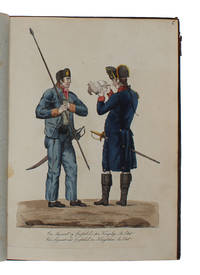
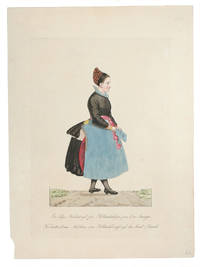
180560296København ca. 1805-08. 4to. Near contemporary ca. 1850 full brown calf with richly gilt spine and blindstamped border to boards. Spine worn and capitals lacking a bit of leather. Front hinge cracked strengthened from verso. Internally very nice and fresh with only occasional brownspotting. With the book-plate of John Arden to inside of front board. Bound with the original wrappers for the fourth and ninth series. The front wrapper for the ninth has the title written in English in contemporary hand to the top right slightly cropped in ink that seems identical to the "9" denoting the series number. 57 out of in all 72 published engraved an excellently hand-coloured plates of costumes one present in two copies plate nr. 67. All plates with Danish and German text in the plate. Apart from two leaves that are slightly smaller the leaves measure 255x19 cm. The print surface on all measures 205 x 14 cm. <br/><br/><em>An unusually large collection of 57 of the rare plates that constitute the first Danish work on national costumes. The work is of the utmost scarcity with only one known complete copy in public institutions Danish University Library - the copy in the Royal Library is also incomplete. The title is known solely from the wrappers that each series of six plates was issued with. These wrappers are also exceedingly scarce and almost never present. Our copy contains two of them. As always the issue number has been added in hand. Rieter and Senn were both born and educated in Switzerland and both arrived in Copenhagen in 1804. They studied costumes on Sealand the West Sea Islands and Holsten. The series of costumes is divided into two sections the first depicting those of Copenhagen along with Amager and Sealand the other that of Southern Jutland including Holsten and the North Friesian Islands. Rieter left Copenhagen already in 1805 and Senn was left to complete the publication. It is assumed that Senn did most of the drawings. Only very few complete copies of the work are known to exist only one in public collections. Colas states that “I do not know the exact number of plates to have been published in this collection which is very rare. The copy of Lipperheide contains 56 plates and that of the University of Copenhagen has 72.†Own translation from French. Lipperheide 1045 56 plates; Bibl. Danica II: 1080 incomplete; Colas: 2557; Krohn: 873-944. </em> hardcover
180536079København ca. 1805-08. 4to. Varierende bladstørrelser. Trykflade ca. 20x15 cm. Med 59 kobberstukne og håndkolorerede dragtplancher samt 6 tillægsplancher i tusch og akvarel. Alle med dansk og tysk tekst under billedet. Indlagt i bogæske af helshirt. <br/><br/><em>Af største sjældenhed. Der udkom i alt 72 blade af denne Danmarks første arbejde om vore nationaldragter men en komplet serie kendes kun i ganske få eksemplarer - kun et eksemplar forefindes i offentlige biblioteker UB mens eksemplaret i KB ikke er fuldstændigt. Titlen kendes kun fra de 12 hefteomslag som medfulgte udgivelsen de er ikke til stede her. Rieter og Senn som begge var født og uddannet i Schweitz ankom til København i 1804 de gjorde dragtstudier på Sjælland på Vesterhavsøerne og i Holsten. Serien af dragtplancher er opdelt i 2 afdelinger den første viser københavnske med Amager og sjællandske dragter mens den sidste gengiver sønderjydske Holsten og de nordfrisiske øer. Denne sidste afdeling med ialt 37 plancher foreligger her komplet og blev genudgivet 1909 af Karl Häberlin i "Volkstrachten der nordfriesischen Inseln". Rieter forlod København allerede i 1805 således måtte Senn fuldføre udgivelsen. Antageligt har Senn udført de fleste af tegningerne. De medfølgende 6 originale akvarel-plancher supplerer serien således at den omfatter ialt 65. Disse kopier fra Det 19.årh. har flg. numre hos Krohn: 1317233234 og 35.An extremely scarce series of the first Danish work on National Costumes only known in a few copies.Bibl. Danica II: 1080 incomplete - Colas: 2557 only 56 plates. - Krohn: 873-944 </em> unknown
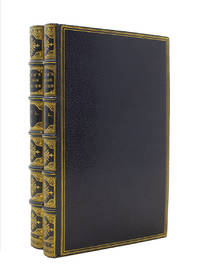
182368858London: Published by C. Baldwyn 1823. CRUIKSHANK George. . GRIMM Wilhelm. ZAEHNSDORF binder. German Popular Stories. Translated from the Kinder und Haus Marchen Collected by M.M. Grimm from Oral Tradition. London: Published by C. Baldwyn 1823.<br> <br> Full description:<br> <br> GRIMM Jacob and Wilhelm. CRUIKSHANK George illustrator. German Popular Stories Translated from the Kinder und Haus Marchen Collected by M.M. Grimm from Oral Tradition. London: Published by C. Baldwyn 1823; James Robins & Co. London and Joseph Robins Junr. & Co. Dublin 1826.<br> <br> First English edition with the second issue title-page for Volume I with an umlaut over the "a" in "Märchen" in the title. "A few copies of the engraved title were printed off before the umlaut was added in 'Märchen'" Otherwise with the following first issue points: With a list of plates on page 218; the title to the tale of "The Travelling Musicians" on p. 9 has no additional words; in the "Notes" at the end of the volume the note referring to "Preface p. vii" comes last; and Baldwyn's advertisement at the end begins "On the First of November was published Price 5s. No. XII. Completing the Sixth Volume of The Retrospective Review."<br> <br> Two twelvemo volumes 7 3/8 x 4 3/8 inches; 190 x 110 mm. 2 xii 240 12 publisher's advertisements; 2 iv 256 1 1 printer's imprint 1 ads 1 blank 12 publisher's advertisements pp. Half-titles in each volume. With twenty-two etched plates by George Cruikshank including two vignette title-pages. The plates in Volume I are printed in brown and black in Volume II.<br> <br> Bound by F. Bedford in full navy crushed levant morocco. Covers triple-ruled in gilt. Spines tooled and lettered in gilt in compartments board edges ruled in gilt turn-ins decoratively tooled in gilt. Top edge gilt others uncut. Maroon coated endpapers. Leaves D2 and D3 in volumes I and B10 and page iv in Volume II with small closed tears to fore-edge margins invisibly repaired and not affecting text. Text is very clean and margins are large. The drab printed pictorial front and back wrappers for Volume I along with the spine are bound in to the end of volume I. The printed paper spine label from volume II is bound in to the end of that volume. Overall an about fine set.<br> <br> "The stories that we know today as Grimm's Fairy Tales were collected from oral tradition by the brothers Jacob and Wilhelm Grimm philologists and pioneer folklorists. They began to publish the results of their work in 1812 in Germany under the title Kinder- und Haus-Märchen. The tales first appeared in English in 1823 with the publication of the first volume of German Popular Stories. The translator was Edgar Taylor and the book's publication was an auspicious event for at least two reasons. It launched an era in which folklore and the fairy tale would stimulate writers to produce an increasingly imaginative literature for children. And German Popular Stories also put before the public the remarkable illustrations-perhaps his best work-of George Cruikshank. The illustrations evoke wonderfully the grotesque awesome yet matter-of-fact qualities of witch and goblin of Frog Prince Rapunzel Rumpelstiltskin and all the other characters that people the tales. As illustrations to these fairy tales Cruikshank's etchings have never been surpassed" Morgan Library Early Children's Books.<br> <br> Cohn 369. Morgan Library Early Children's Books 197. Ray The Illustrator and the Book in England 112.<br> <br> HBS 68858.<br> <br> $10000. Published by C. Baldwyn unknown
18601726401860. CHEVREUL Michel-Eugène and M. JACOB editors. Le teinturier universel: echo des applications des Matières colorantes. 96 fascicles in four volumes. 192; 192; 192; 192 pp. together with 192 specimens of various dyes on paper cotton silk rope and leather. Folio 310 x 228 mm. bound in original printed wrappers together in a new red cloth box. Paris: Teinturier Universel 1860-1864. Complete set containing every issue from 1 année no. 1 1 avril 1860 through 4 année no. 24 15 mars 1864. The periodical was issued semi-monthly; each issue includes lecture notes from M.E. Chevreul's "Cours de teintures des Gobelins" here in its first printing. Chevreul's colour studies made him one of the most influential scientists in France during the nineteenth century. From 1824 he was director of dyeing at the Manufactures Royales des Gobelins where he taught chemistry for nearly sixty years. "Chevreul's immediate task at Gobelins was to work on the improvement of colour intensity and fastness in wools. He had been selected for this position because he was an outstanding chemist; and his initial studies were on the chemical aspects of dyes and dyeing attempting to place the art of dyeing on a more rational basis than the complicated and empirical procedures then employed.Chevreul rendered an important service to the dye industry during the years prior to the advent of synthetic dyestuff" DSB. With nearly two hundred specimens of various colour dyes on paper cotton silk rope and a few illustrating the tanning and colouring of leather. The final volume investigates a large number of contrasting colours on the same type of sample Échantillon de Papier. Fragile spines somewhat worn but an excellent copy in original condition with many gatherings unopened. A desirable copy of a rare and important work. Bibliotheca Tinctoria 1218. hardcover
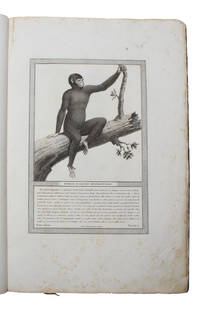
182232794Milano P. Hugues 1822. Folio. 48x325 cm. Bound in one cont. hcalf richly gilt back and title-label with gilt lettering. Title-label a little torn. Lightly rubbed along edges and spine ends but good. Engraved ornamental title-page printed in brown. 6 engraved leaves with text and 4 plates with descendt-line skeletons etc. 17 printed leaves of text 25 engraved leaves with text Indices and text. And in all 89 fine stipple-engraved plates 4 separately numb. I-LXX I-XV. Plates with engraved frame and at bottom engraved text in Italian.A large uncut copy with broad margins. Scattered marginal brownspots a few tears to margins images clean and bright. <br/><br/><em>Scarce title-issue of this important and perhaps the largest monograph on primates apes and monkeys from the 19th century by the French painter Nicholas Henri Jacob. The original issue was published in 2 parts 1812-14. This title-issue has a reset title-page a new dedication and the text beneath the image is in Italian. The illustrations in these splendid stipple-engravings are the same.The plates depict apes monkeys and lemurs from the Old World and The New World in 5 Classes: 1. Genere; Orang; Pithecus. 2. Genere. Babbuino. 3. genere. Guenone; Cercopithecus. 4. Genere. Sapajù; Cebus. 5. genere. Sapajù-Sagoino; Callithrix.- Part II: Famiglia. I Maki; Lemures.Wood p. 402. - BMC NH II:916 but with the year 1823 "This is the same as the original from 1812 except in the setting of the title-page of the dedication and of the translations of the introduction." - Nissen. 2080. </em> unknown
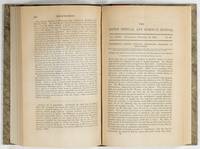
1846229581846-1847. Boston Med. Surg. J. 35/ 1-26. - Boston David Clapp August 1846 to February 1847 8° 2 8 544 IV pp. 1/4-leather and marbled boards; Small brown stains on 5 pages and some browning of text leves; fine copy. First Edition! Read Before the Boston Society of Medical Imporvement Nov. 9th. 1846 an abstract having been previously rea before the American Academy of Arts and Sciences Nov. 3rd. 1846. Communicated for the Boston Medical and Surgical Journal. VERY RARE - Sir William Osler him only on his deathbed on Dec. 1919 was able to incorporate into his collection. "When this long-looked-for volume arrived in Dec. 1919 towards the end of his last illness Sir Wm. Osler asked that the following note be inscribed in it: "All things come to him who waits - but it was a pretty close shave this time! . a blastoderm from which the enormus literature has developed." Content relating to Anaesthesiology: 1 Smilie E.R.: Insensibility produced by the inhalation of the vapor of the ethereal solution of opium. Letter p.263 28.Okt. 1846. 2 Bigelow H.J.: Insensibility during Surgical Operations produced by Inhalation. Read before the Boston Society of Medical Improvement Nov. 9th. 1846 an abstract having been previously read before the American Academy of Art and Sciences Nov. 3rd. 1846. p.309; with editorial note "Operations without pain" on p. 324. - Garrison & Morton No.5651: "The first published description of ether anesthesia. John Collins Warrren performed the operation and William Morton delivered the anesthetic. 'Bigelow a surgeon witnessed the operation and left an excellent account in the above paper'." 3 Flagg J.F.: The inhalation of an ethereal vapor to prevent sensibility to pain during surgical operations p.356. 4 Peirson A.L.: Surgical operations with the aid of the "new gas" p.362. 5 Warren J.C.: Inhalation of Ethereal Vapor for the Prevention of Pain in surgical Operations p.375. - ".stands out in literature of surgical anesthesia as fundamental and truly epoch making". Osler 6 Bigelow H.J.: Insensibility during surgical operations produced by inhalation p. 379. - Letter in reply to Flagg p. 356. 7 Ellsworth P.W.: The discoverer of the effects of sulphuric ether p. 397. 8 Flagg J.F.: Inhalation of sulphuric ether p. 407. - Reply to Bigelow p.379. 9 Parkman S.: Inhalation of ehtereal vapor. Painless reduction of a dislocated shoulder joint p.409. 10 Peirson A.L.: Sequel to Dr. Peirson's operations p.410. 11 Editorial: Insensibility during surgical operations produced by inhalation p.413. 12 Mansfield J.D.: The inhalation of ethereal vapor &c. p.424. 13 Wallace W.C.: Remarks on the the inhalation of ether previous to surgical operations p.435. 14 "A Correspondent who has no Property in Patent Rights": Are inventions in surgery and in chemistry legitimate subjects for patents p.436. 15 Editorial: Apparatus for inhaling the new gas p. 440. 16 "N.Y. Correspondence": Letheon in New York p. 442. 17 B. T.E.: Insensibility produced by ethereal inhalation p. 445. 18 Cox A.L.: Experiments with the letheon in New York p. 445. 19 "N.Y. Correspondence": Insensibility during surgical operations p.464. 20 "A Physician": Ethereal vapor p.472. 21 Kimball H.: Use of the letheon; seventeen teeth extracted p.489. 22 "Claudian": The patent "Letheon" p. 514. 23 "N.Y. Journal of Med. and Collat. Sciences": Insensibility during surgical operations by inhalation p. 518. 24 "N.Y. Correspondence": Letheon in New York p. 520. 25 Editorial: Insensibility by inhalation of the letheon p. 542. Osler 1357; Cushing B 380; Fulton & Stanton Anesthesia IV1; Keys p. 29; Cole Anesthesia pp.32-42; Duncum pp.99-120. Garrison & Morton No.5651 hardcover
1817D12811Milano: P. Hugues 1817. Hardcover. Very Good. Contemporary half black and green morocco gilt-stamped lettering and ornament direct in spine compartments 5 raised bands; folio 455x300mm; leaves printed on the recto only with wide margins; consisting of engraved illustrated title-p. I-VI engraved text and illustrations 3 scimie dell' antico continente prima classe orang I-IX 2 seconda classe babbuino X-XVII 2 terza classe guenone XVIII-L 3 scimie del nuovo continente quarta classe sapaju LI-LX 2 quinta classe sapaju-sagoino LXI-LXX LXXI-LXXXVIII text 2 indice 6 dei lemuriani ossia maki propriamente detti genere maki I-VIII 2 genere indri IX-X 2 genere loris XI-XIII 2 genere galago XIV 2 genere tarsiere XV XVI indice. Collates complete with printed and engraved text and a grand total of 85 very fine -- and very charming -- engraved plates of monkeys most of whom will remind you of someone you know. Spine tips and edges of boards discreetly renewed; some light scuffing along spine and joints. Marginal browning; a few tiny worm holes to last few leaves; otherwise nice and bright. Bookplates of Cecilia Barbosa de Moura. <br/><br/>An important early monograph on primates including orangutans baboons guenons sapajous lemurs indris loris galagos tarsiers. P. Hugues hardcover
1812B5180Milano: F. Artaria c. 1812. A handsome example of this important work. . Edition: First Edition. Binding: Contemporary full vellum. Gilt text on morocco label on spine. All edges dyed red. Notes: Text is in Italian with French and German translations for the plates. This book often considered to be one of the most important books on Natural History published during the Napoleonic Era delves into the origin and habits of different species of apes and monkeys from both the Old and the New World. The dedication page is for Eugene Napoleon the viceroy of Italy. <br><br>Nicolas Henri Jacob 1782-1871 was a French painter draftsman and lithographer. He was the cousin of the famous cabinetmaker Georges Jacob. He taught drawing at the National Veterinary School of Alfort. He was famous for his anatomical drawings culminating in his opus in collaboration with Bourgery: Complete Treatise on the Anatomy of Man and furniture design. <br><br>Luigi Rados 1773–1840 was an Italian engraver. He was born in Parma and was educated in the Academy of that city. His principal engravings are those depicting Emperor Francis II and King Ferdinand after Jean-François Bosio.<br> Size: Folio 450x325mm. Illustration: Illustrated with an engraved title page an engraved dedication page and a series of 73 fine monographs of apes and monkeys by the respected French painter Nicholas Henri Jacob and stipple-engraved by Luigi Rados. Pages: P. Engraved title page. Engraved dedication page. IV preface. 1-73 numbered III-V and I-LXX. Category: Book Europe Italy; Book Natural History; Book Plate Books General; F. Artaria hardcover
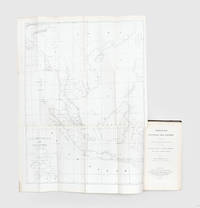
1844186843London: James Nisbet and Co. 1844. The novelty of his teachings apparently attracted considerable interest First edition arguing that the main benefit of British military expansion in Asia lay in the new opportunities for religious conversion rather than increased freedom of trade. A member of the London Missionary Society Tomlin 1793-1880 accompanied the German Karl Gützlaff during most of his pioneering journey through Thailand in 1828 - the first visit to the country by Protestant missionaries. In Thailand Tomlin "distributed religious tracts and preached but was unable to build a church. In a period of religious freedom the novelty of his teachings apparently attracted considerable interest. After visiting Bali he returned to Bangkok although as little more than a visitor. By 1833 Tomlin was principal at the Anglo-Chinese College in Malacca when he abolished the stipend the mission paid to students. His relationship with the London Missionary Society came to an end in 1834 after which he ran his own school in Malacca" Howgego. Tomlin's prefatory remarks appeal for greater missionary work in China following the First Opium War. "That vast empire which has been closed against us and the pure Gospel for many ages is at last thrown open" p. xiv. The subscriber's list at the rear lists only 177 copies distribution focused on the Liverpool area. Octavo. Folding frontispiece map. Original brown horizontal-grain cloth spine lettered in gilt and stamped in blind covers blocked in blind yellow coated endpapers edges untrimmed binder's ticket of Westleys & Clarke. Front free endpaper with near-contemporary ink annotation referencing pp. 315 & 361 marginalia on those pages; recent pencillings on endpapers. Cloth perhaps lightly cleaned a few marks to boards head of front joint just starting contents clean: a very good attractive copy. Cordier 1325 incorrectly listing the date as 1845; Howgego IV T10; Lust 944; not in Löwendahl. hardcover
18192518New York Nov. 18 1941. JACOB KALICH. COMMEMORATION TO JACOB KALICH. FOR FIFTY YEARS OF PROGRESS AS A PLAYWRITE DIRECTOR AND PRODUCER IN THE YIDDISH THEATRE. SIGNED BY KALICH and his ardent admirers. Over thirty signatures of those in the Yiddish Theatre.Watercolor pen and ink gouache. On vellum. 23 x 15.<br /> Right side: Tillie Rabmovitzty Ben Pepper Dolly Pepper O Salzman Michael Field David Dubin All the best Luba S.C. Cantor Edmond Bayends Blanche d. Ross Rose Dubrow Wm. H. Silverblatt May Glaubeman Jean Joan Grunfield Alias Yor II Sara Libromshow. Center: Hoseph Buloff Jeanne Greene Betty Sims Marvin Lowenthanl Zesnile John Jerome Veltin Miriam Kressyn Minnis Salzman Louis Golding Max Kozyk I. Grazabeman David Dubin Alexander Salzman Yetta Zweilig Clara Picon. <br />Left Side: Joseph Kalich Joseph Rumchinsky composer and writer Non Einhorn Molly Picon Seymour Rechzeit husband of M. Kressyn Abe Eller Slyvia Reger Kline Fred Berns Lucy and Michael German Mr. and Mrs. Isadore Gatevi Jacob A. Zanger R. Gurkin Frieda Rumshinsky/Victor Sims Nelson Picon Aaron Hoffman Ernie Norma's husband Welcome stranger Adelstein.<br />Please notify me for detail photos.
18072114<p><b>Rage against missions: a landmark anti-colonialist treatise</b></p><p>Haarlem Joh. Enschedé en Zoonen & J. van Walré 1807.<br /></p><p>4°. 4 X 2 27 1 blank 296 pp. With two engraved medallions on the first title-page.</p><p>First edition of a landmark Dutch anti-colonialist and anti-missionary treatise. This controversial and heavily criticized work marks a shift in thinking about the Western influence around the world. It is a rare work and here in excellent. Only a few copies are recorded in libraries outside The Netherlands.At the end of November 1803 the Teyler's Religious Society in Haarlem organized a competition. A treatise was to be prepared on the question "What service have missionaries done to the propagation of true Christianity in the past two centuries and what fruit is there been to expected from the present active missionary societies in this regard". On November 30 1804 Haafner's manuscript of 195 pages arrived. This turned out to be the only entry making it inevitable to crown him the prize winner.He was born in Halle in Germany in 1754 came to Amsterdam with his parents in 1765 and left with his father in 1766 for the East Indies. Shortly before arriving in Cape Town Haafner's father died and the twelve-year-old boy was left alone. He was taken into foster care. In 1770 he returned to Amsterdam but the following year he left for Batavia. Via Dutch India he ended up in the British Indies. He spent years on the Coromandel Coast in eastern India traveled in India and Sri Lanka and returned to the Netherlands in 1787. He made bad investments and lost all his money which is why he tried to earn some money as a translator later also as a publicist. His first travelogue appeared in 1806 the present award-winning treatise on missions in 1807 and he died in 1809. After his death his son published many of his father's works with success.Haafner had seen missionaries at work with his own eyes in the Cape Colony in Indonesia and in India. His judgment on missions is damning. He recognized that mission implies cultural destruction and is an illicit interference with other religious beliefs. In his treatise Haafner treats various population groups per chapter. In the first chapter of his essay he deals with missions among the Hottentots. During his years in the Cape Colony he'd gotten to know these people and even had a relationship with a Hottentot girl. He qualified the mission to the Hottentots as a hopeless task. But Haafner not only scathingly judged what he saw with his own eyes of missionary zeal and missionary crime. In his second chapter he writes about the black slaves in the Americas. He vigorously rages against slavery against the capture of slaves in Africa and against the transfer of them to the Americas. In the third chapter Haafner deals with the mission to the Indians in North America and the fourth chapter on the mission among the Hindus in India.His style and eloquence make him the best Dutch writer on this subject before Multatuli and as a polemicist in many ways ahead of him that. This treatise is still a pleasure to read and relevant today. Later editions appeared in 1823 same publisher and 1993 edited by Jaap de Moor and Paul Van de Velde. Haafner's creed is as follows:"I see all people of whatever colour nation and religion as my fellow humans and brothers; whomever thinks the same will not be offended but indeed be pleased that I defend and intercede the innocent and oppressed Indians and seek to load their tyrants with shame".</p><p>Condition: repair in blank page very minor spotting on a couple pages otherwise an excellent wholly untrimmed copy.</p><p>Reference: P. van de Velde Wie onder palmen leeft. De sublieme wereld van Jacob Haafner 2008.</p> Enschedé
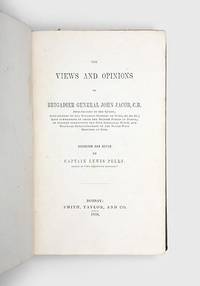
1858175736Bombay: Smith Taylor and Co. 1858. The thoughts of an influential British administrator in India on British policy in the east First edition of this important collection of Jacob's often controversial views; a London edition followed in the same year. The book covers general and civil administration military matters the North-West Frontier the Anglo-Persian War and Jacob's proposals for reorganizing India's civil and military administration. John Jacob 1812-1858 travelled to India in 1828 as a second lieutenant in the Bombay Artillery. He served in Gujarat before joining the Bombay column in the First Anglo-Afghan War. He was placed in charge of ordnance stores at Fort Bukkur and later appointed to command the Sind Irregular Horse under Sir James Outram. In this role he suppressed raiding in Sind and Kachhi though his support for Outram in a dispute with Charles Napier damaged his career prospects. Despite this Napier authorized him in 1846 to expand his force to 1600 horsemen. He successfully led campaigns against Bugti Baloch tribesmen and as political superintendent of Upper Sind developed frontier defences roads and canals. He also negotiated a treaty with the khan of Kalat. Promoted brigadier-general during the Persian War 1856 he commanded British forces in Persia after the fall of Muhammarah. He died of brain fever in Jacobabad in 1858 mourned by an estimated 10000 residents. The editor Lewis Pelly 1825-1892 a Bombay Army captain joined Jacob as aide-de-camp in Persia in 1857 and became brigade major of the Sind Frontier Force. After Jacob's death Pelly's career flourished under Sir Bartle Frere's patronage. He became chargé d'affaires at Tehran 1859 political agent and consul at Zanzibar 1861 and in 1863 replaced J. Felix Jones as British Resident in the Persian Gulf. Pelly relocated the residency from Bushire to Muscat expanding British influence in the Gulf. His impact is noted in Saudi Arabia's Memorial on the Muscat-Abu Dhabi territorial dispute: "Lieutenant Colonel Lewis Pelly became the British Resident in the Persian Gulf in 1863 and for the next nine years he played an important part in events there. Pelly came to the Gulf after a long association with General John Jacob whose forthright views on the position of the British in the East he admired to the point of collecting and publishing them in a volume for the enlightenment of the British public" Memorial p. 230. This first edition is scarce WorldCat showing six locations only plus the Oriental and India Office Collection British Library. We trace only a single copy of the London edition at auction. The book reflects both Jacob's strategic vision and Pelly's commitment to shaping British policy in the Gulf. Provenance: Charles Waddington 1796-1858 with his ownership inscription on the front free endpaper dated "Kurachee Karachi 19th Feby. 1858". Waddington served in the Bombay Engineers from 1813 and was superintending engineer for Bombay and southern southern provinces. He was ADC to Napier at Miani 1843 and in October 1847 was appointed superintending and executive engineer at Aden altered to chief engineer in April 1851. In 1854 he was appointed chief engineer in the public works department Bombay and "his services in preparing the Persian expedition received official acknowledgement. In November 1857 he was appointed to the command in Sind" ODNB; in September 1858 he left India due to ill health and died in London on 22 November. With the armorial bookplate of his son Horace Waddington 1834-1930to front pastedown. Octavo. Tables to the text 4 engraved plates on 2 leaves. Original green morocco-grain cloth gilt lettered on the spine embossed arabesque panels to the covers. A little rubbed neatly rebacked with majority of original spine laid down 3 letters partially replaced on the underlying cloth endpapers browned contents with pale toning and occasional light foxing overall a well-preserved copy very good. Memorial of the Government of Saudi Arabia 1955. hardcover
1873140948037Vienna: L. C. Zamarski & C. Dittmarsch 1873. The Babylonian Talmud complete in 24 books bound in 12 volumes. The title page to the first volume is undated but typically dated 1864 in institutional catalogs; the second volume is dated 1866 the last volume is dated 1872 but the last page of the Taharot Vol. XXIV is dated 1873. Tall quarto each volume measuring 14" x 10". Bound in half cloth and paper-covered boards leather spine labels with gilt lettering. Title pages printed in red black yellow and gilt. Very Good overall lots of edge wear with exposed boards chipping toning and wear to spines. Cloth of volume 7 appears to have been inexpertly repaired; binding tape repair to rear hinge. Other than that the bindings are sturdy; contents have a little foxing with age. Occasional marginal notes presumably from either Ernest or Walter Jacob; a few pages of notes in Hebrew laid in as well. <p>This set has a very distinguished provenance: it came from the estate of Walter Jacob a significant leader in Reform Judaism in America author of 43 books and the chief rabbi at Rodef Shalom in Pittsburgh. His father Ernest Israel Jacob 1899-1974 was district rabbi of Augsburg and was deported to Dachau concentration camp for several months after Kristallnacht in 1938; he eventually emigrated to the US. Walter's grandfather Benno Jacob was considered one of the great biblical commentators of liberal Judaism. Ernest Jacob has written a note on the front pastedown of the first volume: "The textual corrections and marginal annotations in this Vienna edition of the Babylonian Talmud are by the late orientalist Samuel Landauer a great Aramaic scholar formally librarian of the University library at Strasbourg Alsace from whose estate I bought this work. Ernest I. Jacob." <p>A lovely 19th century Hebrew edition of the central text of Rabbinic Judaism and the source of Jewish law and theology compiled in the 3rd to 6th centuries in Mesopotamia. <p>International buyers please note: shipping this set outside the United States will require extra charges due to its weight and size. L. C. Zamarski & C. Dittmarsch unknown
1876195603Philadelphia: J. B. Lippincott 1876. Fourth Edition; revised. Hardcover. Very Good in boards. Rubbing along panel edges. J. B. Lippincott hardcover
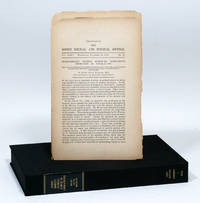
18472758Boston 1847. 1st Edition. Original Wrappers. Very Good. FIRST EDITION OFFPRINT of the first announcement of the successful use of anesthesia during surgical operations one of the greatest discoveries of nineteenth-century medicine. A visitor to Boston Massachusetts would be well advised to take a stroll to the Ether Dome at Massachusetts General Hospital to see the amphitheater where surgery without pain began. On October 16 1846 dentist William T.G. Morton publicly performed a painless surgery through the use of general anesthesia thereby transforming surgical medicine and marking one of the greatest advances in medicine one that not only liberated patients from pain but enabled surgeons to perform more extensive operations. <br /> <br /> Offered here is the first edition offprint of the first announcement of Morton's seminal achievement as reported by Henry Jacob Bigelow in the November 18 1846 issue of The Boston Medical and Surgical Journal Vol. XXXV No. 16 pp. 309-316. Interestingly the offprint omits the last seven paragraphs from the journal article critical of the patent-holders: Drs. Morton and Charles T. Jackson. The redacted paragraphs likely indicates the offprint was issued shortly after the journal. <br /> <br /> Offprint from: The Boston Medical and Surgical Journal vol. XXXV No. 16. 8 pages. As issued without wrappers. Paper uniformly toned. First and last leaves detached from stitching. Small closed tear in margin of last leaf edges rough. Presented in a handsome custom box. RARE. unknown
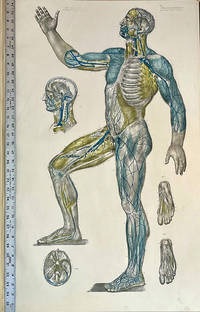
185451129Brussels: Comptoir des éditeurs 1854. <p>Bourgery Jean-Baptiste Marc 1797-1849 and Nicolas Henri Jacob 1782-1871. Anatomie élémentaire en vingt planches representant chacune un sujet dans son entier à la proportion de demi-nature . . . Atlas only. Elephant folio. Title-leaf and 20 lithographed plates most hand-colored. Brussels: Meline Cans et Cie; Comptoir des Éditeurs 1854. 888 x 600 mm. 20th-century quarter morocco boards slight wear. A few marginal tears repaired minor dampstaining but very good.</p> <p> Later edition first published in both Paris and Brussels in 1836 of this set of very large anatomical plates that were intended to be mounted on the walls of dissection rooms. All editions are extremely rare-OCLC does not cite any copies of the 1854 edition. This is the only copy of any edition of this work that we have handled in over 50 years of trading. The work was originally accompanied by a small 20-page pamphlet of text that is not present here.</p> <p> The impressive plates in this atlas reproduce the illustrations in Bourgery and Jacob's Traité complet d'anatomie at a much larger scale than their counterparts in the Traité-roughly half life-size. Some plates were lithographed in Paris; others in Brussels. Plates I and II are devoted to osteology and syndesmology; plates III - VIII to myology and aponeurology; plates IX-XIV to angiology; plates XV-XVII to neurology; plates XVIII-XIX to the digestive system; and plate XX to the reproductive organs. The plates were originally sold separately; uncolored versions were priced at 6 francs and colored versions at 12 francs. Currently two uncolored plates from this series are on the market for about $1300.</p> . Comptoir des éditeurs unknown
18371206921837. First Edition. WHEELER Jacob D. A Practical Treatise on the Law of Slavery. Being a Compilation of all the Decisions Made on that Subject in the Several Courts of the United States and State Courts. New York and New Orleans: Allan Pollock Jr. and Benjamin Levy 1837. Octavo modern half brown sheep burgundy morocco spine label. $3600.First edition of this important work on the legal aspects of slavery in the United States one of the earliest digests on the subject.Wheeler's Practical Treatise is one of the earliest digests of virtually all American court decisions on slavery including cases from both the North and South. This book was initially intended for use by slaveholders and other interested parties but it became an important tool of abolitionists who used it for its incidental descriptions of slavery and its attendant cruelty. ""The work bears marks of haste in its preparation but it is a valuable compilation of decisions on practical questions arising under the Law of Slavery in the United States. It will be serviceable to the Profession as a comprehensive digest of authorities on this branch of law and it will afford much instruction to philanthropists and statesmen interested in reconciling the welfare of slaves with the integrity and just operation of Constitutional Law"" Marvin 729. Harvard Law Catalogue 908. Cohen 9883. Work 344. Light to moderate foxing to text a few spots of soiling to edges of text block binding attractive. An extremely good copy. unknown
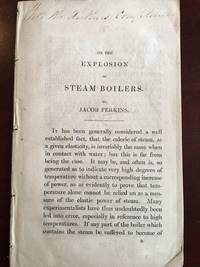
182730<p><b>AN EXTRAORDINARY EARLY AMERICAN INVENTOR AND ENGINEER</b></p><p><b>"THE THEORY OF THIS INGENIOUS METHOD OF ABSTRACTING HEAT"</b></p><p><b>PERKINS Jacob. </b><i>On the Explosion of Steam Boilers. </i>caption-title. 8vo disbound pp. 18 folding plate. N.p. n.d. i.e. London: 1827. <br /></p><p>First Edition. Rare. "In 1823 at fifty-seven years of age Perkins started an entirely new type of activity new to him and almost entirely new to science. This was his experimental work with steam of high pressure."-Dirk J. Struik <b>Yankee Science in the Making </b>1948 p. 69. Our copy is exactly like the BL copy without formal title-page and beginning on sig. "B"1. Inscribed on title: "With the Author's Compliments" and with a single correction in ink on p. 16. In 1823 Perkins invented super heated steam in an experiment called a "flash boiler" one thousand shots per minute using 900psi steam. This steam was later used in nuclear power plants to turn the steam turbines and small flash boilers were used on some steam automobiles and provided quick acceleration. In flash boilers water is delivered to preheated tubes and vaporizes almost immediately. "The theory of this ingenious method of abstracting heat was described by Perkins in a small printed pamphlet published in 1827 entitled <i>On the Explosion of Steam Boilers…</i>This pamphlet consists of eighteen pages and a folding plate engraved with a diagram showing the relationship of the piston and the crank at various pressures. Perkins was very chary of distributing copies of his pamphlet before his patent of March 22 1827 was finally sealed for fear that it might prematurely reveal the nature of his invention. A copy is in the author's possession Perkins has written on the margin of the first page: 'With the author's compliments. Confidential."-Greville Bathe & Dorothy Bathe <b>Jacob Perkins: His Inventions His Times & His Contemporaries </b>1943 p. 123 & note. Perkins says in a long letter to his friend and one-time-partner Dr. Thomas P. Jones in Philadelphia that he is sending him a copy of the pamphlet and that he gave copies to Dr. Wollaston and Michael Faraday "and to several engineers whom I could trust and who all agree that it assigns the true cause of explosions."-<b>Barthe</b> p. 125. Born in 1766 in Newburyport Massachusetts Perkins 1766-1849 was a gifted and prolific inventor running a goldsmith business by age 15! By 21 the state of Massachusetts commissioned him to make the dies for the State's copper coins. At 31 he invented a machine for heading and pointing nails and tacks in a single operation a remarkable invention for its day. He moved to New York later to Philadelphia where he developed probably the first steel plates for banknote engraving a system of preventing banknote forgery. Unable to get financial backing in this country he moved to England in 1819 taking his sons and a group of craftsmen with him. "America's loss was Britain's gain…He started a successful banknote business and went on to develop instruments for measuring ships' speeds for determining diving depths and a score of other devices. When he turned his attention to steam development this amazing man really hit his stride…Then he invented his steam gun. The Duke of Wellington became very interested in this Perkins gun…" and its military uses were explored then spurned by the British government. <i>The London Mechanics Register</i> of Nov. 6 1824 said "If Mr. Perkin's steam guns were introduced into general use there would be but very short wars; since no fecundity could provide population for its attacks." See W. H. B. Smith <b>Mr. Perkin's Extraordinary Steam Gun of 1824</b><i> </i>original published in 1957 and reprinted in <b>Lateral Science: A plethora of science & engineering subjects both real & virtual</b> 8 July 2012. The <b>DAB </b>calls his experiments with high-pressure steam "unique" saying "He received recognition in various countries particularly in England but he was a hundred years ahead of his time." In all Perkins created over 21 inventions and between 1819 and 1836 patented 19 of them. His biography in <b>ODNB </b>is included in the biography of his son Angier March Perkins and in fact gets the longest treatment there. Another useful biography is at <b>madehow.com</b>. For all things Perkins see <b>Baker Perkins Historical Society</b> online. <b>OCLC </b>locates two copies National Library of Sweden & Swarthmore College. <b>NUC </b>adds Univ. of Illinois. First Edition not in <b>COPAC.</b> </p><p><b><br /></b></p><p><b><br /></b></p><br /><p><br /></p>
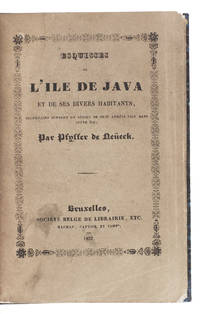
183722302Brussels 1837. 12mo. P.J. Voglet for Société Belge de Librairie Hauman Cattoir and company Modern grained brown half calf preserving the original lithographed wrappers partly uncut. 4 III 1 blank XV 1 blank 239 1 blank pp. Very rare first edition of the French translation of a work on Java by Joseph Jacob Xaver Pfyffer zu Neueck 1798-1853 a German in military service of the Dutch East India Company. The work covers Java's topography natural history ethnography customs religion local inhabitants government etc. and also discusses the Europeans their habits and customs. Included is a short extract with a vocabulary of the Malay language. The original German edition was published in parts between 1829-1832 and contained 15 plates Skizzen von der Insel Java und derselben verschiedenen Bewohnern. A second edition of the French translation appeared in 1854 Description de Java and it was also translated in Dutch as Schetsen van het eiland Java in 1838.Wrappers soiled; trivial spotting inside. Interesting work on Java in good condition.l Bastin & Brommer 197; cf. Haks and Maris p. 236; Tiele Bibl. 858. ABE CAT Anthropology & Ethnography unknown
18640001441Very Good. 1864. On offer is a significant historical relic of the Civil War being a book of 71 bound-in original handwritten telegraphs dated from May 19 1864 to December 6 1864. All appear to be handwritten and all have been folded at least 2 times or more. Many have original autographs by the sender. Several different types of paper were used to write them on. All in excellent condition. Examples of some of the subjects of telegrams are: Where to send white and colored recruits; payment amounts for recruits; forbidden furloughs granted to recruits by Provost Marshalls; Arrest Acting Masters Mate Edw. Parsons at Lebanon Springs and have him delivered on board the receiving ship North Carolina at Brooklyn Navy Yard plus many many more. The premium book is 8" x 10" with leather spine and corners with gilt stamped title on the spine attests to the importance of the contents. VG.; 4to - over 9¾" - 12" tall; KEYWORDS: CIVIL WAR GRAND ARMY OF THE UNION NORTH AGAINST THE SOUTH WAR BETWEEN THE STATES BROTHER AGAINST BROTHER AMERICANA UNION ARMY HANDWRITTEN MANUSCRIPT DOCUMENT LETTER AUTOGRAPH DIARY JOURNAL LOG KEEPSAKE WRITER HAND WRITTEN DOCUMENTS SIGNED LETTERS MANUSCRIPTS HISTORICAL HOLOGRAPH WRITERS DIARIES JOURNALS LOGS AUTOGRAPHS PERSONAL MEMOIR MEMORIAL PERSONAL HISTORY AMERICANA Als antiquité contrat vélin document manuscrit papier Antike Brief Pergament Dokument Manuskript Papier oggetto d'antiquariato atto velina documento manoscritto carta antigüedad hecho vitela documento manuscrito papel. . hardcover
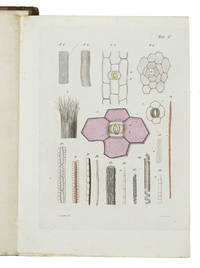
1812K7BC7632IMESKiel 1812. 4to. Königlichen Schulbuchdruckerei printed by C.L. Wäser Contemporary half calf gold-tooled spine black spine label. With 6 engraved folding plates 3 partly handcoloured. xii 335 1 pp. Rare first edition of a botanical classic the principal work of Johann Moldenhawer published in 1812. This copy was part of the collection of the famous German botanist and explorer of Brazil Philipp von Martius 1794-1868 as the book-plate on the front pastedown shows. The Beyträge reflects the knowledge acquired in the field of plant anatomy during the period 1800-1812 when many new texts on the structure of plant organs were published and Moldenhawer made advances in his own research. This book contains important findings concerning plant anatomy based on Moldenhawer's own experiments where he isolated the cells and the vessels. By completely isolating the cells and vessels in his preparations Moldenhawer demonstrated that the cell wall is closed on all sides. Moldenhawers Beiträge zur Anatomie der Pflanzen the result of eighteen years of unremitting research on plant anatomy reflects his critical insights and methodical observations both in his own experiments and in his analysis of earlier and contemporary research on plant anatomy by others. This makes it a classic overview of the history of plant anatomy.With the bookplate of the explorer Philipp von Martius on the front paste-down. Some folds in the engraved plates not affecting the images binding slightly rubbed and discoloured head of the spine and foot of the black spine label chipped but still in good condition.l BMC NH III p. 1333; Bradley I p. 98; Pritzel 6357; for the author: DSB IX p. 455. unknown
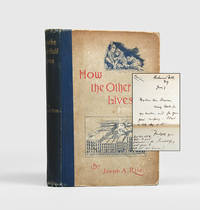
1890191014New York: Charles Scribner's Sons 1890. One of the most important photobooks ever published First edition with an autograph letter signed from the author tipped-in to the front free endpaper thanking the recipient "for your kindness and for your good company - I had a bully day of it". He adds in a postscript: "Good luck with the trout. A good fisherman is a good fellow I will bet. Ask Grover!". The letter is dated 7 June and noted as received 8 June 1902. The reference is presumably to the keen fisherman and former president Grover Cleveland. The front free endpaper has the ownership signature of the recipient Elizabeth M. Brown of Belvidere New Jersey dated 25 April 1891. A lifelong campaigner for child welfare Riis exposed overcrowded tenements raised funds to send children into the countryside advocated city parks and pressed for better-funded public schools. His exposés of New York poverty and decades of campaigning helped drive Progressive Era reforms and forced the city's slum conditions into public view. How the Other Half Lives is his the most important work. "His book is about the tenements of New York: the overcrowded slums of the Lower East Side that were home to boatloads of immigrants who had come to the United States to seek a better life. it is one of the most important photobooks ever published. It represents the first extensive use of halftone photographic reproductions in a book. These reproductions are rough to say the least but it is the beginning not of a photographic genre but a photographic attitude an ethos - humanist documentary photography - in which the photographic social document is employed to bear critical witness to what is going on in the world" Parr & Badger p. 53. Octavo. With 43 illustrations including 18 halftones from photographs by the author. Original blue quarter cloth spine lettered in gilt front cover lettered and decorated in red and blue. Tipped-in at rear is the pamphlet Jacob A. Riis: A Sketch of his Life and Work circa 1903. Rubbed and a little shaken and toned still a very good copy. Martin Parr & Gerry Badger The Photobook: A History Vol. I 2004. hardcover