CATS, Jacob (1577-1660)Biblio.com

172 résultats
1700BB1034T'Amsterdam / T'Utrecht: Daniel van den Dalen. François Halma. De wed. van A. van Someren / J. en Wilhelm vande Water. Boekverkopers 1700. Early Reprint. Vellum. Fine. Profusely illustrated edition of Cats's complete collected works first published in 1655. Two folio volumes bound in one each separately paged and signed and each with additional engraved title page bearing a portrait of the author as well as sectional title pages with engraved vignettes. 28666 i.e. 662: 183-184 repeated and 343-348 omitted10; 183906393-608611 pp with full-page portraits of the author and of Anna Maria Schurman three double-page plates and more than 400 superb copper-engraved half- and quarter-page plates most from the original designs of Adrian van de Venne numerous tailpieces of bouquets and historiated initials. Recent period-style full vellum binding by Fitterer mustard lettering piece decorated and lettered in gilt end papers renewed. An exemplary example in a magnificent vellum binding occasional spotting and minor marginal browning else fresh and bright with rich impressions of type and plates. Cats was a Dutch statesman and writer of emblem books a type of popular seventeenth-century literature consisting of woodcuts or engravings accompanied by didactic verses pointing a moral or presenting an ethical concern often related to love and marriage. Dutch artists of the Golden Age including Vermeer used such books as inspiration for motifs in their paintings and prints. The sources upon which Cats draws for this combination of emblem literature and love poetry are chiefly the Bible and the classics and occasionally Boccaccio and Cervantes. His first book Sinne-en minnebeelden "Portraits of Morality and Love" contained 96 emblematic engravings with text in Dutch Latin and French each emblem with a threefold interpretation expressing what were for Cats the three elements of human life: love society and religion. Perhaps his most famous emblem book written in a more homely style than his earlier works is Spiegel van den ouden en nieuwen tyt "Mirror of Old and New Times" with 128 emblematical engravings accompanied by quotations many of which have become household sayings. Two other works—Houwelyk 'Marriage' and Trou-ringh 'Wedding Ring' with 59 plates—are rhymed dissertations on marriage and conjugal fidelity. Finally in one of his last books Ouderdom buyten-leven en hof-gedachten "Old Age Country Life and Garden Thoughts" with 27 plates Cats writes movingly about his declining years. Adapted from the Encyclopedia Britannica N. B. With few exceptions always identified we only stock books in exceptional condition. All orders are packaged with care and posted promptly. Satisfaction guaranteed. Fine Editions Ltd is a member of the Independent Online Booksellers Association and we subscribe to its codes of ethics. Daniel van den Dalen. François Halma. De wed. van A. van Someren / J. en Wilhelm vande Water. Boekverkopers unknown
160749241Witebergae Wittenberg Iohan. Gorman 1607. 4to. No binding but bound together. All 12 dissertations with own title-page except one and all except one with broad woodcut border. Unnumbered. 6 pp. of Index but seems to lack a general title to the collection. The dissertations from 10-20 pp. each. <br/><br/><em>The dissertations all seems to comments on and explaining Aristotelian physics in the way of the Schoolmen. </em> unknown
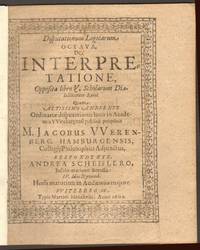
1609952243Wittenberg: Martin Henckel November 1609. Gut. 20 Seiten. - Lagenkollation: A-B4 C2. Neuer Umschlag aus Kleisterpapier im Stil der Zeit. Quarto. 192 x 163 mm. Papierbedingt leicht gebräunt gut erhalten. Enthält: Quit sit hermeneia; De Symbolis; De Nomine & Verbo; De Enunciatione; De Contradictione & homonymia; De modo contradictionis in futuris contingentibus. - Sehr selten. Über KVK konnten wir kein Exemplar nachweisen. Jacob Werenberg Weremberg 1582-1623 ein lutherischer Theologe aus Hamburg der zu Helmstedt und Wittenberg studierte dort 1604 Magister und Adjunctus Facultatis philosophicae wurde 1609 jedoch wieder in seine Heimatstadt zurückkehrte um als Diakon und später als Pastor zu arbeiten lehrte als Professor am dortigen Gymnasium Logik und Metaphysik. - Der Doktorand Andreas Scheffler geboren 07.09.1587 Marienwerder; gestorben 21.07.1625 Marienwerder war Pfarrer. New wrappers. Lightly browned due to quality of paper else very good. - Nicht im VD17; nicht bei Schüling: Logische Schriften; nicht bei Risse; nicht bei Paisey. - RFM - Weitere Bilder auf Anfrage oder auf unserer Homepage. Wegen Urlaub kann Ihre Bestellung / Anfrage erst nach dem 21.06.2026 bearbeitet werden. - Because of holidays your order / question can be handled only after 06/21/2026. Martin Henckel unknown
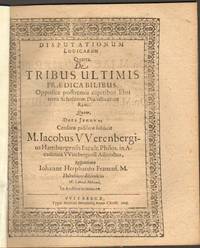
1608952235Wittenberg: Martin Henckel November 1608. softcover. Gut. 31 1 weiße Seiten. - Lagenkollation: A-D4. Neuer Umschlag aus Kleisterpapier im Stil der Zeit. Quarto. 192 x 163 mm. Papierbedingt leicht gebräunt gut erhalten. Enthält: De differentia; De proprio; De accidente; De Communionibus & differentiis categorematum; De Usu praedicabilium. Unter dem Vorsitz des Hamburger Philosophieprofessors Jacob Werenberg angefertigte Dissertation über die Thesen der beiden Gelehrten Petrus Ramus 1515 - 1572 Humanist und Johannes Piscator 1546 - 1625 Humanist; reformierter Theologe; Pädagoge zur Lehre des Aristoteles und dessen Gottesbegriff. - Zum Autor Johannes Herphard konnten wir nichts eruieren. - Äußerst selten über KVK konnten wir kein einziges Exemplar in Bibliotheken nachweisen. Jacob Werenberg Weremberg 1582-1623 ein lutherischer Theologe aus Hamburg der zu Helmstedt und Wittenberg studierte dort 1604 Magister und Adjunctus Facultatis philosophicae wurde 1609 jedoch wieder in seine Heimatstadt zurückkehrte um als Diakon und später als Pastor zu arbeiten lehrte als Professor am dortigen Gymnasium Logik und Metaphysik. - New wrappers. Lightly browned due to quality of paper else very good. - Äußerst selten. Nicht im VD17; nicht bei Schüling: Logische Schriften; nicht bei Risse; nicht bei Paisey. - RFM - Weitere Bilder auf Anfrage oder auf unserer Homepage. Wegen Urlaub kann Ihre Bestellung / Anfrage erst nach dem 21.06.2026 bearbeitet werden. - Because of holidays your order / question can be handled only after 06/21/2026. Martin Henckel paperback
160849238Witebergae Wittenberg Martin Henckel 1608-09. 4to. No wrappers. Bound together. All 16 with own titlepage with broad woodcut borders. All unpaginated. Each from 8-20 pp. Some notes and underlining in contemporary hands old names on the first titlepage. Some yellowing to leaves but clean. unknown
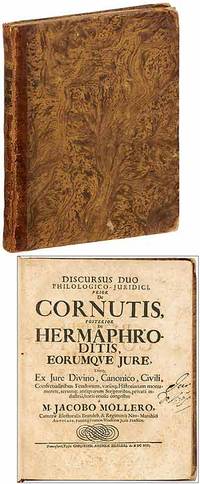
1692396062Francofurti Frankfurt: Typis Christoph Andreæ Zeitleri 1692. Hardcover. Very Good. First edition. Quarto. 8 214pp. Bound in late 18th century quarter leather and marbled paper over boards gilt spine. Small contemporary owner's name on the title page the front joint is partially split scattered foxing very good. One of the earliest treatises to survey the history and phenomenon of hermaphroditism: "from earliest mythological sources to anatomical description and medical consideration. Möller seriously attempts to understand and explain the phenomenon ." Cornell Human Sexuality Collection. A scarce copy of the first edition the only edition published in Möller's lifetime. Typis Christoph Andreæ Zeitleri hardcover
162870012Loven Louvain Louvain Louvain: by Jan Maes 1628. Fine. by Jan Maes Loven Louvain Louvain Louvain 1628 15.50 x 10.50 cm broché sous étui First illustrated edition with 20 woodcuts by Christoffel van Sichem decorated with initial letters and tailpieces printed in Gothic type. Our copy is presented in original wrappers within a contemporary half morocco slipcase with raised bands in old rose gilt date at foot vellum-style paper boards. Jacob Stratius Antwerp 1559-Leuven 1634 was rector of the Jesuit college of Leuven notably writing compilation works .Wars of Flanders. This work by Thomas A Kempis is also a compilation and edition by Jean Stratius. by Jan Maes hardcover
1610043260Geneva: Jacob Stoer 1610. First Edition. Hardcover Vellum. Good Condition. Contemporary vellum worn soiled with a few repairs but intact. some worming to endpapers and the first title but otherwise clean internally. Two separate titles the second dated 1611. Apparently lacking blanks otherwise complete. 78pp 2 372 ll; iv pp 270 ll. Size: Octavo 8vo. Previous owner's book-plate inside front cover. Quantity Available: 1. Shipped Weight: 1-2 kilos. Category: Language & Linguistics; Antiquarian & Rare. Inventory No: 043260. Jacob Stoer hardcover
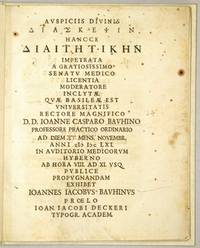
1661446231661. Basileae: Proelo Io. Iacobi Deckeri 1661 Kl.4° 15 pp. Pappband. Diaskepsin . diaitetiken / impetrata a . senatu medico licentia moderatore . Ioanne Casparo Bauhino ad diem . mens. Novembr. Anni M DC LXI . publice propugnandam exhibet Ioannes Iacobus Bauhinus. Bauhin Johann Caspar 1606-1685 Bauhin Johann Jacob 1641-1691 Husner: Verzeichnis bas. med. Univ.Schriften Nr. 1099 unknown
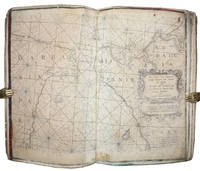
1670ABC_48983Amsterdam 1670. Contemporary stiff paper wrappers with a manuscript label pasted upside down on the back wrapper reading: Carta Marinaresca del Mar Mediterraneo. Folio 29 x 45 cm. With 9 double-page engraved charts only each sheet ca. 44 × 55 cm each mounted on stiff paper with maps back-to-back with thick red and black ink borderlines. 8 of 9 maps are by Colom numbered 2-9 in the plates from; plate 1 has been replaced with Johannes de Rams map of the Mediterranean: "Paskaart vande Middelandsche Zee In twee deelen vertoont". Unusual working copy of Coloms rare pilot owned by an Ottoman Turkish mariner with his Osmanli inscriptions transliterating the location names throughout. Coloms charts cover the Straits of Gibraltar the Barbary Coast Mallorca the coastline around Barcelona Nice Corsica Sardinia Southern Italy Sicily and Croatia. Koeman highlights the rarity of all of Coloms pilot books and notes that despite thousands of copies having been circulated . only a score have survived.The wrappers are worn and with significant spotting and browning throughout some cockling and losses to sheets old repaired tears creases and signs of heavy use. A highly uncommon survival.l Cf. Koeman IV 120; Phillips III 53 ff. unknown
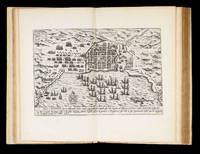
162215084Amsterdam: Chez Emanuel Colin de Thovoyon 1622. Folio 310 by 200mm first French edition second issue title page canncelled with Paris imprint added to that of Amsterdam engraved title with vignettes and map 8 103 1 blank 6 107-254 pp. head- and tail-pieces with decorated initials; 27 engraved plates pictorial title page 17 maps and charts 16 double-page 1 folded 4 city views 5 text engravings scenes from Le Maire voyage portrait of Le Maire not present as usual for the French edition seventeenth century vellum. The first French edition of Herrera'a rare work here extra-illustrated with Boazio's exceedingly rare views of Santo Domingo Dominican Republic; Santiago Cape Verde Islands; Cartagena Columbia; and San Augustine Florida - first known engraving of any locality in the present-day United States. The importance of this French edition of Herrera's 'Description des Indes Occidentales' and the other 1622 editions in Latin and Dutch lies in its engraved pictorial title page with the first map to delineate California as an Island and in the inclusion of the first comprehensive account of Jacob Le Maire's voyage. The 14 maps in the Herrera's section are almost identical to those in the original 1601 'Descripcion' save for some resizing and changes in a few details. The most interesting are probably the 'Description de las Yndias Occidentalis' which depicts the Papal line of demarcation dividing the world between Spain and Portugal and the 'Description de las Indias del Poniente' which depicts a large part of the Pacific with the Moluccas the Philippines and the Ladrones accurately positioned. Le Maire and Cornelis Schouten his second in command left Texel in June 1615 on a mission to find a new route to reach the Spices Islands which would break the trade monopoly of the Dutch East India Company which had been grant a monopoly trade through the Strait of Magellan. The pair succeeded to break the monopoly by rounding south America south of the Straits of Magellan. The new cape was name Horn or Hoorn after Shouten's ship which had been lost due to fire at the Patagonian port Desire. In doing so they also dispelled the myth of a great southern continent joined to South America. They would continue to sail across the Pacific discovering numerous islands along the way and sailing up the northern coast of New Guinea. By September 1616 Le Maire reached Ternate in the Moluccas the headquarters of the Dutch East India Company. Initially well received they were soon accused of having encroached on the rights of the Company and were tried found guilty and shipped home on Spilbergen's ship which was completing its own trip around the world. Le Maire died on the return voyage and his journals were taken by the Company. Schouten and Spibergen published an abreviated version of these journal; and it was not until 1622 after a long trial that Isaac Le Maire was able to regain custody of his son's journals and to publish them in full. The four additional city views Santo Domingo in the Dominican Republic; Santiago in the Cape Verde Islands; Cartagena in Columbia; and San Augustine Florida were drawn and possibly engraved by the Italian artist Baptista Boazio. The Boazio views are "probably the most interesting and important published graphic work pertaining to Drake and his career" Kraus. They are also the first representations of those four cities. Indeed the view of St Augustine is the first known engraving of any locality in the present-day United States. Their history is uncertain. There is no indication that Boazio participated to the voyage but he must have obtained a version of these views from someone who did: "It was undoubtedly in the course of the return voyage that the author of this view-plan of St. Augustine was able to copy the figure of the Dorado fish and of the other creatures decorating the plans from John White's original drawings" Kraus. John White was the Governor of the first English settlement in America who along with the other surviving settlers returned to England from Roanoke Island with Drake's expedition. Two issues of these views were printed in Leiden in 1588 both extremely rare: a large paper issue 16.5 by 22 inches was printed to illustrate Walter Bigges and Master Croftes 'A Summarie and true discourse of Sir Francis Drake's West Indian Voyage' published in London in 1589; the present smaller size 7.5 by 11.25 inches has captions in Latin and French and a numerical instead of alphabetical key and was probably printed to illustrate the Latin and French translations of 'A Summarie and true discourse' published in Leiden in 1588. While the pictures are broadly similar the present examples show greater detail whilst the larger ones include more sea monsters and other embellishments. Priority regarding date of publication between those two issues has not been established with certainty but there are indications that the smaller issue came first: <br /><br />"A close comparison of details however suggests that the smaller engravings come from an earlier set of drawings and that the larger maps represent revisions as well as embellishments probably done by the same artist" Mary Frear Keeler. <br /><br />There were two subsequent issues of the smaller Boazio plates: the first in 1589 published in Cologne used the same plates but with only the Latin text below; the plates themselves are set within the text with printed text to the verso; the second 1590 Nuremberg printing was neither printed from new plates or the plates have been heavily revised. Only two complete sets of the four large views have appeared at auction in the last fifty years each accompanied by an example of a map of Drake's Atlantic voyage: the DuPont sale at Christie s in 1991 for $231000; and bound into the Macclesfield example of Saxton's atlas Sotheby's 2007 for £669600. A large coloured view of Cartagena was sold at Christies in 1996 for $16100. <br /><br />There is no record of any copy of the 1588 smaller size issue having gone through auction. In 1970 Kraus p.156 estimated that they were eight recorded complete sets of the large Boazio plates and seven complete sets of the smaller plates 1588 and 1589. <br /><br />OCLC records eight complete sets of the large plates but only two complete sets of the small 1588 plates: New York Public Library and the Huntington Library. There is an incomplete set lacking San Augustine of the smaller 1588 plates in the Kraus' Sir Francis Drake Collection housed in the Library of Congress. Of the 1589 small plates we were able to trace nine complete examples. <br /><br />A comparison of the Boazio maps in the present book with the plates in the Huntington Library New York Public Library and the Library of Congress confirm that the 4 sets are identical. For the 'Description des Indes Occidentales': Brunet III cols 132-133; Burden 195-198; Cox I: 41n. 'European Americana' 1622/68; Medina 'Biblioteca Hispano-Americana' 455n.; Tooley 'California as an Island' 107; Wagner 'Cartography of the Northwest Coast' pp. 145-146 & No. 291. For the Boazio plates: Burden 65 & 70; in the February 2016 'Addenda for The Mapping of North America' note 71 Burdern refers to this set and the number of known copies; Church 134A 136 138; H.P. Kraus 'Sir Francis Drake A Pictorial Biography' Amsterdam 1970 pp. 121-127 and nos. 20 & 49a; Mary Frear Keeler 'Sir Francis Drake's West Indian Voyage' 1585 86. Hakluyt Society London 1981. Chez Emanuel Colin de Thovoyon, hardcover
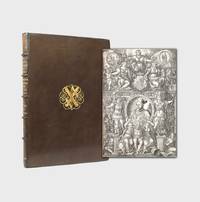
1603376588Innsbruck: Daniel Baur 1603. First edition in German after the Latin edition published in 1601. With frontispiece engraved portrait of Archduke Ferdinand II privilege on verso title page two preliminary leaves and 121 of 125 elaborate engraved portraits each with facing biographical notice printed within woodcut border. Lacking 4 leaves portraits 3 24 64 71. Two preliminary leaves printed for William Sterling Maxwell his extensive bibliographical note and index of portraits; a facsimile folding view of Innsbruck inserted after title. Full dark brown morocco spine titled in gilt upper board with Sterling Maxwell arms in gilt a.e.g. by XXXX. Sterling Maxwell's largest bookplate on front pastedown. A few portraits possibly in old facsimile or restrike. 11 leaves loose or slightly sprung a few marginal paper flaws one portrait poorly inked. First edition in German after the Latin edition published in 1601. With frontispiece engraved portrait of Archduke Ferdinand II privilege on verso title page two preliminary leaves and 121 of 125 elaborate engraved portraits each with facing biographical notice printed within woodcut border. Lacking 4 leaves portraits 3 24 64 71. Two preliminary leaves printed for William Sterling Maxwell his extensive bibliographical note and index of portraits; a facsimile folding view of Innsbruck inserted after title. The celebrated portrait gallery of the Archduke Ferdinand II of Austria with portraits of emperors kings nobles and war heroes in historic suits of armor in the Archduke's collection at Schloß Ambras. Compiled by the Archduke's secretary Schrenck von Notzing and translated into German by J.E. Noyse van Campenhouten. With an interesting full page printed bibliographical notice by Sterling Maxwell dated 1870 printed within facimile borders matching the text pages of the portraits. Colas 2691; Brunet V 224; Vinet 2046; Grässe VI 317; Lipperheide 499 Daniel Baur unknown
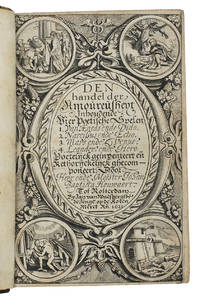
162122956Rotterdam: Jan van Waesberghe III 1621. Contemporary calf spine richly gold-tooled in compartments with red title label lettered in gold gold-tooled board edges. 8vo. With an engraved ornamental title-page with the title in an oval cartouche and 4 roundels in the corners with scenes from the four plays; 4 full-page engraved plates with similar scenes one in the preliminaries of each play. Each of the four parts starts with a letterpress title-page with the publisher's device of Van Waesberghe. Further with woodcut tailpieces woodcut decorated initials 3 series and headpieces built up from arabesque typographic ornaments. 4 parts in one volume. First and only edition of four morality plays or dialogues often wrongly attributed to the famous Antwerp rhetorician Jean Baptiste Houwaert 1533-1599. In fact they were written by Antwerp rhetoricians ca. 1550 when Houwaert was only about seventeen. It has mistakenly been described as a second edition of Houwaert's Den handel der amoureusheyt Brussels 1583 - see Bibl. Belg. III p. 538 H 189 bis but in fact it has nothing to do with that work: if Houwaert wrote anything for the present edition it would be the entr'actes of the third play.After four preliminary poems on 5 pages by a poet calling himself Niet Snel Al-be-recht four plays follow:1. Verscheyden schoone spelen van zinnen van Aeneas ende Dido A1-F3; 43 ll. written by the rhetorician Jacob de Mol of the Chamber of rhetoric De Goudsblom in Antwerp performed for the first time in 1552 cf. Vinck-Van Caeckenberghe in her book on Cornelis van Ghistele 1996 who attributes this play to Van Ghistele.2. Verscheyden schoone spelen van zinnen van Narcissus ende Echo &c. F4-P7; 76 ll.: three separate plays together 2193 verses by Colyn Keyart with entr'actes possibly by Johan Baptiste Houwaert.3. Verscheyden schoone spelen van zinnen van Mars ande Venus &c. Q1-Z1; 57 ll.: three separate plays together 1128 verses probably by Smeecken.4. Vier schoone spelen van zinnen van Leander ende Hero Z2-Gg2; 57 ll.: this play according to Knuttel also by Colyn Keyart is preserved only in this edition.The book is a very important source for the history of the rhetoricians in the Southern Netherlands.One plate shaved otherwise in good condition.l Bibl. Belg. III pp. 538-539 H 26; G. Kalff in: Tijdschrift Ned. letterk. 8 1888 pp. 231-235; STCN 9 copies incl. 1 incompl.; F. van Veerdeghem in: Tijdschr. Ned. letterk. 12 1893 pp. 202-205 320; W. de Vreese in: Tijdschr. Ned. letterk. 12 1893 pp. 206-211; Te Winkel Ontwikkelingsgang 2nd ed. II p. 395; J.A. Worp in: Tijdschr. Ned. letterk. 20 1901 pp. 27-29. Jan van Waesberghe III, unknown
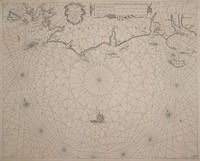
166219188Amsterdam: Jacques & Gasper Anthoine 1662. Other. A strong impression in very good condition. 424 by 530mm 16¾ by 20¾ inches. 424 by 530mm 16¾ by 20¾ inches. Copper-engraving uncolored when published. Detailed sea chart showing the coasts of the Bretagne from Brest towards Vannes with the Island Boelin. Ornated in the upper centre with a decorative title cartouche as well two compass roses and a sailing ship. The map is pretty accurate and provides information along the coast with place names anchor places sand banks and depths in the sea. Jacques & Gasper Anthoine unknown
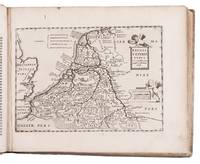
1660KBQE72K0ZFOJAmsterdam 1660. Oblong 4to ca. 23 x 28 cm. Jacob Aertsz. Colom Contemporary vellum sewn on 4 supports laced through the joints with shelf mark labels of the Oudheidkamer Twente mounted on the spine and back board. With an engraved allegorical title page by Experiens Sillemans and 50 full-page numbered engraved plates 47 maps and 3 plates containing 117 portraits of the Counts of Brabant Flanders and Holland. 2 4 14 223 2 1 blank pp. Enlarged Dutch edition of an attractive atlas of the Seventeen Provinces roughly corresponding to present-day the Netherlands and Belgium containing all 50 maps and plates. The work was compiled and published by the ambitious Amsterdam map- and globe maker printer and publisher Jacob Aertsz. Colom 1600-1673. Like Willem Jansz. Blaeu Colom began his career by publishing pilot guides and maritime atlases a field in which few dared to compete with Blaeu before branching out into terrestrial atlases. The maps and portraits in this second Dutch edition were printed from the plates of the first Dutch edition 1635 but the accompanying text has been revised and expanded.The descriptions were derived from the text written by Reinier Telle for Abraham Gooss Nieuw Nederlandtsch Caertboeck 1616 which itself was largely based on Lodovico Guicciardinis classic Beschryvinghe van alle de Nederlanden 1612. In addition to general maps of the Netherlands depicting both the Roman period and the 17th century and of the Seventeen Provinces the work contains numerous detailed maps of individual regions and cities together with their surrounding areas. These include among others the Meierij of s-Hertogenbosch Bergen op Zoom Breda Valkenburg and Dalhem Mechelen the diocese of Liège Namur the Veluwe Zutphen the island of Dordrecht Delfland six maps of newly reclaimed polders Bijlmermeer Purmer Wormer Heerhugowaard Diemermeer and Zijpe the three historic regions of Frisia Eastergoa Westergoa and Zevenwouden and Walcheren.The engraved portrait plates comprise two sheets containing respectively 40 and 38 portraits of the Dukes of Brabant and the Forestiers of Flanders and a third with 39 portraits of the Counts of Holland.With the library stamp of the Oudheidkamer Twente on the front flyleaf. The work has been recased with the endpapers restored the vellum is slightly soiled and stained. Restored tears in the head and foot margins of the title page the maps have not been bound in order the margins of map 31 have been trimmed without affecting the image map 45 with a water stain in the lower outer corner. Otherwise in good condition.l Koeman Col 5; V.d. Krogt Koeman's Atlantes Neerlandici IIIB 365:02 pp. 635-637; Shirley British Library T.COLM-1a; STCN 853365954; Tiele Bibl. 262; USTC 1845771. hardcover
16606191660. With 47 full-page engraved maps and 3 full-page plates with portraits. 2 Blank pages / 4 Pages / 14 NNP / 223 Pages / 2 NNP / 3 Blank pages / 47 Maps / 3 Engraved Plates This book can only be viewed by appointment. Binding: Contemporary Full Leather Octavo 8vo Height cm: 22 CM Width cm: 29 CM Thickness cm: 4 CM hardcover
1658046557Rotterdam: Arnold Leers 1658. Early Edition. Hardcover Full Leather. Very Good Condition. Contemporary full sheep spine rubbed hinges cracked but binding sound title in red and black with old ownership signature very clean internally. First published in 1638 it criticizes a wide variety of popular medical beliefs and takes issue with some current scientific theories e.g. Harvey's circulation of the blood. It was translated into French and English and remained influential for some time. 20 2 blanks 561pp. Osleriana 3735 Size: duodecimo 12mo. Quantity Available: 1. Shipped Weight: Under 1 kilo. Inventory No: 046557. Arnold Leers hardcover
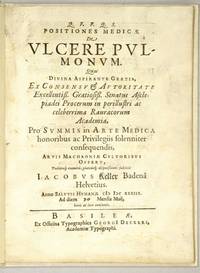
1638446241638. Basileae: Ex Officina Tyopographia Gerogi Deckeri 1638 Kl.4° 24 pp. Pappband. Positiones medicae de ulcere pulmonum / quas . pro summis in arte medica honoribus ac privilegiis solenniter consequendis . offert publicoque examini placidaeque disquisitioni subiicit Iacobus Keller Badena Helvetius. Anno . M DC XXXIIX. Ad diem . Mensis Maii. Husner: Verzeichnis bas. med. Univ.Schriften Nr. 1004 unknown
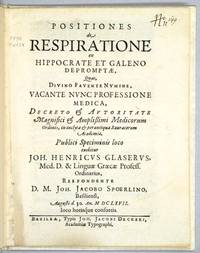
1667446771667. Basileae: TRypis Joh. Jacobi Deckeri 1667 Kl.4° 12 pp. Pappband. Positiones de respiratione ex Hippocrate et Galeno depromptae / quas . vacante nunc professione medica . publici speciminis loco tuebitur Ioh. Henricus Glaserus . respondente Ioh. Iacobo Spoerlino Basiliensi Augusti d. 30. An. M DC LXVII. Johann Heinrich Glaser auch Johannes Henricus Glaserus 6. Oktober 1629 in Basel- 5. Februar 1675 ebendaSchweizer Anatom Chirurg und Botaniker "als Bewerber um die freie med. Professur". Husner: Verzeichnis bas. med. Univ.Schriften Nr. 1134 unknown
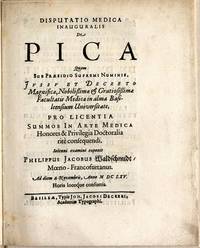
1665445561665. Basileæ Typis Joh. Jacobi Deckeri Academiæ Typographi 1665 Kl° 12 pp. Pappband. Disputatio Medica Inauguralis De Pica / Quam Sub Praesidio Supremi Numinis . in alma Basileensium Universitate Pro Licentia Summos In Arte Medica Honores & Privilegia Doctoralia rite consequendi Solenni examini exponit Philippus Jacobus Waldschmidt/ Moeno-Francofurtanus. Ad diem Novembris Anno MDCLXV. . Husner: Verzeichnis bas. med. Univ.Schriften Nr.1119 unknown
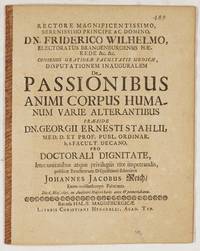
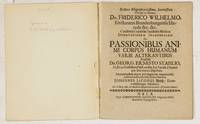
1695419751695. Halae Magdeb. Literis Christiani Henckelii 1695 Kl.4° 16 6 pp. orig. Broschur. Erste Ausgabe zweiter Abdruck! Die hier vorliegenden "Disputatio de passionibus animi" "Über den mannigfaltigen Einfluß von Gemütsbewegungen auf den menschlichen Körper" zeigt daß es Stahl schon zum Beginn seines Wirkens in Halle seit 1694 also um das Problem der psychophysischen Wechselwirkung gegangen ist. Er hat seine Bedeutung seine Auswirkung in der Praxis beobachtet. Man findet hier die Grundlagen der medizinischen Psychologie. Es werden Beispiele für den Einfluß seelischer Erregungen auf den menschlichen Organismus angeführt. In der Einleitung wird hervor gehoben: "So leiten sich von den Leidenschaften des Gemütes in ihrer vielfältigen Bestimmung Leitung oder Änderungen der Bewegungen des menschlichen Körpers auch viele Krankheitsanzeichen her." Die Mehrschichtigkeit seelischer Alterationsstufen das Unverlierbare besonders tiefe Eindrücke wird in der Vorahnung späterer Erkenntnisse Freudausgesprochen: Zugegeben sei "daß der im Erbgang geprägte Prototyp der Leidenschaften und Neigungen des Gemüthes in gewohnheitsmäßiger Festigung nicht ganz umgekehrt werden kann" so vermag doch "die domminierendende Leidenschaft durch eine ihr entgegengesetzte Gewohnheit an die zweite oder gar dritte Stelle verdrängt werden wo sie zwar noch innerhalb der Ordnungen steht gleichwohl ihre Rangstufe wechselt." Es liegt dem in nuce die Idee von der Verdrängung zugrunde. Es wird schließlich empfohlen die psychologischen Beobachtungen bei der Behandlung der Patienten nützlich anzuwenden und zu verwerten indem man den Kranken "viele Ausbrüche des Erschreckens der Furcht des Zornes anhebender Ängstlichkeit durch guten Zuspruch und durch vertrauenserweckende Sicherheit" benimmt. So zieht die Arbeit die Folgerung: "Seelenleiden die von Verletzungen des Körpers herrühren sind oft mit schwerwiegenden und dauernden Folgen verbunden. Doch sie sind zu vertreiben mit der Heilung der Körperschäden." Die Lehre von den symptomatischen Psychosen wird im Ansatz vorweggenommen wenn auch die Terminologie auf einen noch neuen Begriffsterain vortastet. Es sind Gehversuche auf einem noch dunklem Gebiet in der ärztlichen Praxis. Man kann die "Disputatio" als eine frühe Arbeit bezeichnen die sich aus der Sicht des Arztes mit dem Problem psychisch verursachter Störungen von Krankheitsabläufen beschäftigt. Es handelt sich hierbei nicht um Geisteskrankheiten. Es geht vor allem um die körperlichen Einflüsse transitorischer Seelenzustände die man heute in der Lehre von den Neurosen und ihren verschiedenen Erscheinungsformen zusammenfassen würde. Die seit der Antike beknatte Verbindung zwischen Knostitution und Charakter wird auch nach der therapeutischen Seite hin erwogen und berücksichtigt. Es ist der Geist einer naturwissenschaftlichen Betrachtungsweise der sich durch diese Arbeit hindurchzieht. Es zeigt wie vorbeitreffend die Annahme war den STAHL'schen Animismus nur religiös zu interpretieren." "In dem an zweiter Stelle stehenden "Propempticon inaugurale" - es ist eine dem Doktoranden JOHANN JACOB REICH gewidmete Abschiedsrede STAHLS mit angeschlossener Vita REICHS - nimmt STAHL zu dem Thema "De synergeia naturae in medendo" Stellung. Man findet hier alle Merkmale des STAHLschen Systems und erkennt wie sehr der aus der Erfahrung schöpfende Psychologe den Vorrang gehabt hat. So wird eine tiefe Kenntnis des Eigenrhythmus biologischer Abläufe in dem Gedanken ausgesprochen: "Die Natur hat ihr eigenes Zeitmaß und verwendet dieses bei den rhythmischen Vorgängen des Lebens von längerer Zeitdauer so bei der Embryonalentwicklung bei der Geburt Zahnung Pubertät". Die Synergie der Organe unter der Direktion der Lebenskraft enthält im Krankheitsfalle das ärztliche Problem die nützlichen Bewegungen der Naturheilkraft von den eigentlichen Krankheitsbewegungen zu unterscheiden. Der Arzt muß vor allem die Bewegungen erkennen die auf einen nützlichen Zweck abzielen. Theoretische Fragen werden aus dieser Sicht kurzerhand beiseite geschoben und in der für STAHL typischen Art das Leib-Seele-Problem zu einem biologischen Postulat'gemacht : "Es handelt sich nicht um eine Annahme sondern wir beweisen a priori mit der Vernunft daß im Menschen von einer einzigen Seele alle diese Akte und Bewegungen vollzogen werden können. Erfahrung und Vernunft zeigen a posteriori daß diese Zusammenhänge zwischen Leib und Seele in der Tat vorliegen." In diesem Problem sieht STAHL den Inhalt seiner Lebensarbeit: "Darauf werfe ich mich mit ganzer Seele. Dem gilt meine ganze Arbeit. Weder Mühe noch Neid können mich dabei verdrießlich machen. Ich hoffe vielmehr mit dem Problem in würdiger Weise fertig zu werden. Möge die Medizin dann wieder auf ihr rechtes Fundament gestellt sein"!" Diese beiden Texte "vermitteln so ein interessantes Bild der ärztlichen Persönlichkeit STAHLS ihres Temperamentes und ihrer Suche nach den biologischen und psychologischen Gesetzen einer wirksamen Therapie. Er gibt sich mit der Vorstellung einer nur mechanistischen Arzneiwirkung nicht zufrieden. Er nennt die besondere "Chronometrie" biologischer Abläufe das Gesetz der Ganzheit den Begriff des allen Einzelerscheinungen übergeordneten Organismus den Einfluß seelischer Erregungen auf die Vitalbewegungen desselben. Die psychophysische Wechselwirkung wird dem Arzt als praktisch wichtiges Problem gestellt. Jedenfalls hat STAHL bereits im Jahre 1695 alle wesentlichen Gedanken seines medizinischen Systems dargelegt. Die Ansicht er habe erst durch CHRISTIAN WOLF gewichtige Anregungen erhalten ist nicht mehr haltbar. Bereits 12 Jahre vor dem Erscheinen seiner "Theoria medica vera" hat die Forschungsrichtung STAHLS ihr wesentliches Ziel gehabt. Wenn man die Geschichte der medizinischen Psychologie überdenkt so wird man GEORG ERNST STAHL auf Grund der Einsichten in die ärztliche Bedeutung des Psychischen wie schon KORNFELD mit Recht ausgeführt hat an den Anfang einer Erschließung dieses Fachgebietes stellen dürfen. Die Leitsätze am Schluß der "Disputatio" enthalten das historische Fundament dieser neuen erst in unserer Zeit zur Anerkennung gekommenen Wissenschaft." B.J. Gottlieb G.E.Stahl Sudhoffs Klassiker der Medizin pp.18-21 23-47 unknown
1695621831695. Halae : Typis Christophori Salfeldi 1695 Kl.4° 16 6 pp. marmor. Broschur; feines Expl. Sehr Selten - Erste Ausgabe! Die hier vorliegenden "Disputatio de passionibus animi" "Über den mannigfaltigen Einfluß von Gemütsbewegungen auf den menschlichen Körper" zeigt daß es Stahl schon zum Beginn seines Wirkens in Halle seit 1694 also um das Problem der psychophysischen Wechselwirkung gegangen ist. Er hat seine Bedeutung seine Auswirkung in der Praxis beobachtet. Man findet hier die Grundlagen der medizinischen Psychologie. Es werden Beispiele für den Einfluß seelischer Erregungen auf den menschlichen Organismus angeführt. In der Einleitung wird hervor gehoben: "So leiten sich von den Leidenschaften des Gemütes in ihrer vielfältigen Bestimmung Leitung oder Änderungen der Bewegungen des menschlichen Körpers auch viele Krankheitsanzeichen her." Die Mehrschichtigkeit seelischer Alterationsstufen das Unverlierbare besonders tiefe Eindrücke wird in der Vorahnung späterer Erkenntnisse Freudausgesprochen: Zugegeben sei "daß der im Erbgang geprägte Prototyp der Leidenschaften und Neigungen des Gemüthes in gewohnheitsmäßiger Festigung nicht ganz umgekehrt werden kann" so vermag doch "die domminierendende Leidenschaft durch eine ihr entgegengesetzte Gewohnheit an die zweite oder gar dritte Stelle verdrängt werden wo sie zwar noch innerhalb der Ordnungen steht gleichwohl ihre Rangstufe wechselt." Es liegt dem in nuce die Idee von der Verdrängung zugrunde. Es wird schließlich empfohlen die psychologischen Beobachtungen bei der Behandlung der Patienten nützlich anzuwenden und zu verwerten indem man den Kranken "viele Ausbrüche des Erschreckens der Furcht des Zornes anhebender Ängstlichkeit durch guten Zuspruch und durch vertrauenserweckende Sicherheit" benimmt. So zieht die Arbeit die Folgerung: "Seelenleiden die von Verletzungen des Körpers herrühren sind oft mit schwerwiegenden und dauernden Folgen verbunden. Doch sie sind zu vertreiben mit der Heilung der Körperschäden." Die Lehre von den symptomatischen Psychosen wird im Ansatz vorweggenommen wenn auch die Terminologie auf einen noch neuen Begriffsterain vortastet. Es sind Gehversuche auf einem noch dunklem Gebiet in der ärztlichen Praxis. Man kann die "Disputatio" als eine frühe Arbeit bezeichnen die sich aus der Sicht des Arztes mit dem Problem psychisch verursachter Störungen von Krankheitsabläufen beschäftigt. Es handelt sich hierbei nicht um Geisteskrankheiten. Es geht vor allem um die körperlichen Einflüsse transitorischer Seelenzustände die man heute in der Lehre von den Neurosen und ihren verschiedenen Erscheinungsformen zusammenfassen würde. Die seit der Antike beknatte Verbindung zwischen Knostitution und Charakter wird auch nach der therapeutischen Seite hin erwogen und berücksichtigt. Es ist der Geist einer naturwissenschaftlichen Betrachtungsweise der sich durch diese Arbeit hindurchzieht. Es zeigt wie vorbeitreffend die Annahme war den STAHL'schen Animismus nur religiös zu interpretieren." "In dem an zweiter Stelle stehenden "Propempticon inaugurale" - es ist eine dem Doktoranden JOHANN JACOB REICH gewidmete Abschiedsrede STAHLS mit angeschlossener Vita REICHS - nimmt STAHL zu dem Thema "De synergeia naturae in medendo" Stellung. Man findet hier alle Merkmale des STAHLschen Systems und erkennt wie sehr der aus der Erfahrung schöpfende Psychologe den Vorrang gehabt hat. So wird eine tiefe Kenntnis des Eigenrhythmus biologischer Abläufe in dem Gedanken ausgesprochen: "Die Natur hat ihr eigenes Zeitmaß und verwendet dieses bei den rhythmischen Vorgängen des Lebens von längerer Zeitdauer so bei der Embryonalentwicklung bei der Geburt Zahnung Pubertät". Die Synergie der Organe unter der Direktion der Lebenskraft enthält im Krankheitsfalle das ärztliche Problem die nützlichen Bewegungen der Naturheilkraft von den eigentlichen Krankheitsbewegungen zu unterscheiden. Der Arzt muß vor allem die Bewegungen erkennen die auf einen nützlichen Zweck abzielen. Theoretische Fragen werden aus dieser Sicht kurzerhand beiseite geschoben und in der für STAHL typischen Art das Leib-Seele-Problem zu einem biologischen Postulat'gemacht : "Es handelt sich nicht um eine Annahme sondern wir beweisen a priori mit der Vernunft daß im Menschen von einer einzigen Seele alle diese Akte und Bewegungen vollzogen werden können. Erfahrung und Vernunft zeigen a posteriori daß diese Zusammenhänge zwischen Leib und Seele in der Tat vorliegen." In diesem Problem sieht STAHL den Inhalt seiner Lebensarbeit: "Darauf werfe ich mich mit ganzer Seele. Dem gilt meine ganze Arbeit. Weder Mühe noch Neid können mich dabei verdrießlich machen. Ich hoffe vielmehr mit dem Problem in würdiger Weise fertig zu werden. Möge die Medizin dann wieder auf ihr rechtes Fundament gestellt sein"!" Diese beiden Texte "vermitteln so ein interessantes Bild der ärztlichen Persönlichkeit STAHLS ihres Temperamentes und ihrer Suche nach den biologischen und psychologischen Gesetzen einer wirksamen Therapie. Er gibt sich mit der Vorstellung einer nur mechanistischen Arzneiwirkung nicht zufrieden. Er nennt die besondere "Chronometrie" biologischer Abläufe das Gesetz der Ganzheit den Begriff des allen Einzelerscheinungen übergeordneten Organismus den Einfluß seelischer Erregungen auf die Vitalbewegungen desselben. Die psychophysische Wechselwirkung wird dem Arzt als praktisch wichtiges Problem gestellt. Jedenfalls hat STAHL bereits im Jahre 1695 alle wesentlichen Gedanken seines medizinischen Systems dargelegt. Die Ansicht er habe erst durch CHRISTIAN WOLF gewichtige Anregungen erhalten ist nicht mehr haltbar. Bereits 12 Jahre vor dem Erscheinen seiner "Theoria medica vera" hat die Forschungsrichtung STAHLS ihr wesentliches Ziel gehabt. Wenn man die Geschichte der medizinischen Psychologie überdenkt so wird man GEORG ERNST STAHL auf Grund der Einsichten in die ärztliche Bedeutung des Psychischen wie schon KORNFELD mit Recht ausgeführt hat an den Anfang einer Erschließung dieses Fachgebietes stellen dürfen. Die Leitsätze am Schluß der "Disputatio" enthalten das historische Fundament dieser neuen erst in unserer Zeit zur Anerkennung gekommenen Wissenschaft." B.J. Gottlieb G.E.Stahl Sudhoffs Klassiker der Medizin pp.18-21 23-47 unknown
165149274Leipzig and Jena: P. Fuhrmann and G. Sengenwald 1651. Early edition. Hardcover. Very Good-. 12mo: 4 455 1 blank 80: indices Latin Greek German and errata. Contempory vellum over boards with exposed thongs. Several old entries at endleaves and title. Covers lightly soiled; lightly embrowned else a very good clean copy.<br /> <br /> First edition of this popular work on the Latin particles to be edited by the academic philosopher and jurist Jacob Thomasius 1622-1684 who has supplied copious annotations. Thomasius was the father of the important early Enlightenment thinker Christian Thomasius and taught rhetoric and moral philosophy at the University of Leipzig where Gottfried Wilhelm Leibniz was among his students. Orazio Torsellino Horatius Tursellinus; 1545-1609 was a Roman-born Jesuit scholar whose works especially on Latin grammar were very influential. First published at Rome by A. Zanetti in 1598 revised editions appeared well into the nineteenth century; the present edition was also published at Antwerp by Arnold Brakel in the same year.<br /> <br /> Annotations: The first entry inscribed on the title page "Ex libris Christophorii Friedelii. 1662." Among the inscriptions which appear at the endleaves is an evocative bit of verse: Se cupis o lector librum quis posfidet istum / Infra fluse oculos perlege nomen ad est If you wish O reader who trusts in this book read the name of it inwardly with flowing eyes. References: Cf. De Backer and Sommervogel 8:146.10 not listing the present edition. Cf. Vancil Cordell Collection p.237 eds. 1625; 1636. <br /> <br /> Full title and imprint: De particulis Latinae orationis Horatii Tursellini Romani libellus utilissimus. Nova editio superioribus longè emendatior locupletiórque adornate M. Jacobo Thomasio Lipsiensi Scholae Sent. Conrect. . Impensis Philippi Fuhrmanni Bibliopol. Lipsisnsis. Jenae Literis Georgii Sengenwald. Anno M.DC.LI. P. Fuhrmann and G. Sengenwald hardcover
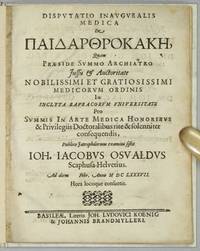
1687446521687. Basileae Literis Joh. Ludovici Koenig & Johannis Brandmylleri 1687 Kl.4° 20 pp. Pappband. Disputatio inauguralis medica de paidarthrokake / quam praeside summo archiatro jussu et authoritate nobilissimi et gratiosissimi medicorum ordinis in inclyta Rauracorum Universitate pro summis in arte medica honoribus et privilegiis doctoralibus rite et solenniter consequendis publico iatrophilorum examini sistit Joh. Jacobus Osvaldus Scaphusa-Helvetius. ad diem 19 Febr. Anno MDCLXXXVII hora locoque consuetis. Husner: Verzeichnis bas. med. Univ.Schriften Nr.1216 unknown
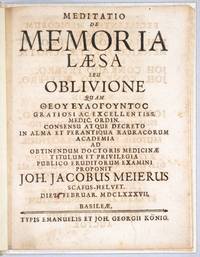
1687446791687. Basileae: Typis Emanuelis et Joh. Deorgii König 1687 Kl.4° 24 pp. Pappband. Meditatio de memoria laesa seu oblivione / quam . ad obtinendum doctoris medicinae titulum et privilegia publico . examini proponit Ioh. Iacobus Meierus Scafus-Helvet. Die . Februar. MDCLXXXVII. Husner: Verzeichnis bas. med. Univ.Schriften Nr. 1218 unknown