Ortelius, AbrahamBiblio.com
201 résultats
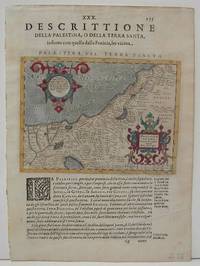
1610M1853Antwerp 1610. Excellent. Size : 137x178 mm 5.375x7 Inches Coloring: Hand Colored Category: ; Maps Asia Middle East Holy Land & Palestine unknown
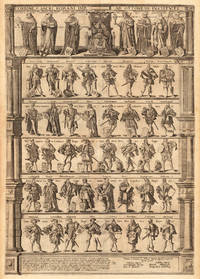
162425470Antwerpen 1624. Other. In excellent condition. 755 by 520mm 29 by 20 inches. Original copper engraving published 1624 in a Latin text edition of the famous historical atlas" Parergon by Abraham Ortelius. Printed from two plates. Latin text edition. Uncolored example in two sheets as published. Highly decorative engraving published from two double pages showing the dignitaries of the Holy Roman Empire. This engraving was published from 1593 for the first time in the atlas by Gerard de Jode. The plate was later acquired by Vrients and was then from 1603 onwards included in Ortelius' s "Theatrum" and the "Parergon". Our example was published 1624 in a Latin text edition of the Parergon."They represent the dignitaries entitled to choose German Emperors as instituted to end the turmoil and quarreling that occurred after the death of Charles the Great by Otto IV and the Pope. This plate shows left of the Emperor the highest ranking officials three ecclesiastical and four lay dignitaries. The second rank consists of four dukes and four marquesses the third of 8 earls." Broe. 201 Ortelius was born on 14 April 1527 in the city of Antwerp which was then in the Habsburg Netherlands modern-day Belgium. The Orthellius family were originally from Augsburg a Free imperial city of the Holy Roman Empire. In 1535 the family had fallen under suspicion of Protestantism. Following the death of Ortelius's father his uncle Jacobus van Meteren returned from religious exile in England to take care of Ortelius. Abraham remained close to his cousin Emanuel van Meteren who would later moved to London. In 1575 he was appointed geographer to the king of Spain Philip II on the recommendation of Arias Montanus who vouched for his orthodoxy. He travelled extensively in Europe and is specifically known to have traveled throughout the Seventeen Provinces; in southern western northern and eastern Germany e.g. 1560 15751576; France 15591560; England and Ireland 1576; and Italy 1578 and perhaps twice or thrice between 1550 and 1558. Beginning as a map-engraver in 1547 he entered the Antwerp Guild of Saint Luke as an illuminator of maps. He supplemented his income trading in books prints and maps and his journeys included yearly visits to the Frankfurt book and print fair where he met Gerardus Mercator in 1554. In 1560 however when travelling with Mercator to Trier Lorraine and Poitiers he seems to have been attracted largely by Mercator's influence towards the career of a scientific geographer. Wikipedia Broe. 201/202. State 2/2 xxij / xxj Latin text edition. unknown
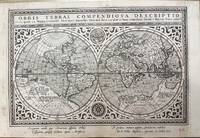
1617M10653Arnhem The Netherlands: Antonii Magini c.1617. Very Good. Notes: Latin text and blank verso.<br>Rare World map taken from Ioannis Antonii Magini's Geographia Tum Veteris Tum Nova. It is published in Arnhem in 1617 and edited by Jan Janssonius. The map is specially engraved for this publication by Abraham Goos inspired by the map of Girolamo Porro of 1597 a reduction of the Mercator globe. Size : 172x246 mm 6.77x9.69 Inches Coloring: Black & White Category: Maps World; Antonii Magini unknown
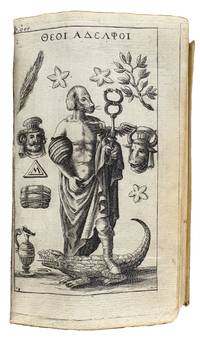
1649518331649. Luguni Joannis Antoni Huguetan 1649 Folio Portrait 2 2 68 984 311 pp.; 50 655 1 46 2 pp.; 14 148 6 1 pp. zwei Pergamenteinbände d.Zt.; von einigen kleineren Mängel abgesehen ein feines Expl. Editio postrema à mendis purgatissima - Second Edition of this Opera Omnia first published 1642. ABRAHAM ZACUTUS LUSITANUS 1575-1642 - or Abraham ben Samuel Zacutus "was born in Lisbon. He studied medicine at Coimbra and Salamanca and took his degree of doctor in 1596 when he was twenty-one years of age after having attended the Universities of Salamanca Coimbra and Siguenza . He then returned to Lisbon where according to L. Lemos "In the thirty years he practiced there . He stood out preeminent among his colleagues of many lands . . . whether in discussion or in consultation in medical practice or in literary matters he easily won the palm. . . . But when there seemed that nothing could be added to the happiness of Zacutus- behold a sudden whirlwind of fate . he was plunged headlong from the high peak of the good fortune to which his merit had raised him. A most cruel edict of the king of Lusitania banished all of the Hebrew stock from the kingdom." Zacutus departed from the city of his birth when he was 50 years of age and settled in Amsterdam. " . He journeyed to Amsterdam in the hope of obtaining a peaceful abode ." Zacutus joined the Amsterdam Jewish Community and was one of that remarkable body of physicians who as Portuguese emigres won fame for themselves and added luster to Portuguese medicine; many proudly added "Lusitanus" to their names. In his "Peroration" to the first volume of his Opera Omnia Zacutus writes: " For I am a Jew and a stranger who fled from Portugal and my beloved and most lovely birthplace Lisbon tossed about hither and thither by severe misfortune and the storms of a long life. . I have allowed no day to pass-as Seneca says-without writing a line in which I showed my love for the Republic of Medicine. . I was determined to spend my life in devotion to study." He regarded " physicians as the tutelaries of Divinity sons of the gods." M. Lemos has studied Zacutus' works and presents us with an interesting summary. From this we can see that as an anatomist and pathologist Zacutus deserves special praise for the frequency with which he made autopsies at a time when they were rare. He embraced every opportunity and as a result he published post-mortem findings in the plague in affections of the heart malignant tumors renal and vesical calculi etc. He was much interested in drugs . But it is chiefly as clinician that he showed his greatness; he examined carefully with all the means then known and he relied upon his observations. As a result M. Lemos claims that the name of Zacutus is inseparable from the history of such diseases as plague diphtheria the eruptive fevers and malignant growths. He was one of the first to describe black water fever. He is praised for his studies of and contributions to the knowledge of syphilis. In estimating Zacutus' place in medicine we must bear in mind with M. Lemos that he was one of the most illustrious representatives of moribund Galenism which he defended with great loyalty. In his devotion he combated with all his force those whom he regarded as perverting the text and showing disregard to the masters. But as Carvalho points out "it is true that we had at that time some doctors who without despising traditional science by their devotion to progressive tendencies made great advance in the field of pathology and therapeutics. Of this number Zacutus and Duarte Madeira Arrais take front rank." The universality of Zacutus' interest in human diseases is everywhere apparent. His writings are arranged very systematically and no part of the body fails of attention. An interesting account could be made of the diseases of the eye which he describes and discusses. The same may be said of other organs. It is to be regretted that Zacutus did not live to publish his promised work on surgical diseases for the purpose itself furnishes proof there was nothing in medicine that was foreign to his concern. The collected works the Opera Omnia published in Lyon 1st.Ed. 1642/44 in two large volumes shortly after Zacutus' death January 22 1642 "hauptsächlich betrauert von den Armen" Hirsch but bearing the note of the author's revision present vast scholarship. They were dedicated to King Louis XIII of France. Volume I is described in its title as: The History of the Great Physicians being all the medical histories of internal diseases which are found scattered in the works of the foremost physicians most carefully arranged in proper order and supplied with explanatory notes and commentaries; together with a review of questions and matters of doubt." This is a medical history written not in chronological order of the general development of medicine nor in the sequence of eminent medical personages and their discoveries and their writings but from the point of view of single diseases their course and their treatment as recorded in the works of medical writers throughout the centuries. At the end of the volume Zacutus writes that he has presented " the histories of medical cases gathered from the foremost physicians in bountiful measure-to the number of 433 " and that he has illustrated clarified arranged and confirmed them on the authority of the most learned scholars to the number of 1711 "whom he has cited. It represents work of astounding volume. Volume II is entitled " The Practice of Cases-in which the treatment of all internal diseases is explained according to the views of leading physicians; serious doubts are discussed and resolved; and finally many practical observations are interspersed in their proper places. With an introduction of the physician into practice together with a most elegant pharmacopoeia. To which are added extraordinary medical cases by the very same author fully and newly enriched in which rare wonderful monstrous cases are presented together with their hidden causes signs courses and treatments." Each disease is considered under the following heads: Definition sometimes followed by "differentia" species causes signs prognosis treatment together with illustrative cases. The volume ends with a deeply pious and moving prayer of gratitude for Divine help-just as the book of precepts mentioned above opens with Precept I: "The physician should be a faithful worshipper of Divine Majesty "; yet in discussing objectively a medical problem he adds: "for we are physicians and not theologians! " It is also worthy of mention that the editions of 1649 and 1657 both volumes were from the same printer and are identical in form and paging with the first. What estimate have medical historians placed upon Zacutus Lusitanus Sprengel summarizes his life and work with the words that he distinguished himself as a practitioner as well in Holland as in Portugal. He commends the well ordered and carefully explained collections of cases of older writers as well as his own observations and experiences in rare cases. Daremberg describes the books as "precious works . . . still very useful." Neuburger and Pagel cite Zacutus frequently and praise his works. Neuburger regards him as the first to deal with the history of medicine." Harry Friedenwald The Jews and Medicine I pp.307-321 Cat. p.154 unknown
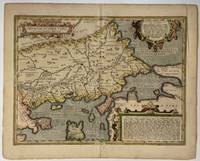
1630324748Antwerp: Abraham Ortelius 1630. unbound. Map. Engraving with hand color. Image measures 14" x 18 3/4".<br/> <br/> This beautiful map by Abraham Ortelius depicts the Balkan Peninsula or the Balkans extending from The Sea of Marmara Istanbul and the Bosporus Strait westward to Macedonia including Bulgaria. Portions of the Black Sea and the Thrakikon Pelagos are also shown. Topographical and geographical features such as mountains forests and cities are beautifully rendered in profile.<br> <br> Ortelius based this map on the 1560 South-East Europe map by Gastaldi and on on information from numerous ancient sources specifically Herodotus Plinius Strabo Appianus Virgilius Plutarchus and Sidonius. A beautifully engraved title cartouche adorns the top left of the map. Two additional cartouches containing text are also included in the top and bottom right.<br> <br> This map was published in the 1630 edition of Ortelius's famous "Theatrum Orbis Terrarum" which is historically considered the first modern atlas. Based on the Latin text on verso only 300 copies of this particular atlas were ever printed van der Broecke 214. The map is in good condition with minor wear and toning along the original centerfold. Printers crease to right margin not affecting the image. Latin text on verso.<br> <br> Abraham Ortelius 1527 - 1598 a Flemish cartographer and geographer is widely regarded as one of the important and influential cartographers in history. He is known for his "Theatrum Orbis Terrarum" which was the first modern atlas. Van den Broecke #214<br/> <br/> Abraham Ortelius unknown
166341874Nuremburg: Heirs of J. & W. Endter 1663. 8vo. 6 3/16 x 3 3/4 inches. xiv 998 xl pp. Title in red and black engraved frontispiece and 42 plates 7 folding. Early ownership signature on front pastedown. Early 18th-century lengthy manuscript commentary referencing passages on Brahmins from a work by Johann Albrecht von Mandelslo 1616-1644. Contemporary vellum<br/> <br/> First German Edition of one of the earliest European accounts of Hinduism in Southern India by a missionary who worked in Palicatta Coromandel for ten years from 1630 enlarged by supplementary accounts of Asian African and American religions not included in the Dutch and French editions.<br/> <br/> Abraham Roger was a Dutch missionary and linguist who spent a significant portion of his career working in India under the Dutch East India Company VOC. He was stationed in Pulicat a trading hub on the Coromandel Coast of South India where he worked among the Tamil speaking population. His experiences as a missionary coupled with his interest in local culture prompted him to document Hindu religious practices and beliefs culminating in this notable work. First published in Dutch in 1651 and translated into German in 1663 it is one of the earliest and most significant works by a European exploring Hinduism in South India. Roger's approach was distinct in its attempt to understand and accurately portray Hinduism a religion he sought to comprehend despite his missionary objectives. His work stands out for its translations of Hindu hymns and descriptions of temple rituals and he drew much of his knowledge from his close collaboration with local Brahmins reflecting a relatively objective tone compared to other European writings of the period. Despite his Eurocentric and missionary perspective Roger was unique in that he did not entirely dismiss Hinduism but rather engaged with it to create one of the earliest detailed European accounts of the religion.<br/> <br/> Sabin 72603; JCB III p. 92; Ackermann V 1273; Landwehr VOC 65. Heirs of J. & W. Endter unknown
161220665Antwerpen: Juan Baptist Vrints 1612. Other. In very good to excellent condition. 369 by 488mm 14 by 19 inches. Original copper engraving published 1612 in a Italian text edition Vriens edition of the " Theatrum Orbis Terrarum. This antique map shows Hannonia in Belgium. The map is equipped with many small place names rivers woods etc. In the upper right corner we see an allegoric title cartouche and in the upper left corner a mileage scale and at the bottom two coat of arms. Ortelius was born on 14 April 1527 in the city of Antwerp which was then in the Habsburg Netherlands modern-day Belgium. The Orthellius family were originally from Augsburg a Free imperial city of the Holy Roman Empire. In 1535 the family had fallen under suspicion of Protestantism. Following the death of Ortelius's father his uncle Jacobus van Meteren returned from religious exile in England to take care of Ortelius. Abraham remained close to his cousin Emanuel van Meteren who would later moved to London. In 1575 he was appointed geographer to the king of Spain Philip II on the recommendation of Arias Montanus who vouched for his orthodoxy. He travelled extensively in Europe and is specifically known to have traveled throughout the Seventeen Provinces; in southern western northern and eastern Germany e.g. 1560 15751576; France 15591560; England and Ireland 1576; and Italy 1578 and perhaps twice or thrice between 1550 and 1558. Beginning as a map-engraver in 1547 he entered the Antwerp Guild of Saint Luke as an illuminator of maps. He supplemented his income trading in books prints and maps and his journeys included yearly visits to the Frankfurt book and print fair where he met Gerardus Mercator in 1554. In 1560 however when travelling with Mercator to Trier Lorraine and Poitiers he seems to have been attracted largely by Mercator's influence towards the career of a scientific geographer. Wikipedia Juan Baptist Vrints unknown
1616ABC_48242Amsterdam 1616. Oblong 4to ca. 16 x 21 cm. Abraham Goos in de Kalverstraet 19th-century quarter calf with a manuscript number on the spine "32" sprinkled paper sides. With an engraved title page signed by P.Serwouter scul. bottom right after D.Vinck Boons bottom left 23 full page maps several decorated woodcut initials and woodcut tailpieces. 7 "305" =294 2 1 blank pp. Rare first edition of one of the first atlases of the Low Countries with 23 very detailed maps. It is the only atlas published by the mapmaker Abraham Goos himself. At the time the present atlas was published the Seven United provinces The Northern Netherlands were still together with the 10 provinces of the Spanish or Habsburg Low Countries. The atlas includes two maps of the Low Countries as a whole one map of each of the seventeen provinces except Drenthe which is included in the map of Overijssel four additional maps of Holland and one additional map of Brabant. Gooss maps were also used for the Atlas Minor published by Johannes Janssonius in 1628.The maps are elegantly designed with decorative title cartouches finely engraved and set in a decorative oval rectangular frame while the corners are decorated in a Renaissance style. The work was reprinted by Janssonius in 1625 and Doncker in 1685. Only the first edition was printed by Goos himself. Koeman recognizes only one Goos issue but Van der Krogt's reissue of Koeman's Atlantes Nederlandici distinguishes two of which ours is the second. The two issues are nearly identical but the second can be recognised by the imprint which includes Goos's new address "inde Kalverstraet" and the addition of the text "cum privilegio" to the maps which Goos added after receiving his privilege for this atlas on 24 December 1615 and an honorarium of 120 guilders from the States General on 8 January 1616. Generally 20 of the 23 maps of the second issue have this addition but in the present copy it is 17: the text is not present on maps 3-5 8 and 11-12.The text was written by the poet and translator Reinier Telle 1559-1618 who based it mainly on Ludovicos Guicciardinis Beschrijvinghe van alle de Nederlanden translated by Telle in 1613. Telles text was in turn the main source for the text in De Vyerighe Colom; finally that text was again used for a new edition of Guicciardinis work published by Jacob van Meurs in 1660.Abraham Goos ca. 1590-before 1643 was born in Antwerp as the son of Margaretha van den Keere the sister of the famous mapmaker Hendrik van den Keere. In 1600 Goos moved to Amsterdam where he soon was employed and trained by the Hondius family and by Willem Jansz. Blaeu. He had his own shop named "In t vergulde Caertboeck" first located op den Dam later around 1615 in the Kalverstraat. Pieter Goos Abrahams son later became famous for his sea atlases and pilot guides.With an erased ownerships entry at the head of the half-title and 18th-century annotations on pp. 136-138. The edges and corners of the boards are scuffed the boards have been rubbed with some loss of material. The first few leaves are somewhat browned a repaired hole in the lower margin of the title page false folds in the half title some marginal small tears small holes in 2 leaves with some loss of text a repaired tear in the last leaf a water stain in the outer half of the last few leaves. Otherwise in good condition.l Krogt P. van der Koemans Atlantes Neerlandici IIIB § 363 pp. 612-615 no. 363:01B; Koeman Atlantes Neerl. II p. 121 Goo 1; STCN 853385556; USTC 1032942; cf. for the text: Fontaine Verwey H. de la Reinier Telle hekeldichter pamfletschrijver vertaler in: Uit de wereld van het boek III pp. 55-86 esp. 68. hardcover
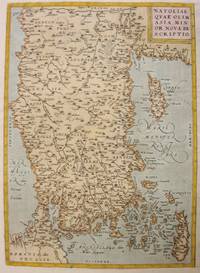
1612M3955Antwerp 1612. Very Good. Notes: With rare Spanish text on verso.<br>Map of Asia Minor Turkey Cyprus and the Eastern Mediterranean sea. Size : 322x230 mm 12.68x9.06 Inches Coloring: Original Hand Coloring Reference: Marcel P.R. van den Broecke #174 Category: Maps Asia Near East Turkey: Maps Mediterranean Islands; unknown
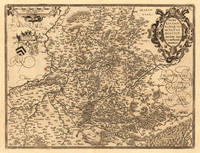
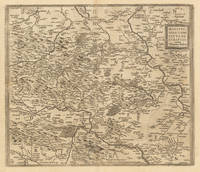
160269318Antwerp. c.1602. A striking and very handsome map of the province of Namur in modern day Belgium. This map was first used by Ortelius in 1579 and it is based on the earlier map by I. Surhon. The map features a pair of stylish title cartouches and a directional compass. Namur is a province in Wallonia in the French speaking part of Belgium. The city stands astride the twin rivers of the Sambre and the Meuse. Published in Ortelius' landmark atlas the Theatrum Orbis Terrarum. Copperplate engraving with original colour. Size: 400x 525 mm Good condition. unknown
1601208175Antwerp: Ortelius Abraham 1601. unbound. very good. Map. Engraving with hand coloring. Image measures 15.5" x 20.25".<br/> <br/> Lovely map of the Namur region of Belgium. Includes a compass rose and a cartouche incorporating the Belgian coat of arms. From the 1601 Latin edition of Ortelius' "Theatrum Orbis Terrarum" the first modern Atlas. Margins have been cropped some chipping and tears along margins. Stain to top center margin and also to lower left and right of image.<br/> <br/> Ortelius, Abraham unknown
169640906Leiden and Utrecht: Pieter vander Aa and François Halma 1696. Two volumes folio. 15 5/16 x 10 1/4 inches. Half title title printed in red and black with engraved vignette. Engraved additional title and 243 engraved plates. Contemporary Dutch blindstamped vellum with arabesque design.<br/> <br/> Provenance: Karl Magnussun bookplate – John David Drummond 8th Earl of Perth Viscount Strathallan<br/> <br/> First expanded edition of one of the most attractive Dutch florilegia of the seventeenth century.<br/> <br/> Munting was professor of botany at the University of Groningen and took over and enlarged the botanic garden founded by his father Henricus. The present work depicts some of the exotic and remarkable plants growing in the garden. It is one of the earliest and most important documents concerning Japanese flora and its importation into the West predating Thunbergs works by almost one hundred years. "Munting wrote a number of works on medical-botanical topics but his posthumously published opus magnum the Naauwkeurige enjoyed particular success at least in part due to the novelty of the plates which in a radical departure from the iconography of the traditional florilegium presented its plant species against a charming series of landscape backgrounds . The illustrations are remarkable for their elegance and originality" Oak Spring Flora. The initial botanical line drawings are now known to have been by about ten different but unidentified artists. Some time after Munting's death and in preparation for their publication these line drawings had tone and the pictorial back- and fore-grounds added by Jan Goeree 1670-1731 under the supervision of the publishers. The engraving and etching was then carried out by Jacob Gole and Joseph Mulder engraver of many of plates in Maria Sibylla Merians work on the insects of Surinam.<br/> <br/> Hunt 396; Nissen BBI 1428; Tomasi Oak Spring Flora 45 latin edition; Pritzel 6556; Brunet 1947. Pieter vander Aa and François Halma unknown
1696211447Leyden and Utrecht: Pieter Vander Aa 1696. unbound. very good. Botanical. Copper plate engraving with hand coloring. Image measures 12.5" x 8.25".<br/> <br/> Beautiful side profile of a banana tree attached to a base. Abraham Munting 1626-1683 taught medicine and botany at the Academy of Groningem in the Netherlands. He had a particular interest in the uses of plants especially medicinally. This engraving is from "Naauwkeurige Beschryving Der Aardgewassen". Aging around edges and minor foxing. Adhesive residue verso slightly visible to left side. Please visit our gallery for more Munting prints.<br/> <br/> Pieter Vander Aa unknown
16531712080008Paris: Chez ledit Bosse 1653-01-01. First Edition. Hardcover. Good. Small octavo 18.5 x 11 cm. Bound in contemporary speckled leather boards rebacked and rehinged. 5 raised bands gilt spine with loss. Speckled page ends. 1 preliminary leaf 75 1 pages. Illustrated with added engraved title and 32 leaves of plates. Two folding plates. Last few leaves and rear most plate damp stained. This copy has the final folding plate dated 1669. <br> Abraham Bosse's 1602-1676 rare sequel to Maniere universelle des principes de Mr. Desargues. Bosse applies Desargues' methods to angled and curved surfaces. "His Moyen universelle. paid particular attention to the illusionistic projection of perspective onto ceilings and vaults of various configurations" Kemp Science of Art pp. 123-4. Provenance: Early signature of Randolph Greenway of Thavies Inn Holborn London 1725. Includes card states "From the library of John Bianchi owner of the Merrymount Press Boston. Purchased from Starr bros. booksellers Cambridge Mass. in 1949." Brunet I 1127. Chez ledit Bosse hardcover
161235663Antwerpen: Christopher Platin 1612. In good condition. Old oxidations on the back. 35.6 x 475 cm 14 x 1875 inches. Original antique copper engraving old colored. Spanish text edition. Fine and decorative early map of Moravia. The map provides good information on early place names in the 16th century in Moravia as well rivers and mountains are engraved. Villages and towns are still shown as miniature views. In the upper left corner we find the renaissance cartouche and in the lower right corner we see a mileage scale with a circle and the coats of arms of Moravia. Christopher Platin unknown
167760729Cologne i.e. Rouen Pierre du Marteau 1677 Ville-France Pierre Petit 1677. 8vo. In a contemporary vellum binding with yapp edges. Small paper-label pasted on to top of spine. Ex-libris pasted on to pasted down front end-paper. Previous owner's name in contemporary hand to title-page. Light wear to extremities otherwise nice and clean. 6 627 3 190 pp. hardcover
167768020à Cologne: Chez Pierre du Marteau 1677. Fine. Chez Pierre du Marteau à Cologne 1677 8.50 x 14 cm relié First edition under initials L.M.P. for ""le ministre prisonnier"". Title page with sphere. Contemporary full marbled brown sheep binding. Spine with raised bands decorated. Brown sheep title-label. Slight lack at foot. One corner slightly bumped. Good copy perfectly fresh. In his memoirs written in Holland where he found refuge Wicquefort diplomat and intellectual takes up his pen to defend himself against accusations of high treason which earned him a sentence of life imprisonment. Famous diplomat first in the service of Mazarin then imprisoned for a writing on the relations of young Louis XIV with Mazarin's niece he finds refuge in Holland where he will inform France of the actions of foreign diplomats and ambassadors. In 1675 the Williamson Affair emerges: Wicquefort is accused of high treason after having sold secret dispatches to the ambassador of the English Crown Sir Williamson. He is arrested on March 25th and taken to prison. In 1676 he is condemned to life imprisonment after a resounding trial and to the confiscation of his goods. It is during his stay in prison that he writes these memoirs on diplomats ministers ambassadors and law in Europe. Wicquefort will manage to escape from prison in 1679. Chez Pierre du Marteau hardcover
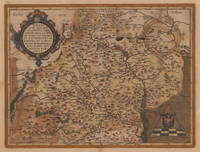
161233375Antwerpen: Juan Baptist Vrients 1612. In excellent condition. 368 by 430mm 14 by 17 inches. Hand-Colored Original Copperplate Engraving by Abraham Ortelius depicting Mansfeldiae Comitatus Descriptio auctore Tilemanno Stella. Sig. Published Antwerpen Juan Baptist Vrients 1612. Sheet: 368 by 430mm 14 by 17 inches. A fine and original hand-colored example of Ortelius's celebrated cartographic work documenting this region of Germany with the precision and decorative artistry characteristic of the 16100s. Abraham Ortelius 1527-1598 was a Flemish cartographer and geographer from Antwerp widely regarded as the creator of the first modern atlas. His landmark publication Theatrum Orbis Terrarum 1570 set the standard for atlas-making for the next century presenting uniform copper-engraved maps with scholarly commentary. By Ortelius's death the Theatrum had appeared in 25 editions in seven languages. In 1575 King Philip II of Spain appointed him Royal Geographer. His maps engraved with extraordinary precision are among the most sought-after in antique cartography held in collections including the Plantin-Moretus Museum in Antwerp the Library of Congress and the British Library.This original copperplate engraving with original hand coloring depicts the region of Mansfeldiae Comitatus Descriptio auctore Tilemanno Stella. Sig. published in Antwerpen Juan Baptist Vrients 1612. The map features a decorative Baroque cartouche containing the title inscription. A distance scale is incorporated within the cartouche or alongside it. The map records the political and geographic boundaries of the region as understood in 1612 offering a fascinating window into the history of German territorial organization. Sheet measures 368 by 430mm 14 by 17 inches. In good condition overall with minor signs of age appropriate for a 17th-century engraving. Ready to frame. Broe. 94 Koeman 32 Juan Baptist Vrients unknown
1648001623Paris: Pierre Des-Hayes 1648. Book. Very good- condition. Hardcover. First Edition. 16mo - over 5¾" - 6¾" tall. xviii 342 pages of text. Defective copy lacking five plates the frontis and a final engraved table. Attractive early-to-mid-18th century leather binding with moderate wear to the hinges spine extremities and corners. Raised bands gilt tooling and lettering on spine. Decorative marbled endpapers and blank endsheets supplied at time of binding. Present is the full-page engraved portrait of Michel Larcher engraved armorial dedication to Larcher and the engraved title page following page 58. A complete copy has the plate numbers 151 and 156 used twice totalling 158 plates showing plans and designs of perspective of which 153 only are present in this copy. Lacks plate numbers 110 151 both 154 and 155. However early hand-drawn facsimiles of plates 151 one of two and 155 are supplied and bound-in leaving three images unrepresented. The majority of the plates are double-sided. Plate 156 is in less than good condition with heavy staining and soiling. Engraved title page is repaired with early conservator's tape with no loss. Pages 168 through 193 are bound out of order. Several leaves are affected by damp staining and minor rippling; approximately 15 front and 30 rear. The title page and several adjacent leaves as well as a few at the rear of the text are heavily stained. Some of the staining appears to originate from washed-out markings -- notations to which an attempt at removal were made -- that are in blank areas mainly in the front and rear pages but also in the blank areas in the introduction. Includes Desargues New Theory at the end with demonstrations. Protected in a modern circa 1950 slipcase decorated with marbled endpaper the seams of which are detached at the top edge. Desargues 1593-1661 was a French mathemetician and a founder of modern Geometry. With Pascal he introduced the method of perspective; treated conic sections as projections of circles formulated the so-called Arguesian transformation; developed the theory of involution and of transversals; defined parallels as lines that intersect at infinity. Measures 6-5/8" tall by 4-1/2" wide; printed on thick paper with ample margins. 20th century bookplate of Paul and Verner Mac Alister on front pastedown and a neatly handwritten identification on the 2nd front endpaper. On the same leaf is a contemporary name or marking. French France Fortifications Conics Cartography Projective and Descriptive Geometry. Early editions of Desargues works are quite uncommon. Pierre Des-Hayes Hardcover
1610M1953Antwerp c.1610. Very Good. Notes: Rare Cartographer Portantius Latin text on verso Size : 227x250 mm 8.875x9.875 Inches Coloring: Hand Colored Category: Maps Europe Estonia Latvia; unknown
168643445Nuremberg: Johann Georg Endter 1686. <p>Linden Johannes Antonides van der 1609-64. Lindenius renovatus sive . . . de scriptis medicis libri duo . . . noviter praeter haec addita plurimorum authorum . . . a Georg. Abrah. Mercklino . . . 4to. 22 210 221-1101 55pp. Lacking Part II "Cynosura medica" approx. 170pp. containing Mercklin's subject index to Lindenius renovatus. Engraved frontispiece. Nuremberg: Endter 1686. 200 x 163 mm. Vellum ca. 1686 head of spine and hinges repaired. Occasional light foxing but fine. From the library of anthropologist Johann Friedrich Blumenbach 1752-1840 with booklabel bearing his autograph signature on the front pastedown and annotations and underlinings possibly his on at least 50 leaves. Modern bookplate of Gordon W. Jones M.D.</p> <p>First Edition of Georg Abraham Mercklin's considerably expanded version of van der Linden's bibliography of medicine. First published in 1637 Van der Linden's was the most complete medical bibliography of its time; it was also the most modern of early medical bibliographies both in its contents and format. Mercklin 1664-1702 supplied corrections biographical material on authors and additions that included the innovative listing of articles from the publications of learned societies.</p> <p>This copy is from the library of Johann Friedrich Blumenbach the founder of modern anthropology. He was the author of De generis humani varietate nativa 1775 in which he divided humanity into four races based on head shape skin color and hair type; he later added a fifth race and in the expanded third edition of De generis 1795 he introduced the famous terms "Caucasian Mongolian Ethiopian American and Malayan" to describe the "white yellow black red and brown" varieties of mankind. Brodman Development of Medical Bibliography pp. 29-33; no. 14. Fulton Great Medical Bibliographers pp. 35-36. </p> . Johann Georg Endter unknown
1672ABC_50310Amsterdam 1672. 8vo. Jacobus Wagenaar 18th-century sprinkled paper over contemporary gold-tooled calf with a brown paper label lettered "Hobbes" on the foot of the spine mottled edges. With an engraved frontispiece a woodcut vignette on the title page an engraved portrait of Thomas Hobbes and a folding table on the classification of sciences. 16 744 64 pp. First Dutch edition of the seminal work by Thomas Hobbes 1588-1679 one of the most original political philosophers of his era. Written during his exile in Paris amidst the English Civil War 1642-1651 Leviathan presents the state as a vast artificial monster composed of individual men whose authority is necessary to protect citizens from the natural state of war. Hobbes argued that survival property and power drive human behaviour making submission to a strong sovereign preferable to the chaos of anarchy. The present Dutch translation was made by Abraham van Berkel 1630-1688 who was closely associated with the Dutch freethinking circles around Spinoza. For this translation van Berkel wrote an important preface explicitly stating the political aims of publishing his Dutch Leviathan at that particular moment in Dutch history. A close reading of the Dutch text reveals several telling deviations from the English original one of which may represent a deliberate reinterpretation of Hobbes meaning presumably intended to adapt Hobbesian ideas more effectively to a Dutch context.With 2 stamps of the Breslau library on the verso of the title page and a later pencil annotation on p. 722. The boards are rubbed the spine is worn with a tear and loss of material at the head. The leaves are somewhat browned and foxed.l Graesse III 311 u; Knuttel Verboden Boeken 185; STCN 095379150 4 copies; USTC 1808932 5 copies; cf. PMM 138 English ed. hardcover
161220662Antwerp: Juan Baptist Vrints 1612. Other. Within the title cartouche an old small rust spot. In very good to excellent condition. 380 by 497mm 15 by 19 inches. Original antique copper engraving published 1612 in a Italian text edition Vriens edition of the " Theatrum Orbis Terrarum. This antique map shows the region of Lüttich in Belgium. The map is equipped with many small place names rivers woods etc. Uncolored copy in a strong impression. The map is ornated a large title cartouche and below a decorative mileage scale. Ortelius was born on 14 April 1527 in the city of Antwerp which was then in the Habsburg Netherlands modern-day Belgium. The Orthellius family were originally from Augsburg a Free imperial city of the Holy Roman Empire. In 1535 the family had fallen under suspicion of Protestantism. Following the death of Ortelius's father his uncle Jacobus van Meteren returned from religious exile in England to take care of Ortelius. Abraham remained close to his cousin Emanuel van Meteren who would later moved to London. In 1575 he was appointed geographer to the king of Spain Philip II on the recommendation of Arias Montanus who vouched for his orthodoxy. He travelled extensively in Europe and is specifically known to have traveled throughout the Seventeen Provinces; in southern western northern and eastern Germany e.g. 1560 15751576; France 15591560; England and Ireland 1576; and Italy 1578 and perhaps twice or thrice between 1550 and 1558. Beginning as a map-engraver in 1547 he entered the Antwerp Guild of Saint Luke as an illuminator of maps. He supplemented his income trading in books prints and maps and his journeys included yearly visits to the Frankfurt book and print fair where he met Gerardus Mercator in 1554. In 1560 however when travelling with Mercator to Trier Lorraine and Poitiers he seems to have been attracted largely by Mercator's influence towards the career of a scientific geographer. Wikipedia Juan Baptist Vrints unknown
160153035Antwerp. 1601. Ornate map of Luxembourg eastern Belgium and part of North Eastern France with flamboyant strapwork decoration to title across upper centre. Decorated frame. The stippling around the scale identifies this as the later of two plates of the same subject. Published in Ortelius' landmark atlas the Theatrum Orbis Terrarum. Copper engraving. Fine condition Later colour. Size: 48.5 x 37.5 cm. Ref: Van den Broecke 64. unknown
16671000441667. Paris Abraham Bosse 1667. Engraved frontispiece 87220pp. With an engraved dedication page. 8vo. Contemporary full mottled calf spine and corners expertly restored. Some browning. Bound in at the end the last 20 pages are: 1 - A. Bosse au lecteur sur les causes qu'il croit avoir euës de discontinuer le cours de ses leçons geometrales et perspectives dedans l'Academie Royale de la Peinture et de la Sculpture & mesme de s'en retirer. Paris A. Bosse 1667. 15pp. And: 2 - Discours tendant a desabuser ceux qui ont creu que l'Auteur d'un Traité qui a pour Titre Entretiens sur les vies et sur les ouvrages des plus excellens peintres anciens et modernes; avoit pretendu m'attaquer dans sa Préface. Paris A. Bosse 1667. 4pp. This scarce book is written in the form of a dialogue between Ariste an amateur who would like to build an architect a painter a "disciple" and the author himself. All the representatives of these different arts are asking for Bosse's advice. This allows Bosse to express once again his ideas regarding perspective in painting and architecture. Abraham Bosse who was born in Tours in 1602 is best known as an engraver but he was also the first professor of perspective at the newly founded Académie Royale from 1648 to 1661 when he was forced to leave due to disagreements with other Académicians. The two addresses that follow the book explain why in Bosse's own opinion he had been forced to leave his lob at the Académie and they also respond to comments made about Bosse by Félibien in the preface to the first part of the latter's Entretiens published a year earlier. c.f. Cicognara 91; Berlin cat. 2381; Abraham Bosse Savant Graveur # 310 311 & 312. unknown