ADAM Géraldine -Livre Rare Book

20 résultats
150257781502 Broché, comme neuf, 150x230, 285 gr, 172 pages, illustrations N&B? Préfacé et dirigé par Constance de Champris analyste transgénérationnel, qq figures et dessins, ISBN: 2-7163-1318-0 - 9782716313186
16001243AG1600. O.J. um 1600. Kupferstich Brustbild in runder Umrahmung. Bildgrösse: 118 x 91 cm. Plattengrösse: 121 x 95 cm. Bis zum Plattenrand beschnitten und auf Papier montiert 136 x 105 cm. unknown
16001243AGO.J. (um 1600). Kupferstich (Brustbild in runder Umrahmung). Bildgrösse: 11,8 x 9,1 cm. Plattengrösse: 12,1 x 9,5 cm.
15201002N2London: Bloomsbury; Mudlark 2015-2022. First edition. Cloth. Fine/Near Fine. 9.5" by 6.5". Various. Two first editions of biographies that delve into the author who shaped espionage fiction including his definitive biography and an intimate memoir written by his lover. The two first editions of intriguing biographies on esteemed espionage author John le Carré David Cornwell.In the publisher's original cloth in the original unclipped dust wrappers.Despite John Le Carré being considered one of the greatest authors of the postwar era little is known about the famously private author. Including his background with both MI5 and MI6 these two biographies offer us insight into the man behind the Smiley and Karla.- John Le Carré the definitive biography written by Adam Sisman written with exclusive access to Cornwell and his private archives. Bloomsbury 2015.- The Secret Heart John Le Carré: An Intimate Memoir written by his lover Suleika Dawson offering an alternative version of Cornwell's story. Mudlark 2022. In the publisher's original cloth in the original unclipped dust wrappers. Externally in excellent condition with minimal marks and edgewear. Dust wrappers are bright and clean with very faint creases to top edge of Sisman wrapper. End papers are bright and clean. Internally firmly bound. Pages are bright and clean. Fine Bloomsbury; Mudlark hardcover
1519ZB1135881Ottawa: Tache etc. 1915-1935 passim. volume one is second edition in two parts volumes two & three are first editions; rebound in modern gilt stamped maroon cloth hardcovers very good. - If you are reading this this item is actually physically in our stock and ready for shipment once ordered. We are not bookjackers. Buyer is responsible for any additional duties taxes or fees required by recipient's country. Ottawa: Tache, etc. hardcover
1556325271869-1556. Wien. med. Wschr. 19/93. - Wien L.W.Seidel Sonnabend 20. November 1869 4° Sp.1541-1556 feine Broschur. Erstdruck! unknown
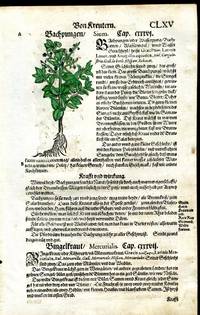
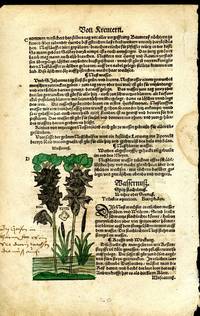
1564049676Franfurt: Ch. Egenolffs 1564. disbound. Very Good Condition. single leaf 7" x 11 1/4" slight chipping at edges browned in spots. A nice example with hand colored illustrations of dog's mercury and privet. Size: Folio. Quantity Available: 1. Shipped Weight: Under 1 kilo. Category: Science & Technology; Botany; Inventory No: 049676. Ch. Egenolffs unknown
1597438191597. Icones virorum illustrium Frankfurt 1597-1599. Kupferstich vpn Theodor de Bry 150 x 113 mm; beschnitten. Inschriften: Im oberen Bereich des Bogens steht sein Name: ADAMVS LONICERVS Med. Physic. Francf. ad Moenum Hinweis auf seine Tätigkeit als Stadtphysikus in Frankfurt am Main. Ein kleinerer Textkasten links gibt seine Lebensdaten an geboren 1528 in Marburg gestorben 1586 in Frankfurt. Am unteren Bildrand befindet sich eine lateinische Inschrift die seine wissenschaftliche Arbeit lobt: "Herbarum scribis solerti indagine vires. Nunc est labor est multae cognitionis opus. fabr." Adam Lonicerus "Ist als Sohn des vorstehen Johannes Lonicerus 1528 d. 10. Oktob. in Marburg geboren. schon im 13ten Jahr erlangte er das Bakkalaureat und im 16ten die Magisterwürde. Sein Vater schickte ihn nach Frankfurt a.M. um unter dem Jak. Mycillus sich in der Gelehrsamkeit noch gründlicher zu befestigen. Er überkam hier an der Schule auch selbst ein Lehramt doch verursachten die damaligen Kriegsunruhen dass er nach Verlauf eines Jahres nach Marburg zurückgieng von da aus er mit Casp. Rudolphi die Friedberger Schule in Stand setzen half. Im Jahr 1550 übernahm er das Majorat der Stipendiaten in Marburg. Gleichwie das Studium der Arzneygelahrtheit immer seine Hauptabsicht war so unterzog er sich 1551 in Maynz bey den Kinder des Dr. Osterods einer Informatorsstelle blos von deswegen um von diesem dabey zugleich Nutzen in jener Wissenschaft zu schöpfen. Im Jahr 1553 indessen brachte ihn der Ruf zur Professur der Mathematik wieder nach Marburg. Seine anhaltende Neigung aber für die Arzneygelahrtheit machte dass er 1554 die Doktorwürde in derselben annahm und der Aussicht nach Maynz zu einem öffentlichen Lehramte zu folgen beschloß. Mit Magdalenen der Tochter des Buchdruckers Christian Egenolphs in Frankfurt a.M. hatt er sich im eben dem Jahr verheyratet: der dasige Stadtpysicus Graphius war eben mit Tode abgegangen und nun gediehe es dahin das Lonicer durch das Bemühen seines Schwiegervaters diese Stelle erhielt also in Frankfurt blieb daneben die Korrekturen in der Buchdruckerey desselben besorgte. Egenolph stand sich hierbei so gut dass Lonicer für die Folge einer jeden anderwärtigen Veränderung entsagte also auch in Frankfurt in seinem 58then Jahrsalter am 29 May 1586 sein Leben endigte." Friedrich Wilhelm Strieder Grundlage zu einer Hessischen Gelehrten und Schriftsteller Geschichte VIII pp.86-93 mit ausführlichem Schriftenverzeichnis unknown
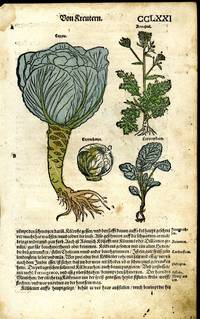
1546049670Frankfurt: Ch. Egenolff 1546. Early Edition. disbound. Very Good Condition. single leaf 7 1/2" x 11 3/4". Some stains chipped at edge. With five hand colored illustrations four on one side one on the other illustrating cabbages and soldanella<br /> <br /> ca. 1546 Size: Folio. Quantity Available: 1. Shipped Weight: Under 1 kilo. Category: Science & Technology; Botany; Inventory No: 049670. Ch. Egenolff unknown
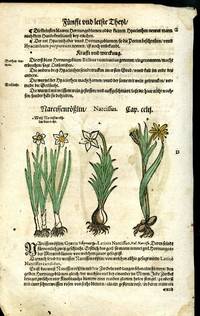
1546049672Frankfurt: Ch. Egenolff 1546. Early Edition. disbound. Very Good Condition. single leaf 7 1/2" x 11 3/4". Some stains chipped at edge one corner creased with a temoin. With six hand colored illustrations three on each side illustrating hyacinth and narcissus<br /> ca. 1546 Size: Folio. Quantity Available: 1. Shipped Weight: Under 1 kilo. Category: Science & Technology; Botany; Inventory No: 049672. Ch. Egenolff unknown
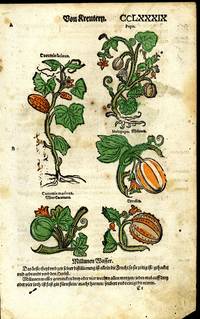
1546049671Frankfurt: Ch. Egenolff 1546. Early Edition. disbound. Very Good Condition. single leaf 7 1/2" x 11 3/4". Some stains chipped at edge one corner creased. With six hand colored illustrations five on one side one on the other illustrating melons and the squirting cucumber cucumis sylvestris.<br /> <br /> ca. 1546 Size: Folio. Quantity Available: 1. Shipped Weight: Under 1 kilo. Category: Science & Technology; Botany; Inventory No: 049671. Ch. Egenolff unknown
1546049669Frankfurt: Ch. Egenolff 1546. Early Edition. disbound. Very Good Condition. single leaf 7 1/2" x 11 3/4". Some stains chipped at edge. With two hand colored illustrations of a beech nut and a water chestnut. Contemporary note next to the water chestnut wassnusz.<br /> <br /> ca. 1546 Size: Folio. Quantity Available: 1. Shipped Weight: Under 1 kilo. Category: Science & Technology; Botany; Inventory No: 049669. Ch. Egenolff unknown
1552325931894-1552. Wien. med. Wschr. 44/29-3537-3840. - Wien Verlag von Moritz Perles 1894 4° Sp.1289-1552 1593-1656 1697-1744 feine Broschur. Erstdruck! unknown
151865628Port Royal S.C.:: The "New South" Printing Office March 15 1862. single sheet folded to form 4 pages as issued. Old horizontal and vertical crease with some wear at those creases; short tears and marginal chipping at the fore-edge. Folio. Issued by the Union military command. The "New South" Printing Office, unknown
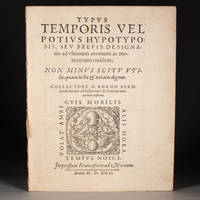
159200695<p>A BRIEF HISTORY OF TIME ---- 24 p. 4to A-C4 189 x 150 mm ---- First and only edition of this <strong>curious digest of time</strong> a pamphlet the author composed for his friends as the title indicates. Jordan worked as a cellar keeper <em>Keller</em> in the German village of Steinheim though we find little else about him. ¶ He opens his brief treatise with a philosophical summary of ancient time outlines the traditional ages of the world and offers Galen's six periods of the typical human life. As one might expect Jordan then explores the salient details of the standard solar year—mentioning the new Gregorian calendar—and the typical lunar cycle. But then <strong>he ventures much deeper into the weeds of time</strong>. He discusses the concept of an <em>annus emergens</em> when time is measured from an extraordinary event e.g. the founding of Rome or the birth of Christ; the lengths of the years for other planets in the known solar system; the lengths of the four seasons each introduced with a line of verse reminiscent of emblem literature; alternative starting points for the year; the twelve signs of the zodiac a chart of where they fall during the year and still more on the zodiac structure; the month's division into weeks and the week into seven days with historical background on the structure of a day plus notes on the etymological roots of each day's name; when different groups start their days e.g. some count from noon others from midnight; and how the day is divided into still smaller segments. The author ends with a brief postscript. "Let those who want read; those who do not let them decline" <em>Legant qui velint: qui non volunt despiciant</em>. ¶ We find a single copy in North America Linda Hall and this the only copy we find in auction records. ---- CONDITION: Sewn but without covers clearly removed from a larger Sammelband. Last leaf is blank. ¶ Small spot of skinned paper adhered to A2v and A3r affecting a couple of words on the former though hardly affecting legibility; a bit dusty at the edges; remnants of adhesive on spine. ---- REFERENCES: USTC 699894; VD16 ZV1333 ¶ J.W. Chr. Steiner <em>Geschichte und Alterthümer des Rodgau's im alten Maingau </em>1833 p. 73 for the author's work as a <em>Keller</em></p>
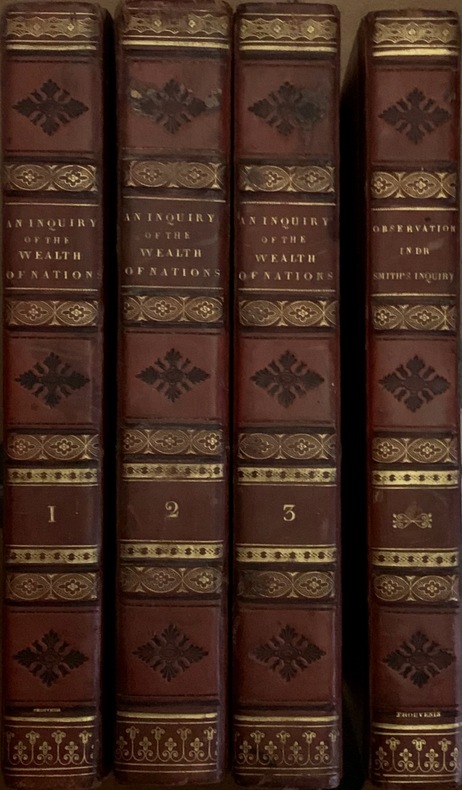
1501123371501 Edinburgh, Printed For Oliphant, Waugh 1 Innes, Edinburgh and John Murray, 50, Alnemarble-street, London, 1814; 4 volumes in-8, de X - 525pp.; VII- (I) - 542pp. ; VII - (I)- 462 pp.- (53)pp.( Index) - (1)p.(errata). ; VII-(I) - 492pp. (53) - (1) pp.; (8) -XVI- 316pp. 88pp. ( Appendix)- (15)pp. (Index). Reliure de emi-veau glacé framboise, dos à larges nerfs plats cernés de filets à froid et orné de palette dorées, compartiments de fleurons à froid, titre et tomaison dorés, palette en tte et pied , tranches marbrées de beige, papier des plats rose moucheté ( Thouvenin relieur)
15931604130047Franckfurt Bey Christian Egenolffs seligen Erben 1593. Hardcover. Acceptable. 0x0x0. Folio. Ninth edition. Bound in contemporary tooled pigskin. Brass clasps to front board. Ties present lacking one clasp. Boards detached. Most of spine lacking. Owners name and date to first few pages. Lacking prelims; 1 colored frontispiece; The Latin Index 8 pages; The German Index 6 pages; 1 Title page and 1 Plate XVI. A few pages detached. Pages worn; some stained lacking extremities to beginning and end pages. Plates are hand-colored in a contemporary hand. S.W.A.F. Nissen 1228; Pritzel 5599; Pauli 506; Richter Egenolff 587. <br><Br> Lonicer's herbal proved to be the great printing success of the Egenolph firm: though by no means the most innovative of its kind it proved to be one of the most enduring of all and editions of it were still being produced in Germany in 1783' Elliott 'The world of the Renaissance herbal 20110. Despite its title Lonicer's work actually covers a great deal more than plants and trees with sections on birds beasts nuts saps metals gemstones and ores in a scheme which follows the biblical story of creation contained in Genesis. Despite its title Lonicer's work actually covers a great deal more than plants and trees with sections on birds beasts nuts saps metals gemstones and ores in a scheme which follows the biblical story of creation contained in Genesis. He also included a lengthy introduction on the techniques of distillation an essential skill for the physician or apothecary who needed to know how to extract the essential oils from the various plants and herbs at his or her disposal. Franckfurt, Bey Christian Egenolffs seligen Erben hardcover
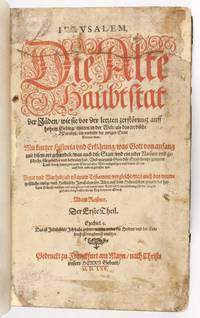
156518945Frankfurt a. M.: Georg Rabe Sigmund Feyerabend & Heirs of Weygand Han 1565. Second edition. Hardcover. Good-. Two volumes the first in two parts bound in one large quarto. Text in German gothic lettering with some Hebrew and Greek. 14 CXXV 1 12 6-177 13 leaves. 4 CCXVI 1 leaves; main titles in red and black; first volume with secondary full title; decorative initials and tailpieces throughout. Folding woodcut map of Palestine repaired on parts of margins wtih minor loss on upper right area; folding woodcut map of Jerusalem lacks 1/2 after fold; illustrated with 76 in-text woodcuts by German draughtsman and printmaker Virgil Solis. Psalms in German version at end of second volume 6 leaves supplied in manuscript copy. Blind-ruled contemporary calf with metal studs and metal clasp settings. Lacking leather clasps. Expertly rebacked retaining original boards; gilt lettering piece at spine. Modern endpapers. Lightly embrowned throughout. A few leaves with closed tears some repairs including at the first title page. A fairly good but defective copy lacking part of the Jerusalem map.<br /> <br /> Second edition of Adam Reissner's important work on Jerusalem. The first edition was published in 1563. Unlike Bernhard von Breydenbach's Peregrination in Terram Sanctam which was published eighty years earlier Reissner's work paints a more theological and medieval picture of the city. References: Laor 642 map. Georg Rabe, Sigmund Feyerabend, & Heirs of Weygand Han hardcover
15724221Dillingen: Sebald Mayer 1572. 8vo 153 x 120 mm. Collation: A-Z8 a4 -a4 blank. 7 173 7 leaves. Title printed in red and black within 4-part metalcut border repeated on title verso shoulder notes; 121 woodcuts of which 17 flanked by type-ornament borders; the cut on f. 113v roughly colored. One-inch tear to title first few leaves loosening and slightly softened some minor soiling a few short marginal tears. Contemporary blind-tooled calf over wooden boards covers with border of a Fides-Justitia-Prudentia-Spes roll approx. 166 x 14 mm. not in Haebler or the Einbanddatenbank pair of metal fore-edge clasps and catches plain endpapers rubbed knife slashes to front cover by an anti-Catholic. Provenance: partially legible early signature on back flyleaf Ex libris Andreas Zwy---; inscription in a different early hand on front flyleaf: ich läbte lebte und weiss nit wie / ich stirb und weiss nich wän / ich fahr und weiss nit wohin†this popular German saying incorrectly attributed to Martin von Biberach was called by Luther the “rhyme of the godlessâ€.<br /> <br /> First Edition of Walasser’s modernized adaptation of a late medieval allegorical romance of the soul’s marriage to Christ in an illustrated pocket edition from the first press of Dillingen. <br /> <br /> The compiler Adam Walasser was not a cleric but a writer for hire who worked as “content producer†editor and proofreader for Sebald Mayer from the time the press was founded in 1550 until 1573 when along with Mayer’s son Johann Walasser helped the Tegernsee Benedictines set up their own monastic press. His charge for Mayer was to produce copy by editing translating reworking or completing existing printed or manuscript works in order to further the Counter-Reformation program of the press’s patron and eventually owner the Cardinal-Prince-Bishop of Augsburg Otto von Waldburg. The hard-working Walasser who also had experience as a printer also produced a few works of his own and left dozens of works of Catholic religious devotion Counter-Reformation polemics and a couple of books on German heraldry and language.<br /> <br /> The Büchlein der geistlichen Gemahelschaft a didactic allegory in rhyming couplets by one “Konrad of Vienna†identified as the Viennese Franciscan Konrad Spitzer d. 1380 circulated in manuscript in the late 14th and 15th centuries. A prose version written ca. 1418-1430 known in a few illustrated manuscripts was printed in Augsburg by Johann Bämler in 1477-1478 GW 5666-5668 and later by Johann Schönsperger GW 5669. Bämler used the title Buch der Kunst dadurch der weltliche Mensch mag geistlich werden "the Book of art by which the worldly person can become spiritual" hence the word Kunstbüchlin usually reserved for practical manuals in Walasser’s title. Walasser used one of the Bämler editions as his copy-text. In his dedicatory letter to the powerful Abbess of the Imperial Abbey of Buchau Maria Jakoba from the noble family of von Schwarzenberg und Hohenlandsberg he describes his labors after receiving an “old book†from an “honorable person in Konstanze†who suggested that he republish it; it “delighted him as if it were a noble precious treasure†for he found it filled with the Gold and Silver of Christ’s teachings fol. A6r-v. Walasser followed the Bämler text modernizing the language omitting a few words and phrases and adding others and added chapter numbers and a final table.<br /> <br /> The tale of seven virgins one of whom is chosen to marry the King is an allegory of the eternal struggle between good and evil God and Satan. The bride is led through temptation and is accompanied on mystical visits by the allegorical figures of Hope Faith and Wisdom. The latter teaches her “the theocentric worldview†Verfasserlexikon through seven secret words. The final magnificent wedding prepared by ten more virtuous maidens represents the unification through baptism of the soul with God. The symbolic meanings of the plot developments are helpfully spelled out in printed shoulder notes. The story is used as a framework for teaching the basics of Christian doctrine of Creation the Passion and the Sacraments. Using this old tale for Counter-Reformation messaging was a way to beat the Protestants at their own vernacular game by instructing while diverting the literate lay reader unversed in Latin often a woman. <br /> <br /> The many woodcut illustrations are smaller copies some in reverse of the cuts used in Bämler’s editions. Whereas Bämler used some of his blocks more than once there are no repeats in Mayer’s edition and while the cuts showing the virgins in action are all copied from the incunable editions there are some divergences in the sections on the Passion and other “generic†passages. A few of the woodcuts which are more heavily shaded than the others and/or are narrower than the text-block may have come from Mayer’s stock and been used in other works. The cut on 51v stylistically different from the others is signed BP; this monogrammist’s woodcuts appeared in other books by Walasser cf. Nagler Monogrammisten I:1992. <br /> <br /> No doubt in part because of the rarity of the Dillingen editions the source of this work does not seem to have been previously recognized. Although four more editions appeared during the next 30 years all are rare with none represented in American libraries. <br /> <br /> USTC 703501; VD16 ZV 2620; Otto Bucher Bibliographie der deutschen Drucke des XVI. Jahrhunderts. I: Dillingen Bibliotheca Bibliographica I 648; cf. Bäumker Wilhelm "Walasser Adam" Allgemeine Deutsche Biographie 40 pp 640-643. Sebald Mayer unknown
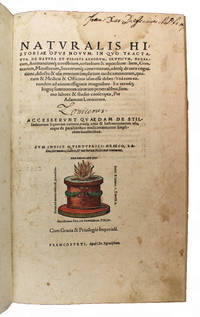
15516464Frankfurt: Christopher Egenolph 1551. First Edition Primera edición. Hardcover Tapa dura. 315x195mm. 12½x7¾". Frankfurt Christopher Egenolph 1551-1555. En folio 315 x 195mm. 2 partes encuadernadas en un volumen. 18 353 fols. 1 bl. 64 21 folios. Grabado del impresor en ambas portadas y 749 grabados repartidos por el texto todo coloreado a mano de época. Encuadernación alemana de época en pergamino sobre tabla ricamente decorada con gofrados en los planos. Primera edición de este famoso herbario al que siguieron numerosas ediciones posteriores. La Naturalis historiae es uno de los textos botánicos más populares y sus reediciones se extendieron por más de 250 años "ningún otro trabajo botánico de la época tuvo un éxito comparable a Lonitzer el cual es el más importante y valioso" trd. L'Art Ancien Early books on Medicine p.350. Esta primera edición es muy rara. El libro contiene 749 excelentes grabados en madera de plantas animales y trabajos del campo todos estrictamente coloreados a mano de época. Además de las descripción y nombre de las plantas en varias lenguas describiendo la flora local el trabajo incluye numerosas referencias a las plantas medicinales y sus remedios curativos. Contiene también amplios e interesantes capítulos dedicados a los animales a los metales las piedras preciosas y todo un tratado de destilación. Su éxito se debió en gran parte a que supo actualizar y compendiar los numerosos herbarios más tempranos que se habían impreso. Los numerosos grabados que ilustran el texto son una muestra del numeroso inventario de xilografías botánicas de Egenolph e incluyen copias piratas de algunos que se utilizaron para la Historia stirpium de Fuchs y los Herbarum de Brunfels Rösslin y Dorsten. Lonitzer 1528-1586 era el yerno del impresor Egenolph. Fue uno de los primeros que supo distinguir los árboles caducifolios de las coníferas. Linneo llamó al género Lonicera en honor a él. Buen ejemplar ligeramente amarronado. Ligera mancha de agua en el margen superior de las primeras tres hojas restauración en el margen inferior de a6; N2 Y4 Ff4 Hh3 y Ll5 remarginadas de antiguo sin afectar. Procedencia: 1. Franc. Xav. Diefenacies anotación en la portada. Christopher Egenolph hardcover