ADAM, RobertBiblio.com
37 325 résultats
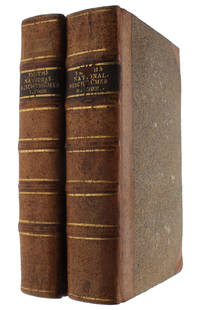
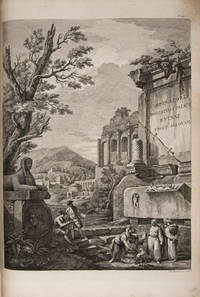
107175London For the Author 1764. . First edition; folio 545 x 390 mm; 61 engraved plates on 54 sheets many double-page or folding by Bartolozzi Zucchi and others subscription list occasional light spotting; contemporary calf gilt rebacked corners repaired boards rubbed a very good example; iv viii 33 i pp.<br /> In July 1757 in company with the French architect C.L. Clerisseau and two other draughtsmen Adam visited Spalatro Split in order to explore and measure the ruins of the great Palace of Diocletian. He seems to have been travelling with the intention of producing a book which would establish his reputation 'with a great puff' and apparently chose Spalatro because of its residential character so different from the Greek and Roman architectural monuments being illustrated by his contemporaries such as Stuart and Revett Wood and Le Roy. Also Adam had more natural artistic flair than his contemporaries so that he included more views and flourishes than are to be found in those earlier works which seem a little dry in comparison.<br /><br />The text to this work was written by Adam's cousin William Robertson and Bartolozzi engraved the majority of the magnificent plates which accompany it. Other engravers included Zucchi Santini and Cunego. The influence of this work could be seen in Adam's later work and in the work of other Neo-classicists.<br /> Millard British Books 1; Blackmer 3; Fowler p3; Berlin 1893; Cicognara 3567. London, For the Author, 1764. hardcover
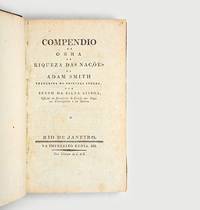
1811137677Rio de Janeiro: Na Impressão Regia 1811-12. Adam Smith in Portuguese First edition in Portuguese comprising a selection of passages from books I-IV of Smith's Wealth of Nations translated from the third English edition of 1784 by Bento da Silva Lisboa. "Given the strong Brazilian interest in Smith's work one can better understand why the first Portuguese translation of Wealth of Nations appeared during 1811-12 in Rio de Janeiro. This is a partial translation with the omission of Book V and half of Books I and IV. The translator's preface makes clear that Wealth of Nations was translated and studied as a doctrinal blueprint to promote the liberalisation of economic relations between Portugal and her most important colony fostering in this way the independent development of the Brazilian economy." Reeder & Cardoso "Adam Smith in the Spanish- and Portuguese- speaking world" in Tribe. 3 vols bound in 1 octavo 205 x 122 mm. Contemporary sprinkled half roan and marbled paper boards smooth spine divided into compartments by gilt roll toll red leather label. Housed in a brown cloth flat-back box by the Chelsea Bindery. Shelf label to front pastedown and first spine compartment. Joints and corners slightly rubbed occasional light spotting; a very good copy. Goldsmiths' 20224: Tribe 104; Vanderblue p. 33. WorldCat finds copies at Columbia Yale Princeton John Carter Brown and the National Library of Scotland. hardcover
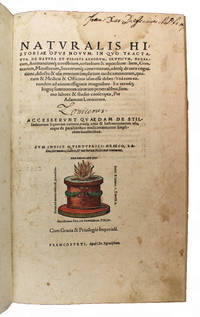
15516464Frankfurt: Christopher Egenolph 1551. First Edition Primera edición. Hardcover Tapa dura. 315x195mm. 12½x7¾". Frankfurt Christopher Egenolph 1551-1555. En folio 315 x 195mm. 2 partes encuadernadas en un volumen. 18 353 fols. 1 bl. 64 21 folios. Grabado del impresor en ambas portadas y 749 grabados repartidos por el texto todo coloreado a mano de época. Encuadernación alemana de época en pergamino sobre tabla ricamente decorada con gofrados en los planos. Primera edición de este famoso herbario al que siguieron numerosas ediciones posteriores. La Naturalis historiae es uno de los textos botánicos más populares y sus reediciones se extendieron por más de 250 años "ningún otro trabajo botánico de la época tuvo un éxito comparable a Lonitzer el cual es el más importante y valioso" trd. L'Art Ancien Early books on Medicine p.350. Esta primera edición es muy rara. El libro contiene 749 excelentes grabados en madera de plantas animales y trabajos del campo todos estrictamente coloreados a mano de época. Además de las descripción y nombre de las plantas en varias lenguas describiendo la flora local el trabajo incluye numerosas referencias a las plantas medicinales y sus remedios curativos. Contiene también amplios e interesantes capítulos dedicados a los animales a los metales las piedras preciosas y todo un tratado de destilación. Su éxito se debió en gran parte a que supo actualizar y compendiar los numerosos herbarios más tempranos que se habían impreso. Los numerosos grabados que ilustran el texto son una muestra del numeroso inventario de xilografías botánicas de Egenolph e incluyen copias piratas de algunos que se utilizaron para la Historia stirpium de Fuchs y los Herbarum de Brunfels Rösslin y Dorsten. Lonitzer 1528-1586 era el yerno del impresor Egenolph. Fue uno de los primeros que supo distinguir los árboles caducifolios de las coníferas. Linneo llamó al género Lonicera en honor a él. Buen ejemplar ligeramente amarronado. Ligera mancha de agua en el margen superior de las primeras tres hojas restauración en el margen inferior de a6; N2 Y4 Ff4 Hh3 y Ll5 remarginadas de antiguo sin afectar. Procedencia: 1. Franc. Xav. Diefenacies anotación en la portada. Christopher Egenolph hardcover
17641721551764. ADAM Robert. Ruins of the Palace of the Emperor Diocletian at Spalatro in Dalmatia. vi 8 33 1 pp. with 61 engraved plates on 54 sheets some double-page. Folio 525 x 370 mm. bound in full contemporary calf. London: For the author 1764. First edition. "The book incorporated the first encyclical of Britain's most popular architect of the day who had now been in practice for several years with an immense patronage. Adam makes it quite plain that the great palace of Diocletian forms the source of his ideas upon domestic building and he modestly claims that it is the first private dwelling-house of the Romans to have been illustrated and described." Adam's account was based on his five-week visit to Spalatro in Croatia now known as Split; the sixty-one superb plates were executed after Clerisseau Zucchi and others some of the drawings survive at the Hermitage St. Petersburg. In his introduction Adam expresses his conviction that Diocletian had revived a taste in Architecture superior to that of his own times. Adam's "observance on unusual detail throughout is remarkable. Nothing is too minute to escape his notice. A careful reading of the descriptions shows whence Robert Adam derived his theories for the planning of his domestic buildings on a monumental scale like Syon and Kedleston" James Lees-Milne The Age of Adam pp. 67-69. A fine copy of this landmark book. Millard British 1. Harris British Architectural Books 4. Fowler 2. Berlin Katalog 1893. Cicognara 3567. John Fleming Robert Adam and His Circle 1962 pp. 235-240. Georg Kowalczyk Denkmäler der Kunst in Dalmatien 1910 reproducing 22 plates. unknown
182134964Paris: Gide fils 1821. 3 volumes text: 2 volumes 8vo 8 x 5 1/2 inches; atlas: folio 18 1/2 x 12 inches. xii 418; 4 531 1pp. 30 engraved plates portrait 9 maps and 20 plates; 2 double-page maps. Text volumes bound in grey paper boards rebacked paper labels; atlas bound to style in grey paper boards.<br/> <br/> First French edition with the very rare atlas not published with the English edition.<br/> <br/> This is the first Russian circumnavigation written by its commander and of great importance to Pacific history for his account of the attempt to open Japan to commerce and for Krusenstern's notes on the Russian-Chinese trade. The two ships sailed from Kronstadt on July 19th 1803 and were together until the Marquesas and Hawaii. They visited Hawaii in the summer of 1804 touching briefly on the Big Island to trade for needed supplies. From there Krusenstern sailed by himself for Kamchatka where he made extensive surveys and ethnographic inquiries. Japan was the main focus of the expedition. They arrived at Nagasaki on Aug. 30th 1804 with the emissary from the Tsar and presents including looking glasses and a portrait of Catherine the Great. Hoping to open a trade mission and expecting more freedom than was granted the Dutch they found themselves "greatly mistaken." They were kept in confinement and suspense and at the audience the following April the negotiations collapsed. The ships' repairs were put to the Imperial account all gifts were sent back and they were politely but firmly asked not to return. The narrative contains a detailed account of the negotiations and includes a view of Nagasaki Harbor one of the first views of Japan published in the west. Krusenstern charted much of the west coast of Japan made a short stop at Hokkaido and at Aniwa Bay and gives an account of his contact with Ainu people. The fine atlas is illustrated with twenty-one lithographic plates by Engelmann and nine engraved maps three folding. Though unsigned O'Reilly says the plates are probably the work of Tilesius one of the naturalists of the ship. They include a portrait of Krusenstern four views of Nukuhiwa and eight of Japan including the Ainus. The maps include three of the Marquesas and four of Japanese interest. "The atlas volume is very important and is difficult to obtain" - Hill. The work was translated and revised by J.B.B. Eyries who also wrote part of the text for Choris' "Voyage Pittoresque."<br/> <br/> Hill pp. 167-68. Forbes Hawaii 530. Kroepelien 695. Sabin 38382. O'Reilly & Reitman 732. Gide fils unknown
1660B6282Paris: N. Langlois n/a c.1660’s-1670’s. Expertly rebacked; few tear repairs mostly marginal; overall in near fine condition with plates clean and crisp. . Binding: Contemporary mottled full calf; expertly rebacked; spine with five 5 raised bands; gilt lettered title on morocco label on two; compartments with central gilt floral ornament; dated; endpapers renewed; all edges cut. Notes: PERELLE GABRIEL 1603/or 10/ or 20 - 1675/or77/ or 80 an eminent French designer and engraver born at Paris. He excelled in drawing and engraving landscapes and views of which we have a prodigious number which prove the fertility of his invention and an extraordinary facility of execution rather than an observant study of nature. They are however composed in a very pleasing style and executed with neatness and taste. He usually enriched them with ruins and other objects which give an agreeable variety to his scenery. His principal defect is in the management of his masses and his lights are scattered and in spots by which the general effect of his prints is materially injured. Although by far the greater part of his plates are from his own compositions he also engraved from the designs of several other masters particularly Paul Brill Gaspar Poussin Jan Asselyn and above all after Silvestre. He was assisted in his numerous works by his sons ADAM 1638/ or 40-1695 and Nicholas b.1631/ or 38- 1695 PERELLE who after his death engraved a great number of plates of architectural views landscapes &c. but which are inferior to those of their father. <br>He is considered the Hollar of France both in his style of engraving and the esteem in which his views are held. His large views of public buildings and gardens in France Italy and Spain were published with those of Silvestre in 1680; and there is a set of smaller views by these artists.<br><br> Size: oblong folio 285x370mm Illustration: Illustrated with 164 architectural etchings of palaces great houses and churches detailed views of their gardens gates squares fountains etc. The album of Perelle engravings depict four 4 overall areas 1. Paris and surroundings 2. Versailles 3. France and 4. A collection on Rome - the latter containing six 6 plates etchings after drawings by Asselyn. This attractive album consists solely of large views no plan outlines or small sized half-paged etchings otherwise often featured as part of these albae. Title pages point to the publication being very early – not yet including the imprints printed in later publications.<br>The album on Paris containing 61 plates starts with a title without imprint but signatures by Perelle and Langlois; perspective views of Paris follow with its bridges the Seine the Louvre and Tuileries the Palais-Royal the Luxembourg or ‘Palais d'Orleans’ the Place Dauphine the College des quatre nations; the small island of the Notre Dame on the Seine the city hall the famous entrance gates to the city: Porte de la Conference St.Honore St. Denis St. Martin St.Bernard and St.Anthoine; depictions of monuments and buildings as the l'Arc de Triomphe the Notre Dame the ‘Monastere Royal de Val de Grace’ fountains and the observatory the ‘Invalides’ l'Hospital de la Salpestriere gardens of the Hotel de Conde and St. Victor. The views of the surrounding Paris feature the Chateau de Vincennes Conflans the Chateau of St. Maur the Chateau of Madrid the Chateau of St. Cloud the Chateau of Meudon the House of Boisfrant at St.Ouen the Grotte of Ruel.<br>The album on Versailles with 36 plates # 62- 97 starts with its title page without imprint then depicts perspectives of the castle the gardens and castle grounds the king's stables the great entrance cascades grottes water-fountains bassins dedicated to gods and the menagerie.<br>Perelle’s great houses of France with 45 plates #98-142 begins with its titlepage with no imprint except signatures followed by more buildings in the environs of Paris of Chaville St. Germain en Laye Maison Sceaux Rincy Pompone Choisi; this is followed by views of Fontaine-bleau the Chateau of the Vaux le Vicomte of Villiers-Coste-Rez Monceaux Liencour Chantilly Richelieu and Ancy.<br>The Rome or fourth album with 22 etchings starts with a title leaf without imprint but signatures of Perelle and N. Langlois; followed by magnificent views of St. Peter St. Angelo the new capitol and the arc of Constantin and the Colisseum the arc of Septimus Severus the bath of Emperor Diocletian; a group of six unsigned plates after I. Asselin e. showing Charles V Rome’s aquaeduct the Colisseum 2 ruins of the Palais Maior ruins of Marius’ trophies; this is followed by views of the Vigne Pamphili with its entrance garden amphitheatre and the fountain of Venus; at the end a plate depicting the fountain of Tivoli.<br> References: Michael Bryan Dictionary of Painters and Engravers Biographical and Critical 1849 p.560; Berlin Katalog 2483&2675; BNF - Getty Research Institute 2015 pp. 90-115 chap. II: Architecture and engraved views; Brunet IV p. 494; Fowler p. 245; Ganay Category: Book Art Architecture & Design; Book Plate Books General; Book Europe France; Book Europe Italy; N. Langlois hardcover
181769616Philadelphia: Published by Anthony Finley. J. Maxwell Printer 1817. Full Description:<br> <br> SMITH Adam. The Theory of Moral Sentiments. Or an Essay Towards an Analysis of the Principles by which Men naturally judge concerning the Conduct and Character first of their Neighbours and afterwards of themselves. To Which is added A Dissertation on the Origin of Languages. First American from the Twelfth Edinburgh Edition. Philadelphia: Published by Anthony Finley. J. Maxwell Printer. 1817.<br> <br> First American edition stated. There was a edition printed in Boston the same year. It is believed that this Philadelphia edition came before the Boston edition. Sabin only lists the Boston edition. Kress calls this the first American and Vanderblue collection lists the Philadelphia copy first and does not have a Boston copy. Both editions are very rare. We could only find 7 copies total on Rare Book Hub the last appearing in 2007. One octavo volume 8 1/2 x 5 1/8 inches; 215x 130 mm. 2 blank vii 1 blank 598 2 publisher's ads 2 blank pp.<br> <br> Contemporary full marbled sheep. Spine with red leather spine label lettered in gilt. Spine ruled in gilt. Spine with repairs along hinges and head and tail. Boards a bit scuffed and corners bumped. Some washed dampstaining to preliminary leaves. Leaves foxed and toned throughout as is usual from American paper of this time. Two previous owner's bookplates to front pastedown Joel Crawford and C.P. Crawford. Title-page and final leaf with the old ink signature "J. Crawford." A few instances marginalia in the same ink as well as a few pencil underlines. Overall a very good copy.<br> <br> Smith's Theory of Moral Sentiments is drawn from his course of lectures while he was professor of moral philosophy at the University of Glasgow. "The work received wide acclaim and so impressed the stepfather of the young duke of Buccleuch that he invited Smith to become the duke's tutor with the promise of a pension for life.The greater part of the Theory of Moral Sentiments is an account of moral psychology.The mainstay of Smith's moral psychology is sympathy.Smith characterizes the mechanism of sympathy in this way: 'Whatever is the passion which arises from any object in the person principally concerned an analogous emotion springs up at the throught of this situation in the breast of every attentive spectator'.Smith argues that if the appearance of grief or joy for example arouses similar feelings in us it is because these feelings suggest to us the general idea of some good or evil that has befallen the person in whom we observe them" Encyclopedia of Philosophy.<br> <br> "The Theory of Moral Sentiments was published in April 1759 and at once brought Smith something more than local fame. It was hailed by David Hume in typical ironic manner: 'I proceed to tell you the melancholy news' he wrote from London 'that your book has been very unfortunate: for the public seem disposed to applaud it extremely'" Mossner Adam Smith: The Biographical Approach p. 12.<br> <br> Provenance: The bookplates on this copy are for Joel Crawford Milledgeville GA 1824 and C.P. Crawford. Joel Crawford June 15 1783 - April 5 1858 was an American politician soldier and lawyer. He served as a U.S. Congressman in the state of Georgia.<br> <br> Kress B.7052. The Vanderblue memorial collection of Smithiana Pg 40-41. Sabin 82314 for first edition<br> <br> HBS 69616.<br> <br> $15000. Published by Anthony Finley. J. Maxwell Printer unknown
17951169901795. First Edition. SMITH Adam. Essays on Philosophical Subjects To Which Is Prefixed an Account of the Life and Writings of the Author by Dugald Stewart. London: for T. Cadell Jun. and W. Davies et al. 1795. Large quarto 9 by 11-1/4 inches period-style full speckled brown calf raised bands red morocco spine label; pp. i-iii iv v-vi vii-ix x-xcv blank 1-3 4-93 94-97 98-111 112-115 116-129 130-133 134-184 185-187 188-194 195-197 198-244; slipcase. $13800.First edition of this core volume of Smith's essays issued posthumously featuring the important first publication of History of Astronomy that seeks ""to explain what drives 'philosophers' to ask the questions they do"" an impressive wide-margined volume handsomely bound.Though Essays on Philosophical Subjects appeared five years after Smith's death most were likely written before the publication of his Theory of Moral Sentiments in 1759. Essays was compiled by his literary executors physicist Joseph Black and geologist James Hutton. Prior to his death Smith ""instructed them to destroy his manuscripts but allowed them at their discretion to publish a set of essays"" Berry Cambridge Companion 116. As noted herein Smith had begun work early in his career on ""a connected history of the liberal sciences and elegant arts"" but ""found it necessary to abandon that plan as far too extensive."" These writings thus represent Smith's longstanding attempts at such a ""connected history"" and range over philosophy aesthetics and the history of science. A biographical Account of Smith and his work is followed by the extensive History of Astronomy which was the only writing Smith did not want destroyed; indeed he specifically arranged for its posthumous publication. Black and Hutton used their authority to incorporate its momentous first publication into this collection. Astronomy ""was probably begun decades before Smith's death perhaps as early as 1746 and was at one time intended to form a chapter of a much larger work Astronomy purports to explain what drives 'philosophers' to ask the questions they do and to seek explanations for the things they observe"" Otteson Adam Smith 22-3. Astronomy ""has occasioned much scholarship Just as The Wealth of Nations was titled an enquiry into its 'natures and causes' so Smith says at the end of the preliminary section of Astronomy that the design of the essay is to consider the 'nature and causes of the three sentiments""identified by him as ""Wonder Surprise and Admiration."" Citing Galileo Copernicus Kepler Newton Descartes and others Astronomy aims ""to illustrate how philosophy is an activity that addresses itself to the imagination"" Berry 116-117 123. Also included in this volume are his essays on ""Ancient Physics"" ""Ancient Logics and Metaphysics"" and the ""Imitative Arts"" along with a concluding essay on perception in the five ""External Senses."" One of 1000 copies. Containing the first publication in book form of Dugald Stewart's Account of the Life and Writings of Adam Smith which had appeared in the Transactions of the Royal Society of Edinburgh in 1794. Stewart's Account ""formed the basis upon which everyone drew for biographies of Smith that began to appear in the early 19th century"" Tribe 55. Without initial blank. Goldsmith 16218. Kress B3038. Rothschild 1902. Trace of early owner signature above title page.Interior very fresh period-style calf fine. An elemental Adam Smith work. hardcover
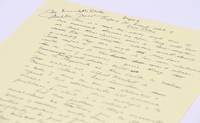
1983822701983. Fine. There is a long-standing myth that if two economists discuss any topic they will have at least three opinions about it. s. d. septembre 1983 21.50 x 28 cm une page sur un feuillet Autograph manuscript signed one a page written in black ink on a sheet of yellow lined paper and titled by the author: Draft 8 Preface for French edition 8 Price Theory; numerous erasures and corrections. At the top left of the sheet in ballpoint pen autograph signed: For Bernadette Platte Milton Friedman. Extremely rare autograph manuscript signed by the 1976 Nobel Prize winner one of the most influential economists of the 20th century whose entire archives are now kept at the Hoover Institution Library & Archives Stanford University. The few Friedman manuscripts still in private hands are particularly desirable and sought-after. Important theoretical text of the first two paragraphs of the preface to Price and Economic Theory first French translation of Price Theory published in 1983 by Economica editions. Completed on September 7 1983 at Stanford University this original version in English is completely new. Price Theory Friedman's major work Chicago Aldine Press 1962 whose definitive version was published in 1976 the year Friedman won the Nobel is a fundamental essay directly inspired by his lectures at Chicago University. For his first publication in France seven years later Friedman therefore undertook to compose a completely new preface intended for this public less naturally won over to monetarist ideas than the Americans. Our manuscript the final version of a text that required eight rewrites as evidenced by the exergue still bears multiple modifications underlining the attention paid by Friedman to the reception of his work by the French readership. Spearhead of Ronald Reagan's economic policy Friedman's theory of prices comes from a long tradition of French and Anglo-Saxon thinkers whom the economist takes care to quote in this manuscript: From the French physiocrats and Adam Smith to Léon Walras and Alfred Marshall to Maurice Allais and Paul Samuelson a body of theory has been elaborated and refined that essentially all economists accept and use in their analysis of the problems for which it is relevant. As a connoisseur of the French spirit Friedman thus insists on the connection between the economic liberalism of his famous school of Chicago and the philosophy of the Enlightenment dear to the intelligentsia of the old continent. It is moreover in homage to this French critical spirit that he opens his preface with an ironic anecdote on the relativity of economic theories: There is a long-standing myth that if two economists discuss any topic they will have at least three opinions about it. We note however that he replaces the real author of this trait who is none other than Churchill with an anonymous long-standing myth. The repetitions and redactions on our manuscript show Friedman's temptation to analyze the origin of this myth: This myth rests like most myths is crossed out and replaced by an irrevocable Whatever small element of validity this myth may have with respect to some topics it has none whatsoever with respect to the core of economics. price theory. The second paragraph of our manuscript is a promotion of his monetarist theories which at the beginning of the 1980s had just borne fruit: their application by the American Federal Reserve led to a sharp decline in inflation and a historic rise of the dollar. At the height of his influence Friedman then saw his works including Price Theory republished taught around the world and translated into several languages. He emphasizes here the central importance of his theory for understanding the world market: For price theory seeks to understand how the actions of hundreds of millions of people spread around the surface of the globe interact through a market to determine the price of one good or service relates to unknown
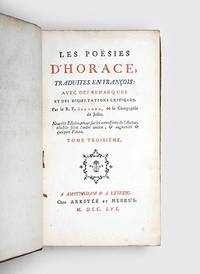
1756163096Amsterdam & Leipzig: Arkstée and Merkus 1756. We grow weary of the grave pedantic and long-sentenced love of Cowley and Petrarca. but the gaiety of Ovid and the gallantry of Horace are always agreeable" TMS I. ii. 2.1. A hitherto unrecorded volume from Adam Smith's library with his bookplate centrally positioned on the front pastedown volume 3 of an 8-volume set of Horace's poems the text in French and Latin on facing pages with the extensive remarks and critical notes of Noël-Étienne Sanadon of the Society of Jesus. Horace was clearly a favourite author of Smith's with thirteen different editions listed by Mizuta in his Catalogue of Smith's library 81-823 all but one of which are in Latin the only other entry being a ten-volume set in French of Horace's works equally with parallel Latin and French texts and notes and commentaries by Dacier. This single volume was purchased by its previous owner in the basement of Holleyman and Treacher booksellers of Brighton several decades ago. Duodecimo 168 x 95 mm. Woodcut vignettes and tailpieces title printed in red and black. Contemporary calf spine with five raised bands ruled in gilt black morocco label numbered direct in gilt. Housed in a dark brown quarter morocco solander box by the Chelsea Bindery. Spine ends chipped and corners worn spine label with slight loss free endpapers with burn marks from the leather turn-ins around the edges somewhat browned and brittle contents crisp and clean; a very good copy. Not listed in Mizuta or Yanaihara. hardcover
1779158759Copenhagen: Gyldendal 1779-80. Adam Smith in Danish First edition in Danish of The Wealth of Nations translated from the first edition of 1776 by Frants Draebye published together with a translation of Thomas Pownall's critical Letter. to Adam Smith of the same year. Draebye had been in England in 1776 as part of his role of tutor on a continental tour to two sons of a Norwegian merchant James Collett. Smith acknowledged the translation in two letters of 1780 the first written to Andreas Holt Commissioner of the Danish Board of Trade and Economy to whom he wrote "it gives me great pleasure to hear that Mr Dreby has done me the distinguished honour of translating my book into the Danish language." the second to Peter Anker Consul General of Denmark in Great Britain sending him three copies of the second edition of 1778 and asking him to forward them to Draebye and Holt. 2 vols octavo 192 x 114 mm pp. xii 575 1; viii 775 3. Contemporary sprinkled sheep spines decorated in gilt between five raised bands yellow paper labels lettered in gilt marbled paper pastedowns red edges. Joints of vol. I strengthened head and tail of both vols repaired gilt decoration to vol. II largely eroded; marginal tear to one leaf occasional light spotting; a very good set. Tribe 19: Vanderblue p. 23. Mossner & Ross The Correspondence of Adam Smith 1987. hardcover
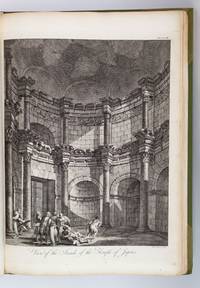
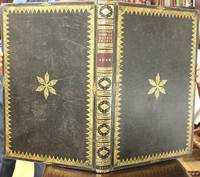
1764ST17496-042London: Printed for the Author 1764. FIRST EDITION. 520 x 365 mm. 20 3/4 x 14 1/4". iv 8 subscribers list 33 pp. <br/> Attractive modern light green half morocco gilt by J. F. Newman of Dublin his ticket on front pastedown raised bands spine panels with central patera ornament two darker green morocco labels reinforced hinges edges untrimmed. WITH 61 SPLENDID ENGRAVINGS 14 plans and elevations 47 views ON 54 PLATES eight double-page six folding by Bartolozzi and others. Front flyleaf with ink signature of Francis D. Bedford dated October 1886. Cicognara 3567; Fowler 2. Spine sunned to a light olive shade one corner bumped one plate with a little browning along the fold occasional mild marginal foxing or trivial smudges but A FINE COPY--fresh bright and clean internally with deep impressions of the type rich impressions of the plates and generous margins in a binding with few signs of wear.<br/> <br/> This is an extremely appealing copy of one of the great architectural books of the 18th century described by Cicognara as a "magnificent and grandiose work." Scottish architect Robert Adam 1728-92 was a product of the Scottish Enlightenment and moved in intellectual circles that included historian William Robertson who wrote the introduction here David Hume and Adam Smith. His interest in architectural drawing was stimulated by books in his father's extensive library which DNB tells us contained "a working collection of illustrated architectural books in English French and Italian and a series of manuals on architectural draughtsmanship." This curiosity developed into a passion during his 1755-57 tour of Italy which "was in every way a period of intense professional training during which the skills learned in Scotland were tested and given an international gloss by the Roman circle in which he now moved." DNB At the center of this circle was French architect antiquarian and artist Charles-Louis Clérisseau 1721-1820 the leading authority on Roman antiquities and architecture who introduced Adams to among others the great Piranesi. With Clérisseau as guide and tutor he explored and sketched various sites before arriving at the un-surveyed fortress palace built by the former emperor Diocletian at Spalatro the modern-day Croatian city of Split. Adam undertook a survey of the building and drew the architectural plans and elevations for this work while Clérisseau sketched views of the ruins. Adam planned this book as a way of promoting his career as an architect and worked with Clérisseau to have engravings made for it. According to Thom "while the traditional plans elevations and sections--what Robert Adam called the 'Geometricals'--were generally supplied by English engravers like Rooker Patton and Walker the all-important picturesque views and perspectives which Adam thought were essential to convey the emotional impact of the remains of Diocletian's Palace were engraved in Italy mostly by Bartolozzi Paolo Santini and Zucchi." Adams also wrote the architectural commentary. The publication was a success praised by the "Critical Review" in October 1864 as possessing "a taste and execution that has never been equalled in England." As DNB observes "during these two Roman years Adam succeeded in transforming himself from a provincial and rather green Scottish architect into a cosmopolitan figure ready indeed to put into effect 'the Antique the Noble & Stupendous.'" Now based in London he embarked on a distinguished career specializing in country houses and townhomes that reflected the deep influence classical architecture and his Italian sojourn had on his work. Our copy was once owned by another artist Francis Donkin Bedford 1864-1954 who exhibited landscapes at the Royal Academy and illustrated books during the Golden Age of children's book illustration in the late 19th and early 20th century. Printed for the Author unknown
1827B6041Munic: Chez Hermann & Barth. 1827. A fine example in contemporary decorative binding plates are clean and crisp. Binding: contemporary decorative black morocco rebacked expertly matching the boards spine with 6 raised bands and decorative gilt motifs title on red morocco label on spine upper and lower board with gilt ruling and decorative central gilt motif. Notes: An important plate book on Russia and Napoleonic era. The plates depict city or landscape views together with studies of soldiers and battle views particularly in Smolensk near Borodino and in Moscow - where the account ends.<br>Albert Adam son of artist Victor Adam followed the Prince Eugene recording views and events of the disastrous 1812 campaign. After the death of the Prince he published his drawings in the present volume sometimes as fully accomplished lithographs sometimes as line drawings only. He specialized in battle painting and accompanied the French army and became famous by Eugene de Beauharnais who appointed him painter of the Court and drawing designer in 1812. Size: Large Folio 530 x 350 mm Illustration: Finely illustrated with 3 lithographed portraits of Napoleon Eugene and Murat; & 97 lithographed plates. Pages: P. Title decorative title with portrait preface 1 leaf table 1 leaf text 26 leaves 100 lithographed plates. Category: Book Russia; Book Military Chez Hermann & Barth. hardcover
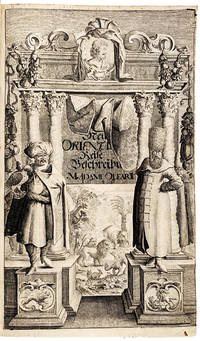
1645MEE1127Schlesswig:: Bey Jacob zur Glocken. Jm Jahr 1645-1647. 1645. Large 4to. 13 ff. 546 i.e. 536 pp. 1 f. 42 pp. 6 ff. With full-page engraved half title 10 double-page engraved plates 11 full-pages engraved plates 60 text figures engr. head and tail pieces initial letters. Title with vignette "Allah" in Arabic script. First edition of Offt begehrte Beschreibung der newen orientalischen Reise 1645-7. This is an important and widely-read seventeenth century account of travels through Russia and Persia and into India and the Far East. The maps include the large folding plan of the Volga plus the Baltic regions Muscovy Persia Asia China etc. In addition to the OLEARIUS book this HAND-COLORED DOUBLE-PAGE ENGRAVED MAP depicting Adam Olearius' Olschlager route from the atlas of Willem Janszoon Blaeu 1571-1638. The map is fully hand-colored in a contemporary hand. The map is entitled: Nova et Accurata Wolgae Fluminis olim Rha dicti deline atio Auctore Adamo Oleario. / Illustrissimo Domino Dno. Benedicto Bagge de Berga Sneco haec Geographica fluminis Wolgae descriptio humillime offertur. Amsterdam Apud Janssonio-Waesbergios et Moses Pitt. Double-page 1680. 570x650 mm. Contains 3 cartouches the map was originally issued by Jan Jansson Nieuwen atlas of 1658. / "The first edition of Olearius' account of his travels was published in 1647 in Schleswig under the title Offt begehrte Beschreibung der newen orientalischen Rejse so durch Gelegenheit einer Holsteinischen Legation an d. Konig in Persien geschehen. An extended and restructured edition appeared in 1656: Vermehrte Newe Beschreibung der Muscowitischen und Persischen Reyse so durch gelegenheit einer Holsteinischern Gesandschafft an den russischen Zaar und Konig in Persien geschehen reprint with a commentary by D. Lohmeier Tubingen 1971. The Vermehrte Newe Beschreibung is divided into six "books" of which the fourth treats the mission's route up to Isfahan with detailed descriptions of Ardabil Qazvin Qom Kasan and their stay at the Safavid court. Book five is an encyclopedic description of Persia covering aspects such as geography fauna and flora political institutions manners customs and clothing Safavid history education language and script trade and religion. The return journey from Isfahan is the subject of book six. Amongst the numerous ethnographic observations mention should be made of Olearius' depiction of the Asura ceremonies and other Shi'ite rituals including the recitation of a "Machtelnamae" and the celebration of Ali's designation as the Prophet's successor "Chummekater;" p. 435ff. 456ff. Of interest for the history of printing is the regular insertion of Persian and Turkish quotations in the original script serving as a model for the later account by Engelbert Kaempfer. The copper plate illustrations are of particular value especially his detailed city views and the portrait of Shah afi. Modern scholars such as Strack Emerson and Brancaforte have presented different views on the question of Olearius' objectivity and the extent to which he was affected by contemporary assumptions Strack; Brancaforte; Emerson. "Olearius provided the first comprehensive description of Persia since antiquity but his achievements appear less significant when compared with the far broader range and experience of later travelers who wrote after him in the course of the 17 century" Lohmeier p. 59. Still all later travelogues are heavily indebted to him and his work can be studied as a starting point for the genre. His outstanding contribution to the cartography of Persia is his Nova Delineatio Persiae et Confiniorvm veteri longe accurator edita Anno 1655 the first realistic map of Iran that in particular corrects the location and form of the Caspian Sea." – Encyclopedia Iranica. / Olearius "Born in 1599 with the German name Ohlschlegel later Olschlager Olearius studied theology mathematics astronomy and geography at the University of Leipzig. After various teaching assignments in 1633 he entered the service of Frederick III 1597-1659 ruler of the Duchy of Schleswig-Holstein-Gottorp. As secretary and counselor he took part in the diplomatic missions to Russia and Persia that were aimed at negotiating a new direct trade route for Persian silk. After the initial consent of the Tsar the embassy set out for Persia in 1635. Taking the route through Moscow and following the Volga to Astrakhan they entered Persia after crossing the Caspian Sea at Sama-i. There the delegation had to wait for three months before they were allowed to proceed. Olearius used the time to acquire a basic knowledge of Persian and Arabic. Their route then took them from Ardabil Qazvin and Kasan to Isfahan the capital. After a stay of several months the mission returned without concrete results by a similar route this time passing through Rast. Olearius continued his service in Gottorp as court mathematician and principal of the extensive court library and collections Kunstkammer. He was deeply engaged in the baroque literary scene of his time and achieved wide international recognition. He died in 1671 and was buried in Schleswig Lohmeier." – Encyclopedia Iranica. REFERENCES: Wing CD-ROM 1996 O269; ESTC RLIN R021580. FULL TITLE: Offt begehrte Beschreibung Der Newen Orientalischen Rejse So durch Gelegenheit einer Holsteinischen Legation an den Konig in Persien geschehen. Worinnen Derer Orter vnd Lander durch welche die Reise gangen als furnemblich Russland Tartarien vnd Persien sampt jhrer Einwohner Natur Leben vnd Wesen fleissig beschrieben vnd mit vielen Kupfferstucken so nach dem Leben gestellet gezieret. Jtem Ein Schreiben des Wol Edeln rc. Johan Albrecht Von Mandelslo worinnen dessen OstIndianische Reise uber den Oceanum enthalten. Zusampt eines kurtzen Berichts von jetzigem Zustand des eussersten Orientalischen Konig Reiches Tzina. Durch M. Adamum Olearium Ascanium Saxonem Furstl: Schlesswig-Holsteinischen Hoff-mathemat. . Mit Rom. Kays. Maj. vnd Churfl. Durchl. zu Sachsen privilegijs auff 10 Jahr bey Verlust Tausend Thlr. nicht nachszudrucken. . Bey Jacob zur Glocken. Jm Jahr [1645]-1647. hardcover
05698Madrid: Estamperias de los Suizos 1846. The Military Costume of the Spanish Army<br /> Thirty-two Superb Hand Colored Lithograph Plates by Victor Adam after José Villegas<br /> <br /> ADAM Victor illustrator. VILLEGAS José. Album Militar. Coleccion de uniformes del ejercito Español pintadas por D.J. Villegas y lithografiados por V. Adam. Madrid: Estamperias de los Suizos 1846.<br /> <br /> First edition. Folio 12 1/16 x 9 1/4 inches; 307 x 235 mm. Pictorial lithograph title page and thirty-two superb hand colored lithograph plates by Victor Adam after José Villegas all on stubs. Printed by Godard and Lemercier. Six of the plates are very slightly toned but not affecting images. The thirty-two plates are bound out of order.<br /> <br /> Early twentieth century three-quarter red morocco over marbled boards spine with five raised bands ruled in blind and lettered in gilt in compartments marbled endpapers top edge gilt.<br /> <br /> This extremely rare Spanish work on the military costume of the Spanish Army was issued without text save for a title page. The composition of the subjects is superb but the chief glory of this work is the exceptional hand-coloring.<br /> <br /> OCLC locates just one complete copy in libraries and institutions worldwide: Brown University RI US. <br /> The Bibliotheque Nationale de France and the Kunstbilio Staatliche Museen zu Berlin have just 25 of the 32 plates apparently uncolored.<br /> <br /> The only copy that we can locate at auction over the past fifty years was at Sotheby's Hodgsons in 1979 24 of 25 hand-colored plates only.<br /> <br /> Colas 3016 25 plates only; Lipperheide 2361 25 plates only; Not in Bobins.<br /> <br /> According to Colas 3017 and Hiler p. 881 there was an undated edition with 34 hand colored plates.<br /> <br /> Colas 3016 25 plates only; Lipperheide 2361 25 plates only; Not in Bobins. Madrid: Estamperias de los Suizos, 1846 unknown
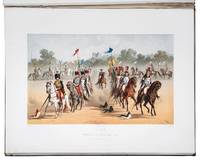
54319Saumur: Javaud Librairie. Éditeur. Imprimerie Lemercier Paris 1869. Large folio 70 x 45 cm. Original publisher's blind-stamped black cloth title in gilt to upper cover with imperial eagle coat of arms. Lithographed pictorial title after Adam tinted lithographed view of the school by Bechalier second lithographed title "Carousel et Exercises Divers" and 13 fine chromolithographed plates by Albert Adam and Tom Drake enhanced with original additional hand-colouring. Sole edition of this "important ouvrage d'une exécution soignée intéressant non seulement au point de vue des exercices représentés mais aussi à celui des uniformes de la cavalerie à la fin du second Empire" Mennessier de la Lance. Mennessier de la Lance I 436. Saumur: Javaud, Librairie. Éditeur. Imprimerie Lemercier, Paris, [1869]. hardcover
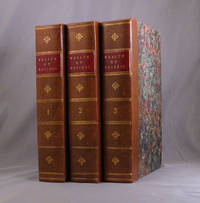
1786173725London: printed for A. Strahan; and T. Cadell 1786. An uncut copy Fourth edition of "the first and greatest classic of modern economic thought" PMM an uncut and partly unopened copy in a contemporary binding a reprint of the third edition of 1784 with minor variations. In his Wealth of Nations Smith "begins with the thought that labour is the source from which a nation derives what is necessary to it. The improvement of the division of labour is the measure of productivity and in it lies the human propensity to barter and exchange The Wealth of Nations ends with a history of economic development a definitive onslaught on the mercantile system and some prophetic speculations on the limits of economic control" PMM. "The Wealth of Nations had no rival in scope or depth when published and is still one of the few works in its field to have achieved classic status meaning simply that it has sustained yet survived repeated reading critical and adulatory long after the circumstances which prompted it have become the object of historical enquiry" ODNB. "The 'Advertisement to the Fourth Edition' announces that no alterations of any kind have been made. Cannan noted some small variations which can be attributed to small misreadings or unauthorised corrections by the printers. The division between volumes is identical to that in the 3rd Edition and Vol. II Bk. IV Ch. 8 is this time included in the Table of Contents" Tribe. Provenance: engraved armorial bookplate of Talbot of Gonvile's Hall in Wymondham Norfolk to each front pastedown; earlier ownership signature of B. C. Hingham dated June 1787 above. Binder's note in ink on front blank endpaper of vol. I: "3 V. 0.18.0 in hf bind." 3 vols octavo 228 x 138 mm pp. Complete with the conjugate blank leaf before title in vol. III the top edge unopened. viii 499 1; vi 518 6; v iv-v 1 465 1 50 index. Contemporary half calf and marbled boards red morocco spine labels. Housed in a brown leather entry slipcase by the Chelsea Bindery. Spines with some surface wear and vertical cracks consolidated at the head one joint partly cracked but sound minimal loss of the marbled paper covering; very occasional light spotting and the odd short marginal tear; a lovely example of a modest provincial binding entirely uncut and partly unopened. Goldsmiths' 13148; Kress B.1129; Tribe 30; Vanderblue p. 3. See Printing and the Mind of Man 221; Loudon J. H. James Scott and William Scott bookbinders Scolar Press 1980. hardcover
29235In two volumes. Translated from the original German by Richard Belgrave Hoppner Esq. London : Printed by C. Roworth Volume II Printed by T. Davison for John Murray Bookseller to the Admiralty and the Board of Longitude 1813. First edition in English. Two volumes in one quarto later half calf over marbled papered boards lightly rubbed spine in gilt-ruled compartments with black morocco title piece lettered in gilt marbled edges and endpapers front pastedown with armorial bookplate of William Philip Earl of Sefton; Volume 1. frontispiece handcoloured aquatint plate of Native of Nukahiva drawn and engraved by J. A. Atkinson xxxii 314 pp with a folding engraved map by Neele Chart of The Northwest Part of the Great Ocean Drawn By D. F. Sotzmann 1811 Reduced from Captn. Krusenstern's Original Chart; Volume 2. frontispiece handcoloured aquatint plate View of Nangasaki by Atkinson x 404 pp; light foxing and toning to preliminaries of Volume 1 else clean and crisp throughout with the plates and map in fine condition; an excellent wide-margined copy. First edition in English of Krusenstern's important narrative of the first Russian circumnavigation. Although ostensibly under the auspices of the Czar Krusenstern's expedition was actually funded by the Russian American Company to ""open relations with Nippon and the Sandwich Islands to facilitate trade in South America to examine California for a possible colony and to make a thorough study and report on the Northwest coast its trade and future"" Hill. A number of the officers under Krusenstern's command including Lisiansky commanding the Neva Bellingshausen Kotzebue Rezanov and Langsdorff would go on to make significant voyages of exploration in the Pacific. After visiting Brazil the expedition entered the Pacific where the Neva and Nadeshda were separated in a storm. Lisiansky in the Neva made for Easter Island later meeting up with Krusenstern in the Nadeshda in the Marquesas. The two ships then sailed together to Hawaii. From there Krusenstern continued west to Kamchatka Sakhalin and Japan - his narrative contains an extensive account of his failed ambassadorial mission in Nippon - while Lisiansky made for Russian America. The expedition ships would eventually rendezvous in Canton before returning to Kronstadt by way of the Cape of Good Hope. Krusenstern's account was first published in Russian in three volumes plus folio atlas at St. Petersburg 1809-1813. The English edition was translated by Hoppner from the first German edition also in three volumes plus folio atlas published at St. Petersburg 1810-1814 with the title Reise um die Welt in den Jahren 1803 1804 1805 und 1806. Hill 952; Sabin 38331; Kroepelien 693; Lada-Mocarski 61 & 62 note; Arctic Bib. 9381; Cordier Japonica 459 hardcover
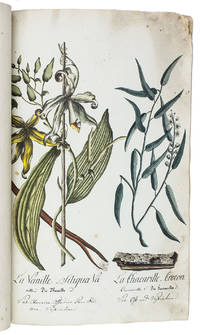
1804K59DWF5YDV43Ofen Buda 1804. Small folio 31.5 x 20 cm. Contemporary marbled paper wrappers. With manuscript title-page followed by 18 leaves of coloured drawings of plants and trees. 19 ll. Collection of high quality drawings of plants and trees by the physician Adam Johann Ingruber who graduated from the faculty of Medicine of the University of Pest in 1803. The 18 leaves of drawings mostly show two species of plants or trees each with captions in French Latin and German at the foot the last two show silkworms bees a rattlesnake and a scorpion. Most species are from Asia South America Africa and the southern part of Europe.Water stained some occasional smudges a few leaves cut short tattered spine: in fair condition. unknown
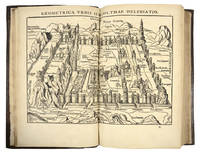
90734Frankfurt Georg Raben Sigismund Feyerabend and heirs of Weigand Han 1563. . First edition folio 31.5 x 21.3 cm; contemporary blind-stamped calf morocco lettering piece and gilt compartments to spine; old ownership signatures to title page; text in German. 12 pp. including title page with woodcut device 635 33 double-page woodcut map 42 woodcut illustrations in text.<br /> A fine example in an attractive contemporary binding of the first edition in Latin of this important illustrated history of Jerusalem prior to its destruction by the Romans.<br /><br />Adam Reisner 1500-1572 a German mystic and poet was the pupil of Johann Reuchlin a German humanist and prominent scholar of Greek and Hebrew. Reisner taught theology for many years and wrote historical and theological works including an 'anti-papal history.' He later made a name for himself as a writer of hymns.<br /><br />This is one of Reisner's most important works in which he describes the city of Jerusalem in detail with all its holy landmarks. He paints a picture of 'Heavenly Jerusalem' in stark contrast to what he sees as the 'Satanic Babylon' of the corrupt papacy. For Reisner a supporter of the Protestant reformer Caspar Schwenckfeld Jerusalem represents a community of true believers in constant battle with the Antichrist of Rome. With constant comparisons of historical events to selected Bible passages Reisner eventually comes to the conclusion that Judgement Day has indeed arrived.<br /><br />The lovely woodcut illustrations by Virgil Solis were taken or possibly copied from the Luther Bible published in 1560 by the Frankfurt publisher Sigmund Feyerabend. This edition is a translation of the first volume of the German edition published in the same year and entitled Ierusalem die alte Haubtstat der Juden. We could not find any bibliographical evidence that the second volume has ever been translated and published in spite of such claims in the Allgemeine Deutsche Biographie.<br /> Rohricht 708; VD16 R1058; Adams R340; not in Atabey. Frankfurt, Georg Raben, Sigismund Feyerabend and heirs of Weigand Han, 1563. unknown
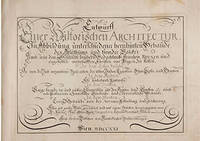
51-7134Vienna: by the author 1721. Oblong folio. 391 x 535 mm. Later calf upper cover decorated in blind and gilt with initials "SRG" and armorial crown motif gilt lettered morocco spine label.5 parts in one volume.Engraved calligraphic title and 5 engraved calligraphic section titles by J.A Delsenbach engraved calligraphic dedication page by Fischer von Erlach 85 of 86 plates 3 folding Book 3 plate 6 trimmed lacking Book IV plate 20. A few plates with tears repaired on verso.FIRST EDITION of this history of architecture "the first of its kind" Neville. The work includes plates illustrating a broad array of architectural styles including pyramids temples castles palaces and churches. Each volume highlights the architecture of a different regions and styles or decorative objects: the Near East architecture Part I Roman architecture Part II Islamic and Asian architecture Part III Fischer von Erlach's own works primarily in Vienna and Salzburg Part IV and antique and Baroque vases Part V. Berlin Kat. 2105; see Kristoffer Neville: "The Early Reception of Fischer von Erlach's Entwurff einer historischen Architectur" Journal of the Society of Architectural Historians vol 66 no 2 2007 pp 160-175.Erstes Buch. Die von der Zeit vergrabene Bau-arten der alten Jüden Egÿptier Sÿrer Perser und Griechen.Andres Buch. Alte unbekante Römische.Drittes Buch. Einige fremde in- und ausser-europäische als der Araber und Türcken etc. auch neue persianische siamitische sinesische und japonische Gebäude.Viertes Buch. Einige Gebäude von des Autoris Erfindung und Zeichnung.Fischer’s architectural oeuvre ranges from summer and city residences for the Viennese nobility to church buildings for the Archbishop of Salzburg and the major imperial monuments of baroque Vienna. By eloquently referring to antiquity while being unmistakably modern his buildings complied with the notion of noble representation with its roots in tradition and history.“Entwurff Einer Historischen Architectur†which Fischer published in 1721 was the first illustrated history of global architecture. The work ranging in content from the Wonders of the Ancient World and Greek Roman Arabic Persian and Chinese monuments to his own projects earned him acclaim across Europe. The impressive copperplates from “Historischen Architektur†and the preserved preparatory drawings form the centerpiece of the exhibition which was organized in cooperation with the Salzburg Museum. Its nine chapters span an arc from Fischer’s early days in Rome to his later masterpieces and above all the Karlskirche. A wealth of objects some previously unseen — drawings prints models paintings sculptures and books — illustrate his exceptional artistic oeuvre. By presenting Fischer’s buildings from new and sometimes unexpected perspectives the photographs taken by Werner Feiersinger trace the artistic intentions of the architect.Die Karlskirche gilt als das bedeutendste Bauwerk des Barock in Österreich und ist ein Wahrzeichen Wiens. Ihr Architekt Johann Bernhard Fischer von Erlach 1656–1723 steht im Zentrum der ersten Sonderausstellung im neueröffneten Wien Museum. Fast 70 Jahre nach der letzten großen Schau wird Fischers Werk neu betrachtet und mit der Gestaltung durch Werner Feiersinger in einen zeitgenössischen künstlerischen Kontext gestellt. Fischers Schaffen als Architekt reicht von Garten- und Stadtpalästen für den Wiener Adel über die Kirchenbauten für den Erzbischof von Salzburg bis hin zu den großen kaiserlichen Monumenten in Wien. Seine Bauten verwiesen auf die Antike und waren doch unverkennbar modern – damit kamen sie den zeitgenössischen Vorstellungen herrschaftlicher Repräsentation entgegen für die Tradition und Geschichte eine zentrale Rolle spielte.1721 veröffentlichte Fischer mit dem „Entwurff Einer Historischen Architectur“ die erste Weltgeschichte der Baukunst in Bildern. Das Werk das von den Weltwundern der Antike über griechische römische arabische persische und chinesische Monumente bis zu seinen eigenen Bauten und Projekten reicht machte Fischer in ganz Europa bekannt. Die eindrucksvollen Kupferstiche der Historischen Architektur und die dazu erhaltenen eigenhändigen Vorzeichnungen bilden das Zentrum der in Kooperation mit dem Salzburg Museum entstandenen Ausstellung. In neun Kapiteln spannt sie einen Bogen von Fischers Anfängen in Rom bis zu den späten Hauptwerken mit der Karlskirche als dem Höhepunkt. Eine Vielzahl zum Teil noch nie gezeigter Objekte – Zeichnungen Druckgrafiken Modelle Gemälde Skulpturen Bücher – macht sein außerordentliches künstlerisches Werk anschaulich. Die Fotografien von Werner Feiersinger zeigen die Bauten aus neuen mitunter ungeahnten Blickwinkeln und spüren damit den künstlerischen Absichten des Architekten nach.OCLC Number / Unique Identifier: 3700919:Yale Beinecke Rare Book and Manuscript Library Catalog Record no. 9953851383408651. Vienna: by the author, 1721 unknown
178620767London: for A. Strahan and T. Cadell 1786. 3 volumes. An especially early printing the fourth only the second of the octavo editions the last edition with any changes includes a new preface never before printed issued only 10 years after the first 2 vol. quarto edition. 8vo beautiful three-quarter polished calf in fine antique style over marbled paper covered boards red morocco lettering labels gilt the spine in compartments separated by gilt bands gilt central devices in the compartments. viii 499 errata; vi 518 5 Appendix errata; v errata 465 47 index 1 ad pp. A remarkably fine and handsome set the text blocks completely untrimmed and with the original deckled edges as issued from the printer. Bindings in excellent condition. A BEAUTIFUL SET OF THIS EXTRAORDINARY WORK. Smith's classic work was begun at Toulouse in 1763-64 where he had travelled as guardian of Henry Scott the young duke of Buccleuch and in the company of David Hume historian and fellow professor at Glasgow University. The work took shape over the next ten years and was finally published in 1776. At one point during its composition Hume wrote that Smith was "cutting himself off entirely from human society." But his labors however severe his methods yielded the "first and greatest classic of modern economic thought" Printing and the Mind of Man.<br> "It may be said that the WEALTH OF NATIONS certainly operated powerfully through the harmony of its critical side with the tendencies of the half-century which followed its publication to the assertion of personal freedom and 'natural rights.' It discredited the economic policy of the past and promoted the overthrow of institutions which had come down from earlier times but were unsuited to modern society. As a theoretic treatment of social economy and therefore as a guide to social reconstruction and practice in the future it is provisional not definitive. But when the study of its subject comes to be systematized on the basis of a general social philosophy more complete and durable than Smith's no contribution to that final construction will be found so valuable as his" Britannica.<br> The fourth edition contains a special ‘advertisement’ first appearing here in which Smith declares that he is now ‘at liberty to acknowledge my very great obligations to Mr. Henry Hop of Amsterdam. To that gentleman I owe the most distinct as well as liberal information concerning a very interesting and important subject the Bank of Amsterdam’. Eighteenth century editions of Smith’s magnum opus are now becoming very scarce. for A. Strahan and T. Cadell hardcover
177947455Kiøbenhavn Copenhagen 1779-80. 8vo. Two very nice contemporary brown half calf bindings with raised bands gilt ornamentations and gilt leather title- and tome-labels. Volume two with a bit of wear to upper capital. Corners slightly bumped. Pencil annotations to verso of title-page in volume one; title-page in volume two mounted to cover up a small hole caused by the removal of an old owner's name. Internally very clean and bright. All in all a very nice clean fresh and tight copy. Engraved by Weise 1784 armorial book plate to inside of front boards Gregorius Christianus Comes ab Haxthausen. 12 575; 8 775 3 - errata pp. <br/><br/><em>The extremely scarce first Danish edition of Adam Smith's seminal main work "the first and greatest classic of modern economic thought" PMM 221 the main foundational work of the era of liberal free trade. This publication constitutes the first Danish work worth mentioning in the history of economic thought - in spite of the great interest in political economy that dominated Danish political thought in the last quarter of the 18th century. The value of Smith's work was not immediately recognized in Denmark at the time of its appearance and a quarter of a century had to go by for its importance to be acknowledged and for Danish political economy to adapt the revolutionizing theories of Adam Smith. Few copies of the translation were published and sold and the book is now a great scarcity. As opposed to for instance the German translation of the work Smith concerned himself a great deal with this Danish translation. As is evident from preserved correspondence about it he reacted passionately to it and was deeply concerned with the reaction to his work in Scandinavia see "Correspondence of Adam Smith" Oxford University Press 1977.- As an example Smith writes in a letter to Andreas Holt on Oct. 26th 1780: "It gives me the greatest pleasure to hear that Mr. Dreby has done me the distinguished honour of translating my Book into the Danish language. I beg you will present to him my most sincere thanks and most respectful Compliments. I am much concerned that I cannot have the pleasure of reading it in his translation as I am so unfortunate as not to understand the Danish language." The translation was made by Frants Dræby 1740-1814 the son a whiskey distiller in Copenhagen who mastered as a theologian and was then hired by the great Norwegian merchant James Collett as tutor to his son. There can be no doubt that Dræbye's relation to the Collett house had a great impact upon his interest in economics. In the middle of the 1770'ies Dræbye accompanied Collett's son on travels throughout Europe which took them to England in the year 1776 the same year that the "Wealth of Nations" was published for the first time. Through the Colletts Dræbye was introduced to the mercantile environment in England and here became thoroughly acquainted with English economics and politics at the time. It is presumably here that he gets acquainted with Adam Smith's freshly published revolutionary work. When Dræbye returned to Denmark at the end of 1776 he was appointed chief of the Norwegian secretariat of the Board of Economics and Trade. He began the translation of the "Wealth of Nations" that he brought back with him from England immediately after his return."WN i.e. Wealth of Nations was translated into Danish by Frants Dræbye and published in 1779 three years after the first English edition. The translation was initiated by Andreas Holt and Peter Anker who were acquainted with Smith. Dræbye was a Dane who lived mainly in Norway reflecting the fact that Norway was much more British-oriented than Denmark proper Denmark and Norway were united until 1814 when Sweden took Norway away from the Danes; in 1905 Norway became an independent state. Norwegian merchants lived from exporting timber to Britain and tended on the whole to be adherents of a liberal economic policy whereas the absolutist government in Copenhagen was more German-oriented and had economic views similar to those in contemporary Prussia." Cheng-chung Lai edt.: "Adam Smith Across Nations" p. 37. The last quarter of the eighteenth century in Denmark was dominated by a lively discussion of monetary policy and the institutional framework best suited to realize that policy. There was a vital interest in questions of economic concern and contemporary Danish sources refer to the period as "this economic age" and state things such as "never was the world more economically minded" both from "Denmark and Norway's Economic Magazine". During this period Smith's revolutionary ideas did not play a major role however and only at the beginning of the 19th century did Danish politicians and economists come to realize the meaning of Smith's views. "Without exaggeration it can essentially be said that a quarter of a century was to pass from the time of the publication of the book in Denmark before Danish political economy fully made Adam Smith's theories and points of view its own. It took so long a time because the economic conditions as a whole in the years from 1780-1800 did not make desirable or necessary the changing of their concepts. That glorious commercial period had to pass before it was understood that we had altogether too little help in our own natural resources and that a different course was therefore necessary. Only when one had come so far could the new thinking find a nourishing soil so that it could develop strength with which to push aside the old ideas."Hans Degen: "On the Danish Translation of Adam Smith and Contemporary Opinion Concerning It." Translated by Henrietta M. Larson. In: Adam Smith Across Nations p. 51. This first Danish translation is one of the very earliest translations of "Wealth of Nations"; it is only preceded by the German 1776-78 and the extremely scarce French 1778-79. As a comparison the Italian translation does not appear until 1790-91 the Spanish 1792 the Swedish 1800-1804 the Russian 1802 etc.Adam Smith Across Nations: A4 - nr. 1. "All five books were translated; appears to be a complete translation. The long letter from Governor Pownall to Adam Smith 25 Sept. 1776 is added as the Appendix vol. 2 pp. 683 ff."PMM 221 - first edition </em> hardcover
177860523Leipzig Weidmann 1776-78. 8vo. Bound in two nice uniform contemporary half calf bindings with five raised bands black title-label and gilt lettering to spine. Small paper-label to upper compartment Catalogue-number from an estate-library. Light wear to extremities otherwise a very nice set. VIII 632 pp; XII 740 pp. <br/><br/><em>First German edition also being the very first overall translation of Adam Smith's ground-breaking main work the "Inquiry into the Nature and Causes of the Wealth of Nations". This seminal first translation of the work was undertaken by J.F. Schiller who finished the first part of the translation in time for it to appear as soon as 1776 the same year as the original English edition. The second part appeared in 1778 the same year as the exceedingly scarce first French translation. This first German translation has been of the utmost importance to the spreading of Smith's ideas throughout Europe and after the true first this must count as the most important edition of the work."The influence of the Wealth of Nations . in Germany . was so great that 'the whole of political economy might be divided into two parts - before and since Adam Smith; the first part being a prelude and the second a sequel." Backhouse Roger E. The Methodology of Economics: Nineteenth-Century British Contributions Routledge 1997."The first review of the translation which appeared in the Göttingische gelehrte Anzeigen for March 10 1777 by J. G. H. Feder professor of Philosophy at the University of Göttingen was very favorable. In the words of the reviewer: "It is a classic; very estimable both for its thorough not too limited often far-sighted political philosophy and for the numerous frequently discursive historical notes" but the exposition suffers from too much repetition." Lai Cheng-chung. Adam Smith Across Nations: Translations and Receptions of The Wealth of Nations Clarendon Press UK 2000.Until 1797 . the work of Adam Smith received scant attention in Germany. While Frederick II was living Cameralism held undisputed sway in Prussia and the economic change which began with the outbreak of the French Revolution had still not gained sufficient momentum to awake the economic theorists from their dogmatic slumber." Lai Cheng-chung. Adam Smith Across Nations: Translations and Receptions of The Wealth of Nations Clarendon Press UK 2000.Various German economist read the german translations and was inspired by it."Christian Garve . must be considered as among the important contributors to the spread of Smith's views. Himself a popularizer of philosophical doctrines he was early attracted by the Scotch writers and became one of their foremost exponents in Germany." In 1791 Garve began a second translation of the Smith's work and in the introduction to the the translation he wrote: "It Smith's work attracted me as only few books have in the course of my studies through the number of new views which it gave me not only concerning the actual abject of his investigations but concerning all related material from the philosophy of civil and social life". Georg Sartorius August Ferdinand Lueder and perhaps the most important economist of the period Christian Jacob Kraus were all important figures in the spread of Smith's thought. "The most significant of Kraus' works and that also which shows his conception of economic science most clearly is the five-volume work entitled State Economy. The first four volumes of this work are little more than a free paraphrase of the Wealth of Nations". Kraus was: "to a large extent responsible for the economic changes which took place in Prussia after 1807 in so far as they can be ascribed to Smithan influence." Lai Cheng-chung. Adam Smith Across Nations: Translations and Receptions of The Wealth of Nations Clarendon Press UK 2000.Kraus wrote of the present volume: "The world has seen no more important book than that of Adam Smith. Certainly since the times of the New Testament no writing has had more beneficial results than this will have. Smith's doctrines form the only true great beautiful just and beneficial system." Fleischacker Samuel A Third Concept of Liberty Princeton University Press 1999._____________Hailed as the "first and greatest classic of modern thought" PMM 221 Adam Smith's tremendously influential main work has had a profound impact on thought and politics and is considered the main foundation of the era of liberal free trade that dominated the nineteenth century. Adam Smith 1723-1790 is considered the founder of Political Economy in Britain mainly due to his groundbreaking work the "Wealth of Nations" from 1776. The work took him 12 years to write and was probably in contemplation 12 years before that. It was originally published in two volumes in 4to and was published later the same year in Dublin in three volumes in 8vo. The book sold well and the first edition the number of which is unknown sold out within six months which came as a surprise to the publisher and probably also to Smith himself partly because the work "requires much thought and reflection qualities that do not abound among modern readers to peruse to any purpose." Letter from David Hume In: Rae Life of Adam Smith 1895 p. 286 partly because it was hardly reviewed or noticed by magazines or annuals. In spite of this it did evoke immense interest in the learned and the political world and Buckle's words that the work is "in its ultimate results probably the most important book that has ever been written" and that it has "done more towards the happiness of man than has been effected by the united abilities of all the statesmen and legislators of whom history has preserved an authentic account" History of Civilisation 1869 I:214 well describes the opinion of a great part of important thinkers then as well as now. Kress S. 2567Goldsmith 11394Menger 521Not in Einaudi </em> hardcover
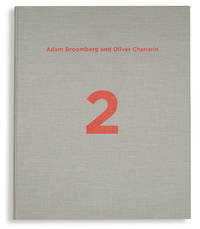
110758London Mack 2011. . First edition an altered artists' book number 68 of 100 copies signed by both artists on the front free endpaper; 4to 294 x 243 mm 11½ x 9½ in; 85 black-and-white photographs printed in offset each with a new photographic reproduction partially pasted over it by hand the final image with a screen printed red square new notes screen printed in red over the original text section; plain endpapers grey cloth-covered boards original titles stamped on spine in silver new titles screen printed in red on upper side starting at head near-fine; 176 xxivpp.<br /> German poet and dramatist Bertold Brecht's Kriegsfibel War Primer was first published in 1955. Brecht's mistrust of the press imagery emerging from the Second World War led him to compose four-line poems which he juxtaposed with photographs sourced from newspapers and magazines many of which were from LIFE magazine as Brecht was living in the United States in exile from Nazi Germany. Broomberg & Chanarin concerned with the proliferation of imagery relating to the 'War on Terror' that began with 9/11 have taken copies of the 1998 first English edition of Brecht's War Primer as the starting point for this revised version. Keeping the original captions intact they have partially overlaid the original photographs selected by Brecht with contemporary imagery from both sides of the recent conflict drawn from online sources. The URL for each image is provided with a caption in a new set of notes screenprinted over the originals. Broomberg & Chanarin were awarded the 2013 Deutsche Börse Photography Prize for this work.<br /> The Photobook: A History III p285. London, Mack, 2011. hardcover