BUDDHISMBiblio.com
3 040 résultats
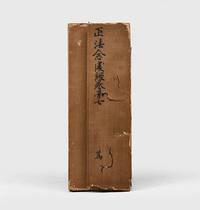
159500Huzhou: c.1250. A treasure of Chinese early printing A remarkable surviving fascicle from a famous early Chinese edition of the Buddhist canon printed during the Song dynasty at the Yuanjue later Zifu temple in Huzhou. The respect given to Buddhists texts has ensured the institutional survival of a couple of near-complete Yuanjue sets but any examples of Chinese printing of this age are exceptionally scarce in commerce. We have traced only three works on paper printed before 1300 in Western auctions since 1980. Multiple characteristics suggest that this particular example is from the Yuanjue edition. Phonetic glosses at the end of the fascicle the size of the printed area and the number of pages columns and characters per sheet are consistent with other known examples. The first sheet also gives the name of the block carver as Shi Hong. A carver of the same name is known to have been active in the Huzhou region during the Southern Song period and was involved in other projects including editions of the Shuijing zhu an ancient geographical treatise and the Lotus Sutra. Scholarly research has revealed that the carving of the blocks for the Yuanjue edition of the Buddhist canon commenced at some point between the 1110s and 1140s. Once carved they were used to print copies until being burned by Mongol invaders in 1276. Subsequently this edition was unknown in China until the bibliophile Yang Shoujing 1839-1915 brought an almost complete set back from Japan in the late 19th century. Li & He write that surviving volumes from the Yuanjue edition "are already very rare in China". Near-complete copies are held at the National Library of China and Tokyo's Sanenzan Zojo Temple. Scattered volumes are found in other institutions including the Gansu Provincial Library the National Palace Museum in Taipei and several other temples in Japan. Provenance: Osaka Bookseller's Guild Kotenkai 119th Anniversary Auction Osaka 28-30 May 2021 lot 947; private collector in UK. Slim quarto concertina-style 305 x 115 mm. 17 xylographic sheets each with 5 pages of 6 columns of 17 characters joined sequentially with adhesive near-contemporary semi-stiff brown paper wallet binding strengthened with bamboo rod front cover with manuscript title in Chinese single page from another sutra used as binder's waste on rear cover verso. Housed in custom blue cloth folding case. Wallet binding fragile with losses rear cover detached and front cover just holding at head worming and splits to first leaf with old paper repair along one fold contents otherwise unaffected. A well-preserved example. Li Fuhua & He Mei Hanwen Fojiao dazangjing yanjiu "Research on the Chinese Buddhist Canon" 2003. hardcover
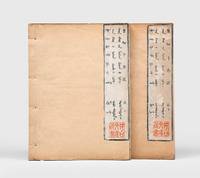
1774159690Likely Beijing: no stated publisher 1774. One polity many languages First edition of this unusual quintilingual work exhibiting the artistic skill of Chinese woodblock carvers. Compiled by the personal Buddhist tutor to the Qianlong emperor - China's Louis XIV - it lists slightly over 1000 buddhas destined to appear in the present Buddhist aeon. We have traced just three institutional copies. Print was a vital vehicle for spreading Buddhist thought throughout the multicultural Qing empire. This compilation based on the Bhadrakalpa Sutra served as an invaluable scholarly and devotional reference for practising and aspiring Buddhists as well as for those charged with producing religious commentaries. It begins with Kakusandha an esteemed buddha of antiquity and lists four names per page with the five different languages Chinese Manchu Mongolian Tibetan and Sanskrit phoneticized in Tibetan arranged vertically. The compilation process was led by the senior court figure Changkya Rölpé Dorjé 1717-1786 Qianlong's principal Buddhist advisor who also oversaw the translation of the Tibetan Buddhist canon into Mongolian and Manchu. The Bhadrakalpa Sutra is a key text in Mahayana Buddhism. Without it the names of many buddhas would otherwise have been lost. The text was first translated into Chinese by Dharmaraska c.233-310 one of the most significant scholarly influences on the growth of Buddhism in East Asia. China's Qing emperors presided over an ethnically heterogeneous empire which continued to expand in the early 18th century with the conquest of Tibet in 1720. Buddhism enjoyed significant state support; for example Qianlong 1735-1796 commissioned paintings depicting him in the form of a Buddhist in an advanced stage of enlightenment. Provenance: several ownership seals of Taijun Inokuchi 1922-2018 a leading Japanese scholar of Buddhism at Kyoto's Ryukoku University with his manuscript cataloguing notes on a sheet of personalized notepaper affixed to the lower flap of the folding case. In 1989 he published a preliminary catalogue of the famous manuscripts unearthed by Paul Pelliot at Dunhuang now housed in the Bibliothèque Nationale de France which have revolutionized scholarly understanding of Buddhism. Volume I contains in-text numerical annotations in red pencil most likely by Inokuchi. This copy then passed to a private collector in the UK. Copies can be found in the Library of Congress Harvard and the Austrian National Library. 2 vols quarto 270 x 200 mm. Original brown paper wrappers recently renewed xianzhuang stitching front covers with original quadrilingual xylographic title labels. Housed in 19th-century custom blue cloth folding case bone toggles. Wrappers with some chips and nicks as well as a few small closed tears one sometime repaired by pasting vol. II front wrapper to first blank at head moderate foxing and browning internally. A very good copy in the like case. hardcover
84051aafTibet / Mongolei, 19. Jhd, verschiedene Grössen, 49 Miniaturen, Gouache auf Leinwand, unter insgesamt 28 Passepartouts (meist leinenbezogen, in Blau u. Grün) gerahmt, bei kleinformatigen (ca. 8x6 cm) Miniaturen je 2 übereinander gerahmt, guter Zustand. some waterstanes to some of the plates.
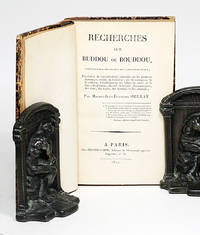
18172238Paris: Chez Brunot-Labbe 1817. First edition. contemporary morocco over marbled boards. Very Good. EXTREMELY RARE FIRST EDITION OF THE FIRST WESTERN BOOK ON BUDDHISM. "Although the Western encounter with Asia's largest religion may be the vastest and most consequential spiritual encounter in human history its protagonists and historical development are still barely known. Thus it comes as no surprise that even specialists have hitherto failed to appreciate the earliest Western book about Buddhism: Michel-Jean-François Ozeray's Recherches sur Buddou ou Bouddou instituteur religieux de l'Asie orientale Paris 1817.<br /> <br /> ". Ozeray's book represents a landmark in the history of the Western discovery of Buddhism. Published three years after the establishment of Europe's first academic chairs for indology and sinology and just before the organized academic study of Buddhist texts began Ozeray's reliance on images and reports by embassies and European residents in Asian countries rather than missionary literature marks a watershed as does the author's firm advocacy of a single historical founder his unwillingness to engage in etymological and mythological flights of fancy and his insistence on Buddhism's status as the largest of all religions of the Orient or even of the entire world. Though the book did not reach a large pan-European readership it was read by intellectuals interested in Buddhism such as the philosopher Arthur Schopenhauer Europe's first professor of Sinology Abel-Rémusat and the linguist Julius Klaproth. Klaproth and Abel-Rémusat were around the time of publication expressing increasing interest in Buddhism and its history. Both were involved in the birth of France's earliest Orientalist journal the Journal Asiatique which from the early 1820s became one of Europe's most important sources of information about Buddhism. Ozeray's book thus stands near the end of the mythological speculation period and near the beginning of organized research on Asia's greatest religion" Urs App The First Western Book on Buddhism and Buddha. <br /> <br /> Paris: Chez Brunot-Labbe 1817. Octavo contemporary half-morocco marbled boards and endpapers. Complete with half-title. Some scuffing to binding small closed tear to half-title. Text in outstanding condition with large margins. SCARCE. Chez Brunot-Labbe unknown
18172238Paris: Chez Brunot-Labbe 1817. First edition. contemporary morocco over marbled boards. Very Good. EXTREMELY RARE FIRST EDITION OF THE FIRST WESTERN BOOK ON BUDDHISM. "Although the Western encounter with Asia's largest religion may be the vastest and most consequential spiritual encounter in human history its protagonists and historical development are still barely known. Thus it comes as no surprise that even specialists have hitherto failed to appreciate the earliest Western book about Buddhism: Michel-Jean-François Ozeray's Recherches sur Buddou ou Bouddou instituteur religieux de l'Asie orientale Paris 1817.<br /> <br /> ". Ozeray's book represents a landmark in the history of the Western discovery of Buddhism. Published three years after the establishment of Europe's first academic chairs for indology and sinology and just before the organized academic study of Buddhist texts began Ozeray's reliance on images and reports by embassies and European residents in Asian countries rather than missionary literature marks a watershed as does the author's firm advocacy of a single historical founder his unwillingness to engage in etymological and mythological flights of fancy and his insistence on Buddhism's status as the largest of all religions of the Orient or even of the entire world. Though the book did not reach a large pan-European readership it was read by intellectuals interested in Buddhism such as the philosopher Arthur Schopenhauer Europe's first professor of Sinology Abel-Rémusat and the linguist Julius Klaproth. Klaproth and Abel-Rémusat were around the time of publication expressing increasing interest in Buddhism and its history. Both were involved in the birth of France's earliest Orientalist journal the Journal Asiatique which from the early 1820s became one of Europe's most important sources of information about Buddhism. Ozeray's book thus stands near the end of the mythological speculation period and near the beginning of organized research on Asia's greatest religion" Urs App The First Western Book on Buddhism and Buddha. <br /> <br /> 
Paris: Chez Brunot-Labbe 1817. Octavo contemporary half-morocco marbled boards and endpapers. Complete with half-title. Some scuffing to binding small closed tear to half-title. Text in outstanding condition with large margins. SCARCE. Chez Brunot-Labbe unknown books
19822110502150907022Rinsen Bookstore 1982. Soft Cover. Fine. Number of books: 11 Rinsen Bookstore paperback
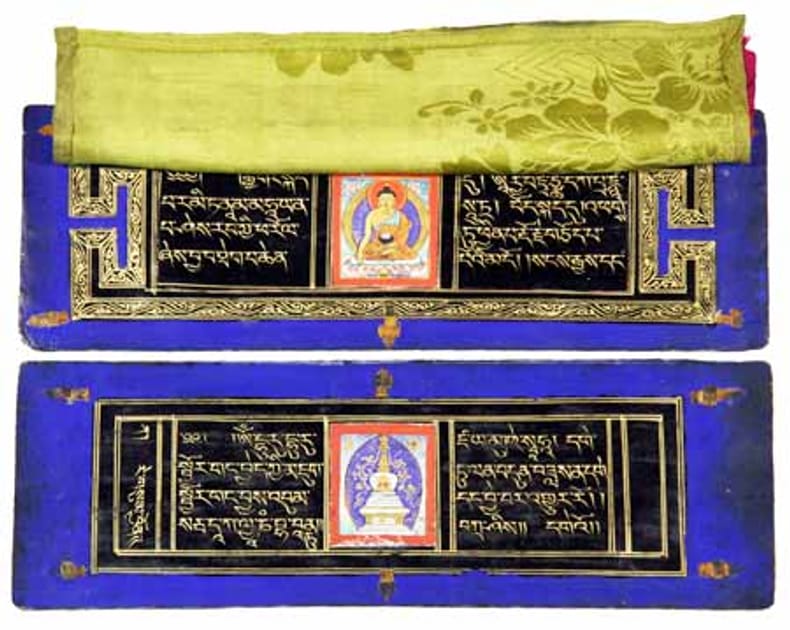
83817aafTibet, s.d., (vers 1800), 26 x 8.5 cm, 62 (von 63 ?) doppelseitig beschriftete lose Blätter mit Goldschrift auf schwarzem Grund u. dunkelblauer/schwarzer Umrandung, davon 3 Blätter illuminiert (Deckblatt mit 3 verschiedenfarbenen Seidenvorhängen zeigt in der Mitte Shakyamuni, Blatt 2 Subhuti, Blatt 3 einen Stupa), guter Zustand.
19972091502135703824Hozokan 1997. Soft Cover. Fine. The book is in fine condition. Hozokan paperback
19752091502135202622Iwao Minamido shoten 1975. Soft Cover. Fine. Size: 22cm Number of books: 21 Iwao Minamido shoten paperback
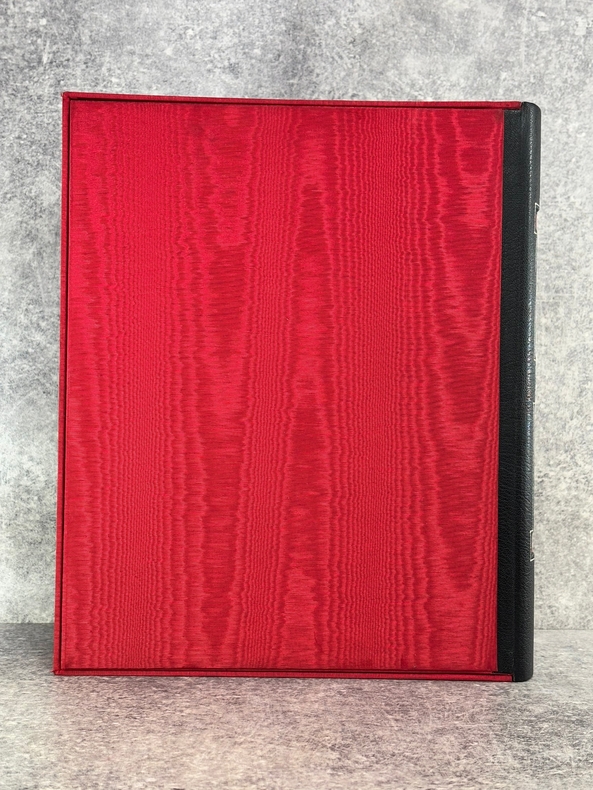
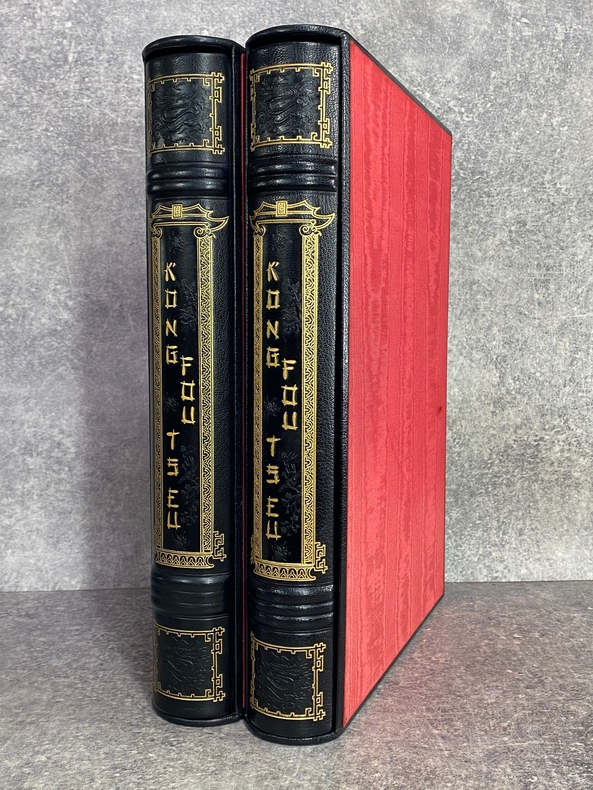
19883444NICE. EDITIONS D'ART SEFER. LE CHANT DES SPHERES. MONACO. EDITIONS ARTS ET COULEURS. 1988-1990. 2 VOLUMES IN-FOLIO DE 140 + (8) ET 134 + (8) PAGES, DANS UNE MAGNIFIQUE RELIURE DE L'EDITEUR PLEIN CHAGRIN NOIR, DOS ORNE D'UN CAISSON EN CREUX AVEC DECOR FLORAL ET TITRE DORES, PLATS BISEAUTES, PLAT SUPERIEUR RICHEMENT ORNE D'UNE PAGODE EN RELIEF EN ROUGE ET EN DORE, AVEC INCRUSTATIONS DE PLAQUES EMAILLEES A DECOR POLYCHROME D'UNE PAGODE ET DE DRAGONS, TETE DOREE, NON ROGNES, SOUS EMBOITAGES 1/2 CHAGRIN NOIR (33,5 X 39,5 X 18,5 CENTIMETRES ENVIRON), DOS IDENTIQUES A CELUI DE L'OUVRAGE, LE RESTE RECOUVERT D'UNE SOIE MOIREE ROUGE (SEFER RELIEUR). ILLUSTRE DE NOMBREUSES COMPOSITIONS IN ET HORS-TEXTE, DANS LE STYLE DE L'ENLUMINURE, MISES EN COULEURS A LA MAIN. PREMIER TIRAGE LIMITE A 1280 EXEMPLAIRES NUMEROTES, DONT 30 HORS-COMMERCE. UN DES 150 SUR VELIN D'ARCHES COMPORTANT 2 ILLUSTRATIONS ORIGINALES SIGNEES, UNE PLANCHE HORS-TEXTE, ENCADREE ET UNE SUITE DU TRAIT EN LAQUE ROUGE DES ILLUSTRATIONS IN ET HORS-TEXTE, CELUI-CI PORTANT LE NUMERO 149 ET ACCOMPAGNE DE SON CERTIFICAT D'AUTHENTICITE AU MEME NUMERO SIGNE PAR L'ARTISTE ET L'EDITEUR. LES ILLUSTRATIONS ORIGINALES ET LA SUITE SONT INSEREES DANS UNE CHEMISE RECOUVERTE DE SUEDINE NOIRE AVEC LE PLAT SUPERIEUR ORNE D'IDEOGRAMMES CHINOIS DORES. INFIMES PETITS DEFAUTS EXTERIEURS SANS AUCUNE GRAVITE, SINON SUPERBE EXEMPLAIRE.
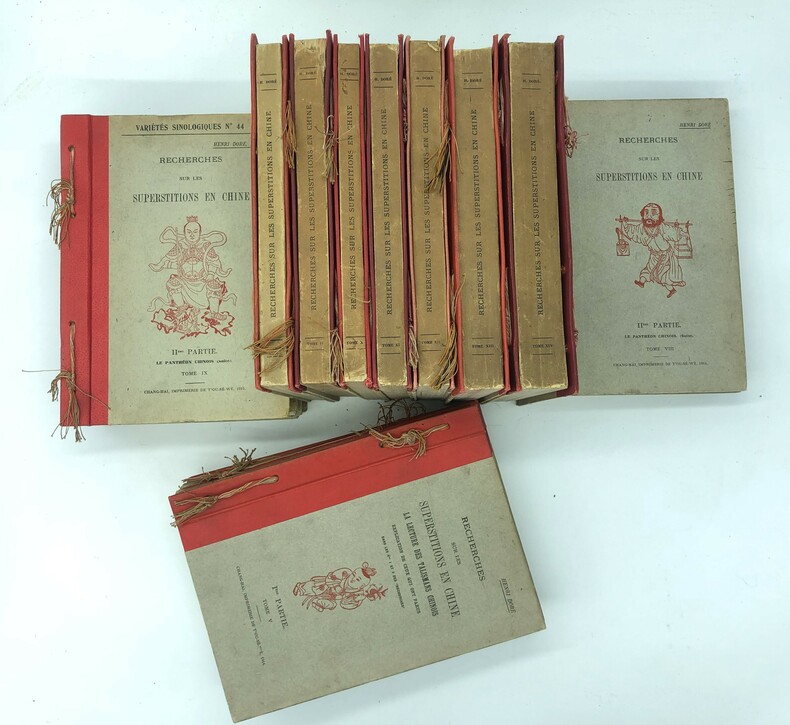
1911PHO-73615 volumes, in-8 (235 x 160 mm)avec une profusion de planches souvent en couleur. Chaque volume est relié de style chinois: des blocs de texte soutenus par des doublures de dos imprimées, placés entre des planches imprimées avec des charnières en tissu rouge et cousus avec des faisceaux de fils à travers quatre trous percés à travers les charnières .
19883789NICE. EDITIONS D'ART SEFER. LE CHANT DES SPHERES. MONACO. EDITIONS ARTS ET COULEURS. 1988-1990. 2 VOLUMES IN-FOLIO DE 140 + (8) ET 134 + (8) PAGES, RELIURE DE L'EDITEUR PLEIN CHAGRIN NOIR, DIFFERENTE POUR CHACUN DES 2 VOLUMES (SEFER RELIEUR) :TOME I. DOS A NERFS ORNE D'UN DECOR A FROID ET EN DORE, TITRE DORE, PLATS BISEAUTES ORNES D'UN DECOR A FROID ET EN DORE, LETTRES CHINOISES METALLIQUES LAQUEES EN NOIR ET EN ROUGE AU CENTRE DU PLAT SUPERIEUR, DENTELLE INTERIEURE DOREE, TETE DOREE, NON ROGNE, SOUS EMBOITAGE 1/2 CHAGRIN NOIR (34 X 42,5 X 8,5 CENTIMETRES ENVIRON), DOS IDENTIQUE A CELUI DE L'OUVRAGE, LE RESTE RECOUVERT D'UNE SOIE MOIREE ROUGE. TOME II. DOS ORNE D'UN CAISSON EN CREUX AVEC DECOR FLORAL ET TITRE DORES, PLATS BISEAUTES, PLAT SUPERIEUR RICHEMENT ORNE D'UNE PAGODE EN RELIEF EN ROUGE ET EN DORE, AVEC INCRUSTATIONS DE PLAQUES EMAILLEES A DECOR POLYCHROME D'UNE PAGODE ET DE DRAGONS, TETE DOREE, NON ROGNE, SOUS EMBOITAGE 1/2 CHAGRIN NOIR (33,5 X 40 X 9,5 CENTIMETRES ENVIRON), DOS IDENTIQUE A CELUI DE L'OUVRAGE, LE RESTE RECOUVERT D'UNE SOIE MOIREE ROUGE.ILLUSTRE DE NOMBREUSES COMPOSITIONS IN ET HORS-TEXTE, DANS LE STYLE DE L'ENLUMINURE, MISES EN COULEURS A LA MAIN. PREMIER TIRAGE LIMITE A 1280 EXEMPLAIRES NUMEROTES, DONT 30 HORS-COMMERCE. UN DES 100 SUR VELIN D'ARCHES RESERVES AU CERCLE DES BIBLIOPHILES ARTS ET COULEURS NUMEROTES AC 1 A AC 100, CELUI-CI PORTANT LE NUMERO AC 10 DANS CHACUN DES VOLUMES, ET COMPORTANT 2 ILLUSTRATIONS ORIGINALES SIGNEES, UNE PLANCHE HORS-TEXTE, ENCADREE ET UNE SUITE EN COULEURS DES ILLUSTRATIONS HORS-TEXTE. ACCOMPAGNE DE SON CERTIFICAT D'AUTHENTICITE AU MEME NUMERO SIGNE PAR L'ARTISTE ET L'EDITEUR. LES ILLUSTRATIONS ORIGINALES ET LA SUITE SONT INSEREES DANS DEUX CHEMISES RECOUVERTES DE SUEDINE NOIRE AVEC LE PLAT SUPERIEUR ORNE D'IDEOGRAMMES CHINOIS DORES. INFIMES PETITS DEFAUTS EXTERIEURS SANS GRAVITE, SINON TRES BEL EXEMPLAIRE.
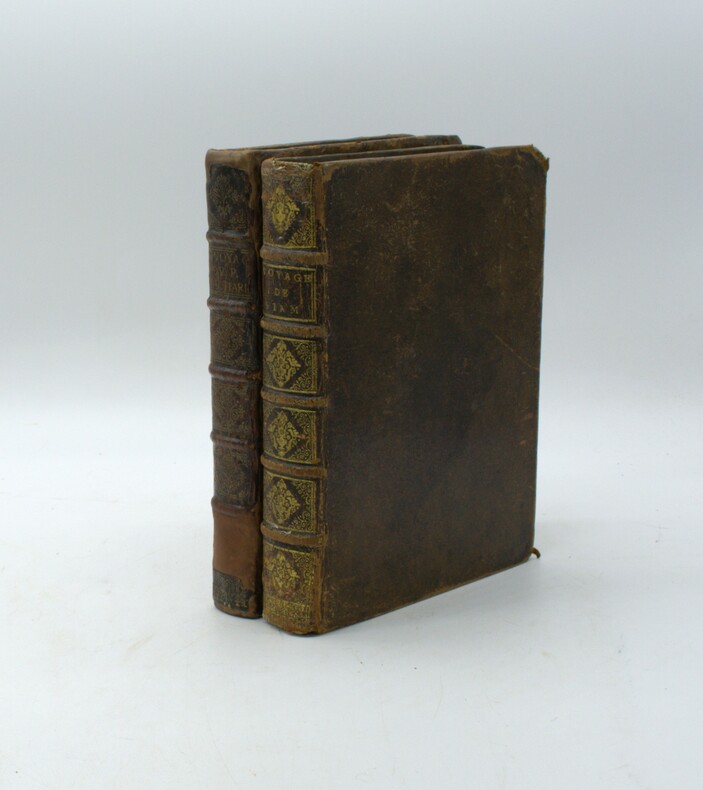
1686PHO-1723Paris, Arnould Seneuze, Daniel Horthemels, 1686-1689, 2 vol. in-4 : 16ff.-424pp. 8ff., 8ff.-416pp.-5ff., illustré de 26 planches (20+6) dont certaines dépliantes ou à double pages, gravées par Cornelis Vermeulen, d'après les dessins de P. Sevin, relié plein veau chiné (légèrement différentes), dos à nerfs orné avec titre, frottements, manques en tête et en queue du tome I, coins du tome I émoussés, dos, mors et coins du tome II réparés, tache d'encre dans les marges inférieures des pp.305-307 du tome I, pl. p. 91 du tome I colorié à la main, déchirure au titre du tome II renforcé.
19832091502135303854Daiichishobo 1983. Soft Cover. Fine. Number of books: 13 Daiichishobo paperback
187575492Tibet: N.p. ca. 1875. This Sutra comprises Volume 33 of the Narthang Kangyur. The dimensions including both wooden covers are 24 1/4 inches long; 6 3/8 inches wide; 4 1/2 inches high. This exemplar contains 448 leaves made of Tibetan rice paper and printed using carved wooden blocks on both recto an verso for a total of 896 pp. The leaves and the holder are in very good condition. We know that the Narthang Kangyur printing blocks were carved in the Narthang Monastery around 1730-1732. The legibility of this copy argues for a date of about 1875 but it could be as late as 1920. The upper wooden board has a nice Sanskrit inscription in Landza / Ranjana script. With the original saffron carrying cloth. A rare offering.The text is a sutra named The Perfection of Wisdom in Eight Thousand Lines. Copies of this text are often used for devotional purposes which may be why it has not been kept with the other volumes. This particular sutra was initially translated from Sanskrit into Tibetan in the 8th century then the translation was revised in the 11th. The original composition of the Sutras is unknown. the traditional answer to this is that these sutras were spoken by the Buddha then concealed by the Nagas for centuries before being revealed by Nagarjuna in the 3-4th century. While they are usually thought of as later compositions the sutras of the Perfection of Wisdom and especially this text are interestingly among the oldest physical Buddhist manuscripts preserved. The sutra deals with a number of topics but is primarily concerned with the conduct of a bodhisattva the realiation and attainment of the Perfection of Wisdom as one of the Six Perfections the realization of thusness tath t the attainment of irreversibility on the path to buddhahood avaivartika non-conceptualisation and abandonment of views as well as the worldly and spiritual benefit of worshipping the s tra.The s tra is among the most well-established in the Mahayana tradition and "was the first philosophical text to be translated from the Mahayana literature into Chinese." It was translated seven times into Chinese9 five times into Tibetan and eight times into Mongolan. The first Tibetan edition was in the eighth century. It remains one of the most relevant of all sutras. Even the dalai Lama acknowledges it preiminence - "“Now Khyongla Rato Rinpoche and I are both students of the late Kyabje Ling Rinpoche. He is the senior student but I the younger one have the name Dalai Lama. I have a close bond with him and with Richard Gere who is a friend of mine and a friend of Tibet. They asked me to give this teaching. For many years Rinpoche has requested me to give the oral transmission of the Perfection of Wisdom Sutra in 8000 lines. As we drove in from the airport yesterday he mentioned it again and I thought “Let’s start now.†The book is about 500 pages long so looking at it I feel somewhat daunted but I won’t try to read it all now I’ll just begin today.â€He explained that the Perfection of Wisdom Sutras form a large part of the Buddhist scriptures. Of those sections translated into Tibetan the longest is in 100000 lines and consists of 12 volumes the version in 25000 lines is in 3 volumes this edition in 8000 lines is only one volume while the shortest sutra simply consists of the syllable ‘A’. N.p. hardcover
19881163MONACO. EDITIONS ARTS ET COULEURS. 1988-1990. 2 VOLUMES IN-FOLIO (30 X 39,5 X 13 CENTIMETRES ENVIRON) DE 140 + (8) ET 134 + (8) PAGES, RELIURES DE L'EDITEUR PLEIN CHAGRIN NOIR ET PLEIN CHAGRIN ROUGE, DOS A NERFS ORNE D'UN DECOR A FROID ET EN DORE, TITRE DORE, PLATS BISEAUTES ORNES D'UN DECOR A FROID ET EN DORE, LETTRES CHINOISES METALLIQUES LAQUEES EN NOIR ET EN ROUGE AU CENTRE DES PLATS SUPERIEURS, DENTELLE INTERIEURE DOREE, TETE DOREE, NON ROGNES, SOUS ETUI BORDE DE L’EDITEUR RECOUVERT DE SOIE MOIREE. ILLUSTRE DE NOMBREUSES COMPOSITIONS IN ET HORS-TEXTE, DANS LE STYLE DE L'ENLUMINURE, MISES EN COULEURS A LA MAIN. PREMIER TIRAGE LIMITE A 1280 EXEMPLAIRES NUMEROTES, DONT 30 HORS-COMMERCE. UN DES 200 SUR VELIN D'ARCHES COMPORTANT UNE PLANCHE HORS-TEXTE, ENCADREE, ET UNE SUITE DU TRAIT EN LAQUE ROUGE DES ILLUSTRATIONS IN ET HORS-TEXTE, CELUI-CI PORTANT LE NUMERO 274 ET ACCOMPAGNE DE SON CERTIFICAT D'AUTHENTICITE AU MEME NUMERO SIGNE PAR L'ARTISTE ET L'EDITEUR. EXEMPLAIRE ENRICHI D'UN ENVOI AU CRAYON DE L'ILLUSTRATEUR : «HOMMAGE DE L'ARTISTE, J. GRADASSI». TRES BEL EXEMPLAIRE.
1916SB-13568Tokyo, Kobunsha, 1916. 15, (546) pp. Green clothbound (original) volume with gold-embossed title along spine and blind-tooled publisher's mark on front. Illustrated endpaper with floral ornamentation. Famous study of Russian Orientalist, Sinologist and scholar of Japanese Studies Otto Julius Rosenberg (1888 - 1919) on a system of classification of Chinese characters. Rosenberg studied from 1906 to 1911 at the Institute of Oriental Studies of the University of St. Petersburg, lectured by, among others, the founder of the Russian school of Indology, Sergei Oldenburg (1863 - 1934). During a study stay in Bonn in 1909, Rosenberg befriended Hermann Jacobi (1850-1937), the greatest Indologist and Sanskrit scholar of that time. As part of an internship at the Department of Oriental Languages (SOS) at the Friedrich-Wilhelms-Universität two years later, he also befriended the German linguist and scholar of Japanese studies, Rudolf Lange (1850 - 1933). From 1912 to 1916 he studied Buddhist Literature and Tradition at the University of Tokyo. Here Rosenberg became acquainted with the then leading Buddhist Scholars of Japan. In the course of this stay, he explored the school of Zen Buddhism as one of the first Western scientists and also became an expert for Japanese and Chinese characters used in the writing of Chinese and Japanese. In 1924, his work "The problems of Buddhist philosophy" was published in German. Based on ideas of Russian Sinologist and Buddhologist Vasily Vasilyev (1818 - 1900), Rosenberg developed a method of classification of Chinese and Japanese characters. He published the results of his research in a dictionary which was published in English and Japanese and which formed the basis of the so-called "Four Corner Method", which is still employed today in the creation of Chinese and Japanese dictionaries. This volume is extremely rare and, according to the world's largest bibliographic database, WorldCat, it is only found in six libraries worldwide. The copy offered here was purchased from a Japanese private collection.
1927000013000Oxford: Oxford University Press 1927. First English language edition. Hardcover. Near Fine. 8vo. 9 x-xliv 1 2-248 pp. Green cloth with a gold design stamped on the front board the Hindu/Buddhist swastika at the center of the design gold lettering and a gold decoration on the spine; top edge gilt. Title page printed in red and black. Illustrated with a double-sided frontispiece and with several plates of black and white photographs. Foreword by Sir John Woodroffe. World History Encyclopedia Joshua J. Mark "Tibetan Book of the Dead". According to the traditional story Lotus Guru Padmasambhava and a female disciple Yeshe Tsogyal wrote the texts that would become the Bardo Thodol the Tibetan Book of the Dead during the eighth century of the Common Era. The texts became lost to time until they were found and disseminated orally by Karma Lingpa in the fourteenth century. Although written as a guide to assist and comfort the dead the work has taken on a new life as a guide for the living on spiritual transformation and self-improvement. The buddhist text is divided into six sections beginning with the moment of death until the moment that the deceased soul is either reborn or breaks the cycle of reincarnation samsara. The book was intended to shepherd the recently deceased through these cycles of the intermediate stages of reality and was read aloud at funeral rites for either days or weeks at a time by a monk. It was not until the twentieth century that the work was published in English. Walter Evans-Wentz was an anthropologist and scholar of Tibet and sought Dawa-Samdup's help in translating the texts from Tibetan into English. Dawa-Samdup died in 1922 after completing the funerary section of the book and Evans-Wentz filled in the rest accourding to his own knowledge. The Tibetan Book of the Dead is an excellent example of the core tenets of Buddhism and of eastern philosophy in general. A contemporary bookplate on the front pastedown very light foxing to the title page. Overall a beautiful copy. Oxford University Press hardcover
19882816MONACO. EDITIONS ARTS ET COULEURS. 1988-1990. 2 VOLUMES IN-FOLIO (30 X 39,5 X 13 CENTIMETRES ENVIRON) DE 140 + (8) ET 134 + (8) PAGES, RELIURE DE L'EDITEUR PLEIN CHAGRIN NOIR, DOS A NERFS ORNE D'UN DECOR A FROID ET EN DORE, TITRE ET TETE DORES, PLATS BISEAUTES ORNES D'UN DECOR A FROID ET EN DORE, LETTRES CHINOISES METALLIQUES LAQUEES EN ROUGE AU CENTRE DES PLATS SUPERIEURS, DENTELLE INTERIEURE DOREE, GARDES DE SOIE MOIREE, NON ROGNES, SOUS ETUI BORDE DE L’EDITEUR RECOUVERT EGALEMENT DE SOIE MOIREE. ILLUSTRE DE NOMBREUSES COMPOSITIONS IN ET HORS-TEXTE, DANS LE STYLE DE L'ENLUMINURE, MISES EN COULEURS A LA MAIN. PREMIER TIRAGE LIMITE A 1280 EXEMPLAIRES NUMEROTES, DONT 30 HORS-COMMERCE, TOUS SUR VELIN D'ARCHES, CELUI-CI PORTANT LE NUMERO 818 ET ACCOMPAGNE DE SON CERTIFICAT D'AUTHENTICITE AU MEME NUMERO SIGNE PAR L'ARTISTE ET L'EDITEUR. TRES BEL EXEMPLAIRE.
19842110502151001241Asahishinbunsha 1984. Soft Cover. Fine. Volume: 1 Asahishinbunsha paperback
198587407Snow lion publications | Ithaca (New-York) 1985 | 14.50 x 22.50 cm | broché
19822090502124900426Rinsen Bookstore 1982. Soft Cover. Fine. The book is in fine condition. Rinsen Bookstore paperback
201187402HARPER, "HarperCollins Publishers India" | New Delhi 2011 | 14.50 x 22.50 cm | reliure de l'éditeur
1690PHO-1696Paris, veuve de J.-B. Coignard, J.-B. Coignard, 1691. 2 volumes in-12, titre, 2 ff. n. c., -555 pp. ; 1 ff. n. c.., 404 pp, 2 ff. de tables in fine, relié plein veau époque, dos à nerfs orné légèrement différent, étiquette de titre au tome 1, coins et coiffes usés, petit travail de ver, 3 planches détachées au tome 1, page de titre courte, cachet. L'illustration comprend 37 planches (41). La première planche donnée dans la table du tome 1 est dans le texte, planches hors texte gravées par Ertinger, certaines dépliantes. Vignette aux armes du marquis de Torcy, à qui l'ouvrage est dédié. Les planches représentent des plantes, des costumes, des habitats, des instruments, de musique, des cartes … etc
19752110502151003205Daiichishobo 1975. Soft Cover. Fine. Number of books: 18 Daiichishobo paperback