STEIN, R. A. (traduction et annotations)Livre Rare Book

877 résultats
1972827681972 Editions G.-P. Maisonneuve et Larose, Collection U.N.E.S.C.O d'Oeuvres Représentatives - 1972 - Grand in-8, broché - 442 p. - Quelques illustrations hors texte en N&B - Ouvrage non coupé (jamais lu)
20182090202118201464Japan Arts and Crafts Company 2018. Soft Cover. Fine. The book is in fine condition. Japan Arts and Crafts Company paperback
19722090502113717055Not Available 1972. Soft Cover. Fine. The book is in fine condition. Not Available paperback
19262092902137307099Chuobijutsu-sha 1926. Soft Cover. Fine. The book is in fine condition. Chuobijutsu-sha paperback
<p>3 volumi, cm 31x23, rilegature originali in cartone, titolo al piatto e al dorso; p. 358, con moltissime tavole in nero nel testo che raffigurano sculture, reperti archeologici, oggetti di culto e pitture. English text, fine</p>
Mm 125x190 Brossura editoriale, 127 pagine con illustrazioni in nero nel testo. Opera in ottime condizioni.
Mm 150x215 Collana "Civiltà dell'Oriente" - Copertina flessibile con sovraccoperta, 117 pagine. Kodo Sawaki (1880-1965), detto anche Yadonashi, 'il senza dimora', pur riproponendo lo stile di vita sobrio dei primi patriarchi zen, appartiene interamente alla nostra epoca, che ha percorso talvolta tragicamente, ma che ha saputo anche guardare con acuto e ironico senso critico non privo di comprensione per quella "strana creatura che brancola nel buio con occhi intelligenti" - Libro in condizioni di nuovo, spedizione in 24 ore dalla conferma dell'ordine.
Mm 120x190 Brossura originale, 86 pagine con figure in nero nel testo. Buona copia mai letta, spedizione in 24 ore dalla conferma dell'ordine.
in-12, 188 pages, bibliographie, index, broché, couverture illustrée. Tres bel exemplaire. [VA-2]
64 pages. Many black and white illustrations and reproductions of photos. Features include: Transcending Materialism - Tibetan Buddhism in America; The Way of the Buddha; The Meditative Tradition of Tibet; Jamgon Kontrul of Sechen; Chogyam Trungpa, Rinpoche; Tail of the Tiger/Karma Dzong Meditation Centers; The Bodhisattva Path; The Ten Oxherding Pictures; and more. Average wear. Some soiling to front cover. Unmarked. A sound copy of this interesting work. Book
192360788Paris, La famille théosophique S.A 1923. 316 pages. gebundene Ausgabe, Ledereinband, Exemplar in gutem Erhaltungszustand
69721Paris, éd. La Famille Théosophique - Adyar, 1923, 3e édition, in-12, br., texte en noir sur fond rose éd., 320 pp., préface de la première édition, préface de l'édition annotée, table des matières, Les enseignements exposés dans ce livre éclairent d'une vive lumière certaines questions touchant les doctrines bouddhistes. Très bon livre sur le bouddhisme. Pas courant. Très bon état du papier; la couverture est très légèrement défraîchie
in-16, 221 pages, broche, couverture illustree. Bon etat. [LP-10]
19246070166München-Neubiberg : Schloss 1924. 27 S. + 31 S., 23cm x 15cm
200493768Bad Honnef, Horlemann Verlag 2004. Mit Abbildungen., 238 Seiten., 8°. ill. rote OBroschur.,
188810005Kansas City Mo: Spiritual Scientific Publishing Co 1888. Good. 8vo. 103pp. frontis engraved portrait 3/4 leather and boards front cover detached rear cover held in place with tape spine perished. -- Needs rebinding. Text block sound. -- Condition. Spiritual Scientific Publishing Co unknown
20108511BBMünchen / Hamburg, Shinnyo-En, 2010. quer4°, 151 S. mit zahlreichen Farbabbildungen, illustr. original Pappband, wie frisch aus der Buchhandlung.
19811709110667xbvkJapan, Showa 55 (1981). 207 pages with 100 wholepage photographic plates of Shimizus clay-sculptures. - Publisher's white hardcover binding with transparent dustjacket in a triptych-like grey titled clothfolder, in the publisher's titled cardboard-box; oblong-4to.(ca. 30 x 32 x 4 cm; ca. 1,9 kg.).
198759435Dharma Drum 1987. 139 pages Softcover/Paperback, book in good condition
198259434Taipei. Dharma Drum Corp. 1989 1982. 147 pages Softcover/Paperback, book in good condition, Exemplar in gutem Erhaltungszustand
0984156143.Gpaperback. Good. Access codes and supplements are not guaranteed with used items. May be an ex-library book. paperback
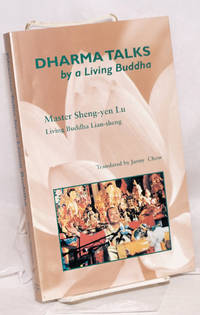
1995166093San Bruno CA: Amitabha Enterprise Inc 1995. ix 209p. first edition decorated glossy pictorial wraps 8.5x5.5 inches a very good copy. "Originally a Christian Master Lu was twenty six years old when a profound mystical experience led him to study Taoism Sutrayahna and Tantric Buddhism" p.v. Enjoins vegetarianism passim; and reveals that because many holy-external humans are "blue" within when the body drops away there is a "red-light distict" for them in paradise which the master has been shown; see pp.77/8. Blue here is an "X-rated condition" that he forbears from describing further. Amitabha Enterprise, Inc unknown books
MAI SFOGLIATO, COME NUOVO, LIEVISSIMI SEGNI DEL TEMPO, QUALCHE FIORITURA ALLA COPERTINA. Dopo la morte di un maestro di un monastero tibetano, cinque discepoli si mettono alla ricerca del nuovo Budda. Durante il loro viaggio incontreranno metamorfosi, reincarnazioni, false piste, levitazioni. Dal Tibet a Miami, da Parigi all'India e a Cuba, l’autore dona un ritmo danzante alla sua prosa conducendo in un labirinto stellato dove si affastellano tutti gli orpelli del nostro tempo. Severo Sarduy (Camagüey, Cuba, 1937 – Parigi, Francia, 1993), poeta, scrittore, drammaturgo cubano. Trasferitosi nel 1961 in Francia in esilio, ottenne in seguito la cittadinanza francese. Era inoltre un conosciuto collezionista di opere d'Arte. Ha collaborato spesso con importanti riviste cubane e francesi. Tutta la sua opera è orientata verso la distribuzione dell’intreccio narrativo mediante il ricorso a uno sperimentalismo linguistico, dove agisce l’influenza dell’avanguardia francese e il ricordo della cultura del suo paese. Informazioni bibliografiche Titolo: Maitreya: il Budda che deve venire: romanzo Titolo originale dell'opera: Maitreya Collana: Volume 60 di Tasco Autore: Severo Sarduy Traduttore: Piero Verni Editore: Milano: SugarCo, 1982 Lunghezza: 147 pagine; 21 cm Soggetti: Narrativa spagnola, Letteratura caraibica, Cubana, Buddha, Tibet, Romanzi, Contemporanea, Novecento
1988135356Druck von K. K. Gyösei, Tokyo Nara 1988. 29 und 16 S., Abb. 25,5*18 cm. OBroschur.
108981 p.l. 38 folding leaves. 8vo 280 x 174 mm. orig. wrappers with cover wrappers old stitching. Thần Xá: An Thái French colonial period.<br /> <BR> <BR> An extremely rare woodcut book printed by nuns in a rural monastery in northern Vietnam. “An eponymous MahÄyÄna sutra that recounts the qualities vows and pure land of the buddha Bhaiá¹£ajyaguru — the Master of Healing also known as the Medicine Buddha or the TathÄgata of Lapis-Lazuli Light. The scripture was most likely written in northern India during the early centuries of the Common Era. In this sutra Bhaiá¹£ajyaguru vowed that his name if merely uttered would cure diseases free prisoners secure food and clothing for the impoverished and produce other similar benefits. He also vowed that his body would be as resplendent as lapis lazuli itself so that it might illuminate the world†Donald Lopez & Robert Buswell The Princeton Dictionary of Buddhism “Bhaiá¹£ajyagurusÅ«traâ€.<br /> <BR> <BR> The Scripture of the Medicine Buddha T. 450 translated from Sanskrit into Chinese by Xuanzang 602–664 in the year 650 C.E. has been a popular text in East Asian and Tibetan Buddhist traditions. In our copy the sutra itself is bookended by a liturgical opening including the “Incense Praise†praises for the Buddha and a “sutra-opening gÄthĆand a final homage to the Medicine Buddha. According to the colophon bound at the beginning of the volume the scripture was printed for a specific occasion by three bhikkhuni or ordained Buddhist nuns affiliated with the An Thái temple 安泰寺 in the Thần Xá village 神èˆæ‘ of the An Lại commune 安賴社 in the Thanh Khê canton 清溪 Äại An district 大安縣 Nam Äịnh province å—å®šçœ of northern Vietnam. <br /> <BR> <BR> Only the names of two of them are fully legible: they are Quảng Thuáºn å»£é † and Quảng Thà nh 廣æˆ. They printed and disseminated this Scripture of the Medicine Buddha with a sincere mind when the statues of three of their masters were completed and placed into stupas. In their colophon they traced the lineage of themselves and their masters to the bhikkhuni An DÆ°Æ¡ng Tháp 安陽塔 dharma name Nguồn Hạnh æºå¹¸ and pseudonym Minh Lâm 明ç³. <br /> <BR> <BR> Despite the country’s long history of Buddhist and Confucian learning woodblock-printed books published within Vietnam itself are far fewer in number than their Chinese or Japanese counterparts. This scarcity is owed to the high cost of domestic production: according to the estimate of Kathlene Baldanza as late as the 19th century “the labor cost of printing in Vietnam was five to ten times higher than in China. Even ink and brushes were more expensive to produce in Vietnam.†Extensive international trade between northern Vietnam and southern China — where plentiful books were printed at very low costs — meant that “it was generally cheaper to purchase books from China than to buy them locally†“Publishing Book Culture and Reading Practices in Vietnam†Journal of Vietnamese Studies 13.3 2018 pp. 10–11. <br /> <BR> <BR> Beyond the limited cases of official and temple-based publishing Vietnamese publishers were pushed toward niche genres such as Sino-Vietnamese dictionaries ritual manuals or morality books. Regardless of genre woodblock-printed books from Vietnam are very difficult to find today outside a few major collections such as the Institute of Sino-Nôm Studies in Hanoi and l’École française d’Extrême-Orient in Paris. We will not focus on the humid climate of the country or the massive destruction of the nation’s cultural heritage during its long war of independence in the post World War II period.<br /> <BR> <BR> The catalogue of materials kept at the Institute of Sino-Nôm Studies mentions two copies VHv.1071 AC.116 of the Scripture of the Medicine Buddha printed in 1911 and it is unclear if those were printed with the same woodblocks as ours. We know for certain however that no material at the Institute of Sino-Nôm Studies gives the An Thái temple as the place of publication despite the large numbers of temples and monasteries listed. This copy being an example of Vietnamese women’s printing in a rural monastery is extremely rare.<br /> <BR> <BR> Fine copy. First leaf a little frayed and the outer wrappers are quite frayed.<br /> <BR> <BR> ⧠Li Guimin æŽè²´æ°‘ “Zaizhi yu bianyi: Yuenan hanchuan fojiao dianji de zhuanhua å†è£½èˆ‡è®Šç•°â€”—越å—漢傳佛教典ç±çš„轉化†Foguang xuebao 佛光å¸å ± 7 No. 1 2021: pp. 111–37. Yuenan Hannan wenxian ziliaoku 越å—漢喃文ç»è³‡æ–™åº« Academia Sinica. unknown