Gautama BuddhaBiblio.com
AJ Buda A JBiblio.com
Digital Cardiac Imaging
B9789401087124Paperback / softback. New. paperback
The Saint Bookstore · Royaume-Uni59,23 £GB≈ 67,63 €
220 résultats
11941476-nnew. unknown
11941476like new. unknown
B9789401087124Paperback / softback. New. paperback
2013x-9401087121Springer 2013. Paperback. New. 324 pages. 9.25x6.10x0.77 inches. Springer paperback
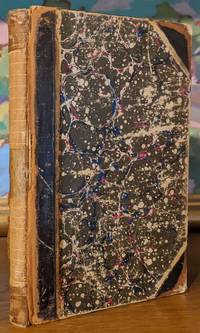
108981 p.l. 38 folding leaves. 8vo 280 x 174 mm. orig. wrappers with cover wrappers old stitching. Thần Xá: An Thái French colonial period.<br /> <BR> <BR> An extremely rare woodcut book printed by nuns in a rural monastery in northern Vietnam. “An eponymous MahÄyÄna sutra that recounts the qualities vows and pure land of the buddha Bhaiá¹£ajyaguru — the Master of Healing also known as the Medicine Buddha or the TathÄgata of Lapis-Lazuli Light. The scripture was most likely written in northern India during the early centuries of the Common Era. In this sutra Bhaiá¹£ajyaguru vowed that his name if merely uttered would cure diseases free prisoners secure food and clothing for the impoverished and produce other similar benefits. He also vowed that his body would be as resplendent as lapis lazuli itself so that it might illuminate the world†Donald Lopez & Robert Buswell The Princeton Dictionary of Buddhism “Bhaiá¹£ajyagurusÅ«traâ€.<br /> <BR> <BR> The Scripture of the Medicine Buddha T. 450 translated from Sanskrit into Chinese by Xuanzang 602–664 in the year 650 C.E. has been a popular text in East Asian and Tibetan Buddhist traditions. In our copy the sutra itself is bookended by a liturgical opening including the “Incense Praise†praises for the Buddha and a “sutra-opening gÄthĆand a final homage to the Medicine Buddha. According to the colophon bound at the beginning of the volume the scripture was printed for a specific occasion by three bhikkhuni or ordained Buddhist nuns affiliated with the An Thái temple 安泰寺 in the Thần Xá village 神èˆæ‘ of the An Lại commune 安賴社 in the Thanh Khê canton 清溪 Äại An district 大安縣 Nam Äịnh province å—å®šçœ of northern Vietnam. <br /> <BR> <BR> Only the names of two of them are fully legible: they are Quảng Thuáºn å»£é † and Quảng Thà nh 廣æˆ. They printed and disseminated this Scripture of the Medicine Buddha with a sincere mind when the statues of three of their masters were completed and placed into stupas. In their colophon they traced the lineage of themselves and their masters to the bhikkhuni An DÆ°Æ¡ng Tháp 安陽塔 dharma name Nguồn Hạnh æºå¹¸ and pseudonym Minh Lâm 明ç³. <br /> <BR> <BR> Despite the country’s long history of Buddhist and Confucian learning woodblock-printed books published within Vietnam itself are far fewer in number than their Chinese or Japanese counterparts. This scarcity is owed to the high cost of domestic production: according to the estimate of Kathlene Baldanza as late as the 19th century “the labor cost of printing in Vietnam was five to ten times higher than in China. Even ink and brushes were more expensive to produce in Vietnam.†Extensive international trade between northern Vietnam and southern China — where plentiful books were printed at very low costs — meant that “it was generally cheaper to purchase books from China than to buy them locally†“Publishing Book Culture and Reading Practices in Vietnam†Journal of Vietnamese Studies 13.3 2018 pp. 10–11. <br /> <BR> <BR> Beyond the limited cases of official and temple-based publishing Vietnamese publishers were pushed toward niche genres such as Sino-Vietnamese dictionaries ritual manuals or morality books. Regardless of genre woodblock-printed books from Vietnam are very difficult to find today outside a few major collections such as the Institute of Sino-Nôm Studies in Hanoi and l’École française d’Extrême-Orient in Paris. We will not focus on the humid climate of the country or the massive destruction of the nation’s cultural heritage during its long war of independence in the post World War II period.<br /> <BR> <BR> The catalogue of materials kept at the Institute of Sino-Nôm Studies mentions two copies VHv.1071 AC.116 of the Scripture of the Medicine Buddha printed in 1911 and it is unclear if those were printed with the same woodblocks as ours. We know for certain however that no material at the Institute of Sino-Nôm Studies gives the An Thái temple as the place of publication despite the large numbers of temples and monasteries listed. This copy being an example of Vietnamese women’s printing in a rural monastery is extremely rare.<br /> <BR> <BR> Fine copy. First leaf a little frayed and the outer wrappers are quite frayed.<br /> <BR> <BR> ⧠Li Guimin æŽè²´æ°‘ “Zaizhi yu bianyi: Yuenan hanchuan fojiao dianji de zhuanhua å†è£½èˆ‡è®Šç•°â€”—越å—漢傳佛教典ç±çš„轉化†Foguang xuebao 佛光å¸å ± 7 No. 1 2021: pp. 111–37. Yuenan Hannan wenxian ziliaoku 越å—漢喃文ç»è³‡æ–™åº« Academia Sinica. unknown
2019x-3030134520Springer-Verlag New York Inc 2019. Paperback. New. 272 pages. 9.25x6.10x0.87 inches. Springer-Verlag New York Inc paperback
feb101765Used. For more details please contact me unknown
2026x-1032984643Taylor & Francis Ltd 2026. Hardcover. New. 222 pages. 9.18x6.12x9.45 inches. Taylor & Francis Ltd hardcover
19882111902152908995Kosaku-sha 1988. Soft Cover. Fine. Size: B6 size Kosaku-sha paperback
199375997120 pages 102 pages 50 pages with 52 pages in Mandarin 50 pages with illustrations 73 pages 5 volumes on Buddhism and Buddhist theory. Published by Dorje and Bell; H. K. Buddhist Book Distributor; The Corporate Body Of The Buddha Educational Foundation paperback
19892092902140304366Kosaku-sha 1989. Soft Cover. Fine. Number of books: 1 Kosaku-sha paperback
19842111902160302106A-sa o sha 1984. Soft Cover. Fine. Number of pages: 224 pages Size: B5 size A-sa o sha paperback
19812090502113717253Not Available 1981. Soft Cover. Fine. The book is in fine condition. Not Available paperback
19332111902154606780Ogi shobo 1933. Soft Cover. Fine. The book is in fine condition. Ogi shobo paperback
19832092902141207763Guangxi people 1983. Soft Cover. Fine. Volume: 1 Guangxi people paperback
2007356246-KC17Baarn : Atalanta Pers 2007. Softcover. Good. Oorspronkelijk omslag softcover foto op het frontispice gemaakt door Vincent Menzel 7 uitsnedes en kleurvariaties van René Bakker bindwerk van Tineke Bakker-Overeem oplage 110 genummerde exemplaren dit is nummer 31/100 achterin gesigneerd in potlood door Frans Budé ongepagineerd 4to. Baarn : Atalanta Pers paperback
51-0257Berkeley: Sky Walker and Ä€rif Press 1974. Folio. 17 x 11.5 inches on thick paper. Drawing on one side and text on the verso.In Buddhism Manjushri is the Bodhisatva Buddha-to-be of Wisdom although he is believed to have the enlightenment of a Buddha. He bestows intelligence wisdom mastery of the Teaching the power of exposition eloquence and memory. He is the principle guardian and patron of astrologers. Revered as the patron of arts and sciences he is traditionally invoked by writers for assistance. Authors often open their books with verses in his honor.Manjushri works with Lord Maitreya. The two are sometimes depicted in a triad with Gautama Buddha in which Manjushri represents the wisdom aspect and Maitreya the Compassion aspect of Buddhist teaching.The Sanskrit name Manjushri means "gentle glory" or "sweet glory." Manjushri is also known as Manjughosha meaning "sweet-voiced-one" or "gentle-voiced-one" and as Vagishvara "Lord of Speech".Manjushri is said to have the power of discriminating wisdom. He can discriminate between correct and incorrect views and between beneficial and non-beneficial actions that must be taken on one's spiritual path. He holds a sword that vanquishes ignorance. Manjushri's sword is also considered a sword of quick detachment and a symbol of enlightened will.In Buddhist art Manjushri is portrayed as a beautiful 16-year-old prince. He often holds in his left hand the stem of a blue lotus blossom. On the blossom rests one of the Prajnaparamita scriptures which deal with the realization of Prajna or wisdom. With his right hand he wields a flaming sword of wisdom to vanquish ignorance.DHIH is the bija or seed syllable of Manjushri. The essence of a cosmic being is concentrated in his bija. Manjushri's mantra can be given to help develop wisdom memory and the understanding of the scriptures.According to one Tibetan tradition the devotee should recite this mantra -OM AH RA PA TSA NA DHIH- 100 21 or at least 7 times. On the last repetition the final syllable DHIH is to be repeated as many times as possible.OM – also written Aum is a sacred and mystical syllable that originates from Hinduism but is now common in Buddhism Hinduism Sikhism Jainism and the Bön tradition. Interestingly it is considered that the Islamic “Amin†and Christian “Amen†are both derived from this syllable.AH – represents the direct understanding of the nature of phenomena.RA – represents the understanding of emptiness from the Hinayana point of view. These profound teachings of the â€Hinayana†emptiness are suitable for those practitioners that have problems in understanding emptiness in its ultimate nature.PA – represents meditation. There are 2 basic types of meditation: the non-conceptual without thinking meditation and the conceptual thinking.TSA – represents the importance of nirvana and samsara. The exact nature of both samsara and nirvana is emptiness. But if we don’t understand the exact nature of samsara it manifests to us in the form of 3 sufferings. It is essential to understand the importance of both nirvana and samsara.NA – represents karma action. In short it signifies that all the suffering we experience is the result of our previous non-virtuous actions negative karma and all our happiness results from our previous virtuous deeds positive karma. There are 2 basic kinds of karma: the collective karma and the individual karma. We need to understand that with each action of our speech body and mind we are sewing the seeds of our future experience.Dhi – represents the bija or seed syllable of Boddhisatva Manjushri. After chanting 108 dhihs envision the dhi on your tongue coming down and absorbing into the dhi on the moon disk at your heart which becomes very brilliant. Immeasurable red-light rays radiate from that seed syllable filling your entire physical body and purifying all negative karma actions sickness and obstacles.In short the view helps us recognize the correct path. Meditation is the actual practice through which we develop an experiential understanding of the path leading to a change in our mind and feelings. Activity combined with wisdom gives us the capacity to help sentient beings in an efficient way at the right time. Fruition is the happiness and courage resulting from accomplishing our virtuous intentions. Berkeley: Sky Walker and Ārif Press, 1974. unknown
19792111902154612013Shirokawa Town Board of Education 1979. Soft Cover. Fine. The book is in fine condition. Shirokawa Town Board of Education paperback
188810005Kansas City Mo: Spiritual Scientific Publishing Co 1888. Good. 8vo. 103pp. frontis engraved portrait 3/4 leather and boards front cover detached rear cover held in place with tape spine perished. -- Needs rebinding. Text block sound. -- Condition. Spiritual Scientific Publishing Co unknown
19712090502113709562Not Available 1971. Soft Cover. Fine. The book is in fine condition. Not Available paperback
20182090202118201464Japan Arts and Crafts Company 2018. Soft Cover. Fine. The book is in fine condition. Japan Arts and Crafts Company paperback
19932080502106500573Kokusho Publishing Association 1993. Soft Cover. Fine. Volume: 1 Kokusho Publishing Association paperback
19862092902140900415Kokusho Publishing Association 1986. Soft Cover. Fine. Volume: 1 Kokusho Publishing Association paperback
19832111902152800418Kokusho Publishing Association 1983. Soft Cover. Fine. Volume: 1 Kokusho Publishing Association paperback
19862111902160306836Kokusho Publishing Association 1986. Soft Cover. Fine. Number of pages: 536 433 pages Size: B5 size Number of books: 2 volumes Kokusho Publishing Association paperback