348 résultats
19462111902153200697Sangyo tosho 1946. Soft Cover. Fine. Number of books: 1 Sangyo tosho paperback
19893133695München: Chr. Kaiser 1989. 179 Seiten. 8° (17,5-22,5 cm). lllustrierte Orig.-Broschur. [Softcover / Paperback].
1989162954München: Chr. Kaiser 1989. 179 Seiten. 8° (17,5-22,5 cm). lllustrierte Orig.-Broschur. [Softcover / Paperback].
20013133281Göttingen: Joachim Jungius-Gesellschaft der Wissenschaften 2001. 74 Seiten. 8° (22,5 x 15 cm). Orig.-Broschur. [Softcover / Paperback].
57644Coll. "Bibliohphane", Paris, Les Belles Lettres, 1995, in-8, br., 448 pp., L'explication de la vie actuelle à travers la torah, texte trois fois millénaire ? L'auteur est le grand rabbin de Marseille. Petite tache sur la 1ére de couv., int. Très bon état
Out of print. 124 pages. Library of Congress Number 90-63171. Binding beginning to split between pages 28 and 29. Mildly soiled cover. Crease to lower front cover. Contents clean. Variety of poetry and writing focussed upon the Jewish faith. 8 sections labelled as follows: Desert; Jerusalem; There are Rebbes and Rebbes; Prayers, Reflections and other Zings and Zangs; Close Encounters of Various Kinds; Schechinah, Sexuality and the Serpent; Clearing the Way for Meshiach; Adieux and Intermediate Conclusions. Included are two informational mailouts for workshops the author was conducting in 1992 - Creativity, Spirituality and Action; Intimacy with the Self and Others. Book
lc_104131Souffle d'Or (21 janvier 1997)
Original Cloth. 8vo. 38 pages. 25 cm. First edition. In German. Contains two fold out pages. Habakkuk: Prophet; author of the eighth in the collection of the twelve minor prophetical books. The etymology of the name of the prophet is not clear. It seems to be a loan-word representing the Assyrian 'hambakuku, ' a garden-plant, and has the appearance of being a writer's pseudonym (F. E. Peiser, 'Der Prophet Habakuk, ' in 'Mitteilungen der Vorderasiatischen Gesellschaft, ' 1903, i. 12) . ... Peiser (l. C. ) contends that Habakkuk is the pseudonym of a Judean prince held as a hostage in Nineveh, and who witnessed the attack of the Medes, in alliance with Chaldea and Babylon, in 625 B. C. But his book announces a second attack. This prince may have been the son or grandson of Manasseh. Peiser shows that Habakkuk displays remarkable familiarity with Assyrian literature, his similes indicating quotations from, and adaptations of, Assyrian mythological writings. - 1906 JE. Subjects: Criticism, interpretation, etc. Bible. Habakkuk. Bible. Old Testament - Criticism, interpretation, etc. Bible. Habakkuk. Bible. Old Testament. Light soiling to wraps, otherwise clean and fresh. Very good condition. (BIBLE-14-28)
Verdier, 1988. In-8 broché de 258 pages. Très bon état
20035146015Gütersloh: Chr. Kaiser, Gütersloher Verlagshaus 1999-2003. Gr. 8° (22,5 x 18 cm). Fadengeheftete Orig.-Kunstlederbände mit goldgeprägtem Rückentitel und Lesebändchen. [Hardcover / fest gebunden].
189292249Berlin, Gaertner 1892. 28 S. 4°. Orig.-Geheftet. - Sehr gutes Exemplar.
Very Good Armenian Contemporary leather bdg. 16mo. (14 x 10 cm). In Armenian (Modern West Armenian). 238 p. [PSALMS IN ARMENIAN] Girk' Saghmosats'; Girk Arakats. A.B.C. 53,000. [A.B.S. 49,000 on colophon]. OCLC 988094270. The book of the Psalms in Armenian printed in Istanbul.
In 8°, br. muta, pp. 12 xpellx
199912015Editions du Beth Loubavitch 1999 271 pages in8. 1999. reliure édieteur avec jaquette. 271 pages. Likouteï Si'hot est une collection de discours et d'enseignements du Rabbi de Loubavitch (Rabbi Menahem Mendel Schneersohn) sur les sections hebdomadaires de la Torah (Paracha). La deuxième série couvre les cinq livres du Pentateuque (Berechit Chemot Vayikra Bamidbar Devarim) et présente des perspectives hassidiques sous forme de causeries de lettres et de notes personnelles
20002139604Frankfurt am Main: Moritz Diesterweg / Berlin: Institut Kirche und Judentum IKJ 1989-2000. 82; 98; 109; 120; 107; 109, (3); 93, (3); 91, (1) Seiten. Zweispaltig. 4° (30 x 21 cm). Orig.-Broschuren. [Softcover / Paperback].
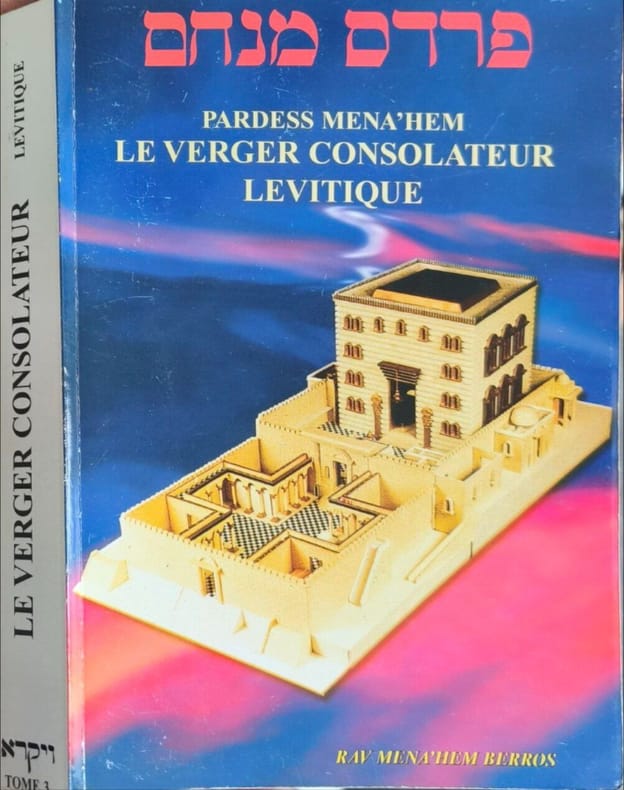
13026Centre 'hida 389 pages in8. Sans date. broché. 389 pages. L'ouvrage 'Pardess Menahem (Le Verger consolateur)' du Rav Mena'hem Berros propose des commentaires sur les sections hebdomadaires de la Torah en explorant les quatre niveaux de compréhension (Pardess). Il s'agit d'un coffret de cinq volumes couvrant les livres de la Genèse de l'Exode et du Lévitique destiné à un public juif pratiquant
197134036ABBerlin-NewYork, Walter de Gruyter, 1971. gr8° (24x16), X, 161 S., OKart (Brosch), minimal gebräunt, fest sauber und gepflegt, [= Die Mischna V (Seder: Kodaschim) / 5 (Traktat: Arakin) : Text, Übersetzung und ausführliche Erklärung mit eingehende
GUERINI E ASSOCIATI 1998 283 PP. FONDO DI MAGAZZINO: SEGNI DEL TEMPO ALLA COPERTINA, COME DA FOTO, PER IL RESTO INTONSO, MAI SFOGLIATO. Il possesso dell’intera terra promessa è condizione per l’avvento della Redenzione: è l’ideologia alla base del fondamentalismo in Israele. Un testo fondamentale per capire le lacerazioni che attraversano la società israeliana, ampiamente secolarizzata ma costretta al confronto con l’identità religiosa delle comunità osservanti.
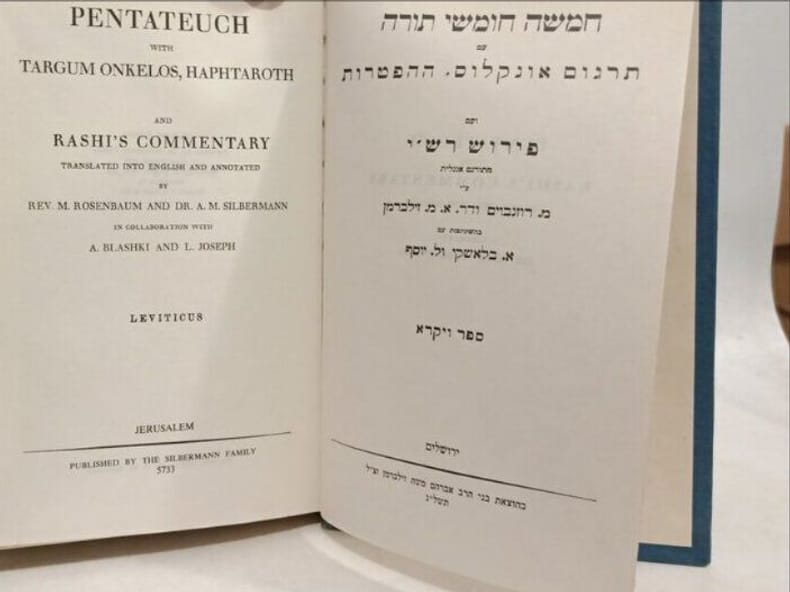
100144491The Silbermann Family in8. Sans date. Cartonné. 2 volume(s).
1977100127280Cambridge University Press 1977 256 pages 12 8x2x19 8cm. 1977. Broché. 2 volume(s). 256 pages.
300 p. 8vo. Original cloth binding, spine dust spotted. Hardbound. First Edition. JUDAICA BOX 1
300 p. 8vo. Original cloth binding, spine dust spotted. Hardbound. Very Good. First Edition. JUDAICA BOX 1
19863125450Helsinki: Finnish Exegetical Society 1986. VII, 377 Seiten. Als Typoskript gedruckt. 8° (17,5-22,5 cm). Orig.-Broschur. [Softcover / Paperback].
New Turkish Original bdg. HC. Roy. 8vo. (24 x 17 cm). In Turkish and Arabic. 2 volumes set: 1960, 568 p. "The Jews, as a monotheistic society, have lived in peace and security in the Muslim territory for centuries. Within the tolerant athmosphere they were active in any area as members of Islamic states. Saadia Gaon, who lived in the Islamic society in the 10th century, was one of the most important scholars of Jewish thought at the Middle Ages. He was an authority in both discipline of religion and literature by showing his competency through his dozens of works. He crowned his competency by becoming the president of the Talmud academy, guided the people in his time and also enlighted the next generation with his works. He tried to identify the rational basis of the essentials of the Jewish faith in his masterpiece Kitâbu'l Emânât ve'l 'Itikâdât and explored the consistency between the revelation and the reason. Gaon was born in Fayyum (upper Egypt) in 882 and died in Baghdad in 942. We have not enough knowledge about early life of Saadia. He left his home to study Tanakh with the scholars of Tiberias in Palestine at a young age and lived for sometime in Palestine territory. In 921 a controversy arose concerning the Hebrew calendar between the Talmudic academies in Babylonia and Palestine. Rabbi Aaron ben Meir, the Gaon (head) of the leading Talmudic academy in Palestine claimed that the Babylonian Gaonim made an error in calculation of the feast days. According to him the first day of Passover would be on a Sunday, while according to the Talmudic academies in Babylonia it would be on Tuesday. In this disputation Saadia supported the Babylonian Gaonim. He was in Aleppo, on his way from the East to Baghdad, when he learned of Ben Meir's claim of the Jewish calendar. Saadia addressed a warning to him and settled in Baghdad. He was knowledgeable about on astronomy and pointed to the mistakes made by Rabbi Aaron. In Baghdad, he wrote his "Sefer ha-Mo'adim" (Book of Festivals) and "Sefer ha Zikkarôn" (A Record Book) in which he refuted the claims of Ben Meir regarding the calendar. Finally the dispute was resolved and letters sent to all the Diaspora, and Babylonian Gaonim was restored the default with the great support given by Saadia. After this victory against Ben Meir, Saadia was acknowledged as a great scholar who has knowledge on religious matters and defender of Rabbinic Judaism. He received the honour of Alluf ( a title given to the scholars of the Babylonian Talmud academies who had the privilege of sitting in the first row) at the Pumbeditha Talmud Academy in Baghdad. Soon after, he became the gaon of the Sura Talmud Academy in Baghdad in 928. After accepting the role, he was known as Saadia Gaon. After two years, Saadia Gaon and the exilarch (Hebrew Rosh Galut, refers to the leaders of the Diaspora Jewish community in Babylonia) David ben Zakkai were of different opinions in an inheritance case. Saadia Gaon refused to sign the exilarch's verdict which was about that inheritence case because he thought it was unjust to sign it. After all was said and done he was dismissed from the presidency of academy by the exilarch. After seven years they were reconciled. Saadia Gaon retrieved his position; but he held it for only five more years. Finally Saadia Gaon died in Baghdad in 942 at the age of sixty. His Arabic translation and commentary of Torah gained prevalence among Jews living in the Islamic world, has earned a respected place among Rabbanim. After his era, many Jewish scholars have used this work in various ways especially Yemenite Jews called it Keter Torah (Taj), published it along with the masoratic Hebrew and Aramaic Targum texts and read it as the standard Arabic translation for centuries. ". (Muhammed Ali Bagir, Saadia Gaon'un hayati ve Arapça Tevrat tercümesi).