[Quakers]. [Conscientious Objectors]Biblio.com
241 résultats
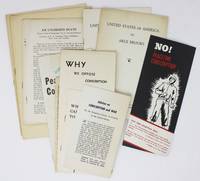
19544307Philadelphia 1954. About very good. Thirty-five printed and typescript items approximately 150pp. total. Some staples old folds. Scattered contemporary ink stamps. Light toning and minor wear heavier in places. Scattered chipping and occasional short edge tears. A fascinating and scarce group of newsletters pamphlets and ephemera published by the American Friends Service Committee during and after World War II comprising thirty-five printed and typescript items. The Committee administered roughly one third of the camps in the Civilian Public Service system which was established to provide a means of non-military service to religious conscientious objectors during the war and also played a significant role in the anti-draft anti-conscription movement. The first group of material present here includes seven issues of the Civilian Public Service Friends Newsletter. These provide a detailed contemporary account of the overall state of the camps including camp populations incoming "campers" camp openings and closures and the financial situation. The newsletters also include news relating to the administration of the camps and developments regarding their operation and the activities of the interned objectors. Included as well are a promotional report issued on the two-year anniversary of the Service's inception and an elaborate four-page solicitation for donations to the CPS both also issued by the American Friends Service Committee. The issues of the newsletters present are: No. 5 October 30th 1942; No. 6 December 21 1942; No. 8 February 25 1943; No. 9 March 15 1943; No. 10 April 21 1943; No. 12 July 12 1943; No. 13 August 23 1943. A substantial run of a scarce and short-lived newsletter. We locate individually catalogued groups of these reports only at Bethel College and the University of Oregon and not in the Swarthmore Peace Collection.<br /> <br /> A second group of newsletters contains three issues of a weekly periodical Information and eleven issues of its monthly offshoot Information Digest dating December 1943 to July 1945 with two issues from later in 1946. These issues document the administration process of the CPS camps and contain reports on various facets of their operation including finances fundraising working and social conditions religious life and legal issues. Amongst these are reports on internal efforts and negotiations to fund the camps both within the Society of Friends and in partnership with other pacifist religious sects such as the Mennonites who were involved in camp operations. The December 2 1943 issue of Information for example contains a detailed narrative of the negotiation to fund the camps in 1944. The newsletters also contain a wealth of information on developments initiatives and daily life at the camps which include some particularly interesting reports on mental health among internees and on civil rights as the issue related to conscientious objectors but also to racial equality in the United States during the war era. OCLC locates holdings of this periodical at just a small handful of institutions.<br /> <br /> The third group of material comprises four scarce typed reports prepared and distributed by the AFSC during the war regarding the rights of conscientious objectors and their status. Three of the reports address the Selective Service Act and continued amendments thereto concentrating on the portions of the law that applied to religious objectors to military service and changes that affected objectors during the early years of the war. The first these issued in March 1942 first outlines the changes made to the draft law during December 1941 in the wake of the attack on Pearl Harbor and the declaration of war on the Axis powers and then provides an extensive step-by-step procedure for the application process to become a conscientious objector. Two further lengthy "memoranda" explain the rights of conscientious objectors as of December 1942 and March 1943 when each report was produced and gives advice for completing the objector application as well as for preparing supplementary documents and written statements. The other report in this group dated September 1941 gives an outline of the finances and disposition of the Civilian Public Service the system of labor camps for conscientious objectors on the eve of the war including lists of camps already in operation their capacities and statistical charts of objectors already registered and camp populations and assignments. These reports are quite striking as first-hand evidence of the role played by the Society of Friends administration in counseling their members to become conscientious objectors.<br /> <br /> Finally there is an interesting group of Quaker anti-conscription ephemera from World War II consisting of nine pamphlets that outline the pacifist views of the Society of Friends and the reasons behind them. The works go on to detail how these beliefs necessitate the Quakers' refusal to be conscripted into the American armed forces and defend this stance. Two pamphlets deal specifically with the opposition to peacetime conscription which became a political issue towards the end of the war. The individual titles are as follows:<br /> <br /> 1 "Why They Cannot Go to War." Philadelphia: American Friends Service Committee 1940.<br /> 2 "Why We Oppose Conscription." Philadelphia: American Friends Service Committee 1941.<br /> 3 "United States of America vs. Arle Brooks." Philadelphia: American Friends Service Committee 1941. Two copies.<br /> 4 Royden A. Maude. "An Unarmed State." Philadelphia: American Friends Service Committee N.d.<br /> 5 Muste A.J. "Conscription and Conscience." Philadelphia: American Friends Service Committee 1944. Two copies.<br /> 6 "Peace Time Conscription.A Problem for Americans." Philadelphia: American Friends Service Committee 1944.<br /> 7 "Permanent Conscription." Philadelphia: American Friends Service Committee 1945.<br /> 8 "No! To Peacetime Conscription." Philadelphia: American Friends Service Committee 1945.<br /> 9 "Advices on Conscription and War." Philadelphia: American Friends Service Committee 1954. unknown
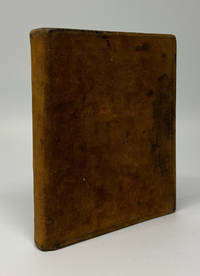
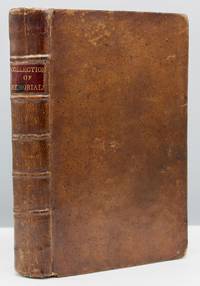
180011885New York: Printed by Isaac Collins 1800. Hardcover. Very good. First edition. viii 141 pages. Evans 37474. Printed on heavy paper with one or two leaves bound between each of the chapters. According to a note following the introduction "The book is printed with blank pages for the purpose of making future additions which are to be inserted in the manner and in the page in which they will be directed to be placed by the yearly meeting. No other additions are to be made.". The present copy is annotated and corrected in various ways presumably by someone who attended this annual meeting. On the first free endpaper there is a contemporary annotation: "Abraham Barker Lives in Ohio Huron Co. Town of Brunson." On the blank leaf following p. 50 there is the note: " To the monthly Meeting of . . . Dear friend We the subscriber A B son of . . . . do propose taking each other in marriage between us which we submit to your approbation then dated AB / CJ"; the inscription is somewhat illegible owing to some soiling; however it follows the chapter on "Marriages" and reproduces in part the "Form of Marriage Certificate" that appears on p. 49. In the next chapter "Removals and Certificates" at the top of the page the following annotation is added: "it shall be the duty of such monthly Meeting to accept the same unless there be some manifest objections." On p. 123 in the chapter "Queries" the following annotation appears at the bottom of the page: "B. Are the answers to the Queries introduced to the Quarterly and Yearly Meetings the substance of and founded on the answers from the prepositive Meetings." On the preceding page three lines of text have been x'ed out and an "a" has been inserted before the word "priest" in the second line from the bottom and the words "or magistrate" have been crossed through. And on p. 124 the last page of this chapter the entire ten lines of text have been crossed out. Similar crossings have been made to the chapter "Meetings of Ministers and Elders". <br /> <br /> It would appear that these annotations and corrections were made by one of those attending the Meeting in New York presumably perhaps Abraham Barker. The chapters in the book cover the following topics which however do not appear in the order given in the Table of Contents: Appeals Apprentices Books Burials Certificates Civil government Children Dealing with offenders Differences and Arbitrations Diversions Defamation and detraction Days and times Distilled spirits &c. Donations Elders Gaming Meetings for worship for discipline of ministers and elders for sufferings; Ministry Meeting-houses and ground Marriages Memorials Overseers Oaths Poor Plainness Priests wages or hireling ministry Queries Requests to be received into membership Removals Scandal publick Slavery Schools Sufferings Subscriptions Scriptures of the Old and New Testament Taverns Trade and commerce Women's meetings War Wills. In the short chapter on "Slavery" it is stated: "No friend is to import buy or sell negroes or other slaves; or hire any that are held in bondage; or wake any that are young or others by indenture or otherwise unless they are first set free. Any friend disregarding the advice above expressed after deliberate dealing with except satisfaction be given is to be disowned. . . ." The Meeting House on Pearl Street was established in 1795-96 but demolished in 1828. <br /> <br /> Light foxing but a very good copy of a rare publication very few locations known including AAS and Haverford College. Printed by Isaac Collins hardcover
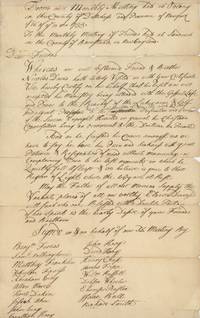
1755List2976Dutchess County New York 1755. Single sheet measuring 7 ¾ x 12 ½ inches. Folded and quite torn at folds; very good. A letter signed by the members of the Oblong Monthly Meeting of Friends in New York to members of the Sandwich one in Massachusetts on the occasion of the death of Nicolas Davis 1690–1755 a member of the Sandwich meeting. Davis was well-respected in his community and occasionally traveled to minister; he died in Quaker Hill where the Oblong Meeting House is located on such a trip. The Oblong Friends remember him:<br /> <br /> “His visit was well accepted his ministry being attended with the Gospel Life and Power to the Reproof of the Lukewarm & Self Indulgent Professers to the instruction of the weak and to the Edification and Comfort of the Sincere & uprightâ€.<br /> <br /> One of the letter’s signers Benjamin Ferriss is likely the same Benjamin Ferris who was one of the first Euro-American settlers of Quaker Hill arriving in 1728. The letter has eighteen other signatories: John Hoag Samuel Nothingham David Hoag Matthew Franklin Henry Chase Zebulon Farriss James surname illegible Abraham Ewing Wilm Buffett Allen Moore Dobson Wheeler Tim. Dakin Ebenezer Peaslee Josiah Akin Haas Bull. John Ewing Richard Smith and Jonathan Hoag. Of interest to scholars of Colonial-era Quaker history and New York State history. unknown
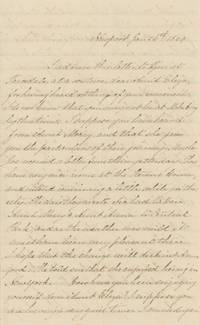
1871List3241Rhode Island Massachusetts and New York 1871. Thirty-two letters two apparently missing final pages; with fifteen pages of incomplete letter material. Excellent to Near Fine. Letters from some of the young ladies of the Hazard family primarily Gertrude Minturn 1843–1877 Anna Peace 1845–1868 and Esther Robinson 1848–d. Hazard with some from other family and friends. The family was descended from Thomas Hazard one of the founding settlers of Newport Rhode Island.1<br /> <br /> The girls were educated and often write from school; Anna and Esther attend the ‘Friends School’ in Providence which is probably the Moses Brown School and Gertrude attends Dr. Dio Lewis’s School for Young Ladies in Lexington Massachusetts. Founded by Diocletian Lewis a temperance and physical culture advocate the school incorporated his exercise system developed to condition weaker individuals. Gertrude describes a regimen of thirty minutes of walking plus an hour and a half of exercise and discusses Dr. Lewis:<br /> <br /> “Dr Lewis gives familiar lectures on any subject which the scholars propose. He is a very pleasant genial man and takes part in the games & dancing with the greatest spirit. There are about 20 scholars. Some of them board in the village but are subject to the rules of the school. This building is very large and is mostly occupied by the patients of Dr Lewis’ ‘Movement Cures’ to whom most of his time is devoted. The scholars and patients associate together. Indeed we are under very little constraint the teachers leaving our actions to be regulated by our own sense of propriety; and they seldom find occasion to reprove the scholars for misdemeanors.†November 23 1864<br /> <br /> Meanwhile Anna and Esther’s education is more on the religious side; Esther writes:<br /> <br /> “We have not been to meeting very often since we returned from our lovely visit to Newport but the first Sunday morning I did think all the time of it as I said I was going to. We were edified this morning by a sermon from Elizabeth Meader or rather a torrent of noise so that I am nearly deafened now. I don’t think I ever heard a more horrible combination of sounds from the mouth of any human being.†January 8 1865<br /> <br /> Though speaking in tongues is most strongly associated with Pentecostalism it is not unheard of in Quakerism. In his book of genealogy and reflections the girls’ father Thomas Hazard 1797–1886 connects the family’s “strong religious tendencies†to his own interest in spiritualism.2 This interest in mediumship comes up several times in the letters first in 1864 when one of the girls reports that “Pa writes us that at a circle which he attended a few days ago a clairvoyant medium described our house at Vaucluse perfectly†February 24 1864 and later when one of the girls attends a circle with their father in Philadelphia:<br /> <br /> “Yesterday morning Pa & I had a sitting with a Mrs. Robinson a trance speaking medium. The communication from mother was the most beautiful I ever heard. She spoke to us just as she used to on earth using the same expressions. It seemed as if I could almost see her – we are going again on Monday.†February 8 1867<br /> <br /> That is the pair spoke to Frances Minturn Hazard who had died in 1854.<br /> <br /> Of interest to researchers of the Hazard family and Rhode Island Quakers.<br /> <br /> 1 Caroline Elizabeth Robinson The Hazard Family of Rhode Island 1635–1894 Printed for the Author 1896.<br /> 2 Thomas R. Hazard Recollections of Olden Times Sanborn 1879 228. unknown
46400295, Londres, chez David Fowler, de l'Imprimerie de J. Cooper, 1791; in-12, plein maroquin rouge, guirlandes dor., dos orné, tranches dorées. (Reliure de l'époque). 286 pp., 1 f. errata. EDITION ORIGINALE et seule parue. A la fin du volume l'éditeur Fowler annonce une édition en anglais de l'ouvrage "actuellement sous presse". Elle ne semble point avoir paru. Le Catal. de la British Library (cote 527 h.26) ne mentionne que l'édition en français. L'éditeur précise que l'ouvrage fut composé plusieurs années avant la Révolution française "il allait paraître lorsqu'elle survint. J'en suspendis alors l'impression afin de voir quelle tournure ce grand événement prendrait et quelles facilités il en résulterait pour l'introduction d'un pareil ouvrage dans un pays où autrefois il eut été proscrit et brûlé. Je fus si frappé des sages décrets de l'Assemblée Nationale Conformes aux vœux formés dans cet opuscule…". Nous n'avons trouvé aucun renseignement sur l'auteur, un certain Poopds, un Quaker familier de la langue française. En confiant son manuscrit à l'éditeur peu avant son décès, l'auteur a exigé le secret sur son nom. Violent pamphlet, inspiré par la philosophie des Lumières, contre les préjugés catholiques, la superstition, l'imposture des prêtres, le fanatisme et la répression préjugés des intolérants, paganisme des prêtres, commémoration du fanatisme pour la Terre Sainte, la Bible n'est pas un livre divin, miracles supposés, moines dangereux, réfutation de quelques erreurs de Locke, conseils pour un prince éclairé, etc. Ce livre est très rare. Très bel exemplaire en maroquin de l'époque.
171521205London 1715. 4pp. Printed in two columns. Disbound. Small folio. Early folds and early stab holes in left margin. Some foxing. One of Two Known Copies<br/> <br/> A rare and expansive appeal to Parliament against the 1715 bill to renew the Quakers' right to the "solemn affirmation" in place of the legal oath. In 1696 after experiencing decades of exclusion and imprisonment for conscientiously refusing to take loyalty and court oaths Quakers were granted the right by an act of Parliament to take a "solemn affirmation" in legal situations in place of an actual oath. In 1715 a bill was under consideration in Parliament to renew that act indefinitely. Significantly longer than most lobbying documents from this time this petition asks that Parliament only extend the act if the affirmation be made "of no Force where they are concern'd in Interest but where they only Affirm as Witnesses between others there being no Temptation for them to Lye when it brings no Profit to them." Many Quakers by this time had achieved significant prosperity in manufacturing and commerce adding fuel to their enemies' resentment. The author of this pamphlet charges various Friends with hypocrisy greed and swindling and reprints an earlier petition describing six widows of commanders of two "Guinea ships" allegedly defrauded by Quakers including one Quaker from Maryland. Not listed in Joseph Smith's Biblioteca Anti-Quakeriana or A Descriptive Catalogue of Friends' Books. ESTC records only one copy at Oxford. unknown
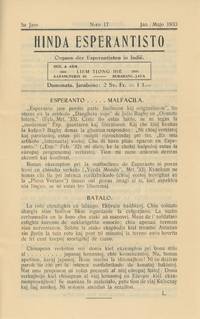
1947List2844Austria; Java Indonesia; London England; and Los Angeles California 1947. Sixteen pieces: two “Friends’ Esperanto Society†bulletins 8 x 12 ½ inch each; two letters 8 ½ x 11 inch each; seven “Hinda Esperantisto†pamphlets 5 ½ x 8 inch four pages each; two “Declaration†forms 4 x 6 inches; one BES pamphlet 4 ½ x 6 inches eight pages; one set of tickets for membership information 2 x 5 inches missing one tear-off ticket and one “Universala Ligo†membership card for 1947 3 x 4 ½ inches. Folded; some chipping and tearing at edges. Overall excellent to near fine. Esperanto is an artificial language created by Polish physician Ludwik Zamenhof 1859–1917 in 1887. Zamenhof intended Esperanto to be a universal second language; his experiences growing up Jewish in the Russian Empire among Russian Polish German and Yiddish speakers—all of whom regarded each other at best with suspicion—led him to believe that an easily-learned neutral second language could by contrast inspire unity between all people. Offered here is a small collection of materials related to various Esperanto societies: the “BES†a Czech group the Universal Esperanto Association the Friends’ Esperanto Society the Esperanto Club of Los Angeles and Hinda Esperantisto – “Indian Esperantist†based in Java Indonesia.<br /> <br /> These materials written largely in Esperanto note that most quotes herein are translated are mostly typical club bulletins advertising events announcing members’ news and reminding the reader of upcoming fees. The BES pamphlet besides advertising its Adresaro member directory solicits donations for a “living monument to Esperantoâ€â€”a headquarters—to be built in PotÅ¡tejn in Czechia<br /> <br /> “in the shape of a five-pointed star which would become a real home for all those who love goodness beauty health truth and progress. The stone-like majestic white building will shine brightly in a beautiful circle from a moderate slope and the fragrant forest behind it will form a charming background.†1932<br /> <br /> This utopian vision was likely prevented at least in part by the Nazi occupation of the country. Esperanto speakers including Zamenhof’s family in particular were among their many targets. The effort to purge the universal language from Europe was clearly not successful; a postwar letter from a language teacher in Austria to a gentleman in California included in this collection notes that the Californian’s address had been printed “in the magazine ‘Die Weltsprache’†– that is “The World Language†February 14 1947.<br /> <br /> Esperanto’s egalitarian and pacifist aims form a large part of its appeal to Quakers. It is unclear whether the Friends’ Esperanto Society which authored two of the items in this collection is the same as the Kvakera Esperanto-Societo which was founded in 1921 and is still active. The March 1935 bulletin announces the F.E.S.’s annual meeting at Friends House in London the headquarters of the Religious Society of Friends in Britain. An obituary for Wilson Henry Sturge the Society’s Vice President remarks on “his desire for international friendship and understanding through Esperanto†March 1935. The January 1936 bulletin calls members to petition their local Registrar of Education for Esperanto to be taught in high schools a request echoed by the Universala Esperanto-Asocio’s declaration form calling on the United Nations to “help to spread the use of this language in every possible way†including supporting its teaching in schools in order “to facilitate communication between the peoples of the world and to promote social progress.â€<br /> <br /> George R. Thompson’s letter to the Los Angeles Esperanto Club as its President strikes a similarly idealistic tone. He gives Club members his “Decalogue†finishing with an exhortation to: “10. Fix our eyes directly on our dear goal the universal brotherhood of humanity and global peace – through linguistic mutual understanding†August 1 1933.<br /> <br /> “Hinda Esperantisto†written by Liem Tjong Hie is somewhat more polemical. Its announcements include news from the Manchurian Federation of Esperantists who proposed to make Esperanto the region’s official language and “to abolish the English language†Jan-May 1933. It criticizes “the European progressive writers†especially the Hungarian Esperantist Kálmán Kalocsay for making the language more difficult for learners. Liem also writes mysteriously:<br /> <br /> “The world does not know that the Belgian Esperanto Institute dir. Frans Schoofs Antwerp is a physically rotting company. The shamelessness of the leaders is shown by the fact that they are so heroic in victimizing distant people knowing that they cannot do anything against them. A black mark to the apparent reputation of the leaders!â€<br /> <br /> These pamphlets also include side-by-side Indonesian and Esperanto blurbs including a review of a new book for Malaysian Esperanto learners – Esperanto caught on quickly in Asia where it still enjoys widespread popularity. <br /> <br /> Of interest to Esperantistoj and historians of Esperanto. unknown
171521197London 1715. Broadsheet. 1p. plus printed docket title on verso. Dbd. Early folds and early stab holes in left margin. Moderate toning and foxing. Very good. Quakers seek relief on affirmation.<br/> <br/> In 1696 after experiencing decades of exclusion and imprisonment for conscientiously refusing to take loyalty and court oaths Quakers were granted the right by Parliament to take a "solemn affirmation" in legal situations in place of an actual oath. Over the next two decades numerous Quakers objected to the invocation of God's name in the official affirmation and refused it as they had the oath. In 1715 a bill was under consideration in Parliament to renew indefinitely the Quakers' right to the affirmation. The Quaker authors of the present petition support the bill but ask that it be amended with a revised affirmation that does not include the name of God. ESTC lists copies at four institutions: the British Library the Library of the Religious Society of Friends the National Library of Scotland and Oxford.<br/> <br/> Smith A Descriptive Catalogue of Friends' Books Vol. II p.265 listing its imprint at "about 1721". unknown
1910List2847Bryn Mawr Pennsylvania; and others 1910. Eleven photographs approximately 7 x 9 ½ inch and smaller. With stamps for Brown Brothers Illustrations Bureau and E.J. Reily verso; most with captions verso. Most with chipping and wear at edges; overall good. Open-air schools became popular in the United States in the early 20th century in response to public health crises including tuberculosis.1 Conducting lessons in open-air classrooms reduced the transmission of diseases which allowed many children to attend school despite their often chronic illnesses. Offered here are eleven photographs of open-air schools three of which are identified as the Phebe Anna Thorne Model School at Bryn Mawr.<br /> <br /> The Phebe Anna Thorne Model School opened in 1913 under the direction of the College’s president Carey Thomas using funds donated by Samuel Thorne in memory of his sister Phebe Anna.2 The Thornes were an affluent New York Quaker family; Phebe Anna 1828–1909 was the only daughter to survive to adulthood and was a philanthropist and supporter of progressive social causes.3 <br /> <br /> The school was part of Bryn Mawr’s Department of Education which trained its students in teaching younger pupils rather than those of highschool or college age – the students in most of these photos are probably in about 4th or 5th grade.3 It also allowed testing of more cutting-edge pedagogical practices: the structure of the school was quite experimental including open-air classrooms outdoor naptime a flexible curriculum and less formal assessment. <br /> <br /> Of interest to scholars of the history of education especially experimental pedagogy.<br /> <br /> 1 Sherman C. Kingsley & F.B. Dresslar “Open-Air Schools†Department of the Interior Bureau of Education Bulletin 23 1916.<br /> 2 Cornelia Meigs What Makes a College A History of Bryn Mawr The MacMillan Company 1956.<br /> 3 Olive Floyd Phebe Anna Thorne: Quakeress Privately Printed in Rye New York 1958. unknown
1725035981London: Assigns of J. Sowle 1725. Second Edition Corrected . Original Full Leather. Very Good. 12 7/8" Tall. X 699 Xvi Index 4 Pp Catalog At End. Original Simple Full Calf Five Bands Morocco Spine Label Yellow Endpapers. "Second Edition Corrected". Worn Fraying At Corners Front Hinge Patly Cracked Nicely Refurbished. Contents Clean Slight Wear Pp 123-126 Partly Detached. Original Signatures Of Joseph Pike On Front Pastedown Title Page 1 And Rear Endpaper; Pike D. 1729 Wrote "An Epistle To The National Meeting Of Friends In Dublin" One Of Three Important Early Treatises On Quaker Conduct The Other Two Written By Penn And Barclay. Additional Ownership Information Of The Quakers Sarah And Margaret Beale Myrtle Hill Terrace CorkAnd John And Fanny Edmondson Dublin 1860. An Exceptional Association Copy Of An Important History. <br/> <br/> Assigns of J. Sowle hardcover
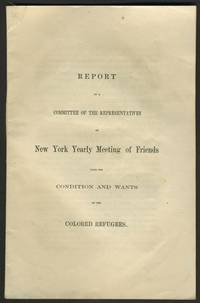
186227695New York: The Religious Society of Friends 1862. First printing. Pamphlet. Very good condition. Three reports from the Quakers during the Civil War on their ministry amongst the "Colored Refugees" of Virginia & Washington DC reporting on the conditions and needs at Fort Monroe Camp Barker Craney Island Alexandria Hampton Norfolk etc. Conditions are tough in the refugee camps but none wish to return to where they have fled from. "Slaves have been abandoned and we must help. Don't we owe them for our prosperity--- enjoying indirectly from the unrequited labor of these people." <br /> <br /> Encyclopedia Virginia writes on their website- "In this report dated May 1864 the Committee on Colored Refugees who were representatives of the New York Yearly Meeting of Friends gives its assessment of the needs of the formerly enslaved people escaping behind Union lines and how Quaker charity efforts were meeting them in contraband camps across Virginia including Alexandria. One of their agents Harriet Jacobs wrote her own letter documenting what she saw in Alexandria and Washington D.C. For Quakers the abolition of slavery was a moral and religious imperative."<br /> <br /> Title continues: Address of the Representatives of New-York Yearly Meeting of Friends to Its Members.; Third Report of Committee of the Representatives of New York Yearly Meeting of Friends upon the Condition and Wants of the Colored Refugees<br /> <br /> 1862 Report OCLC: 21308787 8vo 30pp black title on cream paper wraps saddle stitched. Clean throughout. 1862 Address OCLC: 25519700 8vo 10pp. October 24th 1862. 1864 Third Report OCLC: 25113848 cites 9 copies; 8vo 23pp May 1864 slt. marked wrapper. <br /> <br /> All in their original self wrappers overall in very good condition. The Religious Society of Friends unknown
1822415530Richmond Ind: Elijah Lacey Printer 1822. Unbound. Very Good. First Indiana edition. Bifolia folded to make four pages. Old folds age-toning and small tears about very good. OCLC locates no physical copies. Elijah Lacey, Printer unknown
184420220422London: Edward Marsh 1844. First Edition. Hardcover. Fine. Octavo; 4 247 pages publisher's embossed black cloth newly rebacked in leather <br /> <br/><br/>An excellent precis of the history of the treatment of the Indian tribes east of the Mississippi River. The 2 fine maps are the frontispiece 16x11 cm. of the territories several Indian nations occupied previously to the settlement of the English colonies in America. The large folding map 46x43 cm also in color shows the territory NOW occupied by the natives In addition to the areas east of the Mississippi River this volume republished the report of two Quakers John Lang & Samuel Taylor who traveled in 1842 west of the Mississippi visiting the Winnebago Shawnees Kickapoos Delawares Kansas Osages Cherokees and Choctaws. Sabin 86572; Phillips Maps of America p.604; see also Howes L72; not in Field; Graff 2386 2387; Hubach p. 95; Jones 1073; Rader 2199; Wagner-Camp-Becker 96; Streeter 1807; Eberstadt 137:332; Not in Siebert Catalogues . The map of North America depicts an independent Texas extending north nearly to the Oregon border and northwest to Russian America. Edward Marsh hardcover
First edition, ii,238pp., cont. calf, rebacked, rubbed. The first Quaker bibliography. "Hereby may be seen, not only what Books have been Printed of the Sufferings which many of the said People underwent, but also the many Warnings to the Governments and Rulers, &c. Concerned..." ? Advertisement of verso of title.
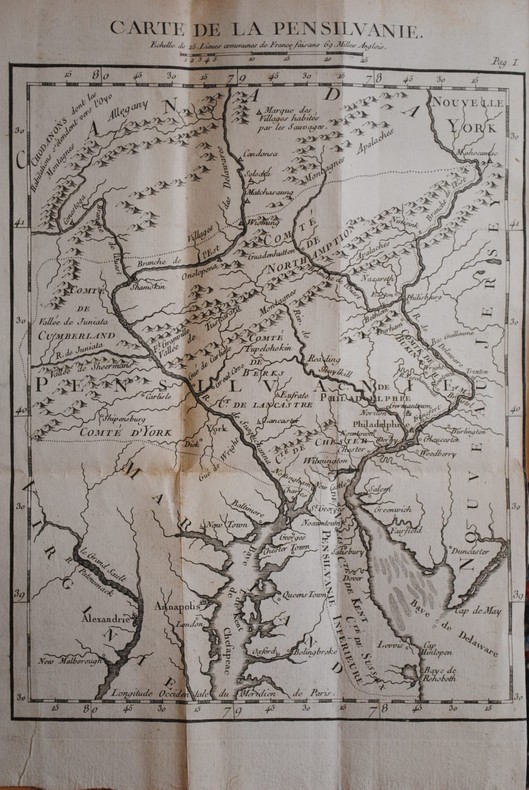
17684A-8PARIS, GANEAU (DE L'IMPRIMERIE D' HOURY), 1768. IN-8° (185x115mm), XX - 372 - 2ff., 1 CARTE DÉPLIANTE, FAUX TITRE ET TITRE TACHÉS, PIQÛRES, TRÈS CLAIRE MOUILL. MARG. AU MILIEU DE L'EXEMPLAIRE. BROCHÉ, DOS SALI. UNIQUE ÉDITION DE CET OUVRAGE BASÉ SUR CELUI DU BOTANISTE PEHR KALM POUR L'HISTOIRE NATURELLE ET SUR LE VOYAGE DE GOTTLIEB MITTELBERGER POUR LA PARTIE CONSACRÉES AU QUAKERS. ILLUSTRÉ D'UNE CARTE DÉPLIANTE. UNIQUE FRENCH EDITION OF THIS DESCRIPTION OF PENNSYLVANIA BASED ON THE WORKS OF KALM AND MITTELBERGER. ILLUSTRATED WITH 1 FOLDING MAD. SEWED (FIRST LVS STAINED, FOXING).
183415580<p><b>1834 QUAKER anti Slave Trade Slavery Book of Discipline War Sexuality RARE</b></p><p>'<i>Book of Discipline'</i> is one of the many books published by the Quakers in the 19th-century. Throughout this era the Quakers or Society of Friends held a yearly meeting to decide on books that would help define what it means to be a Quaker. Books include rules faith and practice principles disciplines and much more. </p><p>This particular issue includes an important section on the <b><u>Quaker views of slavery and slave trade.</u></b></p><p>Item number: #15580</p><p>Price: $499</p><p>Quakers</p><p><b><i>Rules of discipline with advices being extracts from the minutes and epistles of their yearly meeting held in London from its first institution.</i></b></p><p>London: Darton and Harvey 1834.</p><p><br /></p><p><u>Details</u>:</p><p>· Collation: Complete with all pages</p><p>o 2 xxviii 335 1</p><p>· Language: English</p><p>· Binding: Leather; tight and secure</p><p>· Size: ~11.25in X 8.75in 28.5cm x 22.5cm</p><p>Our Guarantee:</p><p>Very Fast. Very Safe. Free Shipping Worldwide.</p><p>Customer satisfaction is our priority! Notify us with 7 days of receiving and we will offer a full refund without reservation!</p><p>15580</p><p>Photos available upon request. </p> Darton and Harvey hardcover
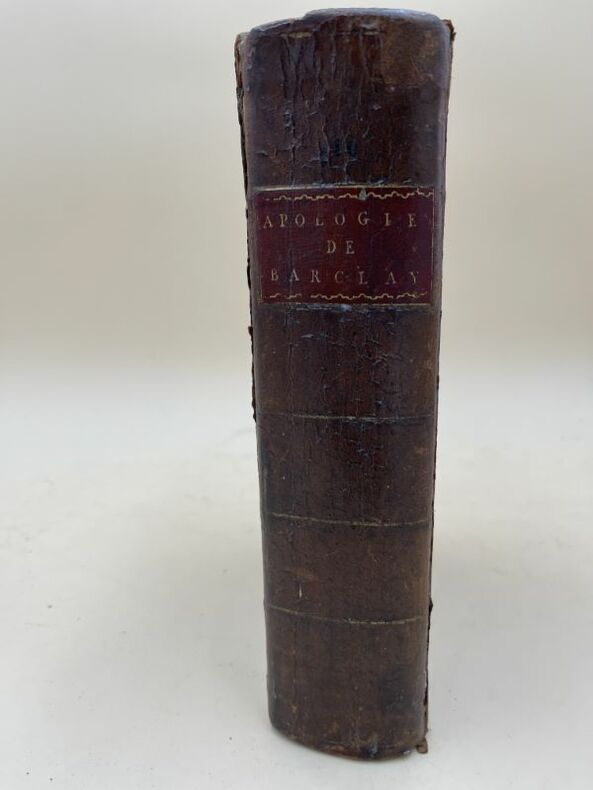
17979994545Imprimerie Jaques Phillips Londres, Imprimerie Jaques Phillips et Fils, 1797. Fort In-8 relié pleine basane de l'époque, dos lisse, filets dorés, pièce de titre rouge. XXXII + 652 pages. Index des textes de l'Ecriture cités dans l'ouvrage, table des auteurs cités et table des choses principales. Quelques rousseurs et brunissures, reliure légèrement usagée sans gravité, mors fragile. Bon exemplaire malgré les défauts signalés. Ex-dono du temps "Témoignage d'amitié de Stéphane GRELLET, de NEW YORK dans la NOUVELLE ANGLETERRE". Un ouvrage essentiel sur le sujet qui eut un grand retentissement en son temps. Ecrit à l'origine en Latin et en Anglais, l'ouvrage fut traduit en Allemand, Hollandais, Espagnol et cette présente édition française traduite par E. P.BRIDEL...pour l'instruction des étrangers.
Londres, Imprimerie Jaques Phillips et Fils, 1797. Fort In-8 relié pleine basane de l'époque, dos lisse, filets dorés, pièce de titre rouge. XXXII + 652 pages. Index des textes de l'Ecriture cités dans l'ouvrage, table des auteurs cités et table des choses principales. Quelques rousseurs et brunissures, reliure légèrement usagée sans gravité, mors fragile. Bon exemplaire malgré les défauts signalés. Ex-dono du temps "Témoignage d'amitié de Stéphane GRELLET, de NEW YORK dans la NOUVELLE ANGLETERRE". Un ouvrage essentiel sur le sujet qui eut un grand retentissement en son temps. Ecrit à l'origine en Latin et en Anglais, l'ouvrage fut traduit en Allemand, Hollandais, Espagnol et cette présente édition française traduite par E. P.BRIDEL...pour l'instruction des étrangers.
Les Quakers a leur frère V…. Lettres plus philosophiques… Un volume di 108 pagine. Legatura moderna in tela. L'opera è indirizzata a Voltaire, ed utilizza la visione dei Quakers degli Stati Uniti per combattere le idee illuministe e razionaliste di Voltaire. Che rispose a sua volta all'auore con una lettera. Non comune.
1789List2987Philadelphia Pennsylvania 1789. Single three-page letter measuring 7 ¾ x 9 ¾ inches. Folded with large tears at folds; excellent. A letter from H. Cathrall in Philadelphia to her friend Amey Thurston dated October 20th 1789. The letter discusses her health and the health and lives of their mutual friends. She also describes her experience of hearing ministry at a women’s Quaker meeting:<br /> <br /> “our yearly Solemnity was uncommonly large and much sisterly condescension was comfortingly evidencd; and thro the condescension of Isarels Israel’s King and Shepherd we were made in some sittings reverently to rejoice in that the Lord in wondrous Mercy had not forgotten Sion ‘nor yet in Anger cast off his People’~â€.<br /> <br /> Though Quaker worship meetings did not exclude women Philadelphia did have a women’s monthly meeting as well; Haverford College holds its membership book for 1793 Cathrall does not appear in it but at least one other name mentioned in her letter does.<br /> <br /> Of interest to scholars of Philadelphia’s long Quaker history especially the role of Quaker women. unknown
1828415545Richmond Indiana: no publisher 1828. Softcover. Very Good. First edition. Octavo. 26pp. Stitched self-wrappers. Age-toned light dampstain and creases at the edges of some of the leaves near very good. Quaker's report including sections of the care of Native Americans and freed Africans. no publisher] unknown
iv, [5]-186, [2]pp. 3 Works bound in one, 12mo (170 x 100 mm), cont. calf, gilt, a nice copy.
pp. lix, 679, (xxviii). Folio. Engraved bookplate of: John Glaisyer, Chymist & Druggist, Brighton" Engraved armorial bookplate of Francis Frederick Fox. Contemporary full leather binding, joints cracked. A nice copy of an important and scarce Quaker work. George Fox (1624-1691), was the founder of the Society of Friends (Quakers). By nature serious and contemplative, at the age of 19 he entered upon a wandering quest for spiritual enlightenment. In 1646 he underwent a mystical experience that convinced him that Christianity was not an outward profession but an inner light by which Christ directly illumines the believing soul. Revelation was for Fox not confined to the Scriptures. In 1647 he began to preach. Although often the victim of mob brutality and eight times imprisoned between 1649 and 1675, Fox won many followers, especially among groups of separatists. In 1668 he prepared the first pattern of organization, which was for some years to serve as the discipline of the Society of Friends. The London Yearly Meeting was started in 1671. To confirm his followers in their beliefs and to spread the truths, Fox went in 1671 to the West Indies and to America, where he made arduous journeys to various colonies scattered between New England and North Carolina. Later he twice visited Holland. His sincerity, serenity, fearlessness, and powerful preaching are attested to by a number of his contemporaries. This Journal, with a preface by William Penn, was first published in 1694. An early owner of this book was Francis Frederick Fox (1832-1915) the 2nd son of Francis Ker Fox of Brislington House. He was an oil and colour merchant, President of the Grateful Society in 1869. Sadly, his wife Alice died in childbirth in 1870 and he was left a widower with six children. He was Master of the Society of Merchant Venturers in 1878 & 79 and Sheriff in 1894. He was a J.P. for Bristol and for Gloucestershire and an Alderman for the city from 1865. He wrote extensively on local history. Perhaps he was a descendant of the great Quaker George Fox. Smith p. 690; Sabin 25352. **PRICE JUST REDUCED! PA62
178715881Philadelphia: Printed by Joseph Cruikshank 1787 First edition. Contemporary calf burgundy morocco spine label. Octavo. With alphabetical index. Bottom corners rubbed small chip at foot of spine some light browning. Contemporary ink inscription on front free endpaper. A very good copy. An interesting collection of short biographies of early American Quaker ministers. Over fifty of the people discussed are women. Printed by Joseph Cruikshank unknown
18472345<p>Boston: Printed by S.N. Dickinson & Co. 1847.</p><p>A full-throated cry against slavery. The Quakers who had long opposed slavery wonder how a supposedly Christian nation could allow such evil to exist. "From the border slave states to the far south and southwest the vessels of the slave-trader regularly ply laden with youthful victims reared like cattle for the market" page 4. <br /><br />This pamphlet is scarce to the market.</p><p>PHYSICAL DETAILS: 12mo 7 1/4 x 4 5/8 inches; 183 x 119 mm 12 pages in original printed wrappers softcover.</p><p><br />CONDITION: Slight soiling and creasing to wrappers horizontal fold probably for mailing. Very Good or better.</p> Printed by S.N. Dickinson & Co. paperback