M. MASSILLONLivre Rare Book

33 résultats
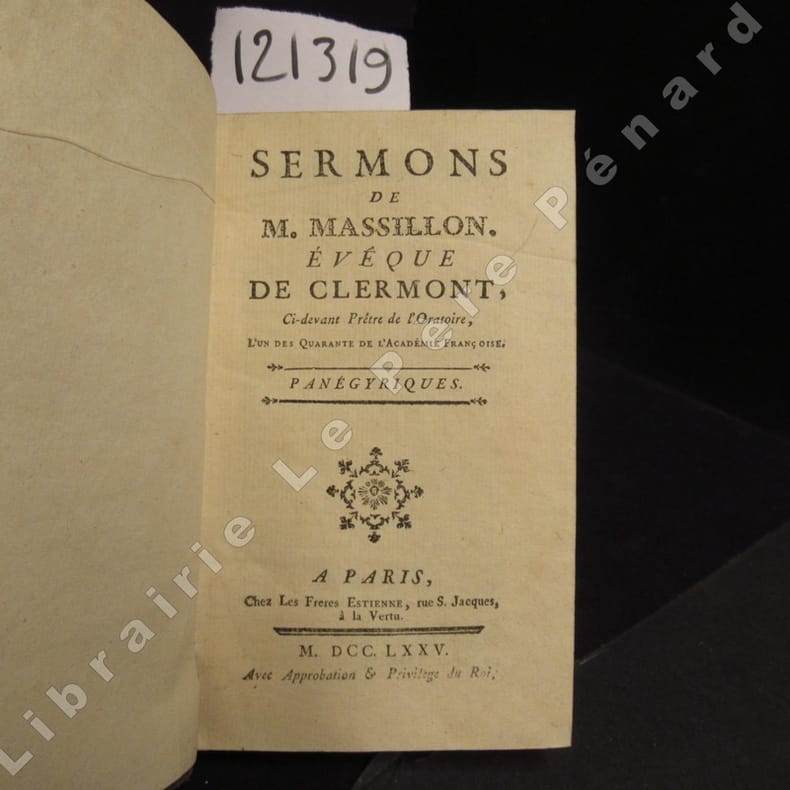
17751213181775 A Paris, chez Les Frères Estienne - M. DCC. LXXV. (1775) - 4 volumes in-12 (environ 17,5 x 10,5 cm), plein veau marbré de l'époque; dos à 5 nerfs avec pièce de titre et de tomaison bleue, titres, fleurons et caissons dorés; tranches mouchetées; roulettes dorées sur les tranches - 391 pp. + 369 pp. + 383 pp. + 395 p.
17751213191775 A Paris, chez Les Frères Estienne - M. DCC. LXXV. (1775) - In-12 (environ 17,5 x 10,5 cm), plein veau marbré de l'époque; dos à 5 nerfs avec pièce de titre et de tomaison bleue, titres, fleurons et caissons dorés; tranches mouchetées; roulettes dorées sur les tranches - 312 pp.
17751099061775 A Paris, chez Les Frères Estienne - M. DCC. LXXV. (1775) - In-12 (environ 17,5 x 10,5 cm), plein veau marbré de l'époque; dos à 5 nerfs avec pièce de titre et de tomaison bleue, titres, fleurons et caissons dorés; tranches mouchetées; roulettes dorées sur les tranches - 311 pp.
17191193371719 A Paris, chez Charles Osmont, ruë S. Jacques, à l'Ecu de france - M. DCC. XIX. (1719) - In-12 (environ 17 x 10,5 cm), plein veau brun de l'époque, dos à 5 nerfs avec pièce de titre rouge, titre, tomaison, caissons et fleurons en dorés, tranches mouchetées rouges - 385 pp.
1741RO20009055Non Renseigné. 1741. In-18. Relié plein cuir. Etat passable, Plats abîmés, Dos abîmé, Mouillures. 428p, dos avec caisson et fleurons doré, pièce de titre sur cuir rouge, coins frottés, gros manque sur plats, coiffes frottées, épidermure sur dos.Les pages sont déchirées et tachées.. . . . Classification Dewey : 234-La foi
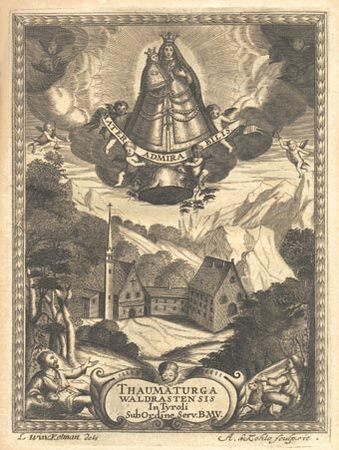
17084354Vetero-Pragae (Prague), Wolfgang Wickhart, 1708 ; in-4 ; cartonnage de papier marbré, pièce de titre havane (reliure fin XVIIIe - début XIXe siècle) ; (4) ff., 167 pp., (1) p. d'errata ; 8 magnifiques planches hors-texte de Johann Leonhard Winkelman, gravées par Antoine Kohl.
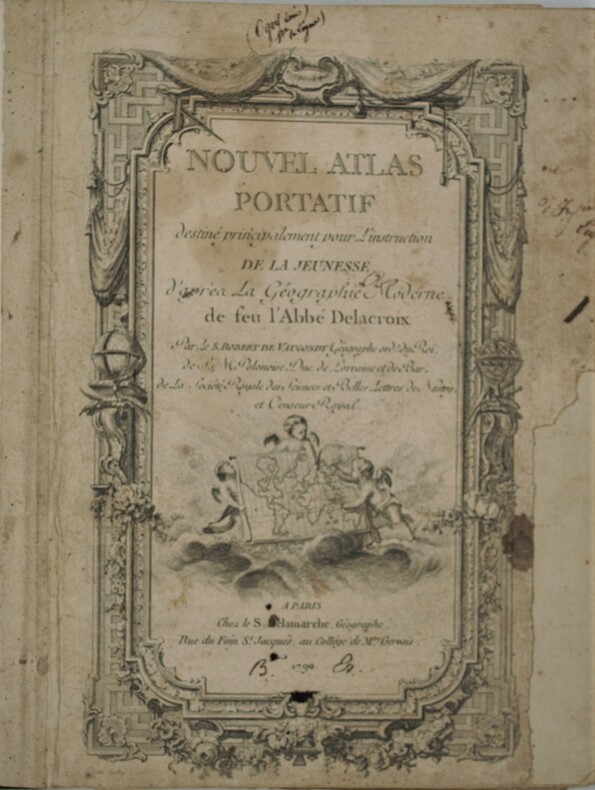
1790PHO-731Paris: Chez de S. Delamarche, Géographe, Rue du Foin St. Jacques, au Collège de Mtre. Gervais, 1790. in-4 (230x280) ,relié demi-daim époque , manque sur un coté [1-2, titre gravé] 3-6 [introduction gravée], [4, tableaux et listes gravés], 52 cartes doubles, gravées sur cuivre avec cartouches ornées, couleur du contour d'origine, gravées par E. Dussy, en fin d’ouvrage une grande carte dépliante de la Grèce par Barbié du bocage. rare atlas mis à jour par François Delamarche qui avait repris le fond de Robert de Vaugondy. Commentaires au crayon d’époque sur le dos de quelques cartes , quelques mouillures et taches, réparation au titre et à une carte.
1782046A46Barby Christian Friedrich Laux und in Leipzig in Commission bey Weidmanns Erben und Reich. 1782. 1782 pp. 592 64. Small 8vo. 185 mm. One leaf has a lower corner torn out effecting 9 lines of text. The binding's clasps have worn the preliminary and end leaves without loss of text. Early full leather binding; with remains of the original clasp mountings. Slight loss to top 1" of spine. Early pencil ownership of Abraham P. Moyers. August Gottlieb Spangenberg 1704-1792 was Count Zinzendorf's successor and bishop of the Moravian Brethren. In 1728 Count Zinzendorf visited Jena and Spangenberg made his acquaintance. In 1730 he visited the Moravian colony at Herrnhut. A "Collegium Pastorale Practicum" for the care of the sick and poor was in consequence founded by him at Jena which the authorities at once broke up as a "Zinzendorfian institution." Later his free lectures in Jena met with much acceptance and led to an offer from Gotthilf Francke of the post of assistant professor of theology and superintendent of schools connected with his orphanage at Halle. He accepted the offer and took up his duties in September 1732. But differences between the Pietists of Halle and himself soon became apparent. He found their religious life too formal external and worldly and they could not sanction his comparative indifference to doctrinal correctness and his incurable tendency to separatism in church life. After some false starts Spangenberg went to Herrnhut and found amongst the Moravians his life-work. He became its theologian its apologist its statesman and corrector through sixty long years. For the first thirty years 1733-1762 his work was mainly devoted to the superintendence and organization of the extensive missionary enterprises of the body in Germany England Denmark the Netherlands Suriname Georgia and elsewhere. During the second half of this missionary period of his life he superintended as bishop the churches of Pennsylvania. There he defended the Moravian colonies against the Indians became their apologist against the attacks of the Lutherans and the Pietists and did much to moderate the mystical extravagances of Count Zinzendorf. In 1777 Spangenberg was commissioned to draw up the Idea Fidei Fratrum or "Compendium of the Christian Faith of the United Brethren" which became the accepted declaration of the Moravian belief. As compared with Zinzendorf's own writings this book exhibits the finer balance and greater moderation of Spangenberg's nature while those offensive descriptions of the relation of the sinner to Christ in which the Moravians at first indulged are almost absent from it. - From Wiki. GER-GER1 Language: eng. Hardcover. Good. Barby, Christian Friedrich Laux, und in Leipzig in Commission bey Weidmanns Erben und Reich. 1782. hardcover