R.P. De CeriziersLivre Rare Book
16 résultats
1662AA475''Chez Christophe Iouvnel 1662 In-12°de 320 pp., Réf AA475'
16502682Paris Chez la Veuve Martin Durand 1650 Un volume in-12 plein vélin ivoire d'époque, dos lisse, titre manuscrit, page de titre, [14ff] de table et avant-propos, 410 pages. Bilingue latin français. Petits manques aux coupes, une petite tâche au plat inférieur, néanmoins bel exemplaire, rares rousseurs.
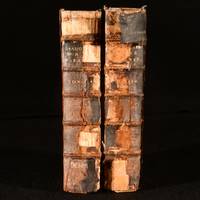
1683860F4Paris: Chez Pierre Le Petit 1683 . Leather. Fair. 8" by 5.5". None. The first two volumes only of a very scarce late seventeenth century French language edition of the writings of Saint Augustine. A French language edition of Augustine's sermons.The first two volumes only of this very scarce seven volume set in which the writings of the Catholic saint a theologian of Berber origins are translated into French.With the register 2 a-e8 A-2R8 2S4; 2 A-2X8. Collated complete. With the stamp of the St Augustine Abbey Ramsgate to the title page and final leaf of each volume and their bookplate to the front pastedown of each volume. Library markings to tail of volume I back strip.The first two volumes only of a very scarce work. In full calf bindings. Significant losses to back strips with head of volume II and tail of volume I back strip detaching. Joints starting. Front board of volume I somewhat tender with boards otherwise generally firmly held. Bookplate to front pastedowns. Internally generally firmly bound. Library stamp to title page and final leaf of each volume. Pages age toned with the odd spot and area of discolouration. Worming to the tail of each leaf of volume II up to leaf I3 not affecting text. Fair Chez Pierre Le Petit hardcover
165272736Roma y Madrid: Emmanuelem Fernandez 1652. Pergamino rígido. Emmanuelem Fernandez unknown
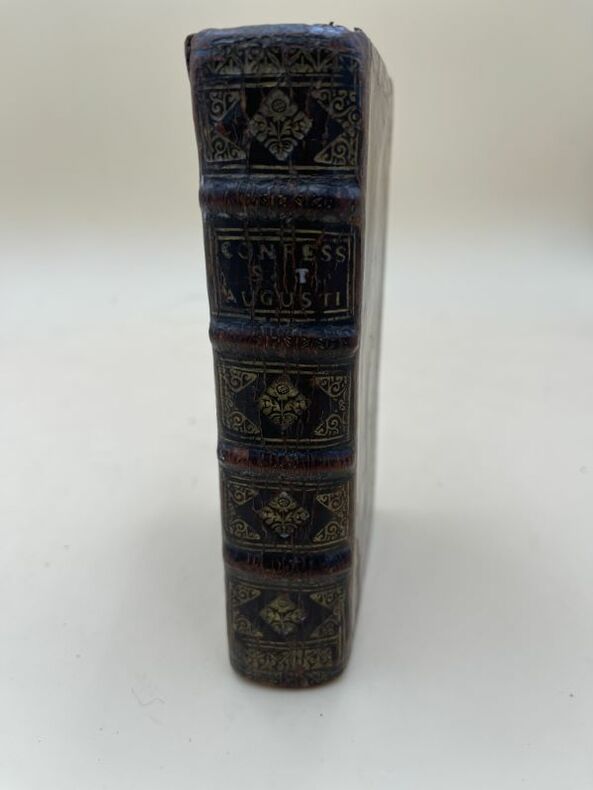
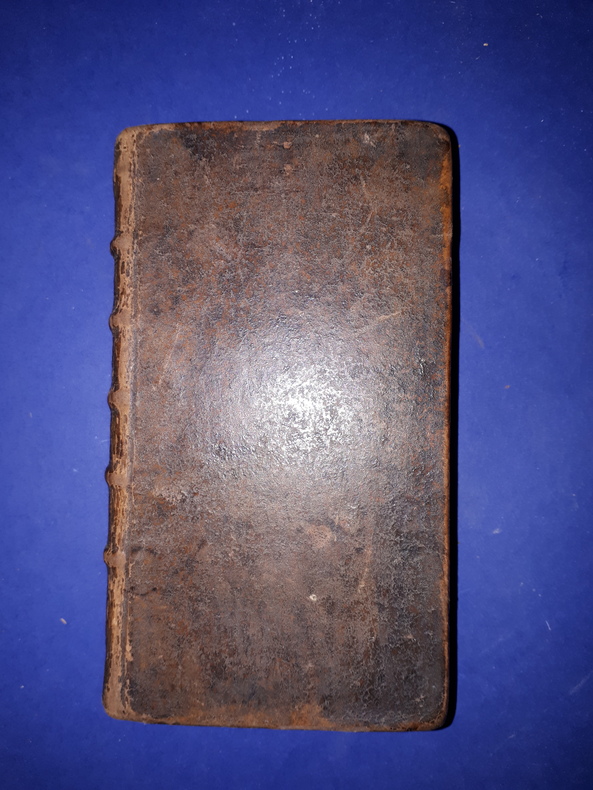
167525813paris Pierre Le Petit 1675 -in-12 PLEIN VEAU un volume, reliure d'époque plein-veau brun in-douze (binding full calfskin in-12) (9,6 x 17 cm), dos à nerfs (spine with raised bands), décoré "or" et à froid (gilt and blind stamping decoration), titre frappé "or" avec un filet "or" en encadrement, entre-nerfs à fleuron "or" dans un encadrement d'un filet "or" avec rinceaux "or" aux angles, filet à froid de part et d'autre des nerfs, roulette "or" en pied, trés léger manque de cuir à la coiffe de tête, mors fendus sur 3 cm en tête et en pied au premier plat mais la reliure est bien solide, coins écornés, Toutes tranches lisses dorées, Tampon Ex-Libris aux Armes en noir au dos de la page de titre : Bibliothèque du COMTE SIOC'HAN DE KERSABIEC [Kersabiec (comte Charles Siochan de), membre fondateur de la Société archéologique de Nantes et du département de la Loire-inférieure ], sans illustrations (no illustration) excepté une marque de l'éditeur en bas du Titre gravée sur bois en noir + bandeaux fronts de chapitres et culs-de-lampes historiés gravés sur bois en noir, [(30 p. de Tables) + 576] pages, 1675 Paris Pierre Le Petit Editeur,
1696104551Paris, Chez Jean de Nully 1696 In-16 17 x 10 cm. Reliure de l’époque veau havane marbré, dos à nerfs encadrés de fers dorés, pièce de titre maroquin grenat, XXV-606-[60] pp. Reliure sensiblement frottée, intérieur correct.
167149380<p>Paris: Chez Pierre Le Petit 1671. Hardcover. Collectible - Poor/No Jacket. 6.5x3.5x1.25 with 576 pages. full dark brown leather. Appears to be orginial covers. Front cover completely detached but present. Front free endpaper is missing and the upper part of the illustrated frontispiece is torn away. Owners name on title page. Pages have darkened. Text in French.</p> Chez Pierre Le Petit hardcover
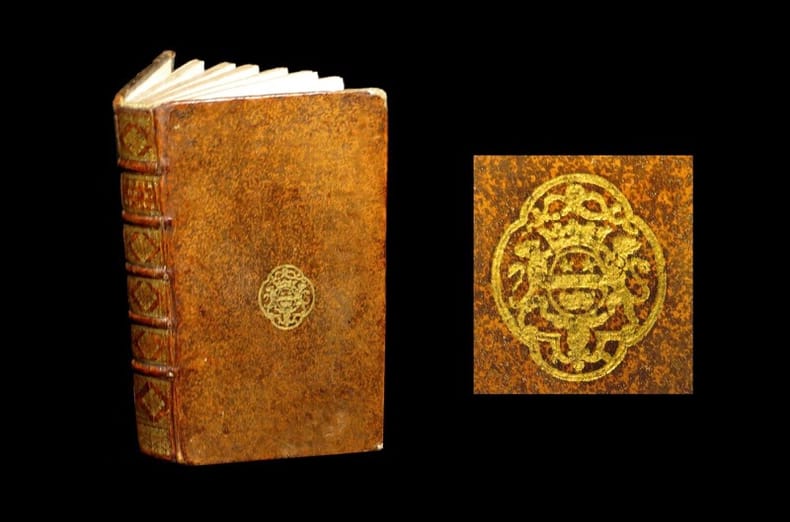
1686259111686. A Paris chez Jean-Baptiste Coignard 1686. Un vol. au format in-12 170 x 88 mm de xxxvi - 296 pp. 1 f. n.fol. et 1 f. bl. Reliure de l'ÂŽpoque de plein veau glacÂŽ et mouchetÂŽ havane plats ornÂŽs en leur centre d'armes ducales dorÂŽs au centre d'un ovale stylisÂŽ dorÂŽ dos ˆ nerfs ornÂŽ de filets gras ˆ froid filets en pointillÂŽs dorÂŽs caissons d'encadrement dorÂŽs large dÂŽcor fleuronnÂŽ dorÂŽ titre dorÂŽ palette dorÂŽe en queue roulette dorÂŽe sur les coupes tranches mouchetÂŽes. Exemplaire sous reliure aux armes ducales portÂŽes sur chacun des plats. Famille d'Auvray . ''On dira que toutes les conversions qui se font prÂŽsentement ne sont que des conversions feintes et qu'en pensant faire des catholiques on ne fait que des hypocrites. Mais on disait la mÂme chose des Donatistes et saint Augustin rÂŽpond dans ces deux Lettres ˆ Vincent et ˆ Boniface ˆ toutes sortes de raisons et les rÂŽfute d'une maniÂre qui ne souffre point de rÂŽplique''. Angles coupes et coiffe supÂŽrieure ÂŽlimÂŽs. Petit manque angulaire affectant un feuillet. Quelques discrÂtes rousseurs dans le texte. Du reste bonne condition. b42961 unknown
168625911A Paris, chez Jean-Baptiste Coignard, 1686. Un vol. au format in-12 (170 x 88 mm) de xxxvi - 296 pp., 1 f. n.fol. et 1 f. bl. Reliure de l'époque de plein veau glacé et moucheté havane, plats ornés en leur centre d'armes ducales dorés au centre d'un ovale stylisé doré, dos à nerfs orné de filets gras à froid, filets en pointillés dorés, caissons d'encadrement dorés, large décor fleuronné doré, titre doré, palette dorée en queue, roulette dorée sur les coupes, tranches mouchetées.
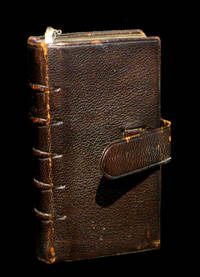
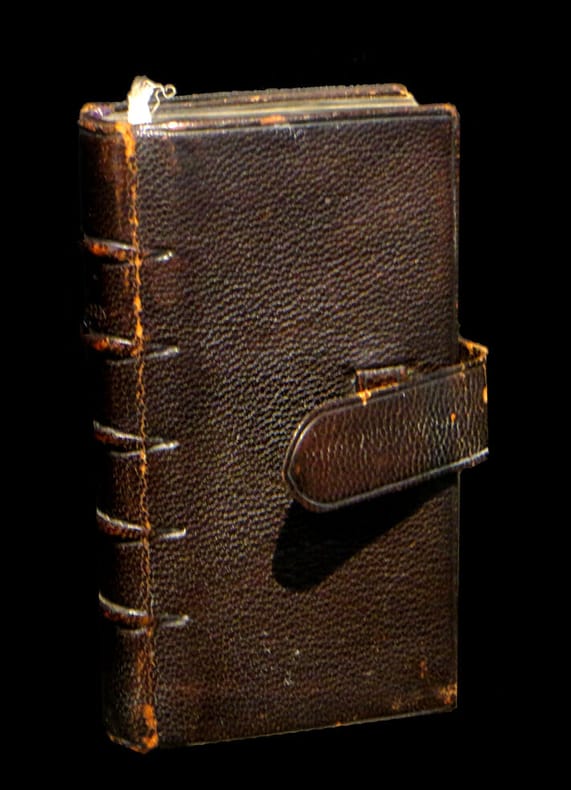
1652146701652. A Paris par Antoine VitrÂŽ 1652 - page de titre absente pour le second volume - A Paris s.ÂŽ. 1652. Un vol. au format in-32 ÂŽtroit 98 x 53 mm de 1 page de titre gravÂŽe n.fol. et 366 pp. ; 1 f. bl. 14 pp. et 1 f. bl. ; 1 f. n.fol. 129 pp. et 3 ff. n.fol. Reliure postÂŽrieure XIXÂme de plein chagrin maroquinÂŽ brun filet ˆ froid encadrant les plats dos ˆ nerfs ornÂŽ de filets ˆ froid titre ˆ froid large bandelette de plein chagrin faisant office de fermoir tranches noires. Charmant et dÂŽsirable exemplaire ici prÂŽsentÂŽ dans un format ''minuscule'' 98 x 53 mm. Edition originale pour les RÂgles de Saint Augustin et le Directoire des choses spirituelles exemplaires tous deux entiÂrement rÂŽglÂŽs. Etiquette - sans doute de relieur - apposÂŽ au revers de la premiÂre contre-garde. L'exemplaire s'ouvre sur une jolie page de titre gravÂŽe figurant Saint Augustin et FranÂois de Sales se faisant face. Ce dernier est ici en outre le prÂŽfacier des ''RÂgles de l'Institut de Saint Augustin pour les Soeurs choses que nos ordonnons Âtre observÂŽes par vous qui Âtes au MonastÂre''. Frottements affectant mors et coiffes de la reliure. Un feuillet manuscrit a ÂŽtÂŽ substituÂŽ ˆ un feuillet de texte. Exemplaire parfois un peu court de marges. Nonobstant trÂs belle condition. Rare. b42961 unknown
165214670A Paris, par Antoine Vitré, 1652 - [page de titre absente pour le second volume] - A Paris, s.é., 1652. Un vol. au format in-32 étroit (98 x 53 mm) de 1 page de titre gravée n.fol. et 366 pp. ; 1 f. bl. 14 pp. et 1 f. bl. ; 1 f. n.fol., 129 pp. et 3 ff. n.fol. Reliure postérieure (XIXème) de plein chagrin maroquiné brun, filet à froid encadrant les plats, dos à nerfs orné de filets à froid, titre à froid, large bandelette de plein chagrin faisant office de fermoir, tranches noires.
167940581Bruxelles: Apud Judocum De Grieck. Very Good with no dust jacket. 1679. Cloth. 32mo ; 433 26 pages; Rebound in modern green cloth. Text bright and clean. Ex-St Alphonsus seminary library. Two stamps two library stickers and library pocket on back cover Contents sound and complete. Otherwise contents unmarked. Binding solid. . Apud Judocum De Grieck hardcover
167999936307Apud Judocum de Grieck Bruxelles, Apud Judocum de Grieck, 1679. In-16 relié plein veau brun, dos à nerfs trés orné. 432 pages + 24 pages pour l'index. Ex-libris manuscrit en page de titre. Bon exemplaire.
164925744Paris Veuve Jean Camusat et Pierre Le Petit 1649 in-16 PLEIN VEAU un volume, reliure plein veau havane blond marbré in-seize (binding full calfskin in-16) (15,5 x 9,5 cm), dos 5 nerfs (spine with raised bands) titre frappé "or" dans un encadrement de 2 filets "or", entre-nerfs à fleuron au fer plein dans un encadrement de deux filets "or", filet à froid de part et d'autre des nerfs, petit manque de cuir à la coiffe de tête(head of the spine lightly damaged), petit accident à léchancrure de tête et de queue du premier plat (small accident in the top and in the bottom indentation of the front cover), de queue du premier plat (small accident in the bottom of indentation of the front cover), plats décorés "or" de 2 filets "or" en encadrement, plats frottés et légèrement tachés, coins émoussés, , coupes usées (cuts faded), toutes tranches lisses jaspéees rouge et noir, orné d'un frontispice gravé en noir par Poilly d'après Philippe Champaigne + une Marque du libraire gravée au titre en noir, (16)-600-(16) pages, 1649 A Paris, chez la Veuve Jean Camusat et Pierre Le Petit Editeurs,
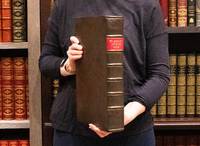
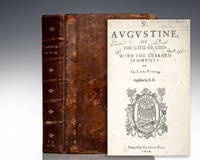
1620921London: G.Eld and M. Flesher 1620. Lg. Folio 13" Binding Finely Bound in Full Leather by A.B. Buck. Saint Augustine: The Citie of God 1620<br /> This is a handsome early English translation of one of the foundational texts of Western Christianity complete with renowned Renaissance commentary.<br /> Author: Saint Augustine of Hippo<br /> Title: Saint Augustine of the Citie of God: With the Learned Comments of Io. Lodovicus Vives.<br /> Translator: John Healey noted on the title page as "Englished first by J.H."<br /> Commentator: Juan Luis Vives Io. Lodovicus Vives a prominent Spanish Renaissance humanist.<br /> Edition: Second English Edition "now in this second Edition compared with the Latine Originall and in very many places corrected and amended".<br /> Publication Year: 1620<br /> Printers: Printed by G. Eld and M. Flesher George Eld and Miles Flesher.<br /> Originally written in the early 5th century The City of God De Civitate Dei is Augustine's profound theological response to the sack of Rome by the Visigoths in 410 AD. It explores the conflict between the Earthly City and the City of God.<br /> This specific volume is notable for being the second edition of the first English translation by John Healey whose first edition appeared in 1610. The inclusion of commentary by Juan Luis Vives—originally commissioned by Erasmus—adds significant scholarly value as Vives's notes were highly influential in Renaissance humanist circles.<br /> Large folio binding measures 13.25" tall x 9" wide. Externally in Fine condition beautifully bound by A.B. Buck in full crushed Morocco with seven compartments and six raised bands to spine with bright gilt rule and red Morocco label. Binding and hinges are excellent new end papers and paste downs Repairs to first and last couple pages mild foxing soiling and damp staining throughout last 40 pages with some worm holing see photos. Pages and text are still crisp including elaborate woodcut initials and decorative headpieces.<br /> A Foundational Pillar of Western Thought: The City of God De Civitate Dei is widely considered Augustine's magnum opus and one of the most influential works in the history of Western philosophy and Christian theology. <br /> <br /> <br /> The Ultimate Apologetic Masterpiece: Written in response to the Visigoth sack of Rome in 410 AD Augustine defends Christianity against pagan claims that abandoning the old Roman gods caused the empire's collapse. It offers a fascinating window into the late antique world and the clash between paganism and early Christianity. Augustine doesn't just write about theology; he extensively critiques Roman history classical mythology and Greek philosophy particularly Platonism. The book serves as a veritable encyclopedia of ancient thought. <br /> <br /> <br /> Vives’s commentary was originally commissioned by Desiderius Erasmus the "Prince of the Humanists." Vives’s notes don't just explain Augustine; they provide a brilliant 16th-century humanist perspective on the ancient text making this volume a dialogue between Late Antiquity and the Renaissance.<br /> <br /> . G.Eld and M. Flesher unknown
1610149448London: George Eld 1610. Rare first edition in English of Augustine's monumental work. Translated by John Healey. Folio bound in full brown calf gilt titles to the spine morocco spine label raised bands. Large woodcut printer's device on title McKerrow 375. Decorative woodcut head-pieces and decorative and woodcut initials including three twelve-line initials. In very good condition ownership signature on title page dated 1790. First editions are rare. One of the great cornerstones in the history of Christian thought The City of God is vital to an understanding of modern Western society and how it came into being. Begun in A.D. 413 the book's initial purpose was to refute the charge that Christianity was to blame for the fall of Rome which had occurred just three years earlier. Indeed Augustine produced a wealth of evidence to prove that paganism bore within itself the seeds of its own destruction. However over the next thirteen years that it took to complete the work the brilliant ecclesiastic proceeded to his larger theme: a cosmic interpretation of history in terms of the struggle between good and evil. By means of his contrast of the earthly and heavenly cities--the one pagan self-centered and contemptuous of God and the other devout God-centered and in search of grace--Augustine explored and interpreted human history in relation to eternity. George Eld hardcover