MECCA GRAND MOSQUEBiblio.com
321 résultats
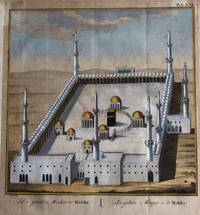
RGW25802No Binding. Very good. Engraving with fine early hand-colouring plate XXI from Carsten Niebuhr "Voyage en Arabie & en d'autres Pays" No Jacket issued unknown
ria9780359308958_inpHardcover. New. New Book; Fast Shipping from UK; Not signed; Not First Edition; N/A hardcover
0359308953.Ghardcover. Good. Access codes and supplements are not guaranteed with used items. May be an ex-library book. hardcover
ria9780359343126_inpHardcover. New. New Book; Fast Shipping from UK; Not signed; Not First Edition; N/A hardcover
0359343120.Ghardcover. Good. Access codes and supplements are not guaranteed with used items. May be an ex-library book. hardcover
1993180239San Francisco: MECA 1993. Magazine. 68p. 8.5x11 inches illustrated with photos and ads stories histories biographies programs very good magazine format souvenir program for the 1993 San Francisco Cinco de Mayo parade and celebration very good in stapled pictorial wraps. MECA unknown books
186065528Wien, Verlag v. M[atthäus] Trentsensky (Druck v. E. Sieger), o. J. (um 1860). Qu.-Fol. 7 lithogr. Tafeln (ca. 23 x 37 cm) mit jeweils mehreren Darstellungen.
Very Good Turkish, Ottoman (1500-1928) In contemporary fine black 1/3 leather bdg. Decorated gilt to spine. Roy. 8vo. (23 x 16 cm). In Ottoman script (Old Turkish with Arabic letters). 112 p. Extremely rare first edition of this Nabi's first-hand account of Mecca, Medina and the Hejaz during his pilgrimage in the late 17th century. This is the most celebrated literary pilgrimage narrative written in Ottoman Turkish. Nabi (1642-1712) was one of the prominent Ottoman poets and is considered a foremost exponent of the didactic trend (hikem-i tarz) in Ottoman Turkish literature. Nabi, whose given name was Yusuf, was born in Urfa (then known as Ruha) in 1052/1642. In 1082/1671 he took part in the Ottoman military campaign in Poland, in the retinue of Müsahib Pasha, (1640-1686). Having spent thirteen years in Istanbul, Nabi desired to go on a pilgrimage to Mecca. He was personally ready to undertake a journey to the Hijaz and to set down an eloquent account of his journey, the experience of his lifetime. Accordingly, having achieved a position of good standing with his patrons, Müsahib Mustafa Pasha and Mehmed IV, Nabi revived his longstanding desire to perform the hajj. In 1089/1678, at around 37 years of age, he set out in a small private caravan from Istanbul, passing through Konya, Urfa, Damascus, Jerusalem and Cairo, where he joined the main Egyptian pilgrimage caravan. The work, which is one of the most successful examples of Ottoman insa (artistic prose), includes historical, sociological, geographical and autobiographical information. In his preliminary remarks, Nabi indicates that he had received governmental help for his journey. He relates that he first obtained leave for the hajj from his patron Musahib Mustafa Pasha, and then submitted a qasida to Mehmed IV, describing the sacred places. The sultan provided Nabi a letter of recommendation addressed to Abdurrahman Pasha (d. 1691), governor of Egypt, ordering him to enable Nabi to make a comfortable journey. Nabi traveled in a small private caravan, since the caravan extended its route to Nabi's homeland, Urfa, and spent about fifty days there. It appears that he generally followed the usual route of the pilgrimage caravan from Istanbul to Damascus, passing through Scutari, Kartal, Gebze, Hersek, Iznik, Eskisehir, Seyitgazi, Aksehir, Ilgin, Ladik, Konia, Eregli, Adana, Misis bridge, Payas, Antioche, Aleppo (with a long detour to Urfa (Edessa) and back to Aleppo via Aintab), Hama, Hims and the Kuteyfe strait. He was fascinated with the splendid architecture of the buildings, the bazaars and the mosques built side by side by Kurdish and Circassian rulers and the Nile when he arrived in Cairo. Nabi gives a general description of the city of Cairo, the Nile, the two reservoirs of the city, parklands, the Ahram hills and the immediate neighborhood of the city. In Mecca, Nabi visited the sacred sites enthusiastically and performed the hajj on 77 January 1679. He gives a moving account of his experience as a pious emotional pilgrim. It appears that Nabi stayed in Mecca for more than twenty days. Immediately after 1 Muharrem 1090/12 February 1679, he set out for Medina, presumably in the Damascus caravan. While in Medina, Nabi served at the tomb of the Prophet by lighting the candles since his name was on the honorary list of attendants who were determined by the central government to serve the sanctuaries in Mecca and Medina. Nabi regards these services as a testimony to the legitimacy of Ottoman rule. He summarizes his journey of return from Medina to Damascus and to Istanbul in a few general words. Özege 21267.; Not in OCLC.
Very Good Arabic Original b/w lithographer print of Mecca. 21,5x17,5 cm. In Arabic. 1 p. [A FINE LITHOGRAPHER MECCA] Mecca al-Mukarrama Zad Al-Lah Sharifhâ al-ayyum al-qaima. It shows Mecca city with its building like Kaba, and walls besides its environment. Mecca is a city in the Hejazi region of Saudi Arabia. The city is located 70 km (43 mi) inland from Jeddah, in a narrow valley 277 m (909 ft) above sea level, 340 kilometres (210 mi) south of Medina, its population in 2012 was 2 million, although visitors more than triple this number every year during the ?ajj ("Pilgrimage"), held in the twelfth Muslim lunar month of Dhûl-Hijjah. It is the birthplace of Muhammad, a cave 3 km (2 mi) from Mecca was the site of Muhammad's first revelation of the Quran, and a pilgrimage to it, known as the Hajj, is obligatory for all able Muslims. Mecca is home to the Kaaba, one of Islam's holiest sites and the direction of Muslim prayer, and thus Mecca is regarded as the holiest city in Islam.
Very Good Turkish, Ottoman (1500-1928) Contemporary 1/3 leather bdg. with cloth spine. Leather boards. Restored. Demy 8vo. (22 x 15 cm). In Arabic. [138] p. Slightly chipped extremities of papers. Occasionally stained on pages, wear on binding. Text is fine. Including 'kataba'. The routine, predictable, yet exhaustive nature of the journey Ottoman pilgrims endured may have discouraged them from recording their journeys. The route was relatively well-defined, and the caravan orderly and well-protected. Moreover, Ottoman pilgrims, unlike Christian travelers, were traveling across the lands of the same state, thus seeing people of the same Muslim culture, without needing to speak different languages, use different currencies, or negotiate borders between states. The uniqueness and peculiarity of a journey would motivate the traveler to record it and the result would be of interest to an audience. As for the Ottomans, if the texts which were composed to help future pilgrims with practical information are excluded, the majority of known narratives, are written by those authors such as Ahmed Fakih, Fevri, Evliya Çelebi, Nabi, and Shaikh Sinan er-Rûmî who undertook at least some parts of their journeys independently of the official caravan. Texts which seem to have been intended simply to provide practical information either on the stations or on the rites of the hajj or on both are defined as guidebooks. These texts appear not to be based on a particular pilgrimage journey, regardless of the fact that their authors might have performed the hajj. This manuscript starts with 'Bayân al-Menâzil Beyt Al-Sam wa al-Qabah' [i.e. Descriptions and stations from Damascus to Mecca] including a very detailed routes' list with their times hour by hour. 40 routes and hours probably by mounts and/or walking between Damascus and Mecca, Qaba. Other chapters of the text include rites and routes like "Farziyyat of Hajj, Ihram, Mukhrima, entry to Mecca-i Muqarrama, tawaf, Sa'y between Safa and Marwa, Arafat in Mecca, Muzdalifa from Arafat, Ef'al in Mina, Umra, Taawaf al-Vedâ, Qabr-i Sharif in Medina al-Munawwara, etc. Sheikh Sinan Al-Roumi's manasik al-hajj is one of the most important and famous ones in the hajj literature of the Islamic world. It was a mostly used reference book among Muslim pilgrims, especially in the Ottoman world. Calligrapher and copied by Ahmed b. Muhammed b. Suleyman. Text in black ink and important headings in red ink on paper with 'ahar'. A fine paper suitable for calligraphy. A very good example from the first half of the 18th century.
Very Good Turkish, Ottoman (1500-1928) Original illustrated wrappers. Chipping on top edge and front cover. Occasional foxing on pages. Overall a good copy. Roy. 8vo. (23 x 15 cm). In Ottoman script (Old Turkish with Arabic letters). 103 p., b/w plates (19 unnumbered b/w plates and 1 map). First edition of this extremely rare first-hand and historically significant eyewitness account of the Syrian and the Suez Canal Operations during the Great War by an Ottoman soldier and statesman. Erden describes in this book his return to Istanbul after his military attaché duty in Paris and his departure to Damascus to join the 4th Army in Syria under the command of Cemal Pasha (1872-1922). He then discusses the Arab Revolt in Hejaz and its possible effects on the Ottoman Empire (The Arab Uprising was initiated by Sharif Hussein bin Ali in June 1916 during the Great War with the aim of creating an independent and united Arab state comprising of Aden in Yemen and Aleppo in Syria against the Imperial Ottoman). After disclosing his views and the actions of the army in the region, he goes on to describe Jerusalem, the Suez Canal, and the wars that took place there. Erden gave new information on the reasons and results of the Canal operation, the condition of the Turkish army along Palestine and Syria fronts, the relations among the Turkish staff, and the nature of the Arab revolt through his views and observations in Egypt, Palestine, and Syria fronts accumulated as he was Cemal Pasha's chief of staff. Erden was a Turkish soldier and war historian. After graduating from the Military Academy in 1903, he worked in the units and headquarters in Yemen, as the staff of the 3rd Corps in the Balkan War and as the Paris Military Attaché. During the Great War, he served as the Chief of Staff of the 4th Army within the entourage of Admiralty Minister Cemal Pasha in Syria. Özege 16174. Kursun p. 51.
Very Good Turkish, Ottoman (1500-1928) Paperback. Cr. 8vo. (20 x 14 cm). In Ottoman script. 238 p. Hac yolunda. The late nineteenth and early twentieth-century poet Cenab Sahabeddin (1870-1934) narrated his journey observation in the "Hac yolunda" [i.e. On the way of Hajj], which was composed of his 17 letters written in the course of the journey to Mecca, traveling by steamer from Istanbul to Alexandria, and then passing through Cairo, Suez, and Tih. These travel memoirs were completed in 1909. Hegira 1341 = Gregorian 1925. Özege 6535 / 2. Second Edition.
Very Good Turkish, Ottoman (1500-1928) Original wrappers. Foolscap 8vo. (17 x 12 cm). In Ottoman script (Old Turkish with Arabic letters). 152 p. Roumi: 1324 = Gregorian: 1906. Taken from a volume including multiple books. Spine is restored. A very good copy. First and only edition of this early and extensively rare book including a first-hand account of the topography and descriptions of Hejaz, Mecca, and other parts of Arabian Peninsula such as Taif and Yemen by Sadiq Sherif, who was the first person to take photographs of Mecca, Medina, and the Hajj in 1880 and 1881 as well. Sadiq Sherif was the grandson of Serif Abdulmuttalib, the Emîr of Mecca. This book written by Sherif was dedicated to 'the Progress and Union Society' [i.e. Ittihad ve Terakki Cemiyeti]. The book describes the way of administration and territorial division of Hejaz after giving some information of its geography, borders, tribes and natives, mountains, rivers, crops and products, and animals of this Ottoman 'vilâyat' [i.e. province]. Sherif gives detailed information on how and when the Ottoman Empire ruled Hejaz, the location of Mecca city, its borders, physical and social geography, crops in Mecca and around, its flora, fauna, demographic structure, 'nahiyes', Kâba's construction, and its history, sacred places around, Masjid-i Haram and other masjids, cemeteries, mountains, gifts by Ottoman caliphs to Kaba, 'Taif' area, people who were 'Emîr' of Mecca from the period of Mohammad, Wahhabism and its birth, etc. At the last, Sherif gives place to his personal letter (layihâ) including 49 articles. The letter was about the reforms that Hejaz needs and it was sent to the Ottoman 'sadâret' [i.e. prime ministry]. (Source: History of geographical literature during the Ottoman Empire, Edited by Ihsanoglu). Muhammad Sadiq Sherif Bey was the first person to take photographs of Mecca, Medina, and the Hajj in 1880 and 1881. Sadiq Bey trained as a military engineer after completing his studies in Cairo and at the École Polytechnique in Paris. It is not known when, or from whom, Sadiq Bey learned to take photographs but it was most probably through one of the resident photographers in Egypt. In 1861, prompted by the need to carry out more extensive military land surveys of the area between Wajh and Medina, Sadiq Bey made his first journey to Arabia. He took a camera along with his surveying equipment and took his very first photographs of Medina. In a series of articles published in the Egyptian Military Gazette in 1877, he refers to his early photography at Medina describing the use of a 'photographia'. Sadly, however, none of the photographs from this first journey has survived. In 1880 he was appointed as the treasurer of the Mahmal, the ornate cloth to cover the Ka'ba brought each year on a special litter to Mecca. He accompanied the Mahmal to Medina and Mecca from September 1880 until January 1881. Again equipped with his camera, he succeeded in producing the series of photographs that are now considered some of the earliest known photographs of the region, those of the Ka'ba, taken under great secrecy. Sadiq Bey published various accounts of his travels in Arabia in military journals, through the Emiry Grand Press in Cairo, but the 1880/81 series of photographs appear to have been issued separately for wider distribution through the Société Khédiviale de Géographie. The society's secretary, Dr. Frederic Bonola, advertised sets of photographs for sale. In January and April 1880 Sadiq Bey gave a talk and report to the society on his earlier 1861 expedition, and on 20 May 1881 he presented a report on his recent journey to Mecca; detailed accounts were published in the society's bulletins, numbers 9/10 and 12. (Source: Christie's). Özege 11888.; Karatay, TM II: 695.; MKAHTBK, II: 991.; OCLC 248374684 / 4082352.
Very Good Turkish, Ottoman (1500-1928) Original photograph showing Fahreddin Pasha in Medina city with Ottoman soldiers and Arabian notables congratulating each other's bairam. His injured left leg is cast into plaster. 9x14 cm. Fakhri Pasha or Fahreddin Pasha, known as Ömer Fahrettin Türkkan after the Surname Law of 1934, was a Turkish career officer, who was the commander of the Ottoman Army and governor of Medina from 1916 to 1919. He was nicknamed "The Lion of the Desert" and "The Tiger of the Desert" by the British and Arabs for his patriotism in Medina and is known for defending Medina in the Siege of Medina during World War I. In 1914 before the Ottoman Army was mobilized, Staff Colonel Fahreddin Bey was appointed the commander of the XII Corps stationed in Mosul. He was promoted to the rank of Mirliva on 12 November 1914 and appointed as the Deputy Commander of the Fourth Army stationed in Aleppo. During World War I, after Hussein bin Ali, Sharif of Mecca, started preparing for a revolt against the Ottoman Empire, Fahreddin, upon the orders of Djemal Pasha on 23 May 1916 moved toward Medina in Hejaz to defend it; he was appointed the commander of the Hejaz Expeditionary Force on 17 July 1916. Medina was besieged by the Arab forces who revolted against the Ottoman Sultan and sided with the British against Fahreddin Pasha, but he stood his ground and defended the city. He also protected the single-track narrow-gauge Hejaz Railway from sabotage by the Hejazi army Turkish garrisons of the isolated small train stations withstood the continuous night attacks and secured the tracks against the increasing number of attacks (around 130 major attacks in 1917 and hundreds in 1918, including more than 300 bombs on April 30, 1918). With the withdrawal of the Ottoman Empire from the war with the Armistice of Mudros between the Ottoman Empire and the Allies of World War I on 30 October 1918, it was expected that Fahreddin would also surrender. But he refused to do so and rejected the armistice. During the siege of Medina, Fahreddin sent the sacred artifacts and manuscripts of Medina to Istanbul in order to protect them from seizure. Most of the manuscripts were returned to Medina by the Ottoman Empire and are now in libraries in the city, while the rest remain in the Topkapi Palace in Istanbul.
Copertina illustrata a colori in fascicolo originale completo de "La Domenica del Corriere" del 20/08/1950
052110N. p. : N. p. 18-19th century. Soft cover. Very Good. 8vo - over 7¾ - 9¾" tall. Original b/w lithographer print of Medina. 215x175 cm. In Arabic. 1 p. A FINE LITHOGRAPHED MEDINA Medina al-Munawwara ali sâhibhâ afzal al-tahiyya. It shows Medina city with its building and walls besides its environment. Medina is the capital of the Al-Madinah Region in Saudi Arabia. At the city's heart is al-Masjid an-Nabawi 'The Prophet's Mosque' which is the burial place of the Islamic prophet Muhammad. Medina is one of the three holiest cities in Islam the other two being Mecca and Jerusalem. Medina was Muhammad's destination in his Hijrah migration from Makkah and became the capital of a rapidly increasing Muslim Empire under Muhammad's leadership serving as the power base of Islam and where Muhammad's Ummah Community composed of both locals and immigrants from Muhammad's original home of Mecca developed. Medina is home to three prominent mosques namely al-Masjid an-Nabawi Quba Mosque and Masjid al-Qiblatayn 'The mosque of the two Qiblas'. Muslims believe that the chronologically final surahs of the Quran were revealed to Muhammad in Medina and are called Medinan surahs in contrast to the earlier Meccan surahs. <br/> <br/> N. p. (18-19th century) paperback
B9780359027279Hardback. New. hardcover
035902727X.Ghardcover. Good. Access codes and supplements are not guaranteed with used items. May be an ex-library book. hardcover
JC-ZSF9-FK92Hardcover. Very Good. Light wear to book and jacket. hardcover
Paris, Berger-Levrault 1929, 227pp., dans la série "Les grandes vies aventureuses", 1e ed., qqs.rousseurs, bon état
G22846, Paris, Berger-Levrault 1929, 227pp., dans la série "Les grandes vies aventureuses", 1e ed., qqs.rousseurs, bon état
0484804820.Ghardcover. Good. Access codes and supplements are not guaranteed with used items. May be an ex-library book. hardcover
1332453759.Gpaperback. Good. Access codes and supplements are not guaranteed with used items. May be an ex-library book. paperback
1017722587.Ghardcover. Good. Access codes and supplements are not guaranteed with used items. May be an ex-library book. hardcover
Features: ACQR Scale Drawing Portfolio - Martin Seamaster, Cessna OE-2 Birddog, Northrop Snark, Cessna L-27A, Republic F-105 Thunderchief, Sikorsky Ilia Mouremetz D; Albatross B.I Series 23, Albatross B.I Series 22 (Knoller Wing); The Hawker Sea Fury; Greenham Common Air Tattoo; Strange WWII aircraft; USAF in Europe - today and tomorrow; RAF Mildenhall Open House; Diamond Jubilee Airfield; Tracking hurricanes in C-130 Hercules; Sopwith Z00 - a collection of scale drawings; Southend Air Museum; The Birth of Naval Aviation - the story of the first shipboard landing; RNAS Lee-on-Solent - visiting one of the last Royal Navy air bases; RNAS Yeovilton - an interesting display; Rolls-Royce Spitfire; Super Spad - little known attack aircraft from Douglas; Sweden's new Air Museum; Liberator Nose Art - pin ups from WWII; China's Warbirds - rare look into aviation in China after WWII; Blackbushe Air Festival - we visit an English Warbird mecca; Enter the Lynx - a new helicopter becomes operational; ACQR Scale Profiles - a selction of classic aircraft drawings; Genie named John - first operational use of the Genie atomic missile; Aircraft cutups - can you guess these mismatched airframes; Combat aircraft of the USN - special pictorial report; Maple Leaf Seafires - Canadian Navy Supermarine Spitfires; Forgotten Swingwing - does anyone remember the USN's F-111B?; America's Early Wings - photos from an early flier's album; Fleet Air ARM Museum Update - new exhibits at the FAA Museum in England; Harvard's 40th Anniversary!; How the USAF established an air safety program; Those weird and wild triplanes; The last Falcon - the last Falcon from the Curtiss stable; Bassingbourn Anglo-American Air Festival - a tribute to the 91st Bomb Group; Red Star over California - a Russian record flight of the 1930s; Forgotten Warbird Graveyard; Helicopter Rescue; Strangers in 'Port - unusual aircraft that visit an airfield; Biggen Hill Air Fair; Mustang Guardsmen - the P-51 Mustang helped form the modern Air National Guard; Boeing's Grasshopper - Nifty little observation type lost out to the L-19; Kingfisher Wreckovery; Lady Peace - the Ping Pong Special - V-1; Twilight for the Sikorsky Giants; 18 days of Hell - the brief combat history of the Belgian Air Force in WWII; Mission U-5 - Abort! - the discovery of a rare P-39 combat veteran in Australia; Typhoon! - deadly fighter-bomber of WWII from Hawker Aircraft Co.; Famous Alaskan Bush Pilots - these pioneers helped develop flying in the north; Mountain Air Force - Switzerland maintains a strong and interesting air force; Zerbe's Air Sedan - a flying oddity; Flying the F-82 in combat - the Twin Mustang is pitted against MiGs; Deuces Wild - swan song of the Convair F-102 Interceptor; Service on Sunday - flying a preacher in an SBD and almost meeting the Maker; Sea-going Gliders - USN experiments in amphibious gliders during WWII; Magnificent Men in their Flying Boats - early aerial developments with flying boats; Messerschmitt's Super-Secret P.1101 - this German aircraft helped USAF researchers in the 1950s; Roscoe Turner Special - the famed unlimited racer he flew; Hot Deck! - landing combat aircraft on aircraft carriers is a dangerous business as these photos prove; Japan's newsboy warrior - little-known Japanese biplane. Average wear. Minor lean to spine. Privately bound in blue buckram-covered boards with gilt lettering to backstrip and front board. A sound copy. Book